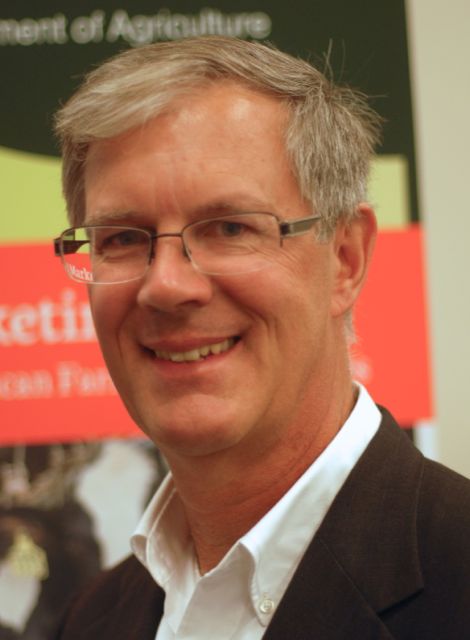
Cornell Kasbergen On Federal Milk Marketing Order

Continued Coverage of Milk Hearing

Dairyman Cornell Kasbergen: We Need Federal Milk Marketing Order

By Patrick Cavanaugh, Deputy Editor

Cornell Kasbergen, a dairyman in Tulare County, is fed up with the flawed California State Milk Marketing Order. So much so, that he and other dairymen and women have a great desire to switch to the Federal Marketing Order.

This idea is presently front-and-center in Clovis, CA as USDA officials are holding an historic hearing that may extend into early November.

“It started three to four years ago when our milk prices were dramatically less than those in the rest of the country, and we wanted to get our industry on a level playing field. It has been a lot of work getting the co-ops together, but we are just at the beginning of this whole process.”

Having the USDA here is, in itself, a big beginning,

Kasbergen has worked hard to drum up interest in the idea. “When I was a co-op board member at Land O’Lakes, Inc. [a national, farmer-owned food and agricultural cooperative milk cooperative], we worked with other dairy co-ops and their members to get educated.  We discovered, for the last three to four years, California’s whey value in its milk pricing formula deviated from national prices, and California producers were losing money. Once we realized we were leaving a lot of money on the table—over a million dollars a day—it opened people’s eyes. That’s why we are having this hearing.”

“The California Department of Food and Agriculture intentionally left the state’s whey prices lower than the rest of the nation, and though we’ve been petitioning them over and over again to rectify the issue, they have failed,” said Kasbergen. “That’s why we have gone this route in getting our milk prices formulated by the federal government rather than by the state. Our state has really let us down.”

“The CDFA has taken hundreds of millions of dollars out of the dairy farmers’ pockets, the loss is killing the dairy industry in California,” said Kasbergen.
2016-05-31T19:27:07-07:00October 9th, 2015|

2nd in Series: Mental Health on the Farm

Part 2  Mental Health on the Farm:  Destigmatizing Mental Health

October 4th – 10th is National Mental Illness Awareness week, and National Depression Screening Day is tomorrow, October 8, 2015.

Resources are provided at the end of this post.

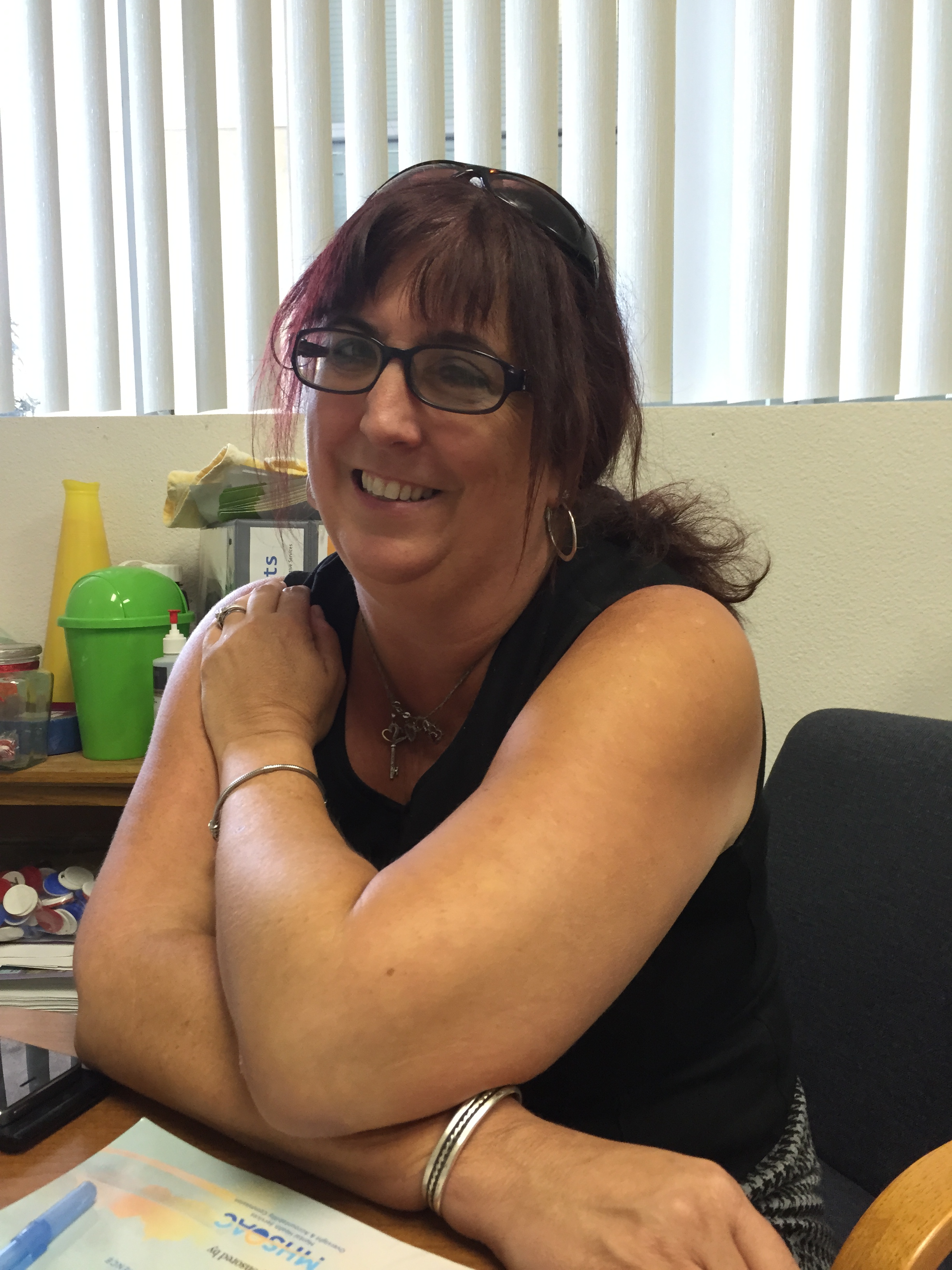
Karen Markland, Division Manager for the Fresno County Department of Behavioral Healths Planning, Prevention and Supportive Services. spoke with California Ag Today Editor Laurie Greene about mental health and the state’s farmers and farmworkers who have experienced increased stress due to the drought and environmental water restrictions impacting their livelihoods.

Editor: Back in April, your department partnered with the Fresno Economic Opportunities Commission (EOC) and the USDA to receive a grant specifically to host a conference called “The Drought Emergency and Preparedness Conference,” (DEAP). DEAP was a full-day event for farmers to discuss the drought and water, but also included representatives from mental health?

Markland: Here was the Department of Behavioral Health, a mental health partner, at an agricultural event. It was fascinating to see the curious looks that implied, “I kind of want to go up there, but I don’t want to go up there.” And by the end of the day, we had attendees and farmers approaching our table. We created an agricultural theme with plants and live videos of our gardening projects to destigmatize and show that mental health and mental wellness speak all languages. So we were pleased to be there.

Editor: We understand the Fresno County Farm Bureau participated?

Markland:   Yes, the meeting with the EOC and USDA was actually initiated by the Fresno County Farm Bureau, which is is very interested in the wellbeing of its community. Ryan Jacobson, Farm Bureau ceo/executive director, had received some communication indicating our farmers were feeling stress and that some had lost their lives based on the anxiety and depression brought on by these drought conditions. It was time for us to activate and come together to talk about a very uncomfortable subject.

Our Farm Bureau and the USDA partnered to talk to workers and farmers who aren’t just happy; rather, they are depressed and anxious, and we are worried about them. The collaboration among the Farm Bureau, USDA and mental health was wonderful.  It was an amazing dialogue to jointly say, “This is such a stigmatizing topic for a group of individuals who are typically adult male farmers who don’t want to share or hear these words. Yet, we’ve lost lives, so it is time to make a difference.”

The Fresno Department of Behavioral Health is dedicated to supporting the wellness of individuals, families, and communities in Fresno County who are affected by, or at risk of, mental illness and/or substance use disorders through cultivation of strengths toward promoting recovery in the least restrictive environment.County of Fresno Logo

The Fresno Department of Behavioral Health provides mental health and substance abuse services to adults within the County of Fresno. The programs within our department focus on delivering the highest quality of service. There are over 300 professionals and staff dedicated to providing services in both metropolitan and rural areas. The diversity of our staff has helped us create a department that is sensitive to cultural differences and attempts to bridge the language barriers with our consumers. 

2016-05-31T19:27:08-07:00October 8th, 2015|

Water Rally Calls for Action

Water Rally Calls for Action, More Voices

By Brian German, Associate Broadcaster

At the recent “Take Back our Water Rally” in Mendota, hundreds gathered to call on Governor Brown to recognize the impact of not just the drought, but the bureaucratic decisions that have had devastating consequences for California farmers. Leadership at the water rally called for action and more voices in the plea for change.

Aubrey Bettencourt, executive director of California Water Alliance, shared some points she made a the rally, “My challenge to this audience was to understand there is a void of leadership. We have a governor who says he is handling this, and he is not. We have no recovery plan for how to get out of this drought. How do we get out of the crisis?  There has been no pathway to recovery, neither from the federal government, nor the state government.” Finally, last month, a group of 47 legislators, both Republican and Democratic, called for a special legislative session.

Bettencourt pointed out the Ag industry is not alone in having been adversely affected by the water constraints. “We all need to communicate to our elected officials,” she said, “that we need a path to relief. My challenge to the audience was to help them realize that because the drought is now statewide and regulatory constraints have drastically cut the regular water supply, we are all—ag and urban communities—even the environmental conservation community—feeling the effects. While we’ve been in this situation for years, and years, and years, we need to expand our base and build our army.”

Many attendees are concerned about the use of the Endangered Species Act to cut water supplies that Central Valley farmers depend on in order to increase populations of a fish that can just as easily be grown by the thousands in hatcheries.

Calling to educate those outside of agriculture to advocate for change in water policies, Bettencourt remarked, “Help those who are unfamiliar with the importance of supply, or more importantly, the lack of supply, to understand why they are frustrated, what is really going on, and how California’s water supply really works. Let’s activate them to being an additional voice to ours; encouraging many voices from diverse locations saying the same thing is the only way the agricultural community, and all stakeholders in California, will ever be heard,” she said.

While forecasters are still optimistic El Niño will deliver heavy rainfall, Bettencourt says California’s water issues will continue unless there is a change in the legislature. She emphasized it would take a big push from more than just the agricultural sector to demand the change that is needed. “It is a numbers game,” she explained. “When you look at the population in California, the bulk of the voters are in the Bay Area, along the Coast and in Southern California. If you add up the registered voters of all the agricultural counties in California, the total is not enough to offset even one of those three heavily populated areas. So the sole hope we have to maximize the only two opportunities for input we can control—our voice and our vote—is to get new voices and new votes,” Bettencourt said.

2016-05-31T19:27:08-07:00October 7th, 2015|

Dairyman Xavier Avila on Federal Milk Marketing Order

Continued Federal Milk Marketing Order Hearing Coverage

Kings County Dairyman, Xavier Avila Worked Hard to Get Federal Milk Marketing Order on the Docket 

By Laurie Greene, Editor

Xavier Avila, a dairyman in Kings County, is monitoring the USDA Federal Milk Marketing Order (FMMO) Dairy Hearing in Clovis very closely. “Well, I was one of the ones who pushed for it five or six years ago. It’s kind of dear to me to get it done,” he said.

Avila explained, “As a kid growing up in the sixties and seventies, all my family members who were in the dairy business talked about how bad it was before the orders. Milk needs to be picked up everyday, so it it’s really easy to mess the market up if you don’t pick up a guys’ milk or threaten not to pick it up. So the California marketing order was established to bring order to California milk.”

Avila said the California marketing order worked for many years when dairies across the country were making the same amount of money per hundredweight. But prices are not equal now, and California dairy farmers are getting paid much less than those other parts of the country.

“We set up a solution on end-product pricing. Yet in California, the CDFA was not following the rules. If the rules had been followed, we wouldn’t have a need to go to the FMMO,” said Avila. “But CDFA just wouldn’t follow the rules regarding end-product pricing and the USDA does follow the rules; so it is just a simple matter of going with the people who are following the rules.”

“For the past ten years,” Avila said, “our whey prices have been much less than the national whey price, so the California dairy industry has lost billions of dollars.”  “It’s really simple. There are six pounds of whey per every 100 pounds of milk. Basically for the last few years, whey was 60 cents/pound. Doing the math, 60 cents times 6 pounds; you come up with a total of $3.60 for the whey in each 100 pounds of milk. With the California Milk Marketing Order, we were paid just 25 cents towards that total and the plant kept the rest. The Federal order is basically the reverse; not quite, but almost the reverse.”

Avila is bullish on the California dairy industry’s conversion to a FMMO. “I think it’s going to happen. Nothing is for certain, but the industry is united. Milk is the same everywhere, and I think it is in California dairy farmers’ hands because we are going to vote on this. Whenever you produce the same product and earn far less for it, it is inevitable that something is going to happen.”

Avila noted it will take some time, “but I knew that from the start, it would not be quick and easy. We are looking at anywhere from one to two years,” Avila said, affirming his belief the California dairy industry can hang on for two years. “We’ve got not choice. Now with the drought, there are other crops you can do better with. Some dairy farmers will leave the business just because they have something better to do than milk cows. So we see this as saving the California dairy industry,” Avila said.

Click here to view Video of Xavier Avila, September 22, 2015.


2016-05-31T19:27:08-07:00October 6th, 2015|

Food Security – Inspections on Imports, Part 2

Rachel Martin on Food Security – Inspections on Imports, Part 2

By Charmayne Hefley, Associate Editor


This is the final segment of a two-part series with national chairman of Homeland Security for the National Federation of Republican Women, Rachel Martin on food security  – Inspections on imports into the United States.

Due to budget cuts, as reported in Part 1, the Department of Homeland Security inspects only 1 in every 60 containers arriving in the U.S. This ratio brings up two issues, according to Martin: (1) the threat of terrorism and (2) concern over food safety. Failure to properly inspect imported containers exposes American citizens to toxins in imported goods that don’t meet the same regulatory standards as food products produced in the United States.

“When you’re doing things en masse,” Martin said, “and the [containers with imported food] are not being inspected, many dangers can come into the country that can kill people—especially the elderly and kids because we know they are more susceptible to bacteria and chemical toxins.”

While she is aware of the potential for accidents and mistakes in food safety, Martin said risking the safety of our country and citizens by inspecting only a limited number of imported containers to save money is more harmful than helpful. “Accidents are going to happen with any food,” Martin said, “even with when I cook for myself in my own kitchen. I may undercook my meal, and there is a possibility I can get food poisoning that way.”

Martin said the Obama administration’s budget cuts have hurt Homeland Security’s inspection rate on food imports. “Number one, it’s not right, there are so many regulations here that we have to deal with,” Martin said. “And number two, it’s wrong that these containers are not inspected because people can become very ill and be killed by food toxins that come into the country in the absence of inspection. ‘Not to mention, the terrorists, bombs, weapons and anything else that is dangerous that could be on those containers.”


2016-05-31T19:27:08-07:00October 5th, 2015|

Historic Milk Pricing Hearing in Clovis

Historic Milk Pricing Hearing in Clovis:

Converting California to the Federal Milk Marketing Order

By Patrick Cavanaugh, Deputy Editor

In Clovis last week, an historic USDA milk pricing hearing commenced to gather testimony from the California dairy industry, which for the most part, favors changing to the Federal Milk Marketing Order (FMMO). This represents an abandonment of the state marketing order which has been harmful to dairies since it was altered 10 years ago to disallow dairies from getting paid the same price for their milk and whey products.

William Francis, director, USDA Order Formulation and Enforcement, is involved in the formal rule-making process for marketing orders. Francis commented, “There’s been tremendous interest in a federal order for California and we are holding a formal rule hearing for the promulgation of a California FMMO. This is an historic event. For years, the state has operated a program. But, farmers have gotten together and invited us to come in for the state’s hearing.”

The hearing could last as long as eight weeks to review each of four proposals. Francis noted, “We are here as long as it takes. We want to make sure we have a complete and accurate record so there are no time constraints,” He said the USDA will post a transcript on their website, filter through all of the documentation and make a recommendation.

A comment period with a sufficient amount of time will follow the public announcement of the USDA decision. “Then we will generate a modified final decision,” Francis said. “By the time we complete that process, farmers will have the opportunity to vote on the modified decision through a referendum process, which could be up to two years away.”

USDA Federal Milk Marketing Order (FMMO)

Industry Information Request postings

All of the proposals can be viewed at www.ams.usda.gov/CAOrder.

2016-05-31T19:27:08-07:00October 2nd, 2015|

Lygus Bug Control in Strawberries

Lygus Bug Control in Strawberries Can Prevent Significant Damage

By Patrick Cavanaugh, Deputy Editor

Adult Lygus Bug, Jack Kelly Clark, UC IPM

Adult lygus bug, Lygus hesperus.
(Photo by Jack Kelly Clark, UC IPM)

In the coastal areas of California where the majority of strawberries are grown, the top pest pressure comes from the lygus bugHillary Thomas, senior production research manager with Watsonville-based California Strawberry Commission, works on lygus bug control in strawberries, as it causes significant damage to the crop each season.

“We conservatively attribute between $150 and $250 million in damage each year to the lygus bug alone,” Thomas said. “We have only a few tools to handle this pest, including insecticide and vacuums, that can be used for the strawberry industry.”

Thomas explained vacuum use is widespread by both conventional and organic growers despite its drawbacks, beginning with the huge investment required by the grower. The vacuum is generally tractor-mounted with three or four vacuum fume hoods to one hydraulic system, and the entire vacuum system runs off the tractor’s PTO (power takeoff). The vacuum is so difficult to remove, it is typically installed on the tractor for the entire season.

Therefore, current research aims to make the vaccuum more useful, according to Thomas, by focusing on technological innovations to improve vacuum efficiency. She explained, “We are literally trying to suck up as many bugs as possible by moving the largest cubic volume of air and killing all the insects that move through the vacuum. We have created some standard operating procedures for vacuums as well as recommended short-term modifications to improve their efficiency by 25 percent. The Commission has also developed a series of trainings to disseminate information on the best management practices vacuums for growers.

2016-05-31T19:27:09-07:00September 28th, 2015|

Table Grape Nutrition

Kathleen Nave on Table Grape Nutrition

By Charmayne Hefley, Associate Editor

Table Grape AdAs consumers have demonstrated a consistent desire to eat more healthfully, food marketing campaigns are increasingly focused on the nutritional benefits of their products. Kathleen Nave, president of the California Table Grape Commission, said the Commission has launched a global campaign to remind consumers about the versatility of grapes, table grape nutrition and why we love them.Table Grape Commission Logo_Page_1

“The campaign we are fielding in the U.S. is the same campaign we are running in 25 markets around the world,” Nave said. “And if you watch the campaign on the television, you will see it portrays the familiar beauty, simplicity, versatility and healthfulness of eating grapes. Everything we do is designed to remind consumers around the world why they love grapes and how easily grapes fit in a healthy diet.”

“Grapes have significant antioxidants and nutrients,” she continued. “And most importantly, families love them. It’s easy to serve grapes either as a snack or as an addition to favorite dishes like salads, pizza, sauces and yogurt. There are lots of ways you can have grapes in addition to eating them fresh out of hand,” Nave said.


2016-05-31T19:27:09-07:00September 25th, 2015|

Ag in the Classroom

Teaching Ag in the Classroom


By Charmayne Hefley, Associate Editor


As the disconnect between consumers and the source of their food grows, many students do not understand where their food comes from. California teachers are doing their part to bridge the educational gap by teaching ag in the classroom.

Agriculture in the ClassroomKathy Yager, a fifth grade teacher at Fowler Unified School District, as well as a farmer, brings agriculture education to her students in several ways. “We’ve been using programs through the California Foundation for Agriculture in the Classroom,” Yager said.

“I’ve participated in Taste Test grants,” Yager said. The grant allows teachers to bring in a new ag product, “and the students get the opportunity to try those things.” Yager said it also helps expose students to new products, and allows them to become better informDairy Council of CAed consumers in the future.

“We also have visits from the Dairy Council of California and students get to see a dairy cow and how the whole milking process works,” Yager said.

In addition Yager brings farmers, including her own brother, into the classroom to educate students, “and [they] show students how agriculture works and how a product gets from the field, to the stores, and to them.”

Healthy Eating

California Foundation for Agriculture in the Classroom (CFAIC)

More than 7 million California students are fed, clothed and housed with products grown right here on our farms, in our fields and within our forests. California Foundation for Agriculture in the Classroom is dedicated to helping students and teachers across our great state gain an understanding of how agriculture provides the daily essentials necessary to make our society and our world function.

From the cotton in our jeans and the food on our tables, to our landscaped yards and playing fields, we all depend on agriculture. The survival of this vital industry depends on educating and encouraging the next generation of decision-makers. We do this by engaging students and educators in meaningful ways: developing and sharing unique classroom curriculum, supporting school garden efforts, spreading our message at local Ag Days, honoring outstanding educators, rewarding students who learn and write stories about agriculture and so much more.

http://www.cfaitc.org/imaginethis/Featured Programs:

Imagine this… Story Writing Contest

Meet Academic Content Standards for California schools through this creative writing contest!

Create a positive learning experience that promotes reading, writing and the arts, and furthers the understanding of agriculture in our lives by using this award-winning contest in your classroom.

PUBLISHED AUTHOR

State-winning authors will have their stories published in an illustrated book and will be distributed to school libraries and classrooms across the state!

DEADLINE: NOV. 1

Entries must be postmarked by November 1, annually.
Download entry form (PDF, 331 KB)

California Fruits and Vegetables Seasonal Chart (PDF, 18 KB)

2016-05-31T19:27:09-07:00September 22nd, 2015|

1st in a Series on Mental Health on the Farm

Part 1 Mental Health on the Farm

Listening for Negative Thoughts

Resources are provided at the end of this post.

California Ag Today Editor Laurie Greene extensively interviewed Karen MarklandDivision Manager for the Fresno County Department of Behavioral Health’s Planning, Prevention and Supportive Services about the mental health needs of those in the agricultural industry who may be emotionally suffering due to the severe drought and environmental water restrictions impacting their livelihoods.

Editor: I have observed that depressed people may say something that implies they are having suicidal ideation, but it is just so easy in our society to tell them, “Oh you’ll snap out of it.” In other words, we tend to dismiss these statements. What do you want to say to listeners on how to respond to someone who says something hopeless? What opportunity does this present to the person who hears someone utter something desperate?

Markland: It is so easy, I say it to myself sometimes, “I want to die; I don’t want to go on.” Those are really important messages, though, for people to pick up on. I really feel it is always important to respond genuinely and supportively. Our statewide California Stigma & Discrimination Reduction Program suggests we go back and say something like, “Each mind matters, and you matter.”

Each Mind MattersThis is an opportunity to have that dialogue; yet often, people will look at me like, “What?” But we all have those moments and we all feel that way at times. Tell people there are resources and support systems. Become familiar with them—whether they are family, clergy, a neighbor, a teacher, County services, a hotline. Likewise, let someone else know when you are not having the best of days.

Editor: It seems as if the general population believes that these issues are not medical issues, that they are within someone’s control, and that perhaps someone is weak or has a bad attitude and they need to change their thinking. What would you like to say to people who don’t recognize that mental illness is a medical illness?

Markland: So, there is a lot of dialogue about ‘What is mental illness?’ versus ‘What is mental health?’ ‘What is mental wellness?’ Clearly, mental illness is a diagnosable medical condition. There are categories in which an individual may have a serious mental illness and these include diagnoses like schizophrenia, bipolar disorder.

These are serious, long-term illnesses, but there is a whole other spectrum of mental illness such as postpartum depression, anxiety disorders, and depressive disorders, which show signs and symptoms that people are functioning outside of their wellness. These are also medical conditions—medical conditions that can be treated in a variety of ways.

Editor: Of course medication is one option. Are there other options?

Markland: Sometimes it is medication; sometimes it is holistic healing; sometimes it is having a positive self-attitude and making sure you get the sleep and the nutritious diet, exercise and more that you need. So it is truly a diagnosable medical condition that can be treated in a multitude of ways, and what we are seeing right now in mental health is a strong recovery movement. People live, grow and recover from mental illness.

Mental HealthThe Fresno Department of Behavioral Health is dedicated to supporting the wellness of individuals, families, and communities in Fresno County who are affected by, or at risk of, mental illness and/or substance use disorders through cultivation of strengths toward promoting recovery in the least restrictive environment.County of Fresno Logo

The Fresno Department of Behavioral Health provides mental health and substance abuse services to adults within the County of Fresno. The programs within our department focus on delivering the highest quality of service. There are over 300 professionals and staff dedicated to providing services in both metropolitan and rural areas. The diversity of our staff has helped us create a department that is sensitive to cultural differences and attempts to bridge the language barriers with our consumers. 


2016-05-31T19:27:10-07:00September 22nd, 2015|
Go to Top