Ag Day at the Capitol

Ag Day Celebration at the Capitol

By Charmayne Hefley, Associate Editor


In honor of National Agriculture Week, the California Department of Food and Agriculture (CDFA) will partner with the California Women for Agriculture and the California Foundation for Agriculture in the Classroom to host the state’s annual celebration of agriculture, California Ag Day at the Capitol in Sacramento tomorrow, Wednesday, March 16, 2016. Karen Ross, secretary of the CDFA, said she is excited for the event, which highlights the diversity of California’s agriculture.

National ag day logo“Our theme for this year’s Annual Ag Day at the Capitol is ‘Golden State on Your Plate,'” said Ross, “to honor our farmers and ranchers and all they provide. Legislators, staffers and the public will have the opportunity to shake a farmer’s hand and advance our shared understanding of the importance of our food supply. In addition to approximately 40 agricultural booths and exhibits, Buttercup the electronic cow, a favorite of children, will return to the Capitol for robotic milking demonstrations.  

“We’ve been watching the weather,” Ross said, cautiously. “We would not mind being in the rain, but it looks like we’re going to have a day of sunshine and 70-degree weather.”

Sheila Bowen, president of the California CattleWomen (CCW), said CCW and California Women for Agriculture members will attend tomorrow’s Ag Day at the Capitol, alongside many other agriculture organizations. “In addition to giving out our brochures,” Bowen said, “we’ll be giving out tri-tip sliders to the guests who come to the Capitol.”

The celebration will be held on Wednesday, March 16, 2016, from 10:30 a.m. to 11:30 a.m. for legislators and staff, and from 11:30 a.m. to 1:30 p.m. for the public at the California State Capitol grounds, west steps.
2016-06-03T09:27:56-07:00March 15th, 2016|

Duarte Farmland Under Siege

Duarte Farmland Under Seige By Army Corps of Engineers

By Brian German, Associate Editor

The Duarte family has been in a lengthy court battle with the federal government regarding the right to farm their own property.

John Duarte, a fourth generation California farmer and president of the family-owned nursery in Hughson, commented on how this dispute began, “My family owns a piece of property up in Tehama County that we purchased in 2012 and planted wheat that fall. The property is in some slightly rolling grasslands, and has some minor wetlands on it, vernal pools, vernal swales. Like most grasslands, wheat areas and wheat plantings, we had a local contractor go out and plow the field for us, 4-7 inches deep, and we flew on some wheat seed for a winter wheat crop in 2012.

“The U.S. Army Corp of Engineers called us and told us we were deep-ripping the property. I think they were under the misunderstanding that we were getting ready to plant orchards or vineyards there. They looked at it and assumed we were deep-ripping, three feet deep, which we were not,” Duarte said.

“They sent us a cease and desist notice in early 2013, then refused to tell us what their evidence was or how they had drawn their conclusion that we were deep-ripping. We sent two letters from an attorney, under the Freedom of Information Act, requesting evidence we had deep-ripped, the assumption that apparently warranting a cease and desist notice.”

“They refused to answer the first letter. They kicked the matter up to enforcement and then sustained the cease-and-desist notice without ever giving us a hearing and without ever giving us specific cause for their action. They obstructed our farming operations indefinitely,” Duarte noted.

As their request for the evidePacific Legal Foundationnce against them continued to be ignored, Duarte said, “We went to the Pacific Legal Foundation, where they filed a due process suit against the Army Corps of Engineers on behalf of a farmer’s right to farm their ground. The Army Corps of Engineers now claims that our 4-7 inch tillage through ground that has been tilled 18-24 inches in the past destroyed wetlands.”

“They are making extremely spurious claims that the small plowing furrows through some of the minor vernal pools are now mini mountain ranges and the valleys of those furrows are still wetlands. But the top of the furrow, maybe five inches higher than the bottom of the valley, is now a converted upland and therefore we have destroyed wetlands across the property and are subject to a destruction of wetlands lawsuit filed by the Army Corps of Engineers against Duarte Nursery.”

Nevertheless, Duarte doesn’t think this was strictly in the interest of habitat preservation, “We believe this lawsuit is completely vindictive and retaliatory because we are challenging the Army Corps of Engineers’ ability to simply drive by farms and send cease and desist notices to farmers for very little cause, and then refuse to give any information as to what their cause for the cease-and-desist notice was.”

Duarte believes the lawsuit filed by the Army Corp of Engineers is a somewhat arbitrary enforcement of wetland destruction laws, “Lately, under the new WOTUS Rule, federal administrations [designate that] everything we farm as a wetland. We’ve had experts on both sides out in the field. Everyone agrees that wetlands are still there; the wetlands are still the same size; the wetlands have the same hydrology; the wetlands still have the same pocket water when it rains; the wetlands still have wetland vegetation; the wetlands are all still there by all the parameters one would measure a wetland’s presence by.”

Duarte noted where they are in the process, and why they chose to standup for their rights, “We filed motions for summary judgement, had a motion for summary judgement hearing back in, I think it was early December, we are waiting for the judges rulings on those, so we can proceed to trial on any unsettled matters in the case. We see these types of things happening to our customers all over the state, and that is one reason we wanted to bring this suit. We’re willing to bring this suit and defend our customers, our growers’ ability to take our products and farm their land. Duarte Nursery cannot exist without our growers being able to farm.”

This situation has come at a heavy price for the Duarte family. “This has cost our company over $1 million just to stand up for everyone’s right to farm their property. In a number of important ways, there is a noose tightening around the neck of agriculture everyday, and unless we stand up and fight back, in the courts, where it is appropriate, we are going to lose our ability to farm without federal government permission to do so,” Duarte said.

________________________________

Links:

Duarte Nursery

Pacific Legal Foundation

U.S. Army Corp of Engineers

2016-07-23T17:25:28-07:00March 11th, 2016|

National Days Celebrations at Fresno State Farm Market

Fresno State Farm Market Hosts National Day Events

By Charmayne Hefley, Associate Editor


Fresno State’s Rue and Gwen Gibson Farm Market hosted its Annual Pistachio Day on February 26 in honor of World Pistachio Day. Miles Robinson, a student market lead, said, “We’ve been working with American Pistachio Growers (APG) to market this campaign and give away pistachio samples, all courtesy of APG. We are also raffling a gift basket with several of our products and APG items as well.”12821589_10153999748978330_676533612082576193_n

Robinson said the Fresno State farm market plans to host monthly events to feature the store and student products, including that very fowl day, Poultry Day, on March 18, and National Raisin Day on April 29. “For Poultry Day,” Robinson said, “we’ll be sampling Foster Farms chicken in a couple of different recipes. We look forward to having people actually taste our chicken. We will also have a chicken dance contest. For National Raisin Day we’re partnering with the California Raisin Board to bring information, samples and have a fun time.”

Robinson said the student-run farm market, which specializes in student-made products, is in the process of creating new recipes for its coated nuts and raisins. “Over the past year, we’ve been slowly rolling out new recipes for our milk chocolate raisins, milk chocolate almonds, milk chocolate cabernet raisins and dark chocolate raisins,” Robinson said. “All of our products will have brand-new recipes, 100 percent Fresno State-done.”

2016-08-10T11:56:30-07:00March 11th, 2016|

Pistachios Trump Diabetes

Pistachios Trump Diabetes

By Brian German, Associate Editor

Just eating the right foods can benefit people diagnosed with pre-diabetes or with type 2 diabetes.  Recent research* suggests including pistachios as part of a balanced diet is a sound strategy to help lower the risk of developing type 2 diabetes. And the news could increase pistachio imports into China, where the disease is rampant.

Judy Hirigoyen, vice president of global marketing for the Fresno-based American Pistachio Growers organization that represents more than 800 growers in California, Arizona and New Mexico, noted pistachios have a good future in the global diabetes epidemic, especially in China. “Believe it or not,” she explained, “one-third of the entire world’s population of diabetics lives in China. Diabetes is associated, not with overweight or obesity, but with their diet. In particular, a lot of fingers are pointed at a lot of white rice,” she said.

“The good news for the pistachio industry,” said Hirigoyen, “is the Chinese population really loves American products, including pistachios. They’re looking for healthy foods to eat, and pistachios are very widely recommended, especially as part of a diet for someone who either has diabetes or who wants to prevent pre-diabetes from developing into diabetes.”

American Pistachio Growers Infographic - Pistachios and Diabetes

American Pistachio Growers Infographic – Pistachios and Diabetes

__________________________________

*A study, published in Diabetes Care, suggests that pistachios may have glucose- and insulin-lowering effects and promote a healthier metabolic profile in people with pre-diabetes. (Hernandez-Alonso, P., et al. Nutrition attributes and health effects of pistachio nuts. Br J Nutr. 2015 Apr;113 Suppl 2:S79-93.)

Another study, published in Nutrition, Metabolism and Cardiovascular Diseases, suggests that daily consumption of pistachios may shift the lipoprotein size and particle profile to a less atherogenic pattern in people with pre-diabetes. (Hernandez-Alonso, P., et al. Effect of pistachio consumption on plasma lipoprotein subclasses in pre-diabetic subjects. Nutr Metab Cardiovasc Dis. 2015 Apr;25(4):396-402.)

2021-05-12T11:05:58-07:00March 2nd, 2016|

Bayer AgVocacy Forum Connects Public with Food Production

Bayer Advocacy Forum Narrows Gap Between Public and Food Production

Food system, science and agriculture experts gather to discuss the convergence of food and the future of agriculture

NEW ORLEANS, La.  Advancing the conversation about the best ways to sustainably feed a growing population is the overarching theme for the 2016 AgVocacy Forum, sponsored by Bayer CropScience. Representatives from agriculture and consumer media will hear from thought leaders in science, nutrition and sustainable food production at the invitation-only event TODAY.

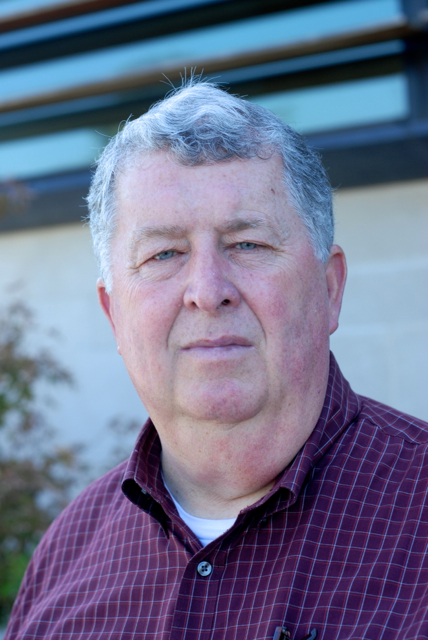
David Hollinrake, vice president, marketing & portfolio management, Bayer

David Hollinrake, vice president, marketing & portfolio management, Bayer

Formerly “Ag Issues Forum,” AgVocacy Forum continues a decade-long tradition of bringing together a diverse mix of people, experience and opinions to exchange ideas and philosophies that help shape and influence modern agriculture. This year’s event shines a spotlight on how being an “AgVocate” may help bridge the growing divide between consumers and those involved in food production.

“There are many challenges facing today’s food producer and perhaps none more important than building trust with consumers,” said David Hollinrake, vice president, marketing & portfolio management, Bayer. “We assembled experts at AgVocacy Forum to spark dialogue and bring focus to the steps needed to educate and engage a public that is increasingly detached from modern agriculture.”

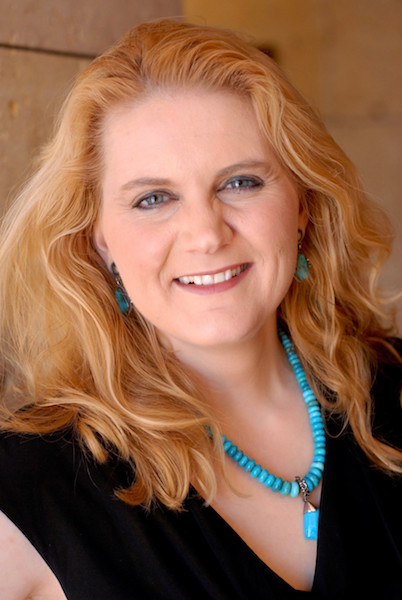
Carolyn O'Neil, MS, RDN, former CNN correspondent

Carolyn O’Neil, MS, RDN, former CNN correspondent

Award-winning author and registered dietician, Carolyn O’Neil, kicked off the Forum last night with a keynote address sharing her insights on consumer preferences driving food trends. The program also featured 12-year-old Braeden Mannering who, while attending the “Kids’ State Dinner” at the White House, was challenged by First Lady Michelle Obama to “pay his experience forward.” Braeden’s response was to create Brae’s Brown Bags (3B), which battles food insecurity by providing healthy snacks to homeless and low-income individuals.

Braeden Mannering, founder Brae's Brown Bags (3B)

Braeden Mannering, founder Brae’s Brown Bags (3B)

Additional guest speakers include:

Kavin Senapathy, author of The Fear Babe: Shattering Vani Hari’s Glass House and regular contributor for Forbes.com

Dan Dye, CEO of Ardent Mills, a joint venture among Cargill, ConAgra Foods and CHS

Josiah Zayner, CEO of The ODIN and former NASA bioscientist

Charles Baron, co-founder and vice president of Farmers Business Network, a crowd-sourced program for data-driven agriculture

AgVocacy Forum is being skillfully moderated by Frank Sesno, director of the School of Media and Public Affairs at George Washington University and a former CNN correspondent, anchor and Washington D.C. Bureau Chief.

In conjunction with the event, the Bayer Foundation has made a $10,000 donation to the Orleans Parish 4-H chapter and will work with the chapter to install a Feed a Bee pollinator garden at Ben Franklin Elementary.

Watch a live stream of the AgVocacy Forum at www.agvocacyforum.com, and join the conversation by following @bayer4cropsus and using #AgVocate. Be sure to look for blog posts on the event at www.cropscience.bayer.us/news/blog.

________________________________

Bayer is committed to bringing new technology and solutions for agriculture and non-agricultural uses. For questions concerning the availability and use of products, contact a local Bayer representative, or visit Crop Science, a division of Bayer, online at www.CropScience.Bayer.us.

Visit the Bayer Connect – Social Hub for social media, recent news, blog posts, videos and more from Crop Science, a division of Bayer.

________________________________

Bayer: Science For A Better Life

Bayer is a global enterprise with core competencies in the Life Science fields of health care and agriculture. Its products and services are designed to benefit people and improve their quality of life. At the same time, the Group aims to create value through innovation, growth and high earning power. Bayer is committed to the principles of sustainable development and to its social and ethical responsibilities as a corporate citizen.

Forward-Looking Statements

This release may contain forward-looking statements based on current assumptions and forecasts made by Bayer Group or subgroup management. Various known and unknown risks, uncertainties and other factors could lead to material differences between the actual future results, financial situation, development or performance of the company and the estimates given here. These factors include those discussed in Bayer’s public reports which are available on the Bayer website at www.bayer.com. The company assumes no liability whatsoever to update these forward-looking statements or to conform them to future events or developments.

2016-06-03T09:32:30-07:00March 2nd, 2016|

National Dairy Crisis Continues—Part 2

National Dairy Crisis—A Way Forward, Part 2

By Laurie Greene, Editor

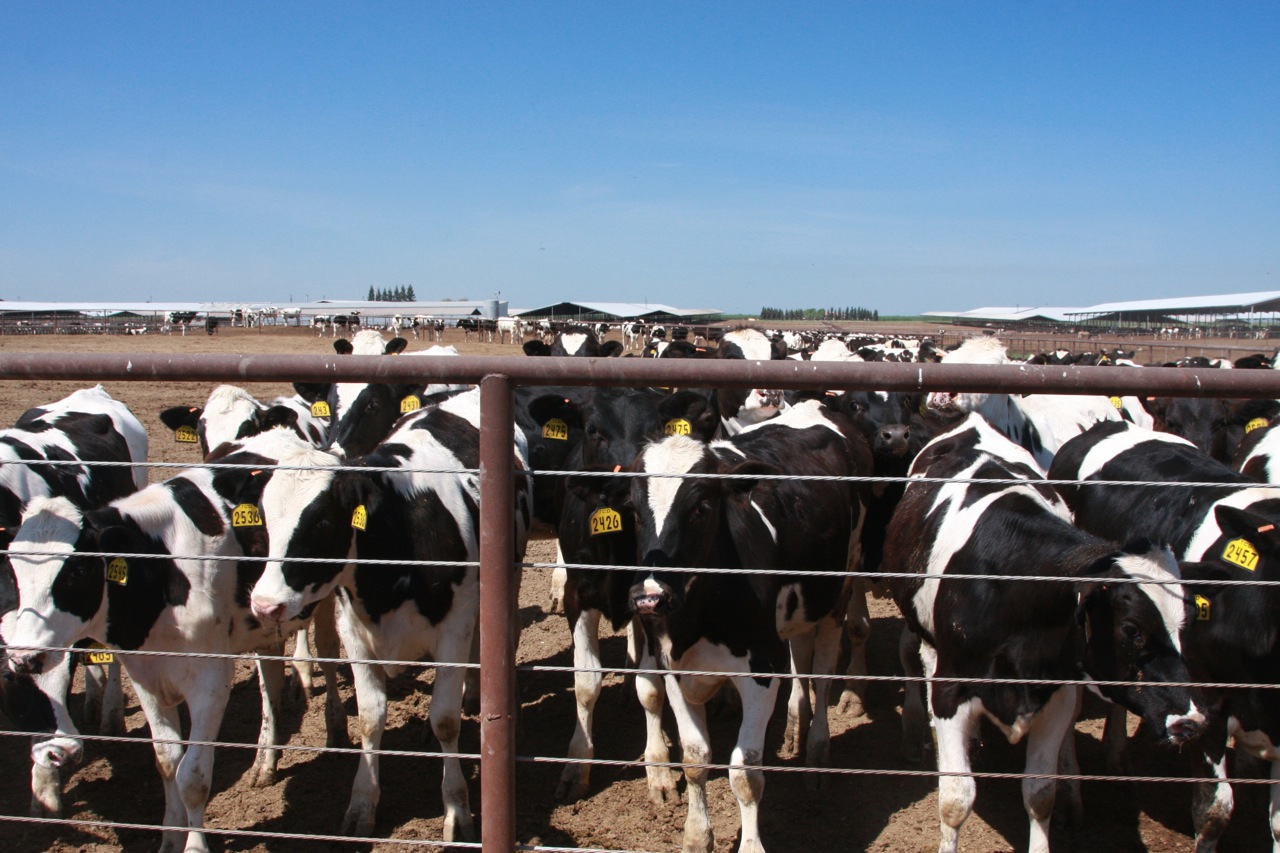
In our continuing coverage of the national dairy crisis marked by high inventories and below-production costs-prices, industry proponents are considering ‘market responsive’ ways to help with inventories, such as donating to the Feeding America organization or to other food banks. Tom Van Nortwick, owner and publisher of Fresno-based Agribusiness Publications, which has published a dairy magazine for 35 years, has been closely involved with hundreds of dairy producers from 2009 through June 2014 in the organization and establishment of the National Dairy Producers Organization. This nationwide organization focuses on keeping dairies profitable especially when market conditions squash dairy pricing.

Van Nortwick, who believes donating excess milk would be relatively easy and painless for the dairy industry, commented, “We are not going to specially package it; it is going to be what it is and where it is. It is then their responsibility to deal with it after that. The milk has already been processed and stored, and it’s waiting to be sold.”

In picking up all these excess dairy products, food banks such as Feeding America would dramatically reduce inventories. Van Nortwick explained, “We have found in studying these inventory levels, that when inventory gets to a certain level, it starts to impact the value of what someone is willing to pay me—a dairy producer—for the milk that I am pulling out of our cow today. And so we are recommending to our dairy producers that it might take literally 15 cents to impact the price of milk today which is currently $5 under the price of production and $7-$10 away from profitability.”

“The idea,” he continued, “is to have producers put up 15 cents per hundredweight into a savings account, which, when needed, would buy up excess inventory on the finished product side—the milk, cheese, milk powder and butter markets. Producers would then donate the purchased product to churches, food banks and Feeding America.

Tom Van Nortwick further expounded, “What if you invest $1 and get a $10 return? What if you invested 15 cents and got a $10 return? Is that a great plan? That is a great plan. The ‘investment’ is actually buying up [excess] inventory from the inventory [of processors and manufacturers] so it is no longer there. Because all of that is tracked, everybody knows how much there is and where it is. So if you are watching the market, you know if you should be buying more cheese, or making more cheese, or more powder. GM doesn’t make more cars than the dealers can sell; otherwise GM shuts the plant down. Everybody screams and hollers, but guess what? They know if they are going to survive, they have got to back off and not make more cars until the dealers, the selling organizations, pick up the slack.”

Van Nortwick says the dairy industry needs to focus more on the milk after it leaves the farm, “It is vitally important that we in the dairy producers sector start paying attention to what is going on with the milk, and the products being manufactured from milk after it leaves the farm. We are doing a wonderful job in how we produce it, the care and keeping of the animals, the sustainability of the environment, the recycling of the waste material; all of that we do better than anybody else in the world.”

“Do we need to be ever watchful?” he asked. “We have a new program called, ‘Picture Perfect’ in the industry, especially agriculture. All of agriculture needs to be ‘Picture Perfect.’ Do you know why? ‘Because everyone has a camera. Everyone’s got their own video recorder and anything can be seen anytime and filmed anytime. And a picture taken can go viral tomorrow, or tonight—even while we are asleep. So, we have to be picture perfect. We already do that.

He implored, “I want to say to dairy producers across the country, ‘You win. You make the most. You make the best. But that is not what we need right now in order to be sustainable. We need you to pay attention to your milk and what happens with your milk after it leaves the farm.”

______________________________

Links:

National Dairy Producers Organization

Feeding America


2021-05-12T11:17:14-07:00February 25th, 2016|

LA Included in Water Priorities Act

CaWater4All-Proposed Water Priorities Act Includes Los Angeles

By Patrick Cavanaugh, Deputy Editor

The Water Priorities Constitutional Amendment and Bond Act is good for all of California—people, farms and the environment. Should the required 565,880 petition signatures necessary for inclusion on the November 2016 ballot be collected by the April 26, 2016 deadline, and should the Water Priorities Act receive a majority of affirmative votes in November, it will provide big benefits to cities such as Los Angeles.

“The availability of regional water projects is massive for our urban centers,” stated Aubrey Bettencourt, executive director of the California Water Alliance, the ballot initiative’s sponsor. “The ability for urban centers to create water in their own regions and become less dependent on other parts of the water system, actually helps the other regions in the system as well.”
CaliforniaWater4All

The proposed water priorities act creates flexibility all around. Bettencourt explained, “Consider that the Los Angeles (LA) River loses as much water in an average storm event as the water supply for 180,000 homes annually—in one storm! In an average normal water year, Los Angeles loses the equivalent of the Shasta Reservoir in stormwater runoff, and they are under state and federal mandates to capture that water, recycle it and put it back in their water supply. This helps clean up their beaches and ocean water, which would otherwise end up with a lot of pollution through runoff,” she said.

“This ballot measure would increase their regional water supply by capturing and injecting stormwater runoff back into their groundwater supply. That would providing flexibility and reliability to the water supply for Southern California, but also affordability, which is such a key part of this effort,” Bettencourt noted.

“And Governor Brown just extended the drought cut mandates through the end of October of this year, and a lot of communities are conserving and conserving,” she said.”They are conserving so much that they using less; and, now they have to pay more because they are using less. So they are using less water, paying more for it, and still being punished. And that should not have to happen if we have a system big enough to supply all of our diverse water needs: agricultural, urban and environmental.”

Bettencourt noted, “The system hasn’t been updated since the late ’60’s-early ’70’s, in terms of some of our large-scale infrastructure. And you have to remember, our population was half the size it is today, and we didn’t have the same type of demand on that system that we do today,” she emphasized.

“Currently, we allocate 50% of our surface water to environmental protection. That is not wrong; but what is wrong is that we didn’t expand the system enough to take care of that allocation and our people. That is what this water ballot initiative is aiming to provide:  to increase our infrastructure to meet the demands of the 21st century,” said Bettencourt.

_____________________________

Links:

California Water Alliance Initiative Fund

California Water Alliance

2016-05-31T19:24:12-07:00February 18th, 2016|

Dairy Prices Still Low

UC Davis’ Bees Butler on Low Dairy Prices


By Laurie Greene, Editor


As previously reported, the dismal below-production-costs dairy prices in California—the #1 dairy state—as well as in the rest of the nation, emanate from excessive inventory and slumping sales, particularly in the export market.

Leslie (Bees) Butler, a UC Davis Cooperative Extension specialist and lecturer in the Department of Agricultural and Resource Economics, explained why dairy producers don’t cut back on milk production. “It is easier said than done,” he said, “and for many producers, it comes down to an income problem. Most production units are set up on a certain sort of ‘scale,’ if you like. So if I am all set up ready to milk, let’s say, 800 cows, or 1000 cows, and then you come along and tell me, ‘Well, you ought to reduce it a bit.’”

“Quickly, I, the dairyman, have to think of what I can do,” said Butler. “There may be a couple of things I can do. First, I can get rid of some cows, my lowest producing cows. You can do that, but it would be a temporary solution to the problem. The second is don’t add those high-producing heifers back into the herd, but they are the most efficient cows. So as you do add them in, you have to cull more lower-producing cows. Many heifers are much better producers than their mothers, so it just reduces the lifecycle of the poor mom.”

“And of course, cash flow in the dairy business is so important,” emphasized Butler. “You know there is a limit to how much a dairy farmer can reduce his income without impacting too seriously his ability to pay off loans, etc.”

2021-05-12T11:17:14-07:00February 17th, 2016|

Lorsban Under Scrutiny

Chlorpyriphos (Lorsban) Must be Used More Carefully

By Patrick Cavanaugh, Deputy Editor

California Department of Pesticide Regulation (DPR) reports an important, broad-spectrum organophosphate insecticide known as Chlorpyriphos, or Lorsban, may be further restricted due to evidence of potential human health and environmental risks, presence (parts per billion) in some California waterways, and pressure from the EPA. Brian Leahy, director of the California Department of Pesticide Regulation, said, “Chlorpyriphos is an important tool and we know there are important times when you have to use it.”

Registered and widely used in agriculture across the nation for more than 40 years, DPR has made it a restricted-use material. Leahy said, “We are trying to work with the grower community to improve how they use it. We are also working with UC IPM to look at essential needs, but we know that as we look at Chlorpyriphos, we are going to have to put additional restrictions on it.”

“We simply need for it to stay on target, and not be getting into the human body. We are seeing that it is, and we are going to continue to make sure that people use it thoughtfully and wisely,” he said.

And Leahy is very confident that growers can use this material and keep it on target, “I have seen farms that use it only when they really need it, and that is what we want. We can’t lose this tool and we are going to keep it only by showing we can greatly reduce off-site movement to the human body and watersheds,” he noted.

___________________________

Resources:

According to the University of California Agriculture and Natural Resources 2014 Chlorpyrifos Report entitled, “Identifying and Managing Critical Uses of Chlorpyrifos Against Key Pests of Alfalfa, Almonds, Citrus and Cotton“:

Chlorpyrifos plays a critical role in many IPM programs for controlling pests that threaten the productivity and economic well-being of California producers and in maintaining the high quality standards required by consumers and international export markets. This active ingredient also allows production of animal feed to support the important dairy industry in California. For some pests, chlorpyrifos is one of the last effective organophosphate insecticides available and may provide an important alternative mode of action for insecticide rotations to prevent the development of resistance to newer insecticide products. For others, this product is one of very few products with international registrations with established maximum residue limits (MRLs) that allow unhampered trade. Chlorpyrifos may also be a key tool for controlling invasive pests as well as endemic pests occasionally found in extremely high population densities. 

The California Department of Pesticide Regulation reports that the combined use of chlorpyrifos in alfalfa, almonds, citrus, and cotton has decreased since 2006. 

Although newer insecticides are also available to manage some pests in these four crops, there is a continued need to preserve the availability of chlorpyrifos for specific situations.

Assessing the Health Risk of Pesticides,” California Department of Pesticide Regulation

2021-05-12T11:03:04-07:00February 16th, 2016|

Youth in California Cattle

Youth in California Cattle

By Charmayne Hefley, Associate Editor

Statistically, it appears millennials aren’t considering agriculture as a career path. The USDA’s “2007 Census of Agriculture: Farmers by Age,” reports the average age of cattle ranchers was 57.8 years old. Malorie Bankhead, director of communications for the California Cattlemen’s Association (CCA) and a millennial herself, said, “Young people in the beef industry have a really unique opportunity to get involved in something called the Young Cattlemen’s Committee (YCC), the young affiliate of our California Cattlemen’s Association.

Young Cattlemen’s Committee (YCC)

Young Cattlemen’s Committee (YCC)

Bankhead explained, “There are four college chapters: Fresno State, Chico State, Cal Poly and UC Davis. We don’t discourage membership from high school students or even folks younger than that who are interested in getting involved. The membership is $25 per year, and with that, you’re afforded a wealth of opportunity to become involved. We have a fairly robust scholarship program available to YCC members where we interview up-and-coming leaders in the beef industry who are focusing academically and extracurricularly on the beef industry, with the career goal to reenter the beef industry.”

Bankhead said the Young Cattlemen on the Capitol event, set for April 5, “is another opportunity for young people in the industry—specifically YCC members—to come to the CCA office in Sacramento to to learn from our staff about the current hot topics in the beef industry affecting ranchers. We turn to discussions with those folks and each other and build your network in the beef industry. We also tour the Capitol, visit some legislators and network with them on issues impacting the beef industry.” Registration information is forthcoming on the CCA website under the YCC tab.

2021-05-12T11:17:14-07:00February 15th, 2016|
Go to Top