Bayer’s Inspiration: Agvocate for Ag

Ag Agvocacy: One Small Pebble Can Cause a Ripple Effect of Change

By Patrick Cavanaugh, Deputy Editor


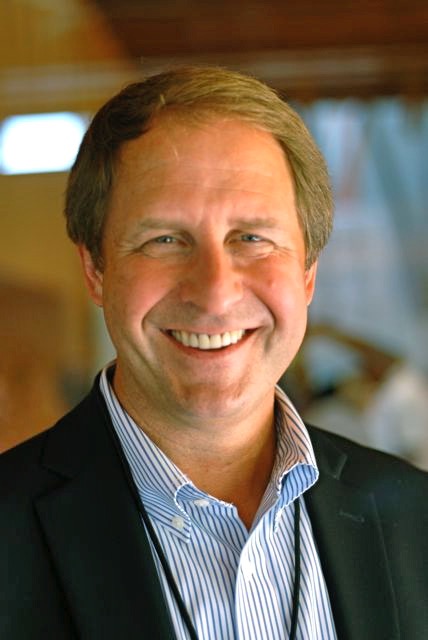
At the March 2016 AgVocacy Forum in New Orleans, Rob Schrick, strategic business management lead – horticulture at Bayer CropScience, noted we should n3B Brae's Brown Bagsever give up trying to AgVocate on behalf of the agricultural industry. “It goes back to the pebble and the ripple, which is what Braedon Mannering, founder of Brae’s Brown Bags talked about; you know, little things can matter,” Schrick said.

Braeden Quinn Mannering is an amazing 12-year-old from Bear, Delaware, who founded the nonprofit, 3B Brae’s Brown Bags (3B), to provide healthy food and other items to homeless and low-income people in his community. Mannering’s ongoing mission is not only to feed people today, but also to raise awareness about the problems of food insecurity and poverty and to empower and inspire youth across the nation to become part of the solution

AgVocacy and Credibility

“The event was the fourth year running of what was the Ag Issues Forum,” Schrick said. “It is a forum that we put on just in front of Commodity Classic because Ag media is there, market influencers are there. So how can we get them together to talk about the issues relating to agriculture? That was a great theme four years ago, but now as the millennial generation is coming onboard [amidst] so much misinformation about production agriculture, we have re-coined this the AgVocacy Forum. What that comes down to is how do we tell our story about agriculture?”

AgVocacy Forum logo“One of the most interesting things we saw at the meeting,” Schrick noted, “was that we are influenced by people all around us, doctors, lawyers, and our pastors. However in agriculture, the number one influencer is the grower. That really resonated with me and it is true; he is the most credible source, he is the one who produces that food, and he has to make that land he is working on sustainable. He has to make that production come, year after year, after year, and in most cases, he wants to turn that over to the next generation of farmers.

Schrick expanded on the grower, “I think because they are at the point-source, their livelihood depends on it, and they have to get more out of that land and make it more fertile each following year, who is better stewarding that land? And because of that, who is the most credible source?” he asked. “You know, I would love for [the credible source] to be a company—like Bayer; we are very proud of ourselves. Or you could talk to a consumer, [but the story] is going to have a bent to it. But when a grower is talking about production agriculture, that is pretty credible,” he said. 

Food Chain Partnership

“At Bayer, our customer is the grower,” Schrick commented, “and we have to meet the needs of that grower. Well that grower is producing a crop and he has a customer, which is the food chain. These retailers, these food processing companies that are buying his product, are putting requirements on that grower. We have a food chain position on our team and a Food Chain Partnership coalition within our company, whose number one job is to understand what these food processors will require the grower. We understand that; we can help the grower meet those challenges; that is what our food chain partnership is all about.

Anticipating Future Agricultural Needs

Bayer CropScience's West Sacramento facility

Bayer CropScience’s West Sacramento facility (Source: Bayer CropScience)

“We have just recently expanded the greenhouse facilities at our integrated West Sacramento Biologics and Vegetables Seeds site. Bayer is an innovation company; our job is to look into the future and ask, ‘What will be the needs of growers ten years from now?’ Part of that is going to be a reduction in residues, and one of the ways to meet that need is through biologics. That is where we are making our investment. In 2012, we purchased AgraQuest, one of several biologics investments we made, not necessarily for the portfolio they had—which was a wonderful portfoliobut for that scientific know-how and the discovery engine that we have created for biologics.”

“We have got to come up with the next generation of crop protection products that can meet lower residue requirements. And as Bayer is Science for a Better Life, we are going to inject science into this and come up with a new portfolio of crop protection products that will meet the needs of the new generation.”

It all goes back to the pebble and the ripple effect.

2021-05-12T11:03:02-07:00April 13th, 2016|

Agriculture Science Recognition Awards, Part 4

Elizabeth Mosqueda, Agriculture Science Recognition Award Honoree

By Charmayne Hefley, Associate Editor


Elizabeth Guerrero Mosqueda, a graduate student in the Department of Plant Science at Fresno State, was one of four students to receive the Agriculture Science Award in mid-March presented by Jim Patterson, California assemblymember, along with, Sandra Witte, dean of the Jordan College of Agricultural Sciences and Technology and Lawrence Salinas, Fresno States’s executive director of government relations.

Jim Patterson, California Assemblymember

Jim Patterson, California State Assemblymember

Patterson said Mosqueda, the child of migrant farmworkers from Mexico,“set her sights on overcoming many obstacles from an early age. Elizabeth’s parents worked on the lettuce fields in the Salinas Valley, which led to her understanding the vital role farmworkers have in harvesting crops and the impact of frequent labor shortages on farming. All of that experience led her to study ways to improve lettuce production.”

Patterson said the labor shortage has required the use of automated lettuce thinners to raise lettuce, one of the state’s biggest crops.  “But some farmers are hesitant to use new technology,”said Patterson, “so Elizabeth decided to roll up her sleeves two and a half years ago” and conducted her graduate studies on the comparison of using lettuce thinning machines to lettuce work done by hand. “She completed her study and has since traveled nationwide to share her findings with other scientists and agronomists.”

Patterson added Mosqueda was recently selected as one of fifty students nationwide to attend American Society of Agronomy’s Graduate Student Leadership Conference.Amer Society of Agronomy

“Elizabeth believes that life is a challenge that shapes us into the people that we are meant to be,” Patterson said. “And each and every struggle and accomplishment that life has presented her has made her, and is making her, into the dedicated, hardworking and successful woman she is today.”

While at Fresno State, Patterson said Mosqueda helped to reestablish the Plant Science Club, serving as both the club’s secretary and president. “Elizabeth is also a member and has volunteered for the Central Valley California Women for Agriculture,” Patterson said, “and many other local, statewide and national farming organizations.”

Mosqueda was encouraged to apply for the award by professors in her department. “I’m very proud to be a part of the Department of Plant Science,” Mosqueda said. “I’m very thankful to all my professors, my advisor and all the other mentors who have helped me achieve this prestigious award.”

One month away from completing her program, Mosqueda hopes to obtain a position with the University of California Cooperative Extension (UCCE), Monterey County as a farm advisor either in vegetable crop production or weed science upon graduation. Mosqueda said she would like to “help growers firsthand with the problems that are going on in our agriculture industry today.”

2021-05-12T11:05:57-07:00April 11th, 2016|

AgVocating in Hawaii

Food Blogger Lorie Farrell AgVocates Conventional Ag

By Laurie Greene, Editor

Lorie Farrell helps farmers and agriculture by amplifying their voices. A freelance blogger and self-described AgVocate for food, farm and public policies that support agriculture and combat misinformation and junk science head-on, Farrell resides on Hawaii’s Big Island, the birthplace of the Rainbow GMO papaya that saved the state’s papaya industry. Having observed, firsthand, many activist groups who have sought to halt progress in conventional agriculture, she has a unique perspective on the issues and shares her views on her website and social media.

Lorie Farrell, Hawaii Food Blogge and self-described AgVocate

Lorie Farrell, Hawaii Food Blogger and self-described AgVocate

And while many food bloggers lean heavily toward organic production, Farrell stays away from it.  “Organic production gets plenty of traction, so I tend to stay away from that part of agriculture production,” Farrell said.

“Some in the organic crowd seem to think that it is all one way or all the other, and it is not,” remarked Farrell. “It is really a mixture of methods. We need all of them at the table, and the table today looks much like what it is going to look like in a few years from now—a mixture of crop production methods and all the technology,” she noted.

Farrell wants to educate her audience to learn more about agriculture and advocate on its behalf. She stressed the importance for all of us to ask more questions, “but at the same time, it is also our job to give them good information and shine the light on good sources of information. It is not their fault they don’t understand. But at a certain point, we can lead a horse to water; they have got to make the choice.

And Farrell said emphatically that food shaming and food fear are intolerable. “Food shaming is when a person makes a judgement call on another person based on their choices of food,” she explained. “This happens very often with females and moms and it is unacceptable. Someone might see a mom buying a food that’s unhealthy and feeding it to their child. They will call the mom out on it. I’ve had moms tell me that people ask them, ‘You are feeding your kids organic food, aren’t you?’ They answer, ‘Well no, I am feeding them balanced meals, or I am feeding my baby formula.'”

“People will shame and bully you into making different food choices based on their perception of food. They will do it in person, but social media is also a very effective way to food shame. The objective of online food shaming is to change your choices of foodto take away your choice of food, actuallyso you purchase organic or non-GMO. I don’t even know what the word ‘natural’ means.”

2021-05-12T11:00:55-07:00April 7th, 2016|

Agriculture Science Recognition Awards, Part 3

Nick Wolfenden Honored With Fresno State Science Recognition Award

By Patrick Cavanaugh, Deputy Editor

Nick Wolfenden, a graduating senior at California State University, Fresno (Fresno State), who majors in animal science and livestock management was honored with three other Fresno State science students in mid-March.

“Nick has made it his mission to educate the ag community and the public about the growing spotlight on the importance of animal welfare,” said California Assemblyman Jim Patterson, who honored the Fresno State students, along with Sandra Witte, dean of the Jordan College of Agricultural Sciences and Technology at Fresno State and Lawrence Salinas, Fresno State’s executive director of government relations.

Fresno State Animal Welfare Club (Source: Facebook)

Fresno State Animal Welfare Club (Source: Facebook)

“Nick says his greatest achievement at Fresno State was starting the Animal Welfare Club,” said Patterson. “The club has made a great impact on his fellow students by giving them the facts and skills to teach each other about the focus on the health and welfare of animals in production agriculture.”

As the club’s founder and president, Wolfenden started a movement to get donations to update Fresno State’s school farm so the animal welfare practices used by students would reflect the visions, values and beliefs of Fresno State. These changes have benefited both the animals and the students who care for them.

For a broader perspective, Wolfenden interned with the American Humane Association and became a key player in their Farm Animal Welfare Program. His drive and his passion have been noticed by several organizations and companies across the country who would like him to oversee their divisions.

“In 2015, Nick was honored as both the Outstanding Poultry Science Student and Outstanding Equine Science Student at Fresno State, given by the faculty to the animal science department students who make an impact in their field,” noted Patterson. “He also is an advisor to the Poultry Science Club, member and student advisor to the Equine Science Club, and has been the Future Farmers of America (FFA) Field Day Contest chair in both equine and poultry.”

Wolfenden believes he has the drive and determination to continue to make a significant difference in the lives of farm animals and in the industry that raises them and brings them to market. And he wasted no time in getting a good job offer from Tyson Foods at their global headquarters in Springdale, AR, to begin after graduation. “I’ll be working in their sustainability department helping to oversee their animal welfare division,” Wolfenden said.

“I think every farmer and rancher has to be passionate about their animals’ welfare,” said the senior. “We are making huge steps and big leaps in improving animal welfare and we see that across all industries,” he noted.

2021-05-12T11:17:14-07:00April 5th, 2016|

Westlands Water Allocation “Despicable”

Westlands Water Allocation “Despicable”

By Patrick Cavanaugh, Deputy Editor

Earlier TODAY, the United States Bureau of Reclamation (USBR) stunned the farming industry by announcing a  5% water allocation for most of the farmland to the Westlands Water District on the Westside in the Central San Joaquin Valley. This single digit water allocation to the comes during an El Niño year of wet weather, following four years of drought and restricted water deliveries to Westlands of 40% in 2012, 20% (2013), 0% (2014) and 0% again (2015).

Westlands Water District LogoLes Wright, agriculture commissioner for the Fresno County Department of Agriculture—ground zero for agricultural water cutbacks, said, “I can’t think of a word to describe how I am feeling about our federal water managers. It’s despicable what they’re doing to this Valley.”

“You have two major reservoirs in flood stage,” said Wright, “but they are refusing to turn the pumps on. It’s like they want to starve out the Valley, its farmers and communities. Agriculture is the major economic driver for the Valley communities, and they’re doing everything they can to drive the people out of this Valley.”

Established in 1902, the USBR, according to its website, is best known for the building of more than 600 dams and reservoirs, plus power plants and canals, constructed in 17 western states. These water projects led to homesteading and promoted the economic development of the West. 
Sign of drought Westlands Water District Turnout

The USBR website reads, “Today, we are the largest wholesaler of water in the country. We bring water to more than 31 million people, and provide one out of five Western farmers (140,000) with irrigation water for 10 million acres of farmland that produce 60% of the nation’s vegetables and 25% of its fruits and nuts.”

Yet, some Western farmers have received a 0% water allocation for each of the past two years, and now may receive only 5% this year. Already, Westlands Water District reports over 200,000 acres of prime farmland in the district have already been fallowed.

Ryan Jacobsen, Fresno County Farm Bureau CEO

Ryan Jacobsen, Fresno County Farm Bureau CEO

“Reservoirs throughout the state have been filling,” said Fresno County Farm Bureau CEO, Ryan Jacobsen, in a statement TODAY. “However, the government’s restrictive interpretation has resulted in the permanent loss of 789,000 acre-feet of water,” said Jacobsen. “Since December 2015, more than 200 billion gallons of water have been forever lost to the ocean, with almost no water being allocated to agriculture.”

Commissioner Wright reflected, “President Obama and both California senators have been here in the Valley, on the ground. They have seen what we are doing. They recognize the crisis; yet they refuse to use their authorities to correct the situationin a year when we’re dumping millions of gallons of water to the ocean.”

Wright explained the federal government is sending fresh water to the ocean in excess of what is needed for the environment and the protected species. “They are just wasting the water,” he said, “and yet, we have the Governor telling us to cut back 25% to 35%. And all of that water we saved last summer and in the last year, they have more than doubled the waste.”

“Where is the governor on this issue?” Wright asked. “It is despicable what the government is doing to its people.”

2016-05-31T19:24:08-07:00April 1st, 2016|

Mario Santoyo: Recent Temperance Flat Dam Memo is Misleading

Mario Santoyo: Recent Temperance Flat Dam Memo is Misleading

By Patrick Cavanaugh, Deputy Editor


A recent memo to the City of Hanford, issued by the Townsend Public Affairs office in Washington D.C., stating the Temperance Flat Dam proposal may not be eligible to receive Proposition 1 funds, was deemed “misleading” according to Mario Santoyo, executive director of the 11-member board of the Joint Powers of Authority that oversees the proposed Temperance Flat Dam.

The U.S. Department of the Interior Bureau of Land Management’s 2014 decision to recommend designation of an 8 mile segment of the San Joaquin River (accompanied by a restricted-use river corridor extending 0.25 miles from the edge of the identified river segment) that falls in the footprint of Temperance Flat as a “National Wild and Scenic River,” has been a concern for awhile, noted Santoyo. “This memo is very misleading,” he said. “It has nothing to do with state bond funding”—California’s Proposition 1 (Prop 1), the legislatively-referred Water Bond (Assembly Bill 1471), passed by state voters on the November 4, 2014 ballot.

USBR Temperance Flat Dam and Reservoir

Temperance Flat Dam and Reservoir (Source: USBR, “Managing Water in the West: Alternative Water Management and Delivery,” 2014)

“But if the [recommended] designation stays in place,” Santoyo continued, “it would prevent us from building Temperance Flat with any funding. Whether with state funding, federal funding or Prop. 1 funding, it does not get builtperiod,” Santoyo said.

“To be eligible for Prop 1 funding, you have to have a feasibility report,” said Santoyo. “In other words, the federal government has to determine if the project is feasible under Prop. 1 money.” However, doing the feasibility report is part of doing the environmental paperwork. And, if at the end something changes on the conditions that were originally evaluated, then the project could be determined unfeasible.”

“But none of this has happened,” emphasized Santoyo, as the recommendation of this San Joaquin River segment to be designated National Wild and Scenic River has not yet been legislatively authorized. “We are perfectly aware of that hurdle. The designation is one of many things that we have to deal with.”

Santoyo said there would be a discussion this week with the regional director of the Bureau of Reclamation to talk about the Scenic River designation, the National Environmental Policy Act (NEPA), and the California Environmental Quality Act (CEQA), as well as technical partnership. “There are a series of things that need to happen to keep advancing the ball,” Santoyo said.

And even though the proposed Sites Reservoir is not subject to the Scenic River designation, it has not passed the feasibility study. “So it even has its challenges,” said Santoyo.

“All the projects have big challenges, but the question is: Do you keep moving forward regardless of how hard the issues are or do you just fold the first time you hit a bump? We are not folding; we are moving forward,” Santoyo said. “Either we shoot hard for currently available options or we shut down and do nothing. Why go through 10 years’ worth of effort to give us this opportunity and not take a shot?” he asked.

Editor’s Note:  Several calls to James Peterson, director of the Townsend Public Affairs federal office were not returned.

2016-05-31T19:24:08-07:00March 31st, 2016|

36th Annual UnitedAg Meeting & Conference Discusses Future of Agriculture 

36th Annual UnitedAg Meeting & Conference Discusses Future of Agriculture 


UnitedAg, California’s member-owned agricultural trade association, recently concluded its 36th Annual Meeting and Conference, held March 15-17 in Anaheim, California.

POLA6651 (1)

Pictured left to right, Karri Hammerstrom, Karen Caplan, Kirti Mutatkar, Ellen Way, Judy Lundberg, Abby Taylor-Silva and Fiona Ma. (Photo source: UnitedAg)

The three-day event, themed “Breaking Through,” featured speakers included, California State Assemblymember Fiona Ma, Tax Lobbyist Jon Coupal, Inspirational Speaker Lt. Col Kevin Sweeney, Agricultural Speaker/Comedian Jerry Carroll and Chapman University President Dr. James Doti who discussed issues and opportunities facing the California’s agriculture industry.

The conference also included a 5K Walkathon and member golf tournament benefitting UnitedAg’s scholarship foundation, as well as a member awards banquet.

“We believe the UnitedAg 36th Annual Meeting and Conference started a conversation for the future of the agriculture business here in California,” said Kirti Mutatkar, UnitedAg’s CEO and President.

Founded in 1980, UnitedAg is a member-owned agricultural trade association dedicated to providing innovative solutions for California’s strong and healthy agricultural industry.

UnitedAg works in close partnership with its 500 agriculture-affiliated member organizations to meet their employee benefits needs, promote their interests with lawmakers, and help them comply with legislation and regulation so members can focus on what they do best – run successful businesses and organizations.

_____________________________

For more information about UnitedAg and its activities, please visit www.unitedag.org.

2016-05-31T19:24:08-07:00March 29th, 2016|

Agriculture Science Recognition Awards, Part 2 – Meghan Loper

Agriculture Science Recognition Awards, Part 2 –

Meghan Loper Receives Fresno State Science Recognition Award

By Patrick Cavanaugh, Deputy Editor

Assemblyman Jim Patterson joined Dr. Sandra Witte, dean of the Jordan College of Agricultural Sciences and Technology at California State University, Fresno (Fresno State) and Lawrence Salinas, Fresno State’s executive director of Government Relations, at the 23rd Assembly District’s 2016 Agriculture Science Recognition Awards on March 17 at Fresno State.

California Ag Today will highlight each of four Fresno State students in the Fresno State Honoree series, Meghan Loper, Megen Morales, Elizabeth Mosqueda and Nick Wolfenden, who were selected from among several students nominated for their dedication to the future of agriculture in the Central Valley.

“These brilliant students represent the best of the best,” said Assemblyman Patterson. “Their devotion to making a difference in our agriculture science community is to be commended and I can’t wait to see what the future holds for them.”

______________________________________

Meghan Loper, is a master’s student at California State University, Fresno (Fresno State), in the poultry science field, working on animal welfare.

“She currently has a bachelor’s degree in animal science and livestock production management,” said California Assemblyman Jim Patterson. “She also teaches the animal health, welfare and poultry production class in the Poultry Science Department,” noted Patterson.

Most recently, Loper researched the economic significance of the number of chickens living in the same chicken house. Her study quantified the amount of chickens per house and its effect on economic return with the goal of understanding the threshold at which the number of chickens starts to have a negative impact on animal welfare. “She hoped the work would provide information to people about the importance of the welfare of chickens in the poultry industry,” said Patterson, “as the issue is obviously becoming more of a hot topic industry-wide, as well as for consumers, and it even touches the California Legislature.”

Loper has been a member of the Poultry Science Club and the Enterprise Manager of the Foster Farms Poultry Education and Research Facility at Fresno State for the last three years. She volunteers for a local 4-H Club and will be organizing a second FFA field day in April.

Loper is also involved with animals of a different type; she has raised 12 guide dogs for Guide Dogs for the Blind.

“This is an individual, as are our other three honorees, who is making plans and getting prepared to make a living, but you are also making a life,” Patterson said to Loper. “And it is that life that we honor today.”

Loper said, “We have been experimenting with the different amount of birds that can be put into production house. What is too many? What is not enough? And, what’s going to be best for the birds in the long run,” Loper elaborated.

“I’m hoping to get a job in the poultry industry,” said Loper. “I want to make a difference somehow.”

______________________________________

2021-05-12T11:05:57-07:00March 29th, 2016|

FFA Members are #FFAProud

FFA Members are #FFAProud

By Charmayne Hefley, Associate Editor


Thousands of National FFA Organization (FFA) members have taken to social media to support a growing campaign known as #FFAProud. Sydnie Sousa, the 2015-2016 California FFA state vice president, said the #FFAProud movement stems from the pride its members feel at being a part of an organization that builds leadership skills and more.

“#FFAProud started,“ Sousa said, “because we want to be clear what we do in agriculture and what FFA was founded upon: premiere leadership, personal growth and career success. Students achieve all this by working with animals and caring for those animals properly.”

Sousa said students are proud to advocate because, “We work hard and diligently within this organization to make sure it is being showcased correctly from all different stages. We are in this organization developing leaders to educate people on the accurate story of agriculture. We truly are proud of the truth behind agriculture and the FFA,” Sousa said.

Sousa said the clear and confident response of FFA members to questions about agriculture and its practices demonstrates that FFA is strong. “It’s the core of our foundation; students rise to meet these challenges within agriculture,” Sousa said. “We are proud to share our stories and to be a part of this organization.”

_____________________

The National FFA Organization website reports the letters “FFA” stand for Future Farmers of America. These letters are a part of our history and our heritage that will never change. But FFA is not just for students who want to be production farmers; FFA also welcomes members who aspire to careers as teachers, doctors, scientists, business owners and more. For this reason, the name of the organization was updated in 1988 after a vote of national convention delegates to reflect the growing diversity and new opportunities in the industry of agriculture.

_____________________

Photo Source: Twitter

2016-05-31T19:24:09-07:00March 28th, 2016|

Landfill Dzine Partners with My Job Depends on Ag

Landfill Dzine Partners with My Job Depends on Ag

By Charmayne Hefley, Associate Editor

Todd and Heather Carpenter, of Landfill Dzine

Heather and Todd Carpenter of Landfill Dzine and A&J Industrial sell recycled lay-flat tubing made into into belts, purses,bracelets, flip-flops.

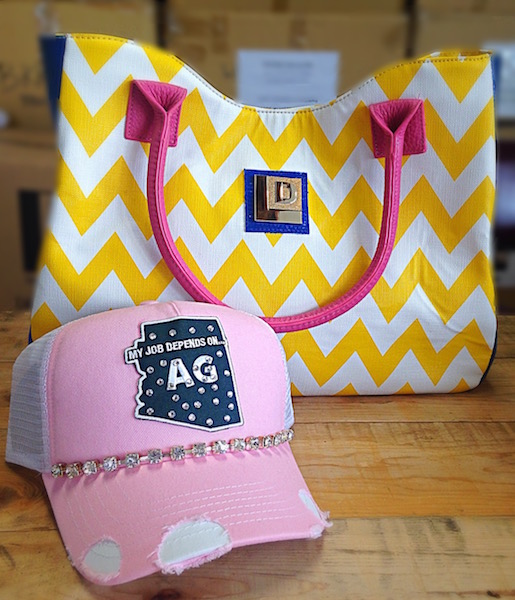
Landfill Dzine has partnered with My Job Depends on Ag (MJDOA) to sell specialized MJDOA merchandise, including the already-popular bling MJDOA baseball caps. Heather Carpenter, co-owner with her husband, Josh, of A&J Industrial and Landfill Dzine, said the partnership just makes sense because Landfill Dzine is a company based on upcycling old irrigation hoses, which depends on the agricultural industry for its existence.

“MJDOA is everything we already do,” Carpenter said, “so it’s just like a match made in heaven for us.”

Carpenter said that Landfill Dzine upcycles old irrigation hoses called Layflat that is made with rubber, nylon and other materials all woven or melted together, which makes the hoses un-recyclable.

We upcycle it into everyday, wearable products: flip flops, handbags, belts. We divert it from going to the trash, and we use it in all of our products. We cut [the irrigation hose], wash it, clean it and make it into something else.”

Carpenter said Landfill Dzine is able to help the agricultural community by taking waste straight from the field and giving it a new purpose. “It helps farmers save money because they don’t have to throw old irrigation hoses in the trash.”

Carpenter said she strongly believes the mission of MJDOA applies to Landfill Dzine; hence, the partnership between the two companies. “We help distribute MJDOA’s products as well,” said Carpenter, “ and increase awareness on what we’re trying to do in California and with water and waste.”

2016-05-31T19:24:09-07:00March 25th, 2016|
Go to Top