Overtime Bill AB 1066 Heads to Governor’s Desk

California Assembly Sends AB 1066 Overtime Bill to Governor

By Patrick Cavanaugh Farm News Director


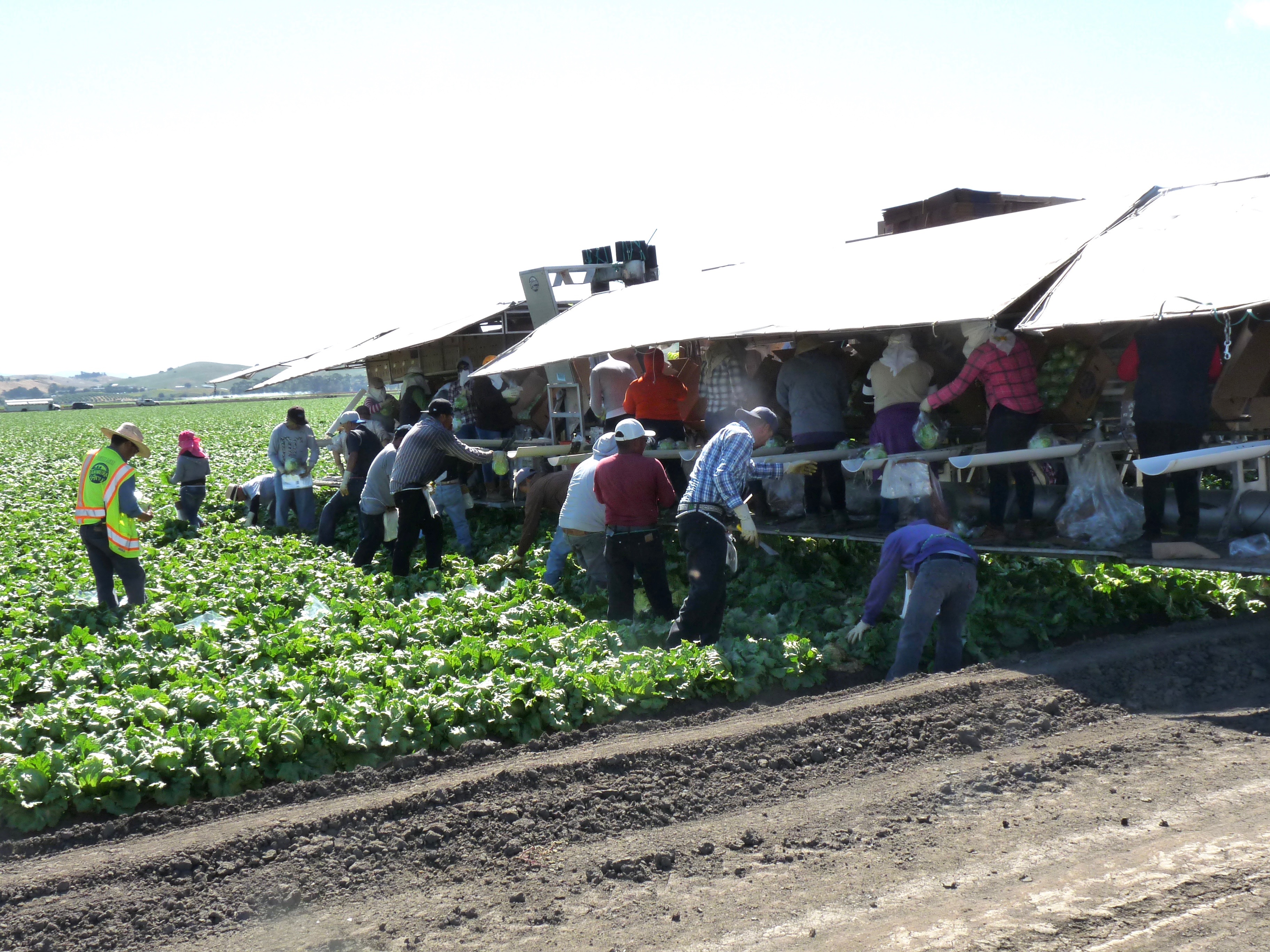
The California Assembly voted 44 to 32, yesterday, August 29, in favor of a bill that would make California the first in the country to give farmworkers overtime pay after working 8 hours per day or 40 hours per week instead of current law that mandates agriculture workers earn overtime after 10 hours per day or 60 hours per week.


CFFA Logo

Because farmworkers are unable to work some days due to weather or harvest schedules, they have historically preferred to work as many hours as possible on any given day. Now farmers may be forced to restrict employees from working more than 8 hours per day to avoid the costly overtime payroll, which would severely hurt their financial bottom line.


The bill, which has already cleared the State Senate, now moves on to Governor Jerry Brown, who has until September 31st to sign or veto the bill.


George Radanovich, president of the Fresno-based California Fresh Fruit Association (CFFA) that represents many farmers who rely on hand labor, stated, “It’s a clear example of people who live on black top and cement and who never talk to people in the vineyards or in the fields. They think they are helping the farmworker, and they are not. They’re making it harder for the farmworker and for the farmer,” said Radanovich.


Roger Isom, president of the Western Agricultural Processors Association (WAPA) and the California Cotton Ginners and Growers Association (CCGGA), said AB 1066 just places additional burdens on the farmer. “When you combine this Ag overtime legislation with the minimum wage increase and all of the other labor issues—the workers comp costs that are imposed on growers—it makes us noncompetitive,” Isom said. “On top of that you add the regulatory costs from the different issues like the truck rule; we can’t compete.”

WAPA-Logo


“There isn’t anybody out there who wouldn’t want to pay the workers more than what they’re getting today, or even that overtime,” said Isom. “But consider that California is one of only 5 states that even pays overtime, and none of them pay it after only 10 hours. We already had the most stringent overtime regulations for farmworkers in the country before it was ever adopted. Now, we’ve made it worse; we are going to have the highest minimum wage of any farm state out there, so how do we compete?”


CCGGA logo

Isom commented, “This last week, U.S. Secretary of Agriculture Tom Vilsack was actually calling Assembly members in the State, urging them to support this bill. We were outraged,” Isom said. “When he was Governor of the State of Iowa, his own state had the lowest Ag wages and has no Ag overtime. The majority of our states, 45 states, have no overtime. You could work 16 hours, 20 hours, and not be paid any overtime.”


Isom noted that supporters of AB 1066 are very shortsighted. He predicts the law will only reduce the number of available working hours available for farm employees and thus decrease their earnings. Isom hopes Governor Brown will see this bill as an added negative impact tied to the recently passed increases to California’s minimum wage.


Agriculture leaders are calling for all concerned to put pressure on Governor Brown to veto AB 1066 by Emailing or phoning constantly.

Governor Jerry Brown
c/o State Capitol, Suite 1173
Sacramento, CA 95814

Phone: (916) 445-2841
Fax: (916) 558-3160

email: governor@governor.ca.gov


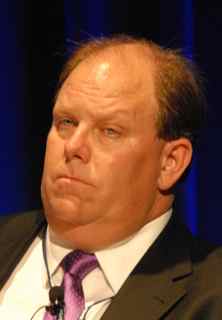
(Featured photo: Roger Isom, president of Western Ag Processors Association and the California Cotton Ginners Association)
2016-09-04T20:42:57-07:00August 30th, 2016|

Nisei Farmers League and African American Farmers of Calif in Sacramento TODAY to Oppose AB 1066

Nisei Farmers League and African American Farmers of California Discuss Disastrous AB 1066 in Sacramento Today


EDITOR’S NOTE: SEE TEDX TALK VIDEO BELOW OF WILL SCOTT, JR., PRESIDENT OF AFRICAN AMERICAN FARMERS OF CALIFORNIA.


TODAY, Manuel Cunha Jr., president of the Nisei Farmers League and Will Scott, Jr., president of the African American Farmers of California are meeting in Sacramento with members of the California Assembly to explain the disastrous consequences of AB 1066, referred to as Agricultural workers: wages, hours, and working conditions, on small and minority farmers.

African American Farmers of California logo


The effects of this legislation, particularly the Phase-In Overtime for Agricultural Workers Act of 2016,  will be detrimental not only to the farmworker who counts on the extra hours, but to the farmer who, with the increasing costs of regulations and the lack of water, will be forced to cut back on crops and their workforce, according to their joint press release.


Manuel Cunha, Jr.

Manuel Cunha, Jr., president, Nisei Farmers League

“The small and minority farmer will be adversely affected by this ill-conceived legislation,” said Manuel Cunha Jr. “The small farmer works hand in hand with their workforce in the fields and [is] in a better position —with direct input from the workers—to determine schedules rather than politicians in Sacramento looking for a soundbite,” he explained. “Without meeting with our small and minority farmers and farmworkers, these politicians pass legislation that will cost our workforce money, our farmers crops, and the residents of California the fresh fruits and vegetables they enjoy everyday.”


Both Manuel Cunha Jr. and Will Scott believe the Legislators need to consider the small and minority farmers when casting their votes. “We are confident that after we meet with the Assembly members,” said Will Scott, Jr., they will understand how harmful this legislation is to our farmers and farmworkers. It is our hope that by educating the members, they will understand the importance of this bill and vote No on AB 1066.”


Nisei Farmers League

The League continues to inform grower members about ever changing regulations and policies providing legal assistance for labor and workplace related issues. Our leadership and staff maintains a close working relationship with local, state and federal agencies and legislators to assure grower interests are adequately understood and defended.

The NFL also collaborates with other grower and agricultural organizations in both California and other states to help provide a powerful, unified voice for the agricultural commNisei Farmers League logounity.

Grower members are kept informed through meetings, seminars, newsletters and special bulletins.

Strength, clear focus and growers looking out for growers and farm workers… that is what the Nisei Farmers League is all about.

African American Farmers of California


The Fresno-based African American Farmers of California organization has doubled its membership since it opened a 16-acre demonstration farm in Fresno County, which serves as a testing area where new farmers can get hands-on experience growing a variety of produce.

View Will Scott, Jr. present a TEDx Fruitvale Talk (Uploaded on Oct 20, 2011) Here.


One of Scott Family Farms primary goals is to reintroduce Southern specialty crops, part of the traditional African American diet, into black communities, to help stop the obesity and diabetes epidemics. Crops include: black-eyed peas, crowder peas, purple hull peas, field peas, collard greens, turnip greens, mustard, corn, tomatoes, okra and sweet potatoes.

2016-08-29T10:27:40-07:00August 29th, 2016|

Ryan Metzler Juggles Many Farm Operations

Ryan Metzler Juggles Farm Operations—Large and Small


By Patrick Cavanaugh, Farm News Director


Ryan Metzler grew up as a fourth generation California farmer, as his dad and uncle had a fairly big farming operation producing tree fruit and winegrapes in the Fresno area throughout the 1970s and 1980s. Eventually, Ryan’s dad spun off on his own, enabling Ryan to work with his dad for many years.


Today, Metzler is a graduate of Fresno State, lives in Fresno, and as vice-president of Capital Agricultural Property Services—the property management division of Prudential Ag Investments—he manages many farm operations in the West. “Most of our clients are large investment groups,” said Metzler, “so these clients will typically look at large agricultural properties as an investment.”


As these investment companies typically know little about farming, Metzler explained, “our role is to not only make recommendations about what to plant, but also how to diversify, how many acres, how to process, and who gets to buy the fruit. So we end up growing fruits, nuts and vegetables and just about anything that is consumed,” he said.


“My charge is the western region of the U.S., but we manage farms in the Midwest and the East,” Metzler said. “It does give me opportunities to be involved with a lot of different commodities, but I have to say that growing winegrapes is probably my favorite.”


Managing many properties takes a very strong team. “I work directly with some managers and then we hire a secondary layer of management to do the tractor work and the day to day operations. We have both the economic responsibility, but also the practical farming responsibility to maintain these properties because they do change over time.”

California Cabernet Winegrapes


Metzler also farms 200 acres of winegrapes and tree fruit in the Fresno/ Sanger area. “What I find the most interesting, is that I get to be a small grower and deal with small grower issues, and I also get to be a large grower and deal with large grower issues. And I love to marry up those two challenges because it gives me a great perspective on decision making. Sometimes you have to make a strategy choice and other times you have to make a tactical choice, and I find that mix to be really rewarding,” said Metzler.


Metzler summed up farming as “an absolute thrill. I wake up everyday and pinch myself to be lucky enough to do something like this for a living.”

2016-08-26T12:05:07-07:00August 26th, 2016|

Frieda’s Karen Caplan Fears No Fruit

Frieda’s  – A Legacy of Introducing Americans to Exotic Fruits & Vegetables


By Laurie Greene, Editor


Karen Caplan, CEO and president, Frieda’s Inc., the 54 year old family business that first introduced kiwi fruit to America in 1962, recounted, “We’ve probably introduced close to 200 exotic fruits and vegetables to American consumers, mostly through supermarkets, but also through restaurants. We continue to introduce new and exotic fruits and vegetables. You’ve got the kiwi fruit; you’ve got sun-dried tomatoes; you’ve got habanero chilies, spaghetti squash, alfalfa sprouts, hothouse cucumbers, shallots, purple sweet potatoes, and purple potatoes.

PurpleKiwiBook_Karen Caplan


Caplan knows consumers love to try new products and new foods. “We really credit the TV Food Networks,” she explained. “If you’re watching ‘Chopped’ one night or any of the other food shows and you see these exotic fruits and vegetables like our purple snow peas as a secret ingredient, and you watch a couple of chefs cook with them, you say, ‘Wow that’s really exciting. I never would have picked that up at the grocery store.’ Consumers go to their local grocery store and find those products. It works in a synergistic way, but we continue to have new varieties of fruits and vegetables to introduce.”


Caplan continued, “It is wonderful that American supermarkets seem to realize consumers are passionate about trying these new foods. I think they realize that if they don’t offer the exotic fruits and vegetables, like tropical fruits, different varieties of citrus fruits and some of the peppers, consumers are going to go online and either order them as meals through Blue Apron or purchase the products on Amazon Fresh.”

Fear No Fruit, The Frieda Caplan Documentary

Fear No Fruit, The Frieda Caplan Documentary


At Frieda’s, we represent about 1,000 different suppliers, mostly farmers. About half of them are in California; the rest are outside of California and around the world. I think the biggest challenges shared by all our farmers, are first of all—water and how to use it efficiently, and then number two—how do we find the labor to pick our products.


When asked how farmers are doing, Caplan replied, “I in awe of farmers. I heard a peach and plum and grape grower speak this morning about his passion. He said, ‘I love this business. I could stop growing this product right now and make more money by putting in nuts, which I could harvest automatically.’”


Caplan continued, “I think what’s so admirable about farmers is they do have a passion for the land and for their products. We’re seeing resurgence in young people wanting to come into the business because everyone has to eat of course; but they love the lifestyle that goes along with it and the work-life balance.


Frieda Rapoport Caplan, Ph.D., founder & chair of the Board, Frieda’s Inc. established Frieda’s Finest/Produce Specialties Inc. in 1962, in the male-dominated Los Angeles Wholesale Produce Market. One of very few women in the produce industry at the time, and the first to own and operate a U.S. produce business, Frieda debuted with a purple sign, which later became the company’s signature color, and her premier product was fresh brown mushrooms – an unusual specialty at that time. She quickly developed a reputation for buying and selling new and unusual produce specialties.

Frieda’s two daughters, Karen Caplan and Jackie Caplan Wiggins, head up the family company and the third generation, Karen’s eldest daughter Alex Jackson, has linked in too. 


2016-08-25T12:32:20-07:00August 25th, 2016|

City of Mendota Recovers from Drought

Mendota Resilience and Pride

By Emily McKay Johnson, Associate Editor


For many small San Joaquin Valley cities that have relied on agriculture to support their local economies, the four-year drought in California has dramatically increased unemployment and decreased business revenue. Mendota, a city west of Fresno, hit hard with a 45% unemployment rate, has constructively made calculated adjustments by residents and farmers to recover to its pre-drought economic level, according to Robert Silva, mayor of this resilient city.mendota logo


“As we have been going through the drought the last four years,” Silva   explained, “Mendota [nicknamed Cantaloupe Center of the World] has been in the spotlight for its high unemployment, and a lot of our farmers are having a rough time. We have had a lot of bad publicity.”


“In the laMendota Muralst year or so we have weathered all this,” he stated, “and things are positive now. Our farmers are really understanding how to use every drop of water. We have a lot of new business coming into the community. We have a housing boom that continues to grow, so things are definitely on the rise and we’re standing very proud.”


“A few years ago, high unemployment forced many people to move away, suddenly creating school classrooms with very few students; however, that has changed too,” said Silva. “Student enrollment is growing and we have added on another school. It is very positive in Mendota; the doom and gloom of a few years ago has gone. Really, it’s gone.”


“Financially we’re in good shape and businesses are prospering,” Silva summarized. “It’s good for our city, good for our citizens, and good for business.”

2016-08-24T16:13:22-07:00August 24th, 2016|

CULTIVATING COMMON GROUND: Economic Analysis of Drought on California Agriculture

Editor’s note: We thank Aubrey Bettencourt for her contribution to California Ag Today’s CULTIVATING COMMON GROUND commenting on the report, “Economic Analysis of the 2016 Drought for California Agriculture,” released this week. Lead UC Davis author Josué Medellín-Azuara’s response can be read below. 


By Aubrey Bettencourt, executive director, California Water Alliance (CalWA)


Josué Medellín-Azuara, Duncan MacEwan, Richard E. Howitt, Daniel A. Sumner and Jay R. Lund of the UC Davis Center for Watershed Sciences, ERA Economics and the UC Agricultural Issues Center reported their views on the economic impact of California’s continuing drought on agriculture this week. The study, “Economic Analysis of the 2016 Drought For California Agriculture,” proved to be uncommonly riddled with errors, questionable metrics and inaccuracies; it’s a continuation of a disturbing recent trend.

CA Water Alliance logo


The authors claim that about 78,800 acres of land might be idled due to the drought, but a quick Google search shows a single water district that had more than 200,000 acres of fallowed land in 2016. There are more than a hundred other water districts throughout the state, and most are reporting idled acreage.


In another irrigation district in Yuba County, more than 100 agricultural users have been cut off entirely, leaving their nearly-mature crops and fruit and nut trees without water.   [North Yuba Water District (NYWD)]


This year the federal and state water projects announced they would provide agriculture with 55% of their water. Two months ago, they reduced the estimate to 5% south of the Delta, and they are struggling to even deliver that amount.


Across the state, water prices have increased dramatically, whether pumped from the ground or bought on the faltering water-exchange market. Water that costs less than $250 per acre foot in 2012 now costs up to $750 or more.


It doesn’t take a doctoral or economic degree to understand that when the price of water goes up, the cost to produce food also goes up. Farmers may be getting more money for the produce they grow, but they are watching their bottom line shrink because it costs more to grow it. Even water from their wells isn’t free; pumping takes energy, and energy costs money too.


Adding to rapidly increasing costs are the new minimum wage, capped work hours, and hundreds of regulatory mandates from the 80+ local, state, and federal agencies that oversee every aspect of California farming and bury farmers in paperwork and red tape. Compliance takes time away from growing food, and it costs money.


Take a look at rice farmers. Growing rice today is a losing proposition. After the labor, cost of rice plants, fuel, fertilizing, care, harvesting, drying and milling, growers pay substantially more to grow rice than they can charge for their crop. Many have converted rice paddies to other uses, and some sell their water or take money from federal agencies and conservation groups to create wildlife habitat in order to simply stay afloat. Some are selling off their land to developers, a lose-lose decision affecting everyone.


On main street, consumers are another group taking a second, alarmed look at their grocery, water and sewage bills. All are rising far faster than inflation. Whether you are talking about the price of fruit, bread and eggs or the cost of taking a shower, all have been increasing over the past five years because of the drought.


To really understand what’s happening, take a drive out of the city and into the countryside where your food is grown. Stop at a roadside produce stand or park your car and strike up a conversation with some ranchers and farmers in a small town cafe.


After you hear their stories, you may realize that almonds and pistachios are not as labor intensive as strawberries, tomatoes, cucumbers, grapes, beef, lamb or many others out of the nearly 450 crops grown in California. Some crops are thirstier than others, too. This doesn’t diminish the value of these fruits, nuts, vegetables, and proteins. The value of water is what it provides us: in this case, safe, local, and hopefully affordable food.


But commonsense interviews and case studies of actual operations — once the heart of any competent agricultural economic study — are virtually missing from the report’s statistical models built on university computers, research hypotheses and tables of statistics.


The drought has hurt California farmers, and it is hurting Californians wherever they live. Gross income may be up, but net profits are down, and the rate of decline hasn’t hit bottom yet. 


Aubrey Bettencourt is the executive director of the California Water Alliance (CalWA), a leading educational voice and authority on California water. CalWA advocates for the water needs of California families, cities, businesses, farmers and the environment.


Editor’s note: California Ag today thanks Josué Medellín-Azuara, senior researcher, UC Davis Center for Watershed Sciences, and lead author of “Economic Analysis of the 2016 Drought For California Agriculture,” published this week, for his response to several claims made by Aubrey Bettencourt (above).

UC Davis Center for Watershed Sciences
Josué Medellín-Azuara told California Ag Today, “I will not go over debating the comments which I very much welcome and respect, but I would like to provide some thoughts instead.”


1)  “Through remote sensing,” Medellín-Azuara said, “we estimated summer idle land in Westlands by the end of the irrigation season to have been 170K acres in 2011 and just above 270K acres in 2014,” based on NASA data. The difference can be explained by some drought effects and other conditions, according to Medellín-Azuara, “so idled land differences should be taken with a grain of salt. As a point of interest, most of the fallow land we estimated was on the Westside of the south San Joaquin Valley.”


2) In addition, Medellín-Azuara clarified, “My understanding is that there is a cost issue and a cutoff issue. We estimated about 150 TAF (Thousand Acre-Feet) of [water] shortage in the Sacramento Valley in our study. At current conditions for North Yuba Water District (NYWD) agriculture is no more than 3 TAF from my reading of the attached document. I am not saying the cutoffs are not hard for the more than a hundred users, but [I] also want to put numbers into perspective.”


3) “From what I’ve heard and read,” Medellín-Azuara stated, “the timing [of] more than quantity of the projected releases is unfortunate. One of the things we highly encourage in this and past reports is easing of low environmental impact water transfers among users.”
2021-05-12T11:05:48-07:00August 22nd, 2016|

Air Resources Board to Rein In Cow Flatulence

Public Enemy #1: Cow Flatulence


By Patrick Cavanaugh, Farm News Director


While not a popular or sexy topic of discussion, flatulence is a very natural activity. Who amongst us hasn’t occasionally burped, belched, or otherwise passed a little gas? When guilty of passing waste gases such as hydrogen, carbon dioxide, methane and other trace gases due to the microbial breakdown of foods during digestion, we may say, “Excuse me.”


California CattleBut for dairy cows and other cattle, manners do not suffice; the California Air Resources Board (ARB) has a low tolerance for such naturally occurring and climate-altering gaseousness. The ARB is planning to mandate a 25% reduction in burps and other windy waftage from dairy cows and other cattle, as well as through improved manure management.


Anja Raudabaugh, CEO of the Modesto-based Western United Dairymen (WUD), said, “The ARB wants to regulate cow emissions, even though the ARB’s Short-Lived Climate Pollutant (SLCP) reduction strategy acknowledges that there’s no known way to achieve this reduction. The ARB thinks they have ultimate authority, even over what the legislature has given them: two Senate Bills—SB 32 and SB 1383—to limit the emissions from dairy cows and other cattle.”


“We have a social media campaign addressing the legislative advocacy components,” Raudabaugh explained, “to make the legislatures aware that this authority has not been given to ARB by the legislature, and to bring that into perspective.” Raudabaugh said while SB 32 is not that popular because it calls for raising taxes, SB 1383 is worrisome, “because if anybody wanted to achieve something of a win for the legislature this year with respect to greenhouse gas emissions, this is the only bill left,” she said.


WUD Cattle Flatulence Social Media FB

Cattle Flatulence Social Media (Source: Western United Dairymen Facebook)

Raudabaugh said that in order for the ARB to achieve their mandated 75% reduction in total dairy methane emissions, they are proposing that 600 dairy digesters be put on the methane grid by 2030. According to the ARB’s own analysis that could cost as much as several billion dollars—more than $2 million, on average, for each of California’s remaining 1,400 family dairy farms.


“That is not only expensive, but digesters do not work for every dairy. They can be an option for some, but because of their expense and the reality that not everyone ‘dairies’ the same way, digesters cannot be a mandated solution,” noted Raudabaugh. “All dairy personnel and other interested Californians should contact your state legislature and urge them to veto both bills and not allow the ARB more powers than they actually have.”

2021-05-12T11:17:12-07:00August 17th, 2016|

Winegrape Cultural Practices Go Mechanical

Winegrape Cultural Practices Must Go Mechanical for Sustainability

By Emily McKay Johnson, Associate Editor


Higher wages handed down by the California Legislature are driving California winegrape growers to mechanize many farming operations. Doug Beckgeographic information systems (GIS) specialist and agronomist for Monterey Pacific Incorporated who works with winegrowers in the Salinas Valley, commented, “We don’t have the people; that’s the main problem. We can put bodies out in the field, but we can’t get the work done the way it needs to be done, at the time it needs to be done,” he said.

Mechanical Box Pruning on Winegrapes

Mechanical Box Pruning on Winegrapes


So the industry has no choice but to go mechanical on pruning, leafing as well as harvesting. Beck explained pruning has been tough to mechanize. “We’re basically just trying to do a system that is pruned by a tractor, creating a box head that self-regulates—it sets the amount of crop it needs and grows the size canopy it needs in order to balance that vine, produce good quality grapes and produce enough to be economically viable,” noted Beck.


Economic viability—profit—is critical, according to Beck. “In fact, it is true sustainability. Otherwise we’re not in business,” he said.


Mechanical pruning essentially creates a hedge every year. Beck explained, “Typically we have pruning spurs that have two buds or three buds, a hand space apart, coming off that cordon that we cut by hand. Instead of just having spurs, we let that grow into a box, and the mechanical pruner cuts along the sides and then across the top of the vine in one pass,” Beck explained. “It looks basically like a long box,” he said.


Beck has discovered that mechanical pruning into a box shape on the trellis wires, “works across all varieties we’ve tried. We’re definitely in a cool area for grape production,” Beck said, “so those are the kind of grapes that we’re growing: Pinot Noir, Grenache, Chardonnay, and Pinot Gris, along with some Cabernet.”


Beck said that winegrape vineyards have a lot of vigor in the Salinas Valley. “You also have big crops, which may also require some shoot or crop thinning. You have to come up with other machines to do the rest of the operations that they usually do by hand.”


“The mechanical process appears to be working well because growers are seeing a bump in yield of 30 to 50 percent,” Beck commented, “and they are saving about $1,000 per acre. Economically, it makes a lot of sense.”


“Quality is definitely acceptable. It’s as good as any other trellis system we have out there. Quality comes from vine balance and fruit exposure to light, and that box prune system accomplishes both,” said Beck.

2021-05-12T11:05:49-07:00August 11th, 2016|

CULTIVATING COMMON GROUND: Almond Board on Assessment Increase

Almond Board’s Response on Assessment Increase


Editor’s note: We thank Mike Mason for his contribution to California Ag Today’s CULTIVATING COMMON GROUND, in response to the letter submitted by John Harris.

By Mike Mason, chairman of the Board of Directors, Almond Board of California


Over the history of this [almond] marketing order, assessments have risen and fallen to meet changing business conditions. This increase was voted on by the Board of Directors after much input from growers and handlers.  After the vote, the industry had an opportunity to weigh in again during a USDA-administered comment period.  They will get another chance during a second comment period.

Only after growers have had all of these opportunities to voice their opinions will the USDA make a final decision on the assessment.

The Almond Board of Directors welcomes your feedback and is available to discuss any questions you may have about the critical investments and justification for this assessment increase.

Below you will see a memo I sent to the industry, dated April 14 2016.  It covers why and how the assessment is needed and will be used.

Sincerely,

Mike Mason                                                                                                               


Mike Mason is a first generation almond farmer and partner of Supreme Almonds of California, a family owned and operated almond handling operation in Shafter. He is also the Chairman of the Board of Directors of the Almond Board of California.


CA Almond Board Header


To: Almond Handlers and Growers

From: Mike Mason, Chairman of the Board of Directors, and

Kent Stenderup, Vice Chairman of the Board of Directors

Re: Almond Board of California FY 16/17 Budget and Assessment Increase

Date: April 14, 2016

On April 12, the Board of Directors met to review the program and budget recommendations coming forward as a result of the extensive strategic planning efforts which have taken place over the past year.

The Board unanimously agreed to recommend a budget for FY 16/17 with an increase of the assessment from 3 cents per pound to 4 cents for a three year period. The increase is limited to three years due to the expectation that almond production will increase significantly during that time period thereby providing additional funding. This decision was made after extensive dialog among Board members as well as outreach between Board members and Handlers and Growers in the almond community.

There are three principal reasons the Board determined an assessment increase was needed. They are:

  1. 30% increase in production anticipated by 2020. This estimated 600 million pound increase needs to be planned for now, to invest in global demand prior to the production hitting the market.

This substantial volume increase is nearly as much as our largest market currently consumes, and is more than the consumption of our four largest export markets combined. This will require doing more of what has been working, as well as implementing innovative new marketing programs.

  1. Strain on agricultural resources has never been higher. Almonds are currently California’s highest value agricultural crop and soon will be its largest acreage crop. With this leadership comes responsibility. Additional investment will allow us to take a leadership role by investing in and accelerating research which will enable us to address concerns, such as:
    • our changing water supply and quality system,
    • air quality as it relates to harvesting, pesticide and energy use,
    • bee health, which is critical to our success
  2. Transformation of the consumer landscape. The environment in which we are growing and marketing almonds is quickly changing. Consumers are more interested in where and how their food is made. In response to this, the industry needs to take a leading role in the world of sustainable farming, as we have done for so long in the world of nutrition, by transparent communications regarding our meaningful and measured sustainable improvements.

To plan for and address these challenges, your Board of Directors has worked across the Environmental, Production Research, Almond Quality, Technical and Regulatory, and Global Market Development Committees to develop a plan of action. This plan is a two pronged approach including investment in research, via the Accelerated Innovation Management or AIM program (launched at our annual conference), and global marketing:

  • AIM Program: Expand and Accelerate sustainability and production research in 9 areas:
  1. Irrigation and nutrient management
  2. Orchard and rootstock development
  3. Harvesting innovations
  4. Pest management tool development
  5. Pollination research and management practices
  6. Bio-mass and by-product innovation
  7. Food safety leadership
  8. Soil health research
  9. Energy Innovation
  • Global Marketing: Expand our programs to address production growth & changing consumer needs by:
  1. Accelerating programs and results in current markets
  2. Considering additional markets for investment
  3. Increasing communication transparency and trust
  4. Ensuring confidence in our sustainability efforts

Your Board of Directors welcomes your feedback and is available to discuss questions you may have about the critical investments and justification for this assessment increase. The assessment increase will be reviewed by the USDA and an opportunity for public comment will be provided before any change is implemented.


1150 Ninth St., Ste. 1500  *  Modesto, CA  95354  USA

T: +1.209.549.8262  *  F: +1.209.549.8267


To read the original post to which the Almond Board is responding, go to: CULTIVATING COMMON GROUND: Almond Growers on Assessment Increase, by John Harris.


The opinions, beliefs and viewpoints expressed by the various participants on CaliforniaAgToday.com do not necessarily reflect the opinions, beliefs, viewpoints or official policies of the California Ag Today, Inc.

2016-08-10T17:24:51-07:00August 10th, 2016|

CULTIVATING COMMON GROUND: Almond Growers on Assessment Increase

Almond Growers Want Justification and Vote on Almond Board’s Assessment Increase


Editor’s note: We thank John Harris for his contribution to California Ag Today’s CULTIVATING COMMON GROUND. The Almond Board’s Response can be read at Almond Board’s Response on Assessment Increase.

By John Harris, owner, Harris Ranch


Marketing orders give agriculture a great tool to collect fees from producers to promote products and/or conduct research projects.  The concept is great, and increasing demand is always good. To be successful, the plan needs to be affordable and explained so it is understood and backed by a big majority of the producers.  I am concerned the Almond Board’s recent assessment increase from 3 to 4 cents a pound—in the absence of an almond producer vote—is unwise.

Harris Farms Fresh LogoAt the current rate of 3 cents per pound, money raised will increase as production increases, which seem fairly certain.  Plus, the fund receives significant help from a government program to encourage exports.  A year or so ago, almond growers were doing really well, when many sales were exceeded $4 a pound.  But last fall prices dropped significantly, in some cases to the $2 range. This loss in revenue made it tougher for almond growers to break even. A grower producing 2,500 pounds per acre is now paying $75 per acre in assessments; under the new plan it would increase to $100 per acre.

To get feedback from growers, the USDA published a request for comments. The comment period opened on July 18 and closed on August 2. But the industry was not notified until July 27. I commented at the time that I was not in favor of the assessment without full knowledge of the purpose of the extra money. I am certain many growers have an opinion on this, but only five comments were submitted. I think most growers did not realize both the assessment increase was under discussion and a producer vote would not be forthcoming.

The time frame for comments was alarmingly short; however, the USDA has decided to reopen the comment period for 10 days.  The reopening of the comment period is expected to be announced within the next two weeks and will be communicated immediately to the industry once it is published in the Federal Register.

I urge all producers to take a good look at the proposal and voice your opinions.

This link will take you to the almond assessment comment page: https://www.regulations.gov/docket?D=AMS-SC-16-0045.

There should be more of a democratic process. I think this proposed assessment increase needs to go to a vote among the growers affected by it and should require strong approval by at least 51 percent of the growers representing 60 percent of the production. We don’t want to micromanage the Board’s process, but large changes like this assessment increase should demand some form of referendum.

I also think everyone would like to know how the millions of extra dollars collected would be used.

And, of course I think the industry deserves more awareness of this proposed increase in assessment. I do not hear people talking about it; many growers may not even learn about the extra assessment until they get their check from their handler next year. I think all almond growers need to know this is happening now and not be surprised next year.

If I asked my boss for a 33% raise, I believe the onus would be on me to sell the idea and win support, rather than just push it through providing little information to the guy who would be paying me.

If the Almond Board is increasing their budget by 33%, shouldn’t the burden be placed on the Board to win the support of growers?  I would think they would communicate a clear plan on how to spend the enormous increase—a strong and strategic plan—they would be eager and proud to share with growers and handlers.

To increase any tax/assessment, the logical thought process should be, “No, unless proven to be needed, supported, and affordable,” instead of defaulting to, “Increase the tax unless we get stopped.”


The Almond Board’s Response can be read at Almond Board’s Response on Assessment Increase.


Harris Ranch and Allied Companies


The Harris Family’s commitment to agriculture spans over 100 years, four generations, and four states, from Mississippi, to Texas, to Arizona, and eventually into California.

J. A. Harris and his wife, Kate, arrived in California’s Imperial Valley in 1916 to start one of California’s first cotton gins and cotton seed oil mills. They later moved to the San Joaquin Valley and began farming there.

In 1937, their only son, Jack, and his wife Teresa, began what is now known as Harris Ranch, starting with a previously unfarmed 320 acres of desert land on the Valley’s Western edge. With vision and determination, Harris Ranch has grown into the most integrated, diversified, and one of the largest agribusinesses in the United States.

Beginning with cotton and grain, Harris Ranch now produces over thirty-three crops annually, including lettuce, tomatoes, garlic, onions, melons, oranges, lemons, almonds, pistachios, walnuts and winegrapes, all backed by their commitment to superior quality and satisfaction. Harris Farms thoroughbreds are raised and trained to compete internationally. Harris Feeding Company, California’s largest cattle raising operation, and Harris Ranch Beef Company produce and market a premium line of packaged and fully-cooked beef products, including Harris Ranch Restaurant Reserve™ beef. All Harris products are served and sold at the internationally acclaimed Harris Ranch Restaurant and Inn.


The opinions, beliefs and viewpoints expressed by the various participants on CaliforniaAgToday.com do not necessarily reflect the opinions, beliefs, viewpoints or official policies of the California Ag Today, Inc.


2016-08-10T16:46:47-07:00August 10th, 2016|
Go to Top