Crop Protection

Monsanto: Jury Got it Wrong on Glyphosate

A Statement from Monsanto Following San Francisco Verdict

No Evidence that Glyphosate Causes Cancer

By Scott Partridge, Monsanto Vice President

Like everyone else following the Dewayne Johnson v. Monsanto Co. trial, my colleagues and I have deep sympathy for Mr. Johnson’s plight. Our hearts go out to the Johnson family, and we understand their desire for answers. Glyphosate is not the answer. Glyphosate does not cause cancer. The jury got it wrong. We will appeal the jury’s opinion and continue to vigorously defend glyphosate, which is an essential tool for farmers and others. We are confident science will prevail upon appeal.

The jury’s opinion does not change the science. Glyphosate has a more than 40-year history of safe use. Over those four decades, researchers have conducted more than 800 scientific studies and reviews that prove glyphosate does not cause cancer.

The National Institutes of Health (NIH) and the Joint FAO/WHO Meeting on Pesticide Residues (JMPR) both recently reaffirmed glyphosate does not cause cancer. The U.S. Environmental Protection Agency (EPA) and other regulatory authorities in Europe, Canada, Japan, Australia, Korea, and elsewhere routinely review all approved pesticide products and have consistently reaffirmed that glyphosate does not cause cancer.

Rather than arguing the science, the plaintiff’s lawyers repeatedly crossed the line, distorted the facts and used baseless and egregious emotional appeals to inflame the jury. We are deeply troubled by the conduct of the plaintiff’s lawyers in this case. The judge admonished this conduct on several occasions and instructed the jury to ignore these statements. However, we are concerned that this conduct unduly influenced the jury’s deliberations, and we will be raising this issue in our appeal.

The plaintiff’s lawyers know they cannot win on the science. This lawsuit is based solely on the opinion of one organization called IARC. IARC is not a regulatory authority and did no independent studies. IARC is the same organization that determined beer, meat, cell phones, and coffee cause cancer. Investigative reports by Reuters and the Times of London have uncovered that IARC members reviewing glyphosate concealed important scientific data, edited out the conclusions of key studies, and were closely aligned with U.S. trial lawyers.

After IARC’s opinion was announced in 2015, U.S. trial lawyers started running advertising campaigns to recruit people for their lawsuits against Monsanto. There were no lawsuits blaming glyphosate for cancer until after IARC’s opinion. A federal judge overseeing some of these lawsuits recently stated that plaintiffs’ evidence is “shaky” and any lawyer faces a “daunting challenge” in bringing a case to trial based on IARC’s opinion.

Our next step is to file post-trial motions with the Court. Following the Court’s ruling on the motions, we will file our appeal with the California Court of Appeals if needed. We are fully confident that science will prevail in the end. Glyphosate-based herbicides are too important to farmers and others for these baseless lawsuits to go unchallenged.

2021-05-12T11:05:09-07:00August 14th, 2018|

Agriculture Struggles Unnecessarily, According to Steve Forbes

Forbes Chairman Has Suggestions to Help

By Jessica Theisman, Associate Editor

Water and labor are major agricultural issues in California. California Ag Today recently spoke with Steve Forbes, chairman and editor in chief of Forbes Media, about the topics.

“I think that the more people are realizing the enormous opportunities of technology in agriculture. They think that it is going to get better and better in the future,” Forbes said.Everything from reservoirs to desalination plants should be modeled after Israel. They have been building desalination plants because Israel is in a desert where they have been getting rainfall.

Steve Forbes

“This is a very sophisticated use of water in agriculture where they are a real global power,” Forbes said.

Today, Israel uses 10 percent less water as a whole, not per capita, than they did 70 years ago despite the economy being 60 times larger.

Forbes thinks labor is also an issue.

“We are hurting ourselves, our food production, not just in agriculture but construction as well,” he said.

Forbes said we should recycle the programs that we once had, programs where returning people come in for specific time periods for specific jobs. This would help prevent the illegal immigrant problem because workers know they can come back.

On another note, he discussed the current trade war that the U.S. is in with China.

“If you hear 10 percent tariff on aluminum, that’s a 10 percent sales tax; put it that way and people’s eyes go up and they get it right away,” Forbes said.

Putting sales taxes on American consumers, agriculture, farmers, and businesses is not the best way to resolve very real trade abuses.

“Everyone knows from the disaster and the depression of the 1930s what trade wars can lead to,” Forbes said.

Forbes also explained that GMOs greatly benefit producers and should not be attacked as harmful to consumers.

“GMOs have been studied fairly well, and they are making food more plentiful. It makes food a safer in terms that you don’t have to use as many pesticides,” he said. “GMOs make a better use of water, and there is a lot less loss to diseases and insects. We are using human ingenuity to make the human condition better.”

2021-05-12T11:05:10-07:00August 13th, 2018|

Fighting Asian Citrus Psyllid On and Off the Farm

Fighting ACP on Farms and Residential Areas Critical

By Hannah Young, Associate Editor

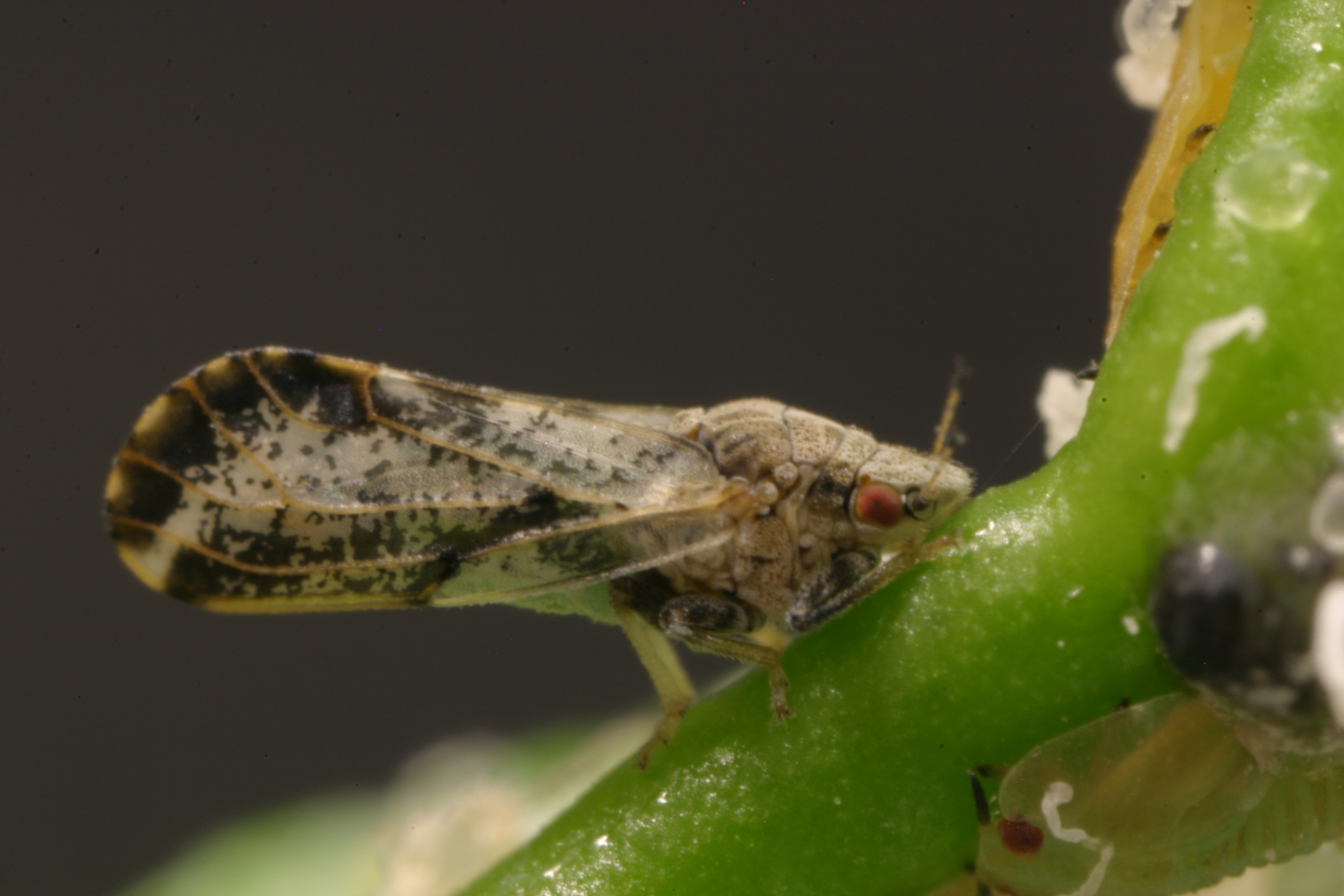
Pests and diseases are as prominent as ever not only for California farmers but in residential areas as well. California Ag Today recently spoke with Rick Westcott, a senior sales rep for Bayer Crop Science, about preventative materials for pests and diseases and the importance of controlling the spread of those diseases, particularly Asian citrus psyllid.

Westcott explained that the advantage of Movento, a powerful insecticide, is that it is systemic, it’s applied early, and it will translocate throughout the entire tree.

“It’s both phloem and xylem movement, so it’ll go down into the roots and then back up so it constantly recirculates within the plant,” Westcott said. “That’s what gives it the longevity of control.”

In citrus trees, Movento typically takes about 65 to 70 days to start working after circulating through the plant which helps with the longevity of the product, Westcott added.

Although Movento is not used specifically for Asian citrus psyllid, it has proved to aid in controlling the pest.

Westcott said Movento is currently being used against citrus red scale and applied during pedal fall along with thrip sprays, which farmers are applying anyway.

“It will take care of your red scale, your early red scale spray, and of course, because it also controls Asian citrus psyllid, it’s a bonus to do that too,” Westcott said. “Then the other thing that they’re doing with the thrip spray as well for katydid control, which is also an issue in citrus at that thrip timing.”

By patrolling and monitoring for ACP, the spread of HLB can also be controlled.

“The key is to keep the ACP at the lowest level possible or zero if that’s possible. [The] fortunate thing for us in the San Joaquin Valley is the fact that we do a lot of spraying for other pests throughout the year that almost everything that we put in the tank happens to also control ACP at the same time,” Westcott explained.

Westcott said that this is the reason we have not seen a huge outbreak of ACP in the San Joaquin Valley, unlike other parts of California.

“The problem isn’t in any commercial grove at this point, but it’s all residential,” Westcott continued. “It’s all concentrated in the residential areas, so there are certain products that you can use an ag that you can’t use there, but most of them, fortunately, you know, they have a label for both residential and agriculture, so they do crossover to stop them there so they don’t get here.”

HLB is still posing a threat in California, but most specifically in the Los Angeles area.

“The total amount of trees currently that are infective with HLB in the counties of LA, Orange and Riverside County is 645. And then if you compare that from a year ago: a year ago, there were only 73 trees that they had infected, and it’s changing every day,” Westcott said.

2021-05-12T11:01:53-07:00August 8th, 2018|

Navel Orangeworm Pressure Could Be Increasing in Almonds

Lack of Good Sanitation Leads to High Navel Orangeworm Numbers

By Jessica Theisman, Associate Editor

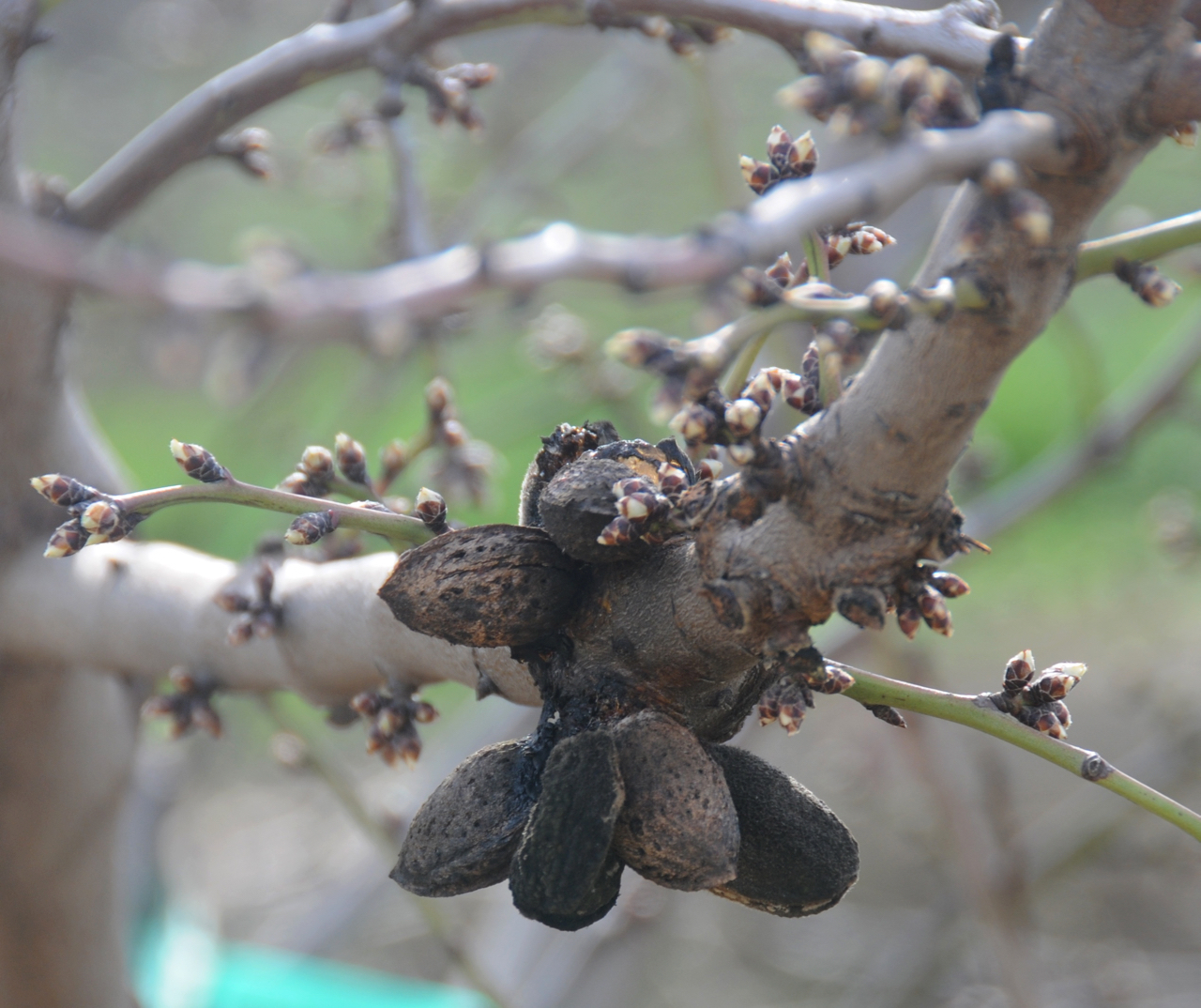
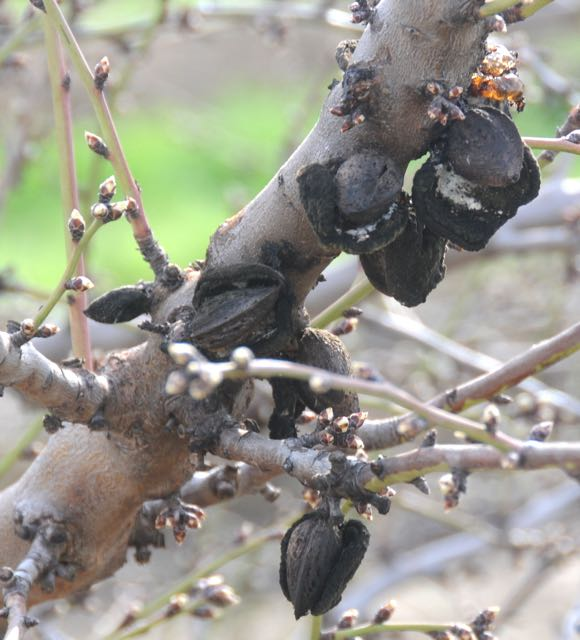
It could be another heavy year for Navel Orangeworm (NOW). David Haviland, UC Cooperative Extension farm advisor for Kern County and entomologist told California Ag Today that sanitation in almond orchards over the winter was not as good as it could have been.

“Everything right now is about trying to prevent a repeat from last year, and it is a little tricky so we know that sanitation wasn’t as good this winter as it generally should be,” he said. “The best time to shake NOW mummy nuts from an almond tree is after a rain when the nuts are heavier.”

David Haviland on Pyrethroid Review

David Haviland

However, rains came late this season, and by the time the rains left, there was only a few weeks before spring.

“This left a very short window to get any shaking done, and some people did an excellent job during that window to sanitize and other people just couldn’t get around all their acreage,” Haviland said. “On average across the whole industry, sanitation was not up to where it should have been, and it gave growers a difficult start to the season.”

NOW could be early this year, but the crop is on time.

“With all of this prolonged hot temperatures, particularly high night-time temperatures, the trees are shutting down a little bit at night compared to what they would do if the nighttime temperatures were cooler,” Haviland explained.

As a result, harvest is not coming as quickly as people would like.

“The problem is that the longer the nuts are in the orchard, the greater chance there will be NOW damage,” he said.

Timely crop protection sprays are recommended.

2021-05-12T11:01:53-07:00August 7th, 2018|

Navel Orangeworm Prevention Critical

High Navel Orangeworm Numbers Statewide

By Jessica Theisman, Associate Editor
mycotoxins

Bob Klein

Almonds are deep into hull split, and it is absolutely critical to control any damage from navel orangeworm (NOW), the number one pest in almonds and pistachios. California Ag Today spoke with Bob Klein, manager of the California Pistachio Research Board, about the issue.

“One of the big control strategies for NOW should have happened many months ago during the winter, such as cold sanitation,” he said.

Pest programs start with orchard sanitation. Many growers are lax on sanitation or spend low amounts.

“Those who do stringent jobs are spending $200-$250 an acre on sanitation. And so growers need to be prepared to pay that as far as insecticide applications,” Klein said.

Critical questions that need to be addressed are what you are going to choose to apply and how you are going to time it. When growers are gearing up to put on protective sprays, there are things to remember to increase efficacy. There are always ways in which application can be improved.

If you have a ground rig with fan sprayers, you can get a high kill rate on the lower canopy. You may have to make multiple applications to be able to penetrate the higher portions of the trees.

“You need to look at where your NOW is and maybe make multiple applications. So you can cover both the lower two-thirds of the tree and the top third,” Klein said.

2021-05-12T11:01:54-07:00August 3rd, 2018|

Caltec Shares Innovative Pest Control Practices

A New Approach to Managing Vine Mealybug

By Hannah Young, Contributing Editor

Some innovative pest and disease control products, such as heat application to kill insects, are making their way to the market, according to Caltec.

California Ag Today spoke with Rudy Monnich, president of Caltec Ag, about some of the new ways California farmers are fighting pests.

caltec

Rudy Monnich with Caltec

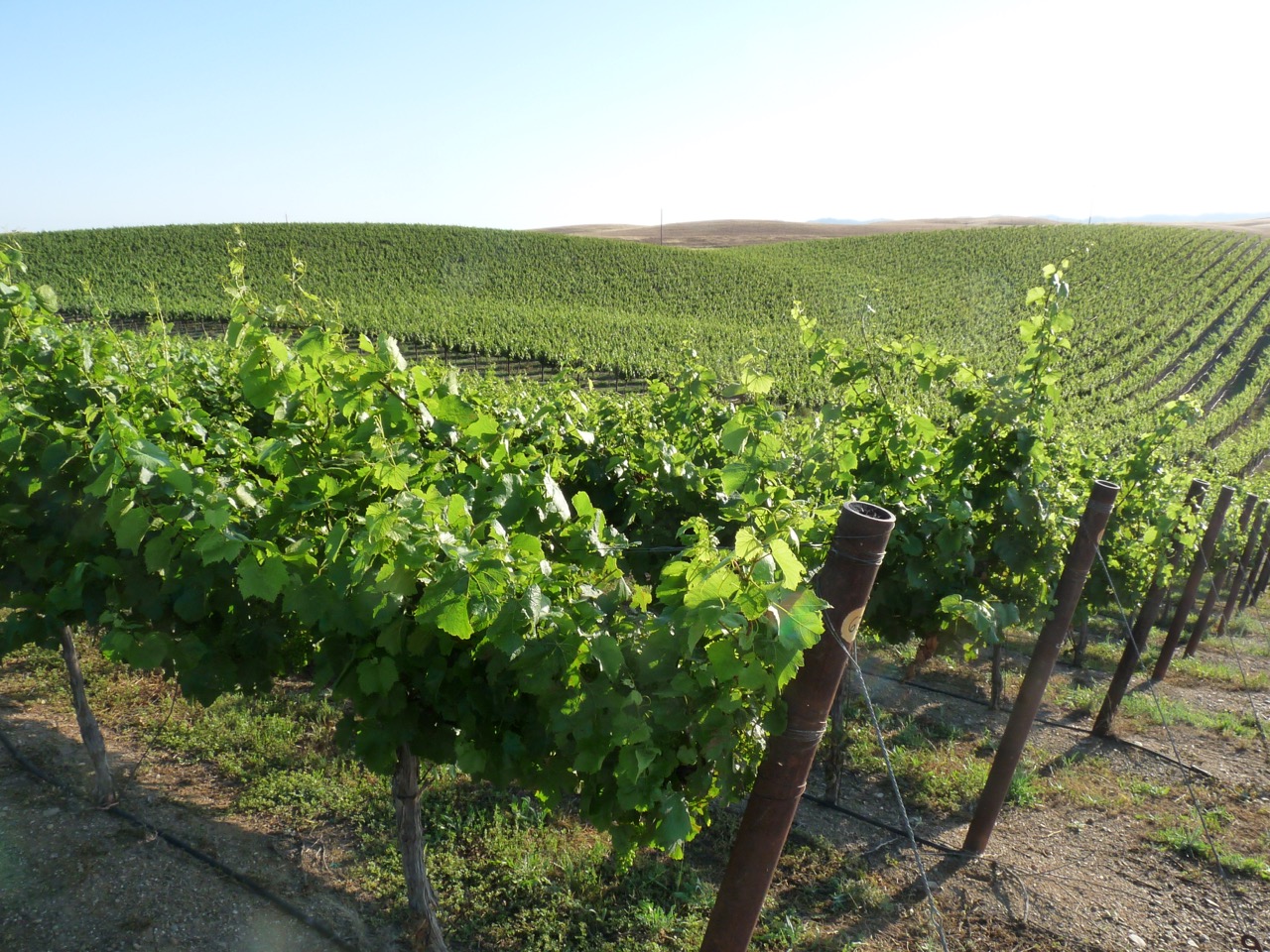
“We have a product which is the diatomaceous earth that controls vine mealybugs and ants and mites in orchards and vineyards,” Monnich said, adding, “There is nothing more damaging than vine mealybug. In fact, Monterey County is forming a committee to be zero tolerant just for that insect pressure.”

The product is silica dioxide and will scarify the body of insects, dehydrate them, and in result kill them off in three or four days, Monnich explained.

However, the product is not a chemical, but a mineral, which significantly diminishes resistance issues.

“You don’t have the resistant issues build up,” Monnich said. “It’s also controlling thrip and whitefly in tomatoes.”

Caltec introduced the product this past spring.

Heat application can also be used by growers to combat insect problems.

“We are working with the Agrothermal people who have a machine that 300-degree to 400-degree temperatures will annihilate soft-bodied insects in tomatoes and powdery mildew in grapes,” Monnich said.

The application of heat kills the spores before signs of damage appear on the plant, Monnich explained.

This method of pest control is increasing the quality of wine, Monnich concluded.

2021-05-12T11:05:10-07:00July 20th, 2018|

Boost Biomes Working on Disease Resistance

Researching the New Frontier

By Jessica Theisman, Associate Editor

California Ag Today recently spoke with Robert McBride of Boost Biomes. McBride explained his vision for the company.

“It’s the new frontier; It has not been researched that much,” he said.

He told us that the company is working on getting the correct microbes into the soil to enhance plants’ productivity.

“I would say the key thing that we think about in terms of getting the right microbes into the soil is that microbes are kind of like a plant’s second genome,” McBride said.

Genomes have the ability to impact the plant’s phenotype, along with the way the plants grow in different temperatures and soil salinity levels.

“They can change the flavor of the fruits and it is all controlled by the microbes in the rhizosphere,” McBride explained.

Boost Biomes is interested in controlling pest resistance. The microbiome shifts to a state that is protective.

“What we would like to do is take soils that are not protective and encourage that shift to happen more quickly,” McBride said.

Boost Biomes takes advantage of the natural microbes in the soil and rhizosphere that protect the plants.

“We are trying to identify the right network to put into the soil to get into the rhizosphere to make the plants resistant against diseases,” McBride explained.

2021-05-12T11:05:10-07:00July 18th, 2018|

Caltec Ag Keeps the Industry Up to Date

Caltec Ag is Busy with Research to Help Farmers

By Mikenzi Meyers, Associate Editor

Rudy Monnich

It’s no secret that technology is more advanced than it’s ever been, and the agriculture industry is no exception. Rudy Monnich, president of Caltec Ag, is helping to ensure that growers are provided with new and innovative technology to improve their crops.

Caltec Ag is a consulting and contract researching group based out of Modesto. They have been in business for about 64 years, and throughout their farming and research, they know firsthand that advanced technologies are key to progressive farming. Not only do they distribute products throughout the United States, but Monnich explained that this year, they are doing over 300 test blocks, mostly on crop protection materials that are all new and innovative.

Research between Caltec Ag and a company they work with led to the discovery of a new organic bacteria that Monnich described as “just phenomenal.”

He also highlighted the effectiveness and efficiency of drones that the company was able to observe in Japan. Not only was the drone able to spray specific locations of a field versus the entire thing, but it was more effective when it came to getting photographs and the data behind it.

“That’s what’s really important to the growers,” Monnich said.

2021-05-12T11:05:10-07:00July 17th, 2018|

One Company, Big Mission – That’s Gowan

Keeping More Crop Protection Tools Available at Gowan

By Mikenzi Meyers, Associate Editor

Cindy Smith with Gowan

With regulations on resistant management products getting increasingly strict, it is important that farmers keep all of their tools in their toolbox. That is where Gowan, a family-owned crop protection company, comes in. Cindy Smith, agricultural relations director, has a proven track record of dedication to the business.

“When you work for a small family-owned business like Gowan, you have the opportunity to do many things,” said Smith, who has been involved in various positions from regulatory to commercial. She is now focused on policy, and how it not only impacts growers but ultimately consumers.

Since its beginnings in Arizona and California, the company has grown internationally to form partnerships with Japanese companies. Despite their exponential growth, their services remain grounded.

“Our focus is niche fit, so it’s specialty crops and it’s niche fits in big agriculture,” Smith explained.

California agriculture is critical to their business, and the team is dedicated to upholding California’s status as an elite producer of agricultural goods—despite the threat of overregulation.

2021-05-12T11:01:54-07:00July 16th, 2018|

Governor Brown Includes $12.5 Million In Budget for HLB Control

HLB Funds To Be Used by the Citrus Pest and Disease Prevention Program

News Release

Recognizing the importance of protecting California’s commercial citrus industry and backyard citrus trees, Governor Jerry Brown’s 2018-19 California state budget includes $12.5 million from the general fund dedicated to fighting an incurable citrus disease called Huanglongbing (HLB).

Signed last week, the funds will be used by the Citrus Pest & Disease Prevention Program (CPDPP), a program primarily funded by California citrus growers and administered by the California Department of Food and Agriculture. The CPDPP helps detect and eradicate Huanglongbing in residential areas, suppress Asian citrus psyllid populations, control the movement of the Asian citrus psyllid, enforce regulations, and fund outreach programs to homeowners, industry members and local governments.

While Governor Brown’s commitment to helping fight HLB is a step in the right direction, California citrus is at a crossroads. More than 685 cases of Huanglongbing have been detected in California, with more than 350 detections in 2018 alone, all in urban areas of Los Angeles, Orange and Riverside counties.

2021-05-12T11:01:54-07:00July 10th, 2018|
Go to Top