Crop Protection

Pesticide Expert Brian Leahy Has Respect for Weeds

Brian Leahy Reminds Growers About DPR’s Mission

By Patrick Cavanaugh, Farm News Director

Brian Leahy is the Director of the California Department of Pesticide Regulation (DPR). Leahy was among the first organic rice growers, and he said he had a very intimate relationship with weeds. “I have lot of respect for weeds, and a lot of respect for weed management. So, with that, we know that weeds are an important challenge in agriculture and in our over society,” he said.

Brian Leahy

Leahy noted that herbicide solutions are very cost effective when they work, but they come with challenges. “And those challenges include the Department of Pesticide Regulation. We are a science-based organization. We have about 400 employees; 300 of them are classified as scientists. We have well over 100 Ph.D.s, we have people with graduate programs from three different continents.”

“We are a very science-based organization. We have very good scientists, but we also incorporate what we call Risk Management. So myself, along with my chief Deputy Director Christopher Reardon, take a look at what the scientists do, and we make risk management decisions. I think it is an important role,” Leahy said. “We use a lot of data, and we are very good at collecting data. Our core mission, of course, is to protect the environment and human health. That is at the center.”

Leahy noted that farm workers and farmers have the closest contact to pesticides, as do folks who are helping with cleaning, such as custodians and janitors.

“But that is our main mission, and it includes the community,” he said. “California has done a remarkable job of building on farmland and adjacent to farmland. We have schools, houses, hospitals, daycare centers, all very close to farmland that uses pesticides. So we have focused on protection of human health as well as how we use pesticides.”

“I would really emphasize farm worker protection, the long-term studies on pesticides show that the folks most at risk are the handlers,” Leahy said.” Of course the other big thing we are supposed to do is protect our environment. That is actually getting to be a much more challenging endeavor. It includes our water quality, it includes pollinators, and off site movement.”

“The third component of our mission has been to foster reduced-risk pesticides. That can take all kinds of forms. We have been engaged in landscaping in this state, because we know which plant in your front yard or backyard is going to determine which pesticides and herbicides you need to use,” Leahy said. “IPM tells you to look at your environment, so we are encouraging that. We are looking at cultural practices and ways to reduce the reliance on pesticides. So that is a part of our mission as well.”

One the most important relationships DPR has is with the county ag commissioners. “Recently, I spent the day with the County Ag Commissioner of Monterey County – a very challenging position,” Leahy said. “We met a couple of Board of Supervisors, we met with labor folks, we met with public health officers, and we met with the superintendent of the school district, which has a lot of schools in the middle of farms. She also has a student population where 11 percent are homeless, some of the poorest students in the state in her school district. She is trying to ensure that her children are safe as they learn. And her relationship with her County Agricultural Commissioner is very important.”

“These County Agricultural Commissioners put about 300 biologists in the field to do pesticide enforcement and education. Enforcement is very important, education is even more important. So, we give them somewhere around $27 million a year to run their pesticide program. They do a very good job. So that is a very important relationship we have,” Leahy said.

Leahy explained that DPR and CDFA have a very vigorous pesticide residue-testing program here in the state. “We test more products than the Federal government does. We look at what might be our biggest challenges and found … cactus from Mexico with residues of Organophosphate materials, which [were] banned in the ’60s. If you ate them, it would make you feel like you had the flu. So we have begun to target what we think are some of the most problematic crops in countries,” he said.

“We are starting to do enforcement, going after retailers and brokers. They have no business selling food that will make people sick,” Leahy said. “It is not a good business practice, and we need to make sure they get that message.”

“It also helps us with enforcement. On a very rare occasion, we will find a California grower who used a pesticide that should not even be on that crop,” Leahy said. “If that happens, we will go in and have them destroy the crop, fine them and get them to realize that it is probably wise, probably in their best interest. But it is a very important tool. What we have found is the most important thing is simply working together. We build very strong relationships with the farmers, the farm workers, the registrant community, with all the stakeholders. And there are a lot of stakeholders in pesticide.”

Leahy said that pesticides are kind of a challenging business because what they are doing is changing human behavior. “If we want to ensure that if you are producing food, you have the tools that you need; we simply want to make sure that those tools do the job and don’t keep moving and doing harm to your neighbors, yourself or the environment. But this collaborative approach is the only one that works, and we want to do that; a lot of active listening.”

Product registration is a very important part of the DPR program. Leahy said that introducing a new active ingredient into the market is a half-a-billion dollar endeavor. “There are years when we don’t see a new active ingredient. And other years, maybe you see four, which is a big number. Not a lot of new herbicides coming into the marketplace. And every time something comes in, there is a change, either a new AI or a even a new use. There are a lot of people looking at that,” he said.

“I can tell you that the water community looks very closely at pesticides. Every time we try to introduce something new, something to control ants or something to control weeds, they want reassurances that it is not going to end up in the water supply, in the storm water, in the drinking water, all of it. The water community are our partners, so we have to listen to them.”

“Then we have all of the stakeholders like the Center for Biological Diversity and all those folks that really care about environmental issues, and they will sue you very quickly if they feel like there is going to be a challenge to one of their critters. So it is challenging to get in new chemistry. This is kind of a cautionary tale that the ag industry must be sure to use materials correctly. Resistance management should always be on our minds,” he noted.

“A number of things have made us successful. I talked about the registration process, looking at the chemistry, and getting a really good idea of how that chemistry is going to behave in the human body and the environment before we put it in.

“Looking at it as we go, we have an incredible system to collect data. We try to capture every pesticide illness in the state. We work hard to do that. We listen to people who have complaints and issues and we follow up and so we can direct our science to determine how to make it better,” Leahy noted.

Recently, the National Academy of Sciences looked at the DPR program. According to Leahy, one of the things that they said was that DPR was “incredible at mitigation, which basically means that they figure out how that pesticide moves off-target.”

“We have made an amazing amount of progress. Society is always asking us to go further, and we will. This is a plug once again to remind you that weeds and insect pests are quick at adapting, that resistance is a real issue. We don’t want to lose tools because they are hard to replace. So mix it up,” Leahy said.

“As we all know, there is no silver bullet for resistance – there are multiple ways of preventing resistance -so just keep that in mind. … We want to keep the tools that we have, but we want to be able to use the new ones and the core of that is a prevention program,” Leahy said.


2021-05-12T11:02:00-07:00January 30th, 2017|

Better Navel Orangeworm Spray Coverage

Navel Orangeworm Sprays Tough to Target

By Patrick Cavanaugh, Farm News Director

Naval orangeworm is the number one pest in almonds and pistachios, and there’s a lot of research going on to find ways to manage this pest. One important strategy is timely sprays, but Joel Siegel, a research entomologist with USDA Ag Research Service in Parlier, CA, said that it’s tough to get that spray on target.

Joel Siegel Navel Orangeworm Expert

Joel Siegel

“Spraying for naval orangeworm is learning to live with loss. Many years ago, my professor told me to assume that 90 percent of what you put out never goes where you want it to go. I didn’t know that he was being an optimist when he told me that,” he said.

To confirm this, Siegel set up a controlled experiment sponsored by DuPont.  “Using the best setup of spray rigs at two miles per hour, we’re basically getting 10 percent of what we calculated in the tank was actually getting on the nut,” he said.  “Then if you add the difficulty of saying, you want to get it in the suture on an early split almond, you’re probably getting about  two percent of what’s in your tank actually on that suture zone, so you’re dealing with a 98 percent loss.”

Siegel said the spray is getting in the tree, but not on the nut or the suture of the nut. “I’m talking about just getting on target. It’s getting on the leaves, it’s getting on the bark, it might be getting on the ground.”

Siegel noted that it’s actually better to spray at night, when the naval orange worm adults are flying. “That way, some of the drift can actually contact the adults. The other advantage of night spraying is that the humidity is higher, so you’re not getting that loss of having the droplets evaporate.”

2021-05-12T11:02:00-07:00December 29th, 2016|

Postcard Campaign to Stop Additional Pesticide Regulations Near Schools

Call to Growers: Join Postcard Campaign to Stop Additional Pesticide Regulations Near Schools before Friday, Dec. 9


By Brian German, Associate Broadcaster


Proposed DPR Regulations

“The proposed California Department of Pesticide Regulation (DPR) further restricting growers from applying crop protection products near schools is unnecessary,” noted Kelly Covello, president of the Almond Alliance of California, which advocates and lobbies for the almond industry.

“Basically, this proposed rule is going to add a layer of unnecessary regulation. It proposes restricting pesticide applications within a quarter mile of schools and daycare centers between Mondays and Fridays, 6am to 6pm,” said Covello. She noted there are already regulations in place to protect both the community and the applicator.

Likewise, Colleen Cecil, executive director, Butte County Farm Bureau, said, “We’re very confident in the regulation that currently exists and the responsibility that landowners take when it comes to spraying anywhere. There are rules in place and these rules work.”

“The environmental community has done a bang-em-up job at fear-mongering, period. They believe they can take pictures of kids next to fields and make the farmer the bad guy. Nothing can be further from the truth,” Cecil said.

“Nothing is more important than the health and safety of people,” noted Ceil. “As stewards of the land, farmers already do everything in their power to mitigate risks involved in agriculture and the application of pesticide is no exception.”  Cecil added, “The puzzling part of the proposed regulation is that DPR have stated themselves that they were ‘unable to quantify the benefits’ and that ‘any health benefits of the prohibitions are unknown.'”


Postcard campaign to stop additional pesticide regulation near schools dpr

Postcard campaign to stop additional pesticide regulation near schools

Call for Growers to Take Action

“We have joined California Farm Bureau Federation (CFBF) and other organizations that are working on this issue,” said Covello. “One of the main calls to action for grower engagement with DPR is CFBF’s postcard campaign. If you would like postcards to share with your grower network, please email staff@almondalliance.org or simply print from the Postcard PDF document and mail directly to DPR (contact information is on the last page of the PDF document).   A high volume of input will be critical.

Growers can also sign and share CFBF’s petition. Farm Bureau will deliver the petitions to DPR before the comment period closes on December 9.

“This [proposed regulation] really is unnecessary,” said Covello. “There is no science. There is no injury or illness that has sparked the need for new regulations. We are really hoping we can get our growers engaged by sending in a postcard or sending in comments. Again, growers can contact the Almond Alliance by email at staff@almondalliance.org and by phone at (209) 300-7140.

“We would be happy to get you a postcard,” Covello said. “We can also email it to anyone. So please help us in this fight to stop unnecessary regulation.”


Almond Alliance of California

Butte County Farm Bureau

California Department of Pesticide Regulation

California Farm Bureau Federation

2021-05-12T11:05:43-07:00December 5th, 2016|

Algae in Soils Increases Soil Health, Better Crops

Is Algae in Soils a New Frontier in Plant Health and Yield?


By Patrick Cavanaugh, Farm News Editor


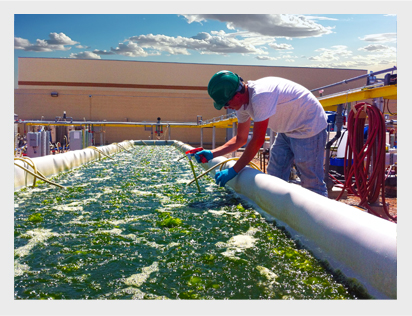
Could applying microalgae to the soil boost yield and strengthen plants? We spoke to Len Smith, chief business office, Heliae Development LLC., based in Gilbert, Arizona, in the southeast Phoenix metropolitan area. “Heliae is a company that is dedicated to unlocking the potential of microalgae,” said Smith. “We’ve been in business now for over eight years. We hope to be able to deliver microalgae products in a lot of areas, including in plant agriculture.”

“While we work with hundreds of algae species, the algae we are currently marketing for plant agriculture is a green algae. It is actually subject to genetic classification so I couldn’t even tell you the exact species at the moment,” noted Smith. “We’re working on several others as well. We have often seen in our early stage testing that many different kinds of microalgae have different positive effects on plant agriculture, so we’re bringing many of them along,” he said.

Unlock the secrets in the soil diversity

Natural Resources Conservation Service (NRCS) Soil Health Campaign

Smith said these algae are among the most common components in healthy soil. “A lot of what we’re doing is actually restoring what is already present in the soil. A lot of the scientists we work with think this is a critical component of the whole plant ecosystem below the soil line.”

Similarly, many university researchers are taking a closer look at algae. “We have about 30 university and contract research studies in, and we are working with growers. We have been selling the product in what I would consider almost a beta launch mode for about two years. So, we probably have about that same number of grower trials—maybe even double that,” said Smith.

Having the algae in the soil not only increased yields, according to Smith, it increased crop quality and strengthened the soil. “Benefits include root mass; in fact, we saw a 20 percent root mass increase in cotton. We have also seen the plant’s ability to grow in stressed environments such as heat stress and drought stress, in some of the work UC Davis did for us. We saw a 25 to 30 percent increase in overall yield in the stressed soils in which the algae was present, as compared to the control,” Smith explained.

Could it be that algae may be the new frontier in plant health and yield? “Yes, we’re very excited about what we’re doing. I would say we are opening a field here that nobody else is really paying attention to. I think that you will be seeing more of these products come to market, hopefully  helping growers get better results in a restorative and natural way,” Smith said.


Heliae Development LLC.

Phycoterra

2021-05-12T11:05:43-07:00December 5th, 2016|

Modifying Rootstocks to Fight, Prevent Pierce’s Disease

Scientists Help Grapevines Double-team Pierce’s Disease

By Patrick Cavanaugh, Farm News Director


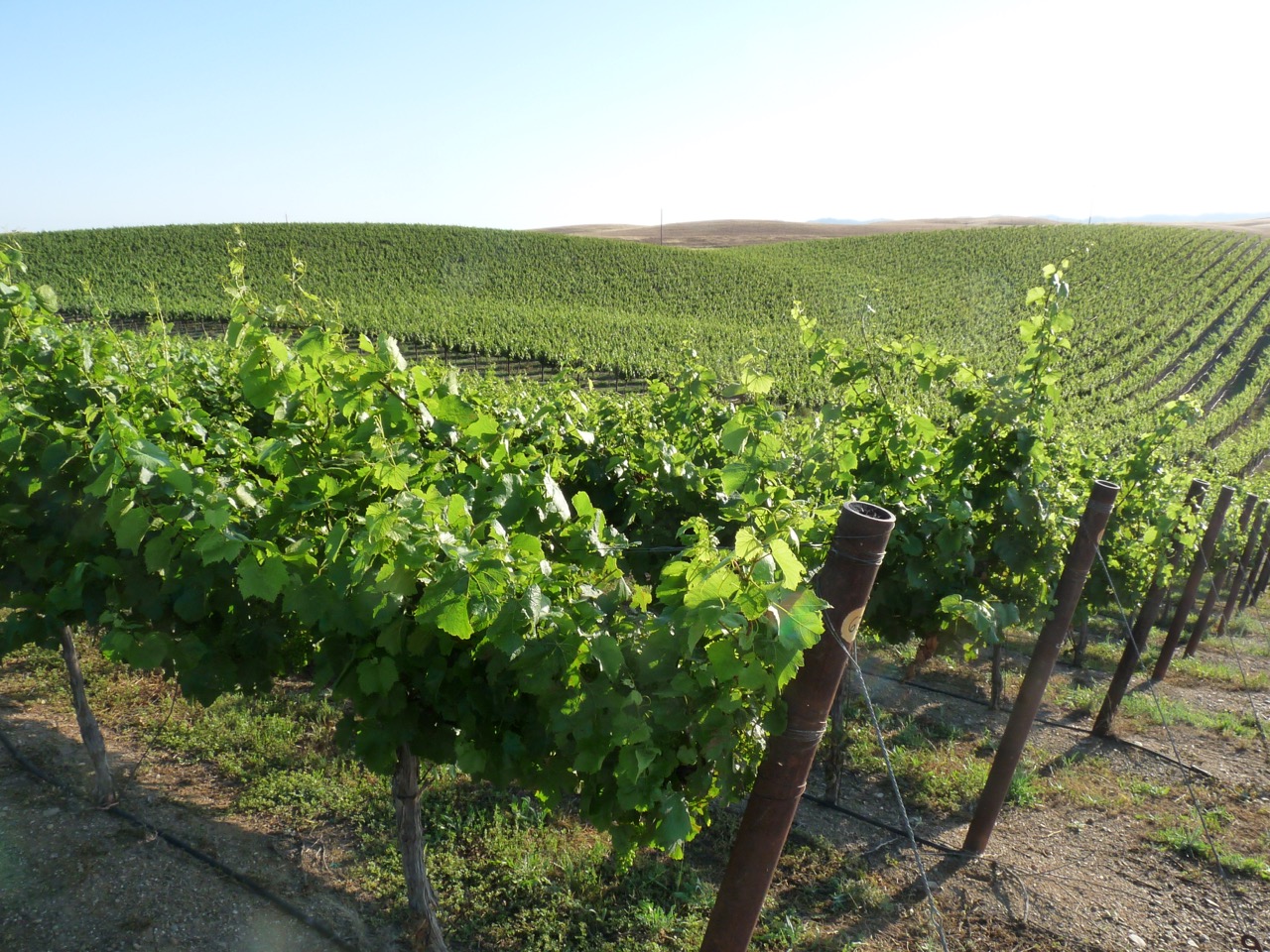
The glassy-winged sharpshooter is a flying insect that vectors a fatal grapevine malady known as Pierce’s Disease. Scientists are conducting volumes of research to fight this insect and reduce disease infection on vines. Moreover, scientists are studying methods to prevent the spread of Pierce’s Disease on winegrapes in California entirely.

California grapevine rootstock

California grapevine

Ken Freeze is the outreach coordinator for the California Department of Food and Agriculture (CDFA) Pierce’s Disease Glassy-winged Sharpshooter Board (PD/GWSS) as well as an account director at Brown-Miller Communications. On behalf of the PD/GWSS Board, Freeze communicates with winegrape growers who pay the Board an assessment to conduct research. Freeze explained ongoing research and how research funds are being spent.

FIGHTING PIERCE’S DISEASE

Could introducing pectin into grapevines, help prevent that bacteria, Xylella fastidiosa, from entering the vine? Freeze said, in a recent field trial, “scientists found five different genes that when placed in a rootstock, put either a molecule or a protein up into an unmodified scion that in one way basically stops the bacteria from moving around,” he said.

“For instance, one of the genes comes from the pear,” said Freeze. “I think we’re all familiar with pectin. A lot of plants produce pectin naturally; grapevines are not one of them. By modifying a rootstock with this pear gene, when the bug comes and injects the bacteria into the plant, the pectin literally gums it up and it can’t move around.”

An unmodified plant injected with bacteria by the glassy-winged sharpshooter, turns to another strategy. “When the bacteria population reaches a certain point, [the plant] releases a protein that causes the bad bacteria to stop moving around. However, in grapevines, it is too late when that signal comes; the plant is already dead. By modifying the rootstock to automatically generate that same protein when the bacteria enters the plant, the bacteria shuts down,” said Freeze.

winegrapes fight Pierce's Disease

Winegrapes

Freeze said scientists are seeing that these strategies are working quite well. “What scientists are actually doing now is stacking these genes, two by two, in the rootstock. Now each root will produce two different ways to shut down the bacteria. If for some reason in the future the bacteria figures out a way to overcome one of those ways, chances are it won’t figure out how to overcome both of them.”

PREVENTING PIERCE’S DISEASE

Dr. Andy Walker, a UC Davis professor and geneticist in the Department of Viticulture and Enology, has been working for years on rootstock that could block Pierce’s Disease from entering the vine. “He’s already released 14 different varieties to the Foundation Plant Services as well as three different rootstock that are resistant to Pierce’s Disease,” said Freeze. “The best varieties will be released to nurseries probably next year. Then from there [nurseries will] basically start growing them and taking orders from winegrowers.”

Freeze noted that other field trials are continuing. “We have field trials for a benign strain of Pierce’s Disease. It is like giving plants a smallpox vaccination, only it is the bacteria. That is on its way to commercialization. In the future, you might actually order your new vines from the nursery pre-infected with the bacteria that would normally cause [Pierce’s Disease]. But in this case, it will not cause it,” said Freeze.


CDFA Pierce’s Disease Glassy-winged Sharpshooter Board (PD/GWSS)

CDFA Pierce’s Disease Glassy-winged Sharpshooter Board (PD/GWSS) Interactive Forum

CDFA Pierce’s Disease Control Program

UC Davis Department of Viticulture and Enology

UC Davis Foundation Plant Services

2021-05-12T11:02:00-07:00December 2nd, 2016|

Improved Huanglongbing Detection in Citrus Trees

Projects Underway for Better Huanglongbing Detection in Infected Trees


By Patrick Cavanaugh, Farm News Director


The big problem with Huanglongbing Disease (HLB), also known as citrus greening, is that an infected tree, despite having no visual symptoms, could quietly be a massive reservoir of HLB. The main vector, the Asian Citrus Psyllid (ACP), could easily pick up HLB from that tree and spread the disease throughout the orchard.

Currently, the main push to contain the possible spread of HLB is by controlling ACP. Yellow sticky traps are positioned near every commercial orchard in California, as well as near non-commercial trees in neighborhoods. Finding a psyllid on a trap triggers mandatory spray programs to help eliminate all psyllids in the area.

Neil McRoberts, Huanglongbing Detection

Neil McRoberts, associate professor of plant pathology, UC Davis

“Yes, one of the most critical questions in managing in HLB is the trees can be infected for a long time before you can visually see the ACP there,” said Neil McRoberts, an associate professor of plant pathology, University of California, Davis.

“There is a group of scientists, funded by the Citrus Research Board of California (CRB), working on different early detection methods. Those are methods where you would be able to tell the tree was infected before you could see the tree is infected,” said McRoberts.

The CRB funded field trials in Texas over the last few years that have narrowed the field of competitors to two or three techniques. The CRB will continue to fund the two leading contenders in that race to determine the leading early detection technology.

In the first technique, researchers analyzed all the microbes that live on a non-infected leaf surface and studied how that profile of microbes changes when the tree gets infected. Detecting a change in microbe profile could indicate the tree is not as healthy as it should be.

“Researchers take the microbes that live on an infected tree, extract the DNA from those microbes and run the DNA through a sequencer. The sequencer identifies which types of microbes are there,” he said.

McRoberts said sampling for microbes is easy. Researchers use an industrial-sized swab on the leaf surface. “You literally clean the leaf surface with the swab until it’s squeaky clean, put that swab in a bottle and send it to a lab. When it gets to the lab, they extract the DNA out of it and the rest of the process happens from there.

ACP Nymph Tamarixia Huanglongbing

A female Tamarixia radiata laying egg on an ACP nymph. (Photo by J. Lotz). Courtesy of Citrus Research Board

In selecting which trees should undergo microbe swabbing, McRoberts noted that the ACPs tend to attack the groves from the outer edges, inwards. “At different times of the day, the light will be on different edges of the grove depending on where the sun is and how warm it is. You can target your sampling towards the places where you’re more likely to find it, but still, finding those initial little infections is tough.”

The second method is a technique called metabolic profiling. A newly infected tree starts to produce different proteins and other chemicals in response.

Still another research strategy is analyzing things that stay in the tissue. “There’s a change in the profile of metabolites in the tree. If you run those metabolites through a mass spectrometer, the mass spectrometer will spit out a profile. You can tell the difference between a healthy profile and an infected profile,” McRoberts said.

“This is how the dogs come into the picture. Everybody knows that citrus has an odor. When the trees are infected, the profile of the chemicals and the composition of that odor change. We can’t smell it, but a very sensitive electronic detector device can sometimes pick it up. Remarkably, dogs can pick it up. We think that’s what happening with the canine detectors; they’re picking up some change in the smell of the trees.”

McRoberts said that dogs are amazingly accurate in detecting trees with HLB disease. “The best that we can tell from the trials involving dogs, the false positive rate is less than 1 in 1,000. I’m very confident with the detector dogs,” McRoberts said.


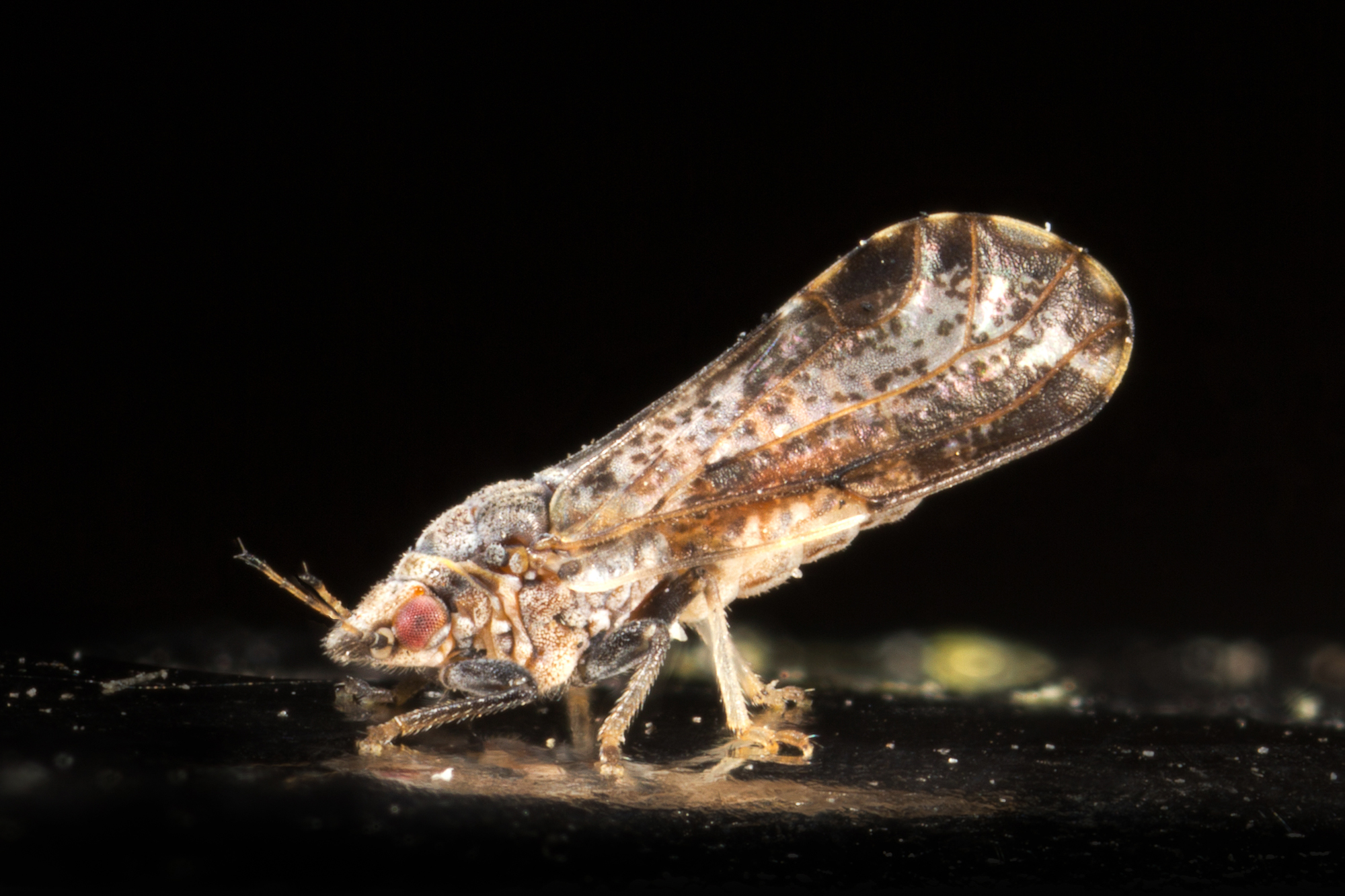
Featured photo: Adult Asian citrus psyllid (Photo by J. Lewis). Courtesy of Citrus Research Board

Citrus Research Board of California (CRB)

UC Davis Department of Plant Pathology

2021-05-12T11:02:00-07:00December 2nd, 2016|

Safe Food Alliance Helps Farmers Cope with MRL Disharmony

California Farmers Cope with MRL Disharmony


By Patrick Cavanaugh, Farm News Director


California farmers are careful with crop protection products because they know the importance of producing safe and wholesome food for their customers across the nation and in their export markets. “However, I think that there are some real challenges facing growers in California today,” said Thomas Jones, senior analytical services director for the Fresno-based Safe Food Alliance.

“As growers send their commodities around the world, they’re facing increasing challenges of knowing the right chemicals to apply and at what levels. We have our own strict regulations within California, if needed, [that govern] not only the application but also the maximum residue levels (MRL) or tolerances allowed for various crops,” said Jones.

Thomas Jones, senior analytical services director, Safe Food Alliance, MRL Disharmony

Thomas Jones, senior analytical services director, Safe Food Alliance

“That’s also carried onto the federal level; we have very strict EPA regulations. But as we [export] into other countries, they may have entirely different regulations,” said Jones. He noted this could be confusing not only to farmers, but also to registrants of crop protection materials because there is a lack of standardization of MRLs in different countries.

“Historically, there was the CODEX system, a UN-based system geared towards a more international standard for pesticide residues. It was very thought out, and very scientifically based,” Jones said.

However, as Jones explained, many countries do not want to follow the important scientific standard. “Increasingly, we are seeing countries want to establish their own systems, their own tolerances. They may be responding to their own political pressures within their countries.”

“We are seeing a process called ‘deharmonization’ in which every country wants to establish its own positive list of what is allowed and what is not allowed in [farm] products. Sometimes, those are in agreement with U.S. regulations and California state regulations; sometimes they are not. So it is important that [our] growers know not only what is legal in this country and in our state, but also what is allowed in their target [export] markets.”

Jones commented it is now known that some of these marketers [apply] random low MRLs and keep other MRLs high on some of their own products in order to get a marketing edge. “Some of those MRLs may or may not be based on any scientific standards.”

“There are a number of great tools out there,” he said. “There are a number of great software programs. Obviously, anything that [information growers] can get out of the print media or any educational courses are really essential. It is important to work with your Pest Control Adviser (PCA), as well. It’s important that [farmers] know what they are up against, as far as growing these crops,” said Jones.

The Safe Food Alliance is available to growers to help them qualify to meet the standards in the U.S. and abroad. “We [provide] training twice a year on fumigation safety for the various processors of dried fruits and tree nuts. We focus particularly on commodity fumigations and on what treatments are allowed and not allowed. We also have a full-service pesticide-testing laboratory and are very aware of the requirements in these other countries, so we’re happy to help both processors and growers with our monitoring efforts,” noted Jones.


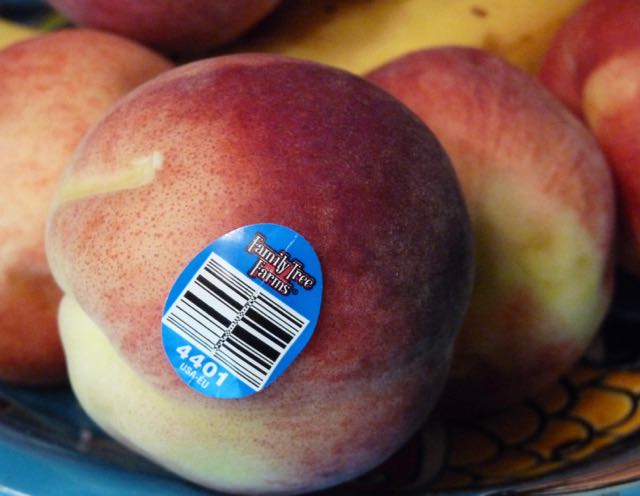
Featured Photo: For these California-grown peaches to be shippable to any out-of-state U.S. consumers or international export markets, they must meet scientific Maximum Residue Levels (MRLs).

C O D E X  A L I M E N T A R I U S, the international food standards, guidelines and codes of practice contribute to the safety, quality and fairness of the international food trade. Begun in 1963, Codex standards are based on the best available science assisted by independent international risk assessment bodies or ad-hoc consultations organized by Food and Agricultural Organization of the United Nations (FAO) and World Health Organization (WHO). Consumers can trust the safety and quality of the food products they buy and importers can trust that the food they ordered will be in accordance with their specifications.

2021-05-12T11:05:44-07:00November 28th, 2016|

Almond and Pistachio NOW Sanitation Critical This Winter

Joel Siegel on NOW Sanitation

By Patrick Cavanaugh, Farm News Director

Last year was a bad year for navel orangeworm (NOW) mainly in pistachios, but also in almonds. If left in the trees, infested nuts become a great reservoir for more NOW to inhabit them.

Joel Siegel, NOW research entomologist, USDA Agricultural Research Service

Joel Siegel, research entomologist, USDA Agricultural Research Service

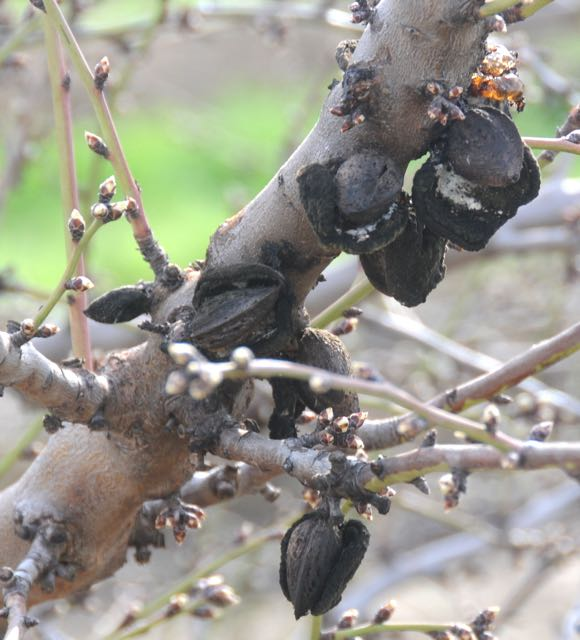
Joel Siegel, a research entomologist for the USDA Agricultural Research Service based in Parlier, stresses the importance of having a good sanitation plan in place to remove those NOW mummy nuts. “When we talk about sanitation, it should be the foundation for everyone’s nut program. That’s something that you control.”

“In almonds, it’s absolutely essential. Where we’ve taken a look at it in the south, every infected mummy per tree is good for 1 percent damage. So going from one mummy to two mummies, your damage on average increases another 1 percent.”

“It’s also important to destroy the mummies on the ground. You figure, for every eight or nine mummies on the ground, that’s good for about a half a percent increase in damage. Get them off the tree and shred the almonds.”

Siegel noted that while pistachio growers can clear mummy nuts off the tree, the industry has not been able to shred the fallen pistachios effectively. The hard, rounded pistachio shells just bounce around in the shredder machine.

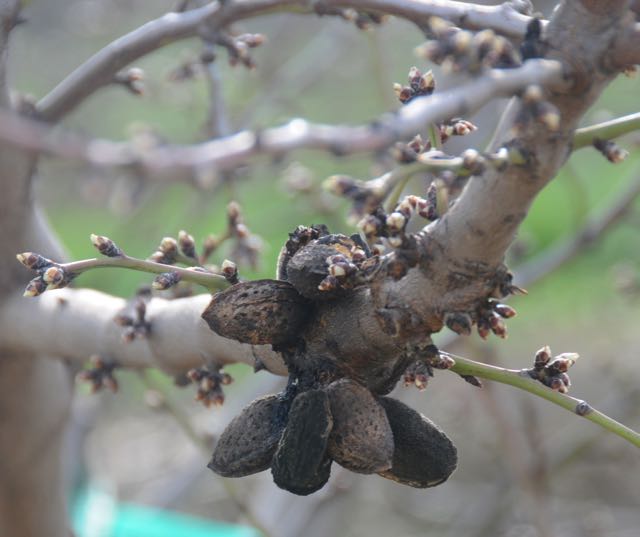
almond_mummies

Almond Mummies

“What you can do is shake them off the tree as soon as possible so they’re on the ground where they can start rotting. You get those weeds growing around them. It has been shown that they break down faster in the weeds,” said Siegel.

“Growers disc them in. But if you’re going to disc them in, you have to disc them twice. Again, you’re not destroying the nuts, you are burying them so that NOW cannot lay eggs in the spring,” he said.

The risk of poor sanitation is high. Considerable NOW damage can prevent pistachio and almond growers from earning the premium paid for nuts that are pest-free.

2021-05-12T11:05:44-07:00November 22nd, 2016|

Sustainable Conservation Works with Growers and Dairies to Solve Problems

Farmers and Sustainable Conservation Collaborate on Economic Improvements

By Laurie Greene, Editor


Sustainable Conservation helps California thrive by uniting people to solve some of the toughest issues facing our land, air and waters. Everyday the organization brings together business, government, landowners and others to steward the resources that Californians depend on in ways that make economic sense.

“We partner extensively with farmers in California on a variety of issues which focus on how to find, solutions that will solve the environmental issue, but also work economically,” said Ashley Boren, executive director, Sustainable Conservation, which has a home office in San Francisco as well as an office in Modesto.

ashly_boren

Ashly Boren, Executive Director of the Sustainable Conservation

“We work with the dairies in California to find manure management practices that work for the farm but also reduce nitrate leeching to ground water, to better protect groundwater quality.

“We help simplify the permeating process for landowners who want to do restoration work, maybe stream bank stabilization or erosion control projects,” Boren said. “We make it much easier to get good projects done.”

“We have a partnership with the nursery industry. This voluntary collaboration aims to stop the sale of invasive plants because fifty percent of the plants that are invasive in California were introduced through gardening, and the nursery industry has really stepped up to be part of the solution on that issue,” she said.

Sustainable Conservation is also doing a lot of work with groundwater. “We think there’s a real opportunity for farmers to help be part of the solution in sustainable ground water management. We are particularly focused on how to capture flood waters in big storm events, and how to spread the water onto active farmland as a way of getting it back into the ground,” Boren said.

Boren noted that she has partnered with the Almond Board of California and other grower associations regarding floodwater management. We actually have a pilot program with Madera Irrigation District and Tulare Irrigation District on helping them with some tools, as well as developing some tools together with them, that will help them figure out how to optimize groundwater management in their basins.

2016-11-21T14:39:08-08:00November 21st, 2016|

Gary Schulz Gives California Citrus ACP and HLB Update

California Citrus ACP and HLB Update from Gary Schulz

By Brian German, Associate Broadcaster


The Citrus Research Board (CRB) recently held their annual California Citrus Conference in Exeter, bringing together a variety of guest speakers and research presentations. The Conference focused on pressing Asian Citrus Psyllid (ACP) and Huanglongbing (HLB) issues, along with political action updates and current projects that are important to the citrus industry. Gary Schulz, president of the CRB, said “We have a 21-member board and we’ve been planning this event for the last 12 months. It’s been 4 years since we held the last conference,” noted Schulz.

Gary Schulz, president, Citrus Research Board

Gary Schulz, president, Citrus Research Board

The CRB is responsible for overseeing the California Citrus Research Program (CCRP), a grower-funded and grower-directed program created in 1968 under the California Marketing Act. The CCRP’s purpose to enable California’s citrus producers to sponsor and support research that furthers the overall industry. Therefore, close to 70 percent of the CRB’s overall budget is allocated to research.

Schulz said the Conference “was a great, great day to have a good update on some of the dollars the Citrus Research Board has been spending on the growers’ behalf on research.” Schulz explained HLB represents the single greatest threat that citrus growers have faced worldwide.

For the past seven years, the USDA and Congress have allocated between $10 and $12 million dollars annually for ACP and HLB research operations.  Advocacy groups and other supportive ag organizations have contributed the difference to reach an annual ACP and HLB research budget of close to $90 million dollars a year. We fund a lot of UC Riverside and USDA agricultural research, service researchers, plus research at UC Davis and the University of Arizona,” Schulz noted.

Schulz, who has many years of experience in California agriculture, having served as general manager of the Raisin Administrative Committee and CEO of the California Raisin Marketing Board, stated that CRB has a great working relationship with California Citrus Mutual (CCM). “Joel Nelson and CCM have worked very hard with the packers to assess themselves, put together a private foundation, and work with the university,” Schulz said.

Featured Photo:  Adult Asian Citrus Psyllid (Source: The Citrus Pest & Disease Prevention Program)


Resources

California Marketing Act

Citrus Research Board (CRB)

California Citrus Mutual

2021-05-12T11:05:44-07:00November 18th, 2016|
Go to Top