Crop Protection

USDA Raises Plant Pest and Disease Awareness

USDA Website Provides Helpful Tips for Everyone

By Melissa Moe, Associate Editor

April is Invasive Plant Pest and Disease Awareness Month. Pests can vector dangerous diseases. In a state so dense with agriculture, Californians must be aware of the huge dangers that these pests create. We spoke to Edward Verona, the state operations coordinator for the USDA Plant Protection and Quarantine, about Hungrypests.com and how Invasive Plant Pest and Disease Awareness Month will help spread awareness of the dangers of plant pests to the public.

“There are eight helpful tips on Hungrypests.com. The public can learn what they can do to make sure that they’re not moving all of these hungry pests, not just from one state to another, but even within California, being that it’s such a large state,” Verona said.

California grows half of the fruit, vegetables and nuts that are consumed in the United States. Carrying fresh fruits and vegetables across state lines into California can spread dangerous diseases into previously uncontaminated areas and risks harming this huge supply of crops. Plants bought from nurseries and growers can also be homes for invasive pests.

“Make sure that you do buy plants and seeds from reputable sources, such as established nurseries or online businesses. You definitely don’t want to be doing that with fly-by-night dealers. Whether it’s in your neighborhood or online, definitely buy from certified sources,” Verona said.

Growers, producers, and consumers alike are all encouraged to visit Hungrypests.com to learn about the threat and what they can do to help. The website is available in English and in Spanish.

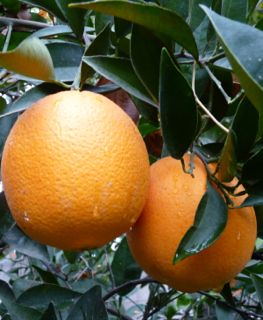
“What’s important is, only one person moving that orange, that apple, or that little sprig of citrus, can be the one to move the problem, but also, it’s everyone and the public that can help by learning what they can do and learning to recognize symptoms of these pests and diseases on hungrypests.com and report,” Verona said.
2021-05-12T11:05:16-07:00April 28th, 2017|

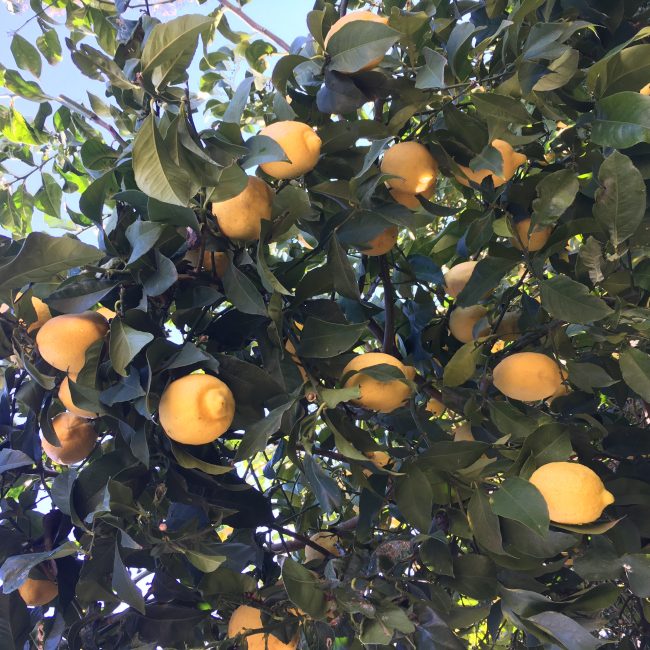
Huanglongbing is causing concern in California

Increase of Huanglongbing in California Causes Concern

 By Brian German, Associate Broadcaster

Southern California has seen a concerning increase in the amount of trees that are infected with Huanglongbing, or citrus greening disease. California Ag Today discussed the news with Beth Grafton-Cardwell, an IPM Specialist and Research Entomologist for the UC Riverside Entomology Department stationed in the San Joaquin Valley.  She agreed that there is an increased concern surrounding HLB.

“It kind of exploded this fall, and it’s kind of continuing. And, that’s not unexpected. The Department of Food and Ag removes only the trees that are polymerase chain reaction – positive. And sometimes, it takes one to two years for a tree for you to be able to detect the bacteria using that method,” Grafton-Cardwell said.

Beth Grafton-Cardwell

There is no cure currently available for HLB, so once a tree is infected, it will eventually die.  Researchers continue working to find a possible cure for HLB, or at the very least, a more effective means of diagnosing infected trees. “Most of the techniques that are going to help us cure or prevent the disease from being transmitted are five to ten years away. Yet, I think we’re going to see a rapid expansion of the disease in Southern California in this coming year,” Grafton-Cardwell said.

Early detection is one of the most important things.  Grafton-Cardwell noted that many farmers are “helping to get the research accomplished and, for example, helping to get early detection techniques tested, and things like that so that we can try and stay on top of the disease.”

In California, production trees are not required to be screened, but many nurseries are now shifting towards putting all of their trees under screening in an effort to be more proactive in guarding against the spread of HLB.

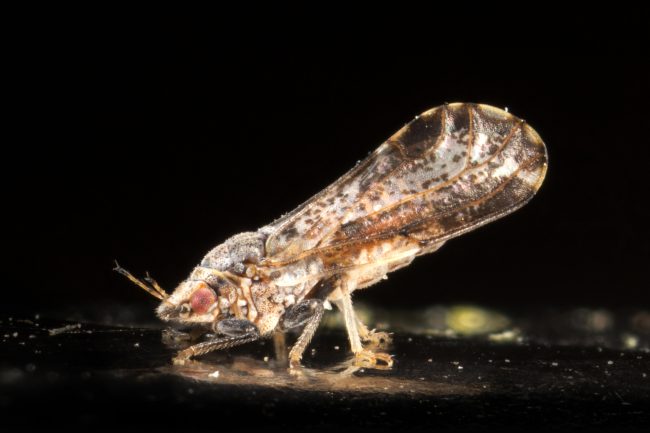
Biological controls like Tamarixia are used as a means to reduce the number Asian citrus psyllids, which cause HLB, but that type of control method is not designed to completely eradicate insects.

“They’re starting to release the Tamarixia Wasps in Bakersfield. So we’re getting them up into the San Joaquin Valley so they can help out in those urban areas,” Grafton-Cardwell said.

Dogs are also used as a means to detect infected trees, but there is still a need for more effective techniques.  “A large team of dogs can do maybe 1,000 acres a day, and we’ve got 300,000 acres of commercial citrus. So I think we need a multitude of techniques,” Grafton-Cardwell said.

2021-05-12T11:01:59-07:00April 27th, 2017|

White Rot Poses Threat to California Garlic and Onions

Research Committee Works to Prevent White Rot

 By Brian German, Associate Broadcaster

The California Garlic and Onion Research Committee was established in 2005 as a state marketing order under the supervision of the California Department of Food and Agriculture.  Bob Ehn is the CEO & Technical Manager for the committee.  The organization’s main goal is to organize onion and garlic growers to develop white rot management programs.  “Once we find a white rot field, we mark it. We then prepare a white rot list that we hand out every fall to our processors or handlers for them to be able to know not to go back into a field,” Ehn said.

Once infected with white rot pathogens, leaves of the plant will begin to show yellowing and wilting.  Leaf decay will also occur starting at the base, with older leaves collapsing first.  Plants can become infected with white rot at any stage of growth, but symptoms typically appear from mid-season to harvest.  “It has a window of where it’s viable. It’s stimulated by organosulfur oxidate or odor that comes off the roots. … That sends out a message like ringing a dinner bell,” Ehn said.

One of the reasons white rot pathogens are so dangerous to California growers is because of their longevity in the soil.  “If you had a field that had light damage, you go back into that field another time and that 10 percent is probably going to turn into 50 percent because of the ability to reproduce,” Ehn explained. “They are hardy little critters. They’re still viable [in] we know, we’ve documented, 20 years. And anecdotally, we have information that it’s been there 30 years.”

California is the leading producer of garlic and onions in the country, growing more than 90 percent of the commercial garlic in the U.S.  Ehn described how white rot destroys the bulb from the inside out.  “The sclerotia virtually wake up and send out a germination tube looking for that source of the organosulfur compounds, find it, enter the roots, and then can enter the base plate of the garlic. Once it’s inside the base plate, it will reproduce.”

Each year, garlic and onions contribute between $150 to $300 million to the overall farm gate value.  If white rot is found in a field, there is still a chance that the land can remain viable.  “If we could GPS a corner or a piece of ground where the white rot was, and it wasn’t in the rest of the field, we will then map that. By mapping that, we ultimately could come back and treat only that area, thereby not having to do the cost of treating the entire field,” Ehn said.

2021-05-12T11:05:17-07:00April 7th, 2017|

Citrus Referendum Coming Up

Citrus Growers to Vote on Referendum

News Release from Citrus Research Board

California citrus growers soon will receive a critical citrus referendum ballot from the California Department of Food and Agriculture (CDFA) asking them to vote on continuing the work of the Citrus Research Board (CRB) for the next five years.

The grower-funded and grower-directed CRB was chartered nearly 50 years ago to enable California citrus growers to sponsor and support needed research that industry members otherwise would be unable to individually fund or access on their own. The Board’s mission is to ensure a sustainable California citrus industry for the benefit of growers by prioritizing, investing in and promoting sound science.

Some key areas funded include general production research, a variety improvement research program, a quality assurance program on agricultural chemical residues, and pest and disease control activities. Currently, disease control is crucially important.

The California citrus industry is now in the fight of its life to prevent the spread of the devastating disease huanglongbing (HLB) from California’s orchards.

HLB already has decimated most other major citrus growing regions, including Florida.

In California, HLB so far only has been found in 40 residential trees in Los Angeles; however, unless researchers are able to find a solution, HLB could gain a foothold in the state’s commercial groves. Currently, the CRB is dedicating its primary research efforts to controlling the spread of HLB and eradicating the disease. The Board is beginning to see some promising results; but without the CRB, much valuable research will go unfunded.

“We urge all citrus growers to vote when they receive their ballots from the CDFA,” CRB President Gary Schulz said. “Citrus is important to our state’s economy, employment, health and positive identity. We are proud to proactively protect and sustain the world’s largest fresh citrus market. The work that our researchers are conducting is vital to sustaining the California citrus industry and ensuring its continued success.”

The CRB administers the California Citrus Research Program, the grower funded and grower-directed program established in 1968 under the California Marketing Act as the mechanism enabling the State’s citrus producers to sponsor and support needed research. More information about the Citrus Research Board may be found at www.citrusresearch.org.

2021-05-12T11:01:59-07:00March 30th, 2017|

HLB Detected Again in San Gabriel

46 HLB Positive Trees in California

News Release from Citrus Insider

CDFA routinely conducts HLB surveys throughout the state based on a risk model that considers factors that may make an area more likely to have a presence of the disease. CDFA has further fine-tuned this approach by increasing the number of samples pulled from citrus trees that are considered high risk. This strategic approach – developed by the CDFA lead diagnostician with input from the Citrus Pest & Disease Prevention Program and leading scientific researchers – has helped pinpoint infected trees.

State and local crews are building relationships with residents in the area, which not only helps gain access to properties, but also results in swift removal of trees identified as having HLB. While removal of diseased trees is mandatory, positive homeowner relationships encourage cooperation. Of the eight trees recently detected, seven have already been removed or been scheduled for removal by CDFA. Crews are contacting the property owner of the remaining citrus tree Tuesday, March 28, and will pursue quick removal.

In 2016, CDFA collected nearly 50,000 plant samples and nearly 80,000 Asian citrus psyllid samples to test for HLB. Since sample collection began in 2008, more than 400,000 plant and psyllid samples have been collected and processed. This diligent work has contributed to quick detection and eradication of diseased trees.

As a part of the Citrus Pest & Disease Prevention Program, CDFA will continue surveying and sampling the area for HLB and keep the industry abreast of finds as they occur.

2021-05-12T11:05:17-07:00March 29th, 2017|

GMOs Are Part of Nature’s Technology

Lowell Catlett On Ag, Part Two

GMOs Are an Ancient Technology

By Jessica Theisman, Associate Editor

Lowell Catlett says GMOs have been around for thousands of years.

There is not a morsel of food that 7.2 billion people put it their mouth today that is not GMO. “That is called agriculture,” said Dr. Lowell Catlett, Ph.D. He is a futurist with a positive and upbeat predictions about agriculture.

Catlett gave California Ag Today the inside story on hybrids and GMOs. One question arose about whether hybrids are indeed considered genetically modified organisms. “Of course they are,” he said. “If you want to say it’s transngenetic, somebody moved a gene out of a fish into corn, that’s trans genetic. If you say GMO, that’s all of agriculture.”

What many people do not understand is that their non-GMO products, do come from GMO sources. “I get a kick out of people saying, ‘Well, this is non-GMO milk for ice cream.’ That Holstein has been genetically modified for 400 years. She is a genetically modified organism. There is no question about it,” Catlett said.

“We have the ability to move things around with genetics. The whole green revolution that gave people more food than at any time in history was all about accelerating genetically. Genetic modification in the old traditional ways is [what] we now call hybridization or crossing, ” Catlett said.

Corn is a GMO crop as well. “It was domesticated about 8,000 years ago by Neolithic women by crossing two grasses. Also, diabetic insulin is the result of GMO technology,” Catlett explained. “If you love yogurt, most yogurt in the United States is manufactured through a genetic modification called CRISPR, which is mother nature’s way of modifying genes.”

This process is caused by the bacteria in the yogurt. “It is the technology that bacteria use to protect themselves from invading other bacteria or pathogens. Right now, the 27 countries that are the EU, or soon to be the 26 EU countries that have banned GMOs, are now having to come back and say, ‘Wait a minute, CRISPR technology is Mother Nature’s technology.’ Mother Nature was a good genetic engineer long before we did it in laboratory” Catlett said.

“It is going to be an interesting time for GMOs in the next few years as the technologies merge to help us have better understandings and better control over things,” Catlett said.

2021-05-12T11:17:10-07:00March 23rd, 2017|

Paraquat Resistance in Weeds?

Weeds Now Showing Paraquat Resistance

By Patrick Cavanaugh, Farm News Director

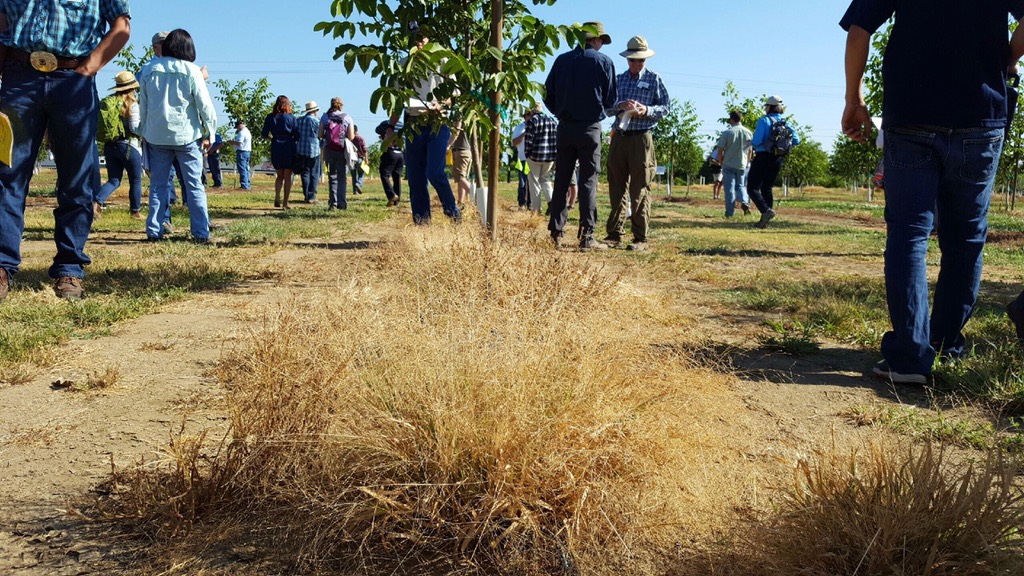
There’s been weed resistance to glyphosate herbicide, but now some weeds show resistance to paraquat herbicide.

“When we see paraquat resistance at often a very high level of resistance, it doesn’t cause any visual injury, which is different than a lot of cases,” said Brad Hanson, a UC Cooperative Extension Weed Specialist at UC Davis.

“We’re dealing with a lot of glyphosate resistant weeds right now, and when you spay glyphosate on the resistant weeds, they are slightly injured and then they recover,” said Hanson. “With paraquat resistance, it’s very stark. You often don’t see any symptoms at all. I describe it almost as immunity. It’s such a high level of resistance.”

“We have glyphosate resistance to annual ryegrass and hairy fleabane, and we have some populations of those same weeds that are resistant to paraquat,” Hanson said. “We see a very temporary reduction in the photosynthetic ability, but within a few hours it bounces back to normal.”

The plant is taking that active herbicide molecule, and it is being sequestered. It’s taking that molecule and putting it somewhere in the cell where it cannot get to the photosynthetic apparatus that’s its target site. It’s a very unique and interesting kind of resistance challenge.

“I think we’re talking about multiple resistance to paraquat and glyphosate. The grower likely switched to use paraquat in order to kill the glyphosate resistant weeds, and then the weeds selected paraquat resistance on top of that.”

2021-05-12T11:05:42-07:00March 6th, 2017|

Early Registration Open for MRL Workshop in San Francisco

Annual MRL Harmonization Workshop May 31 to June 1

The California Specialty Crops Council will hold its twelfth annual 2017 MRL Harmonization Workshop May 31-June 1 in San Francisco. The interactive seminar based on maximum residue limits (MRLs) will address critically important issues for stakeholders with interests in exporting agricultural products.

Registrants, growers, packers, shippers, PCAs, regulators, trade experts, and other stakeholders in international trade are strongly encouraged to attend. Presentation topics include: international trade trends, global registrations, pesticide residue monitoring, MRL strategies for growers, updates for international residue standards, global MRL challenges, and research reports regarding the impacts of residues.

Ed Ruckert, Partner at McDermott Will & Emery LLP, will kick off the Workshop discussing “Pesticide Regulatory Trends in the New Administration.” Julia Doherty from the US Trade Representative will discuss “Recent Work in the WTO SPS Committee on Pesticide MRLs.” The agenda also includes international speakers from the EU, Korea, Australia and Taiwan.

A copy of this year’s speaker lineup can be found at the link below. The Workshop will be held at the Hyatt-Fisherman’s Wharf in San Francisco. On-line pre-registration is required by May 22. For all meeting, hotel information and an updated agenda go to http://specialtycrops.org. The registration fee is $425 by March 31 and $475 after that date.

The California Specialty Crops Council (CSCC), a 501(c) 5 non-profit organization, is a trusted source of field-based information spanning horticultural crop production, pest management, food safety and stewardship activities in fruit, root, vegetable, vine and berry crops (fresh, dried, and processed). Its diverse partnership of ag organizations also includes the CA State Beekeepers Association. Combined, CSCC growers generate almost $4.1 billion annually on approximately 522,000 acres of California farmland.

2021-05-12T11:02:00-07:00March 3rd, 2017|

Pyrethroid Review by EPA is Important

EPA Pyrethroid Review Vital for Many Reasons

By Patrick Cavanaugh, Farm News Director

David Haviland is a UC Cooperative Extension Farm Advisor based in Kern County, and he’s focused on etymology. He spoke to California Ag Today about the current review by the EPA on the pyrethroid class of crop protection materials. He noted that the EPA is concerned about the material making its way to waterways.

David Haviland

“It’s a legitimate concern in that pyrethroids can bind to sediment, and if that sediment was just hypothetically say, worst case scenario, what if you sprayed a product into a orchard or a field right next to a river on the day before it rained?” Haviland asked.

“We don’t do that, but hypothetically if you did that and that sediment washed from that orchard out into a stream, yes, those pyrethroids can affect aquatic invertebrates and of course little tiny organisms. These little invertebrates are the basis for food chains in the stream systems,” Haviland said.

“Just like if you’ve got a household cleaner, it says, ‘Store out of reach of children.’ So yeah, there’s a risk of that product, and you mitigate or solve that risk by only using it where it’s appropriate, storing it where somebody can’t get it,” Haviland said. “The same is true with pyrethroids. If you read the label, there’s very specific use instructions on where you can and can’t use the product as well as other details about waterways and buffer zones and things like that,” he said.

All that is taken into account to make sure that any risk that may occur doesn’t turn into an actual real problem. “That’s part of the review, for the EPA to look over that label,” Haviland said.

The EPA review is to make sure that any mitigations on the label and use patterns adequately take into account any risks that may be real. “I expect it will be done scientifically and prudently and based on that, I hope pyrethroids are in the tool box for a long time,” Haviland said.

2017-02-20T16:11:16-08:00February 16th, 2017|

Post Methyl Bromide Era Creates Questions

Without Methyl Bromide, Then What?

 By Brian German, Associate Broadcaster

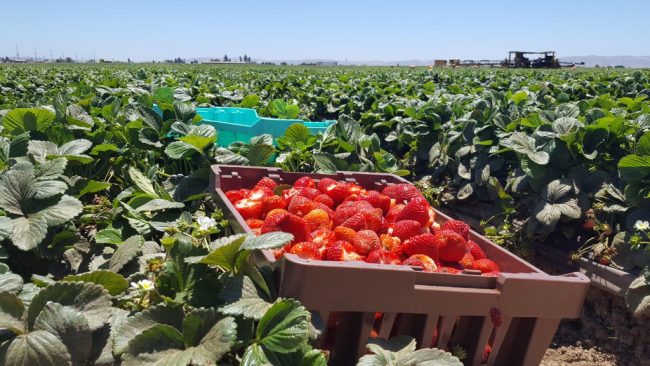
Methyl bromide was first identified as an ozone-depleting compound in 1991 and was scheduled to be phased out by 2005. California strawberry growers found it irreplaceable and fought for exemptions that allowed the fumigant to be used through 2016.  Mark Bolda is a UC Cooperative Extension Farm Advisor who specializes in strawberries and caneberries and also serves as the County Director for Santa Cruz County.  He discussed the work being done to find an effective alternative to methyl bromide.

Mark Bolda is working to help berry growers with the loss of Methyl Bromide

“It’s not just one thing does it all; it’s going to be one thing and then you add other things on top of that. … We don’t have the silver bullet anymore; it’s gone.  We need to figure it out using the systems approach,” Bolda said.

The inability to use methyl bromide is causing some concerns for strawberry growers, who are looking at what new type of management approach to take.  “Everybody’s familiar with the concept of integrated pest management for insects, and really, we need to approach this post methyl bromide era using integrated pest management,” Bolda said.

Growers are worried about how vulnerable their crops are going to be to various soil diseases without methyl bromide, as researchers have yet to find an alternative that is equally effective.  One of the ways to combat disease is to focus on the details of planting.

“In strawberries, you have different chill times. You know, if you add cold conditioning, you give the plant more vigor. The colors of the plastic that you’re using to manage the temperatures of the soil, the amount of fertilizer that your using, all of these things now, we need to start to integrate into the way we are growing the strawberries,” Bolda said.

Methyl bromide controls a variety of pests in agriculture.  It was also commonly used to treat commodities like grapes, asparagus and other imported goods to prevent introducing pests to the U.S.  Bolda expressed disappointment in the lack of preparation in finding an adequate replacement for methyl bromide. “Here we are, zero hour, and we don’t have this worked out. I think, to some extent, there’s been a lack of leadership in the industry,” Bolda said.

The quest for replacing the fumigant might have gotten a late start, but industry experts have been working double-time to find solutions. “We have got all of the researchers in this industry together, working as a unit, and there’s a lot of smart people working on this problem right now. …. What do we need to research? What do we know? What do we not know? Let’s go,” Bolda said.

Nearly 90 percent of methyl bromide use in California was for pre-plant soil fumigation in strawberries, nursery crops, grapes, and tree fruits and nuts.  Growers are preparing for a 5 to 10 percent drop in yield as a result of methyl bromide’s absence and are looking for ways to make up that deficit.

“Maybe using more precise fertility practices, adding cold conditioning to the plant, taking it away, using different varieties.  All of this is going to start to go into this system,” Bolda said

The phasing out of methyl bromide is most impacting to the strawberry industry, which is California’s third most valuable crop behind almonds and grapes, with annual farmgate sales of $2.5 billion dollars.  The biggest disease threats to strawberry fields are macrophomina phaseolina and fusarium, which can both have devastating results in crops.  “It’s plant collapse. You’ll see it kick in once the plant loads up in fruit and gets a little warm. It’s just too much stress for the plant,” Bolda explained.

Methyl bromide will be missed by growers, but its absence is allowing them to demonstrate their creativity in finding new solutions to a problem. “We’re starting to see some methods that are pretty interesting,” Bolda said. One such method is steam, which involves pushing steam into the soil to kill certain pathogens.

Breeding in resistance to disease can also be beneficial; however, it can have some negative consequences as well.  “When you have strong tolerance, you’re taking a hit on something else. There’s no such thing as a free lunch. You might have a plant that’s super resistant but then the yields are low, it doesn’t fruit until late. There’s always the trade off,” Bolda said.

Getting a good chill before planting can also be effective in making the plant more vigorous and better able to withstand disease pressure.  “It’s a little complicated because the longer you chill, the later you’re planting times get, and if you’re planting in the middle of December, [there’s] not a light of sunlight in the middle of December, so you know, there’s a trade off there too,” Bolda said.

Crop rotation can also assist with some soil diseases, but more research is needed to determine just how effective it is.

Methyl iodide was showing some success as a possible replacement for methyl bromide, but its use became a problematic issue.  “It became a political problem. I don’t think the industry stood it’s ground on it, and the industry, basically they struck their flags and left the field. Of course, the entire problem was defined by the opposition,” Bolda said.

Growers might have some difficulty working out a new pest management program without the use of methyl bromide, but Bolda explained that understanding the problem at hand is an excellent step in the right direction.   “Don’t just turn scientists loose and just say, ‘study and do experiments.’ No. Define the problem. I think what we’ve done with the fumigants over this last two years. Getting everybody together and working as a unit, we have defined the problem and now that mental energy and that mental potential is moving. You need to define it in order to bring the people in to solve it,” Bolda said.

It’s going to take some time to work out a program that best replaces methyl bromide, but Bolda is optimistic about the future.  “Sometimes the solutions aren’t so obvious, but they’re starting to show up and you know, the thing is that some of these will be radically different,” Bolda said.


2017-02-20T16:10:40-08:00February 13th, 2017|
Go to Top