Crop Protection

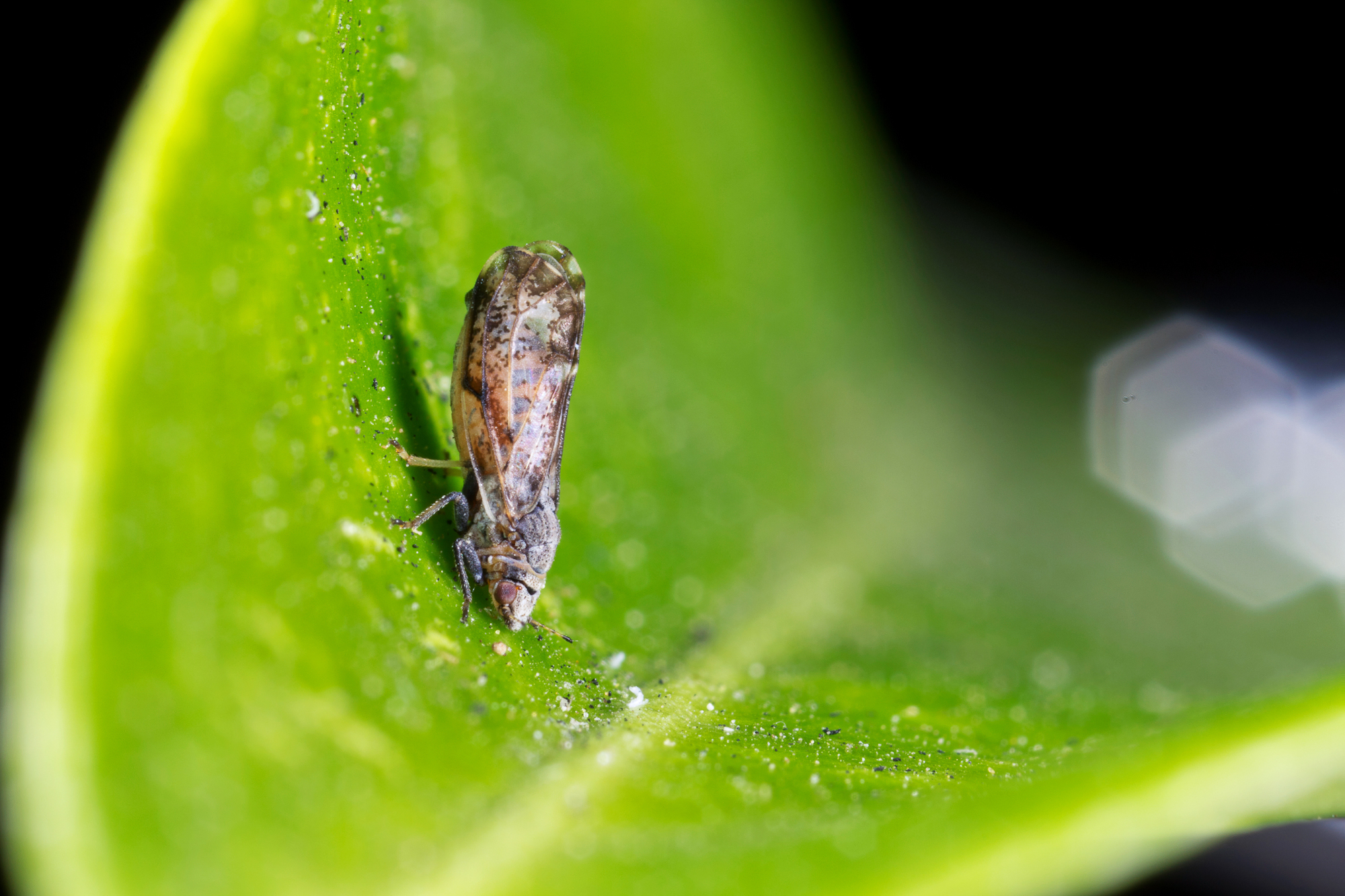
Huanglongbing Top Importance in Citrus

Huanglongbing Disease in Citrus is Top Problem

By Patrick Cavanaugh Farm News Director

Gary Schulz, President of the Citrus Research Board in Visalia, said the pest pressure in citrus comes down to three problems.

“You know, there’s three really. There’s Huanglongbing, Huanglongbing, and Huanglongbing, (HLB)” Schulz said at the recent California Citrus Conference in Visalia. “When I moved to California in 1990, I had an old-timer that was on my board. He said, ‘You know, in California, we have three major challenges: water, water, and water.’ Well, in the citrus research for pests and diseases, it’s really Huanglongbing.”

Gary Schulz

“If we’re talking about red scale or Phytophthora or lemon fruit drop, those are important challenges, but if HLB begins infecting our commercial groves and spreads as rapidly as it can without our attention and treatment or tree removal, the rest are moot,” Schulz said.

He discussed his hope for the future of the California citrus industry.

“I hope that in five years, we’ve solved HLB. That’s my personal goal. Somebody’s got to put the stake in the ground and put a date out there,” he noted.

Schulz said that Citrus Research Board has got a number of research programs that are all working side by side to find that solution, turn that key, and make that happen.

“It may be more than just one solution. We have a researcher at Washington State University in Pullman for example. They’ve earned a research grant from the USDA because of the creativity in putting their work team together and the fact that they bring a whole new fresh approach and fresh thought process to how to culture the bacteria that causes HLB disease. That’s huge in the science community and has never been done before,” Schulz said.

For more information go to http://citrusresearch.org/

2021-05-12T11:01:58-07:00October 17th, 2017|

Spray Safe Meeting Nov. 17 in Modesto

Event Organized by Stanislaus County Farm Bureau

By Laurie Greene, Founding Editor

Wayne Zipser, executive director of the Stanislaus County Farm Bureau, announced the Farm Bureau will hold a Safe Spray and Safety Event on November 17, at the Modesto Junior College’s West Campus Ag Pavilion, located at 2201 Blue Gum Ave. in Modesto. The Stanislaus County Farm Bureau is a non-profit, volunteer membership organization that provides many programs like Spray Safe to assist its members and to educate the general public.

“The Spray Safe meeting will be a big event,” Zipser said, “not only because will it cover how to safely apply pesticides, but also provide tractor safety training, [pesticide application] mask fit testing and physicals [if needed for mask fit testing] for farm employees.”

“Registration opens at 7 AM,” Zipser explained. “A grower panel will start the day at 8 AM with a discussion of the safety and procedure challenges encountered by some of our folks who do pesticide applications. Given the new rules for pesticide applications around schools and preschools, we want to hear how they cope with and mitigate these new challenges.”

The Safe Spray Meeting will also feature a trade show. Attendance is free, courtesy of event sponsors, and lunch is provided.

Additional topics will include: drift prevention, school notification requirements, calibration, sexual harassment prevention, equipment safety and heat illness prevention. The meeting also offers 4 hours of Department of Pesticide Regulation (DPR) Continuing Education (CE) credit.

The all-Ag committee coordinating the event includes the Stanislaus County Farm Bureau, the Ag Commissioner’s Office, the USDA Natural Resources Conservation Service (NRCS), and the University of California Cooperative Extension (UCCE).

For more information, contact the Stanislaus County Farm Bureau at 209-522-7278.

2017-10-13T15:29:16-07:00October 13th, 2017|

BPIA Executive Director Talks Biological Products

Biological Product Industry Meets in Orlando

By Patrick Cavanaugh, Farm News Director

Nearly 200 individuals from the worldwide biological products industry were in Orlando this week for the Fall 2017 semi-annual meeting of the Biological Products Industry Alliance (BPIA).

The two-day meeting featured experts from the EPA, USDA, universities, major U.S.companies such as Nestlé’s and Coca Cola, and others involved in the biological products industry.

BPIA is made up of manufacturers of bio-pesticides, which control pest and diseases, as well as bio-stimulants, which boost the natural defense of plants in the agriculture.

“We’re also marketers, distributors, service providers, anyone who touches the biological industry as we define it,” said Keith Jones, Executive Director of the BPIA.

“There has been tremendous growth in the association,” Jones said. “When I came on board two years ago we were 85 member companies. As I sit here today, we’re 122 member companies, and our companies range from very small, sole proprietors – a couple of folks at some innovative, new technologies – all the way up to the largest agrochemical companies in the world.”

Some biological products, such as B.ts., have been around for more than 50 years, while others, along with bio-stimulants, are very new and innovative. Some aren’t even on the market yet, but many are making their way to market.

“There’s two big drivers for biological,” Jones said. “One is consumer demand. And really, if you look to Europe, they’re about five years ahead of us.”

“The other driver is increased regulatory pressure. Again, Europe is about five years ahead of us. They’re really ratcheting down on a lot of the traditional tools that were available to growers. They’re going away in Europe. I think here in the U.S., you may see some of that as well.”

Jones noted that the BPIA is a big believer in integrated pest management, IPM.

“We never say that biological are the silver bullet. They’re not. They’re most effective when they’re used in conjunction with traditional chemistries,” Jones said.

“The worst time to start a biological is when you’re having a major problem. The best time is to start early. They’re so effective as preventative. They’re really good in tank mixes, used in combination, because they’ll extend the life of traditional chemicals,” Jones said.

Most biologicals have multiple modes of action, so they help with pest resistance.

“They don’t build up the resistance in the same way that they might to a traditional, but by using them together, you can extend the life of that traditional chemistry,” Jones explained.

2021-05-12T11:01:58-07:00October 12th, 2017|

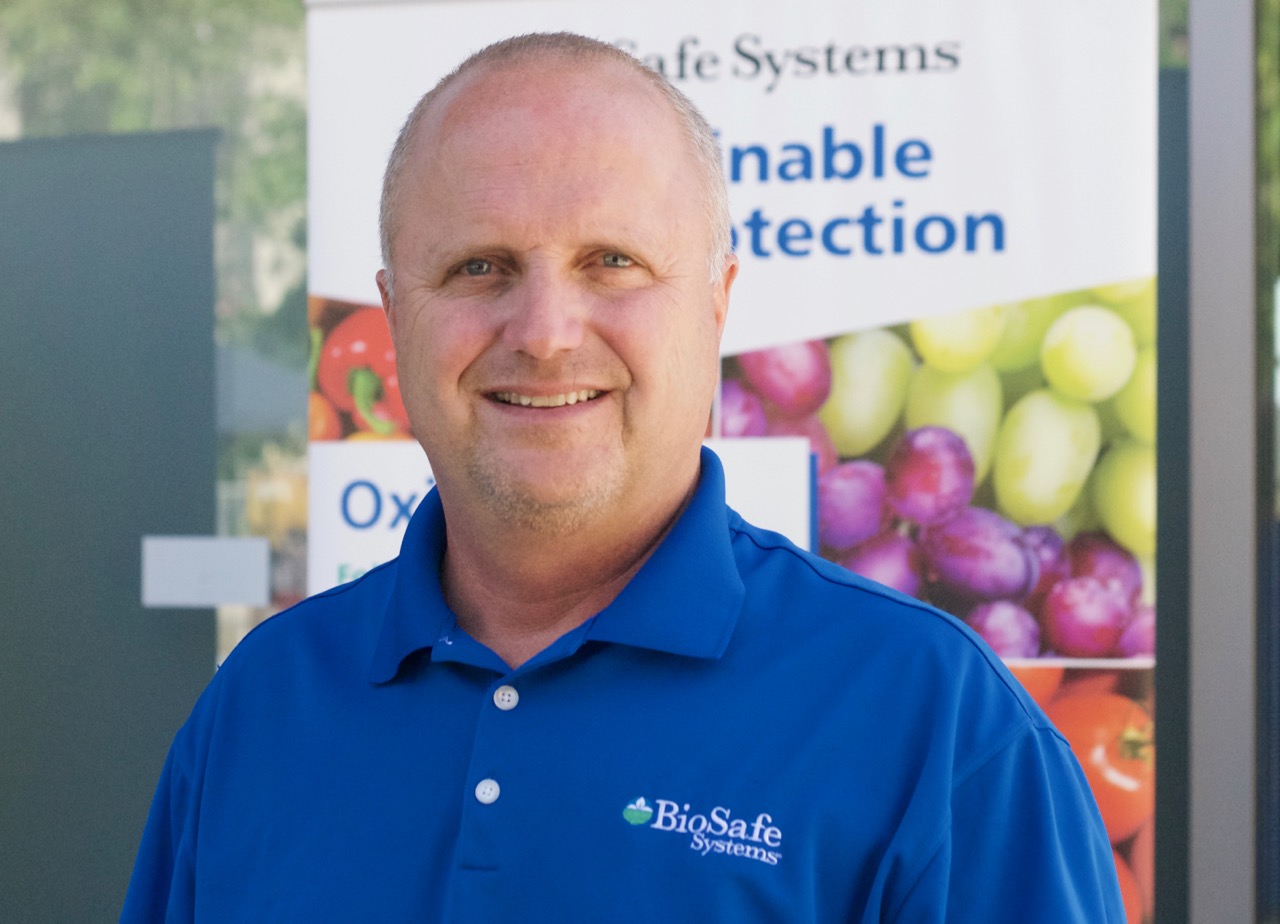
BioSafe Systems Offers Biological Control Products

BioCeres Beneficial Fungi Kills Important Pests

By Patrick Cavanaugh, Farm News Director

California Ag Today recently interviewed Jay Sughroue, Ph.D. with BioSafe Systems about the new BioCeres WP Biological Pesticide.

BioCeres is new strain of the fungi Beauveria basiana discovered in Italy in 1815. There was a sharp decline in silkworm production and the entomologist back then, Antonio Basiana, discovered  the fungi  that was responsible for white muscarsdine disease causing the decline of silkworm production.

“The new strain, ANT-03, is different from commercially available strains is that it’s more aggressive and more resilient, so it lasts longer in the environment. And it’s more pathogenic when it comes in contact with insects that you want to control,” Sughroue said.

“Fast forward several decades, and now, we have commercially available products that are controlling very important agronomic pests, such as thrips, aphids and white flies,” Sughroue said.

Sughroue noted that it’s important to follow important application strategies.

“You want to apply this prior to high population development. It’s not a knockdown, so you want to be out there scouting fields. As soon as you start to see numbers that are indicative of causing damage, you want to start a spray program that contains BioCeres, and then after about 5 to 7 days, you’ll start to see the pests decline in population.”

The fungi spore germination is the key to the effectiveness.

“The spore lands onto an insect. It doesn’t matter if it’s an egg, a nymph, a larva or an adult. It starts to germinate, and through enzymatic activity and mechanical pressure, it grows inside the insect, and it will start to sporulate so the insects come down with a severe case of the flu. They stop feeding immediately.

Sughroue said while it takes about 3 to 5 days for the pest to die, it stops feeding very soon after the spore germinates inside them.

Sugroue said the list of the pests will only become larger as time goes by

“We’re going to expanding that list to include other important insects, but this is the first generation of this product,” he said.


2021-05-12T11:01:58-07:00October 11th, 2017|

LGMA Partners with Stop Foodborne Illness Group

Leafy Green Marketing Agreement Aids Decline in Citations

By Jessica Theisman, Associate Editor

Scott Horsfall, CEO of LGMA

After a severe E. coli outbreak in 2006, California farmers created the California Leafy Green Products Handler Marketing Agreement (LGMA) in 2007 to help prevent foodborne illness. Scott Horsfall, LGMA CEO, addressed the critical role LGMA currently plays in California agriculture, “If you are going to be in the leafy greens business, in particular, you are going to have to invest in what it takes to put a food safety program in place.”

“LGMA has partnered with a group called Stop Foodborne Illness, a national nonprofit, public health organization dedicated both to the prevention of illness and death from foodborne pathogens and to its victims. These two groups collaborated to create a video that is used in all training workshops. The video not only tells them why food safety is important, it shows them.”

Citations for foodborne pathogens in recent years have declined. Most of the citations are noted as minor infractions or minor deviations.

“They are not threatening public health; sometimes they indicate an oversight in having some documentation on hand, or something along those lines,” Horsfall said.

“Yet, there are still a handful of major deviations that are more significant and are treated differently,” Horsfall said. “Auditors are required to go back out, but if [the situation] is flagrant, they will go back out within a week to make sure that all corrective actions that were submitted are actually put in place.”


Links:

California Leafy Green Products Handler Marketing Agreement (LGMA)

Stop Foodborne Illness


2021-05-12T11:01:58-07:00September 19th, 2017|

Chlorpyrifos Under More Scrutiny in California

California Regulators Pursuing Health Protections for Chlorpyrifos

News Release

The California Environmental Protection Agency (CalEPA) announced recently that both the California Department of Pesticide Regulations and the Office of Environmental Health Hazard Assessment are pursuing health protections on one of the most widely used agricultural pesticides in the nation, chlorpyrifos.

The Department of Pesticide Regulation (DPR) released an updated draft risk assessment for public comment. This action marks the start of a public and scientific review of the document, which could lead to increased restrictions on chlorpyrifos statewide. DPR is currently developing interim restrictions on use of the pesticide and recommendations will be made to county agricultural commissioners next month.

In addition, the Office of Environmental Health Hazard Assessment (OEHHA) is referring chlorpyrifos for potential listing as a developmental toxicant under Proposition 65. OEHHA recently posted an announcement that the state’s Developmental and Reproductive Toxicant Identification Committee will consider the listing of chlorpyrifos at its next public meeting.

 “While chlorpyrifos has been protecting crops for more than 50 years, new information in the scientific community leads us to believe the level of risk it poses is greater than previously known,” said CalEPA Secretary Matthew Rodriquez. “We need to better understand the science to ensure our actions protect public health. The actions we are taking today reflect our commitment to the health and safety of all Californians, and the environment.”

Department of Pesticide Regulation

DPR scientists believe chlorpyrifos may pose a public health risk as a toxic air contaminant based on its assessment of the latest studies in the scientific community. However, this new finding, indicated in the updated draft risk assessment has not been peer reviewed and must go through a public comment period and be independently evaluated by other scientists.

On September 15, DPR will hold a public workshop on the updated draft risk assessment at the Pesticide Registration and Evaluation Committee meeting in Sacramento.

After the 45-day written public comment period, which began August 18, DPR’s updated draft risk assessment will go before an independent panel of nine scientists known as the Scientific Review Panel (SRP). The thorough review process, which may ultimately lead to more restrictions on use, may conclude in December 2018.

Next month, DPR will provide county agricultural commissioners with specific interim recommendations, including:

  • Increasing distances between sites where the chemical is applied and sensitive locations, such as homes and schools. These would be specific to each type of application method.
  • New restrictions on methods used to apply chlorpyrifos.

Office of Environmental Health Hazard Assessment

OEHHA will soon open a written public comment period on scientific materials that describe the evidence for the developmental toxicity of chlorpyrifos.  OEHHA will provide the materials and the written public comments to the Developmental and Reproductive Toxicant Identification Committee. The committee is an independent panel of 10 scientific experts that determines whether chemicals are added to the Proposition 65 list as causing birth defects and other reproductive harm. The committee will also consider public comments presented at its November 29 meeting.

If the committee adds chlorpyrifos to the Proposition 65 list as a developmental toxicant, businesses that knowingly cause exposures above minimum levels must provide a Proposition 65 warning.

DPR’s updated draft risk assessment and other documents relating to chlorpyrifos are available at:http://www.cdpr.ca.gov/docs/whs/active_ingredient/chlorpyrifos.htm

OEHHA’s notice of the November 29 meeting of the Developmental and Reproductive Toxicant Identification Committee concerning chlorpyrifos is available at: www.oehha.ca.gov.

2021-05-12T11:05:16-07:00August 21st, 2017|

Pyrethroid Review is Important

Be Thoughtful on Pyrethroid Review Comment Page

By Patrick Cavanaugh, Farm News Director 

California Ag Today has continued coverage on the pyrethroid class of insecticides, which were under review by the EPA. The critical industry comment deadline has been moved to honor before July 7th this year. California Ag Today spoke with David Haviland, an entomology farm advisor with UC Cooperative Extension Kern County about his philosophy on commenting regarding the pyrethroid class of materials.

“From my perspective, please don’t go on there and just say, ‘We need pyrethroids.’ What they really need to know is what importance do these pyrethroids play to that particular commodity on that particular farm? What’s being done to make sure that the risk from those products are mitigated? One of the concerns of pyrethroids is if they can move off-site into waterways. That’s a legitimate concern. All those things need to be taken into account and then reviewed,” he said.

An easy website to go to comment without that complicated government URL is simply Defendbifenthrin.com.


2017-06-01T00:13:05-07:00May 30th, 2017|

Working on Nematode Resistant California Commercial Carrot

Nematode Resistant California Commercial Carrot On Its Way?

By Jessica Theisman, Associate Editor

Phil Simon is a carrot breeder and geneticist with the USDA Ag Research Service based at the University of Wisconsin. He produces the vast majority of carrots for the consumers throughout the nation. A big goal is to find a commercial carrot variety that is root-knot nematode resistant. Nematodes are a soil-borne, microscope, worm-like organism destroying production in some fields. Through lots of research, the carrot industry is getting closer to a resistant variety.

The first resistance gene was first discovered in 1992 in a Brazilian variety that may have some genetic resistance. The resistance was discovered by using derivatives from the Brazilian variety crossed with California-adapted carrots. This is all being done with, “the idea of moving that resistance gene into a carrot that’s suitable for California in terms of shape, size, flavor, and productivity,” Simon said.

The Brazilian variety is not suited to California because it is shorter and wider. It does not look like a California carrot, and it bolts very easy, which means it flowers and goes to seed. But with the Brazilian carrot having nematode resistance, it is also heat-tolerant, which is great news for us in California, especially with the rising temperatures.

It is said that California is getting closer and closer to getting its own commercial variety. “We’ve also found genes for resistance in other carrots from around the world, from Syria, China, Europe, and we intercrossed those also into California, so we’re putting a couple of genes in,” he said.

With all of these genes, this makes for an even stronger and durable resistance to nematodes.

2021-05-12T11:05:16-07:00May 16th, 2017|

Rice Weed Meeting Taking Place on Sept. 15

Second Annual UC Rice Weed Course Scheduled For Sept. 15

News Release

This year will mark the second annual rice-specific weed course at the Hamilton Road Field and the Rice Experiment Station in Biggs, CA, on Friday, Sept. 15. The day will begin with an interactive field tour of the research plots (Hamilton Road Field), where attendees can get up close to the weeds and rice (bring your boots)! The course will include a hands-on weed identification session on emerging and mature weeds. In the afternoon, speakers will address several pertinent topics in California rice, including weedy red rice, regulatory update and how to constructor a weed management program.

The course is a collaborative effort between UC Cooperative Extension (UCCE), UC Davis and the California Cooperative Rice Research Foundation (CCRRF.)

Whitney Brim-Deforest

“Weed management in California rice is becoming increasingly complex. This course provides growers and pest control advisers with the latest research and management strategies for the California rice system” said Whitney Brim-DeForest, UCCE Rice Farm Advisor. The event is a great opportunity for pest control advisers, growers, industry, extension and interested students to gain a deeper understanding of topics that affect rice weed management.

The cost is $70 if received by 8/1/2017, $80 if received by 9/1/2017, and $90 if received after 9/1/2017 (if there is space.) The cost for students with a valid student ID is $40/$45/$50. For more details or to register, visit http://wric.ucdavis.edu and click on RICE WEED COURSE.

If you have questions, contact Whitney Brim-DeForest [wbrimdeforest@ucanr.edu or (530) 822-7515.]

2021-05-12T11:01:59-07:00May 7th, 2017|

New Nematicide Available

New Velum One Nematicide Registered For Use in California

By Patrick Cavanaugh, Farm News Director

Horticulture crops in California and Arizona can now be protected by Velum One nematicide, a wide-spectrum nematicide that increases root health and suppresses key diseases.

“We’re excited to see Velum One go to work for growers in the key horticultural areas of California and Arizona,” Bayer Product Manager Joel Lipsitch said. “It’s another example of the innovation that our growers have come to expect from Bayer.”

Velum One suppresses nematodes below ground but also works by moving upward from the roots into the leaves of the plant to suppress key diseases and promote early season crop establishment. This activity has been shown to protect roots and establish the crop by limiting damage from a wide range of nematodes and key diseases, such as powdery mildew.

Trials have shown that Velum One aids in increasing yields as it protects plants from nematodes and disease.

“In tomatoes, for example, we’re seeing significant yield increases both from Velum One versus untreated and more importantly when Velum is added to grower-standard programs” Lipsitch said. “The combination of nematode and disease control really gives growers confidence that they are maximizing their yields and return on investment.”

Velum One is applied early in the growing season via drip chemigation. While it’s not meant to replace a fumigant, Velum One is most effective when used as part of a complete nematode management program.


2021-05-12T11:01:59-07:00May 7th, 2017|
Go to Top