CFBF HOLDS LEADERSHIP ELECTIONS AT ANNUAL MEETING

California Farm Bureau Unanimously Re-elects President Paul Wenger and Two Officers


In a unanimous vote of delegates at the California Farm Bureau Federation Annual Meeting TODAY, CFBF President Paul Wenger was re-elected to a new term in office. The election occurred at the end of the 95th CFBF Annual Meeting, held in Monterey.

Wenger begins his third two-year term as the 15th president of the California Farm Bureau Federation. A walnut and almond grower from Modesto, he has been a statewide officer of the organization since 1997, when he was elected second vice president. He was elected first vice president in 2005 and president in 2009.

“I can’t think of anything more humbling than to work for people that I respect like I respect all of you,” Wenger told Farm Bureau delegates following his re-election. “We’ll make sure to double down and over the next two years do as much as we can to support, protect and promote this great industry and all of you.”

CFBF delegates also re-elected First Vice President Kenny Watkins and Second Vice President Jamie Johansson to third terms in their offices.

Watkins raises beef cattle, walnuts and hay in Linden. He has been CFBF first vice president since 2009 and had previously served two terms as second vice president, beginning in 2005.

Johansson grows olives and operates an olive oil company in Oroville. He was first elected to statewide CFBF office in 2009 after serving as a vice president of the Butte County Farm Bureau.

Delegates also elected two new members to the CFBF Board of Directors: Mark McBroom of Cali patria will represent Imperial and San Diego counties, and John Ellis of Hanford will represent Kern and Kings counties.

Butte County Farm Bureau member Stacy Goreof Nelson was elected the new chairman of the CFBF Rural Health and Safety Committee.

Kevin Robertson of Hanford was elected to chair the statewide Young Farmers and Ranchers Committee.

Gore and Robertson will serve as advisory members of the CFBF board.

The California Farm Bureau Federation works to protect family farms and ranches on behalf of nearly 78,000 members statewide and as part of a nationwide network of more than 6.2 million Farm Bureau members.

2016-05-31T19:42:30-07:00December 11th, 2013|

VALLEY CITRUS HANDLERS ASSESSING FREEZE DAMAGE

Damage Assessment is Arduous, Industry Calls for 48 More Hours for Inspection


Continuing California Ag Today’s coverage of the chill that is damaging citrus in the state, Tuesday night temperatures were up considerably following the earliest severe freeze event in over 25 years for Valley citrus growers, according to California Citrus Mutual TODAY. Some isolated cold spots persist, but overall, the worst is behind us for the time being.

Generally, grove temperatures held at about 30 degrees with wind protection throughout most of the San Joaquin Valley last night, providing a much-needed reprieve for weary trees, equipment, and growers. However, after seven consecutive nights of low overnight temperatures, damage is expected, industry and County and State inspectors are now assessing the extent of which. 

“Although temperatures are now on the upswing, the compound effect of a seven day freeze event has made the fruit more susceptible to damage at higher temperature points,” says CCM President Joel Nelsen. “There is no doubt that damage has occurred across the citrus belt. For some, the damage is major, for others the damage is manageable. It just depends upon location and the variety.”

A series of meetings by industry representatives, growers, and regulatory personnel took place yesterday to determine the scope of the damage and how to avoid shipping damaged fruit into the market place.

“In the past decade the industry has made significant advances in technology at the packinghouse,” says Kevin Severns, Citrus Mutual Board Chairman and General Manager of Orange Cove-Sanger Citrus Association. “We can now see, literally, what damage exists internally in each piece of fruit. This technology has cost most packinghouses hundreds of thousands of dollars, which will reap dividends this year.”


Nevertheless, damage assessment can be arduous. Starting in the field, extreme and identifiable damaged fruit will be eliminated from the fresh market and directly shipped to the juice plant. For California citrus, juice plants are, by design, a salvage operation for lower quality fruit. “Sending fruit to the juice plant is certainly not ideal for growers from a revenue perspective,” says Nelsen. “Generally speaking, the return for juiced fruit is only sufficient to cover harvesting costs.”

A massive amount of field inspections are underway to determine the extent of damage and how much fruit will be redirected to the juice plant. The process begins by identifying the areas of highest concern – specifically in known cold, unprotected areas. County inspection teams will then work their way through the interior of the grove where frost protection is greater, until zero damage is identified. This must be done on over 200,000 acres between Kern, Tulare, and Fresno counties to eliminate the bulk of the damage before harvesting for the fresh market.

The industry collectively agreed Tuesday, as a precautionary effort, to wait 48 hours to pack fruit harvested on or after December 11, 2013to allow state and county inspectors ample time to conduct further inspections for damage at each of the 81 packinghouses in the Central Valley. “The citrus industry created this partnership with the Commissioners several years ago,” says Severns. “A two-day wait period for packing will be costly to the industry, but it is a small price to pay to guarantee a quality product reaches the market. Sustaining our reputation as the top producer in the Country of fresh citrus is something the California citrus industry will not sacrifice.”

The voluntary wait period will not create any delays in availability to the market place. Packinghouses estimate that enough fruit was harvested prior to the freeze to sustain market supply through the holidays.

Frost protection costs for 7 days totaled an estimated $32.4 million to protect the Valley’s $1.5 billion citrus industry. 

California produces 85% of the nation’s fresh citrus supply year-round. The industry creates approximately 12,000 jobs directly, and another 10,000 in support industries, generating $1.5 million in economic activity statewide. 

2016-05-31T19:42:30-07:00December 11th, 2013|

CITRUS WAITING PERIOD TO ASSESS FREEZE-DAMAGED FRUIT

California Ag Commissioners in Citrus Counties Request 48 Hours Before Citrus Shipping-Starting TODAY
Marilyn Kinoshita, Tulare County Agricultural Commissioner/Sealer reported TODAYto citrus handlers:
As you are aware, citrus growers of Tulare County have experienced several days of freezing weather. Temperatures have been low enough and of sufficient duration to cause fruit damage.

After consultation with Agricultural Commissioners in other citrus producing counties, the following has been agreed upon:

·      We request that packers voluntarily wait 48 hours before shipping fruit harvested on or after December 11, 2013 to allow our staff an opportunity to make assessments on our fruit.
·      You may do your own sampling prior to asking for an official sample by our staff. This additional step may provide you with options and an opportunity to fully assess the level of freeze damage.
·      Every effort will be made to accommodate packing schedules.
·      If fruit is packed and shipped prior to having an official sample taken at the time of packing, a Notice of Violation will be issued. Further administrative actions may be taken.
·      All fruit harvested and packed prior to December 11, 2013 is not subject to this notice.
Our concern, like yours, is to protect the industry and integrity of your labels by keeping freeze-damaged fruit out of wholesale and retail market channels. These steps are considered necessary to maintain consumer confidence.
Thank you for our cooperation during this difficult time. Do not hesitate to contact my staff, or me if you have questions or concerns regarding inspection uniformity at   (559) 684-3350.
2016-05-31T19:42:30-07:00December 11th, 2013|

CALIF. DAIRY AMONG EPA 2013 ENVIRONMENTAL CHAMPIONS

EPA Recognizes Tulare Dairy for Agricultural Renewable Energy
The U.S. Environmental Protection Agency’s Pacific Southwest Region TODAY announced the eight winners of its 2013 annual environmental awards, acknowledging significant contributions winning organizations have made in the past year to protect the environment and support communities.

Groups and individuals were selected from nominees received this year from businesses, government officials, tribes, academia, and environmental organizations. Of this year’s winners from Arizona, California, Hawaii and Nevada, five recipients are from California, one being a dairy.

Curtimade Dairyis a leader in California’s agricultural renewable energy sector. The dairy, located in Tulare, has embraced renewable energy production in a big way, while most other dairies have been slow to adopt the technology. Looking to reduce their overall energy use and related costs, Curtimade used underutilized land that could not be used for feed production or to house animals.
On three and a half acres of this land, they installed a 719 kW, $2.9 million system, among the biggest of just a handful of dairy solar units in the U.S. The solar installation produces enough electricity to power 130 average American homes per year and reduces greenhouse gas emissions by 27,000 tons over the 25 year warranted life of the solar panels, which is the equivalent to removing 192 cars from the road yearly. 
In addition to offsetting fossil fuel use and reducing greenhouse gas emissions, the dairy also sees a savings of approximately $18,000 per month in energy costs.
“Award winners are leaders who are going above and beyond to make big moves to protect the environment and support local communities,” said Jared Blumenfeld, EPA’s Regional Administrator for the Pacific Southwest. “Work by these groups will leave a positive, lasting impact on us all for years to come.”
          
Each year, the Pacific Southwest EPA office encourages citizens in California, Arizona, Nevada, Hawai’i and the Pacific Territories to nominate individuals, non-profits, businesses, local governments and other groups for environmental awards. This program offers a great opportunity to recognize individuals and groups outside of the EPA who are working to protect public health and the environment. Awards are granted to scientists, teachers, journalists, citizen activists, young people, organizations, business representatives, tribal leaders, public officials, and others committed to protecting public health and preserving our natural surroundings.
2016-05-31T19:42:30-07:00December 11th, 2013|

CITRUS DAMAGE ESTIMATED TO BE OVER A BILLION

Cold Continues to Damage California’s Citrus–Mandarins More Than Navels

California Citrus Mutual reported TODAY that another cold night materialized as forecast last night, with temperatures dipping into the low 20s for long duration throughout citrus producing areas in the San Joaquin Valley.  After a week of chill, citrus growers evaluate potential crop damage to be $1.5 billion. 

Growers started wind machines around 8 p.m. last night in preparation for below freezing conditions.  A strong inversion layer coupled with frost protection measures helped raise temperatures in the grove as high as 4-5 degrees in some cases.  However, the cumulative impact of this freeze episode and the long duration of critical temperatures will result in some damage for both Mandarins and Navels.

Preliminary assessments by the County Agriculture Commissioners show damage; however the extent of damage cannot be determined until the freeze event concludes.  

Mandarins are expected to incur a greater degree of damage in comparison to the cold-tolerant Navel crop.  Early fruit maturity and high sugar content will provide some internal protection from frost damage, but the cumulative impact of cold temperatures over several nights is a concern.

Because of advanced weather forecasting systems, the industry has on hand sufficient amount of harvested fruit to supply the market through the holiday season without impacting consumer prices. 

Industry representatives and government officials are currently developing inspection protocols to ensure that damaged fruit does not enter the market place.   

Another cold night is in the forecast for tonight, Tuesday, December 10th, after which temperatures are expected to increase above critical temperatures.

California Citrus Mutual estimates that the industry has spent a total of $28.8 million since last Tuesday in frost protection measures.  At this point in the season, 12-15% of the Navel crop and 20% of the Mandarin crop have been harvested, leaving a significant percentage of the crop at risk of damage.  

2016-05-31T19:42:30-07:00December 11th, 2013|

CITRUS FREEZE DAMAGE ASSESSMENT DELAYED IN KERN COUNTY

Kern County Ag Commissioner Requests Voluntary 48-Hour Hold for Citrus Freeze Damage Assessment


Kern County Agricultural Commissioner Ruben J. Arroyo, issued a letter TODAY to Kern County citrus handlers requesting that all citrus fruit sent to packinghouses on or after December 11, 2013 be placed under a voluntary 48-hour hold to allow his staff time to assess freeze damage prior to packing.


Arroyo writes the following in the body of the letter:


As you are aware, citrus growers of Kern County have experienced several days of freezing weather. Temperatures have been low enough and of sufficient duration to cause fruit damage. After consultation with Agricultural Commissioners in other citrus producing counties, the following has been agreed upon:


·We request that packers voluntarily wait 48 hours before packing fruit harvested on or after December 11, 2013 to allow our staff an opportunity to make assessments on your fruit.

· You may do your own sampling prior to asking for an official sample by our staff. This additional step may provide you with options and an opportunity to fully assess the level of freeze damage.

· Every effort will be made to accommodate packing schedules.

· If fruit is packed and shipped prior to having an official sample taken at the time of packing, a Notice of Violation will be issued. Further action may be taken.

· All fruit harvested and packed prior to December 11, 2013 is not subject to this notice.


Our concern, like yours, is to protect the industry and integrity of your labels by keeping freeze-damaged fruit out of wholesale and retail market channels. These steps are considered necessary to maintain consumer confidence. Thank you for your cooperation during this difficult time. Do not hesitate to contact me or my staff if you have questions or concerns regarding inspection uniformity.

2016-05-31T19:42:30-07:00December 11th, 2013|

CALIFORNIA EMERGENCY FOODLINK, LARGEST FOOD BANK IN U.S.

Farm to Food Bank Month – Secretary Ross and State Board of Food and Agriculture Visit Food Bank

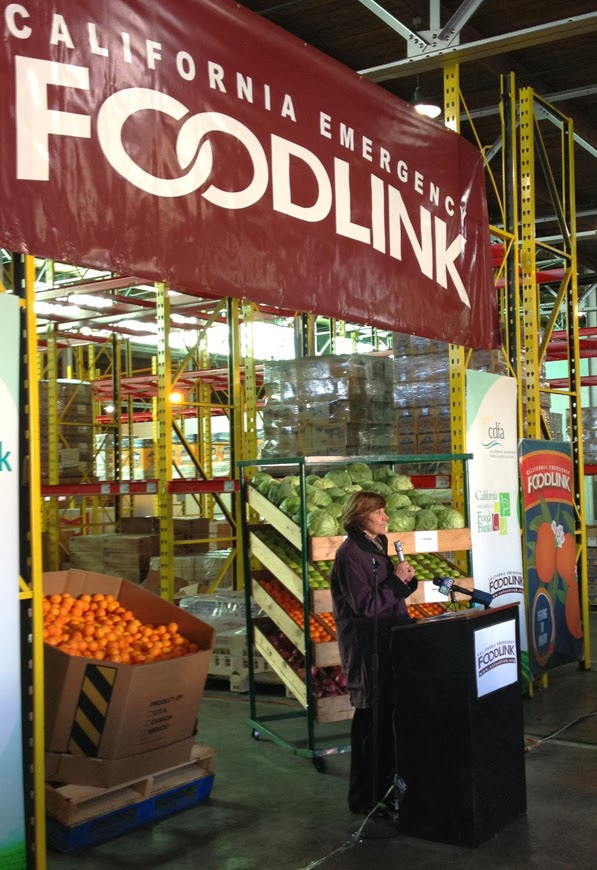
CDFA Secretary Karen Ross at a Farm to Food Bank today
In recognition of December as Farm to Food Bank Month, CDFA Secretary Karen Ross TODAY joined the California State Board of Food and Agriculture at California Emergency Foodlink, the nation’s largest food bank. 


The event highlighted food donation by farmers and ranchers and reiterated the need for food donations statewide.


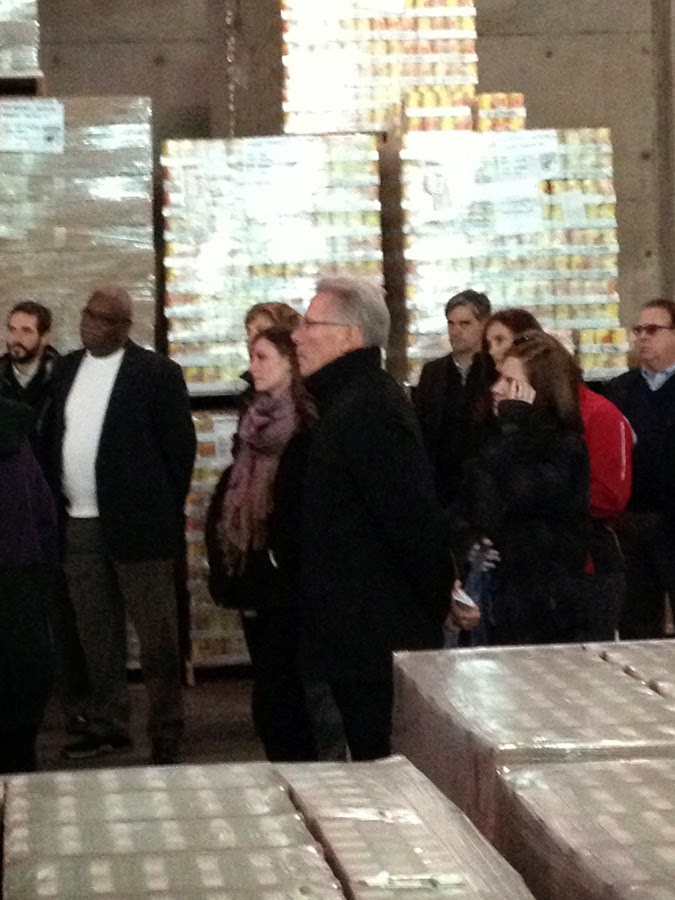
CDFA Board President Craig McNamara (center) and group
 
More than 49 million people are believed to be food-insecure in our nation – one in every six Americans. In California, almost 4 million people are food-insecure, which means they cannot afford enough food at least once in the previous year. So far this year, California farmers and ranchers have donated more than 127 million pounds of food to food banks. 

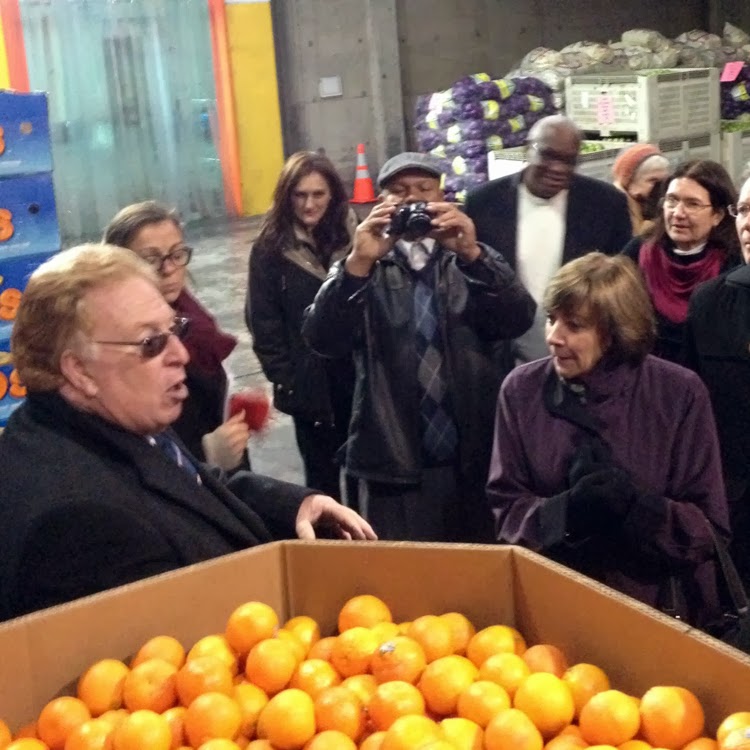
Foodlink President/CEO John Healeywith Secretary Ross
2016-05-31T19:42:30-07:00December 10th, 2013|

CRITICAL DROUGHT CONCERN EXPRESSED TO PRESIDENT AND GOVERNOR

Urgent Letter Signed by 50 Calif. Members of U.S. Congress and State Legislature to Avoid Economic Disaster

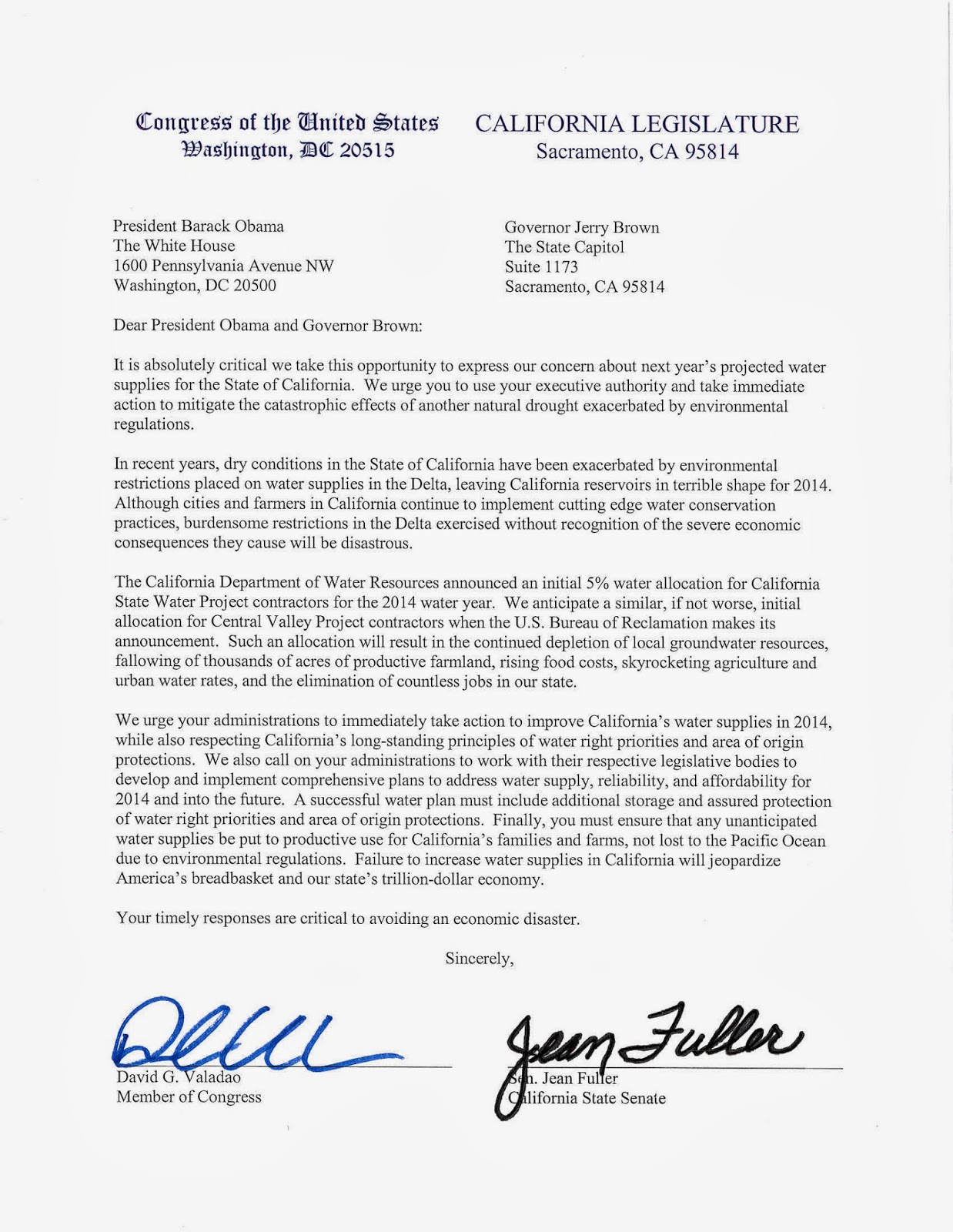
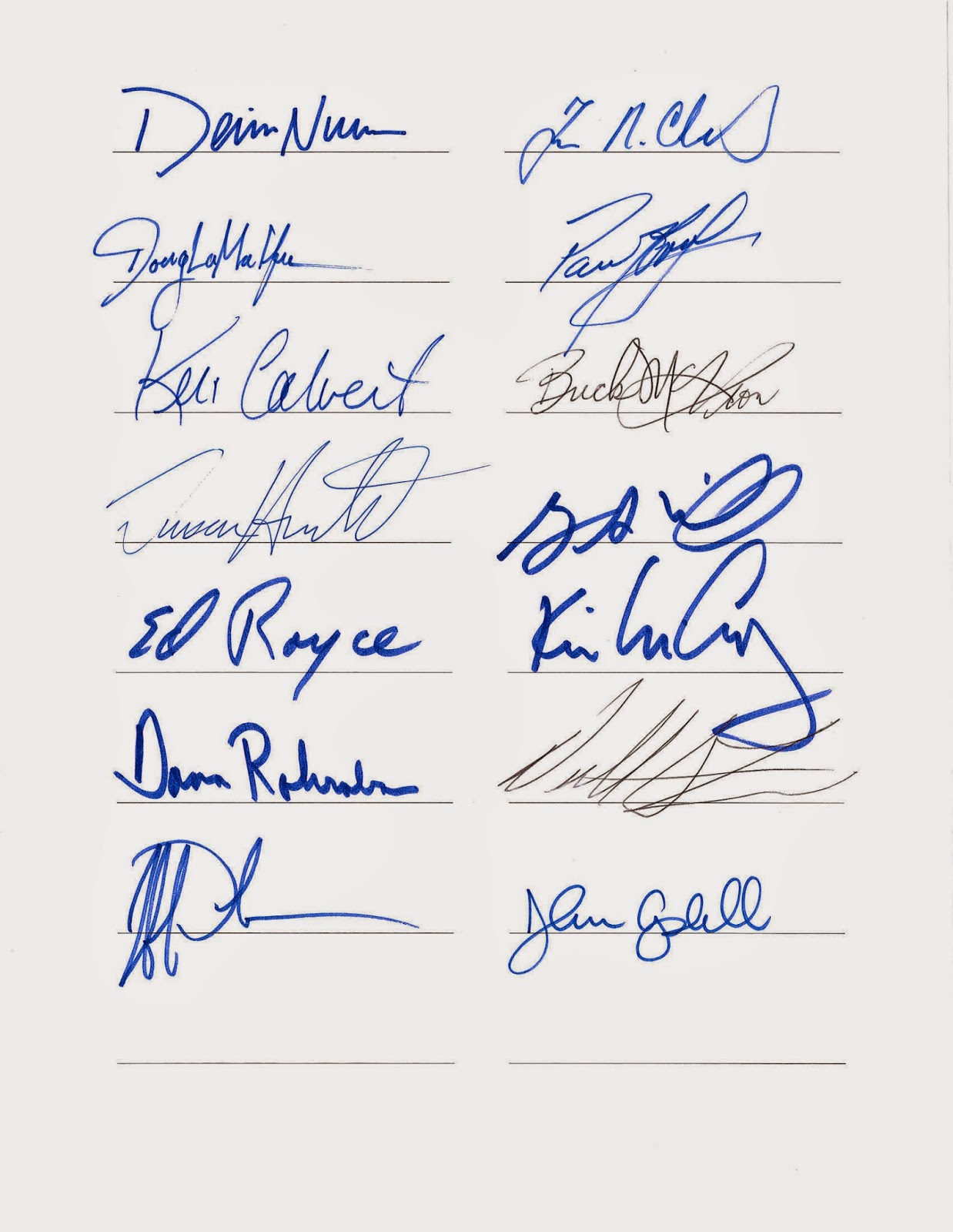
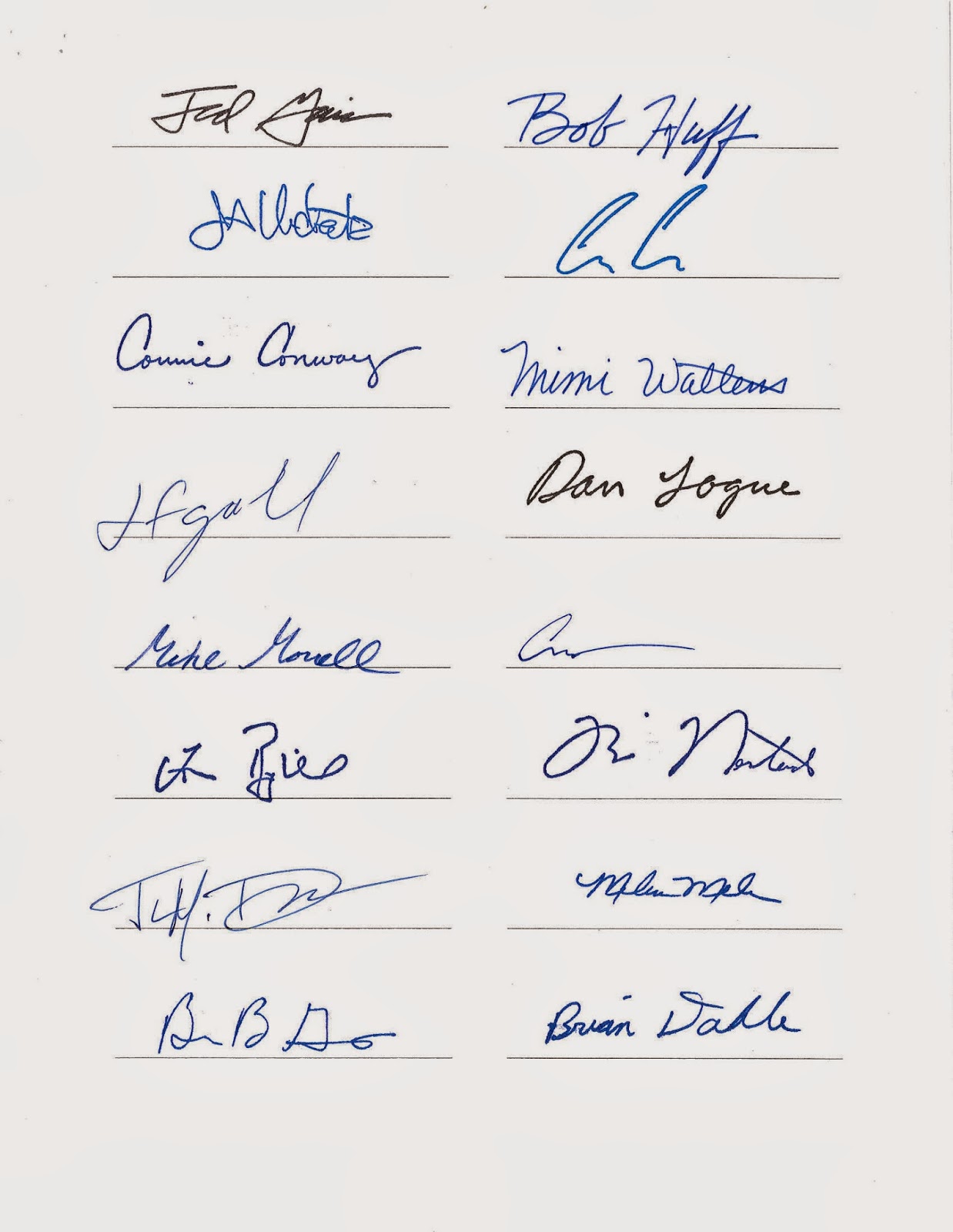
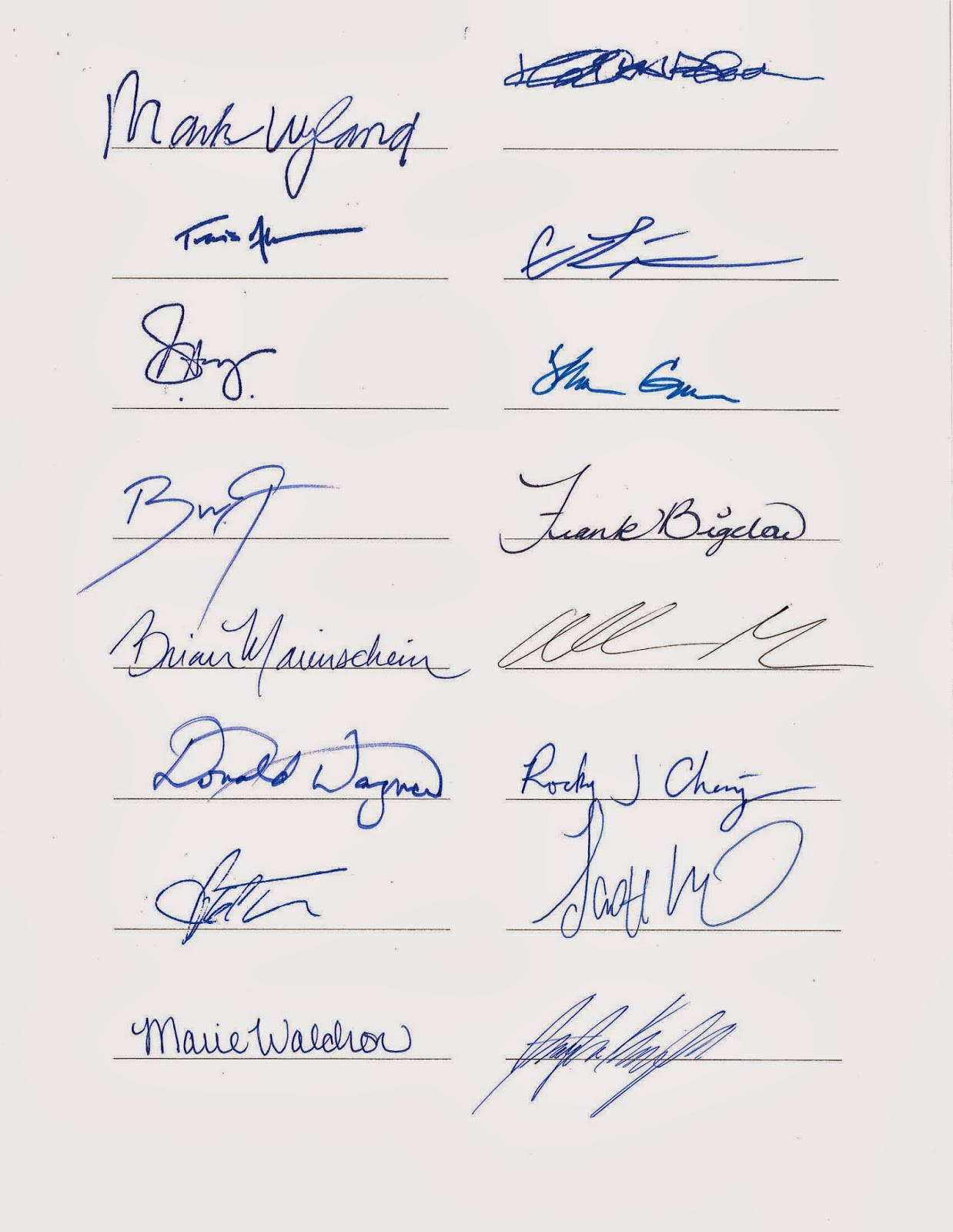
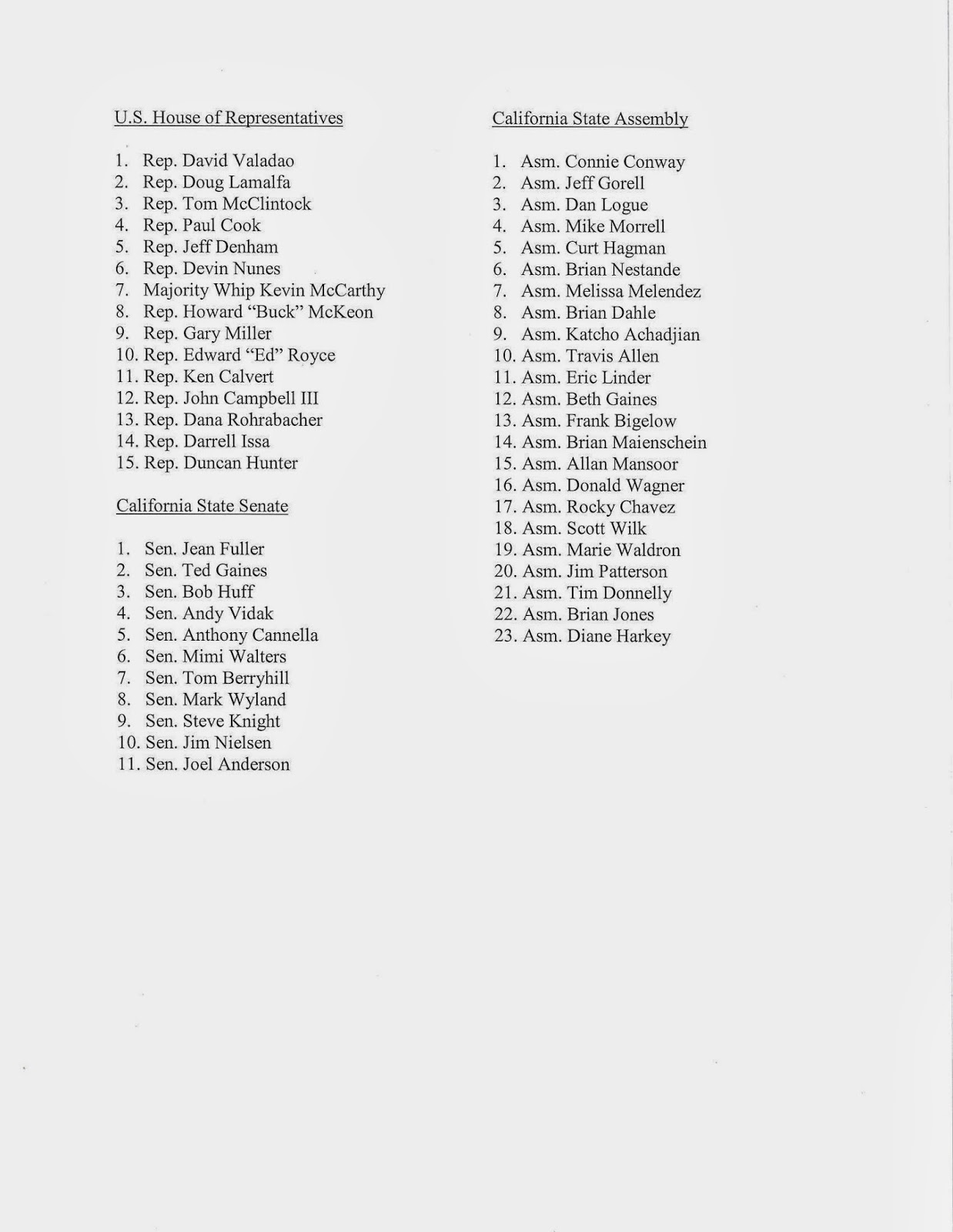
California members of the U.S. Congress and California State Legislature issued a letter to President Obama and Governor Brown yesterday. They are urging immediate use of executive authority to mitigate the catastrophic effects of another natural drought exacerbated by environmental regulations to avoid jeopardizing our state’s trillion-dollar economy.

The letter calls for immediate action to improve California’s water supplies in 2014, to work with respective legislatures to develop and implement comprehensive water plans that include additional storage and water rights, and to allocate any unanticipated water supplies to California’s families and farms and not to the Pacific. 

2016-05-31T19:42:31-07:00December 10th, 2013|

CITRUS DAMAGE EXPECTED TO BE LESS THAN 1990 AND 1998 FREEZES

Some Damage Expected For Valley Citrus Crop

Equipment Fatigue Now A Concern

California Citrus Mutual announced TODAY Valley citrus growers were up against below freezing conditions for the 6th consecutive night last night. Although higher overnight temperatures materialized this weekend, last night’s extremely low temperatures will likely result in some damage to the Valley’s $1.5 billion citrus crop. 
Cold daytime temperatures on Sunday set the stage for a rough night, with wind machines starting as early as 8 p.m. Unlike previous nights, an inversion layer failed to materialize leaving wind protection unsuccessful at keeping temperatures above critical levels.  Coupled with longer duration at low temperatures, damage is anticipated for the already weakened fruit.

The navel orange crop is expected to make it out of this freeze episode with some damage, the extent of which will be determined in the coming weeks.  The less cold tolerant Mandarin crop will have a greater degree of damage, again the extent of which cannot be verified at this time.  

Joel Nelson CCM President

While damage is expected, it is certainly not at levels close to damage in the last significant freeze events in 1998 and 1990. Improved frost protection technology and advanced weather forecasting has allowed growers to better prepare for freeze events than in prior freeze years.   The industry is confident that there is a sufficient level of harvested fruit and undamaged fruit to supply the market. 

Equipment fatigue and fuel supply are the concern now.  In 6 nights, wind machines have run for an average of 56 hours and field reports indicate that mechanical issues may inhibit frost protection efforts for the duration of this freeze event. Additionally, as cold temperatures persist, growers are worried that delivery of fuel supplies to power wind machines may become limited.

Nevertheless, the industry is still optimistic. “The cold weather we are experiencing now is by no means comparable to the severe temperatures and damage incurred in 1990, or even 1998,” says California Citrus Mutual President Joel Nelsen. “The frost protection technology we have today has allowed producers to better prepare for freeze conditions and protect the crop from serious damage.” 

California Citrus Mutual estimates that the overall cost to the industry for 6 nights of frost protection is $23 million.

California Citrus Mutual is a non-profit trade association of citrus growers, with approximately 2,200 members representing 70% California’s 285,000-acre, $2 billion citrus industry.  The mission of California Citrus Mutual is to inform, educate, and advocate on behalf of citrus growers.  The Exeter, California-based organization was founded in 1977.

2016-05-31T19:42:31-07:00December 10th, 2013|

CFBF 95th Annual Meeting Hosts Over Thousand Members

Statewide Farm Bureau Members listen to speakers during the General Session On Monday in Monterey

CALIFORNIA FARM BUREAU

ADVOCATES FOR ADVOCACY

AND AWARDS

TODAY, Farm Bureau President Paul Wenger welcomed more than a thousand members to the 95thCalifornia Farm Bureau Federation (CFBF) Annual Meeting.

CFBF President Paul Wenger

Wenger acknowledged that some could not be there as they were protecting their crops from the cold. He talked about agriculture being about quick adjustment to change and resiliency.

Wenger spoke about crop insurance, immigration reform, labor force, CFBF membership recruitment and retention, medical coverage, and new CFBF managers. He also addressed Prop 3, which caused past membership losses and risks potential ones as well, and CFBF’s positive working relationships with both state parties.

Wenger said that we are the only state among the 50, plus Puerto Rico, whose members rank advocacy and not insurance as the top farm bureau service they receive.

As promised at last year’s annual meeting, CFBF rolled out a new websiteto deliver great content in just a few steps and to facilitate new and renewed memberships.

Wenger’s overall message was, “We have the opportunity to change Sacramento; we need to step up. Make sure we are relevant and have a presence in Sacramento and Washington, D.C. If we are unwilling to fight when we are strong, when will we engage?”

Benny Jefferson
Claris Myers with President Wenger
Recognitions Presented at the Annual Meeting

The first county farm bureau in the country to turn 100 was Humboldt in 2013.  

Inaugural Lifetime Service Award Recipient – Helen Roberti, Plumas-Sierra County Farm Bureau

2013 Distinguished Service Award recipient – Claris Myers Shasta County Farm Bureau and Benny Jefferson, Monterey County Farm Bureau

2013 Leopold Conservation Award – Robert Giacomini Dairy, Marin County Farm Bureau

2016-05-31T19:42:31-07:00December 10th, 2013|
Go to Top