Western Drought Will Impact All Americans

Congress Seeks Solutions

By  Family Farm Alliance

The U.S. is facing yet another record-breaking drought year in the West. Farmers and ranchers in some of these areas are receiving little to no water from federal water projects as they enter the dry summer months.

Meanwhile, the Russian invasion of Ukraine has decreased and destabilized worldwide agricultural commodity production and availability. Rising input costs, combined with the ongoing energy and supply chain crises, continue to impact food supply and demand.

“We’re seeing reports that the war in Ukraine, sanctions and destroyed ports could take nearly 30% of the world’s grain supply out of production or off the market this year,” Family Farm Alliance Executive Director Dan Keppen recently said at a Congressional drought forum hosted by House GOP Members.

All of the above factors have combined to cause significant inflation – food prices alone have increased 9 percent this year – that will impact all Americans.

Loss of Agricultural Water Means Less Food on Grocery Store Shelves

Many Western farmers rely on federal Bureau of Reclamation projects for irrigation water. Over the decades the operations for several of these projects – including the Klamath Project (California and Oregon) and California’s Central Valley Project – have been significantly impacted by government decisions that disproportionately direct water to perceived environmental needs.

Every acre of farmland taken out of production equates to a loss of real food that could help replenish grocery store shelves that may soon run short of once-plentiful food products.

“When people talk about taking millions of acres of California farmland out of production, those are just numbers,” said Bill Diedrich, a fourth-generation California farmer said at the recent Congressional drought forum. “Let me put them in perspective for you. For every acre that is left unplanted because of a lack of irrigation water, it is the equivalent of 50,000 salads that will not be available to consumers.”

Mr. Diedrich also serves as President of the California Farm Water Coalition.

“Our food supply is just as much a national security issue as energy,” he said. “If we fail to recognize that, we put the country at risk.”

Sacramento Valley Farmers and Business Leaders Talk About This Dry Year 

As NCWA President David Guy recently wrote, California farmers are no strangers to drought, although one of the driest years in California has widespread and significant impacts in the Sacramento Valley.

To provide some context for the dry year and the economic impacts, see the recent paper prepared by Dr. Dan Sumner at UC Davis entitled, Continued Drought in 2022 Ravages California’s Sacramento Valley EconomyIn sum, the report suggests there will be 14,000 lost jobs, with $1.315B in impacts for those who rely on agriculture in the Sacramento Valley.

In a recent Ingrained Podcast, Jim Morris was able to catch up with several farmers and business leaders on the west-side of the Sacramento Valley to talk about the dry year and the impacts they will see this year.

“We’re down to 25 percent of normal rice acreage,” said grower Kurt Richter, who farms in Colusa County. “For a westside operation, that figure is actually very high this year. I’m the only person I know who is on the west side who is even planting rice at all.”

We encourage you to listen to the Ingrained Podcast to hear firsthand how the dry year will impact people and businesses in the region.

Water Allotment to Klamath Basin Farmers Hindering Food Production Amid High Market

Many farmers across the Klamath Basin are currently in the stages of planting their crops following the first few water deliveries from irrigation districts. However, with only 50,000 acre-feet of surface water allocated by Reclamation, one farmer says the impacts of another low production year will continue to hurt the community and the farming industry.

“It’s about to get a lot worse because the entire West is in this situation and food scarcity is going to be a real thing this year,” said Scott Seus, a farmer, Tulelake Irrigation District board member, and member of the Family Farm Alliance.

CLICK HERE for the interview Scott did with CBS affiliate KTVL TV (Medford, Oregon).  

Clearly, federal management of water has become too inflexible in places like California and Central Oregon, where a frog protected by the ESA impacts water deliveries to Deschutes River Basin producers.

“We must restore balance in federal decision-making regarding water allocation, particularly in times of drought,” said Alliance President Patrick O’Toole, a rancher from Wyoming. “This is one of several solutions needed to maintain food security for the nation and the economic wellbeing of the Western landscape.”

Congress Proposes Measures to Increase Western Water Supplies

Democrats and Republicans in both houses of Congress bill are advancing additional measures that would increase water supply and modernize water infrastructure in California and other areas of the Western U.S.

A suite of new water supply enhancement projects and demand management programs can also help alleviate the stress on existing Western water supplies. The Infrastructure Investment and Jobs Act, signed into law last November by President Biden, provides a once-in-a-generation federal investment towards this end. Legislative proposals made in the House and Senate seek to further improve water supplies for the West.

In February 2021, U.S. Representative David G. Valadao introduced the Responsible, No-Cost Extension of Western Water Infrastructure Improvements, or RENEW WIIN, Act, a no-cost, clean extension of operations and storage provisions of the WIIN Act (P.L. 114-322).

“Food prices are at a record high, and people are struggling to put food on the table,” Rep. Valadao recently wrote in a recent blog, titled “Severe drought threatens America’s farmers and food supply”. “The ongoing war in Ukraine is destabilizing worldwide agricultural commodity production. Experts are warning about the very real possibility of a global food shortage. Now more than ever, we need to do everything in our power to support our domestic farmers, ranchers, and producers to provide much needed stability to our global food supply.”

The RENEW WIIN Act – supported by the Alliance and several of its member agencies – would extend the general and operations provisions of Subtitle J of the WIIN Act and extend the provision requiring consultation on coordinated operations of the Central Valley Project and State Water Project. The legislation would also extend the authorization of appropriations for water storage projects that the Secretary of the Interior finds feasible.

“Making sure our agriculture producers have access to safe, clean, and reliable water is critical,” said Rep. Valadao.

Senators Dianne Feinstein (D-Calif.), Mark Kelly (D-Ariz.) and Kyrsten Sinema (D-Ariz.) on May 17 introduced S.4231, the Support to Rehydrate the Environment, Agriculture and Municipalities Act or STREAM Act, a bill that would increase water supply and modernize water infrastructure in California and throughout the West.

“If we don’t take action now to improve our drought resilience, it’s only going to get worse,” said Senator Feinstein. “We need an ‘all-of-the-above’ strategy to meet this challenge, including increasing our water supply, incentivizing projects that provide environmental benefits and drinking water for disadvantaged communities, and investing in environmental restoration efforts.”

Click here for the press release issued by Senator Feinstein’s office, which includes links to a one-page summary of the bill, a section-by-section analysis, and a list of supporters, which includes the Family Farm Alliance.

“We appreciate the increased attention that many Western Members of Congress recognize the importance of modernizing and expanding our water infrastructure,” said Mr. Keppen. “There is still time for all of our state and federal officials to right this ship and recognize the importance of storing water and growing food with it.”
2022-05-23T09:24:15-07:00May 23rd, 2022|

California Dairy Innovation Center Offers Opportunities For Cheese Education

2022 Dairy Short Course Programs and Conference Schedule Released

By California Milk Advisory Board

The California Dairy Innovation Center announced the latest list of short courses which will be offered this year in collaboration with the Pacific Coast Coalition and industry instructors. Dates for an inaugural Dairy Products, Processing, and Packaging Innovation Conference were also announced.

The Frozen Desserts Innovation short course will be held on June 28th and 29th at the Dairy Innovation Institute, Cal Poly San Luis Obispo with a focus on capturing consumer trends: sugar-free, lactose-free and high protein. The short course features both lectures, demonstrations and actual ice cream manufacture in the Cal Poly pilot plant and creamery. In addition, a sales and marketing educational segment will provide practical guidance to entrepreneurs, and established brands alike. Registration is open at: https://dairy.calpoly.edu/short-course-symposia

The Advanced Unit Operations short course will take place September 27-29. Designed for those working in dairy plants, this course delivers both theoretical and practical understanding and knowledge of pasteurization, separation, condensation, filtration systems, drying, as well as principles of food safety. Program and registration will open June 1.

The California Dairy Innovation Center, in collaboration with Cal Poly, The Dairy Business Innovation Initiative, Pacific Coast Alliance, and Fresno State will hold a first ever conference on Dairy Products Processing and Packaging Innovation in Shell Beach, Calif, October 12th-14th. Featuring both national and international speakers, the conference focuses on consumer-driven innovation and the latest technological advances. Program outline and registration is open at: https://dairy.calpoly.edu/short-course-symposia

California is the nation’s leading milk producer, and produces more butter, ice cream and nonfat dry milk than any other state. California is the second-largest producer of cheese and yogurt. California milk and dairy foods can be identified by the Real California Milk seal, which certifies they are made with milk from the state’s dairy farm families.

# # #

About the California Dairy Innovation Center
The California Dairy Innovation Center (CDIC) coordinates pre-competitive research and educational training in collaboration with industry, check-off programs, and research/academic institutions in support of a common set of innovation and productivity goals. The CDIC is guided by a Steering Committee that includes California Dairies Inc., California Dairy Research Foundation, California Milk Advisory Board, Cal Poly San Luis Obispo, Dairy Management Inc., Fresno State University, Hilmar Cheese, Leprino Foods, and UC Davis.

About Real California Milk/California Milk Advisory Board
The California Milk Advisory Board (CMAB), an instrumentality of the California Department of Food and Agriculture, is funded by the state’s dairy farm families who lead the nation in sustainable dairy farming practices. With a vision to nourish the world with the wholesome goodness of Real California Milk, the CMAB’s programs focus on increasing demand for California’s sustainable dairy products in the state, across the U.S. and around the world through advertising, public relations, research, and retail and foodservice promotional programs. For more information and to connect with the CMAB, visit RealCaliforniaMilk.com, Facebook, YouTube, Twitter, Instagram and Pinterest.

2022-05-20T08:38:10-07:00May 20th, 2022|

Community Members Invited to Support Favorite UC ANR Programs May 19-20

By Pam Kan-Rice, UCANR

California farmers can grow crops with less water. Gardeners can control pests with safer methods. Community members can take steps to protect their homes from wildfire. Children can learn life and work skills. Families can stretch their food dollars to provide nutritious meals. Californians have benefited from University of California Agriculture and Natural Resources research and outreach in many ways. And thanks to the state’s historic boost to UC ANR funding, more UC Cooperative Extension scientists and educators are being hired to address the unique needs of communities across California.

From noon to noon on May 19-20, the public is invited to donate for UC ANR Giving Day, sponsored by Tri Counties Bank, to enhance their favorite UC ANR projects or programs. 

The 24 hours of giving will expand UC ANR outreach to benefit the health and well-being of more Californians throughout the state.

In the past, donations have been used to fund UC Master Gardener demonstration gardens, purchase teaching supplies for California Naturalists, and fund scholarships for children to develop life and work skills in UC ANR’s 4-H programs.

Donors are invited to give to UC Cooperative Extension in their counties, Research and Extension Centers and favorite programs. When visitors click “GIVE” on the upper right of the website http://donate.ucanr.edu/givingday, fund choices appear in drop-down menus. 

Online gifts made between noon on May 19 and 11:59 a.m. on May 20 may help programs qualify for prize challenge awards. Donations can be made at http://donate.ucanr.edu/givingday.

If you prefer sending a check instead of donating online, please make checks payable to “UC Regents” and specify the fund, then mail to UC ANR Gift Processing, 2801 Second Street, Davis, CA 95618.

UC Agriculture and Natural Resources brings the power of UC to all 58 California counties. Through research and Cooperative Extension in agriculture, natural resources, nutrition, economic and youth development, our mission is to improve the lives of all Californians. Learn more at ucanr.edu and support our work at donate.ucanr.edu.

2022-05-17T12:07:18-07:00May 17th, 2022|

Hoobler, Machado Join Farm Land Trust Board

Bill Hoobler and Mike Machado Appointed to California Farmland Trust’s Board of Directors

California Farmland Trust is proud to introduce well-respected industry professionals and community members, Bill Hoobler and Mike Machado, as new board members.

Hoobler and Machado have been active supporters of CFT for several years and bring a wealth of institutional knowledge and deep-rooted passion to the organization.

“Bill and Mike both offer a talented skillset and valuable expertise to the board, and their combined knowledge in policy and finance will be tremendous additions to our organization,” said Charlotte Mitchell, executive director at California Farmland Trust. “We are thrilled to have such accomplished individuals join the board and look forward to working towards continued success, in service to our critical mission.”

Since 2018, Hoobler has served as a CFT committee member and dedicated his professional life to the agriculture industry. He worked in the Farm Credit system for over 39 years, specializing in lending and crop insurance, before retiring in 2016 and starting his own crop insurance agency in Patterson.

“Being involved with CFT since 2018 has been rewarding,” Hoobler said. “California farmland needs to be protected and CFT is just one way to assure that farmland will remain farmland, forever.”

Machado, a Linden native, grew up on his family’s over-100-year-old farming operation and returned to the family business after serving in Vietnam. Machado also served 14 years to the California State Legislature, where he focused on water, banking, insurance, and budget accountability. In 2015, Machado and his family placed an agricultural conservation easement on their family farm, and later in 2021, Mike protected an additional two parcels.

“Without agriculture, we don’t eat,” Machado said. “Without farmland, we don’t have agriculture. That is why the work of California Farmland Trust is so important.”

Hoobler and Machado join the existing 11 members of CFT’s board of directors and will both serve on the Budget, Finance, and Risk Management committee.

2022-05-09T11:13:42-07:00May 9th, 2022|

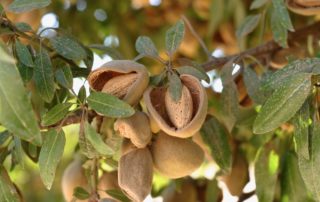
Almond Acreage Increases in 2022 but Pace of Growth Slows

Bearing almond orchards at harvest will cover 1.338 million acres across California, an increase of 29,000 acres


By Almond Board of California

California’s almond acreage continues to grow, but at a gradually slowing rate, according to two new reports released today. While the number of almond orchards removed also increased over the previous year, it was not enough to offset the overall acreage gains.

According to an estimate from Land IQ, bearing almond orchards at harvest will cover 1.338 million acres across California, an increase of 29,000 acres – or about 2.2% – over last year. This estimate looks at orchards that will be productive and harvested in 2022. In addition, the report estimates 59,732 acres of orchards will be removed before harvest, nearly 12,000 acres more than last year.

These estimates from Land IQ’s 2022 Standing Acreage Initial Estimate look at bearing acreage – orchards that have matured enough to produce a crop – for the current 2021-22 crop year. In addition, the U.S. Department of Agriculture-National Agricultural Statistics Service (USDA-NASS) 2021 California Almond Acreage Report released April 28, gives a comprehensive look at last year.

The USDA-NASS report for the 2020-21 crop year estimated there were 1.32 million bearing acres in 2021, up 5.6 percent from 2020. Total almond acreage in 2021, which includes non-bearing trees, was estimated at 1.64 million, up 2.5 percent from the previous year. It also said the 320,000 non-bearing acres in 2021 is a total down 8.6% from 2020.

The USDA-NASS report gave a preliminary estimate for bearing acreage in 2022 at 1.37 million acres, but cautioned that a major source of data for this estimate is a survey mailed to growers and is unlikely to be 100 percent accurate.

USDA-NASS said nonpareil continued to be the leading variety, followed by Monterey, Butte, Carmel, and Independence.

These reports are being issued side by side by the Almond Board of California (ABC) to provide a complete picture of California’s almond acreage.

Neither of these reports offer any estimate on the actual almond yield this 2021-22 crop year. The first look at yield will come on May 12 with USDA-NASS’ Subjective Estimate. A fuller picture of crop size will come with USDA-NASS’ Objective Report in July.

Bearing acres reflect plantings from 2019 or earlier. The removal estimates cover orchards taken out beginning in 2021 through March 31, 2022, added to acreage projected to be removed through Aug. 31, the end of the crop year. The projection uses historical data and present conditions.

“These estimates show that California almond production will remain strong,” said ABC President and CEO Richard Waycott. “Demand for almonds in California, the U.S. and around the globe continues to grow and California almond growers are prepared to meet that demand.”

Land IQ’s Initial Estimate and its Final Acreage Estimate in November, along with USDA-NASS’s April Acreage Report, May’s Subjective Estimate and the Objective Report in July are all commissioned by ABC to provide statistical transparency and a robust picture of California almonds to industry stakeholders around the world.

In 2018, ABC first commissioned Land IQ, a Sacramento-based agricultural and environmental scientific research and consulting firm, to develop a comprehensive, living map of California almonds. The map is the result of nearly a decade of research and has an accuracy of 98% or greater.

Data for USDA-NASS’s acreage reports comes from a number of sources including voluntary responses from almond growers’ to mailed questionnaires with telephone and field follow-ups. USDA-NASS also uses Land IQ data to fine tune its reports.

2022-05-05T10:07:34-07:00May 5th, 2022|

Port Delays Worsen as Harvest of New Crops Approaches

By Ching Lee,  AgAlert

As ongoing port congestion and persistent shipping obstacles continue to block movement of California agricultural goods, farmers and exporters face bulging warehouses and dwindling cash flow that threaten to sink some businesses.

Tree nuts, fresh produce, dairy products and other California farm commodities struggle to find rides on vessels and containers in which to ship them, with ocean carriers rushing to set sail empty rather than hauling agricultural exports.

“We have 50 loads packed and ready to ship, that customers would take tomorrow, that we can’t get on the ship,” said Bill Carriere, a Glenn County walnut grower and handler.

Agricultural exporters say their shipping problems—which trace to pandemic-related supply-chain disruptions that started in 2020—have only gotten worse. More shipping companies have notified them that they won’t stop at the Port of Oakland to pick up containerized farm products, which account for 60% of total exports through the port. The companies opt instead to return ships directly to Asia following long delays in the ports of Los Angeles and Long Beach.

Only one ocean carrier—Mediterranean Shipping Co.—so far has committed to servicing the Port of Oakland, said Roger Isom, president and CEO of the Western Agricultural Processors Association and California Cotton Ginners and Growers Association.

The Northern California port saw 67,910 empty containers leave its shores during the first two months of this year. That’s compared to 37,263 empties during the same time in 2020, according to a letter that agricultural groups, including the California Farm Bureau, sent to the Biden administration last week. The letter further noted that three out of four containers at U.S. ports return to Asia empty.

Because ships continue to bypass the Oakland port, exporters say the opening in March of a new “pop-up” yard for pickup of empty containers has offered limited relief. The temporary hub, located offsite of the port, allows shippers to stage export loads while avoiding busy marine terminals where most empty containers are stored.

As of last week, there were more than 500 containers in the yard, said port spokesman Robert Bernardo. The port saw 83 ships stopping in Oakland in March, compared to 93 a year ago. Reduced vessel arrivals were due in part to a COVID-related port shutdown in Shanghai, the port said.

Though the port has enough empty containers to cover current demand, Bernardo said supplies remain “in constant flux.” He said he expects inventory to tighten as imports from China begin to resume.

Aside from dealing with a shortage of containers, agricultural shippers say they struggle to secure bookings, which often get canceled or “rolled,” meaning the cargo wasn’t loaded onto the scheduled vessel, usually because there’s no room.

To read more, click here.

2022-05-04T12:14:43-07:00May 4th, 2022|

Westlands Water District awarded $7.6 Million Grant by the California Department of Water Resources

Grant Funds Will Help Create Drought Resilience, Increase Investment In Recharge Projects, and Drive Regional Groundwater Sustainability

 Today the California Department of Water Resources (DWR) awarded Westlands Water District, which serves as the Groundwater Sustainability Agency (GSA) for the Westside Subbasin, a $7.6 million grant as part of the Department’s Sustainable Groundwater Management (SGM) Proposition 68 Implementation Grant Program. This grant provides critical investment in the District’s efforts to ensure a sustainable groundwater basin.
“As we enter the third year of historic drought, Westlands remains committed to utilizing the most proactive, innovative, and scientifically-sound strategies in groundwater management,” said Tom Birmingham, general manager of Westlands. “This grant funding from DWR will be instrumental to the District’s implementation of the Sustainable Groundwater Management Act and to achieving groundwater sustainability. We are grateful for the support and investment in these vital projects.”
The grant funding will further three key efforts within the Subbasin: the Storage Treatment Aquifer Recharge (STAR) Program, Phase 1; the Westside Subbasin Groundwater Sustainability Plan (GSP) 5-year Update; and the Westside Subbasin Geophysical Investigation for Recharge Potential.
The STAR Program will establish a network of treatment and aquifer storage and recovery (ASR) facilities in the Westside Subbasin. These facilities will treat water from the unconfined upper aquifer and provide temporary storage of surplus supplies. Based on current design, each treatment facility could treat up to 10,000 acre-feet a year and each ASR well could inject up to 1,200 gallons per minute to be stored for later use. Phase 1 of the STAR Program includes planning and identification of locations for the treatment facilities.
The funding will also support the District’s 5-year review and update of the Westside Subbasin GSP. This update enables the District to assess the implementation of the GSP and incorporate the latest information on groundwater conditions, technology, and science. The 2025 update will reflect progress towards achieving the Westside Subbasin 2040 sustainability goals, key groundwater project, and SGMA regulations compliance.
Lastly, the grant provided by DWR will also provide funding for the Westside Subbasin Geophysical Investigation for Recharge Potential. This Investigation consists of conducting geotechnical examinations on lands within the Westside Subbasin to identify groundwater recharge potential. The data collected will help interested parties, such as growers and/or the District, determine if a proposed site is feasible for groundwater
2022-05-03T11:03:46-07:00May 3rd, 2022|

Fresno County Farm Bureau Recognizes Journalists


FCFB Celebrates Agricultural Champions and Journalistic Excellence

After a two-year hiatus, Fresno County Farm Bureau held its third annual “Bounty of Fresno County” celebration on Thursday, April 28, at Wolf Lakes Park in Sanger.

Fresno County Sheriff-Coroner Margaret Mims was recognized with the FCFB “Friends of the Family Farm Award” for her vigorous support and contributions to Fresno County agriculture and rural communities. Sheriff Mims has served as the 25th Fresno County Sheriff-Coroner since November of 2006 and is now finishing up her final year of service.

Additionally, FCFB announced the winners of the 28th annual Journalism Awards.

Serving as judges for the Journalism Awards were Fresno Chamber of Commerce Chief Operating Officer Amy Fuentes; California Cotton Ginners & Growers Association and Western Agricultural Processors Association’s Assistant Vice President Priscilla Rodriguez; and FCFB President Daniel Hartwig.

Award winners received the coveted FCFB tractor trophy, which was generously donated by Kuckenbecker Tractor Company.

The criteria for the awards were: thorough and objective coverage of issues, given time and space limitations; educational element for the agriculture industry or the consumer; and portraying the personal stories of those who make up the food and agriculture industry, making issues relevant to consumers and Valley residents.

Audio

Patrick Cavanaugh, Ag Information Network, “Initial Zero Allocation Is Part of Massive Decline in Water Availability,” February 2022.

Farm Trade Print

Todd Fitchette, Western Farm Press, “Rice Fields Benefit Endangered Salmon,” January 2022.

General Print

Edward Smith, The Business Journal, “Growers, Experts Say Conventional Wisdom Around Drought is Flawed,” June 2021.

Video

Aurora Gomez/Reuben Guerra, ABC30, “Children First: Firebaugh High School’s FFA program,” September 2021.

“Heavy Puller Award”

18THIRTY Entertainment was recognized with the FCFB “Heavy Puller Award” for their many shows featuring agriculture including American Grown: My Job Depends on Ag, Tapped Out, Silent Sacrifice, and the Creek Fire documentary.

2022-05-04T12:10:00-07:00May 2nd, 2022|

Giulia Marino, Mae Culumber Named Presidential Chairs for Tree Nuts

UC ANR names Marino, Culumber Presidential Chairs for Tree Nuts


By Pan Kan-Rice, UCANR Assistant Director, News and Information Outreach

Two UC Cooperative Extension scientists have been selected as Presidential Chairs for Tree Nuts at University of California Agriculture and Natural Resources.

Giulia Marino, UCCE specialist, will be the Presidential Chair for Tree Nut Genetics and Mae Culumber, UCCE nut crops advisor, will be the Presidential Chair for Tree Nut Soil Science and Plant Water Relations, announced Glenda Humiston, UC vice president for agriculture and natural resources.

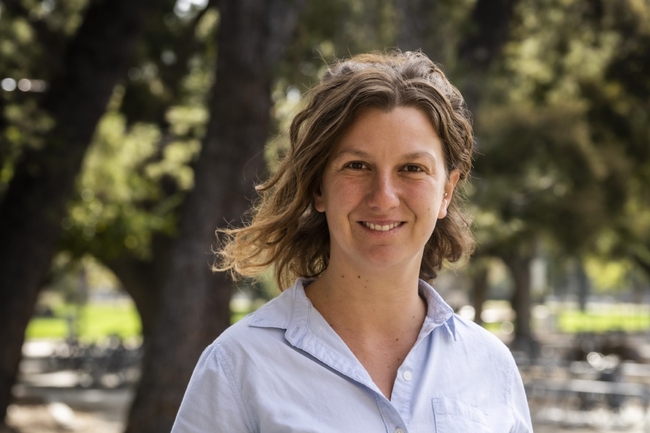
Giulia Marino

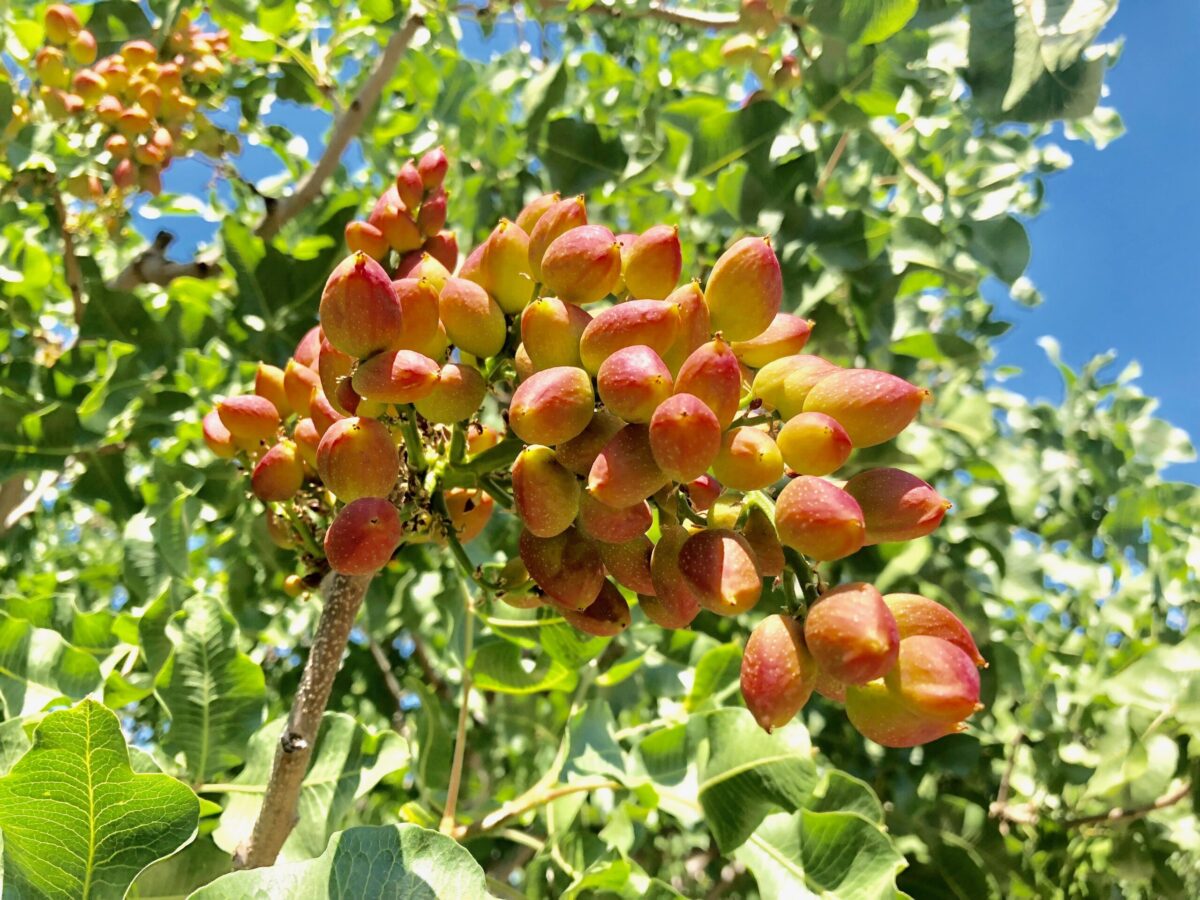
The endowed chairs will give the two scientists a dedicated source of funding for five years for their ongoing agricultural research. UC Agriculture and Natural Resources established the two $1 million endowments in 2015. Half of the funds for the endowed chairs was donated by the California Pistachio Research Board and the other half was provided by UC Office of the President.

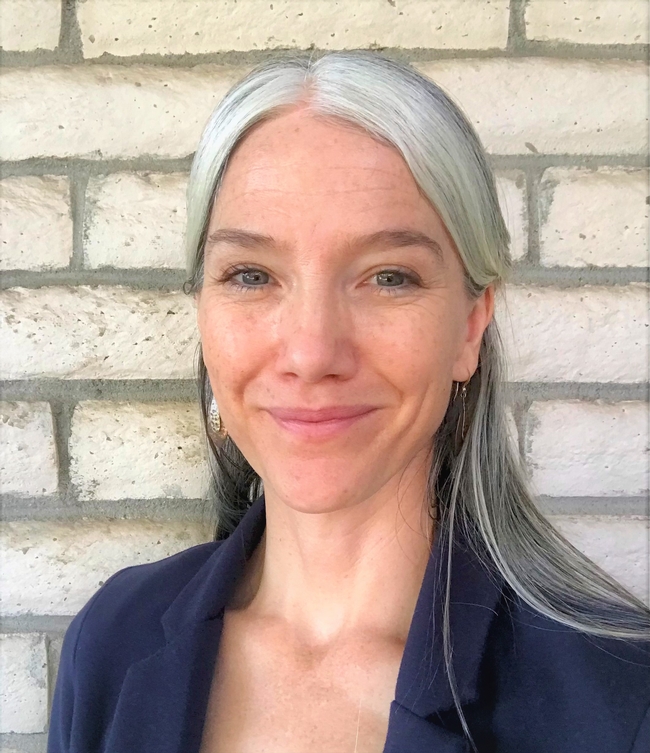
Mae Culumber

“The California Pistachio Research Board appreciated the opportunity to create these Presidential Chairs with the dedicated flexible funding it provides the scientists,” said Bob Klein, manager of the California Pistachio Research Board. “Mae and Giulia have stellar research records, have a history of research on California pistachios, and deserved both consideration and the award of these Chairs. The Board was pleased with the previous incumbents and is now looking forward to working with both Giulia and Mae in their programs on Genetics and Soil Science/Water Relations.”

Marino, who joined UC ANR in 2020, is based at UC Kearney Agricultural Research & Extension Center in Parlier. Her research integrates germplasm preservation and evaluation with tree physiology to improve orchard system profitability and abiotic-stress resilience. She explores the interactions between cultivar-rootstock traits, soil conditions and management practices.

“The funding from the presidential chair of tree nuts genetics will allow me to evaluate the horticultural and physiological performance of some promising new scion-rootstock options stemming from the UC pistachio breeding program developed by Craig Kallsen, UCCE farm advisor for Kern County, and Dan Parfitt, UC Davis professor emeritus,” Marino said.

“The program has the objectives of increasing the genetic diversity of the scion and rootstock cultivars used by the pistachio industry to improve grower returns and reduce its susceptibility to climate change,” Marino continued. “Rootstock projects include novel rootstocks more tolerant of boron in irrigation water, dwarfing rootstocks for higher early yields and more efficient use of pruning and harvest inputs. Scion objectives include novel scions for higher yield and trees less sensitive to inadequate winter chilling.”

One of her current research lines focuses on the characterization of low vigor cultivars and/or rootstocks to increase orchard planting density and reduce management costs in olive, pistachio and almond. She develops protocols for irrigation management based on genotype-specific physiological responses to water stress. Marino also studies the impact of saline sodic soil conditions on pistachio physiology and of low winter chill on cherry and pistachio tree and fruit physiology.

Marino earned a doctoral degree in fruit and forestry tree systems and master’s and bachelor’s degrees in agricultural science, all from the University of Palermo in Italy.

Culumber, UCCE nut crops advisor for Fresno and Kings counties, focuses on enhancing the sustainability and viability of nut crop production through applied research and outreach education with emphasis on soil and water conservation and reducing the impact of production practices on air quality and greenhouse gas emissions. Culumber partners with fellow UC advisors, specialists, campus faculty, growers and other industry stakeholders to find practical, sustainable solutions for issues including soil salinity, tree training and pruning, tree nutrition, and pest and disease management.

“As Presidential Chair, I will utilize these generous funds from the Pistachio Research Board to augment my collaborative outreach extension and applied research efforts to understand and develop solutions to soil and water quality problems faced by pistachio growers and other nut crop producers across the San Joaquin Valley,” Culumber said.

She is collaborating on a CDFA Fertilizer Research and Education Program project that provides irrigation and nitrogen management training for certified crop advisors and growers to adopt practices that conserve water and protect water quality. She is also studying how to improve estimates of crop evapotranspiration and forecasting for major California crops for more precise irrigation. Culumber is leading research on the effects of whole orchard recycling on air quality and climate resilience, soil health, tree growth and productivity in second-generation orchards.

Culumber earned a Ph.D. in soil science and agroecology and a master’s in plant science and molecular ecology, both from Utah State University, and a bachelor’s in biology from University of Wisconsin-Stevens Point.

Bruce D. Lampinen, UC Cooperative Extension integrated orchard management, walnut and almond specialist in the UC Davis Department of Plant Sciences, received the first Presidential Chair for Tree Nut Soil Science and Plant Water Relations. Craig Kallsen, UC Cooperative Extension farm advisor in Kern County who specializes in fruit and nut crops, received the Presidential Chair for Tree Nut Genetics.

2022-04-29T13:59:40-07:00April 29th, 2022|

Governor Newsom Signs Executive Order in Response to Western Drought

By Kahn, Soares & Conway, LLP

As California endures the driest first three months of a year in the state’s recorded history, and simultaneously enters a third year of drought, Governor Gavin Newsom signed an Executive Order (Order) to strengthen conservation efforts. According to the Administration’s press release, the Order calls “on local water suppliers to move to Level 2 of their Water Shortage Contingency Plans, which require locally-appropriate actions that will conserve water across all sectors and directing the State Water Resources Control Board to consider a ban on the watering of decorative grass at businesses and institutions.”

The Governor is “encouraging suppliers, where appropriate, to consider going above and beyond the Level 2 of their water shortage contingency plans, activating more ambitious measures [and]… has ordered state agencies to submit funding proposals to support the state’s short- and long-term drought response, including emergency assistance to communities and households facing drought-related water shortages, facilitating groundwater recharge and wastewater recycling, improvements in water use efficiency, protecting fish and wildlife, and minimizing drought-related economic disruption.”

Today’s Order also includes the following provisions:

  • Ensuring Vulnerable Communities Have Drinking Water
  • Cuts red tape so communities that need access to emergency hauled or bottled water can get it immediately.
  • Safeguarding Groundwater Supplies
  • Requires local permitting authorities to coordinate with Groundwater Sustainability Agencies to ensure new proposed wells do not compromise existing wells or infrastructure, as 85 percent of public water systems rely heavily on groundwater during drought.
  • Streamlines permitting for groundwater recharge projects that help to refill aquifers when rains come.
  • Protecting Vulnerable Fish And Wildlife
  • Expedites state agency approvals for necessary actions to protect fish and wildlife where drought conditions threaten their health and survival.
  • Preventing Illegal Water Diversions
  • Directs the Water Board to expand site inspections in order to determine whether illegal diversions are occurring.

For more information on the state’s response to the drought, click here. For any questions, please reach out to Louie Brown at lbrown@kscsacramento.com.

2022-03-29T13:28:27-07:00March 29th, 2022|
Go to Top