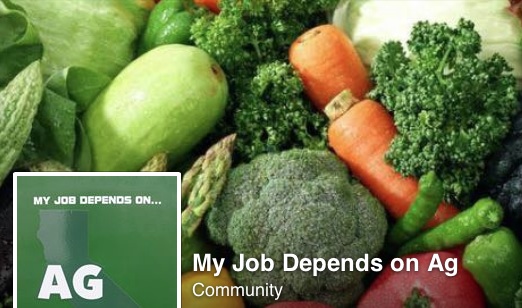
MY JOB DEPENDS ON AG Broadens Ag Community on Facebook

“My Job Depends on Ag” Facebook Campaign Goes Big

 By Patrick Cavanaugh, Associate Editor

It was a vision by Steve Malanca a tractor, salesman, and Erik Wilson, pest control operator and honeydew melon farmer, both working in around Dos Palos in Merced County.

Erik Wilson

Erik Wilson

“The fact that California agriculture is only 2 percent of the gross domestic product of the state was offensive to agriculture,” said Wilson. “because we all know it goes way beyond the gross receipts.”

Steve Malanca

Steve Malanca

Back in 2013 Malanca, an equipment salesman with Duetz Allis in Kerman, Calif., came up with a decal with the message: My Job Depends on Ag. He made a few for his friends who slapped them on their trucks.

“The phrase was inspired by a video done by Mike Wade, California Farm Water Coalition, in which he asked several people how they depended on ag for their job,” Malanca said.

Malanca was born and raised in Firebaugh, where his grandfather settled after emigrating from Italy. “My grandfather worked for Miller and Lux ranch, which was one of the largest ranches in the United States in the late 1800s,” he said.

“My father was born and raised on the West Side and was a cotton gin manager for Producers Cotton Oil Company. I have an older brother who is in the cantaloupe business longer than I have been in the farm equipment business. He is part owner of Westside Produce, and my younger brother is a shipping clerk there.

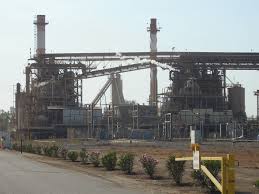
Producers Cotton Oil Company Plant Near Calwa, California

Producers Cotton Oil Company Plant Near Calwa, California

For the last 40 years, starting in Firebaugh, Malanca has been selling farm equipment. “That community has been tremendous to our family. Being involved in the equipment business, and talking to our customers about the trials and tribulations about water was an inspiration to put the ‘I Depend on Ag’ video together.

“There was a local Firebaugh farmer who made a brown ‘V’ decal that was a spinoff of the green ‘V’ of former Fresno State Bulldog coach Pat Hill, signifying the green valley. The brown V of course signified no water,” said Melena. “I expanded the idea and generated the ‘I Depend on Ag Decal’ about a month ago.

“Then Erik immediately suggested that we put it on Facebook, and the two ideas were married–and here we are,” said Malanca. As of the afternoon of June 6, the number of connections were close to 21,000 members!

“We did not want to have a Facebook with statistics on the importance of agriculture in California,” said Wilson. “I have a friend named Brian Ervin who is on Facebook, and he posted an item unrelated to the ‘I Depend on Ag’ concept. He wanted to know about other people’s California…Was it raining?…Was there hail on the ground? There was also an image of a guy loading a hay truck.”

“Instead of pushing out information, I got the idea of just letting everyone tell their own story,” Wilson said. “If people have a job that depends on ag, then we should let them tell their own story. Let people get involved. They own the page, and the stories have been wonderful. In fact, Steve and I have gotten choked up on some. People are saying are some things you’ve never heard of, and it’s really kind of historical,” he said.

“There are a lot of old methods of farming that have been forgotten that are now being introduced on the page,” said Wilson.

“Also, I have encouraged any group or person who disagrees with our philosophy and farming methods to open up the conversation, and not yell or get profane. This is what everyone America has been crying for from our politicians. So, we are going around them. This is how civilized adults get things done.”

“There have been comments from the organic crowd regarding images of sprayers working in fields. Now if they want organic food to eat, we will be happy to give it to them at a higher cost; organic production costs us more in time, money and trips across the field because the materials that we are permitted to use are not as affective,” said Wilson.

“We had a conversation with Western Growers on June 4 in which they asked if we were having to delete a lot of entries from people bashing the web page,” said Malanca. “And Erik, who moderates the page, said only three posts had to be deleted.”

“I may have deleted something prematurely because I thought a comment might go south too fast, but I just do not want the nastiness or personal attacks to take over, because it often happens if you do not moderate–even if it’s a friend–if they throw F-bombs, their entries will be deleted.”

“We are hearing from so many people who understand that ag is part of their job. We had a guy who works in the tortilla chip factory in Los Angeles who depends on ag for his job because all the corn that goes into the chips is grown in the San Joaquin Valley,” said Wilson.

“Flower shops are connecting in because flowers are agriculture. A lavender grower also posted a comment.”

Trucking companies are chiming as well. “If we can’t grow and sell it, then these boys can’t haul it,” noted Wilson. “And if we can get the trucking industry behind us since they do haul a lot of ag products, suddenly we are uniting an even larger segment of people who depend on agriculture,” said Malanca.

“I’d like to see these truckers and the guys on the docks get as passionate as we are, and maybe decide not to haul freight to areas that are complaining about farmers. They need to say, ‘if you want what we have, then turn the water on for the farmers.'”

“This is giving farmers a voice,” said Malanca. “And it’s something that has been missing.”

“Our wives have said that we are preaching to the choir, and I say that we need to rally and embolden every single person in the industry. I want to champion them as their story has not been told in the media–other than the agricultural media,” said Wilson.

“Many fragments have beentrying to get something done, but now we are seeing farmers really coming together on ‘I Depend on Ag.’ This is what we have been trying to do since the beginning of time,” said Malanca.

While the scope of the facebook page focuses on California, plans are germinating to roll out a national campaign. “After all, there are millions across the country who depend on agriculture,” said Wilson.
2016-05-31T19:28:15-07:00June 6th, 2015|

Navel Orangeworm Pressure

Joel Siegel: Beware of Navel Orangeworm Over Next Few Weeks

By Patrick Cavanaugh, Associate Editor

Joel Siegel, research entomologist with USDA Agricultural Research Service (ARS) in the Parlier office in Fresno County, is worried about Navel Orangeworm (NOW) pressure on almonds, pistachios and walnuts this season, “because we have this pattern of hotter winters, warmer springs. And, there is more than enough degree-day accumulation for an extra generation of NOW, compared to what people were dealing with four years ago. And with that, there’s the potential—if you are not on top of things—for it get out of hand.”

Those higher temperatures, he says, are what the worms desire, “Temperature—you can think of it as fuel—fuel for the fire. So the faster the generation time, the more they can start overlapping and possibly resulting in an extra generation, prolonged pressure, and at the tail-end, more NOW going into the next season as well. So you have this cycle that keeps on increasing,” says Siegel.

In describing the different monitoring and spray strategies for the each nut crop, Siegel says, “Well, with pistachios, hull split is not as predictable, so if you have hull integrity maintained, there is less NOW pressure because the nuts are not vulnerable. Navel Orangeworm seems to find pistachios once that hull begins to split. If hull break-down occurs earlier, you are dealing with more pressure.”

Joel Siegel

Joel Siegel, research entomologist with USDA ARS in the Parlier office, Fresno County

“On walnuts,” he explains, “people have been harvesting them later, going into September and October. So, if sun damage or anything else has damaged the hull in these late varieties, NOW will find these nuts as well. So, growers are experiencing higher pressure with late harvest walnuts.”

“NOW management timing is a bit more obvious for almonds,” Siegel explains. “That hull split spray is probably the most critical spray application, plus the new crop nuts are increasingly becoming more vulnerable to NOW. When that hull begins to open seems to be when this moth really notices the almonds.”

Siegel states, “One problem with almonds in particular, is that drought stress may cause prolonged hull-split that is not synchronous within an orchard. You’ll see NOW on the edges and the middle of the orchard, for example, just out of sync. So growers are having to apply an extra spray to treat all of their nuts the first time, and that is a relatively new phenomenon.”

“Second,” he says, “some people get burned in almonds, as they are used to the NOW pressure they encountered two to three years ago when they were not dealing with that extra generation. So they’ve only been applying this single spray; whereas, currently, many people need to do a hull-split spray followed by a post-hull-split spray.” And the way this season is progressing, growers may need to do this second spray over the next ten days.

“With  pistachios,” Siegel notes, “these NOW generations are building. And because of the high economic value of pistachios, people are doing a  second, or even a third shake. So if you have a scenario in which your crop is not synchronous in development, a lot of nuts become available late in the season, just when the NOW population is high as well. So that last 20% of the pistachio crop is where a great deal of damage is occurring.”

Navel Orangeworm does so much damage to the kernels that many processors are offering price premiums to growers for pistachios with  less than 1% damage. Siegel clarifies, “I’m assuming that is the goal of increased subsidies; to help offset either the cost of increased insecticide applications or to offset the cost of puffers for mating disruption.”

Siegel notes some unique NOW attributes, “They are very good at eating a lot of different things.  People don’t realize that although these different nut commodities—almonds, pistachios, and walnuts—have chemicals that help protect them from insects, this worm is very good at detoxifying or eliminating these protective chemicals. So, NOW is able to pressure many different crops and moldy fruit, so that any moldy mummies on the ground can serve as food for Navel Orangeworms. This is why sanitation is so critically important.”

Siegel says California tree nut growers are well-known for their high quality product, and this excellent reputation must be maintained. “Pistachios are a valuable crop,” Siegel says. “Growers must balance these advantages, talk with their processors, and look at how aggressive their pest management practices need to be.”

“The reality,” he continues, “is that a lot of people did quite well last year, and their damage was quite acceptable. So again, my advice is to stay the course; if you are happy with your results, continue to do the things that made you happy. If you got stung a little bit, consider adding sanitation or an additional spray.”

Finally, Siegel summarizes, “The California advantage is a quality nut crop that is high in demand. I assume that quality is never static; it always has to improve and respond to the market. As processors continue to pay premiums, they will expect nuts of a certain quality, and that will be the challenge for growers’ management strategies.”

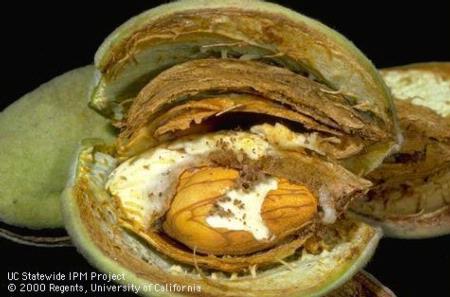
(Featured Photo: Almond damaged by navel orangeworm larvae, UC ANR)

2016-05-31T19:28:15-07:00June 5th, 2015|

Biomass Bill Passes Assembly

Biomass Bill (AB 590, Salas / Dahle) Protects Renewable Energy and Air Quality

SACRAMENTO – AB 590 will incentivize biomass utilization of agriculture waste and forest waste. The legislation will save jobs, divert biomass from landfills, and create renewable energy.

“Biomass power generation is a clean and efficient way to produce renewable energy and help improve our air. In fact, the Delano biomass facility has helped reduce 96 percent of the pollutants released from open-field burning. This facility alone converts 300,000 tons of agricultural waste per year into clean, renewable energy.” said Assemblymember Salas. “AB 590 provides the necessary structure and resources to protect and incentivize biomass power in California.”

Farms in Kern and Tulare Counties generate over 580,000 tons of woody waste annually, mostly from almond, peach, and nectarine orchards. In the past, most of this material has been burned openly in the fields. Open burning of wood residues produces up to 100 times more greenhouse gas (GHG) emissions than biomass power plants, which convert wood into renewable energy. The Delano biomass facility reduces 96 percent of the pollutants released in open-field burning; leading local air quality management officials to call Covanta Delano “a stationary air pollution control device.”

In addition to air quality benefits, the biomass plants produce a steady flow of reliable, renewable, baseload electric power regardless of natural external conditions, like wind, sun and water flow. The plants also help ensure that the state meets its current renewable energy portfolio standard of 33 percent by the 2020 statutory deadline.

“In the past few years we have seen the catastrophic results of forests that are too loaded with forest fuels. The people of my district have lived in a cloud of smoke, as thousands of acres have burned destroying lives, property, critical animal habitat, ruining our watersheds and wasting valuable resources,” said Assemblyman Dahle. “I introduced AB 590 to address this crisis. The bill is now on to the Senate with bipartisan support from the Assembly, where I hope to see it receive the same support.”

Currently, California biomass plants use more than eight million tons of wood waste as fuel. About 3.7 million tons represent urban wood waste kept out of landfills, helping local governments meet disposal mandates.

Biomass plants across the state employ approximately 700 people directly, as well as 1,000 to 1,500 other workers in dedicated indirect jobs. Many are in economically hard-pressed rural communities where the plants are one of the largest private employers.

Unfortunately, the 25 plants that convert biomass waste into energy are at serious risk of closure without decisive action by the State Legislature and the Governor. In the past year, five plants closed. AB 590 would allocate part of the state’s Greenhouse Gas Reduction Fund (GGRF) revenue to defer the costs of operating these plants.

###

Assemblymember Salas represents part of the City of Bakersfield, the cities of Arvin, Avenal, Corcoran, Delano, Hanford, Lemoore, McFarland, Shafter, Wasco, and the communities of Armona, Buttonwillow, Home Garden, Kettleman City, Lamont, Lost Hills, Stratford and Weedpatch

Assemblymember Dahle represents Alturas, Anderson, Butte County (Portions), Colfax, Dunsmuir, Grass Valley, Lassen County, Modoc County, Montague, Mount Shasta, Nevada City, Nevada County, Placer County (Portions), Plumas County, Portola, Redding, Shasta County, Shasta Lake, Sierra County, Siskiyou County, Truckee, Weed, Yreka

(Photo: Covanta Biomass Plant, Delano, CA)

Contact: Jillian Rice. (661) 335-0302

2016-05-31T19:28:15-07:00June 4th, 2015|

Op-ed: California Agriculture Is Worth the Water

California agriculture is worth the water

Op-ed co-authored by Secretary Ross and Daniel Sumner in the LA Times

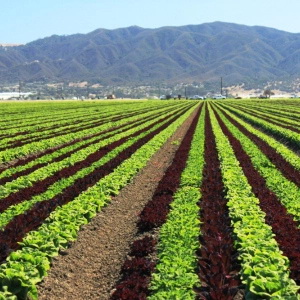
SalinasLettuce1000

By Karen Ross and Daniel Sumner

Pundits here in drought-stricken California have become fond of proclaiming that farms consume 80% of the state’s water and generate only about 2% of its gross domestic product. “Why devote so much of our water to an industry that contributes so little fuel to our economic engine?” they ask.

Both of those figures are deceptive. It’s only possible to arrive at 80% by not accounting for the amount of water dedicated to environmental uses. (For example, the water in rivers that flows into the sea.) And the 2% figure grossly undersells the importance of food grown in California.

California’s economy is incredibly diverse, much like its topography, its climate and its population. That’s a significant benefit when you’re the eighth-largest economy in the world. And agriculture is a key part of that diversity.

Of course, many aggregate sectors constitute a larger share of our economy than agriculture. Finance, insurance and real estate tops the list at 21%. Professional services and government follow at 13% and 12%, respectively.

Beyond those sectors, we have a broad, flat grouping of several categories, each representing just a few percent of the state’s GDP. That’s a remarkably balanced profile that lends resilience and dynamism to our economy.

Let’s look more closely at that data, though. Is agriculture really just 2.1%? As is so often the case with statistics, what’s not in that number is more significant than what is.

Take the “utilities” category, for instance. It includes power generated for farms and for processing and marketing crops once they’re harvested. The “real estate” piece includes sales and leasing of agricultural acreage and processing facilities. “Non-durable goods manufacturing” includes food and beverage processing. “Wholesale trade” and “retail trade” does not just mean the shopping mall; it includes the supermarket, the food court and the regional produce hub.

Categories such as “transportation and warehousing” and “finance and insurance” are linked into every one of our 78,000 farms, each of which needs trucks, banks and insurance coverage to bring in the harvest.

“Accommodation and food services” not only runs on food but also is fond of promoting the fact that many of the most healthful and desirable foods and beverages grow on California farms and ranches. California, after all, helped start the farm-to-plate movement, and it’s not an exaggeration to say that agriculture is tied to the state’s identity from harvest (Cesar Chavez) to table (Alice Waters).

Granted, all economic sectors have ripple effects and multipliers. But unlike most other segments, California’s agricultural productivity and diversity are not readily duplicated elsewhere. Our soils and climate are what have made it possible for us to supply so much of our nation’s and the world’s food.

Food is central to California in more than just the nutritional sense. It contributes to nearly every aspect of our economy and our lives, an important point to keep in mind as we weigh what our water is worth during this drought, and the next one.

Karen Ross is California agriculture secretary. Daniel Sumner is a professor of agricultural and resource economics at UC Davis.

2016-05-31T19:28:15-07:00June 3rd, 2015|

International Trade Tariffs Must Be Lowered

For California Ag Especially, International Trade Tariffs Must Be Lowered


By Laurie Greene, Editor, CaliforniaAgToday.com

USDA Foreign Agriculture Service Associate Administrator Janet Nuzum recently met with agricultural commodity representatives at the California Center for International Trade Development (CITD) in Fresno.

Nuzum spoke about both the opportunities California agricultural groups face as well as key problems they encounter in international trade. She said, “The strength of California agriculture can sometimes appear to be its weakness, in this sense: California is, of course, the largest agricultural state in the United States. It’s also incredibly diverse compared to other parts of the United States. And, because of that diversity, it faces a wider variety of challenges and problems in global trading.

“If there were less diversity, there might be fewer problems,” said Nuzum. “But, with greater presence in the marketplace, having a wider diversity of products or types of products, and whether their product is fresh or processed, California growers and exporters and government officials and regulators face a very challenging set of circumstances, particularly with international trade tariffs.”

Nuzum said that is both the good news and challenging news—all in one. “You’ve got a rich agricultural economy,” she elaborated, and you’ve got a lot of natural resources which are not necessarily found in other parts of the United States. This enables the industry to offer a very rich plate of different kinds of agricultural products. There are some products, and I am thinking about tree nuts now, in which California represents the majority of world production or world trade. So, other consumers around the world are dependent on having that American product, that Californian product, out there in the marketplace,” she said.

Nuzum said because California’s diverse produce is exported around the world, international trade discussions need to come to fruition to lower foreign trade barriers. “Our tariffs, both agricultural and non-agricultural, are much lower than other countries we trade with. That is one reason it is so important to negotiate these trade agreements—to reduce these other tariffs to zero, or at least to our levels,” she said.

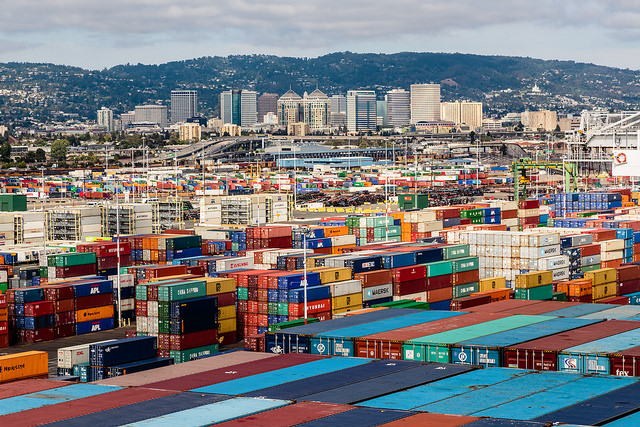
(Photo credit: The Busy Port of Oakland, Flickr)
2016-05-31T19:28:15-07:00June 2nd, 2015|

Soil Health

Keeping Soils Healthy is a Top Priority

By Brian German, Associate Editor

Along with working on water issues, Jennifer Lester Moffitt, Deputy Secretary for the California Department of Food and Agriculture, addresses soil quality. Muffin said, “We need to do everything we can do increase water holding capacity so that when do irrigate, when it does rain, we are able to retain that water in the soil. And there are so many additional benefits, I need to look up the exact number, but roughly half the biodiversity of the earth is in the soil.”

While many research budgets have already been stretched thin to deal with the drought, soil research has been funded largely by the healthy soils initiative from the USDA.

Moffitt explained, “Potential state funding sources might be green house gas reduction revenue, but in order to use that money, we would have to show carbon offsets. If we were able to do that, we could show demonstration projects and develop incentives for farmers to sequester carbon, and the impact could be immense. I mean, we have 9 million acres of farmland in the state, and even if we get a small percentage of growers to adopt these practices, we could really make a huge impact.”

Moffitt stated, “You know, I think definitely there are benefits to managing the soil, studying the drought and looking at how we can be more resilient. Particularly for agriculture during drought, maintaining excellent soil health provides a huge benefit–I think a dual benefit–along with mitigating climate change. There’s a whole handful that healthy soils can do.”

Moffitt also mentioned other departments involved in the health soils initiative, “The Department of Conservation is working on this, especially with their Farmland Mapping and Monitoring Program (FMMP).” According to the The Department of Conservation’s Division of Land Resource Protection (DLRP) website, FMMP “produces maps and statistical data for analyzing impacts on California’s agricultural resources. Agricultural land is rated according to soil quality and irrigation status; the best quality land is called Prime Farmland. The maps are updated every two years with the use of a computer mapping system, aerial imagery, public review, and field reconnaissance.”

“CalRecycle,” continued Moffitt, “especially with regard to compost and their goal to reduce green waste in landfills by composting and applying it on agricultural land, is a win-win, all around. Also, the Water Board, Air Resources Board, Department of Water Resources and the land they manage, are really part of a holistic approach.”

2016-05-31T19:28:15-07:00May 30th, 2015|

Here’s a deal: Tour the Port of Oakland for Free

Summer Port of Oakland Excursions Aboard Former FDR Vessel Open to the Public

Here’s summer’s biggest travel bargain: free boat tours at the Port of Oakland. The Port today introduced no-charge, 90-minute harbor excursions available to the public. The narrated port tours will be conducted aboard the USS Potomac, the former presidential vessel of Franklin D. Roosevelt.

“We’re proud of our Port and of the relationship we have with our communities,” Executive Director Chris Lytle said today before embarking on the maiden harbor tour. “Inviting our neighbors to these tours gives them a way to know us even better.”

More than 200 Oakland school children boarded the Potomac today for the first two of 12 free summer tours. Oakland Mayor Libby Schaaf and School Superintendent Antwan Wilson were there as the Port welcomed youngsters aboard.

The Port said it has scheduled two tours each month on designated Friday afternoons and evenings through October. The 165-foot Potomac, berthed at the Port’s Jack London Square, can carry 120 passengers per excursion. Schedules and registration for the tours will be open to the public beginning June 1 at the Port’s website, www.portofoakland.com.

Tour organizers said the excursions are a cost-effective way to give neighbors a close-up look at how the Oakland seaport works. Passengers will transit the Oakland Estuary and Outer Harbor. They’ll see all five Oakland marine terminals and pass within yards of massive container ships, some 1,200-feet long. The tours will also provide close-up views of San Francisco’s waterfront and skyline.

Port of Oakland Harbor Tours

Port of Oakland Harbor Tours

2016-05-31T19:28:16-07:00May 30th, 2015|

Henry Perea Honored

Ag Council Recognizes Assemblyman Henry Perea with Influential Legislator Award

During its annual Legislative Day held this week, Agricultural Council of California (Ag Council) recognized Assemblyman Henry T. Perea (D-Fresno) with the inaugural Influential Legislator Award.

“Assemblyman Perea personifies what is good in a political leader,” said Emily Rooney, President of Ag Council. “He has found ways to collaborate on issues that have allowed him to help his constituents, but have also been good policy for the entire state. And, even on issues where we may not agree, he always maintains an open door policy to Ag Council and its members.”

Since coming into office in 2010, Perea has tackled some of California’s toughest issues head-on, including water policy. His district represents the heart of agriculture in California, and as a moderate Democrat he’s been sensitive to not only how important the industry is to the economy, but also in providing employment to many of his constituents.

Ag Council Chairman, Brendon Flynn, a farmer with Sunsweet Growers and Assemblyman Henry T. Perea (D-Fresno)

Ag Council Chairman, Brendon Flynn, a farmer with Sunsweet Growers and Assemblyman Henry T. Perea (D-Fresno)

“Assemblyman Perea was a leading advocate for securing the $2.7 billion in funding for water storage in the 2014 water bond package. At the same time, he spoke out against the overly burdensome Sustainable Groundwater Management Act last year, demonstrating the he truly understands that a healthy ag economy is good for the entire state of California,” said Brendon Flynn, Chairman of Ag Council who presented the award to Perea.

Perea’s leadership has made impacts in several areas of agricultural policy. He is currently serving as the Assembly Ag Committee Chair, and has embraced that role by seeking to learn more about California’s number one industry. Assemblyman Perea has authored a bill to help fix some of the implementation issues with last year’s groundwater legislation. In 2013, he brought together a diverse coalition to pass Assembly Bill 8, which provides funds to help lower costs for farmers who choose cleaner burning vehicles.

“This award was created to recognize legislators who might go outside of traditional roles, whether they be Republican or Democrat, and do what is actually best for the state, its residents, and the future of agriculture,” added Rooney.

Assemblyman Perea received the Influential Legislator Award during the Ag Council Annual Legislative Day in Sacramento. This award will be given on an annual basis to legislators who embody that same collaborative approach to finding positive outcomes for agriculture and all of California.

2016-05-31T19:28:16-07:00May 29th, 2015|

Water Wisdom From A Lemon Grower

Water Wisdom: All Water is Recyled; We Are Not Losing It

By Brian German, Associate Editor

Keith Frietas, a lemon grower along the Kings River on the East Side of Fresno County, recently reflected on the value of water with California Ag Today, “I think that people are losing their perspective on the value of the resource. Our concept of the value of water is we’ve had it at our beck-and-call for all of our lives, especially our generation; never had to think about it; never had to worry about it. But there are people in the world who get up before the sun comes in the morning, put on a backpack full of empty containers, walk eight to nine miles, and put their lives at risk to get their daily supply of fresh water.”

Freitas does everything he can to use water as efficiently as possible, and passionately described his water management practices. “Because we live in Fresno and care about our little percentage of water, our take of that resource has to be commensurate with the share we give back to the world by using that water. So, our concept as water users takes the form of being stewards of that limited resource. I want the rest of the public and the world around me to understand that and trust that I have the skills to be a good water steward .”

Addressing the cycle of water, agricultural water in particular, Freitas said, “No fresh water leaves the earth. It all gets recycled. So farmers take that water, put it on the ground, grow 25 pounds of tomatoes and give all that water back–98 percent of it in tomatoes–plus the nutrients from that tomato we need to sustain a healthy life.”

Freitas noted how the water cycle could become even more efficient with increasing technological advances. “They’ve got five different stages of filtering wastewater now. Once we start implementing those five filtration stages, people will be able to eat that tomato, and within a week, the water from that tomato will be recycled back into use, back into the community where the tomato was consumed.”

Despite current statewide water restrictions and financial penalties for offenders, water is still being wasted. Freitas believes we must shift how our culture thinks about water to accomplish real change in water stewardship, “When you can’t change the dynamic of that mindset, you can’t force change by billing your way out of a drought.”

2016-05-31T19:28:16-07:00May 27th, 2015|

A Call for Common Sense Water Management

California Water Management Dilemma

By Lawrence H. Easterling, Jr.

Larry Easterling

Larry Easterling makes a comment at a recent pistachio growers meeting.

We are witnessing the dismantling of the California water conveyance system that supplies drinking water for 25 million California residents and four million acres of prime farmland in the San Joaquin Valley.

Our water resources are being “Withheld” from the very people of this state who have shown what “Free Enterprise” can do not only for the well-being of all in California, but the entire nation. Unfortunately, several major environmental groups and complacent politicians are killing the freedoms that have been the bulwark of success in California. Let me explain.

Water is our most valuable renewable resource and Mother Nature gives it to California in copious amounts during most years. What we do with that water—water management—is critical to the future of the Golden State.

On average, 200.0 million acre-feet of water a year blankets our state. One acre-foot is equal to 325,851 gallons of water. Of that precipitation, 75% originates north of the Sacramento River. The other 25% falls in central and southern California.

The water that is not manageable by us is 120.0 million acre-feet. Some of it evaporates, but most of it settles into the ground, fills lakes, and what remains heads for the Pacific Ocean. The balance of the water is called “directable” surface water (80,000,000 acre-feet) and this is where we have the opportunity to put it to its best and proper use.

By 2005, according to the Department of Water Resources, 48% of that directable water went to the environment, 41% to agriculture and the remaining 11% to rural areas. This balance of such a precious resource seemed at the time to be equitable to all parties, thanks to the ingenuity of our forefathers in the 20th century. Their foresight gave us a water conveyance system second to none in the entire world.


California’s water conveyance system had four major objectives:

  1. To provide reliable water deliveries to 25 million people to avoid water shortages that would otherwise exist and continually plague two-thirds of the California population.
  2. To support four million acres in central California of what the National Geographic Magazine proclaimed to be the most productive farmland in the world.
  3. To reinforce our natural environment.
  4. To recharge our groundwater supplies.

Some distinctions should be made here as to how much directable water we are actually concerned about. At full capacity, the two California water conveyance systems—the State Water Project (SWP) and the federal Central Valley Project (CVP)—deliver water from northern California to southern and central California. Each system, the CVP and the SWP, has the capacity to each deliver 4.0 million acre-feet water each year. However, this water delivery capacity has never been tested. The record shows that in the years prior to 2005, the average total delivery COMBINED for both projects was 5.4 million acre-feet per year. The ultimate users of this water went to agriculture (60%) and the rural population (40%).

The volume of water available, on average, from the Sacramento River, including the San Joaquin River, is 30.3 million acre-feet. It is from this volume of water that the 5.4 million acre-feet are sent south.

In 2007, several environmental organizations led by Natural Resources Defense Council took the Department of Water Resources to court to compel the court to enforce the Endangered Species Act (ESA). The court ruling to enforce this law declared that the giant water export pumps that raise the water from the Delta into the California Aqueduct were cut back because it was suspect that the pumps were killing too many delta smelt, an endangered species.

Even in flood years restricted pumping has reduced the water flow to a fraction of the contracted normal flow. Henceforth, since 2007, our water deliveries to urban and agricultural areas have been severely compromised.

The enforcement of these laws is now negating the four major functions of the giant California water conveyance system outlined with the possible exception of the natural environment. Now mind you, this water comes from northern California where 75% of the rain in California falls, averaging over 50 inches a year. Central and southern California “average” less than 15 inches a year.

During the seven years from 2007 through 2014, average deliveries to farms have been reduced to less than one acre-foot per year. Most agricultural crops require 3 ½ acre-feet of water per year. Today, without recourse, these farms are left with barely enough water to keep their plants alive. As for the hardship visited upon 25 million consumers, the Metropolitan Water District (MWD) in southern California is a good example.

The MWD services 19 million accounts, and prior to 2007, was receiving 40% of its water from the SWP. That water source has now only been able to supply approximately 10% of their needs. Consequently, due to seeking other sources to replace their water losses, rate increases to their customers over the years 2007 to 2014 have doubled. On top of all these setbacks, Mother Nature now has shown us her own drought versus our manufactured water crisis. All the way through this synthetic drought, the average rate of precipitation at the source of our water in northern California has been 45 inches each year.

In order to survive, those of us who must have an adequate supply of water to sustain us have been forced to pump more groundwater and/or purchase water from farmers who idle farmland and transfer their water to areas severely threatened with water shortages. For some of those lucky enough to find water for sale, the cost of water has become a severe financial burden. Where farms in the Central Valley were, prior to 2007, paying just under $100 per acre-foot, today if a willing seller can be found, the price can range anywhere from $1,000 to over $2,000 per acre-foot. In many such cases, water costs can exceed all other cultural costs combined. Likewise, the aquifer has dropped every year since 2007 due to frantic attempts by farmers to supplement the critical loss of surface water.


WHAT MUST BE DONE:

The effects of water deprivation over an eight-year period by a man-made drought capped by one of nature’s real droughts, is wrecking havoc with the nation’s food supply. The state of California is now in the grips of the Law of Diminishing Returns and is incapable of averting a disaster due to environmental regulations. Consequently, this country’s NATIONAL SECURITY is being compromised. CONGRESS MUST ACT NOW before further damage is done. These actions need to be taken:

1. The Endangered Species Act (ESA) must be excluded from jurisdiction over the pumps, which move northern water to central and southern California. The pumps are presently operating at about 15% of their capacity. This measure should be permanent and under the management of the Department of Water Resources (DWR).

2. The Endangered Species Act needs to be revised in order to “protect all species”, including humans, from collateral damage due to methods employed to save one species that results in severe damage to other species. This would be implemented through a biological opinion that would INCLUDE a list of all species that would be adversely affected by the METHOD employed to protect one specific species. This measure would make right just one of the irregularities in this flawed law, which attracts litigation like bees to honey. The law does not need to be struck down, simply rewritten to safeguard “all” species, including human beings.

3. California’s magnificent water distribution and conveyance system has no peer in this world. It is a remarkable feat of engineering admired by those who have come from far and near to marvel at its accomplishment. Yet, by environmental fiat, it has been reduced to a token of its capabilities. “Directable” water in California originally ceded one-third of its 80,000,000 acre-feet to the environment.

Today, according to the DWR, the environment now takes, not one-third, but 50% of the direct able water, leaving the rest to urban and farming communities. This is not what the original framers envisioned, but under the DWR, its control has been gradually diluted by federal agencies such as the Environmental Protection Agency (EPA), and one of its extensions known as the STATE WATER RESOURCES CONTROL BOARD (SWRCB). THIS FIVE PERSON-BOARD IS STAFFED WITH ENVIRONMENTALISTS, such as their chairwoman, Felicia Marcos, a Governor Brown-appointee, whose professional background includes eight years with the EPA and five years with the radical Natural Resources Defense Council.

The influence of these federal agencies, backed by political power brokers’ lobbyists, has tilted the water distribution of surface water away from its original intended users. In essence, the environmentalists now control California’s surface water; and now, with the passage of the recent 7.5 billion dollar Water Bond, they will control our groundwater as well. If the water agencies do not perform with the desired results, the bottom-line is that final control will go to the SWRCB.

The ship of state now needs to be righted; it is drifting far off course. First of all, the EPA must be brought to heel. For a federal agency, it exerts far too much power. And, in so doing, has completely distorted California’s surface water delivery system. Next, the SWRCB must either be eliminated with FULL CONTROL restored to the Department of Water Resources, or completely reorganized as an ADVISORY BOARD to the DWR where ALL recipients of the surface water system would be represented. A ten-board membership might be in order, with a director and the nine remaining seats divided into three equal parts by experienced personnel in agriculture, city water management, and the environment, i.e., three persons from each classification and residents of northern, central and southern California.

4. Finally, one in every ten workers in California is either directly, or indirectly dependent upon the health of our vast agricultural industry.

It is time to step forward and reveal, with facts and figures, the house of cards that water management in this state has become. Likewise, those 25 million people in southern California, such as the MWD’s 19 million users who once got 40% of their water from the giant conveyance system, deserve to get that water back.

With years of a man-made drought compounded by a natural drought now in the eighth year, there is ample information available through various farm county records to quantify in lost dollars the cumulative effect of, (1) lost production due to forced fallowing of land, (2) water costs that are now ten times what they were prior to 2007, and (3) the heavy burden economically of converting hardworking farm labor to the welfare roles where some Central Valley towns are now approaching 50% unemployment. Combined, these costs will be in the billions of dollars, bloating further our California deficit.

The goal of society has always been to improve the human condition and for one generation to leave a better world for the next. The visionaries of the 20th century got it right. They delivered in spades to us, the beneficiaries, a modern miracle. It is a water conveyance system like none other to serve all the people of California. Where are those visionaries now? Rather than embrace the gifts of a reliable source of precious water, they proceed to dismantle the entire system. It is because of the system that California feeds the nation. This is not just a California crisis. It is one that will affect the entire nation. Look upon it as a national security threat and demand that our leaders do what is right for the vast majority of this country’s people.

 Lawrence H. Easterling, Jr. Administrator, Kettleman Pistachio Growers and Director, American Pistachio Growers


2016-08-03T21:05:15-07:00May 18th, 2015|
Go to Top