Mario Santoyo: Hold Environmental Water Use Accountable!

Mario Santoyo: Hold Environmental Water Use Accountable!


By Laurie Greene, California Ag Today Editor


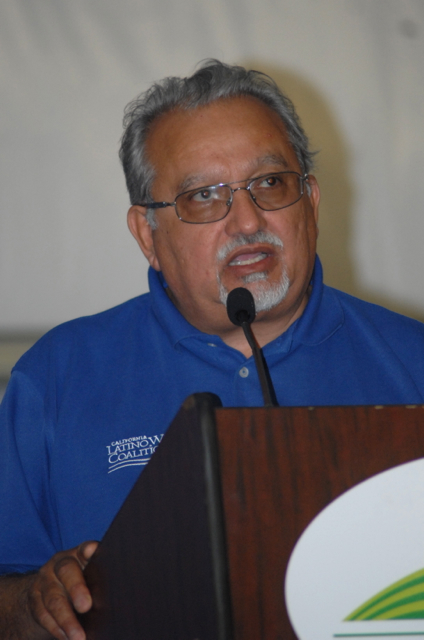
California Ag Today met with Mario Santoyo, executive director for the California Latino Water Coalition at the recent Clovis drought forum organized by Assemblymember Jim Patterson to talk about how serious the current drought situation has become.

We are definitely in one of the worst drought situations that has happened in recent times. But the fact is, the 1977 drought was actually worse than where we are now. But this year, we’re at a zero water allocation and in ’77 we were at 25% for both the Eastside and Westside. So what’s the difference? Well, it boils down to the differences that are now dedicating a whole bunch of water to environment use, but the environment is not being held accountable for its usage,” Santoyo said.

“Cities and agriculture have had to be very accountable for their water usage and efficiency. It’s not the same for the environment, and so I’m hoping people will understand this discrepancy when we push to reallocate some of the water back to the cities and farms. We must hold environmental water use accountable!”

Santoyo noted the critical importance of building new water storage projects. “We have been working on this for a long time, and we just can’t afford to continue losing millions and millions of acre-feet of water to the ocean during times like this, when we could use that water. We need everyone to understand they have a role in communicating to the state government that we must advance our storage capacity.

Santoyo noted, “Farmworker communities are doing a lot worse because, again, zero allocation on both the Eastside and Westside quickly translates into fallowed land, which means there are fewer jobs available. So farmworkers now find themselves in an extremely difficult position in which they either stick around and hope for the best or they leave. But once they leave, they aren’t coming back,” he said.

And, that makes life tough for the farmworkers, but it also makes it tough for the farmers because they need water and labor. You can’t do without both, and the lack of one causes problems with the other; if you don’t have water, you lose the labor, and then what do you do? So, it’s unfortunate that some changes in the way we are using water today have changed the entire landscape of agriculture here in the Central Valley.”

In terms of what we can do, Santoyo urged Californians never to give up. “There’s no reason why we all cannot write letters to our representatives and to the governor! Wake him up! Tell him, ‘Hey by the way, you’re supposed to represent us and step to the plate. Have better control over State Water Resources Control Board because they are making tons of mistakes.’ Governor Brown must start making the right decisions for the people.”
2016-05-31T19:28:12-07:00July 1st, 2015|

Wine Cork Debate: Synthetic vs. Natural Corks

St. Francis Winery Returns to Traditional Natural Corks


By Laurie Greene, California Ag Today Editor


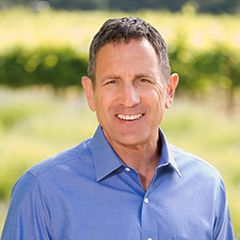
Christopher Silva, President and CEO of St. Francis Winery in Sonoma County, spoke with California Ag Today on the cork debate: synthetic vs. natural corks.

“Our founder, Joe Martin, back in the 1990’s, was not satisfied when he was traveling around the country,” said Silva. “He discovered too many bottles of St. Francis wine were compromised by faulty corks. TCA (trichloroanisole) was creating bacteria issues and damaging the integrity of the wine.”

“So, starting in 1993, we moved to synthetic corks,” Silva explained. “However, internally, we tested and even bottled a case or two of our own wines in natural cork, and we’ve been satisfied that the technological advances in growing natural cork, culling the very best cork from cork forests, and significantly elevated sorting and testing techniques have contributed to eliminating much of the taint problem.”

“There is no perfect closure,” lamented Silva. “I hope that someone finds it! I promise you, I will call California Ag Today the day I find that perfect closure. But we are satisfied that the quality of natural cork has evolved so significantly that the issues we encountered twenty years ago have been largely eliminated,” said Silva.

“Our shift back to natural cork has been a logical choice because it’s been part of our certified sustainable practices,” Silva said. “Remember that natural cork is biodegradable, so it is certainly a certified, sustainable choice. We are trying to care for not only the grapes and the wines that we are so very proud of, but we are all neighbors and inhabitants of this planet, and we think that moving towards significantly consistent sustainable practices is the right thing to do—which makes it the right way to run a business,” Silva said.

“Our biggest issue in winemaking has been cork taint,” Silva explained. “We don’t want a wine that we made compromised by a cork that is contaminated, even slightly, by bacteria. But, we are satisfied that, over the years, there have been all kinds of improved techniques regarding examining the corks, cleaning the corks, and x-raying the corks. Significant advances in technology have eliminated the problem to such an extent that we don’t need to worry about cork taint, which was the biggest issue for us,” Silva said.

“We want the customer to know that when they buy a bottle of St. Francis wine, they are not just buying a product—as wonderful as that product is—and as proud as we are of it—they are buying an experience. Everything from looking at the bottle, studying the bottle, opening the cork, and enjoying the wine inside,” he said.

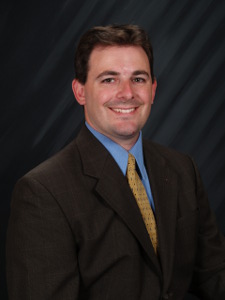
Featured Photo: Christopher Silva, St. Francis Winery

2016-05-31T19:28:12-07:00June 30th, 2015|

WADE: LET THE WATER FLOW!

Let The Water Flow:

Mike Wade Urges Water Board To Let Reclamation Pay Back Borrowed Water

By Laurie Greene, California Ag Today Editor

Mike Wade, executive director of the California Farm Water Coalition, discussed with California Ag Today, his article for the Coalition’s Blog, entitled, “State Water Resources Control Board Could Cost California’s Agricultural Economy $4.5 Billion.”

“A number of San Joaquin Valley farmers have been working the last couple of years to set aside emergency water supplies through conservation and water purchases on the open market,” began Wade. “That water is set aside in the San Luis Reservoir and currently being borrowed, if you will, by the Bureau of Reclamation to help meet their obligations and ultimately the temperature management plan for winter run Chinook salmon.”

Wade said the Bureau’s water obligations also include provisions for summer agriculture south of the Delta, as well as refuge management for numerous listed terrestrial species like the Giant Garter Snake.

Wade estimates the loaned water is worth hundreds of millions of dollars. Lending farmers include those who own land on the Westside of the San Joaquin Valley, Sacramento Valley rice farmers who fallowed land this year to make supplies available for transfers and Friant-area farmers seeking to augment a zero water allocation for the second year in a row.

“We believe the Bureau has an obligation to pay that water back this fall, and we’re urging the State Water Resources Control Board to let that payback happen.” In his article, Wade reported that Reclamation would pay back the water from supplies stored in Lake Shasta as soon as temperature goals for winter run Chinook salmon were met.

Regarding accountability, Wade said, “I believe the Bureau intends to pay it back, but we want the public to understand what’s happening. We want transparency so we can follow this obligation and make sure this fall, when water becomes available, the Bureau follows through to pay it back. People don’t forget.”

Built and operated jointly by the Bureau of Reclamation and the State of California, the San Luis Reservoir is at 44% capacity today, according to the California Department of Water Resources’ California Data Exchange Center, but the supply is already divided and allocated. Wade explained, “The water that is currently in San Luis Reservoir under the Bureau of Reclamation’s control is almost exclusively owned by growers who have conserved it or purchased it on the open market. The remainder belongs to the State Water Project and its users. So, there is little or no federally-owned water in San Luis at this time.”

Wade said, “There are a number of factors that contribute to the 4.5 – 4.9 billion dollar projected cost for San Joaquin Valley farmers. First is the actual value of the water that farmers have already set aside. Second is the monetary obligations farmers have contracted to pay Sacramento Valley rice growers for transferred water. The third component is the actual value of potential crop and orchard losses if that water isn’t paid back and farmers lose out on their ability to keep their farms going.”

Wade urged the State Water Resources Control Board, “to facilitate this complex and unprecedented collaboration” and allow Reclamation to release compensatory water as soon as possible.

Let the water flow!


Sources: Interview with Mike Wade, California Farm Water Coalition; “State Water Resources Control Board Could Cost California’s Agricultural Economy $4.5 Billion,” by Mike Wade, California Farm Water Coalition; Bureau of Reclamation; California Department of Water Resources

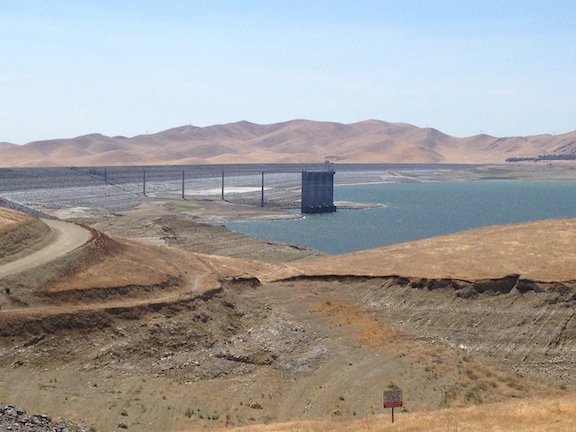
Featured Image: San Luis Reservoir-Empty, California Farm Water Coalition

2016-05-31T19:28:12-07:00June 26th, 2015|

Sakata Seed America Awarded Title of ‘Water Saving Hero’

Sakata Seed America Awarded Title of ‘Water Saving Hero,’ Sets Example during Severe California Drought

Sakata Seed America is doing their part to ‘Go Green’ and conserve water during the severe California drought. The drought has taken a huge toll on the entire state; however, it has hit both the Agricultural and Horticultural industries particularly hard. According to a study by the UC Davis Center for Watershed Sciences, “the drought is expected to be worse for California’s agricultural economy this year because of reduced water availability…Farmers will have 2.7 million acre-feet less surface water than they would in a normal water year – about 33 percent loss of water supply. Individual farmers will face losses of zero to 100 percent.” In response, Sakata has made it a priority to focus on ways to reduce their water usage and boost long-term sustainability for the future.

In 2014, two main projects were completed to conserve water at the Morgan Hill office headquarters. First, 12,500 square feet of turf was removed and replaced with drought-tolerant plants and landscape coverage. In addition, the overhead sprinklers were removed and replaced with a low-volume drip system. The estimated water savings for the 2014 updates totals to 300,000 gallons of water annually. For the remaining turf, complete irrigation updates were implemented, and over 275 sprinkler nozzles were upgraded to a weather track system which reduces water when it’s not needed, resulting in an additional 50,000 gallons of water conserved annually.

This year, Sakata has already begun their next phase of water reduction. Thus far, 16,088 additional square footage of turf has been removed from the front of the company’s headquarters and replaced with a new, drought-resistance landscape and low-volume drip systems. And it doesn’t stop there, Sakata’s internal committee, ‘GreenUp,’ which is solely dedicated to creating a greener work environment has a lot more in store for the future – some immediate plans for facility upgrades include water-saving restroom updates such as touchless faucets. In addition, the committee is distributing free shower buckets to all interested employees.

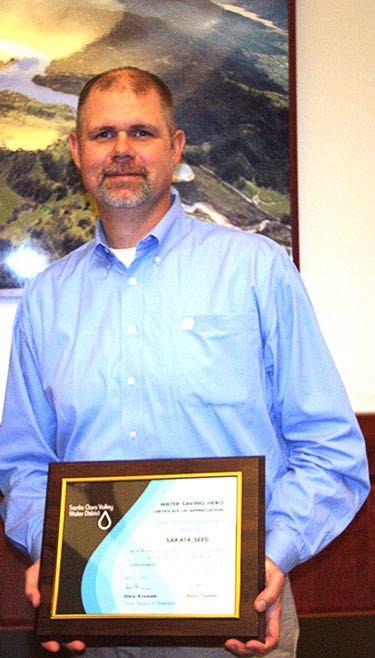
Sakata’s water conservation efforts have not gone unnoticed. In September 2014, Sakata was deemed the title of a ‘Water Saving Hero’ and presented a plaque by the Santa Clara Valley Water District, who have been encouraging water conservation all over Santa Clara County with their ‘Brown is the New Green’ campaign, which distributes free ‘Brown is the New Green’ lawn signs, shower buckets, moisture meters, shower timers, shower heads and hose nozzles for Santa Clara county residents.

“It’s part of our responsibility to the community and the industry to conserve water and lower our carbon footprint. We are proud of our efforts thus far, but are determined to take it further and become a role model for other companies,”states Tye Anderson, Senior Logistics & Operations Manager for Sakata.

Sakata’s GreenUp committee’s future plans stretch far beyond lessening water usage and focus on sustainability as a whole. Long-term goals include such workplace additions as bike racks and charging stations for electric cars.

For more information on how you can help conserve water during the California drought, please visit: www.saveourwater.com. For more on Sakata’s contribution, read the full article.

#

Headquartered in Morgan Hill, CA, Sakata Seed America is a major research, seed production and marketing-distribution subsidiary of Sakata Seed Corporation, established in 1913.   Sakata Seed America serves as the headquarters for the North American operations.  

Featured Photo: Sakata’s Tye Anderson accepts Water Saving Hero Award

2016-05-31T19:28:13-07:00June 25th, 2015|

Valadao Addresses Western Water Reliability

Valadao, California Republicans, Introduce Legislation to Improve Western Water Reliability

Today, Congressmen David G. Valadao (CA-21) introduced a bill to modernize water policies in California and throughout the entire Western United States with the support of the entire California Republican delegation, the Chairman of the House Natural Resources Committee, and Chairman of the Western Caucus.


H.R. 2898, the Western Water and American Food Security Act of 2015 aims to make more water available to families, farmers, and communities in California and bordering Western states. The dedication of vast quantities of water to protect certain species of fish listed under the Endangered Species Act (ESA) is a significant obstacle hindering water delivery in Central and Southern California. H.R. 2898, will require federal agencies to use current and reliable data when making regulatory decisions, which in turn will provide more water for communities in need.

Additionally, Rep. Valadao’s legislation will provide federal regulators with direction and flexibility to capture water during periods of greater precipitation, which can be used to increase California’s water supplies dramatically. Furthermore, the bill will cut red tape holding back major water storage projects that have been authorized for over a decade, which will aid the entire Western United States during dry years.

Congressman David Valadao (CA-21), the author of the legislation, said, “California’s drought has devastated communities throughout the Central Valley and now the consequences are extending throughout the country. Inaction will result in the collapse of our domestic food supply.” He continued, “Congress cannot make it rain but we can enact policies that expand our water infrastructure, allow for more water conveyance, and utilize legitimate science to ensure a reliable water supply for farmers and families.”

Majority Leader Kevin McCarthy (CA-23) stated, “The tragedy of the current drought is no longer isolated to California’s Central Valley, and its response must include tangible solutions that provide us the opportunity to pursue the California Dream. Today is an important step to helping restore the water our communities desperately need by more fully utilizing the most sophisticated water system in the world to quench the robust economic opportunity California families, farmers, workers, and businesses all need.”

“My western colleagues have worked hard to collaborate on a common sense bill that helps people,” stated Rep. Rob Bishop (R-UT), Chairman of the House Committee on Natural Resources. “Communities are suffering and we are putting forward a creative solution to address those needs. I look forward to working on a bipartisan basis in the House and Senate to move this legislation forward.”

“Having personally visited California’s Central Valley on this matter, I can attest to the dire situation facing California with the drought,” said Western Caucus Chairman and Natural Resources Vice-Chairman Cynthia Lummis (WY-at large). “This situation demands congressional action to tackle the man-made barriers that are needlessly choking off water supplies crucial not just for California jobs but for the food on American tables. I am pleased to work with my Californian colleagues to ensure we also seize this opportunity to address water issues west wide through water project permit streamlining, enhanced water storage, and protecting state-endowed water rights that are increasingly under attack at the federal level.”

“The water bill we are introducing today will help California families and businesses that are suffering in our ongoing drought,” said Rep. Ken Calvert (CA-42). “No legislation will magically end our drought, but by passing this bill, we can take a step in the right direction and work in a collaborative way to enact meaningful solutions. Our bill takes important steps that are the direct result of bipartisan and bicameral conversations, and I look forward to the continued engagement with my House colleagues as well as action from the Senate in the near future. Despite what opponents might say, our legislation does not gut – let alone modify – the Endangered Species Act. Rather, our bill ensures our critical water infrastructure is operated using sound science in order to prevent wasting precious water in ways that do not benefit listed species but come at a high cost to Californians.”

“California’s devastating drought is hurting our ag economy and food supply nationwide,” said Congressman Jeff Denham (CA-10). “This bill provides both the short- and long-term solutions that the Central Valley needs, beginning with more storage. It includes two pieces of legislation I’ve introduced to study and eliminate the threat of predator fish and to increase storage in New Melones Reservoir. We can’t keep waiting on the Senate or the President to get engaged and provide Californians with the solutions they need to survive.”

“This bill was designed to address the underlying causes of the drought in a pragmatic and bipartisan manner,” said Congressman Steve Knight (CA-25). “There is no simple answer to this problem. But California needs rational solutions, not more water rations.”

“This balanced legislation improves water access for Californians around the state by using improved science to time water deliveries, preserving water rights and moving forward on new surface storage facilities,”  said Congressman Doug LaMalfa (CA-01). It protects the most fundamental water rights of all, area of origin rights, ensuring that Northern Californians who live where our state’s water originates have access to it. Californians have spoken clearly in support of investment in new surface storage projects, and this measure fulfills the promise to voters by advancing projects that would generate over one million acre-feet of water, enough for eight million Californians. We’ll continue to refine this proposal as it moves through the process, but I am proud to cosponsor a bill that addresses both short- and long-term needs of all Californians and supports continued economic growth.”

“Droughts are nature’s fault; water shortages are our fault,” said Congressman Tom McClintock (CA-04). “For a generation, we have failed to build the facilities needed to store water from wet years to have it in dry ones and radical environmental laws have squandered the water we did store. Our water shortage is caused by a shortage of sensible water policy. This bill begins fixing that.”

Congressman Devin Nunes (CA-22) explained, “Facing an annual water deficit of 2.5 million acre-feet south of the Delta, the San Joaquin Valley urgently needs whatever relief it can get. And once again, the House of Representatives is taking action to assist our long-suffering communities. As this entirely preventable water crisis continues to ravage Valley farms and devastate our economy, I urge the Senate to finally begin supporting the House’s consistent efforts to roll back the disastrous government regulations that prioritize fish over families.”

Original cosponsors of Congressman Valadao’s legislation include Reps. Ken Calvert (CA-42), Paul Cook (CA-08), Jim Costa (CA-16), Jeff Denham (CA-10), Duncan Hunter (CA-50), Darrell E. Issa (CA-49), Stephen Knight (CA-25), Dough LaMalfa (CA-01), Kevin McCarthy (CA-23), Tom McClintock (CA-04), Devin Nunes (CA-22), Dana Rohrabacher (CA-48), Edward R. Royce (CA-39), Mimi Walters (CA-45), Mark E. Amodei (NV-02), Rodney Davis (IL-13), Mario Diaz-Balart (FL-25), Cresent Hardy (NV-04), David P. Joyce (OH-14), Cynthia M. Lummis (WY-AL), Dan Newhouse (WA-04), Michael K. Simpson (ID-02), Chris Stewart (UT-02), Scott Tipton (CO-03), and Ryan K. Zinke (MT-AL).

2016-05-31T19:28:13-07:00June 25th, 2015|

Apple Growers Stuggle

As Temps Heat Up, Apple Growers Struggle

By Courtney Steward, Associate Editor

As temperatures of early summer grow hotter, farmers of permanent crops, such as apple growers, are starting to struggle due to the lack of adequate water  to keep crop production where it needs to be. Alex Ott,  executive director of the California Apple Commission, based in Fresno, shared part of struggle.

“It’s always a challenge, especially when you are in your 4th year of drought,” Ott began. “Our biggest concerns, obviously, are about excessive heat and lack of water for the trees that are in the ground. But we’re also concerned that, first, we have a crop; and second, that the crop sizes well.”

Yet, despite the drought challenges, Ott noted the crop looks good. “The crops have good quality and look like we’re definitely going to be up—compared to last year—which is good. Last year, the crop was very light. It was a tough year for growers.”

“I think that the trees came back with some good vigor and were able to set a nice crop this year,” he said. “The conditions this spring were perfect for bloom, So, we are excited to see a good size crop,”


2016-05-31T19:28:13-07:00June 24th, 2015|

IR-4 Update

IR-4 To Focus on New Strategic Plan

By Courtney Steward, Associate Editor

At a recent meeting, California Ag Today met up with Dan Kunkel, associate director of the IR-4 Project for The Food and International Program at Rutgers University in New Jersey.

IR-4 Project LogoSince 1963, the IR-4 Project has been a major resource for supplying pest management tools for specialty crop growers by developing research data to support EPA tolerances and labeled crop protection product uses. The main goal of the IR-4 program, according to Kunkel, is to help specialty crop growers in California, but with a new emphasis on crop exportation.

Commenting on this new strategic plan for the IR-4 program, Kunkel said, “We are going to be doing a lot of the same things, like residue work, efficacy testing and our biopesticide and ornamental programs. But we are taking a larger focus on international harmonization of the pesticide residue limits for our grower exporters so they can feel more confident that their commodities won’t have issues in foreign trade.

“Of course we submit crop protection registration to the EPA for our growers. But when the commodities go abroad, we also submit the data to CODEX, an international database with maximum residue limits (MRLs), a type of tolerance standard, for pesticides,” said Kunkel.

“We also share data with some of the U.S. commodity groups to submit to the Asian and European markets so our growers’ exports can meet these residue limits as well,” he said.

2016-05-31T19:28:13-07:00June 23rd, 2015|

WAPA Annual Meeting in Monterey

WAPA Annual Meeting Nears! June 25-26

The 2015 Western Agricultural Processors Association (WAPA) Annual Meeting is right around the corner! Beginning on Thursday, June 25, the meeting will kick-off with a four-man scramble golf tournament at Black Horse Golf Club with the Associate Member and Annual Meeting reception to follow including special guest speakers.

The event will be held at the Monterey Plaza Hotel and Spa, 400 Cannery Row, Monterey CA.

The following day will include pertinent industry, regulatory and legislative updates including a FSMA Implementation Update provided by Kathy Gombas, Senior Advisor of the U.S. Food and Drug Administration, a California Water Update provided by Aubrey Bettencourt of the California Water Alliance and Gary Bardini of the Department of Water Resources and Curt Covington of the Federal Agriculture Mortgage Corporation will provide an economic outlook for the tree nut industry.

Associate members and sponsors will exhibit their services and products on:

Thursday, June 25, from 5:30-7 p.m., and

Friday, June 26, from 7:30-9 a.m. and 10:10-10:45 a.m.


Registration and payment for the WAPA Annual Meeting are due ASAP to:

Western Agricultural Processors Association

1785 N. Fine Avenue

Fresno, CA 93727

Tel: 559.455.9272

2016-05-31T19:28:13-07:00June 23rd, 2015|

Ag Leader Paul Martin Inducted into Sonoma County Farm Bureau Hall of Fame

Paul Martin, a Petaluma rancher and agricultural leader who has dedicated his life to building bridges between farmers and regulatory agencies, will be honored at Sonoma County Farm Bureau’s “Love of the Land” celebration on July 16 at Richard’s Grove and Saralee’s Vineyard in Windsor, Calif.

Paul_Martin

Paul Martin (Sonoma County Farm Bureau)

Martin’s remarkable agricultural legacy has earned him a prominent place in Sonoma County Farm Bureau’s Hall of Fame. The annual award recognizes agricultural leaders who are a guiding force in preserving, protecting and propelling Sonoma County’s $4 billion farming industry. Martin joins legendary leaders in the Hall of Fame, like the late Saralee McClelland Kunde, who was the Saralee of Richard’s Grove and Saralee’s Vineyard; Gene Benedetti, who was founder of Clover Stornetta Farms; and Larry Bertolini, who was founder and president of Western Farm Center.

Martin is a former dairy rancher who had a second career as a representative for the dairy and agriculture industries. After selling his cows in the late 1990’s, Martin started working as field representative for Western United Dairymen, utilizing his knowledge of the dairy industry and his excellent communication skills to represent milk producers. After retiring from Western United Dairymen in 2012, he served a two-year stint as Gov. Jerry Brown’s Deputy Director in the Office of Business and Economic Development. Martin and his wife Jill have retired to their ranch in Two Rock.

Sangiacomo Family Photo

Sangiacomo Family Photo (Sonoma County Farm Bureau)

The Sonoma County Farm Bureau will also honor the Sangiacomo Family, a multi-generational Sonoma Valley family respected for their land stewardship, agriculture leadership and dedication to growing world-class grapes, as “Farm Family of the Year”. In addition, the Bureau will present the “Luther Burbank Conservation Award” to Harmony Farm Supply & Nursery in Sebastopol. The Farm Bureau refers to Harmony as, “It could easily be called the Institution of Organic & Sustainable Farming & Gardening, a revered center of learning that upholds an environmental ethic while helping growers produce crops the natural way.”

Harmony Farm Supply & Nursery (Sonoma County Farm Bureau)

Harmony

Love of the Land honors the stewards of the land and Sonoma County’s agricultural bounty. The event starts at 5 p.m. with a tasting of Sonoma County wine and food. A dinner featuring an array of Sonoma County grown products is at 7 p.m. The dinner will be followed by the awards presentation and live auction. The event is open to the public and anyone who wants to join in recognizing the stewards of Sonoma County’s working landscape.

Individual tickets are $65. Corporate sponsor tables for eight people are $1,250. General seating tables of eight are $700.

To make reservations, visit Sonoma County Farm Bureau or call 707-544-5575. Tickets are available until July 2 or until sold out.


2016-05-31T19:28:13-07:00June 21st, 2015|

BioConsortia Invents the Future

BioConsortia Plans New Ag Bio Products

By Patrick Cavanaugh, Associate Editor

Marcus Meadows-Smith is with BioConsortia, a research and development biodiscovery company in Davis, Calif. He and his company have big plans to invent the future for Ag.

“The company was founded about 20 years ago in New Zealand and was funded by a U.S. private equity,” said Meadows-Smith. “We decided to globalize the technology, and I became the founding global CEO of the company as it was established in the U.S. about 1 year ago.”

The company in New Zealand is called BioDiscovery. For many years, it was a contract research company that was very successful in the microbial space, working with companies like Monsanto and Syngenta. Then Biodiscovery made a R&D breakthrough. “We have totally restructured the company so that the global headquarters and global R&D are now run out of the United States,” noted Meadows-Smith, “and the New Zealand company has become the subsidiary that handles complementary R&D functions.”

Meadows-Smith mentioned that UC Davis and surrounding areas such as West Sacramento are teaming with bioscience researchers. “It’s turning into a bit of a hub for microbial expertise with several of the big players. Obviously you’ve got UC Davis, which is always credited as being the number one U.S. agricultural university. I’ve heard that it is now the world’s best agricultural university, so it’s a great place to be.”BioConsortia Logo

“We’ve got an excellent team of scientists in Davis, and the historic team in New Zealand has a lot of experience. They’ve been working together now for about five years, so the R&D down there is really humming at a great pace,” said Meadows-Smith.

“We’ve been able to rapidly bring together a group of scientists in the U.S.,” said Meadows-Smith, “that have jelled. We have set up a series of experiments, and we’re putting discoveries together. It’s a very exciting time to be doing pure research in the lab.”

“The other very exciting progression for us is we have just planted our second year of field trials, having completed our first year of field trials in 2014–just after the company was established,” he said.

The company is biological- and microbial-based. “We are looking at teams of microbes to improve plant traits and increase plant yield . We are developing products for fertilizer-use efficiency, abiotic stress tolerance, and biotic stress,” said Meadows-Smith.

“Pests and disease control are important, as well as metabolite expression,” he continued. “We’ve identified teams of microbes that instruct or enable the plant to deposit more sugar. As you can imagine, this provides the double productivity benefit of increasing both yield per acre and sugar content per plant.”

“While getting the plant to have increased sugar deposited in its leaf structure is a good thing; but that is actually not our main focus,” Meadows-Smith said. “We look at all the crops we want to target and ask what are the biggest needs today?”

“Fertilizer, for example, is a significant cost for the grower, so fertilizer-use efficiency products, we believe, would experience a large demand,”  Meadows-Smith stated. “There are also concerns about fertilizer leaching into groundwater, so the more efficient you can make plant take up the fertilizer, the better,” he added. “And of course, living in California, we are acutely aware of the importance of drought, so we are working on that as well. We are hoping for a yield increase per acre for the grower in everything we do.”

“We are moving products down the pipeline as we speak,” he commented, “and, obviously, we want a large body of data to demonstrate to growers how to best use our products. We are looking for two years of good field trial results and then we’ll go through the registration process. So we are expecting to get our first product on the market by 2017.

“We are developing products that contain beneficial bacteria, beneficial fungi, and good plant colonizers,”  Meadows-Smith declared. “Some will colonize the root system, and some the outside of the plant. Still others, endophytes, that will actually grow through the plant tissue. Just as we humans have microbes in our guts to aid digestion, plants actually have beneficial microbes, bacteria and fungi growing within the plant tissue,” Meadows-Smith explained.

Meadows-Smith said BioConsortia’s revolutionary platform will take biologicals to the next level “by assembling teams of microbes that perform complementary functions; so while some microbes will enhance the root system, others will aid the root in nutrient uptake,” he said. “This will bring consistency and superior performance to the marketplace. It’s a very exciting time for the industry as a whole,” he said.

“We are looking to transform food production in a way that is sustainable, bringing benefits to the grower and feeding the world with nutritious, affordable food. That’s what we are in this industry for. These are very exciting times!” Meadows-Smith said.

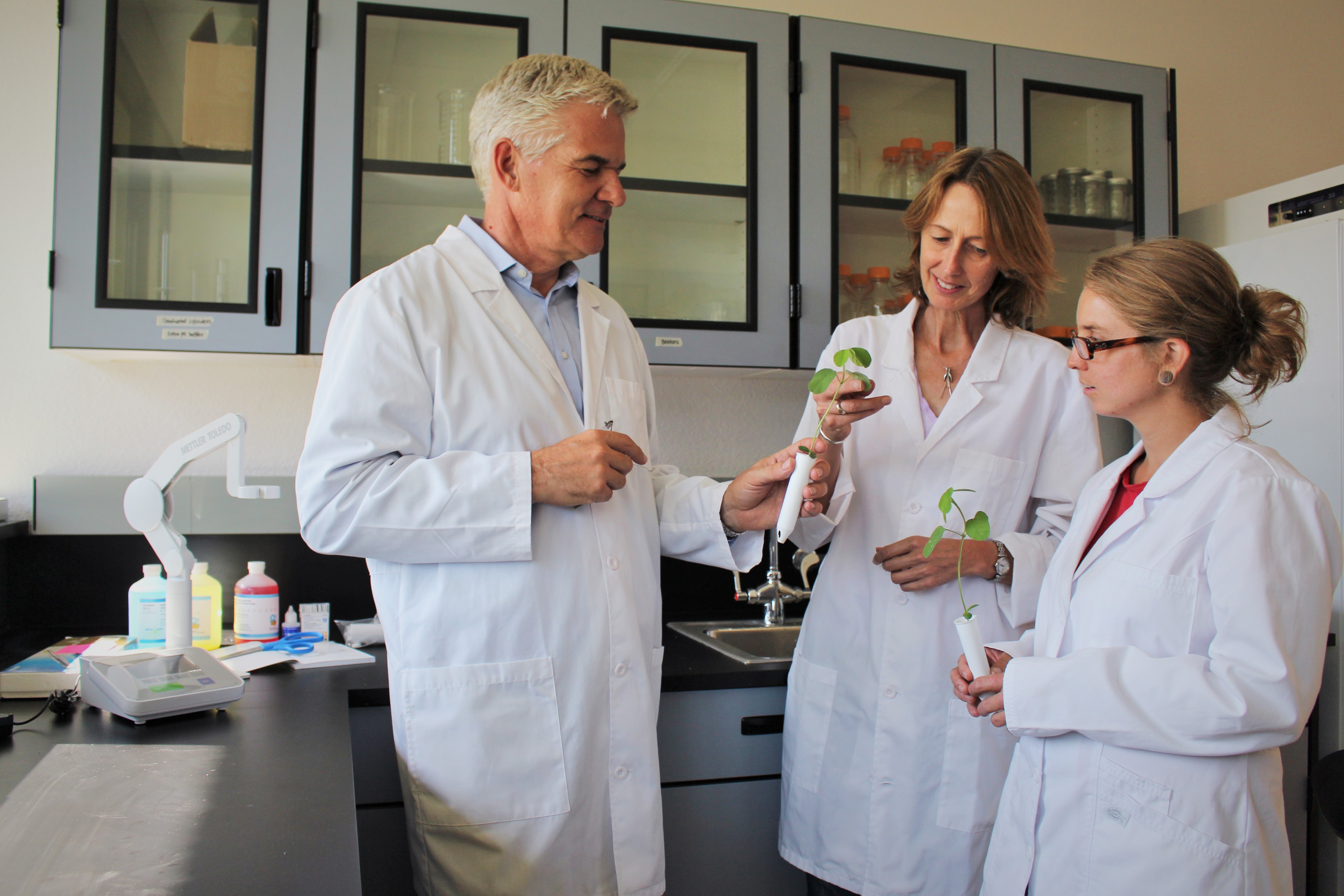
Featured photo: Marcus Meadows-Smith, with Bio Consortia Scientists.

2016-05-31T19:28:13-07:00June 20th, 2015|
Go to Top