URGENT HLB Quarantine UPDATE

HLB Quarantine Update

A Huanglongbing (HLB) quarantine is now in effect in part of Los Angeles County following the detection of HLB in four citrus trees.

On July 10, a kumquat tree on a residential property was confirmed to be infected with the incurable HLB disease. After extensive surveying and testing in the area, three more diseased trees were found nearby. The four diseased trees were on four separate properties close to one another. The tree varieties include kumquat, lime, mandarin and calamondin.

California Department of Food and Agriculture (CDFA) has already removed two of the diseased trees and is currently working with the homeowners at the other two properties to remove those trees as soon as possible. See the CDFA press release below for more details on the resulting quarantine.

QUARANTINE FOR HUANGLONGBING DECLARED IN SAN GABRIEL, LOS ANGELES COUNTY

SaveOurCitrusSACRAMENTO, July 22, 2015 – An 87-square mile quarantine in the San Gabriel area of Los Angeles County has been added to the existing huanglongbing (HLB) quarantine in the Hacienda Heights-area following the detection of the citrus disease huanglongbing, or citrus greening.

Additional information, including a map of the quarantine zone, is available at the CDFA Save Our Citrus website The quarantine boundaries are: on the north, E. Orange Grove Boulevard; on the east, N. Lemon Avenue; on the west, Griffin Avenue; and on the south W. La Habra Boulevard.

This area is part of a much larger quarantine already in place for the Asian citrus psyllid (ACP), the pest that spreads bacteria causing huanglongbing (HLB). The new quarantine will prohibit the movement of all nursery stock out of the area, while maintaining existing provisions allowing the movement of only commercially cleaned and packed citrus fruit. Any fruit that is not commercially cleaned and packed, including residential citrus, must not be removed from the property on which it is grown, although it may be processed and/or consumed on the premises.

“The success of any quarantine depends on cooperation from those affected,” said CDFA Secretary Karen Ross. “The stakes couldn’t be higher for California citrus. We urge residents in the San Gabriel-area to do all they can to comply.”

CDFA, the USDA and the Los Angeles County Agricultural Commissioner’s continue their work to investigate the source of the disease, to survey and test for it throughout the Los Angeles Basin, and to continue with ground treatment of citrus trees within 800 meters of the find sites – which began earlier this week. In the long term, the strategy is to control the spread of ACPs while researchers work to find a cure for the disease.

Huanglongbing has been confirmed four times in San Gabriel, in a kumquat tree on a residential property, in a lime tree on an adjacent residential property, and in calamondin and mandarin trees on residential properties in close proximity to the original find. The disease is bacterial and attacks the vascular system of plants. It does not pose a threat to humans or animals. The Asian citrus psyllid can spread the bacteria as the pest feeds on citrus trees and other related plants. Once a tree is infected, there is no cure; it typically declines and dies within a few years.

Huanglongbing is known to be present in Mexico and in parts of the southern U.S. Florida first detected the disease in 2005, and the University of Florida estimates that the disease causes an average loss of 7,513 jobs per year, and has cost growers $2.994 billion in lost revenue since then. Huanglongbing has also been detected in Georgia, Louisiana, South Carolina and Texas as well as Puerto Rico and the U.S. Virgin Islands.

A total of 15 states or territories are under full or partial quarantine due to the presence of the ACP: Alabama, American Samoa, Arizona, California, Florida, Georgia, Guam, Hawaii, Louisiana, Mississippi, Northern Mariana Islands, Puerto Rico, South Carolina, Texas, and the U.S. Virgin Islands.

The Asian citrus psyllid was first detected in California in 2008 and quarantines for the pest are now in place in 17 California counties. If Californians believe they have seen evidence of huanglongbing in local citrus trees, they are asked to please call CDFA’s toll-free pest hotline at 1-800-491-1899 FREE. For more information on the Asian citrus psyllid and huanglongbing, please visit: http://www.cdfa.ca.gov/phpps/acp/.

2016-05-31T19:28:09-07:00July 23rd, 2015|

Location! Location! Location!

UC ANR Research and Extension Centers Strategically Located

By Charmayne Hefly, Assistant Editor, California Ag Today

Bill Frost is the director of the University of California, Division of Agriculture and Natural Resources’ Research and Extension Center System that has nine different research and extension centers located throughout the state.

UC ANR Research and Extension Center System

UC ANR Research and Extension Center System

Describing the strategy in their geographic placement, Frost said, “We have located them in different growing zones, climates and environments. We have chosen everything from the desert region in El Centro, to cropland here in Kearney, to livestock grazing in both our Hopland and Sierra Foothill Research and Extension Centers, all the way up to Intermountain in Tulelake, where we research potatoes, garlic and crops that can be grown in that fairly short growing season.”

The goal, according to Frost, is to solve local issues from a local or regional perspective. “Each one of our centers has different environments, crops and pest issues to address,” he explained. “These diverse locations are critically important to us because we can do localized, applied research and get useful information out to people, whether they are homeowners in their gardens or growers managing a thousand acres of a crop.”

Frost noted the UCANR Research and Extension Center System has been actively seeking new personnel to better meet the needs of growers. “Just in the last four years,” he said, “we’ve hired almost one hundred new cooperative extension advisors and specialists around the state—many of whom are housed here at the Kearney Research and Extension Center. They are also housed on UC campuses and in our county Cooperative Extension offices.”

Frost commented, “We continue to be relevant. We continue to do cutting-edge applied research. Our programs provide information to everyone; from our youth development program in 4-H and our nutrition education, to master gardener programs that help homeowners with pest problems and water management.”

“And of course, we serve the agricultural community. We have a lot of good research going on and we’re generating lot of good information in commodity production, pest management and water management,” Frost said.

The nine UC ANR Research and Extension Stations are:

Featured Photo: UC ANR

2016-05-31T19:28:10-07:00July 20th, 2015|

Phone Calls Needed Now

STOP WHAT YOU’RE DOING AND MAKE AS MANY CALLS AS YOU CAN!

CALL all Senators to support the WESTERN WATER AND AMERICAN FOOD SECURITY ACT OF 2015

WE ARE DEDICATING THE REST OF THE DAY TO MAKE THESE CALLS.

OUR LIVES DEPEND ON THIS!


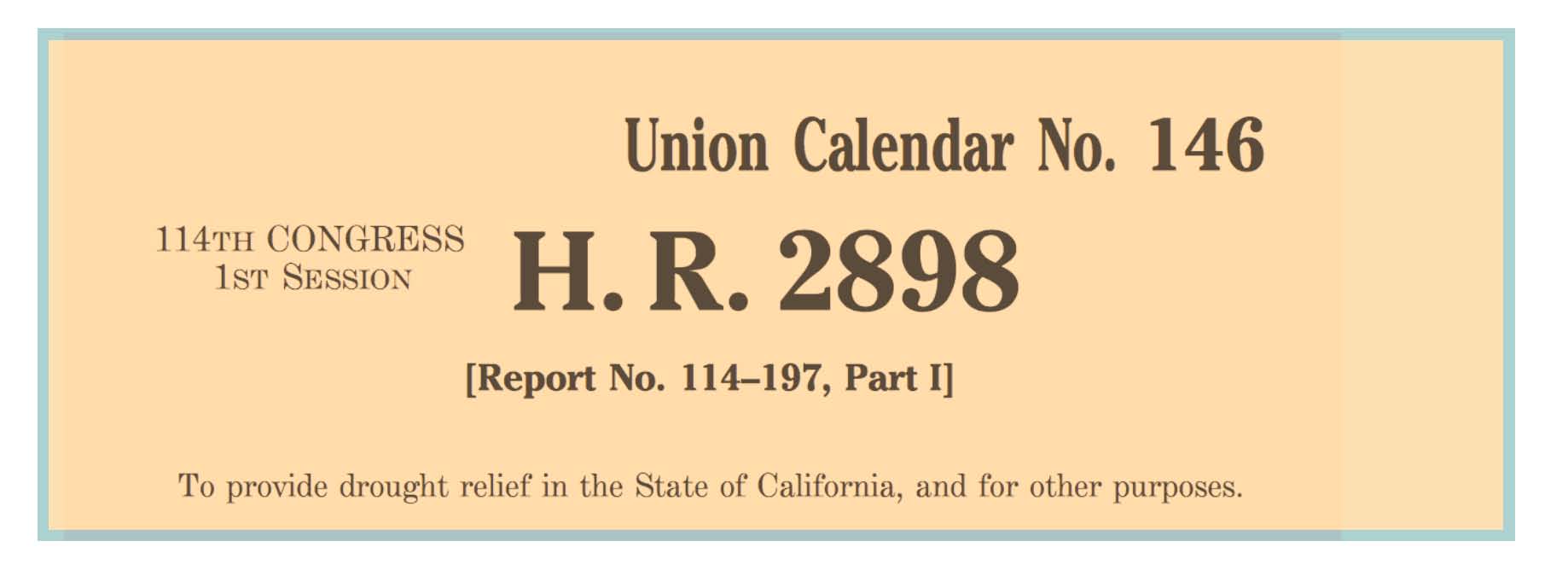
H.R.2898, the Western Water and American Food Security Act of 2015 has passed the House and is on the way to the Senate.

MY JOB Depends on Ag urges each and every one of us to call all U.S. Senators and tell them we want a YES vote.

  • Here’s a template letter to email.
  • Call these Senators, starting with CA and moving onward.
  • Say you are calling regarding HR 2898 and want the Senator to vote YES!! They may ask for your zip code and say they will pass along your concern.


Senator Dianne Feinstein (D-Calif.) TODAY released the following statement after the House of Representatives passed the Western Water and American Food Security Act:

“The House today passed a drought bill that included some useful short-term provisions as well as some provisions that would violate environmental law. While I cannot support the bill as passed, I remain hopeful we can come to an agreement that can advance through both chambers.

“House Republicans are right that we need to increase the flexibility of the state’s water delivery infrastructure. We need to facilitate water transfers and maximize water pumping without violating environmental laws like the Endangered Species Act or biological opinions, and we must do this using updated science and real-time monitoring. Provisions to accomplish this were in the bill the Senate unanimously passed last year, and I plan to include them again this year with added environmental protections.

“I also believe we must look closely at ways to support water recycling, storage, desalination and groundwater replenishment projects. There are already 15 ocean desalination projects and 65 water recycling projects being considered throughout California. These types of projects—as well as building or increasing reservoir capacity—must be a part of any long-term solution.

“To get a bill through the Senate and the House we’ll need to include provisions that benefit the entire West and help support the development of alternative water infrastructure. If the climate continues to warm, as I believe it will, these alternatives will be key.”

2016-05-31T19:28:10-07:00July 16th, 2015|

False Data Abounds

California Drought Information Game:

False Data Out-Markets Ag

By Laurie Greene, Editor and Producer


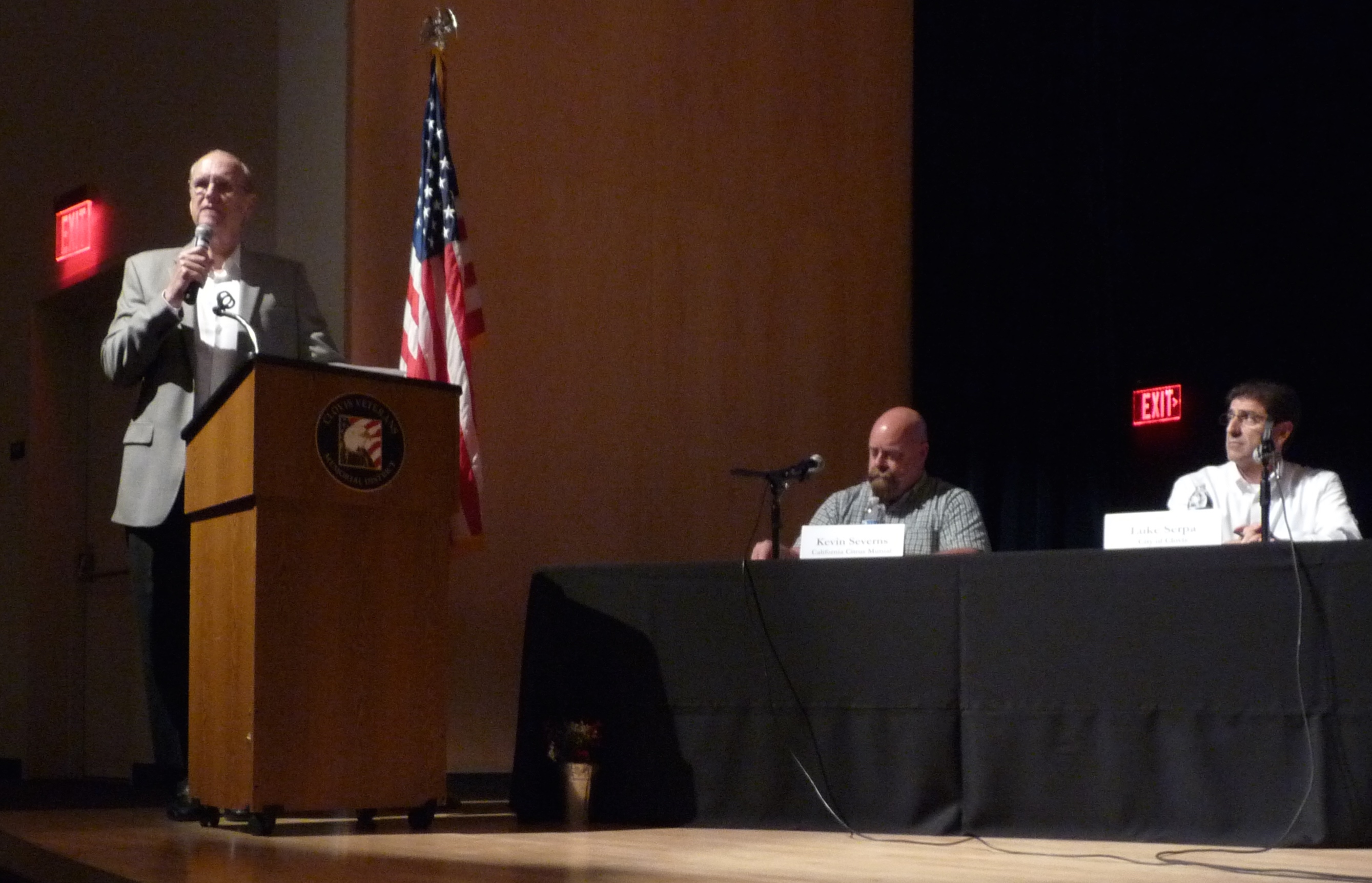
At “The Truth About the Drought” forum, organized by Assemblymember Jim Patterson recently in Clovis, CA, moderator John Broeske, executive director of Families Protecting The Valley, said he thinks Ag is doing really badly on the information game.

“I think that we are getting out-marketed in messaging in the state of California,” said Broeske. “I think a lot of the people in the Central Valley know things that the people in Southern California and in the Bay Area, don’t know.”

Broeske continued, “I don’t blame those people for not knowing because they’re being told over and over again about the ‘80% number’ for Ag water use; and the ‘2%’ Ag contributes to the economy’. These are not real numbers, but people hear them repeatedly, so it’s not hard to understand they believe it.”

“I think the environmentalists want people to believe the 80% figure,” Broeske stated, “because it’s a lot easier to demand water from us if it appears we are using it all. But we’re not, and it’s hard for us to get the message out that these numbers aren’t true.”

Broeske did not know the best way to get the message out, but said he tries to correct people when they get it wrong. He suggested correcting online articles in the comment section to empower more people with the right numbers as ammunition for when they get into conversations. “You’ve got to fight back; if you let people use these false numbers over and over again, nothing is ever going to change.”

As false data out-markets ag in messaging, Broeske said water usage accountability is unequivalent. “Farmers are getting blasted for raising almonds and using too many gallons per almond,” said Broeske. “But, there’s no article about how many gallons it takes to raise a smelt. How many acre-feet for salmon? How many is too many? I think those questions have to be asked.”

“California is spending four million dollars of water per salmon!” Broeske declared. “Should there be some accountability there? How much water are we going to spend on one salmon? At least we get almonds at the end of the farming process. That’s what accountability means; we’ve got to create some rules about how much water is too much to save one fish.”

“I think the only way the public can demand accountability from the government and the scientists is to win elections,” he conjectured. “We are not winning the marketing war on these water usage numbers, so voters keep electing the same people who tell them the wrong numbers, and there’s nothing we can do if they keep getting elected. It’s a tough battle.”

“We are outnumbered,” Broeske said, “and I don’t know how we can overcome their marketing. They’re not even buying marketing, like billboards or advertising—just newspaper articles and news stories they are quoted in—so their marketing costs them nothing.”

“For us to win the market,” Broeske concluded, “we have to buy billboards and ads, and have enough money to do so.”

2016-09-13T14:11:41-07:00July 16th, 2015|

Permission to farm?

Must We Ask Permission to Farm What Consumers Want?

By Patrick Cavanaugh, Associate Editor, California Ag Today

Richard Waycott, president and CEO of the Almond Board of California, discussed the availability of land to grow the crops that consumers want to eat with California Ag Today.

“It’s interesting,” said Waycott, “because we have our current population, plus the anticipated growth in population–not just in the US–but globally. And to the extent we all foresee a future in which people are eating a sufficient number of calories and enjoying a decent standard of living, we must be supportive and understand that land and natural resources will have to be employed judiciously to do that,” said Waycott.

“All crops can’t be grown everywhere,” Waycott noted. “First, the percentage of total land that is arable is pretty small, so you can’t grow anything anywhere. And many times, water availability affects which crops you can grow.”

“With so many people taking issue with irrigating almonds, should we have to ask permission to farm?” asked Waycott.

“There has to be a better understanding that permission to farm is critical so we can meet the dietary and lifestyle needs of generations to come,” he said.

2016-05-31T19:28:10-07:00July 16th, 2015|

Manufacturing Consortium

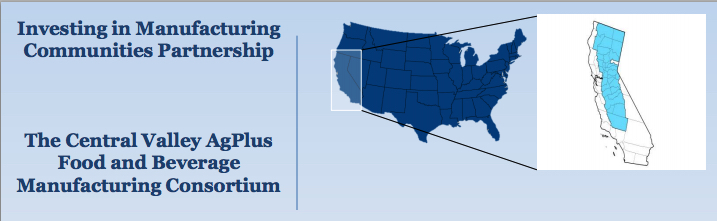
U.S. Secretary of Commerce Penny Pritzker announced late last week that The Central Valley AgPlus Food and Beverage Manufacturing Consortium, led by Fresno State, was one of 12 new communities designated this year under the Obama Administration’s Investing in Manufacturing Communities Partnership (IMCP) initiative. IMCP was designed to accelerate the resurgence of manufacturing in communities nationwide by supporting the development of long-term economic development strategies.

Consortium members represent major Central Valley public and private institutions from the education, business, economic and workforce development and civic sectors joining forces to foster the growth and creation of food and beverage businesses and middle-skills manufacturing jobs in the Central Valley.

“An IMCP designation is an important signal to potential investors that these communities are a good place to spend their money, and this is smart government at work,” Pritzker said. “By breaking down silos and encouraging communities to take a more thoughtful, comprehensive approach to their strategic plans, we are ensuring that precious federal dollars are used on the most high impact projects and in a way that maximizes return on investment.”

The new communities were selected by an interagency panel based on the strength of their economic development plans, the potential for impact in their communities and the depths of their partnerships across the public and private sectors to carry out their plans.

Consortium members worked together to identify a sector of manufacturing where their community has a comparative advantage and drafted a strategic plan that addresses workforce and supply chain challenges; infrastructure; research and innovation; trade and investment; capital access; and operational improvement for manufacturing companies.US EDA Logo

The 12 designated manufacturing communities will receive:

  • coordinated support for their strategies from 11 federal agencies with more than $1 billion available in federal economic development assistance.
  • a dedicated federal liaison who will help them navigate available federal resources.
  • recognition on a government website, accessible to prospective private foreign and domestic investors, looking for information on communities’ competitive attributes.

Mike Dozier, director of Fresno State’s Office of Community and Economic Development, the lead office for the project, said the opportunity and challenge facing the Central Valley is to claim more value from agricultural production through the food processing industry, along with its supply and distribution chains.

“California’s food system is the largest agricultural economy in the U.S. and among the top 10 globally,” Dozier said in the application. “It produced nearly $105 billion in economic output in 2012, and it was responsible for over 198,000 jobs tied directly to manufacturing.”

With 28 counties located in California’s heartland, the Central Valley plays a dominant role in this economy as America’s “Farm to Fork Capital.”

“Production agriculture has been the Central Valley’s mainstay and competitive advantage, fueling growth in the food manufacturing sector as those industries are part of a highly integrated supply chain,” he said.

The AgPlus implementation strategy will build upon the Central Valley’s unique asset base, committed partnerships and networks to:

  • capture more value-added cluster manufacturing and supply chain activity within the region, including to meet new demand and for local specialty products such as through the Farm to Fork efforts;
  • provide the workforce with the needed skills through successful career pathways models;
  • accelerate the development and adoption of innovative technologies so the Central Valley’s food and beverage manufacturing industry is the most efficient, safe, healthy, viable and sustainable national and global center of innovation for next-generation processing and supply chains;
  • facilitate the transformation of the industry to adapt to the short- and long-term impacts of drought and climate change; and
  • strengthen business operations and access to capital.

Consortium members are: 

Higher Education: Fresno State; California State University, Chico; University of California, Davis; Central/Mother Lode Regional Consortium; Fresno State’s Water, Energy and Technology Center; Los Rios Community College District; NextEd; and UC Merced Small Business Development Center.

Government Entity: Tuolumne County Economic Development Authority; City of Avenal; City of Fresno; City of Winters; and Sacramento Area Council of Governments.

Nonprofit: Valley Vision; Center for Land-Based Learning; Fresno Community Development Financial Institution; Northern California World Trade Center; Sacramento Employment and Training Agency; Sacramento Metropolitan Chamber of Commerce; and Solano Economic Development Corporation.

Private Sector: AgTech Innovation Fund; CalAsian Pacific Chamber of Commerce; Davis Chamber of Commerce; JBT FoodTech; and PackageOne, Inc.

For more information, contact Mike Dozier at 559.278.0727 or mdozier@csufresno.edu.


2016-05-31T19:28:10-07:00July 16th, 2015|

Viticulturist Mark Greenspan Confirmed as ASEV President

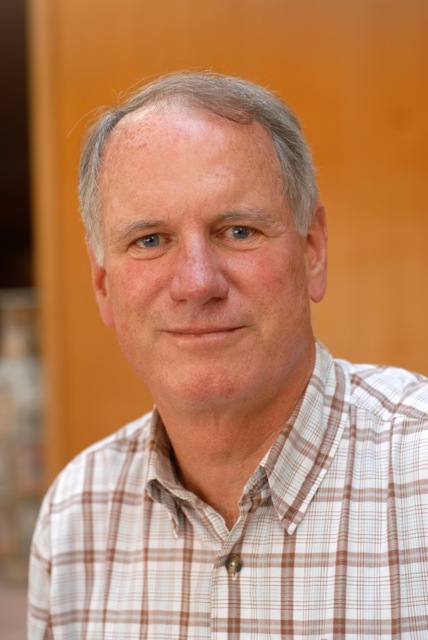
Announced TODAY, Mark Greenspan, president of Advanced Viticulture Inc., has been confirmed to serve as the American Society for Enology and Viticulture (ASEV) 2015-2016 president. Greenspan succeeds Lise Asimont of Francis Ford Coppola Presents to lead ASEV’s 12-member board.

mark greenspan

Mark Greenspan, president of American Society for Enology and Viticulture

“Throughout my career, ASEV has been the go-to source for reliable, thoughtful research and science that has been critical to my success and that of my vineyard clients. It’s a real honor to serve as the Society’s new president and to hopefully carry on the impressive work of Lise and the other dedicated ASEV past presidents,” said the new ASEV president. 

Greenspan, a Sonoma County resident, provides premiere vineyard consultation in water management, nutrient management, precision viticulture and vineyard design, establishment and management. He has operated Advanced Viticulture for over 10 years. Previously, he was the viticulture research manager at E&J Gallo, responsible for viticulture experiments in the north coast vineyards and collaborative projects throughout the state of California. He is a monthly contributor to Wine Business Monthly and periodic contributor to other trade publications. He presents at local, national and international events, and is a certified crop advisor (CCA) and certified professional agronomist (CPAg). Mark has served on review panels for the American Vineyard Foundation and Viticulture Consortium – West and Viticulture Consortium – East. He is a member of Sonoma and Napa Viticulture Technical Groups, Sonoma County Farm Bureau and Napa Valley Grape Growers Association. He’s a former director of the UC Davis Trellis Alliance and sponsor of the Sonoma County Winegrape Commission.

As an active 25-year ASEV member, Mark has held several ASEV positions and served as a reviewer for the American Journal of Enology and Viticulture (AJEV). He has served on the best paper review committee, annual meeting technical abstract review committee, annual meeting program committee, and as sessions chair. He received the ASEV Best Viticulture Student Paper Award in 1991. 

ASEV has also confirmed two new directors: Patty Skinkis, associate professor at the Department of Horticulture at Oregon State University, and Hans Walter-Peterson, viticulture extension specialist at Cornell Cooperative Extension. In addition, the Society has announced its 2015-2016 executive team members: Nichola Hall of Scott Laboratories, confirmed as first vice president; James Harbertson of Washington State University, elected as second vice president; and Tom Collins of Washington State University will serve as secretary-treasurer. Additional Board members continuing current terms are: AJEV Science Editor Linda Bisson and Technical Program Director M. Andrew Walker, both of the University of California, Davis; and Directors Lise Asimont of Francis Ford Coppola Presents, Kristen Barnshisel of J. Lohr Vineyards & Wines, and Kay Bogart and Anita Oberholster, both from the University of California, Davis.

Formed in 1950 as a professional society dedicated to the interests of enologists, viticulturists and others in the fields of wine and grape research and production, the ASEV’s membership of more than 2,000 includes professionals from wineries, vineyards, and academic institutions and organizations around the world.  In addition to publishing the AJEV, the Society also hosts its National Conference (slated for Monterey in June of 2016) and co-presents the Unified Wine & Grape Symposium in January with the California Association for Winegrape Growers. For more information, visit www.asev.org.

2016-05-31T19:28:10-07:00July 16th, 2015|

Opinion Shift: Urbanites Do Not Support Ag

Aubrey Bettencourt Says Ag Industry Missed Important Opinion Shift


By Charmayne Hefley, California Ag Today Associate Editor

It was thought that the agricultural industry in California could rely on the public sector to rally behind them during this devastating drought, once consumers were ordered to undergo severe water cutbacks themselves. “That didn’t happen,” says Aubrey Bettencourt, executive director of the California Water Alliance and third generation farmer in Kings County, where she farms with her dad.

“Back in 2008/2009,” Bettencourt said, “surface water cuts due to the Endangered Species Act really came into prominence more than the 1992 Central Valley Project Improvement Act (CVPIA). At the time, the ag community anticipated that as soon as urbanites experienced similar severe water cuts, they would rally to our side with the common understanding that we all have to make these very arbitrary reductions.”

“Earlier this year, Governor Brown issued a mandatory water cut of 25 percent, on average, to the urban sector, with a range from 8 to 39 percent depending on location,” explained Bettencourt. “Urbanites did not sympathize with the agricultural community on their shared loss of so much water. Instead, they pointed the finger at Ag, called for a rope and a pitchfork, and wanted ag to take even more of a cut–not understanding that Ag had already endured a 100 percent reduction,” she said. “The California ag community thought they shared a connection with the urban community regarding Ag’s importance.”

“I think this a really fine example of how agriculture has missed the societal shift away from the agrarian-based society to a consumer-focused nation in which most people are four to six generations away from the farm,” Bettancourt noted. “And the vast majority of people don’t understand what Ag does and why production agriculture is beneficial to society as a whole.”

“As such, the general population is able to make claims on the industry from perspectives that lack understanding,” she stated, “calling for requirements that are not beneficial to the industry, and ultimately not beneficial to the population as a whole. Urbanites do not support ag, but this disconnect has developed over time,” said Bettancourt.

2016-05-31T19:28:10-07:00July 14th, 2015|

Will President Obama Sign Drought Relief Bill?

Bishop: White House Opposition to Drought Relief Bill Affirms
Environmental Left’s War on People

WASHINGTON, D.C. – Today, the White House issued a statement of administration policy on H.R. 2898, the Western Water and American Food Security Act of 2015, which the Committee passed last Thursday with a bipartisan vote of 23-12. The legislation is scheduled for consideration in the House this week. Chairman Rob Bishop (R-UT) commented:

“More blind threats and stale political messaging from the White House will not save those suffering in California and the West. The House drought relief package tackles a range of highly complicated and politically charged issues in a balanced and creative way, and is a foundation for political and practical compromise. Unless action is taken, all Americans will suffer from higher food prices caused by exacerbated drought conditions,” Bishop said.

“These trite statements reveal that the President is fine with the status quo of the extreme environmental Left’s war on people, which puts American livelihoods dead last and our economy on the brink of disaster. The people of California and the West will be better off once this President leaves office.”

2016-05-31T19:28:11-07:00July 14th, 2015|

Bio-Solarization Research

Bio-Solarization for Soil Pest Management

By Patrick Cavanaugh, Associate Editor, California Ag Today


Yigal Achmon is a post-doctoral scholar at UC Davis in the department of Food Science and Technology. He explains some current research they are doing with solarization, a non-chemical method for controlling soilborne pests using high temperatures produced by capturing radiant energy from the sun without leaving chemical residues. A simple method appropriate for the home gardener or the large scale farmer, solarization also improves soil structure by increasing the availability of nitrogen and other essential nutrients for growing healthy plants.

The method involves heating the soil by covering it with a clear plastic tarp for 4 to 6 weeks during a hot period of the year when the soil will receive the most direct sunlight. When properly done, the plastic sheets allow the sun’s radiant energy to be trapped in the soil, heating the top 12 to 18 inches and killing a wide range of soilborne pests, such as weeds, pathogens, nematodes, and insects. The effect of solarization is greatest at the surface of the soil and decreases at deeper soil depths. The maximum temperature of soil solarized in the field is usually 108° to 131°F at a depth of 2 inches and 90° to 99°F at 18 inches. Controlling pests found in the upper 6 inches of earth is the most efficient target.

“We are now at the stage where we are testing bio-solarization, with the goal of further improving the effectiveness of solarization by incorporating organic materials and bi-products. Hopefully, bio-solarization will change the soil pest management field,” Achmon said, “giving us new insight into what we call ‘closing the loop’. We will be able to use what we should no longer call ‘waste, but rather residue with high potential, like tomato residue or grape residue, and incorporate it into our standard solarization method to achieve bio-solarization.”

Achmon reports observing this new bio-solarization system in the laboratory achieving higher temperatures than standard field solarization, and researchers are discovering a wide range of pest management effects. “This is like lowering the pH while incorporating organic waste,” said Achman.

Achmon championed the benefits of bio-solarization, “We are using up a lot of waste, which has long been a huge problem. This is a very interesting stage because we are studying both the chemical and biological effects of the method. And now with all the next-generation sequencing identification tools, we can start to discover which soil microbes are there working for us.”

2016-05-31T19:28:11-07:00July 13th, 2015|
Go to Top