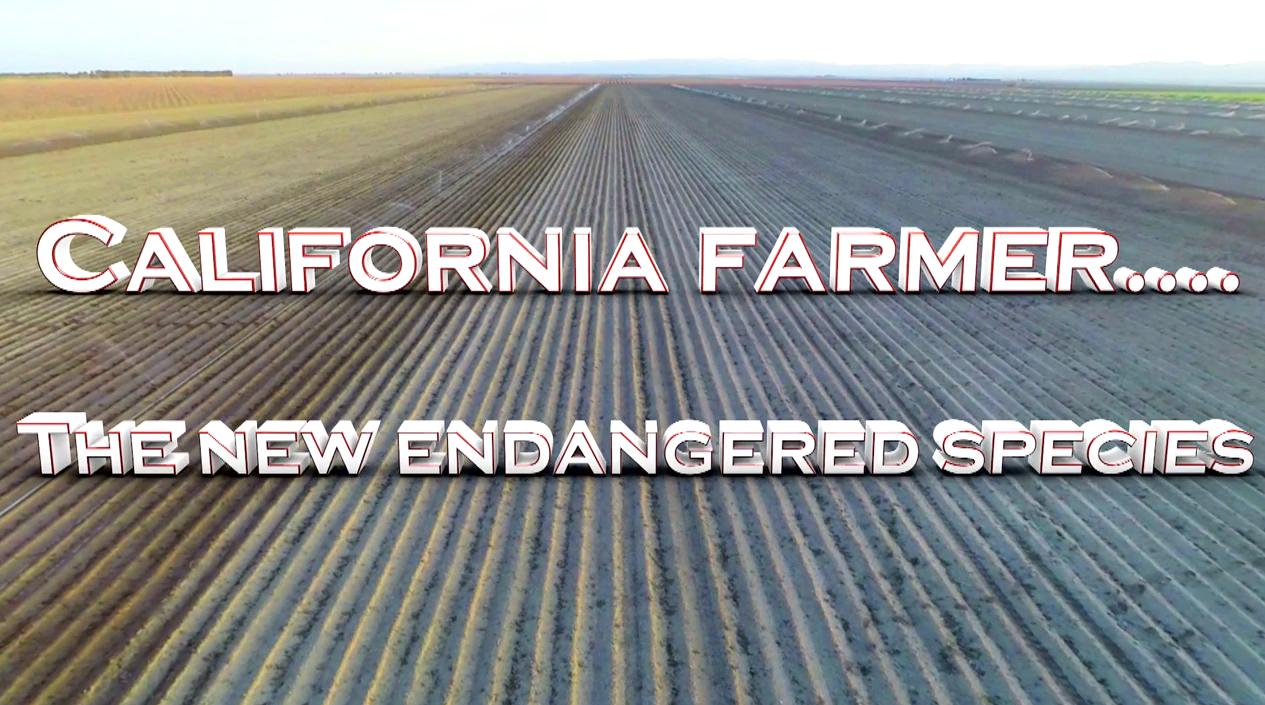
2015 Drought Costs Ag Nearly Two Billion!

DROUGHT COSTS CALIFORNIA AGRICULTURE $1.84B AND 10,100 JOBS IN 2015

The drought is tightening its grip on California agriculture, squeezing about 30 percent more workers and cropland out of production than in 2014, according to the latest drought impact report by the UC Davis Center for Watershed Sciences.

In 2015, the drought costs to the state’s agricultural economy will reach about $1.84 billion and 10,100 seasonal jobs, the report estimated, with the Central Valley hardest hit.

The analysis also forecasts how the industry will fare if the drought persists through 2017.

‘NOT A FREE LUNCH’

Currently, the industry overall remains robust. The agricultural economy continues to grow in this fourth year of severe drought, thanks mostly to the state’s vast but declining reserves of groundwater, which will offset about 70 percent of the surface water shortage this year, the researchers said.

California is the world’s richest food-producing region. Continued strong global demand and prices for many of its fruits, nuts and vegetables has helped sustain the farm economy along with intrastate water transfers and shifts in growing locations.

“We’re getting by remarkably well this year — much better than many had predicted — but it’s not a free lunch,” said lead author Richard Howitt, a UC Davis professor emeritus of agricultural and resource economics.

The heavy reliance on groundwater comes at ever-increasing energy costs as farmers pump deeper and drill more wells. Some of the heavy pumping is in basins already in severe overdraft — where groundwater use greatly exceeds replenishment of aquifers — inviting further land subsidence, water quality problems and diminishing reserves needed for future droughts.

Further, several small rural communities continue to suffer from high unemployment and drying up of domestic wells because of the drought, particularly in the Tulare Basin.

“If a drought of this intensity persists beyond 2015, California’s agricultural production and employment will continue to erode,” said co-author Josue Medellin-Azuara, a water economist with the UC Davis Center for Watershed Sciences.

MAJOR CONCLUSIONS

The UC Davis team used computer models and the latest estimates of surface water availability from state and federal water projects and local water districts. They forecast several drought-related impacts in the state’s major agricultural regions for the current growing season, including:

  • The direct costs of drought to agriculture will be $1.84 billion for 2015. The total impact to all economic sectors is an estimated $2.74 billion, compared with $2.2 billion in 2014. The state’s farmers and ranchers currently receive more than $46 billion annually in gross revenues, a small fraction of California’s $1.9 trillion-a-year economy.
  • The loss of about 10,100 seasonal jobs directly related to farm production, compared with the researchers’ 2014 drought estimate of 7,500 jobs. When considering the spillover effects of the farm losses on all other economic sectors, the employment impact of the 2015 drought more than doubles to 21,000 lost jobs.
  • Surface water shortages will reach nearly 8.7 million acre-feet, which will be offset mostly by increased groundwater pumping of 6 million acre-feet.
  • Net water shortages of 2.7 million acre-feet will cause roughly 542,000 acres to be idled — 114,000 more acres than the researchers’ 2014 drought estimate. Most idled land is in the Tulare Basin.

The effects of continued drought through 2017 (assuming continued 2014 water supplies) will likely be 6 percent worse than in 2015, with the net water shortage increasing to 2.9 million acre-feet a year. Gradual decline in groundwater pumping capacity and water elevations will add to the incremental costs of a prolonged drought.

GROUNDWATER LAWS COULD HELP

The scientists noted that new state groundwater laws requiring local agencies to attain sustainable yields could eventually reverse the depletion of underground reserves.

“The transition will cause some increased fallowing of cropland or longer crop rotations but will help preserve California’s ability to support more profitable permanent and vegetable crops during drought,” said co-author Jay Lund, director of the UC Davis Center for Watershed Sciences.

The report was primarily funded by the California Department of Food and Agriculture.

Other authors on the report include Daniel Sumner, a UC Davis professor of agricultural and resource economics and director of the UC Agricultural Issues Center, and Duncan MacEwan of the ERA Economics consulting firm in Davis.
2016-05-31T19:28:07-07:00August 18th, 2015|

Drip Irrigation is King During Drought

Terranova Ranch Surviving the Drought: Drip Irrigation

By Patrick Cavanaugh, Deputy Editor

As the drought continues to preside, farmers persist in their efforts to improve farming techniques to make the most out of what little water they have available. Don Cameron, general manager of Terra Nova Ranch, Inc., said the 7000-acre ranch in Helm, in Fresno County has managed to keep its 30 crops viable in the middle of the drought by changing its irrigation methods.

“We’ve been able to continue farming the acreage that we have, even in the fourth year of a drought,” Cameron said, “because we’ve changed all of our row crops irrigation to buried drip irrigation. We use every drop of water that we have.”

“We’ve also put in drip irrigation systems on all our trees and vines,” Cameron said. “We have irrigation scheduling. We use evapotranspiration data—we’re not putting on anything more than what we’re actually using.”

“So we’re able to find a solution just to get through these tough times,” Cameron said, “and we hope to have a wet winter and get a good snowpack so next year we’ll have more water. We’re farming like we’re in a drought every year. We’re never really going to go back to the ways that we used to farm.”

2016-05-31T19:28:07-07:00August 17th, 2015|

ALRB Pushes Worksite Access

ALRB Pushes Worksite Access in Upcoming Public Hearings

By Laurie Greene, Editor


Announced TODAY, The Agricultural Labor Relations Board ( ALRB) will be traveling to key agricultural areas in the state next month to hear comments from  farmworkers, employers and the public on the ALRB’s proposed rule to permit ALRB staff worksite access to educate farmworkers and field supervisors about the rights and responsibilities provided by the Agricultural Labor Relations Act (Act).


The public hearings will be held in Fresno, Salinas, Santa Maria and Oxnard, from 10 a.m. to 5 p.m. or until such time that all public testimony has been received.


Further information about the hearings appears at the end of this article.


THE PURPOSE OF THE ACT


The ALRB reports:

In 1975, the California State Legislature passed the Agricultural Labor Relations Act guaranteeing certain rights to California farm workers. The purpose of the Act is to “ensure peace in the agricultural fields by guaranteeing justice for all agricultural workers and stability in labor relations.” The Act states that it is the policy of the State of California to encourage and protect the right of farm workers to act together to help themselves, to engage in union organizational activity and to select their own representatives for the purpose of bargaining with their employer for a contract covering their wages, hours, and working conditions. The law prohibits the employers from interfering with these rights, protects the rights of workers to be free from restraint or coercion by unions or employers, and it prohibits unions from engaging in certain types of strikes and picketing.


The Agricultural Labor Relations Board is the agency which administers the Act and protects the rights of agricultural employees in various ways. For example, the Act creates a method by which workers may select a union or other representative to bargain with their employer if they wish. Agents of the Board conduct secret ballot elections to determine whether workers wish to be represented and if so, by whom. Also, the Act gives authority to the ALRB to investigate, process and take to trial employers or unions who engage in actions which the Act describes as “unfair labor practices” (ULPs). When Board employees conduct an investigation and obtain enough evidence to show that an unfair labor practice has been committed, a “complaint” is issued and a hearing is held at which each party has a right to present its side of the case. The Act guarantees the rights of employees to engage in, or to refrain from, union activities or “concerted activities,” such as acting together to help or protect each other in matters related to their employment.


ALRB HEARINGS AND LOCATIONS

  • Each facility will accommodate between 150-200 persons.
  • Spanish, Mixtec, Trique and Hmong interpreters will be available for language assistance. Other language services are available upon request.
  • The hearings will be recorded and an electronic copy of the transcript will be available.

FRESNO

Wednesday, September 9th

Doubletree by Hilton Fresno Convention Center 2233 Ventura Street, Salon C, Fresno (559) 268-1000


SALINAS

Monday, September 14th

Elks Lodge, 614 Airport Boulevard, Salinas  (831) 424-8039


SANTA MARIA

Tuesday, September 15th

Santa Maria Inn, 801 South Broadway Santa Maria (805) 628-7777


OXNARD

Wednesday, September 16th

Courtyard by Marriott, 600 E. Esplanade Drive Oxnard (805) 988-3600


You may contact the ALRB Executive Secretary’s Office at (916) 653-3741 or jbarbosa@alrb.ca.gov with any questions.

2016-05-31T19:28:07-07:00August 14th, 2015|

Appellations Beyond Napa . . .

Grower Andy Beckstoffer on Lake and Mendocino County Appellations

By Charmayne Hefly, Associate Editor

When people discuss California wine, they most commonly associate it as having been grown and produced in Napa. However, Napa isn’t the only northern county to grow grapes that become iconic California wines.Lake County Winegrape Commission

Andy Beckstoffer, owner of Rutherford-based Beckstoffer Vineyards, owns more than 3,000 acres of premium winegrapes. He began his own vineyard in the 1970s in Mendocino and Napa counties before expanding into Lake County as well.

Beckstoffer said that Lake and Mendocino counties were some of the most promising new wine districts in the new world of wine. He ought to know; the California Association of Winegrape Growers named Beckstoffer 2015 Grower of the Year last month.

“Mendocino County has consistently produced some of the best Chardonnay for years,” Beckstoffer said. “We started back in the 1970s, and they continue to do it in the Red Hills of Lake County. The appellation, Red Hills Lake County AVAis where we’re producing Cabernet at a reasonable price–North Coast Cabernet. It’s really the most promising new wine district in the new world of wine because it is encompassed by the vast North Coast AVA,” Beckstoffer said, “and the quality has been proven to be excellent.”

The North Coast AVA encompasses smaller appellations in six counties north of San Francisco: Lake, Marin, Mendocino, Napa, Sonoma, and Solano. Lake County AVAs


2016-05-31T19:28:07-07:00August 14th, 2015|

Big Water Rally at Grizzlies Stadium Aug. 21

Water Rally August 21 to Fill Grizzlies Stadium for #moreDAMstorage

Valley Ag Retailer gives away thousands of complimentary tickets in effort to promote #moreDAMstorage as a long-term solution to California’s water woes.

Gar Tootelian, Inc. (GAR) has invited Central Valley growers and businesses to rally around the backdrop of a Fresno Grizzlies Game on Friday, August 21, 2015 in support of #moreDAM storage.

“California’s Central Valley depends on reliable, clean water to survive and thrive. The rally’s goal is to fill the stands with those who support #moreDAMstorage as a solution to California’s water woes” said Greg Musson, president of Gar Tootelian, Inc. “For too long now, Sacramento has delivered nothing but lip service to valley water needs. It is time for the people of this valley to rise up and be heard.”

The Rally is an opportunity to learn more about the organizations working together on California’s long term water storage solutions. The Rally and fireworks will be highlights of the Fresno Grizzlies game on Friday, August 21, 2015 at Chukchansi Park, Downtown Fresno. Gates open at 6:05 pm. The game start time is 7:05 pm. GAR is giving away thousands of complimentary tickets which are limited and will be available on a first come first serve basis. You may pick up your tickets at the GAR booth located on the corner of Inyo and “H” Street the night of the game beginning at 5:00 pm.

“GAR takes great pride in supporting long term water storage solutions for the health and sustainability of our Valley,” said Musson, “I personally look forward to welcoming you to the Central Valley Water Rally at Fresno Grizzlies Stadium!”

GAR is committed to supporting long term water storage solutions for California’s greater tomorrow. The company provides water, nutrition, regulatory and crop care advice and products to more than 1,500 growers throughout the Central Valley.


2016-05-31T19:28:07-07:00August 14th, 2015|

Bountiful Plant Transpiration

Guy Kyser on Plant Transpiration, Phytoremediation

By Patrick Cavanaugh, Deputy Editor

When plants get irrigated, not only do they provide food, but all plants transpire. Guy Kyser, a specialist at the UC Davis Plant Sciences Department, explained how plant transpiration transforms carbon dioxide into “food” for plants to grow.

“Water in the shallow soil is either going to evaporate, or it’s going to be transpired,” Kyser said, “which means it’s going to pass through a plant from the soil to the atmosphere. The transpiration process helps the plant fix CO2 and convert it into food or plant material. The plant is really a little solar powered machine that catches CO2 out of the atmosphere and turns it into something solid so it’s not a greenhouse gas anymore.”

Kyser also explained the phytoremediation* process that occurs in plants grown in less-than-ideal soil and water conditions, in which these plants take up polluted water from its roots while removing impurities from the soil, retain the impurities, and release pure water into the atmosphere. Kyser said, “So, with phytoremediation, you can use the plants to purify poor soil or water situations, then mow off the plant material when the process is done. All the toxins stay in the plant, and only the pure water goes through.” Despite being a slow process, phytoremediation is effective in toxin removal, environmentally friendly, and does not harm soil health.

*Phytoremediation: Ancient Greek for “plant” and Latin for “restoring balance”

2016-05-31T19:28:07-07:00August 13th, 2015|

European Farmland Under Pressure

European Farmland under Pressure Due to Regulation and Diversion

By Laurie Greene, Editor

Jose Gomez Carrasco, executive sales manager for AGQ Labs and Technological Services based in Oxnard, is in charge of covering a large area that includes the U.S., Mexico and Central America. Noting global concern regarding how farmland is being used, particularly European farmland, Carrasco said, “There’s a growing population of around 150,000 or 170,000 new mouths every day to feed.” Carrasco said agricultural production on land designated for agricultural use in every country, worldwide, is being diverted to bio-ethanol, or bio-mass, or different renewable energy use, so the availability of agricultural products for food is diminishing.

Carrasco stated this progression needs to be moving in the opposite direction, “especially because there are other issues that are making production more challenging, such as water scarcity, soil erosion and the use and price of agro-chemicals, inputs and fertilizers, all of which are being controlled and monitored more and more.”

“The regulation of crop protection materials is intended to help everyone in the food supply chain,” he continued, “all the way from the grower to the consumer; however, sometimes these regulations can be quite burdensome.”

“In some cases regulations are not for the benefit of all,” Carrasco explained; “just for some. So in markets such as the European Union where the [maximum threshold] number of molecules registered has diminished from 1,000 to 300 or 400 in the last decade, we’re finding a lot of this regulation comes from Germany.” Carrasco said they are leaving a lot of farmers with no agro-chemicals in their arsenal, especially in Spain, Portugal, and Greece, all in southern Europe.

2016-05-31T19:28:07-07:00August 11th, 2015|

Fig Fest This Saturday!

Fig Fest This Saturday at Fresno State

Chef Fabio Viviani

Bravo TV’s Chef Fabio Viviani

The big annual Fig Fest is coming up this Saturday, August 15, from 9 am till 1 pm at California State University Fresno.

“It’s going to be bigger and better than ever,” said Karla Stockli, chief executive officer with the California Fig Advisory Board in Fresno. “Guests will be able to savor gourmet fig-inspired recipes, extraordinary wines and craft beer from California’s best chefs, food purveyors, wineries and breweries.”

CA Fig Fest Logo“And there will be an exciting new addition this year; celebrity chef Favio Viviani will headline the event. Viviani is a restaurateur (5 in U.S.) and a New York Times best selling cookbook author (3 successful cookbooks). But, he is best known as the Fans’ favorite in Bravo TV’s Top Chef and the winner of Cutthroat Kitchen with the Food Network.” Viviani also sells his own wine collection and popular line of cookware.

“Viviani will be center stage at a chef culinary demonstration and he will also tape an episode of his new PBS series, Global Bites,” said Stockli. “He will be interacting with people and signing books. And he is very passionate about all things fig and fresh ingredients.”

Tickets are available. Go to California Fig Fest for more information.

2016-05-31T19:28:08-07:00August 10th, 2015|

“My Job Depends on Ag” is Growing

Steve Malanca on the Future of “My Job Depends on Ag”

By Charmayne Hefley, Associate Editor

Three months ago, a grassroots effort to spread the word of agriculturalists began in the form of the movement, My Job Depends on Ag. The organization held its first meeting this week at Harris Ranch in Coalinga with 50 members in attendance to discuss the future of the group.

Steve Malanca, co-founder of the movement, said his hope for the organization is to educate the consumer, as well as to unite the ag community. Malanca also sells agriculture equipment for AGCO.

“We really feel that educating the non-ag community about who we are and where our food comes from is very important,” Malanca said.

“We want to unite the ag community so that we all are represented together,” Malanca continued. “We want to encompass everybody—the organic farmer, the commercial farmer, the trucking company, the logging industry. But everybody that’s involved in ag we want them to know that we all have a stake in this, and if we can all come together and be as one, I think that we’ll be able to hopefully give a message to the general public that we have a need for people knowing where their food comes from.”

Malanca hopes to host a My Job Depends on Ag Festival in the future. The group is considering Los Banos as a location for the potential festival due to its accessibility with an airport, several hotels and a nearby fairgrounds for the event.

“We’re considering a festival in order to bring everybody together,” Malanca said, “and we’re considering combining the Salinas Valley growers with the San Joaquin Valley growers in a town for example like Los Banos.”

“We want to, perhaps, have ag tours around the city of Los Banos,” Malanca suggested, “and have buses available for people who aren’t familiar with ag to take a ride and come see what kind of crops are grown and how they’re done.”

“An historical pavilion would be nice to show people the history of agriculture, and California—not just central California, but the entire state,” Malanca stated, “and we’d bring in some big time entertainment and food, of course. And we’d have a way for everybody to be proud of what they do and to show people where their food comes from.”

Malanca said he hoped the group’s decal could be an icon that symbolized the importance of agriculture.

“We’re grateful for the response we’ve had with our decals,” Malanca said. “We hope that little decal being shown on people’s vehicles and equipment will be a sign or a vision for people to see where they’re food comes from and know that we are a huge community and that we are good people. Ag is good, and ag is where you’re food comes from.”

2016-05-31T19:28:08-07:00August 7th, 2015|

Senate Water Bill Hopeful

Senate Water Bill Introduction is a Glimmer of Hope for Water Agencies

FRESNO, CA – Last week’s introduction of Senator Dianne Feinstein’s legislation, the California Emergency Drought Relief Act of 2015, is welcome news for the people of the State of California and the Central Valley enduring another devastatingly dry year. Once again, multiple Central Valley water agencies joined together to express their unified voice in support of an expeditious passage of this Senate water bill. This bill comes on the heels of the introduction and passage by the House of Representatives of H.R. 2898, the Western Water and American Food Security Act of 2015.

 “We are encouraged by Senator Feinstein’s actions with the introduction of this legislation. There is no time to lose as the damaging effects of the drought continue to wreak havoc on local communities, businesses, farms and farmworkers in the San Joaquin Valley and other regions of the State. Immediate solutions are needed, and the District looks forward to working with Members of both the House and Senate to find a reasonable solution that will benefit our great State.”

–Don Peracchi, Chairman of the Board, Westlands Water District


“The South Valley Water Association thanks Senator Feinstein for introducing the California Emergency Drought Relief Act of 2015 and encourages the balance of the Senate to make quick work in passing the bill immediately upon return from the August recess. This is a further important step to get legislation that will help those many farms and communities in California who are going without water. We look forward to the members of Congress resolving key differences between the California Emergency Drought Relief Act and H.R. 2898, the Western Water and American Food Security Act of 2015, and finding real water supply solutions. The members of the South Valley Water Association stand ready to assist in any way we can.”

–Dan Vink, Executive Director, South Valley Water Association


“The San Joaquin River Exchange Contractors Water Authority thanks Senator Feinstein for the introduction of the California Emergency Drought Relief Act of 2015. We realize this is another important step to passing a bill out of the Senate later this year that provides a meaningful legislative solution to the long-standing water supply shortages that is crippling the state. We are optimistic that members of Congress and the Senate can resolve the key differences in this bill, and the previously passed House Bill H.R. 2898, the Western Water and American Food Security Act of 2015. The Authority looks forward to working with our legislative leaders to pass legislation that benefits all of California.”

–Steve Chedester, Executive Director, San Joaquin River Exchange Contractors Water Authority


“There is no more important issue facing the Valley than the drought. It is a statewide crisis with the most direct and severe impacts in the Valley. The Kern County Water Agency appreciates Senator Feinstein’s and Senator Boxer’s efforts to help reduce the drought’s terrible impacts by introducing a bill in the Senate that can improve water supplies for farms and cities. We are anxious for the House and Senate to start working on a compromise between Congressman Valadao’s bill and the bill in the Senate, and we encourage the Senate to take swift action on the Feinstein/Boxer bill so that process can begin.”

–Ted R. Page, Board President, Kern County Water Agency


“No area of the State, and perhaps the nation, has suffered more disproportionately the harmful stress of chronic water supply shortages. The San Luis & Delta-Mendota Water Authority is appreciative of the effort of Senators Feinstein and Boxer on the recently introduced California Emergency Drought Relief Act of 2015 bill in the Senate. This bill is not only important to the San Joaquin Valley, but it is also vital for the entire state of California. We encourage the Senate to act swiftly, and encourage both the House and Senate legislators to begin work immediately on a meaningful compromise bill to ensure that long-awaited and much-needed relief is realized.”

–Dan Nelson, Executive Director, San Luis & Delta-Mendota Water Authority


 “Friant Water Authority welcomes the introduction of Senate Bill 1894, the California Emergency Drought Relief Act of 2015, and we thank Senator Feinstein and her staff for all their efforts in bringing this bill forward. The immediate task is to pass Senate legislation so that work can begin to craft a compromise with the House-passed legislation. Our farms and communities have suffered more under these water cutbacks than any other area in the nation. Our people are desperate for solutions that will provide real water for our area. This bill is a critically important step in the process of developing compromise legislation that can be signed into law by the President this year. As the bill advances, Friant looks forward to working with our representatives on both sides of the aisle to achieve drought legislation that will provide real relief for the 2016 water year and beyond.”

–Eric Borba, Chair, Friant Water Authority

2016-05-31T19:28:08-07:00August 6th, 2015|
Go to Top