LA Included in Water Priorities Act

CaWater4All-Proposed Water Priorities Act Includes Los Angeles

By Patrick Cavanaugh, Deputy Editor

The Water Priorities Constitutional Amendment and Bond Act is good for all of California—people, farms and the environment. Should the required 565,880 petition signatures necessary for inclusion on the November 2016 ballot be collected by the April 26, 2016 deadline, and should the Water Priorities Act receive a majority of affirmative votes in November, it will provide big benefits to cities such as Los Angeles.

“The availability of regional water projects is massive for our urban centers,” stated Aubrey Bettencourt, executive director of the California Water Alliance, the ballot initiative’s sponsor. “The ability for urban centers to create water in their own regions and become less dependent on other parts of the water system, actually helps the other regions in the system as well.”
CaliforniaWater4All

The proposed water priorities act creates flexibility all around. Bettencourt explained, “Consider that the Los Angeles (LA) River loses as much water in an average storm event as the water supply for 180,000 homes annually—in one storm! In an average normal water year, Los Angeles loses the equivalent of the Shasta Reservoir in stormwater runoff, and they are under state and federal mandates to capture that water, recycle it and put it back in their water supply. This helps clean up their beaches and ocean water, which would otherwise end up with a lot of pollution through runoff,” she said.

“This ballot measure would increase their regional water supply by capturing and injecting stormwater runoff back into their groundwater supply. That would providing flexibility and reliability to the water supply for Southern California, but also affordability, which is such a key part of this effort,” Bettencourt noted.

“And Governor Brown just extended the drought cut mandates through the end of October of this year, and a lot of communities are conserving and conserving,” she said.”They are conserving so much that they using less; and, now they have to pay more because they are using less. So they are using less water, paying more for it, and still being punished. And that should not have to happen if we have a system big enough to supply all of our diverse water needs: agricultural, urban and environmental.”

Bettencourt noted, “The system hasn’t been updated since the late ’60’s-early ’70’s, in terms of some of our large-scale infrastructure. And you have to remember, our population was half the size it is today, and we didn’t have the same type of demand on that system that we do today,” she emphasized.

“Currently, we allocate 50% of our surface water to environmental protection. That is not wrong; but what is wrong is that we didn’t expand the system enough to take care of that allocation and our people. That is what this water ballot initiative is aiming to provide:  to increase our infrastructure to meet the demands of the 21st century,” said Bettencourt.

_____________________________
Links:

California Water Alliance Initiative Fund

California Water Alliance

2016-05-31T19:24:12-07:00February 18th, 2016|

Dairy Prices Still Low

UC Davis’ Bees Butler on Low Dairy Prices


By Laurie Greene, Editor


As previously reported, the dismal below-production-costs dairy prices in California—the #1 dairy state—as well as in the rest of the nation, emanate from excessive inventory and slumping sales, particularly in the export market.

Leslie (Bees) Butler, a UC Davis Cooperative Extension specialist and lecturer in the Department of Agricultural and Resource Economics, explained why dairy producers don’t cut back on milk production. “It is easier said than done,” he said, “and for many producers, it comes down to an income problem. Most production units are set up on a certain sort of ‘scale,’ if you like. So if I am all set up ready to milk, let’s say, 800 cows, or 1000 cows, and then you come along and tell me, ‘Well, you ought to reduce it a bit.’”

“Quickly, I, the dairyman, have to think of what I can do,” said Butler. “There may be a couple of things I can do. First, I can get rid of some cows, my lowest producing cows. You can do that, but it would be a temporary solution to the problem. The second is don’t add those high-producing heifers back into the herd, but they are the most efficient cows. So as you do add them in, you have to cull more lower-producing cows. Many heifers are much better producers than their mothers, so it just reduces the lifecycle of the poor mom.”

“And of course, cash flow in the dairy business is so important,” emphasized Butler. “You know there is a limit to how much a dairy farmer can reduce his income without impacting too seriously his ability to pay off loans, etc.”

2021-05-12T11:17:14-07:00February 17th, 2016|

Lorsban Under Scrutiny

Chlorpyriphos (Lorsban) Must be Used More Carefully

By Patrick Cavanaugh, Deputy Editor

California Department of Pesticide Regulation (DPR) reports an important, broad-spectrum organophosphate insecticide known as Chlorpyriphos, or Lorsban, may be further restricted due to evidence of potential human health and environmental risks, presence (parts per billion) in some California waterways, and pressure from the EPA. Brian Leahy, director of the California Department of Pesticide Regulation, said, “Chlorpyriphos is an important tool and we know there are important times when you have to use it.”

Registered and widely used in agriculture across the nation for more than 40 years, DPR has made it a restricted-use material. Leahy said, “We are trying to work with the grower community to improve how they use it. We are also working with UC IPM to look at essential needs, but we know that as we look at Chlorpyriphos, we are going to have to put additional restrictions on it.”

“We simply need for it to stay on target, and not be getting into the human body. We are seeing that it is, and we are going to continue to make sure that people use it thoughtfully and wisely,” he said.

And Leahy is very confident that growers can use this material and keep it on target, “I have seen farms that use it only when they really need it, and that is what we want. We can’t lose this tool and we are going to keep it only by showing we can greatly reduce off-site movement to the human body and watersheds,” he noted.

___________________________

Resources:

According to the University of California Agriculture and Natural Resources 2014 Chlorpyrifos Report entitled, “Identifying and Managing Critical Uses of Chlorpyrifos Against Key Pests of Alfalfa, Almonds, Citrus and Cotton“:

Chlorpyrifos plays a critical role in many IPM programs for controlling pests that threaten the productivity and economic well-being of California producers and in maintaining the high quality standards required by consumers and international export markets. This active ingredient also allows production of animal feed to support the important dairy industry in California. For some pests, chlorpyrifos is one of the last effective organophosphate insecticides available and may provide an important alternative mode of action for insecticide rotations to prevent the development of resistance to newer insecticide products. For others, this product is one of very few products with international registrations with established maximum residue limits (MRLs) that allow unhampered trade. Chlorpyrifos may also be a key tool for controlling invasive pests as well as endemic pests occasionally found in extremely high population densities. 

The California Department of Pesticide Regulation reports that the combined use of chlorpyrifos in alfalfa, almonds, citrus, and cotton has decreased since 2006. 

Although newer insecticides are also available to manage some pests in these four crops, there is a continued need to preserve the availability of chlorpyrifos for specific situations.

Assessing the Health Risk of Pesticides,” California Department of Pesticide Regulation

2021-05-12T11:03:04-07:00February 16th, 2016|

Youth in California Cattle

Youth in California Cattle

By Charmayne Hefley, Associate Editor

Statistically, it appears millennials aren’t considering agriculture as a career path. The USDA’s “2007 Census of Agriculture: Farmers by Age,” reports the average age of cattle ranchers was 57.8 years old. Malorie Bankhead, director of communications for the California Cattlemen’s Association (CCA) and a millennial herself, said, “Young people in the beef industry have a really unique opportunity to get involved in something called the Young Cattlemen’s Committee (YCC), the young affiliate of our California Cattlemen’s Association.

Young Cattlemen’s Committee (YCC)

Young Cattlemen’s Committee (YCC)

Bankhead explained, “There are four college chapters: Fresno State, Chico State, Cal Poly and UC Davis. We don’t discourage membership from high school students or even folks younger than that who are interested in getting involved. The membership is $25 per year, and with that, you’re afforded a wealth of opportunity to become involved. We have a fairly robust scholarship program available to YCC members where we interview up-and-coming leaders in the beef industry who are focusing academically and extracurricularly on the beef industry, with the career goal to reenter the beef industry.”

Bankhead said the Young Cattlemen on the Capitol event, set for April 5, “is another opportunity for young people in the industry—specifically YCC members—to come to the CCA office in Sacramento to to learn from our staff about the current hot topics in the beef industry affecting ranchers. We turn to discussions with those folks and each other and build your network in the beef industry. We also tour the Capitol, visit some legislators and network with them on issues impacting the beef industry.” Registration information is forthcoming on the CCA website under the YCC tab.

2021-05-12T11:17:14-07:00February 15th, 2016|

EPA on Agriculture, Part 2

Ron Carleton, EPA on Agriculture, Part 2

By Laurie Greene, Editor

Editor’s note: In an exclusive interview with Ron Carleton, EPA Counselor to the Administrator for Agricultural Policy, we asked how the EPA views agriculture.

“Look, we want to work with agriculture,” said Ron Carleton, former deputy commissioner for the Colorado Department of Agriculture. “We have a number of issues and challenges we face across the country with water quality and other things. The thing that we often talk about is the adoption and implementation of conservation measures and best practices, and our producers are doing that,” he noted.

“Farmers are taking those very important steps,” explained Carleton, “to help get us from here to there. EPA Administrator Gina McCarthy is very committed to working with agriculture, to have that dialogue, to have that discussion, to have those two-way communications. So, hopefully, we can work better together as we go forward and find those opportunities to collaborate and to partner. That is so key, and something that I strongly am committed to and strongly support.”

Ron Carlton, EPA Counselor to the Administrator for Agricultural Policy

Ron Carlton, EPA Counselor to the Administrator for Agricultural Policy

Carleton elaborated, “I absolutely believe the EPA is always willing to look for outreach opportunities to be with our producers to sit down, to have those discussion with farmers,” towards a common goal.

“We’ve worked with our pesticide folks around the state very closely to resolve any issues that might arise with pesticide issues. We want to get those tools and those products out to our producers, but to do so in a safe way, in a way that also protects the environment. So, I think it is about collaboration. It is about discussion and dialogue, and we are committed to doing more of that.”

With the EPA’s commitment to collaboration and partnership, Carleton said hopefully in the long run, we could address the many challenges that we all have—not only in agriculture—but in the environment as well.

“I’ve always said that our farmers and ranchers are the best stewards of the land,” said Carleton. “We at the EPA need to continue working with them to support them to promote those efforts as best we can.”

“Now, we are not without challenges out there—environmental challenges with water quality, for example, with nutrient pollution in some cases, and air issues in other cases. But I think that the way we lick those problems, again, is by working together promoting those voluntary efforts. We must look for and embrace those opportunities to work together, not only with our Ag stakeholders, but also with the USDA and the NRCS.

“I think we just need to continue what we are doing, engage even more farmers and ranchers,” Carleton said, “and continue to seek technological advances, not only in irrigation, but land management and water quality. I’m confident and I’m optimistic that even with the challenges we have, climate change, a doubling of the population by 2050 and all the problems these will pose, I have every confidence in the world that we are going to find solutions to these problems, and I think that our farmers and ranchers are going to lead the way.

USDA Horizontal Logo“Farmers and ranchers are innovative and always trying to do the best they can to protect their land and water; but we all can do better. I think our producers respond to change in very good ways. Look, we have gone through technological advances; we are more technically precise in using fertilizers and water,” Carleton said.

He noted, “Water is going to be an interesting issue as the population doubles and as we have more development, particularly in the Western part of the United States, which is drier. But I think our farmers and ranchers are good at responding to that change, and good at helping to develop, adopt, and implement those technical advances in a way that not only is environmentally good, but increases productivity.”

“They are doing more with less,” Carleton said, “particularly given the challenges of a growing population, not only here in this country, but around the world, the loss of productive agricultural land everyday to development and the increase in extreme weather events, including droughts, floods and the like—and California farmers know all too well the weather extremes.”

2016-05-31T19:24:12-07:00February 12th, 2016|

Valley’s Gold Prepares for Fourth Season

Valley’s Gold Prepares for Fourth Season


By Charmayne Hefley, Associate Editor

Valley's Gold

Currently in the midst of season three, Valley’s Gold, a weekly television series focusing on agriculture in the Central Valley, is scheduled to continue for a fourth season.

Ryan Jacobsen, the series’ host and Fresno County Farm Bureau CEO, is surprised but pleased by the show’s success. “I guess, just by the blessings of being able to do what we do and show this incredible industry, it’s resonating with folks,” Jacobsen said. “They love the show and the opportunities this show has given us to be able to show how our food is produced—not the romanticized viewbut the view of truly how it’s done and the people who come together to make this industry drive. It’s just been a phenomenal opportunity to share Ag’s story.”

Jacobsen said California’s diversity has allowed the show, brought to viewers by Fresno County Farm Bureau and ValleyPBS, to continue with consistent, original content. “You would think after that many seasons we would run out of crops,” Jacobsen said, “but because of this phenomenal Valley and this phenomenal state, we’re finding more and more stories. The more we dig, the more we find and the more we’re able to share the wealth of what we produce here.”

Sponsored by GAR Tootelian, BRANDT and Meyers Water Bank, the show airs on Wednesdays at 7pm PST and is re-broadcasted on the weekends, Saturday at 6:30pm and Sunday at 10:30am.

2016-06-03T09:39:03-07:00February 11th, 2016|

Vertical Integration and Grape Flavors

Vertical Integration and Grape Flavors

By Charmayne Hefley, Associate Editor

Vertical integration, the combination in one company of two or more stages of production normally operated by separate companies, has helped lead to success in many facets of the agriculture industry. Harold McClarty, who founded HMC Farms with Mike Jensen, said without vertical integration, his farm would not be able to survive or have nearly the same level of success.  “We would not be in stone fruit if we were not vertically integrated,” McClarty explained. “There are three profit centers: the growing of it, the packing of it and the selling of it. We have all three of those profit centers. Without them we would not be able to survive the tough years.”

Cotton Candy grape clamshell

Cotton Candy grape clamshell (Photo source: Grapery)

McClarty also said the grape industry has made significant strides in flavor profiles in the marketplace. One popular flavor is Cotton Candy, which is grown and sold by Grapery, a company founded by Jack Pandol in 1996. Grapery also grows and sells Gum Drop grapes, Moon Drop grapes, Flavor Pops grapes and more.

The increase in unique flavors, according to McClarty, has helped grapes become a popular snack. “There’s been a revolution in the varieties of grapes grown just over the last five to seven years,” McClarty said. “These new varieties have revolutionized grapes and enabled us to produce more on less. 

To evaluate a grape, McClarty suggests you “look at a berry’s color, crispness and sweetness; these are the things that make a grape taste delicious. It really is a revolution, and we haven’t seen it in the California marketplace as much as we have in the rest of the United States. The retail chains in California just haven’t embraced it as well as some of the really good supermarkets on the East Coast and in the Southeast,” noted McClarty.

2016-05-31T19:24:13-07:00February 9th, 2016|

Joel Nelsen on New Cases of HLB in San Gabriel

Joel Nelsen on New Cases of HLB in San Gabriel

By Charmayne Hefley, Associate EditorSave Our Citrus

On Wednesday of last week, two more trees, an orange and a kumquat, were found infected with the citrus-deadly Huanglongbing (HLB) disease in the core of San Gabriel. The trees are located on separate properties. One has been removed, and the other is awaiting the owner’s permission for removal. Last summer, 10 diseased trees were confirmed in the San Gabriel area, and a quarantine, already in place since then, will not need to be expanded.

Joel Nelsen, president of California Citrus Mutual, commented on the HLB discovery, “The two trees were found in the core area, pretty adjacent to the others that were found in San Gabriel,” Nelsen said. The finding “is a result of the program and its intensity in continuing to look for positive HLB finds. Unfortunately, these two trees were positive. The Asian Citrus Psyllids (ACP) in the area have been treated. One tree has already been pulled. The other homeowner wasn’t home so we’re hoping for cooperation there. It’s not positive, but again it shows that the program is trying to find HLB before it finds the commercial citrus industry.”

2021-05-12T11:03:04-07:00February 8th, 2016|

Agriculture Detector K-9 on Duty!

Agriculture Detector K-9 on Duty!

By Charmayne Hefley, Associate Editor

[embedvideo id=”Il2TOH1NvOM” website=”youtube”]

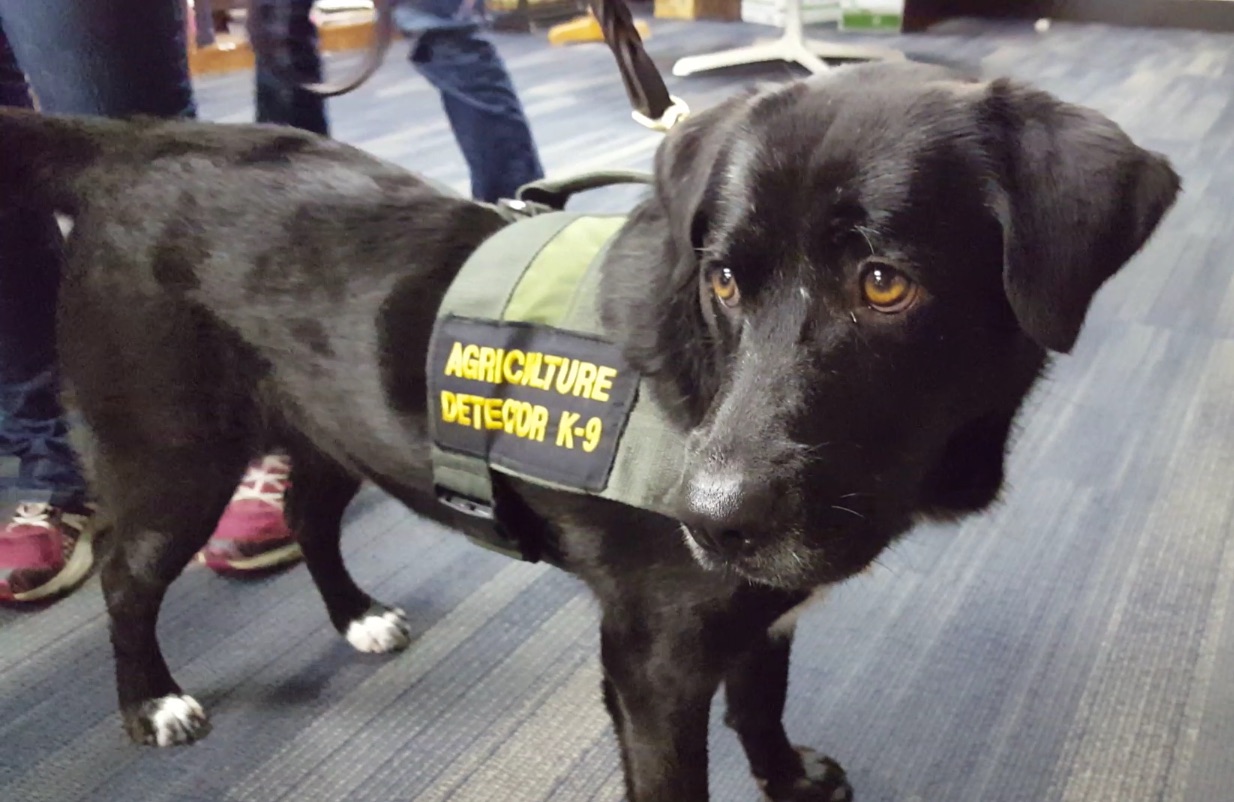
California Ag Today’s associate broadcaster Charmayne Hefley recently asked Soya, a mixed-breed agriculture detector K-9 (canine) with big responsibilities, and Samantha Tomlinson, Soya’s handler with the Fresno County Ag Commissioner’s office, what type of dog Soya is.

ST:      We don’t know exactly what she is for sure, but we’re thinking about getting her DNA-tested someday. We’re thinking she’s a lab-border-collie.

Samantha Tomlinson, Soya and Charmayne Hefley

Samantha Tomlinson, Soya and Charmayne Hefley

CAT:   How long have you and Soya been together?

ST:      We have been matched up since mid-July when we went through the training program in Georgia through the National Detector Dog Training Center.

CAT:   What is Soya able to do for the Ag Commissioner’s office?

ST:      Soya smells out parcels for potential plant material and she alerts us [to suspicious ones] by scratching. We check to see if [the material] has been properly certified and if it’s good to go.

CAT:   What are some of her recent detections?

ST:      She can detect a number of things. She was initially trained on five scents: mango, stone fruit, apple, guava, and citrus. From there, through scent association, she’s been able to find a number of additional agricultural materials, including avocados, blueberries, nuts, soil, cut flowers; anything that is plant material, Soya can find.

CAT:   What region does Soya cover?

ST:      Right now we’ve been covering only Fresno County because we still are in what we call the “acclimation phase,” as she’s still new. We’ve been working at FedEx and UPS, but we’ll broaden our horizons eventually and we’ll be in the post office, GSO, OnTrac, any service that ships parcels.”

CAT:   How important is it for the agricultural industry to have dogs like Soya working for it?

ST:      Well Soya and I are considered a “first line of defense” for California’s multi-billion dollar ag industry. She is in the facilities checking boxes sent from potentially quarantined areas from within the state and from outside the state for materials that may contain any pests or diseases that could prove detrimental to California agriculture.

CAT:   People may not know when they’re shipping certain items—certain plant materials—from one county to the next that the destination county may have a quarantine in place. How do people properly ship plant material?

ST:      Every county is actually different. If you are thinking of shipping some of your backyard fruits to your nephew or grandson, I would contact your local ag commissioner and make sure there are not any quarantines in place for both the county you’re shipping from and the county you’re shipping to. In these facilities, we look for boxes to be properly labeled with the growing origin and we inspect thye contents inside. Depending on what is inside, where it’s grown and where it’s going, we act accordingly.

2016-05-31T19:24:13-07:00February 5th, 2016|

California Weed Science Society Meeting

California Weed Science Society Meeting

By Charmayne Hefley, Associate Editor

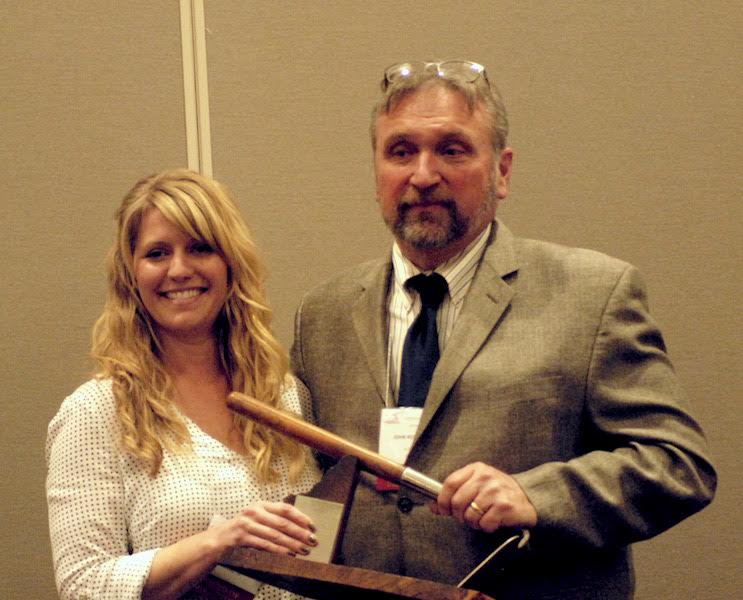
The California Weed Science Society (CWSS) held their annual meeting in Sacramento from January 13-15, 2016. The meeting fostered collaboration between Pest Control Advisors (PCAs) and farmers as they gathered to learn the newest innovations in weed science.

John Roncoroni, weed science farm advisor for the UC Cooperative Extension in Napa County, as well as the outgoing CWSS president, said four Fresno State students gave presentations at the meeting on their research. “We’ve had really great student participation—the amount of student scholarships we’ve given is up this year, the posters, the students and our attendance this year is up,” Roncoroni said. Pre-registration was about 530 people.

CWSS LogoRoncoroni suspects that rain pushed people to attend, “becausewith that rainwe’re looking at more weeds this year. So people are looking for the newest information on weeds. This year’s conference really has done a really good job of putting that information together. Kate Walker, our program chair, has really done a fine job of putting together a great program.”

Kate Walker, technical service representative for BASF Corporation, is also the new, incoming CWSS president.

________________________

Links:

California Weed Science Society (CWSS)

The CWSS recently updated its published textbook, Principles of Weed Control, 4th Edition, that focuses on the applied aspects of weed control.  The purpose of this textbook is to provide access to the fundamental principles and concepts of weed management in California. The book is designed for use at the college level by students who have an interest in pursuing a plant science or associated background of course work. It is also a useful resource for individuals studying to become PCAs and applicators or for consultants who work in weed science. For more information, go to the CWSS website Publications page.

2021-05-12T11:03:04-07:00February 5th, 2016|
Go to Top