Pecan Growers Excited about Federal Marketing Order

Calif. Pecan Growers Gather to Discuss Federal Marketing Order

By Patrick Cavanaugh, Farm News Director

On Wednesday, August 3, nearly 100 people attended the California Pecan Growers Association meeting at Linwood Nursery, the oldest supplier of pecan trees in the world, located in Le Grand in eastern Merced County.

Not all attendees were current pecan growers; many were contemplating planting pecan trees. New interest and excitement in pecan farming surrounds the newly approved (May 2016) and forthcoming Federal Marketing Order For Pecans (FMO) that will assess growers a few cents per pound to increase pecan marketing and awareness in California and other areas of the country.

Pecan growers and others interested in the crop gathered in Le Grand to discuss Federal Marketing Order for Pecans

“We want to model it after the Almond Board of California,” said Mark Hendrixson, president of the California Pecan Growers Association, whose members farm approximately 4,000 acres of the crop throughout the San Joaquin and Sacramento Valleys.

“We had a very a good turnout. Pecans are a growing industry in California; we have great weather for them,” said Hendrixson. “We do things a little bit differently because of our great weather, but we’re able to produce extremely good quality.”

CPGA-Logo“Pecans are extremely healthy,” said Hendrixson. “The research has been out there for quite some time, but the pecan industry has never had a unified marketing voice. Once we develop the Federal Marketing Order, we will be able to spread the message about health and other great benefits that will help drive interest in pecans and pecan consumption, and to deliver quality product to consumers around the world.

Hendrixson expects the Federal Marketing Order For Pecans to be in place very soon. The USDA will officially seat the Board of the American Pecan Council (APC), the new governing board of the FMO, by October 1, 2016 by calling for board member nominations, qualifying the candidates and issuing a ballot for qualified voters to vote on those nominations.

“Once those ballots are approved by the Secretary of Agriculture,” Hendrixson said, “we’ll have an elected Board that can begin to function and actually set the assessment, which in turn will be approved by the USDA going forward.”
2021-05-12T11:05:50-07:00August 4th, 2016|

Breaking News: The 5 Percenters May Not Receive All of Their Water Allocation

5 Percenters and Endangered Fish May Both Lose 

By Patrick Cavanaugh, Farm News Director


Will the 5 Percenters—the Federal water users in California who were restricted by a 95% water allocation reduction this year—actually receive the promised 5% allocation? This scenario follows a more-than-average winter rainfall and snowfall throughout the state.

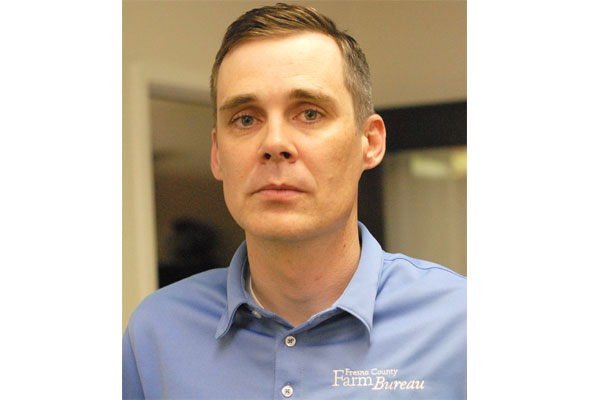
Ryan Jacobsenexecutive director and CEO of the Fresno County Farm Bureau, said, “arguably it’s turned out to be much worse. Right now, for the initial 5% allocation to even be questionable right now is just absolutely insane. It all boils down to the amount of water being held up in Lake Shasta for fish purposes, which has put a major stranglehold on what’s happening down here at this point,” noted Jacobsen.

Central Valley Project (CVP) Water

Central Valley Project (CVP) Water

At Shasta Reservoir, a keystone reservoir of the Central Valley Project, the U.S. Bureau of Reclamation essentially discharged flood releases earlier this year just to make room for the water that was expected to come in.  Shasta now stands at a above average full for this time of year, because the Feds are holding all the water for release for salmon later.

This is part of the plan to have cold water available to release for the salmon. And Shasta actually has 30 percent more cold water than what they thought, and water leaders are pushing hard to get the Feds to release it for agriculture.

San Luis Reservoir dead pool

San Luis Reservoir at Dead Pool Status

And San Luis Reservoir is  at a dead-pool status, which insures no more water can be sent south from that reservoirDead pool means no more water can be drawn from San Luis Reservoir, which does not bode well.

Jacobsen said, “This means our federal contractors’ 5% is in question. And that’s the irony: we were looking at such a strong year—or at least an average year [of precipitation]—and ending up now where our meager water supply is in jeopardy. This is incomprehensible and inexcusable from the federal side.”

Shasta has both federal and state water, and the federal side is essentially nothing at this point, explained Jacobsen. “Farmers rely upon San Luis Reservoir water for July and August irrigation, “and the water is essentially gone at this point,” he said. “It just shows you the major mismanagement we’re seeing from the federal side and the inability to capture water even when it is available, and not at the demise of any of these species.”

Jacobsen reiterated, “Back when the precipitation was falling [last winter], water was available at some extraordinarily high levels; yet, we never saw the increase in pumping that we would have expected under the normal conditions. “Of course, we’ve seen less pumping this year for the farmers and the cities south of the Delta,” noted Jacobsen. “During the times of the rainfall this year, it was essentially excuse, after excuse, after excuse. Some newer excuses pertained to why the pumps were not operating or operating at a very reduced capacity,” explained Jacobsen.

“The situation has been frustrating for a couple of years, but the anger continues to build because right now, this is not a ‘Mother Nature’ issue. It is completely a man-made regulatory drought that is, again, just incompetency at its best.”

“When we talk about the water stored behind Shasta [Dam] right now, really it is for the fish,” noted Jacobsen. “The most-watched fishery, at this point, is the salmon fishery. We’re in year four of this drought, but when it comes to the critical side of fish, the salmon essentially operates in three-year cycles. The last two years have been arguably two of the worst years on record for them, and this potential third year is a kind of make-it-or-break-it for salmon fisheries in the Delta region.”

Unfortunately, per Jacobsen, many decisions have been based on guesstimates. “There are a lot of folks who think we need to reserve all of this cold water for a fishery that may or may not be responding to what has been done in the past for this [contracted irrigation] water that has been given up for those purposes,” Jacobsen explained. “Right now, I think we’re doing a lot of experiments at the cost of jobs and employment, and most importantly, the farms here in the San Joaquin Valley. The frustration is that science is really not playing a big part in it. A lot of decisions are just simply, ‘We think we should be doing this versus what the science actually says we should be doing.’”

Jacobsen’s leading frustration is that all that water taken from farmers and given to fish has not helped the fish at all. In fact, the smelt and salmon numbers continue to decline. “I talk about growing frustration and anger from so many folks in the last couple of years… specifically because it hasn’t made a difference,” said Jacobsen. “An exorbitant amount of water has been given up for these fisheries, [endangered fish populations] continue to decline and crash, and as we’ve been saying for years, it is beyond time to look at just the water exporters,” he added.

Jacobsen maintains other stressors should be seriously investigated. “Many other issues taken place in the Delta should be pulled into play here, but again the regulators and the environmentalists continue to look only at the exporters as the sole issue for fish decline. There are so many other factors out there that need to be looked at,” he said.


Highly recommenced reading: “We are the 5 percenters, stretching our water supplies to get by,” by Joe Del BosqueContributing writer, The Orange County Register, July 14, 2016.

2021-05-12T11:05:50-07:00August 3rd, 2016|

Duarte Nursery v. U.S. Army Corps of Engineers Update

PLF Attorney Reports Duarte Appeals Court Decision—Once Again

By Patrick Cavanaugh, Farm News Director


Damien Schiff, principal attorney at Pacific Legal Foundation (PLF) who has been representing the Duarte family in their legal battle with the U. S. Army Corps of Engineers (Corps), provided this update after Judge Kimberly J. Mueller, U.S. District Court for the Eastern District of California dismissed their summary judgment motions on June 10, 2016, and ruled the Corps’ February 23, 2013 cease and desist order did not deprive Duarte of liberty or property. Schiff said his client’s next course of action is filing for an appeal of the judgment.

“It’s disappointing, in particular, because earlier in the case, we had received a very favorable decision from U.S. District Judge Lawrence K. Karlton, the original Federal Judge assigned to our case who ruled in our favor on our due process challenge to the Army Corps’ cease and desist order.” Judge Karlton retired from the bench in 2014 and passed away in 2015. “It was particularly disappointing to see Judge Mueller reverse Judge Karlton’s decision.”

“Launching the appeals process will take some time,” Schiff explained. “Unfortunately, the case is complicated because there are a lot of claims going on and not all of them have been resolved by Judge Mueller’s decisions. The general rule in Federal Court is that you cannot appeal until a final decision has been made that decides all the claims against all the parties.”

Damien M. Schiff

Damien M. Schiff, Principal Attorney, Pacific Legal Foundation’s National Litigation Center

Considering the preponderance of hills and valleys across the United States, the magnitude of this case has growers—not just from California, but nationwide—concerned about the outcome and precedents resulting from this case, as well as the significance of future Army Corps-issued cease and assist orders.  “It is an amazing assertion of power by the United States Environmental Protection Agency (EPA) and the Corps,” Schiff said, “and I think that’s why we see not just farming groups and property rights groups, but also a majority of the states, challenging the Agency’s Waters of the U.S. (WOTUS) Rule.”

EPA Fact Sheet Clean Water Rule_Page_1A significant point of contention in the case, Schiff explained, stems from Judge Mueller’s ruling that because the Duarte property had not seen any farming activity since 1998, the Clean Water Act’s farming exemption was no longer applicable. “That’s, in part, why we challenged the cease and assist orders,” said Schiff, “because the Corps issued this directive without giving any prior notice, much less any opportunity to present contrary information. The reality is, this property, and the other properties in the entire area, have traditionally been used for agriculture, and are, in fact, zoned for agricultural use.” EPA Fact Sheet Clean Water Rule_Page_2

The Duarte case is so multifaceted,” Schiff said. “The land was always agricultural, and what was done on the property is consistent with normal agricultural farming practices; there is really nothing exceptional about what went on. What’s particularly problematic for the Corps here is that Duarte went above and beyond the call of duty by having a wetlands consultant ensure that all of the areas assessed to have vernal pool or wetlands characteristics were marked and avoided entirely.”

Whatever the outcome, the Duarte case will have far reaching effects on legal precedent throughout the agricultural community as well as on the cease and assist orders issued by the Army Corps to families throughout the country. “Surprisingly, there isn’t very much case law on what process, if any, is owed to the landowner before the agency issues these orders,” Schiff remarked. “However the Duarte case ends up, I think that will have to be litigated in other parts of the country.”

2021-05-12T11:05:50-07:00August 2nd, 2016|

WGA Conflicted on SCOTUS DACA Decision

Western Growers Association has Mixed Feelings on Recent Supreme Court DACA Decision

By Patrick Cavanaugh, Farm News Director

The 4-4 ruling on immigration reform last month by the Supreme Court of the United State’s (SCOTUS) affirmed the lower court’s injunction against President Obama’s executive order, which would have granted deportation deferrals and temporary legal work status to about five million undocumented immigrants. Tom Nassif, president and CEO of Western Growers Association (WGA), has been vocal about the need to establish some type of immigration reform.

Nassif compared the recent SCOTUS ruling to what happened when a 2013 U.S. Senate-endorsed bill that supported a pathway to citizenship was never passed in the U.S. House of Representatives. “The House did not want a pathway to citizenship,” said Nassif. “They were not even sure if they wanted a pathway to legalization. Most Republicans did not even want a border security bill in the House coming to the floor for a vote because they didn’t want any immigration reform—whatsoever.”

Western Growers logoNassif said, “The House was part of that Send-them-home! crowd that considered anything you did—even if it was putting them on probation—as amnesty. It is interesting that with the House doing nothing about immigration, what we have today is amnesty, because we’re not doing anything about it.”

Nassif expressed mixed feelings about the SCOTUS decision. “In a way, it disappointed us; in a way, it didn’t. It didn’t disappoint us because there was no requirement that people working in agriculture who might qualify for this Deferred Action For Childhood Arrivals (DACA) or Deferred Action for Parents of Americans (DAPA) would actually remain working in agriculture.”

To get a pathway under the Senate bill, farmworkers would have to stay in agriculture for a certain number of years, but they could eventually work in other industries. So if you have a choice of working in any industry, why would you go to work on the farm? But, in this instance, you would adversely affect other American jobs,” said Nassif.

Nassif said the motivation of the Obama administration is understandable due to the inability of Congress to compromise on immigration reform, yet Nassif maintains the Immigration Reform should not be done with Executive Orders as the President has done. Instead, Nassif stressed that Congress should take up Immigration Reform and pass it.

2016-08-04T15:40:15-07:00August 1st, 2016|

Alfalfa and Water in Imperial County

Imperial Valley Is Big on Alfalfa Production

By Brian German, Associate Editor


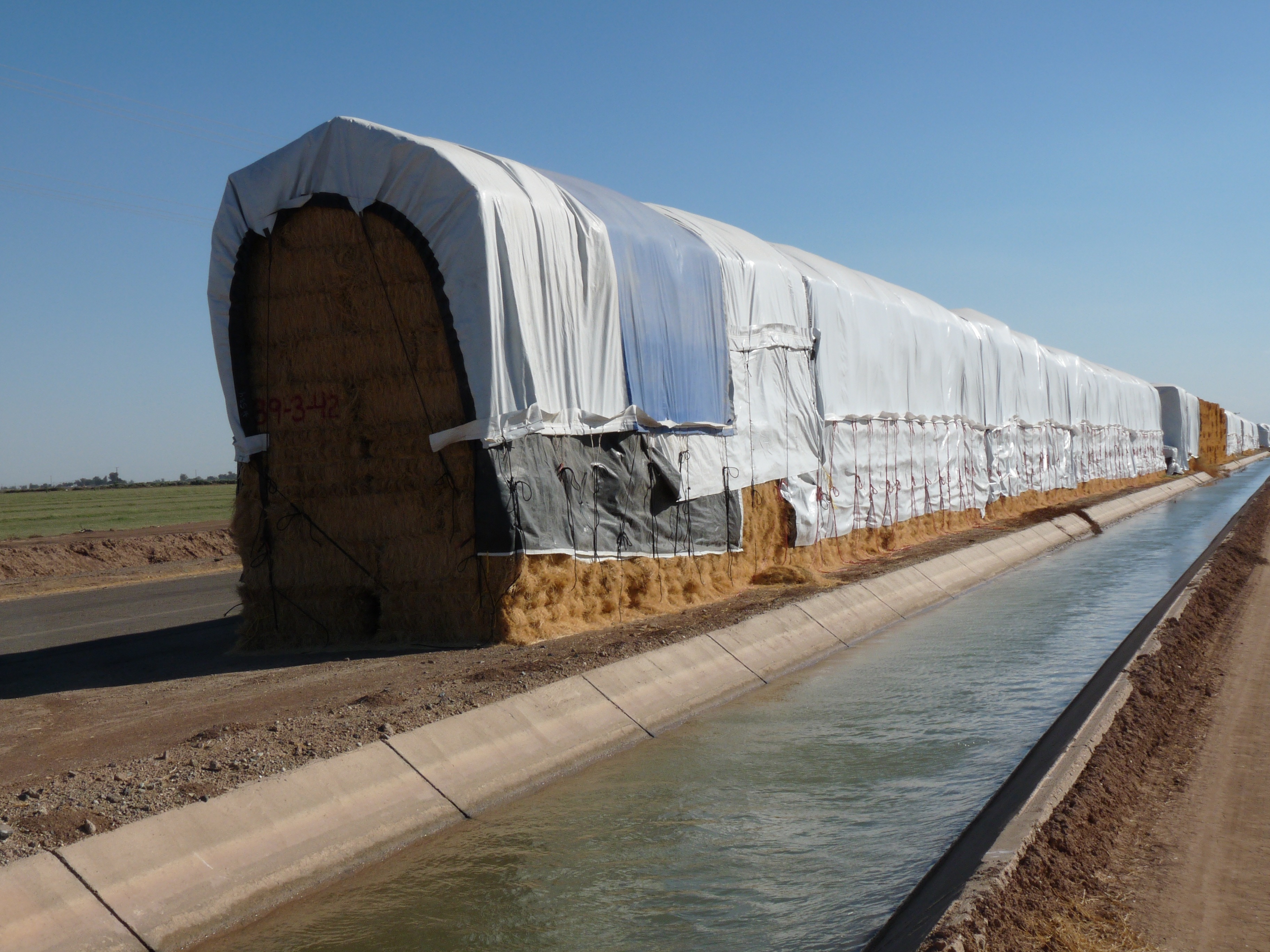
Imperial County farmers produce more than 100 different types of commodities from bamboo to artichokes, with alfalfa being one of the county’s most significant crops. Linsey Dale, executive director for the Imperial County Farm Bureau, said, “Alfalfa is grown on about 120,000 acres in Imperial County—about one quarter of our total farm acreage. It is a very important crop to the County, both for domestic use and export markets.”

Imperial County, CA

Imperial County, CA

Dale differentiated the alfalfa industry from others. “We are completely Roundup Ready-free. We grow non-GMO alfalfa here in Imperial county,” said Dale, “and it’s a very strong crop. We get about nine cuttings per year, which is very significant compared to most areas in the country,” she noted.

Because Imperial County is a desert environment, many wonder how farmers are able to grow so many different types of crops. “We have a very strong water supply. Our water comes from the Colorado River, which is moved by the Imperial Irrigation District, so we do not rely on rainfall to grow any of our crops. We rely 100 percent on our supply from the Colorado River,” Dale said.

“In terms of overall water usage,” Dale explained, “Imperial County agriculture uses an average of 5.6 acre-feet of water per acre every year. Dale added, “The Imperial Irrigation District holds the water in trust for use on our land. They have instituted what we call an Equitable Distribution Program, in which all of the water is allocated by acreage, so growers have a set amount of acre-feet of water to use on each acre.”

2016-07-30T21:37:14-07:00July 29th, 2016|

CAWG Focus on Mechanization, Virus Control

CAWG Monterey Meeting Addresses Mechanization and Virus Control Strategies

By Laurie Greene, Editor

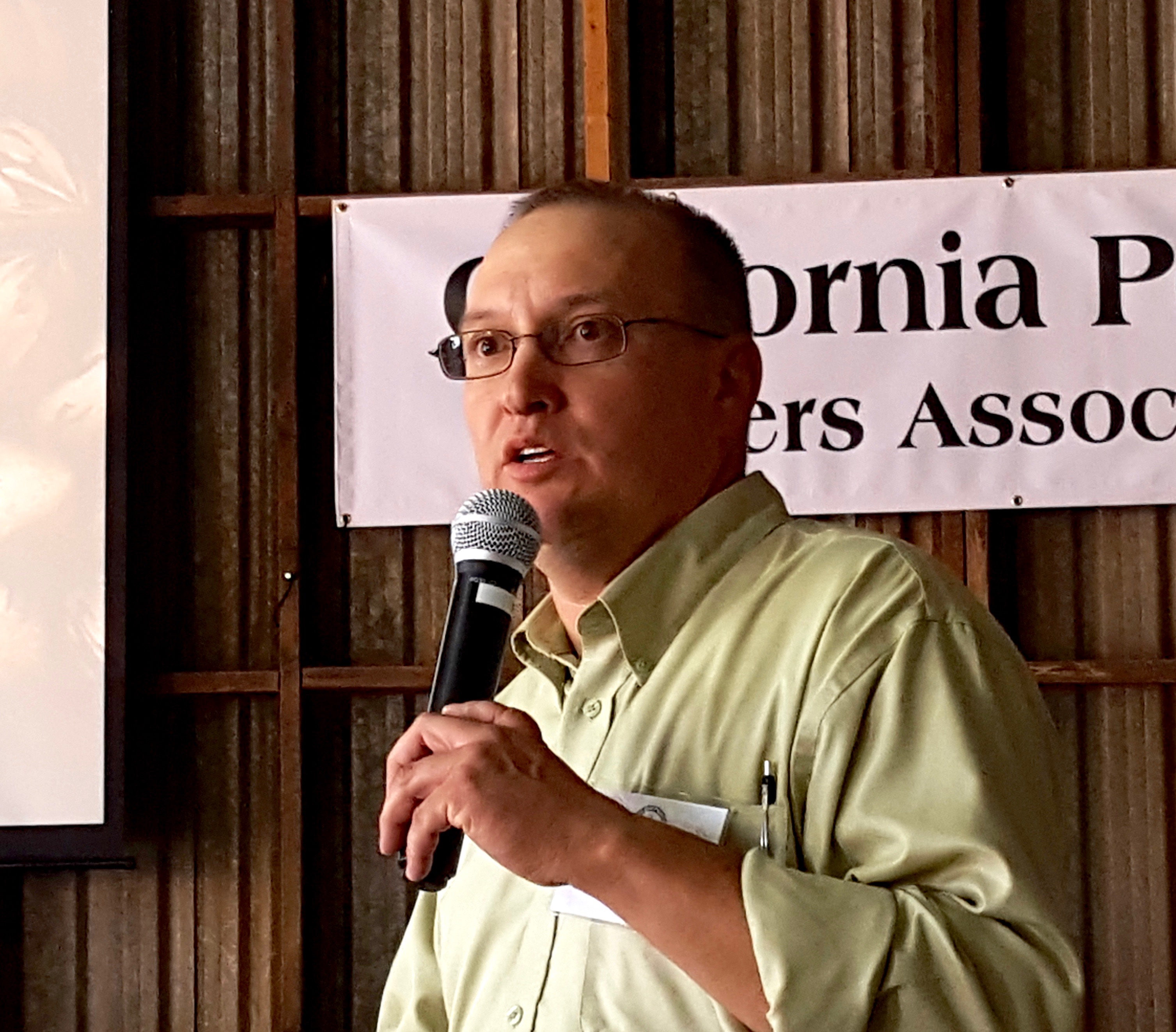
John Aguirre, president of the Sacramento-based California Association of Winegrape Growers (CAWG), highlighted two important topics discussed at their annual summer meeting last week in Monterey: the drive to mechanize as many cultural practices as possible to avoid high labor costs and to encourage innovation in fighting viruses.

“For a variety of reasons,” said Aguirre, “we really have to focus on mechanizing most winegrape vineyard activities such leafing, harvesting and pruning. We have a policy environment that is making labor more expensive, more difficult to use labor in the vineyard.”

Furthermore, Aguirre explained, fewer people want to work in the vineyard, so mechanization is going to be one of the few options available to those who want to stay in business. Aguirre has seen many winegrape growers shift away from winegrapes towards almonds, in part, because of the lower labor requirement. “Again, if we want a diverse agriculture industry in this state, we’ve got to find ways to help all ag sectors be more mechanized,” he noted.

CAWG 2016 Meeting in Monterey

CAWG 2016 Meeting in Monterey

Aguirre emphasized the critical importance of learning about viruses in the vineyard and addressing strategies to minimize virus infections—the focus of a panel of experts at the meeting. Some key takeaways Aguirre noted were, “a better understanding of what we can do in the vineyard to rogue out infected vines and how to manage vectors.”

Aguirre also recalled a real practical hands-on session that focused on preventing the spread of viruses by vectors, such as birds, people, and machinery, through increased cooperation between growers. He also noted there are good systems in place to maintain clean nursery stock. “The Foundation Plant Services and our nurseries are taking really strong steps to improve the cleanliness of grapevine nursery stock. I see things only getting better.”

Featured Image: John Aguirre, president, California Association of Winegrape Growers (CAWG).

2021-05-12T11:02:59-07:00July 28th, 2016|

It Is California Cantaloupe Week!

California Cantaloupe Week Begins in Fresno County

By Lauren Dutra, NAFB Summer Intern


Established by the Fresno County Board of Supervisors for this week, Monday July 25 through Sunday, July 31,“California Cantaloupe Week,” recognizes Fresno County as the lead canteloupe-producing county in California, which currently produces 75% of all cantaloupes sold in the United States.

Steve Patricio, president and CEO of Westside Produce, a grower, packer and shipper in Firebaugh said, “The quality has been absolutely outstanding this year, with some of the highest sugar results we’ve seen in recent years.” Patricio has also observed great demand in the marketplace as well.  At this point, it’s time to eat those beautiful California cantaloupes,” he noted.

Tri Westside ProducePacked with nutrition, “Cantaloupes are one of the most outstanding things we can eat for our health,” Patricio affirmed. “That daily dose of cantaloupe can do wonders for a healthy lifestyle.”

The California Cantaloupe industry has been on the forefront of the food safety movement throughout the world, “You can be assured that every cantaloupe grown, packed and shipped from California meets the highest standard of food safety anywhere in the world,” Patricio stated.

The California Cantaloupe Advisory Board (CCAB) requires all California cantaloupe growers, packing operations, and cooling facilities undergo mandatory announced and unannounced government food safety audits. The audits are based on a set of food safety standards developed from 20 years of university research along with input from government, food safety and farming experts. CCAB food safety systems allow for science-based standards to be updated as new information or science becomes available.

You can review all of the safety checkpoints here.

2021-05-12T11:05:51-07:00July 27th, 2016|

Mathesius is New UC Soil Scientist

Mathesius is New Agronomy Farm Advisor in Sutter-Yuba, Colusa Counties

By Patrick Cavanaugh, Farm News Director


Konrad Mathesius is the new Agronomy farm advisor at the UC Division of Agriculture and Natural Resources Cooperative Extension, Sutter-Yuba, Colusa Counties. Mathesius first explained his unusual last name. “It means ‘mathematics’ in Latin. I guess we had accountants in our family lineage back there somewhere,” he said.

Mathesius completed his undergrad degree in political science at Utah State, followed by two master’s degrees at UC Davis in Soils and Biogeochemistry; and in International Agricultural Development (IAD)—a graduate group within the Department of Plant Sciences. “The IAD is flexible in its curriculum, which allowed me to take many plant- and soil- specific courses. I took the opportunity at IAD to specialize in soils,” he said.

California Safflower Field

California Safflower Field

“Through the years, we have learned a lot through the pioneers of soil science and it’s an exciting field because there is still a lot to learn,” said Mathesius. “And everything that comes out of soil science, in one way or another, is applicable to life on the planet.”

“Soils also tell a story, and that’s one thing I really enjoy about it. It’s especially evident in California because there is a remarkable combination of parent material that has created an abundance of different soils in the state,” noted Mathesius. “And it’s very relevant to agriculture, ecology, and environmental science. Differences in soils create a stark contrast in how crops grow and how they need to be managed,” he said.

Mathesius is responsible for the agronomic crops grown in his region, including dry beans, oilseeds such as safflower and sunflower, fresh market corn and silage corn, and small grains such as barley, wheat, and rye.

“I’m a soil scientist by trade, but ultimately I am a UC Cooperative Extension Farm Advisor and available to growers to figure out what their crop issues are—which include pests, diseases and soil fertility,” noted Mathesius. “I am a resource, and the UC system has many other resources and personnel who can thoughtfully consider solutions to crop problems.”

2021-05-12T11:05:51-07:00July 26th, 2016|

Breaking News: Cal Poly Opens New Greenhouse and Insect Rearing Facility

New Greenhouse Facility Opens to Save Citrus from Psyllids that Vector HLB

Facility to Rear Tamarixia Radiata, Natural ACP Predator

By Patrick Cavanaugh, Farm News Director


Scores of citrus industry leaders, citrus growers, scientists and CDFA officials attended the ribbon cutting event TODAY at the opening of a new greenhouse on the Cal Poly Pomona campus to rear Tamarixia radiata, a tiny parasitic wasp imported from Pakistan because it is an Asian Citrus Psyllid (ACP) nymph predator. ACP, in turn, is a serious nonnative citrus pest that can vector Huanglongbing (HLB)—a deadly citrus disease also known as Citrus Greening—that has devastated the powerhouse citrus Screenshot 2016-07-25 12.24.41.png

industry in Florida, threatens to ruin additional citrus economies, and is the biggest threat the California citrus industry has ever faced.

According to the United States Department of Agriculture Animal and Plant Health Inspection Service (USDA-APHIS), infected citrus trees “produce fruits that are green, misshapen and bitter, unsuitable for sale as fresh fruit or for juice. Most infected trees die within a few years.” ACPs have been detected in Alabama, American Samoa, Arizona, California, Florida, Georgia, Guam, Hawaii, Louisiana, Mississippi, Northern Mariana Islands, Puerto Rico, South Carolina, Texas and the U.S. Virgin Islands. Of those locations, the HLB disease has been detected in California, Florida, Georgia, Louisiana, Puerto Rico, South Carolina, Texas and the U.S. Virgin Islands.

ENTER:  Tamarixia radiata

Use of the ACP predator, Tamarixia radiata as a biological control for ACP was discovered by Mark Hoddle, biological control specialist and principal investigator, UC Riverside ( UCR), Department of Entomology. The first release of Tamarixia was in December 2011 after USDA-APHIS cleared the natural enemy for release from the Quarantine Facility at UCR.

Mark Hoddle UC Riverside Department of Entomology

Mark Hoddle UC Riverside Department of Entomology

“Tamarixia can kill ACP nymphs in two different ways,” explained Nick Hill, a Tulare County citrus producer and Citrus Pest & Disease Prevention Program (CPDPC) chair.  “The first is parasitism. In this instance, a female parasitoid lays an egg underneath a fourth or fifth instar—the larger and final developmental stage of the ACP nymph before becoming an adult—nymphs that are most preferred by Tamarixia for parasitism. When the egg hatches, the Tamarixia larva begins to feed on the under-surface of the ACP nymph. Eventually the larva completely excavates the body cavity of the ACP nymph and pupates inside the empty shell of its host.”

Hill explained the first releases of the tiny and harmless wasp will occur this fall in urban areas, “to help control ACP so that we do not have to do mitigations such as spraying in those areas. We hope to get to a point where we no longer need to go into people’s yards and ask if we can treat the trees.”

“The issue,” commented Valerie Melano, professor and chair, Cal Poly Pomona Plant Sciences and interim chair, Cal Poly Agribusiness & Food Industry Management/Agricultural Science, “is that we need to come up with the best possible ways to raise enough wasps for big releases to prey on ACP. We will have CDFA employees working in this green house, as well as student workers who have participated in our research program all along,” noted Melano.

Nick Hill, CPDPC chair

Nick Hill, a Tulare County citrus producer and Citrus Pest & Disease Prevention Program (CPDPC) chair.

Hill added, “The idea is to get enough Tamarixia out there so they start reproducing themselves and they become self sufficient. This is tough to accomplish, but researchers think if they can get big numbers of the wasp into the urban areas, they can put a big dent in lowering the populations of ACP.”

Cal Poly Pomona Greenhouse

The new Cal Poly 5,040-square-foot research greenhouse, built in collaboration with Citrus Research Board and constructed through a $400,000 grant from the Citrus Pest & Disease Prevention Program, will house the second Tamarixia production program in California. CDFA’s Mount Roubideaux facility in Riverside houses current production. Both facilities will support the CPDPC biological control program that oversees releases in urban areas with high ACP populations.

The new greenhouse should produce a 1-ACP Research Greenhouse1.5 million wasps. “It’s a very nice facility,” said Hill. “We are trying to boost the biological control program to produce four million Tamarixia a year.”

California Quarantine

The California Department of Food and Agriculture (CDFA) operates an extensive monitoring program to track the distribution of the insect and disease in both residential areas and commercial citrus groves. Results have determined quarantine zones, guided releases of biological control agents, and prioritized areas for a residential chemical control program. Nearly all of southern California is under quarantine for ACP, due to the fact that more than 15 residential trees have been discovered to be in infected with HLB.

The ACP quarantine in California includes parts of the following counties:  Fresno, Kern, Kings, Madera, Monterey, San Benito, San Joaquin, San Luis Obispo, San Mateo, Santa Clara, and Stanislaus; and the following entire counties: Imperial, Los Angeles, Orange, Riverside, San Bernardino, San Diego, Santa Barbara, Tulare County, and Ventura.

Asian Citrus Psyllid Cooperative Program California, Arizona, Baja California, and Sonora (USDA-APHIS)

Asian Citrus Psyllid Cooperative Program
California, Arizona, Baja California, and Sonora (USDA-APHIS). Visit our Citrus Diseases page to identify a plant infected by citrus greening, citrus canker, citrus black spot and sweet orange scab. If you detect an infected plant, report it  immediately.

2021-05-12T11:05:51-07:00July 25th, 2016|

Celebrate National Ice Cream Month!

Celebrate National Ice Cream Month with California Ice Cream and Flavors!

By Lauren Dutra, NAFB Summer Intern and Assistant Editor

Jennifer Giambroni, director of communications, California Milk Advisory Board

Jennifer Giambroni, director of communications, California Milk Advisory Board

First established in 1984 by Ronald Reagan, the 40th President of the United States, National Ice Cream Month was scheduled for the month of July, with the third Sunday of the month designated as National Ice Cream Day.

Jennifer Giambroni, director of communications, California Milk Advisory Board, explained why Californians, in particular, have so much to celebrate during National Ice Cream Month. “As the number one ice cream state,” she said, “we produce 126 million gallons of ice cream a year.”

Thats a lot of scoops!

California also leads the nation in milk production, and 99 percent of dairies in the state are family-owned. Including milk production on farms and milk processing, the California dairy industry, supports about 190,000 jobs in the California economy and contributed about $21 billion in economic value added in 2014, according to “Contributions of the California Dairy Industry to the California Economy,” by the University of California Agricultural Issues Center (May 14, 2015). 

Blueberry Ice Cream Float

Blueberry Ice Cream Float (Source: California Milk Advisory Board, Kristina Vanni Blogger, 2012)

Ice cream, being both timeless and innovative, has evolved in flavors and varieties over the years, according to Giambroni, while still holding true to the traditional treat you grew up with as a kid. “Ice cream is an important category that represents a lot of the milk produced on California’s more than 1,400 family dairy farms and carry the Real California Milk seal,” she noted.

“We’re seeing adult-friendly milkshakes with the addition of spirits, ice cream sandwiches made with more than cookies, and sundaes with everything from balsamic vinegar reductions to red bean paste,” Giambroni elaborated. Other new ice cream trends include hyper-indulgent flavor combinations, including nuts and fruits grown in California, and “better for you” versions with probiotics, varying levels of fat and sugar, added calcium, lactose-free, and different kinds of oils. “We’re loving the olive oil and walnut oil ice creams for their subtle flavors,” Giambroni noted.


Approximately 12 pounds of Real California Milk are used to make just one gallon of California ice cream.


Watermelon Chill Ice Cream (California Milk Advisory Board)

Watermelon Chill Ice Cream (California Milk Advisory Board)

The California Milk Advisory Board works with bloggers on how to incorporate ice cream into events for children of all ages:

TomKat Studio – DIY Ice cream Sandwich Bar

Hostess with the Mostess – Healthy Milkshake Bar

Hostess with the Mostess – How to Set Up a Cocktail Milkshake Bar

Hostess with the Mostess – Kids Sundae Party


Check it out:

Ice Cream Sandwich (California Milk Advisory Board)

Ice Cream Sandwich (California Milk Advisory Board)

Rick’s Ice CreamBlue Moon-A fruit loops tasting ice cream with super-secret natural ingredients

McConnell’s Boysenberry Rosé Milk JamCentral Coast, grass-fed milk & cream and cane sugar, slowly-simmered to a thick, rich and decadent milk jam – then churned into house-made, boysenberry & rosé wine preserves. 

Breyer’s Strawberry Ice Cream-packed with sun-ripened California strawberries picked at the peak of happiness!

Gilroy Garlic Festival Garlic Ice Cream-July 29-31, 2016

The Orange Works‘ Orange Ice Cream and Chili Mango Ice Cream

Where Is the Best Ice Cream in California? (PBS, 2014)

2016-07-23T17:33:15-07:00July 22nd, 2016|
Go to Top