California Coffee Brews Success

Mark Gaskell on California Coffee Crop

By Laurie Greene, Founding Editor

California Ag Today recently spoke about the emerging California coffee crop  with Mark Gaskell, who covers San Luis Obispo and Santa Barbara Counties as farm advisor for the University of California Small Farm Program as well as the UC Division of Agriculture and Natural Resources (UCANR) Cooperative Extension.

“Currently, there are about 30 farms with maybe 30,000 coffee plants between San Luis Obispo and San Diego Counties,” Gaskell said. “I would expect that to double this year. California’s coffee crop is doing well.”

“There is also now a private company, Frinj Coffee,” explained Gaskell, “that evolved out of a long relationship I had with Jay Ruskey, CEO and co-founder of Goleta-based Good Land Organics. Ruskey participated in some of our early research and development work with California coffee. Our collaboration has justified investment by the number of coffee growers in the Frinj Coffee operations.”

There are 25 growers, according to the Frinj Coffee website.

Coffee cultivation is new to California, because, as Gaskell explained, “traditionally, coffee is grown in subtropical areas, specifically at high elevations where the relatively cooler temperatures are. Cooler temperatures prolong the ripening time, which improves the quality of the coffee beans.”

“So, in the world’s newest coffee growing region, Coastal Southern California,” Gaskell said, “we replaced the high elevation with the influence of the Pacific Ocean. The ocean delivers a huge mass of relatively cool temperatures—always between 50 and 60 degrees Fahrenheit. These mild coastal conditions enable a very long ripening season for the coffee cherries and coffee beans.”

Gaskell projects the California coffee crop will be very successful.

“We expect the coffee volume will double this year and probably continue to double for the next few years. Just based on existing interest in coffee, I expect demand to keep pace with the ability of California growers to supply it, and more and more growers will be planting it this year.”
2021-05-12T11:05:12-07:00April 4th, 2018|

Safe Food Alliance Shines in Food Safety

CDFA Awards Contract to Safe Food Alliance for Grower Produce Safety Training

The California Department of Food and Agriculture (CDFA) has contracted with Safe Food Alliance, a division of DFA of California, to host 25 Produce Safety Training classes between January and June of 2018. The contract covers central and southern California counties beginning at Madera, Fresno, San Benito and Monterey counties along the north, to the border counties of San Diego and Imperial along the south.

CDFA received $450,000 from the U.S. Food and Drug Administration (FDA), to provide farmers with affordable access to food safety training courses which meet the requirements under the new Food Safety Modernization Act (FSMA) Produce Safety rule for growers, whose first compliance dates are January of 2018.

The Safe Food Alliance offers technical food safety services to assist growers, packers, processors, and manufacturers in meeting customer and regulatory requirements by understanding and applying recognized best practices for food safety and quality control management. Safe Food Alliance has approved trainers who are able to conduct the classes on behalf of the Produce Safety Alliance. The food safety team includes four Produce Safety Lead Trainers and four Produce Safety trainers, making them the largest Produce Safety training facility in California.

Safe Food Alliance conducted 17 Produce Safety trainings for 662 growers in 2017, including 250 walnut growers as part of a partnership with the California Walnut Board. Safe Food Alliance will be partnering with the California Walnut Board to host six trainings in the spring of 2018 to train 500 additional walnut growers.

Over 50,000 produce farms in California are expected to be covered under the Produce Safety Rule, one of several sections of the new FSMA law. As part of this Rule, these 50,000 farms must employ at least one individual who has completed a food safety training course which meets requirements laid out in the new regulation.

Attendees of this course are eligible to receive a certificate from the Association of Food and Drug Officials (AFDO) which verifies that they have completed the recognized training course. Along with the standard curriculum, Safe Food Alliance will provide additional resources to attendees such as materials to help determine how the regulation applies to their farm; templates for creating required records; a calculation tool to determine if a small farm is exempt; a list of allowable water treatment compounds; and tools for conducting water analysis calculations.

For more information about scheduled Produce Safety Grower Training Courses please contact foodsafety@safefoodalliance.com. More FSMA resources are available at https://safefoodalliance.com/resources/food-safety-resources/what-is-fsma/


2018-01-11T08:48:03-08:00January 10th, 2018|

Lunch To be Provided

San Joaquin County and Delta Field Crops Meeting this Friday Jan. 12

By Patrick Cavanaugh, Farm News Director

Cooperative Extension of San Joaquin County will host the San Joaquin County and Delta field Crops meeting this Friday, January 12 8:00 AM to noon. The meeting location will be at the Cabral Agricultural Center in Stockton. Lunch will be provided.

Among some of the items to be discussed at that meeting will be a Regulatory Update, with Tim Pelican, the San Joaquin County agricultural commissioner; Alfalfa Weevil Management, with Rachel Long UCCE Farm Advisor; California Farmer Voices on Nitrogen Management with Jessica Rudnick, UC Davis; Managing Weeds and Agronomic Crop Rotations, with Kurt Hembree UCCE Farm Advisor: and Tools for Selecting Small Grain Varieties.

There will also be a discussion on Sorghum Seeding Rates for optimum productivity. Michelle Leinfelder-Miles UCCE Farm Advisor has been running some trials

“So we tested five, six, nine, twelve and fifteen pounds per acre,” Leinfelder-Miles said. “I think growers in my region were recommended to plant on that higher side, maybe 12-15 pounds per acre. Feedback that I was getting from researchers including our UC Specialist is that we should probably be planting on the lower end, more like five or six pounds per acre—targeting a plant population of, maybe 85,000 plants per acre up to 100,000 plants per acre. But not overshooting 100,000.”

“The real take home message is that we didn’t see the higher seating rates yielding better. We saw basically even yield across the different treatments,” noted Leinfelder-Miles. “So what does this mean? It means that if you’re planting these larger seeding rates, you’re spending more money on more seed, but you’re not seeing a yield benefit from that extra cost of planting more seed.”

Find out more about these seeding rates and other items at that field day. Please RSVP for a Lunch count. (209) 953-6100.

2018-01-10T07:20:19-08:00January 10th, 2018|

Spray Regs Update

Spray Regs Providing Extra Measure of Protection to Schools

By Patrick Cavanaugh, Farm News Director

New regulations went into effect January 1, regarding the timing of applications or crop protection materials near school sites and licensed daycare facilities. The regulation provides an extra measure of protection to public K through 12 school sites and the daycare centers from the risk of short term pesticide exposure and help increase communication between grower and school and day care sites.

It prohibits many pesticide applications within a quarter mile of the school sites and daycare centers during school hours, Monday through Friday between 6:00 AM and 6:00 PM. This includes all applications by aircraft sprinklers, air blast sprayers, and all fume again, applications. In addition, most dust and powder pesticide applications such as sulfur will also be prohibited during this time.

Wayne Zipser is president of the Stanislaus County Farm Bureau. California Ag Today spoke with him concerning these new regulations. “Sometimes timing of applications is more critical for certain times, specifically fungicides, but also insecticides and herbicides applications, and these new regulations are going to effect the timing of these crop protection materials,” Zipser said.

Zipser said that growers have always been extremely careful around schools, but they do understand these new regulations. “It’s going to cause a bigger burden for them, but they understand it and as long as it’s clear along that’s as clear and understanding regulation, there’ll be able to deal with it,” Zipser said. “They’re going to be able to to a spray on weekends and they’re going to be able to spray between six and six, six at night and six in the morning, and so they can work through those as long as they understand what they are.”

The new regulation will affect about 3500 public K through 12 schools and licensed daycare facilities and involve approximately 2500 growers in California. While many counties in California currently have varying requirements for notifications of certain pesticide applications near schools. That proposed regulation is the first statewide standard.

Some commercial spray companies such as Hawk Ag Aviation, of Oakdale, Calif., which does aerial applications of materials, have even a higher standard. “We don’t apply material within a half-mile of schools,” said Shane Sperry with Hawk Ag. “That’s always been our policy.”


2018-01-11T17:20:03-08:00January 5th, 2018|

AgTech Increasing Production

Increasing Food Production with Technology Worldwide – and Locally

By Erika Kosina, Nevada County Tech Connection


California, which boasts more than its fair share of both techies and farmers, hosts several AgTech conferences, some of which attract more than 600 attendees. And these AgTech pioneers are making a difference.

Technology has allowed the inudustry to increase food production by leaps and bounds ever since our ancient ancestors graduated from the digging stick to the hoe. On today’s farm, smart phones and laptops are as common as combines and tractors. The 4th industrial revolution and the advent of the Internet of Things where the internet is connecting devices and things at an unprecedented rate is pushing agricultural technology even further.

Technology Helps Farmers Increase Efficiency

The average size of an American farm is now 434 acres, according to a 2012 United States Department of Agriculture (USDA) census. Farmers simply can’t monitor each plant on a farm of that size. Electronic sensors can gather information that allows farmers to monitor their fields from afar. Analyzing the data from these sensors gives farmers information about the plants, and allows them to make better decisions. According to the USDA, “Farmers no longer have to apply water, fertilizers, and pesticides uniformly across entire fields. Instead, they can use the minimum quantities required and target very specific areas, or even treat individual plants differently.” It’s a much more efficient way to grow large amounts of food.

Drones are another way for farmers to monitor their crops more efficiently. They fly over fields and gathering visual information better than an actual person could. “At the end of the day, drones can detect things the naked eye can’t like pests, disease, weeds, and fertility,” says Melissa Jun Rowley in her article “Farm Tech Revolution.” “If farmers play their cards right, they can use this information to cut costs and save time and resources—a couple of key reasons technology was invented.”

Bringing Farmers and Developers Together

Using technology to increase food production has its challenges. Sensors require internet connectivity to relay information, which is not widely available in rural areas. And farmers generally don’t get into farming because they love technology. Steve Davis is the CEO of Intelligent Wireless Networks, a company that provides rural WiFi networks as well as applications and software to support precision farming. He talks to a lot of farmers about how technology can help their business. “Technology has not been a part of farmers’ lives much,” said Davis. “They require some teaching and hand holding as they adopt these technologies. They are after all, farmers. They know soils and fertilizers. Bugs and crop disease. Water and nutrient content criteria to grow their products. How many Silicon Valley tech CEO’s grow their own food? How many could?”

A middle man like Davis is often needed to bring farmers and technology together. Agricultural Technology conferences can act as that middle man, providing opportunities for techies to pitch farmers and investors with their ideas for making farming more efficient.

Increasing Local Food Production

Nevada County is hosting our own AgTech Micro Conference on February 9, with support from the Economic Resource Council and Nevada County Tech Connection. The conference is happening in conjunction with Sierra Harvest’s Sustainable Food and Farm Conference, which presents world-renowned experts on innovative sustainable farming trends along with workshops and farm tours. Sierra Harvest is working to increase the number of young farmers in Nevada County – the average age of farmers in our county is 58 years old, and over 98% of those farmers do not have a plan to pass on their farm. Sierra Harvest has trained 30 farmers who are under 30, and placed many of them on local farmland. Since millennials are more comfortable with technology than any other generation, these younger farmers may be more open to incorporating technology into their farming methods.

Sierra Harvest hopes to increase local food production from 2% to 25% over the next ten years. Technology has a role to play in that increase, and the AgTech Micro Conference will connect AgTech developers with funders and local farmers to get the conversation started in our community. For more information or to register for the conference, visit http://nctechconnection.org/agtech18/.

2018-01-04T15:02:55-08:00January 4th, 2018|

Who Safeguards California Farm Employees’ Rights? – Part 9

Court Allows UFW to Force Representation and Dues on Gerawan Employees


By Laurie Greene, Founding Editor


The California Supreme Court announced their decision on Nov. 27, 2017 in favor of forced UFW representation on Gerawan employees, thus mandating these workers pay three percent of their wages to the UFW or lose their jobs.

As background, the UFW was elected to represent Gerawan employees in 1990, but never successfully represented them in contract negotiations. Subsequently, the UFW disappeared from this farm operation for nearly two decades, so 99% of current Gerawan employees never voted for union representation; many were born after 1990. In addition, Gerawan employees have reportedly been paid the highest wages in the industry.

Gerawan Employees

Gerawan Farm Workers Protest against UFW at California Supreme Court.


Below is the transcript (in English) of the message, which was recorded in Spanish, that all Gerawan employees heard when they called in on Nov. 27, 2017 to hear their work schedules.

Hi, this is Dan Gerawan.

Unfortunately, the California Supreme Court today decided to overturn the lower court that had said you should have the right to choose whether a contract is forced on you. Instead, the California Supreme Court agreed with UFW and ALRB that you should not have the right to choose, even though you have to pay UFW.

Fortunately, today’s decision does not strip your right to decide whether the UFW can represent you. The majority of you asked for the right to make that decision, and the ALRB held a decertification election over four years ago.

Nothing in today’s court decision prevents your ballots from being counted. As you may know, the California Fifth District Court of Appeal is still going to decide whether your votes from the November 2013 election will be counted.

You are entitled to the same dignity and respect that all other workers in our state and country have, which is the right to choose who represents you.

As for today’s decision, we intend to ask the United States Supreme Court to review it.

Thank you for listening.

According to the November 27, 2017 press release posted by David A. Schwarz, legal counsel for Gerawan Farming, “We believe that coerced contracts are constitutionally at odds with free choice. The employees are entitled to the dignity and respect that they earned by giving them what is their right. A secret ballot election allows them to decide for themselves who will speak for them at the bargaining table.”


Laurie Greene Wins Journalism Award

Greene Wins Fresno County Farm Bureau Award for Series on Farm Workers’ Rights,  by Patrick Cavanaugh, Editor 


2019-12-25T15:59:00-08:00December 7th, 2017|

California Supplies Thanksgiving

California Feeds the Nation on Thanksgiving!

By Patrick Cavanaugh, Farm News Director

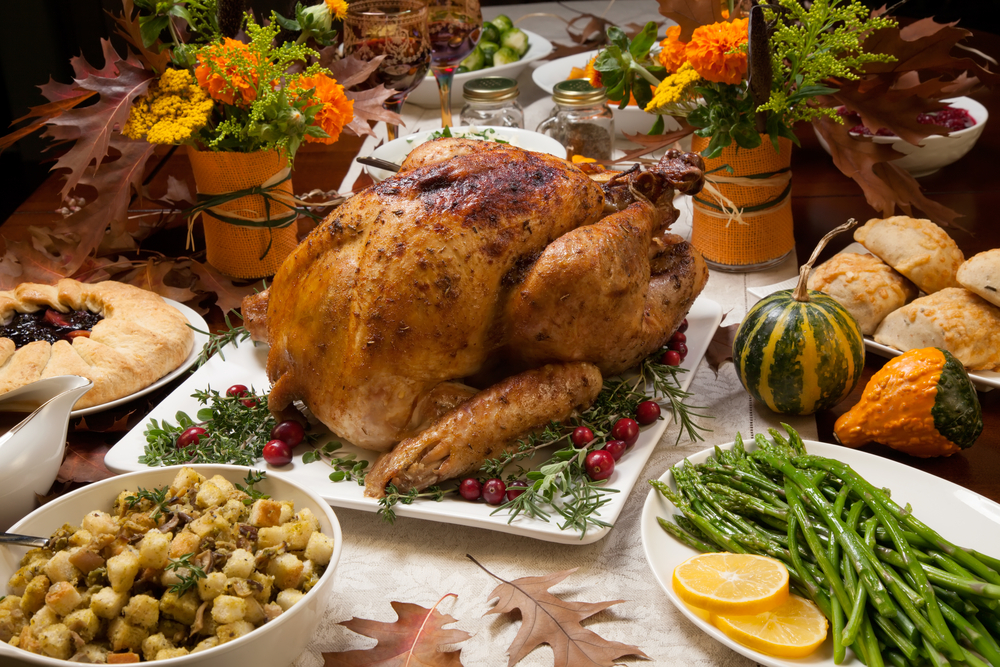
California ranks #8 in turkey production in the United States (2016), and we supply most of the western states from our poultry farms located in several areas in the state.

The famous Mrs. Cubbison’s Stuffing or “Dressing” originated from a ç, born in 1890 in the San Marcos area of San Diego County. In short, Cubbison graduated from California Polytechnical University in May 1920 with a degree in Home Economics having paid her way through school with the money she earned feeding the farm workers.

Cubbison created her popular stuffing in 1948 using broken pieces of the popular Melba toast and various seasonings. The factory in Commerce, California churns it out in mass quantities this time of year.

California farmers produce almonds, raisins, walnuts, prunes, figs, dates, apricots, pistachios, and pomegranates, right on up the food line.

These are all celebrated Thanksgiving foods.

Celery from the Oxnard and Ventura area completes the stuffing mix. Nutrient-dense carrots, lettuce and fresh spinach from Salinas now arrive, pre-washed and bagged, in your local produce department. Your Thanksgiving traditional green beans come from California growers.

An ample supply of freshly harvested oranges and kiwi fruit, table grapes, strawberries, and raspberries are shipped from many areas in the state. Seasonal features include sweet potatoes from the Merced, about an hour north of Fresno, plus all kinds and colors of potatoes and tomatoes, parsley, onions, and garlic—all crops are raised in California.

Nearly all the fruits, vegetables and nuts that are part of America’s Thanksgiving are sourced from California.

Don’t forget about the great varieties of wine grapes grown in the No. 1 agricultural state that are deftly crafted into delectable California wines.

Or the thirst-quenching Martinelli sparkling apple or grape cider from Watsonville California, near the Monterey Bay area. Local growers provide the tree-ripened fruit to the award-winning company that is still family-owned after almost 150 years and is managed by the founder’s grandson and great-grandson. Here’s something to discuss at your Thanksgiving meal:  the company won its first Gold Medal at the 1890 California State Fair in  Sacramento.

How about those heirloom and new apple varieties, plus those small round watermelons that we snack on or toss into a dessert fruit salad, topped with California pomegranate arils?

Of course, we raise poultry, and even California lamb, if you want to go that way. Here is a Did-you-know? challenge for your holiday meal:  What are the most recent Presidental Thanksgiving Turkeys from California pardoned by United States presidents? (Answers are below.)

And by the way, you know that food-safety pop-up turkey timer that indicates when the turkey has reached the correct internal temperature? Public relations genius Leo Pearlstein and a turkey producer in Turlock, a small town north of Fresno in Stanislaus County, invented this Thanksgiving fixture.

Back in the 1960s, they were sitting in a room trying to solve the undercooked poultry challenge, when they looked up and noticed ceiling fire sprinklers. The sprinklers sprayed water when the room temperature became hot enough to melt a tiny piece of metal alloy in the mechanism. This innovative team of two applied the same concept to the pop-up timer!

With the exception of cranberries, our national day of giving thanks for a bountiful harvest is really a California Thanksgiving.


Here are some friendly topics for discussion at your Thanksgiving Table:

  • What is the name of the famous Thanksgiving stuffing that originated in California?
  • What beverage company that is still operating won its first Gold Medal at the 1890 California State Fair?
  • How was the pop-up timer invented and by whom?
  • How does high does California rank in U.S. turkey production?
  • What are the most recent Presidental Thanksgiving Turkeys from California pardoned by United States presidents?

In 2010, President Obama pardoned Apple, a 45-pound turkey from Modesto, California-based Foster Farms; and alternate bird Cider. 

In 2015, President Obama pardoned Apple, a 45-pound turkey and an alternate 43-pound bird named Honest, again from Foster Farms.

The Presidential Turkey flock are Nicholas White turkeys, which originated in California’s Sonoma Valley in 1957. Today, the Nicholas White is the industry standard. (Foster Farms)

2021-05-12T11:17:10-07:00November 20th, 2017|

Labor Issues Affecting Harvest

California Faces Labor Issues

By Jessica Theisman, Associate Editor

California Ag Today recently had the chance to interview Alex Ott, Executive Director of the California Apple Commission, California Blueberry Commission, and the California Olive Committee. He said the apple harvest went well, but there are labor issues in California that will be affecting the industry in the future.

Alex Ott

There is a big concern regarding the ongoing labor issues. These issues don’t just affect apples and blueberries, but other commodities as well. The increased rules and regulations in California are one component to the decrease in labor.

“You have all of the new rules, whether it be mandatory increase in wages, that obviously inflate a lot of the other wages that are currently already in existence,” Ott said.

Another cause is that they have done away with the ag exemption overtime. With all of the stress following that change, the stress is put on the labor and in this type of situation, the labor decreases.

“I think it is a combination of a lot more increased enforcement of what is going on down at the border, and as a result, you see a lot of folks that just are not available to work,” Ott explained. “Many workers will decide to just not go to work. Not only is the stress on the labor, but the growers as well. If the grower does not increase what he is bringing in, it makes it very difficult to pay the increased costs.”

2017-10-26T14:03:50-07:00October 26th, 2017|

Eating Healthy Produce Important for Kids

Produce Critical to Healthy Lifestyle

By Patrick Cavanaugh, Farm News Director

Fruits and vegetable are an important part of a balanced and healthy lifestyle. Eating healthy produce is especially important for kids whose minds and bodies are still developing.

Teresa Thorne, the executive director of the Alliance for Food and Farming in Watsonville, recently talked to California Ag Today about a peer-reviewed study that showcased the importance of healthy eating during childhood.

Teresa Thorne

“It’s another study, and it mirrors other peer-reviewed research that shows the health benefits to children of eating more fruits and vegetables,” Thorne said.

“There have been other studies that also have come out and said that increasing consumption of fruits and vegetables, especially among young children, can really increase IQ. This study, which was conducted in Australia with 4,200 kids, found that test scores on standardized academic tests increased markedly from students that ate more fruits and vegetables and ate them every day,” Thorne explained.

Thorne emphasized that it’s very important for people of all ages to eat their fruits and vegetables.

“We know fruits and vegetables have a benefit for all of us, and on overall health, and that does include brain health, including when your kids are young and growing and maturing,” she said. “Giving the brain those nutrient-rich foods that fruits and vegetables really provide is important, and these types of studies just underscore that.”

It’s not just one type of produce that’s healthy. No matter if you choose organic or conventional, the important part is that you eat more fruits and vegetables.

“Organic or conventional, where ever you purchase them, whether you like to shop at your local grocery store or warehouse store or farmer’s market, buy either organic or conventional, but just always choose to eat more,” Thorne said.

“Even the most loyal, say organic shoppers, there’s times you’re eating in a restaurant or what have you, that they may not have that choice for you, but you should know that the choice to order that salad is always the right choice, whether it’s conventional or organic. Both production methods yield very, very safe and healthy foods.”

2017-10-24T14:38:55-07:00October 24th, 2017|

Entrepreneurship Forum is Biggest in Valley

Entrepreneurship Forum in Clovis on Nov. 15

By Patrick Cavanaugh, Farm News Director

The Central Valley Innovation and Entrepreneurship Forum will be held in Clovis on Nov. 15th. This forum should be the largest event for innovation and entrepreneurship in the Central Valley. Industry leaders, angel investors, entrepreneurs and business owners will be there to share advice and strategies on how to make it in today’s economy.

“We are gearing up for our big event that will be held at Clovis at the Veterans Memorial District in the auditorium,” said Helle Peterson, manager of the Center of Irrigation Technology at California State University Fresno.

“We actually have the whole building because we have multiple things going on. We will have a series of workshops during the day that’s all around financing, investment, entrepreneurship, innovation. We also have five companies that will pitch their technology or their business to a group of potential investors. The whole community will be there, and we’re very excited about that,” Peterson said.

“There’s an evening program attached to that, which we call the stock exchange. It’s where we will have 20 entrepreneurs exhibiting their technology business and then the audience will go around and invest in these businesses with monopoly money. It will create excitement of which company we think will be more successful,” Peterson said.

The keynote speaker will be Paul Singh, the founder of disruption Corporation.

“He’s actually one of the founders of 500 Startup, which is a really well-known accelerator in the Bay area, and he can really talk to that entrepreneurship innovation space,” Peterson said.

Find out more about the event and register for it here.

2017-10-23T16:50:59-07:00October 23rd, 2017|
Go to Top