Pick Justice Stands By Courageous Gerawan Farm Employees

Pick Justice’s Jesse Rojas and Gerawan Employees Will Never Give Up

By Laurie Greene, Founding Editor

For nearly five full years, Gerawan Farming Inc. employees have fought a legal battle for the State of California to count their votes cast in the November 2013 election to decertify the United Farm Workers (UFW) as their bargaining representative. According to Jesse Rojas, a farm worker rights activist and spokesperson for Pick Justice, “Anything the UFW does, the California Agricultural Labor Relations Board (ALRB) is right next to them; and anything the ALRB does, the UFW is right next to them. They are one single entity for the most part; they are a partnership.”

Rojas said the ALRB and UFW filed an appeal to the state Supreme Court this week of the Fifth District Court of Appeal decision to count the votes. “We would not be surprised if the state Supreme Court accepts the appeal because Governor Brown appointees and friendly judges would always be likely to take the case, said Rojas.

“This is where the UFW and the ALRB have failed to mention to the public the fact that we are just asking for the votes to be counted,” Rojas explained. “We are not saying, ‘Certify the results.’ We are not saying, ‘Once you open them and count them, let that be the final choice.’”

“We are saying, ‘You can still litigate it,’ Rojas continued. “‘You can still appeal it. You can still destroy [the ballots] if you want but count them. So why are you so afraid to simply count them?’

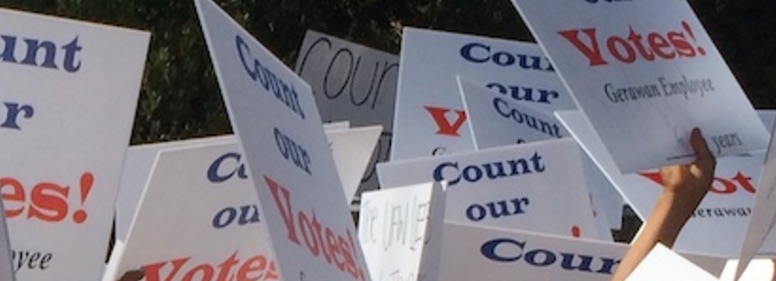
Gerawan Employees

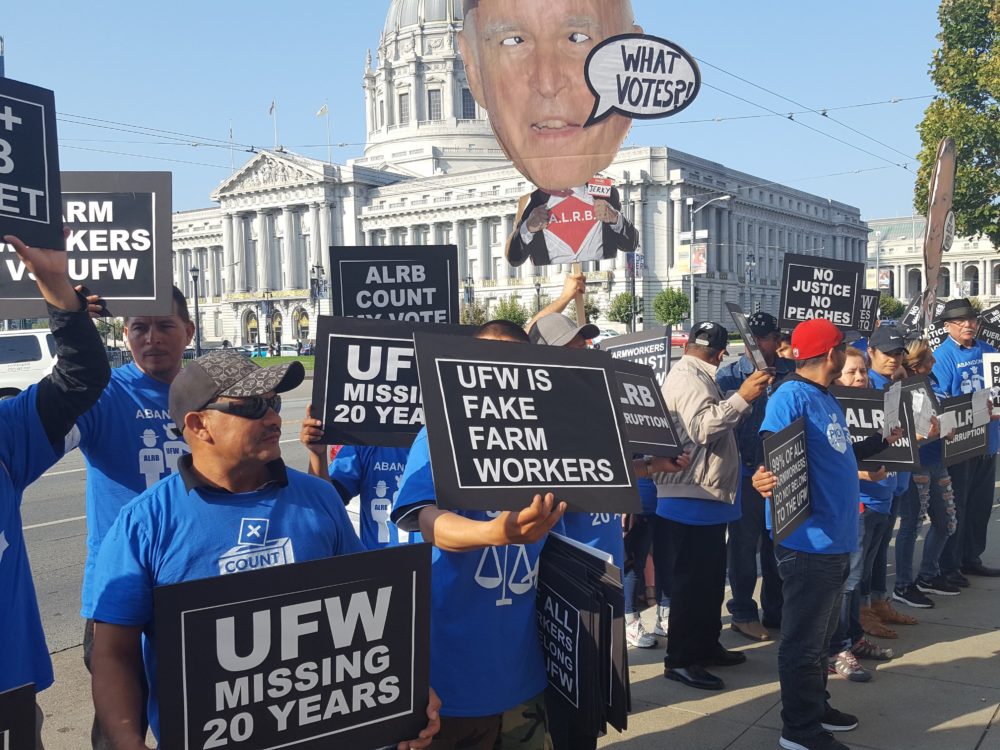
Gerawan Farm Workers Protest against UFW at California Supreme Court.

‘This is the perfect question for the UFW, the ALRB, and our California legislators: Why are you so afraid? Employees deserve to know what the choice was, even if you choose to destroy [the ballots] afterward,” Rojas said.

Rojas explained how Governor Brown appointed people to the ALRB who are UFW sympathizers or people who have worked for the UFW.

“It is not only corrupt, it is also very sad and unfair to see over the last years how many companies and jobs have been lost. How many employees and families have been affected? I am not talking just about Gerawan Farming Inc. workers. We can go on and on in McFarland, Delano, Bakersfield, Salinas and Santa Maria for similar examples of how the ALRB has failed to protect farm workers.”

“Launching Pick Justice was great because it started with thousands of Gerawan farm employees who have been very courageous and have not given up,” Rojas explained. “Pick Justice expanded when other workers started reaching out to us from different companies, perhaps dealing with different issues. For example, we have a lot of workers from the Monterey and Salinas area that have been under a UFW contract for decades, but the UFW fails to protect them.”

“The UFW neglects its members by not reporting certain things to them, by segregating those employees who are unhappy with [the UFW] as well as keeping them away from information or meetings,” Rojas said. “Also, by being on the side of the employer—whatever the employer wants to force upon the workers, even if it’s not in their best interests—and forcing it down their throats.”

“After I reached out to Silvia Lopez, we started to meet over the following months. Many of the workers reached out to me. I have spoken to them on my phone. I’ve gone to their houses. I know their spouses. I know their children. I’ve eaten with them, and that’s where I became even more passionate. I said, ‘Look, you guys are the face of this. Your courage is what makes this effort great over so many years; you just don’t give up. You know what you want, and you know what is right.’ ”

Jesse Rojas, spokesperson for PickJustice.com

“All I have to do,” Rojas continued, “is help you with communication media using techniques that I know, which is so simple. Social media, digital marketing, things that I grew up with and that I’m very good at. Pick Justice is not about me; it’s about them. If they weren’t still fighting, if they weren’t as strong and courageous as they are, we would not have Pick Justice today.”

“In this fight, we’ve gone up against almost all odds. We are going against the state government. We are going against a three- to four-decade-old system, with views, opinions, and decades-long teachings of the UFW and its leaders—its idols, per se—who have parks, schools, and streets named after them.”

“We’ve been attacked, and we continue to be attacked. But we know what we’re doing is right, and we have the numbers. If I didn’t have thousands of workers standing behind me, I wouldn’t be able to do this.”

Rojas said the Gerawan farm workers absolutely knew if they kept fighting, they would be vindicated.

“They did not give up; they are so motivated. And now, we’re in a waiting game for the most of accounting, but the stakes are high.”

Silvia Lopez

Silvia Lopez, Gerawan Employee

“Think about Silvia Lopez,” he said. “You don’t think she’s going to be attacked by the UFW after attending Ivanka Trump’s recent Central Valley event? You don’t think I’m going to be attacked? I’ll give you an example. When Silvia met Tim Donnelly, a 2014 gubernatorial candidate who cared about her story, the UFW circulated a flyer of that picture and called her a racist towards all employees. Why? Because she’s searching for help for farm workers.”

“The UFW is weak; they represent less than one percent of the farm workers. California has an estimated average of 800,000 farm workers in the state—could be more, could be less,” Rojas said. “Current UFW membership fluctuates around 5,000 active members—less than one percent of farm workers. So for them to continue to be quoted as ‘the champions for farm workers and for Latino workers’ is absolutely wrong.”

“Specifically, their words and their actions do not go with one another,” he continued, “including their stance on immigration. If people simply looked up some of the legislation opposed by the UFW, they would see that the UFW is actually not for immigration. It is ironic and hypocritical to keep quoting and portraying the current UFW leadership as pro-employee and pro-Latino.”

“I know I will never give up and I know that thousands of workers behind me will never give up.”

2018-07-26T19:45:07-07:00July 26th, 2018|

USDA Confirms Additional Cases of Virulent Newcastle Disease in Backyard Birds in California 

California Backyard Chickens Succumb to Newcastle Disease

News Release Edited By Patrick Cavanaugh

The United States Department of Agriculture’s (USDA) Animal and Plant Health Inspection Service confirmed five additional cases of virulent Newcastle disease in backyard exhibition chickens in California—two in Los Angeles County, one in Riverside County and two in San Bernardino County.

A complete list of confirmed cases is available on the USDA’s website at www.aphis.usda.gov/animalhealth/vnd.

Virulent Newcastle disease has not been found in commercial poultry in the United States since 2003.

No human cases of Newcastle disease have ever occurred from eating poultry products. Properly cooked poultry products are safe to eat.  In very rare instances, people working directly with sick birds can become infected.  Symptoms are usually very mild and limited to conjunctivitis. Infection is easily prevented by using the standard personal protective equipment.

Samples from the flocks were tested at the California Animal Health & Food Safety Laboratory System (CAHFS).  The APHIS National Veterinary Services Laboratories in Ames, Iowa, confirms all findings. APHIS is working closely with the California Department of Food and Agriculture to respond to these findings and to conduct an epidemiological investigation. Federal and State partners are also conducting additional surveillance and testing in the area.

In addition to practicing good biosecurity, all bird owners should report sick birds or unusual bird deaths to State/Federal officials, either through their state veterinarian or USDA’s toll-free number at 1-866-536-7593. Additional information on biosecurity for backyard flocks can be found at Biosecurity for Birds.

2021-05-12T11:17:09-07:00July 23rd, 2018|

Motion Filed in Fifth District Court to Count the Votes!

Editor’s Note: Anthony Raimondo with Raimondo & Associates filed a motion with the Fifth District Court of Appeal in Fresno to count Gerawan ballots .


SILVIA LOPEZ AND GERAWAN FARMING, INC V. AGRICULTURAL LABOR RELATIONS BOARD

COURT OF APPEAL OF THE STATE OF CALIFORNIA IN AND FOR THE FIFTH APPELLATE DISTRICT (FRESNO)

No. F073730

To Whom It May Concern:

On May 30, 2018, the Fifth District Court of Appeal in Fresno issued a unanimous decision that the Agricultural Labor Relations Board (ALRB) violated farmworkers’ Constitutional and statutory rights by refusing to count their ballots, essentially stripping them of their right to decide for themselves whether to be represented by a union.

Silvia Lopez and her co-workers from Gerawan Farms organized themselves in opposition to the state’s effort to force the United Farm Workers Union, a dying union looking to save itself with money from their paychecks, and through determination, organization, and civil disobedience forced the ALRB to hold what was the largest farmworker vote in history. From the dawn hours to late in the evening, thousands of farmworkers voted on whether to be represented by the union. Sadly, the ALRB, in cahoots with the union, refused to count the votes, suppressing the workers’ vote in order to protect the UFW.

Anthony Raimondo

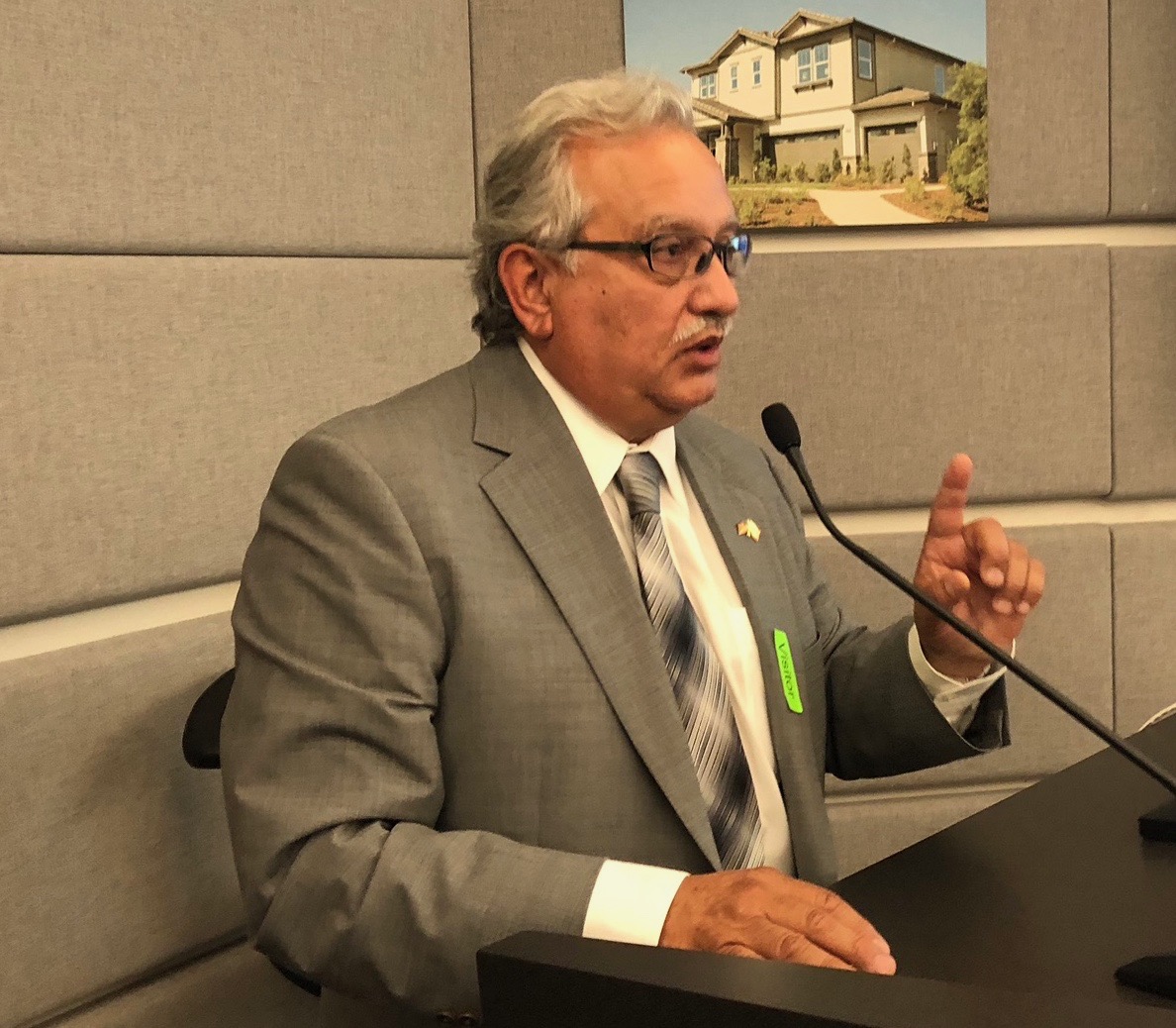
Anthony Raimondo, of Fresno-based Raimondo & Associates, attorney for Gerawan employee spokesperson, Silvia Lopez

Since that time, the workers have been fighting to expose ALRB corruption and get their ballots counted. While they believed that day had finally come, the ALRB has chosen to defy the court and continues to refuse to count the ballots. In fact, the ALRB refuses to confirm where the ballots are stored, or whether it has them at all.

On behalf of the Gerawan workers, Silvia Lopez has filed a motion with the Fifth District Court of Appeal in Fresno, respectfully requesting that the Court order the state to immediately open the ballots, complete the election process, and preserve the record of the election as appeals wind their way through the Court.

The workers believe, as the Court ruled, that to suppress worker votes violates not only principles of democracy, but principles of government transparency as well. In the view of the workers, there is simply no justification to refuse to count the ballots, except for a desire to avoid exposing the overwhelming worker opposition to UFW representation.

2018-07-06T18:03:29-07:00July 6th, 2018|

Monsanto Seeds Transitioning to Bayer Crop Science

Bayer Seeds Going to BASF

By Patrick Cavanaugh, Editor

Sebastian Langbehn is the commercial lead for the Vegetable Division within Monsanto. California Ag Today spoke to him recently, and he is busy.

“We are right now in the process of integrating into Bayer Crop Science, and we’re pleased about the outcome of the whole regulatory process, where Bayer has purchased Monsanto,” Langbehn said. “We finally got the approval slightly more than a month ago, and there will be a clean cut.”

Langbehn said that the vegetable seed division from Bayer will be divested and will be acquired by BASF, and now the company is in the process for integrating the Monsanto vegetable division within Bayer.

“We see this as an amazing tool that will enable us to tap in with an integrated solution to farms so that we don’t restrict ourselves only to provide solutions through genetics, but through the entire portfolio that we will have within Bayer, as the company’s new vegetable division,” Langbehn said.

2021-05-12T11:05:10-07:00July 1st, 2018|

Mariani Packing Co. Puts Food Safety Top Priority

Mariani Served as Chair of the Safe Food Alliance

By Patrick Cavanaugh, Editor

The Mariani Packing Company is one of the largest specialty crop growers and handlers in the state, packing many different types of fruit on a massive scale. California Ag Today recently spoke with Mark Mariani, executive chairman of the Mariani packing company in Vacaville and the outgoing chairman of the Safe Food Alliance (SFA), an organization specializing in food safety among growers, packers, and processers to maintain high standards of food safety and prevent consumer illness.

“Our four major specialty crops areas is that we’re the second largest cranberry growers (with operations back east) and packers, (with operations back east), and we also grow and pack mangoes out of Mexico, Mariani said. “And we are probably the third-largest raisin grower/packer in California. We also repack prunes for the world market.”

Mariani said that the products that they bring in from Mexico are held to the same standard as produce grown inside the United States. Consumers always look back at the supplier when it comes to food safety, so they ensure that standards meet or exceed the U.S. standards.

Mariani reflected on his part in the Safe Food Alliance organization.

“It’s an exciting time for DFA (which still stands as an entity as it’s being morphed into the Safe Food Alliance) because of the growth and the fact that it is offering so many more services to our members. We recognize that for us to move forward as an industry, we have to be better than anyone else and especially foreign competition,” he said. “And you do that because you can create trust, and I think there’s a solid brand with SFA ,if you’ve been approved and a member … that you are operating within the SFA conditions.”

As the former chairman of SFA, Mariani enjoyed working with passionate people.

“The individuals in the DFA and SFA are passionate people that want to do and exceed the expectations or their members. And most importantly, you want to provide safe food for consumers,” Mariani said.

The new Chair of Safe Food Alliance is Dane Lance, President and CEO of Sunsweet Growers, the world’s largest and most famous brand of dried tree fruits including prunes, apricots, and mangos.

2018-06-06T16:17:06-07:00June 6th, 2018|

Officials Applaud Ruling in Gerawan Employees’ Favor

Ballots in UFW Decertification Vote Must be Counted

By Joanne Lui, Associate Editor

Two officials spoke out via press release following today’s ruling that the Agricultural Labor Relations Board (ALRB) must count the ballots cast by Gerawan employees in the 2013 vote to decertify the United Farm Workers (UFW) as their union bargaining representative.

George Radanovich, President of the California Fresh Fruit Association, applauded the decision by the 5th District Court of Appeal.

George Radanovich

George Radanovich

Radanovich stated, “This has been a long time coming. We are encouraged and pleased to see the Court account for the most important opinion in this entire matter, the prerogative of the employees.”

Gerawan employees voted in a sanctioned election in November 2013 to decertify the United Farm Workers as their bargaining representative. Despite having ordered, sanctioned and supervised the election, the ALRB impounded the ballots, withheld a final vote count, and thereby denied recognition and acceptance of the employees’ decision.

Radanovich continued, “Today’s Court action would not have occurred without the determined effort of Gerawan Farming, Inc.; the Gerawan family; and in particular, company president Dan Gerawan, for defending his company and his employees’ right to choose. Finally, sunlight has been cast onto this injustice and the farmworkers’ voice will be heard.”

Assemblymember Jim Patterson (R-Fresno) made the following statement regarding today’s ruling:

Jim Patterson

“This moment is the next step in the most important civil rights battle of our time. More than 2,600 immigrant farmworkers from the Central Valley cast their ballots to determine their own future. Those votes were locked up tight and stowed away by the ALRB—the same agency whose job it is to protect the rights of farmworkers.”

“These hard-working men and women know exactly why their ballots were taken, and they have spent countless hours fighting for the fundamental right to have their votes counted so their voices can be heard loud and clear. Today is victory for them.”

2018-05-31T20:24:07-07:00May 30th, 2018|

Laurie Greene Wins Journalism Award

Greene Wins Fresno County Farm Bureau Award for Series on Farm Workers’ Rights


By Patrick Cavanaugh, Editor


The Fresno County Farm Bureau (FCFB) recognized Laurie Greene, founding editor of CaliforniaAgToday.com,  with a First Place Journalism Award in the Farm Trade Print category on May 3. Her nine-part series published on our Google News-recognized CaliforniaAgToday.com website entitled, “Who Safeguards California Farm Workers’ Rights?” focused on recent, predominantly legal developments that illustrate the increasingly complex quagmire that masquerades as protecting farm employees’ rights in the state.

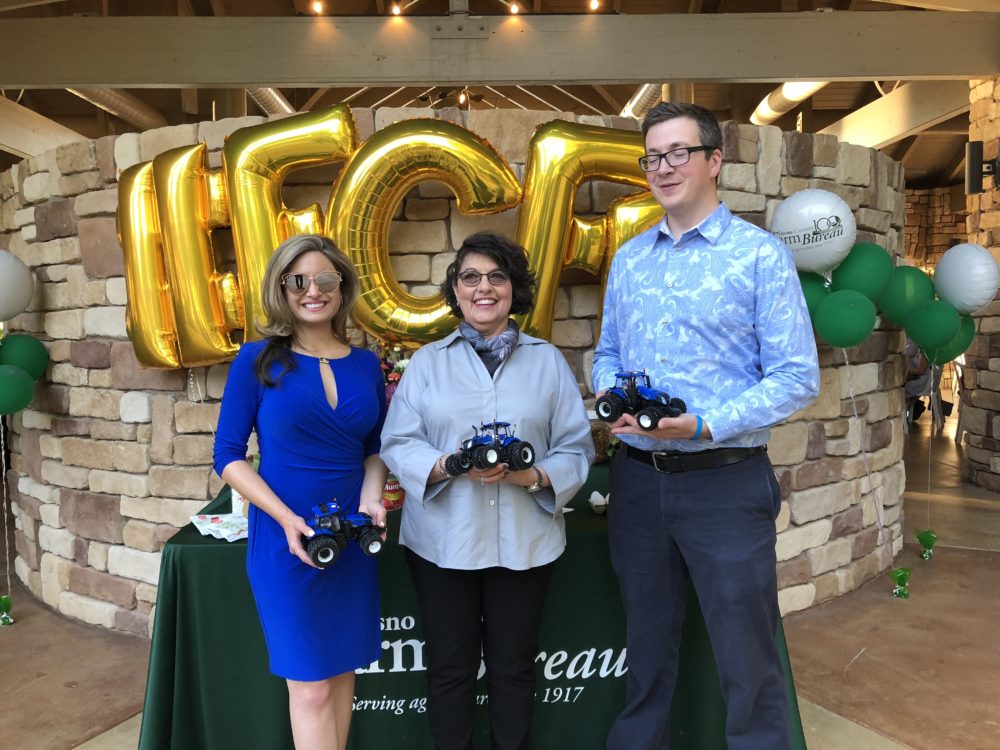
Laurie Greene wins Journalism Award

Ryan Jacobsen, FCFB CEO; Laurie Greene holding tractor award; and Donny Rollin, FCFB President.

According to the FCFB, “The annual awards recognize excellence in reporting on agricultural issues from journalists throughout the region. The criteria for the awards were: awareness of agriculture’s importance in the Valley; use of visuals to tell the story, where applicable; thorough and objective coverage of the issues, given time and space limitations; and portraying the ‘human side’ of the industry, making the issues relevant to consumers and/or producers.”

Laurie’s careful coverage of a complicated story was unrelenting in its meticulous research and thorough in cultivating numerous sources to tell the complete legal story of Gerawan’s farm employees. Laurie has been cited as a journalist with a sharp legal mind and is a strong asset to the company.

“When I moved to the Central Valley,” Greene said, “I was shocked to discover that Cesar Chavez’s legacy was tarnished. His UFW had evolved to mandate that farm employees submit to mediated union representation and payment of dues—all this by a union elected a quarter century earlier that subsequently abandoned the workers for two decades.

Gerawan Employees

Gerawan Farm Workers Protest against UFW at California Supreme Court.

Greene explained, “Current farm employees have had to fight to have their voices heard, to gain access to pertinent court hearings, to work unimpeded for the employer of their choosing, to face employment termination if they refuse to pay union dues, to exercise their right to vote to decertify the union in a sanctioned election and to have their votes publicly counted. I felt compelled to relay the facts in this important story.”

FCFB 2018 Journalism Award Winners Alex Backus, CBS47; Laurie Greene, CaliforniaAgToday.com; and Dominic McAndrew, 580AM KMJ. (Absent was Maria G. Ortiz-Briones, Vida en el Vale)


Greene’s work in the series was shared across the California Ag Today’s social media platforms and broadcasted across the California Ag Today Radio Network of 22 radio stations. She is also the owner of Cultivated Words, which provides professional editing services and college application essay coaching.


Other award winners were:

Audio:  Dominic McAndrew, News Talk 580AM, KMJ, “Signing the application for state funding of Temperance Flat Dam,” August 14, 2017.

Video:  Alex Backus, CBS47, “Fear in the Fields,” May 19, 2017.

General Print:  Maria G. Ortiz-Briones, Vida en el Vale, “Farmers, immigration rights advocates push back after ICE checks in the Central Valley,” February 12, 2018.


Who Safeguards California Farm Workers’ Rights?  (abridged)

Greene focused on the ongoing pressure the United Farm Workers (UFW) and the California Agriculture Labor Relations Board (ALRB) has placed on Gerawan farm workers in an attempt to force them to accept mandatory fee-based union representation by the UFW. Gerawan employees voted in favor of UFW representation in 1990, an election the ALRB certified in 1992. UFW never reached a contract to represent Gerawan employees in wage negotiations with their employer and never collected union dues. The UFW effectively abandoned the farm workers for 20 years.

The California Legislature amended the Agricultural Labor Relations Act in 2012 to impose a mandatory mediation and conciliation process for union contracts. The UFW offered Gerawan employees a new contract proposal via this forced legal process.

On Oct. 25, 2013, Gerawan employee Silvia Lopez filed a petition to decertify the UFW as the bargaining representative for the company’s workers. Gerawan voted in an historic, ALRB-sanctioned election on November 4 or 5, 2013; however, the ALRB impounded the ballots, reportedly without having counted them.

Silvia Lopez, Gerawan farm worker spokesperson

The twists and turns of who actually safeguards California farm employees’ rights have been strikingly dramatic, undemocratic, political, and arguably unconstitutional. And yet, the conflict remains legally unresolved.

Click here to read the series.

Click here to search for California Ag Today’s multimedia coverage since 2013 of this ongoing battle.  Search suggestions:  Gerawan Farming, Silvia Lopez, UFW, and ALRB.

2019-12-25T16:01:33-08:00May 7th, 2018|

Temperance Flat Denied Funding

All Hope Dries Up

By Patrick Cavanaugh, Editor

Again, it came down to fish, specifically Chinook salmon, that forced the proposed Temperance Flat Dam out of the race for Proposition 1 funding for building new water storage projects.

Mario Santoyo and Temperance Flat Denied Funding

Mario Santoyo fought hard for Temperance Flat Dam funding.

For more than 20 years, the Temperance Flat Dam proposal was passionately advocated with unwavering support by Central Valley cities and the San Joaquin Valley Infrastructure Authority (SJVIA) who were behind the application. Temperance Flat came crumbling down Wednesday at the California Water Commission (CWC) meeting in Sacramento on the second day of discussion.

On Tuesday, CWC staff members assigned to crunch the Public Benefit Ratios for the project were solidly encased in concrete, refusing to grant the project any consideration for its ecosystem restoration benefits. The Dam would provide critical cold water to flow down the San Joaquin River, thus helping the salmon spawn.

CA Water Commission kills Temperance Flat funding

CA Water Commission denied funding for Temperance Flat Dam.

And while the official public benefit calculation came up short today, proponents already saw that the project was already on life support Tuesday, with a dire prognosis.

“Stunned is an understatement,” said Mario Santoyo, executive director of the SJVIA, who has worked for more than 18 years on the project. “Temperance Flat is the most critical water project ever proposed for the Central Valley, which is ground zero for significant water shortages that will not go away.”

It all boiled down to the Ecosystem Diagnosis and Treatment (EDT) model that was approved by Bureau of Reclamation and the California Department of Water Resources. Despite both approvals, that model did not jive with the Commission staff’s model, which undervalued the project’s public benefit ratio, killing the opportunity for Temperance Flat Dam to receive funding of more $1 billion for construction.

“We are working in an area of great uncertainty in professional judgment,” Bill Swanson, vice president, Water Resources Planning & Management for Stantec, a global planning and engineering firm, who presented data for the SJVIA. “We do not have fish in the river. We do not have empirical data. The only issue available to us is a comparison of how the system would respond to changes in flow, temperature and habitat,” Swanson said.

“That’s the reason we used the EDT model, the same model that the Bureau of Reclamation has used in their models of flow,” Swanson explained. “The SJVIA’s challenge was how to take the results of that model and analyze them to a level of detail that distinguishes the precision that we might want to have around the results,” said Swanson.

Bill Swanson

Stantec’s Bill Swanson advocated for Temperance Flat Dam funding.

“I’m very disappointed with the way they scored a great project that needed to be built,” noted Santoyo. “And I am not happy about one commissioner from Orange Cove who stabbed us in the back and scolded us on why we did not meet the Public Benefit Ratio. We did meet and exceed that ratio, but the CWC disagreed with our ecosystem restoration model that had been used by both the state and the feds.”

Several Water Commissioners publicly wrangled with their staff on how they could make the project work. They sought areas to increase the project’s cost-benefit evaluation to get it funded.

Commissioner Joe Del Bosque read the ballot text of Prop 1, approved by California voters by 67 percent in 2014. He reminded those present that voters expected a water storage project to be built, adding, “We need to find more certainty in order to get Temperance Flat built.”

Commissioner Daniel Curtain distinguished two parts to the discussion—physical and monetary. “Take a look and see if there is a physical benefit for ecosystem restoration. Finding a potential benefit and attaching a potential monetary benefit could be helpful,” he said.

The project was also short on points for recreation opportunities on what would be a new lake behind the 600-foot high dam east of Fresno, behind Friant Dam. Commissioner Joseph Byrne said he hoped for more thought given to the recreation cost benefit. “Intuitively, zero benefit does not make sense. We need a higher level of confidence in the estimated recreation cost-benefit,” he said.

CWC staff stipulated that while the newly created lake behind Temperance Flat Dam would accommodate boating activity, the lack of camping, hiking, and other activities within the existing San Joaquin River Gorge neutralized any recreation benefits.

If built, the Temperance Flat Reservoir would contain 1.26 million acre-feet of new water storage above Millerton Lake, northeast of Fresno. Temperance would have helped provide a more reliable supply of fresh drinking water for disadvantaged Valley communities. It would have enabled below-surface groundwater recharge, addressed extreme land subsidence and provided critical help to farmers facing severe groundwater restrictions due to the Sustainable Groundwater Management Act (SGMA).

Santoyo said the SJVWIA spent more than $2 million on the California Water Commission application, utilizing what he said were the most qualified engineers to develop the technical data required by Commission staff. The U.S. Bureau of Reclamation, which administers California’s Central Valley Project for the U.S. Department of the Interior, has invested more than $38 million in studying the project. Santoyo said those studies supported the finding that the selected Temperance Flat site is the most preferred location for such a crucial project.

2018-05-03T15:42:58-07:00May 3rd, 2018|

Stolen Property Easily Detected With SmartWater

From SmartWater to Smart Farms

By Mikenzi Meyers, Associate Editor

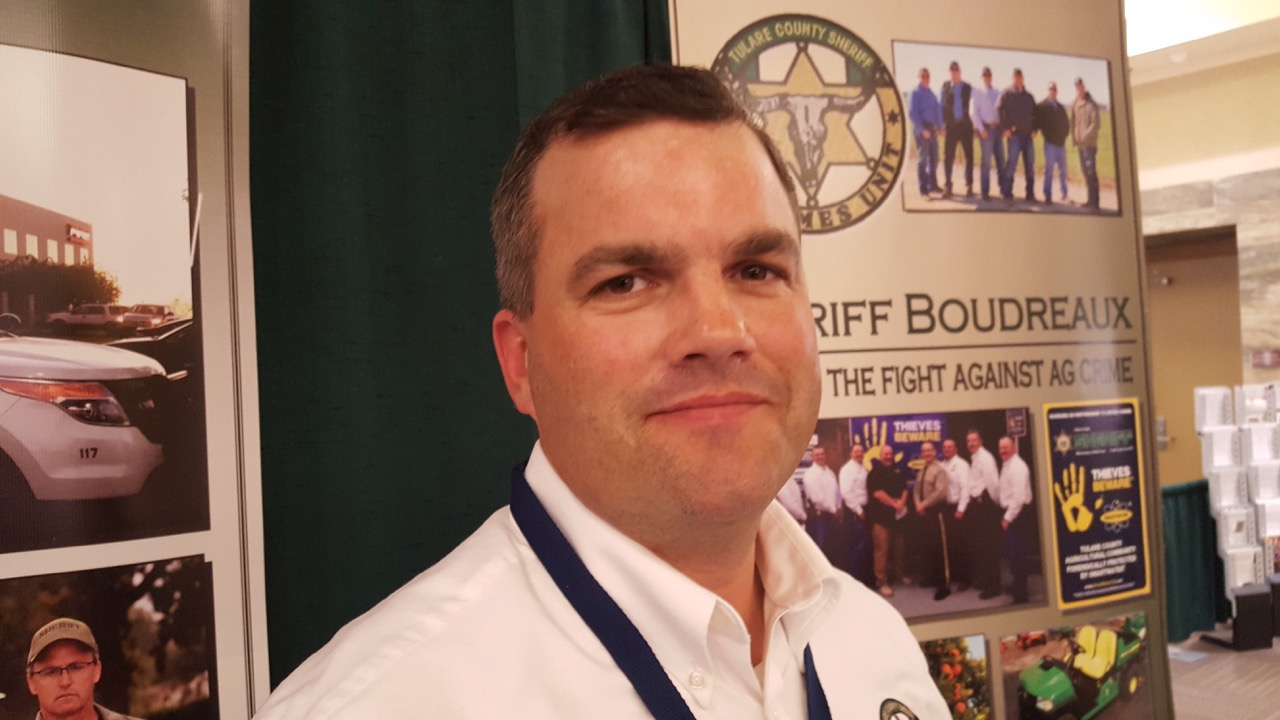
There’s a new tool that could lead to a significant decrease in crime rates, starting in the Tulare County. The tool is called SmartWater, and Detective John Nicholson of the Tulare County Ag Crimes Unit said that the Tulare County Sheriff’s Department has begun using it to track stolen property.

Detective John Nicholson

Nicholson said that SmartWater comes from a company based out of England that has been around for about 20 years and decided to open up a branch in Fort Lauderdale, FL. Word came about the tool’s dramatic effect on crime rates, with double-digit reductions in the neighborhoods where it was used.

“The sheriff was excited about it and thought it could be something that would protect the local farmers and ranchers of Tulare County,” Nicholson said.

Nicholson said growers could get their own vial so that they can mark equipment with a mark that is made visible by a particular light only the sheriff’s department has access to, so the criminals do not know it is there.

Nicholson explained it as working similar to identifying people by DNA, as a sample is taken back to the lab so it can come back registered to the property owner.

“It’s a mineral-based tool that can not only stand up to the elements, but even if bleach is poured onto it, the SmartWater will remain there as evidence against criminals in court,” Nicholson said.

“If someone is caught with a tool, jewelry, firearm or anything—and even if the serial number is ground off—if the item was marked with SmartWater, it comes back registered to a victim who has had the item stolen. Then we can identify that item in court,” he said.

This should ultimately lead to an arrest or conviction due to possession of stolen property.

The SmartWater program is available for free at the Tulare County Sheriff’s department.

2021-05-12T11:05:12-07:00April 27th, 2018|

BioConsortia To Bring New Tools to Ag

BioConsortia Continues Growth and Success, Securing $10 million in Series D Funding

By Patrick Cavanaugh, Editor

Getting even closer to helping California agriculture, BioConsortia, Inc., an innovator of microbial solutions for natural plant trait enhancement and yield improvement, has closed a further round of equity financing to support its continued growth, research achievements, and development of superior products.

Three new PhD scientists working on plants in lab: (from left) Jorge Santiago, Jenna Lang and Steve Wu

The $10 million round was led by Otter Capital and contributed to by Khosla Ventures, both of which are long-term backers of the biotechnology company and experienced ag tech investors.

The completion of Series D will further support the increased momentum BioConsortia saw in 2017, with three strategic new hires, the addition of a sixth U.S. patent, and the planting of fall and winter field trials. Funds raised will be used for the commercial development of a number of novel microbial consortia products — focused toward corn, wheat, soy, tomatoes, and leafy vegetables.

Marcus Meadows-Smith

BioConsortia will also continue to build upon its proprietary discovery process Advanced Microbial Selection (AMS) including supporting the expansion of the AMS platform itself, incorporating deeper and more specialized analytics. Collectively, these steps will drive the company towards the establishment of an original and proven platform for the development of more efficacious and consistent microbial products for a wide range of agricultural crops.

“We are excited by the progress that we have made in product development, for both biostimulants and biopesticides, and the recognition from our investors.” says Marcus Meadows-Smith, CEO. “This new funding allows us to increase our annual spend on R&D, adding more tools from genomics, microbiome and machine learning to our already powerful discovery platform.”

A portion of BioConsortia’s planned development has been and, will continue to be, driven by the key hires made last year: Drs. Jenna Lang and Steven Wu providing scientific leadership in Microbiome Ecology and Computational Biology, respectively. Microbiome analysis and computational modeling underpin BioConsortia’s AMS process. When combined with the extensive physiological data collected throughout the discovery program, microbiome insights enable identification of the functional microbes benefiting high-performing plants, either as individuals or as consortia.

“Collectively, Jenna and Steven have a tremendous wealth of experience and expertise,” says Dr. Sue Turner, Sr. VP of Research. “Throughout the AMS process, we are capturing huge amounts of data; knowing how best to efficiently manipulate and analyze it is crucial for advancing leads and finding new, superior microbial solutions.”

In addition to adding big-data expertise to its research group, BioConsortia has been developing a strong fermentation team as it reaches the final steps in developing leads for commercial launch. Dr. Jorge Santiago-Ortiz joined the company as lead Fermentation Scientist early last year and has worked closely with Dr. Hong Zhu, Sr. VP Lead Development and Manufacturing, to lead scale-up and formulation experimentation in the newly built formulation facilities at the company’s Davis headquarters.

The drive to commercialization is now under way as several microbial treatments transitioned from second and third year field trials across a range of crops and geographies last year. A select number were entered into repeat field trials by major industry players, and these are moving forward to further testing and development. The early-stage biopesticide program also saw many remarkable successes in greenhouse and field trials, and so will be expanded onto many more crops in 2018.

“The expertise that we have added really reflects the comprehensive nature of our discovery and development platform,” Zhu said. “It has set us up for success as we ramp up our 2018 R&D program and move ever closer to product launch.”

2021-05-12T11:05:12-07:00April 10th, 2018|
Go to Top