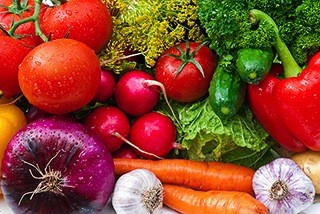
Dirty Dozen List Hurts Consumption of Healthy Food

“Dirty Dozen” Promotes Fear, Discourages Consumption

Peer reviewed research and a recent survey of registered dietitians nutritionists has shown the potential negative impact on fruit and vegetable consumption caused by the so-called “dirty dozen” list.  Further, the “dirty dozen” list has been repeatedly discredited by the scientific community and peer reviewed studies.

“Why continue to perpetuate misinformation and create another barrier to consumption, when you’ve been shown the negative impact it has on consumers,” says Teresa Thorne, Executive Director of the Alliance for Food and Farming (AFF).  “With only 1 in 10 Americans eating enough fruits and vegetables each day, we should be promoting consumption to enhance immune function and prevent illness, not discouraging it by inaccurately disparaging popular and safe produce.”

Scientifically Unsupportable
Peer reviewed research found that the substitution of organic  forms of produce for conventional forms, as suggested in the “dirty dozen” list, does not result in any decrease in consumer risk because residues, if present at all, are so low.  This study also found that the list authors follow no established scientific procedures in developing this list.

The AFF also asks that reporters, consumers and others review the United States Department of Agriculture’s (USDA) Pesticide Data Program (PDP) Report, which the list authors state they base the “dirty dozen” upon.  The most recent USDA PDP report found over 99 percent of the samples tested had residues well below the safety standards established by the EPA with almost half having no detectable pesticide residues at all.

Discourages Consumption
A peer reviewed study published in Nutrition Today found that misleading messaging perpetuated in the “dirty dozen” list which inaccurately describes certain produce items as having “higher” pesticide residues results in lower income consumers stating they would be less likely to purchase any fruits and vegetables – organically or conventionally grown.

Further, a recent survey among registered dietitians found that 94% agreed that inaccurate, fear-based messaging regarding pesticide residues has a negative impact on consumers because it causes misplaced concern about whether conventionally-grown fruits and vegetables are safe to eat. And, when shown infographics from the “dirty dozen” list authors, an overwhelming 95% of dietitians agreed that the group’s misinformation about residues discourages consumption.

“Fresh, dried, canned and frozen fruits and vegetables comprise the only food group health experts universally agree we need to eat more of to improve health, boost immunities and prevent illness and disease,” Thorne says.  “This recommendation is supported by decades of nutritional science.  Knowing this, why would you choose to perpetuate misinformation about produce safety and raise needless fears among consumers, especially under our current circumstances?” Thorne says.

Consumers who are concerned about residues are advised to simply wash their fresh produce – organic and conventionally grown.  According the Federal Food and Drug Administration, washing fresh fruits and vegetables under running tap water is a healthful habit and can help remove or eliminate any residues that may be present on fruits and vegetables.

“We simply want people to know that whatever produce they choose – organic or conventional – both are safe and can be consumed with confidence,” Thorne says.  “Be reassured that the correct and healthy choice is to always eat more.  Don’t let unfounded safety fears or baseless shopping lists get in the way of healthy eating.”

-end-
2020-03-25T10:27:23-07:00March 25th, 2020|

LGMA Audits Continue Through COVID-19 Crisis

LGMA Food Safety is 24/7 365 Day Effort

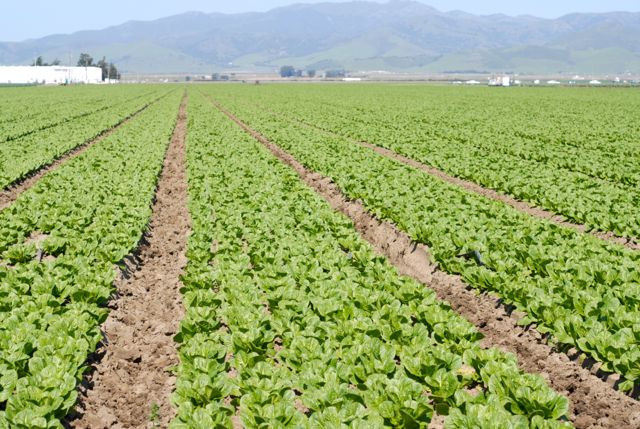
The California Leafy Greens Marketing Agreement (LGMA) is sharing information to inform retail and foodservice customers, as well as consumers, that activities in place to ensure the safety of leafy greens are fully operational during this rapidly changing COVID-19 situation.

“First and foremost, we want to assure people that LGMA audits conducted by state government personnel are continuing as usual,” said Scott Horsfall, CEO of the LGMA. “Audits are scheduled for the desert growing areas as the season wraps up there and will move with the harvest to the central valley and central coast regions.”

Horsfall noted that producing, harvesting and shipping of ag products are considered essential services and the requirements being placed by the federal and state governments recognize that food industries must continue to provide healthy food to the nation’s consumers.

“We are asking auditors and members to take all precautions necessary,” he said. “This is a rapidly changing situation, but when it comes to LGMA audits, they are expected to continue for the foreseeable future.If anything changes the LGMA will keep people updated.”

Over 90% of the leafy greens consumed in the U.S. are produced under the LGMA food safety program. On average each member company of the LGMA is audited by the government five times per year to verify food safety practices are being followed on leafy greens farms.

The LGMA has also issued information to several stakeholder audiences explaining the efforts in place under the LGMA program in the area of health and human hygiene.

“While all public health officials are emphasizing there is no evidence that fresh produce or any other food can transmit the virus, we think it’s important that people understand what happens on our farms each and every day,” said Horsfall.

Some of the measures in place through the LGMA to ensure the safety of leafy greens include:

Bathroom and handwashing facilities are required to be present anytime harvest crews are working in leafy greens fields.

Bathrooms must be clean and must always have water, soap, toilet paper, hand drying towels. Hand sanitizers are also provided on many farms.

Workers must wash hands before and after breaks or whenever they use the bathroom.

LGMA member companies who grow leafy greens are required to train workers on the required practices, including how to properly wash their hands. The LGMA provides a hand-washing training that is free to download. Use your smartphone for access: English iOS | Spanish iOS

People who are sick are not allowed to come into contact with leafy greens products.

No one is allowed to consume food, chew tobacco or spit near leafy greens fields.

Harvest equipment and tools must be sanitized regularly.

Member companies of the LGMA are audited by government officials to verify these required practices are being followed. During on-farm visits, government auditors observe activities of work crews to make sure they understand and follow required hygiene practices. The auditors will test workers’ knowledge by speaking to them directly asking questions such as, “Did your employer check with you today to make sure you weren’t feeling ill before you began work?”

Last, but not least, the LGMA is working with the Produce for Better Health Foundation (PBH) and its team of registered dietitians to encourage consumption of fruits and vegetables, like leafy greens, and to inform people about the safety measures in place on farms. PBH has just published a post titled Remain Calm and Eat Your Leafy Greens, by Neva Cochran, MS, RDN, LD, FAND. PBH is sharing this information via its popular ‘Have a Plant’ social media channels.


2020-03-17T15:08:50-07:00March 18th, 2020|

Karoun Dairies Get’s Top Honors

Karoun Dairies, Iconic Hand-Braided String Cheese Wins World Championship

The first cheese made by Turlock based – Karoun Dairies, the iconic Hand-braided String Cheese, was awarded 1st Place in the String Cheese, Flavored Category at World Championship Cheese Contest 2020. Dairy experts from around the world gathered at the Monona Terrace in Madison Wisconsin, judging a record-breaking 3,600 cheese, yogurts, butters and other dairy products from 26 countries.

Karoun Marinated String Cheese, the company’s original, classic-style String, marinated to perfection with extra virgin olive oil, garlic and herbs, was one of 16 entries for String Cheese, Flavored and scored an impressive 99.70 Best of Class. The Karoun Cheese line of handcrafted braided string cheeses are made with Real California Fresh Milk.

“We are thrilled that our first product category, released over 25 years ago, has won gold in this distinguished competition,” said Rostom Baghdassarian, CEO at Karoun Dairies. “We’re honored that our other cheeses also placed high in their categories, but the win for our string cheese, which is still braided by hand to this day, is especially appreciated. We work tirelessly to make sure that the solid reputation of Karoun delivers for our loyal customers across the country.”

“It is such a competitive contest that you’re really looking for even the most minor defects,” said judge Chad Caler. “You’re looking at the packaging, the surface–is the color even? And then, of course, the flavor everyone cares about, and the texture.”

The 2020 judging team consists of 55 experienced cheese graders, cheese buyers, dairy science professors, and researchers hailing from 19 nations and 14 American states.

About Karoun Dairies

Founded in 1992, Karoun is a family-owned manufacturer, distributor and marketer of specialty-branded, ethnic food and beverage products, including cheeses, yogurts, yogurt beverages, spreads and dips. Through a diverse base of retailers and distribution channels, the Company’s products appeal to the fast-growing multicultural population, as well as to mainstream consumers who are increasingly adopting ethnic cuisines.

Winners of over 170 best-in-class awards, Karoun’s high-quality, branded products have a loyal following around the world. The Company is strategically located in the dairy-rich state of California, with a distribution center in San Fernando and a manufacturing plant in Turlock.

Karoun still maintains their original network of local, artisan merchants, but now also has distribution through nationwide and international mainstream retailers. Karoun cheeses and yogurts are made with Real California Milk from cows free of growth hormones.

Specialty brands include Karoun Mediterranean, Arz, Queso Del Valle, Gopi and Yanni. For more information, please visit www.karouncheese.com and www.blueislespread.com.


2020-03-13T21:08:07-07:00March 16th, 2020|

Adam Borchard Joins California Fresh Fruit Assoc.

California Fresh Fruit Association Hires New Director of Government & Public Policy

The California Fresh Fruit Association (CFFA) is pleased to announce the hiring of Adam Borchard as its new Director of Government & Public Policy. Mr. Borchard comes to the Association after serving as a Regulatory Advocate at the Association of California Water Agencies (ACWA).

The Chairman of the Board for the Association, Randy Giumarra of Giumarra Vineyards Corp., stated, “We are thrilled that Adam has agreed to become a part of the team at CFFA. His personal background and education, as well as his extensive experience working on water resource issues on behalf of ACWA will bring great value to our membership.”

Association President Ian LeMay added, “I have had the privilege of knowing Adam over the past two years during his time as a part of Class 49 for the California Agriculture Leadership Program. We are extremely fortunate to have Adam join the CFFA team. Adam brings an extensive educational and professional background to this position and we are excited to see what he can accomplish on our members behalf. We believe that Adam is a natural fit, along with our current staff, to continue to bring value to CFFA members and to serve the California fresh fruit industry.”

Mr. Borchard is a graduate of University of California, Davis where he earned his bachelor’s degree in Environmental Sciences Management with a minor in Managerial Economics. He earned his Juris Doctorate with a Certificate in Public Law & Policy and Environmental Law from University of the Pacific, McGeorge School of Law. Additionally, he is a recent graduate of the California Agricultural Leadership Program, Class 49. Mr. Borchard’s first day at the Association will be Monday, March 9th .

2020-02-18T13:21:51-08:00February 18th, 2020|

DPR Chief Val Dolcini Speaks About His Dept.

Dolcini Describes His Department

First in a Series from his Presentation at the Almond Board Conf.
By Patrick Cavanaugh, Editor

California Department of Pesticide Regulation is uniquely positioned to serve the varied interest of California, noted Val Dolcini, DPR Director, appointed by Governor Gavin Newsom in Oct. 2019.

“For those that don’t know about us, it’s a department where science management and policy intersect to better protect public health and the environment, and hopefully to find common ground on some of the most challenging regulatory, legal, and political issues facing California,” he said.

Dolcini said DPR is a department that’s always in the crosshairs, always under the microscope, and often at the center of controversy, whether the decisions are large or small. “But, it’s also a department full of dedicated public servants, highly trained scientists, talented policy experts, hardworking attorneys, and many others at every level of the organization,” he said.

“In my first few months at DPR, we’ve worked on issues ranging from the first-ever cancellation of a widely used pesticide, issues related to cannabis enforcement, legislation that would ban certain rodenticides,” he said. “We have also focused on several serious pesticide drift incidents in the Central Valley, multi-agency conversations about endangered pollinators, and more trips to the Capitol than I thought possible.”

“So suffice it to say, we are a very busy department of government, and my colleagues and I aren’t simply counting the days, but, in the words of Muhammad Ali, we’re making those days count. We’re continuing to build a culture of customer-oriented accountability in every branch, every office, and at every level of DPR,” explained Dolcini.

Dolcini gave examples: “In a typical year, DPR receives and processes about 5,000 different submissions. This includes new product registrations and amendments to currently registered products. The submissions may be evaluated by multiple branches within DPR, before registration is granted or an amendment is accepted.”

This process is complex, and, as a result, DPR is constantly looking for ways to improve the process and provide that customer service to registrants. They are working to improve process efficiencies in each of the evaluation stations for these submissions.

“The turnaround time at the chemistry station for new products has gone from about a month to just several days,” said Dolcini. “We’ve also doubled the staff at our ecotoxicology station, and we’re starting to see significant reductions in the backlogs there.”

Dolcini also said that DPR is trying to aggressively re-launch the electronic data reporting system, which will now be known as CALPEST, California Pesticide Electronic Submission Tracking. This will allow for a more streamlined review of these submissions by DPR staff around the department. “Hopefully, it will help identify gaps in the submission process early in the process so that we don’t have to go back to registrants, asking for additional information.

2021-05-12T11:01:45-07:00January 20th, 2020|

CDFA to Hear Updates on Food Safety Jan. 7

CDFA  Will Also Hear Updates on Farm to School Programs and From Assembly Committee On Ag, Jan 7th in Sacramento

 The California State Board of Food and Agriculture will be gathering to discuss the food safety, farm to school programs and hear updates from the Chair of the California State Assembly Committee on Agriculture at it’s upcoming meeting on January 7, 2020. The meeting will be from 10:00 a.m. to 2:30 p.m. at the California Department of Food and Agriculture, 1220 N Street – Main Auditorium, Sacramento, CA 95814.

“Last year demonstrated that even with the best science, data and preventive measures in place – E.coli outbreaks in the produce sector continue, ” said CDFA Secretary Karen Ross. “Food safety is paramount and collaboration among growers, regulatory officials and universities on continuously improving and preventing future outbreaks remains a shared priority of all involved.”

Invited speakers include: Assemblymember Susan Talamantes Eggman, Chair of the Agriculture Committee; Scott Horsfall, California Leafy Green Marketing Agreement; Natalie Krout-Greenberg, CDFA; Nick Anicich, CDFA Office of Farm to Fork; and Sonya Logman, CA Census 2020.

“A new year brings opportunities to California’s farmers and ranchers,” said President Don Cameron, California State Board of Food and Agriculture. “We look forward to exploring innovations and new markets while providing greater transparency and engagement with consumers. Farm to school programs – local food in local schools – is one opportunity that we can expand and grow.”

The California State Board of Food and Agriculture advises the governor and the CDFA secretary on agricultural issues and consumer needs. The state board conducts forums that bring together local, state and federal government officials, agricultural representatives and citizens to discuss current issues of concern to California agriculture.

All meetings are open to the public and attendance is welcome.

Follow the board on Twitter at: www.twitter.com/Cafood_agboard

2020-01-02T17:53:15-08:00January 3rd, 2020|

New Director of Trade At CA Fresh Fruit Assoc

Caroline Stringer is New Director of Trade. at CFFA

The California Fresh Fruit Association (CFFA) is pleased to announce the hiring of Caroline Stringer as its new Director of Trade. Ms. Stringer comes to the Association after serving as a Public Affairs Representative at Pacific Gas & Electric. Prior to her role with Pacific Gas & Electric, Caroline served as the Senior Specialist on Global, Technical and Regulatory Affairs for the California Almond Board.

The Chairman of the Board for the Association, Randy Giumarra of Giumarra Vineyards Corp., stated, “We are very pleased that Caroline has agreed to become a part of the team at CFFA. Her personal background and education, as well as her extensive experience working in the area of trade will bring immense value to our membership.”

Association President Ian LeMay added, “We are extremely fortunate to have Caroline joining the CFFA team. The issues of trade and access into foreign markets is of paramount importance to our membership, possibly now more than ever. Caroline brings an extensive educational and professional background to this position and we are excited to see the work she does on our member’s behalf. We believe that Caroline is a natural fit, along with our current staff, to continue to bring value to CFFA members and to serve the California fresh fruit industry.”

Ms. Stringer is a graduate of San Francisco State University where she earned her bachelor’s degree in International Relations. She also earned a Master of Arts in International Trade Policy from the Monterey Institute of International Studies. Ms. Stringer’s first day at the Association will be Monday, January 6th.

2019-12-18T13:25:55-08:00December 20th, 2019|

Ag Calls on Governor Newsom Regarding PG&E

Media Statement from AECA, CMTA, and WAPA on PG&E Bankruptcy Development

“As Governor Newsom reviews competing plans to get PG&E out of bankruptcy, we call on him to ensure that California ratepayers are protected,” said Western Agricultural Processors Association President and CEO, Roger Isom.

“We commend the parties involved for working with wildfire victims to ensure they receive fair compensation for PG&E’s prior wrongdoings,” said California Manufacturers & Technology Association President Lance Hastings. “To that end, we must hold PG&E accountable and also ensure that PG&E pays its obligations without further burdening ratepayers who already pay more than 50 percent more than the national average and are receiving unreliable service.”

In that regard, PG&E’s plan still causes significant concern. It would leave the company in a worse financial situation, $10 billion dollars deeper in debt than before the bankruptcy. It would be irresponsible for PG&E to emerge from bankruptcy over-leveraged and making hundreds of millions of dollars in annual payments to PG&E’s owners who prioritized profits over safety and got us into this mess. “Governor Newsom should take this opportunity to hold PG&E accountable and make good on their commitments to pay victims,” said Michael Boccadoro, Executive Director of the Agricultural Energy Consumers Association.

“The Governor and bankruptcy court should consider alternative approaches to ensure that PG&E emerges from bankruptcy as a well-capitalized and stable utility that is not turning to ratepayers for another bailout,” Boccadoro said.

2019-12-12T19:18:14-08:00December 13th, 2019|

New Cost Estimates for Almonds Available

UC ANR Updates Cost Estimates for Growing Almonds

By Pam Kan-Rice UCANR Assistant Director, News and Information Outreach

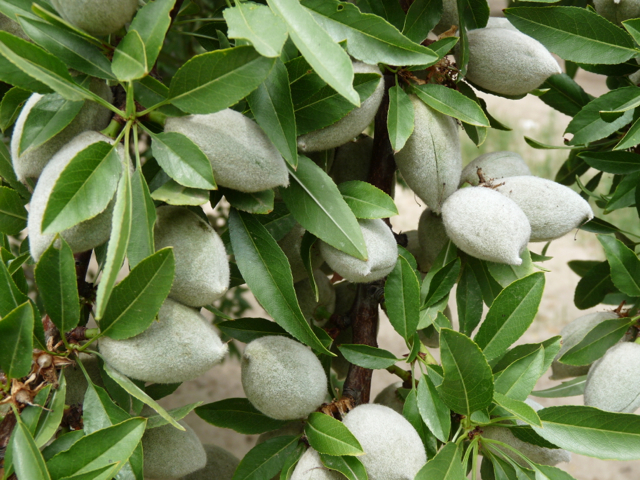
UC Agricultural Issues Center has released new studies estimating the cost and returns of establishing an almond orchard and producing almonds for three growing regions of California.

“These cost studies are valuable for agricultural producers all along the continuum – growers considering entering into a new crop production business, less experienced growers, and those with decades of experience,” said Emily Symmes, UC Cooperative Extension integrated pest management advisor for the Sacramento Valley. “The information in these cost studies allows growers to evaluate their production practices and associated costs relative to an exemplary hypothetical orchard specific to their geographic region, and can help with development of business models, crop insurance and lending.”

In 2018, almonds ranked third among California commodities, with almond growers receiving nearly $5.5 billion in cash receipts.

The cost analyses are based on hypothetical farming operations of well-managed almond orchards, using cultural practices common to the region. Local growers, UC Cooperative Extension farm advisors and supporting agricultural representatives provided input and reviewed the methods and findings of the studies.

“The recent almond updates for the Sacramento and San Joaquin valleys reflect costs associated with the continually evolving conditions facing agriculture,” said Symmes, who co-authored the almond cost studies. “Some of the notable updates include labor, irrigation and pest management costs – all integral to producing and delivering a high-quality crop.”

The researchers based one study in the Sacramento Valley, one in the northern San Joaquin Valley and the other in the southern San Joaquin Valley.

The southern SJV study is based on an orchard that uses double-line drip irrigation, whereas the other two locations use microsprinkler irrigation. All are multi-year studies, estimating costs from removal of the previous orchard, through almond orchard re-establishment and the production years. The economic life of the orchards used in these analyses is 23 to 25 years.

Navel orangeworm (NOW) is a major pest in almond production; Symmes and her co-authors describe in detail the pesticide applications and winter sanitation methods for each location for NOW control and include the costs.

The authors describe the assumptions used to identify current costs for orchard establishment, almond production, material inputs, cash and non-cash overhead. A ranging analysis table shows net returns over a range of prices and yields.

The new studies are titled:

  • Sample Costs to Establish an Orchard and Produce Almonds in the Sacramento Valley – 2019
  • Sample Costs to Establish an Orchard and Produce Almonds in the Northern San Joaquin Valley – 2019
  • Sample Costs to Establish an Orchard and Produce Almonds in the Southern San Joaquin Valley – 2019

The studies are available for free download at the UC Davis Department of Agricultural and Resource Economics website at http://coststudies.ucdavis.edu. Sample cost of production studies for many other commodities are also available on the website.

For additional information or an explanation of the calculations used in the studies, contact Donald Stewart at the UC Agricultural Issues Center at (530) 752-4651 or destewart@ucdavis.edu. To contact a local UC Cooperative Extension advisor, find the UCCE office in your county at http://ucanr.edu/County_Offices. The Agricultural Issues Center is a statewide program of UC Agriculture and Natural Resources.

UC Agriculture and Natural Resources brings the power of UC research in agriculture, natural resources, nutrition and youth development to local communities to improve the lives of all Californians. Learn more at ucanr.edu.


2019-12-06T17:14:25-08:00December 12th, 2019|

Imperial Irrigation District Re: Salta Sea Water

IID seeks resolution over mitigation water delivered to Salton Sea in 2010

To focus its efforts on future Colorado River negotiations, the Imperial Irrigation District Board of Directors has authorized its general manager and management team to work with the U.S. Bureau of Reclamation to resolve a longstanding issue over the district’s 2010 pre-delivery of mitigation water to the Salton Sea.

Nearly a decade ago, to satisfy mitigation obligations for 2011 and part of 2012, to meet existing permit requirements in support of the Quantification Settlement Agreement and to avoid associated financial risk, the district pre-delivered 46,546 acre-feet of its consumptive use entitlement to the Salton Sea.

“IID asserted then, and continues to assert today, that the consumptive use of Colorado River water for QSA environmental mitigation purposes was an appropriate and prudent action,” said IID Board President Erik Ortega. “We recognize that others may have a differing view and we will agree to disagree. However, the recent action taken by this board demonstrates a commitment to finding common ground and resolution in support of the river.”

The board’s action falls closely in line with its resolution, adopted November 18, that establishes parameters for future Colorado River negotiations. The 2007 Interim Guidelines, currently in effect, expire at the end of 2025.

IID’s general manager and designated staff will work with the Bureau of Reclamation to present a proposal for the board’s consideration in the near future.

2019-12-05T18:50:54-08:00December 9th, 2019|
Go to Top