AgTech Honors Women That Solve Modern Problems!

‘From Farms to Incubators’ exhibition honors women who merge ag and tech to solve modern problems

Multimedia exhibition premiers Nov. 12 at National Steinbeck Center

The modern intersection of agriculture and technology has brought to the forefront a diverse generation of women working to overcome rising challenges through new perspectives and solutions.
A new special exhibition at the Steinbeck Center in Salinas lifts up stories of these innovators to help inspire and encourage young women to consider careers in agtech.

“From Farms to Incubators: Women Innovators in California Agtech” uses multimedia and digital storytelling – including video, documentary and still photography – to honor these groundbreaking pioneers. The exhibition is the brainchild of Amy Wu an award-winning journalist for women’s ag and agtech movement and the creator of “From Farms to Incubators.”


“My passion to unearth underreported stories and amplify new voices is what led me to highlight the stories of emerging communities in agriculture,” says Wu. “Ultimately, I hope the exhibition, film series and book serves as vehicles to inspire youth – especially those from rural or underserved communities – to consider that agriculture extends far beyond tractors and overalls and it is a sector that offers an amazing range of opportunities that involve innovation.”


Michele Speich the Executive Director National Steinbeck Center says:

“Women for centuries have played a vital role in farm operations across the country and globally. We are thrilled that Amy Wu has chosen to tell the stories of minority women entrepreneurs in Agtech in the Salinas Valley and beyond in a book and in an exhibition at the National Steinbeck Center,” says Speich.

Presented by the group From Farms to Incubators, the exhibition kicks off Thursday, Nov. 12 with a virtual opening event from 4-6 p.m. PACIFIC TIME, with viewing available through Jan. 12.


The virtual opening will include special speakers including California Senator Anna Caballero, Dennis Donohue the head of Western Growers Center for Innovation and Technology and Karen Caplan the president and CEO of Frieda’s Specialty Produce, a panel discussion led by leading women innovators in ag and agtech, and a sneak preview of the exhibition and films.

Attendees have the opportunity to win prizes, including a copy of the forthcoming book “From Farms to Incubators: Women Innovators in California Agtech,” telling the stories of women entrepreneurs who use technology to help solve problems ranging from climate change and limited water to uncertainties in immigration policy.  The book will be published in April 2021 under Linden Publishing’s Craven Street Books division, specializing in titles on California and the history of the western United States.

Many of those portrayed are women of color who come from diverse backgrounds, the first in their families to complete higher education. What drew them into the nascent but fast-growing sector of agtech? What caused them to uproot themselves to pursue a start-up dream in an industry that continues to be dominated by men? How are they getting their innovation into the hands of growers?

The exhibition and the book attempt to answer these questions and create awareness of women leaders and entrepreneurs.

The National Steinbeck Center in Salinas, Calif., is dedicated to Steinbeck’s creative legacy: to participate, to inspire, to educate, and to understand one another. Find out more at www.steinbeck.org.


“From Farms to Incubators” is a multimedia platform that uses digital storytelling to increase awareness of women leaders and entrepreneurs and their contribution using technology through the agriculture sector, and encourage women to pursue careers in agtech. Find out more at www.farmstoincubators.com


For more information email Amy Wu at amy@farmstoincubators.com or call 914-771-1275.


2020-10-12T11:24:45-07:00October 12th, 2020|

Almond Board Leads the Way to Marketing Almonds

Marketing the 2020 3 Billion-Pound Almond Crop

By Patrick Cavanaugh, with the Ag Information Network

Leading the charge in moving that big crop globally is the Almond Board of California. And their mission is to expand the global consumption of California almonds. Through leadership and strategic market development, innovative research, and the accelerated adoption of industry best standards.

Ron Fisher is the founder, CEO, and President of Fisher Nut Company based in the Modesto area. And he’s active with the Almond Board. In fact, this year he’s Alternate Position One as an Independent Handler

“The Almond Board looks at it from a long-range perspective. While we have challenges that are more short-range, it’s always been a longer-range forecast, three to five-plus years,” said Fisher “And so with the investment that we’ve made in the Almond Board board, we continue to develop and grow markets, reputation management, some of the other things that are going to continue the consumption of our product worldwide.”

“So while we’re doing that constantly year after year, we’re also looking at quick help type methodology to move our product. And so those will be our discussions throughout our committees and on the board over the coming months,” Fisher said.

In more almond news… growers need to be aware that band-canker infections continue to increase on the vigorous young orchard. Infected branches should be removed from the almond orchard in order to reduce surviving inoculum.

2020-10-10T11:34:57-07:00October 9th, 2020|

NO on Proposition 15 Campaign – CALL FOR ACTION

If Passed, It Would be the Largest Tax Hike in California’s History

The largest tax hike in California’s history is on the ballot, and if passed would create $12.5 billion in new taxes, the largest tax hike in our state’s history.  

It is known as Proposition 15, and it would eliminate the 1% cap on property taxes for businesses throughout the state, including agricultural processing facilities such as tree nut hullers and processors.  In addition, it would trigger annual reassessments for agricultural fixtures, such as irrigation systems, solar installations on farms and processors, barns, and even permanent crop trees and vines.  

In a year like 2020, it is difficult to fathom we are facing something like Proposition 15.  For tree nut growers, hullers and processors, the time to take a stand is right now!  We need your help!  We need every member to contribute!

Therefore, we are respectfully asking each of our members to send us a check for $500 to $1,000 to help specifically on this effort.  We have raised over $35,000 to date towards our goal of $50,000!

We want to thank members that have stepped up to help so far, like Central California Almond Growers Association, Horizon Nut, Superior Almond Hulling, JSS Almonds, River Oak Orchards, Gold River Orchards, Cortina Hulling and Shelling, Kern Pareil, Inc, Alldrin Farms, and Andersen & Sons Shelling.  I also want to thank our Associate members like Fresno Rack and Shelving, Boer Commodities, Daniel C. Salas Harvesting and North Valley Ag Services for helping as well.  Lastly, we want to thank individuals and farms like AJ Carvalho & Sons, Pretzer Farms, Barton Ranches, Bill and Dan Prosperi, Clausen Almonds, David Munro and Donald Milburn for their efforts too!

Please fill out the attached form and make the check payable to Alliance of California’s Farmers and Ranchers and mail it back to our office at 1785 N. Fine Avenue, Fresno, California, 93727.  If you should have any questions, please call our office at (559)455-9272.

2020-10-07T12:54:28-07:00October 7th, 2020|

Preparing for the 2021 Almond Crop

Think About the 2021 Budget

By Patrick Cavanaugh, with the Ag Information Network
Franz Neiderholzer is a UCANR Orchard System Farm Advisor based in Colusa County and he also helps growers in Sutter and Yuba counties. He said over the next couple of months, it’s good to budget for next year.


“The price looks like it might be coming up a little and that’s good, but careful budgeting needs to be stated—basically everything you do now, other than watering, the trees in preparation for the 2021 crop,” Neiderholzer said.

Neiderholzer spoke about the potential less water available for growers, next year. “There’s talk about a La Niña winter, which isn’t a guarantee of anything, except it’s more of a chance of a light rainfall year. So what that means to growers is possibly reduced surface water application,” noted Neiderholzer.

“So when you’re budgeting for next year, start with your, paying for water or whatever you need to do to have good quality water available that could cut into your budget for next year, but it’s critical for good production,” he explained.

“So basically build your budget for the 2021 season on stuff that you know is going to bring you value,” he said.


2020-10-05T13:30:27-07:00October 5th, 2020|

California Blueberry Meets Online for Conference

Blueberry Industry Meets Virtually

By Tim Hammerich, with the Ag Information Network

Two California-based groups this week are holding a joint virtual conference and expo. The U.S. Highbush Blueberry Council and the North American Blueberry Council kicked off the four-day event on Monday.

Kasey Cronquist is president of the North American Blueberry Council

“Typically we would see 200-250 people join us for our in person meetings. This week we have had just about 1,000 people register to engage. That is just incredible,” Cronquist said.

Cronquist says the organizations viewed the inability to meet in person as an opportunity to bring the entire blueberry industry together.

“To kick off this four days of just thinking about the future ahead and inspiring possibilities, the timing couldn’t be better for this discussion. We felt like in unprecedented times for our countries, our communities, and our industry, this really just feels like an important opportunity to talk about vision,” she noted.

The event kicked off on Monday with leadership expert who literally wrote the book on vision, Mr. Michael Hyatt.

“I consider myself a blueberry enthusiast. So I have them almost every day. It’s one of the three fruits that are allowable under the keto diet. I’m just delighted to be with you. Anything I can do to help blueberry growers – awesome,” said Hyatt.


2020-10-01T15:52:31-07:00October 1st, 2020|

Safety of Water for Produce Rule Being Honored

Data Shows Lettuce Farmers are Complying with New Water Requirements

Last year the Leafy Greens Marketing Agreement approved significant changes to improve the safety of water used in farming leafy greens. These updates are now in place throughout the California leafy greens industry and represent a further strengthening of what were already the most stringent measures required of any produce commodity.  These requirements also go well beyond what’s currently in place under federal Produce Safety Rule regulations for other produce items.

“Media reports often incorrectly state that leafy greens farmers are not required to test their water. Nothing could be further from the truth,” says Scott Horsfall, CEO of the California Leafy Greens Marketing Agreement (LGMA), a comprehensive food safety program that verifies science-based food safety practices are being followed on leafy greens farms.

The LGMA has released new information about food safety practices concerning water used to farm leafy greens. Specifically, data shows that since April, when new water standards were added to the LGMA audit checklist, government auditors have conducted 69 audits of LGMA members to verify compliance with the 92 food safety checkpoints for water included in each audit.

“Of the 6,348 total water checkpoints reviewed by auditors, LGMA members were collectively found to be out of compliance with 64 checkpoints,” he explains. “This shows farmers are fully compliant 99 percent of the time and indicates LGMA members are doing a very good job of implementing these new metrics in their operations.”

Horsfall emphasized that LGMA members are required to correct all citations for non-compliance.  Of the 64 citations issued for non-compliance with water metrics, 25 were very minor and could be corrected during the audit.  The remaining 39 required a Corrective Action Plan be submitted. All of these corrections have been reverified by CDFA auditors bringing all members into full compliance with the LGMA’s requirements to ensure the safety of water used in farming leafy greens.

Horsfall explains that while it’s true the U.S. Food and Drug Administration (FDA) has not finalized water testing requirements for produce under its federal regulations, the LGMA has required extensive water testing since the program was created in 2007.

The LGMA in California currently represents 99 percent of the leafy greens produced in the state, which accounts for 80 percent of the lettuce and leafy greens consumed in the U.S.  Meanwhile, the LGMA program in Arizona represents another 10 percent of the nation’s lettuce and has similar water testing requirements.

In the years since the LGMA was created, several updates have been made to required food safety practices under the program.  This includes sweeping new improvements adopted in 2019 that now stipulate any water from an open source — such as a canal, reservoir or river – must be treated to ensure it is pathogen free if it will be applied via overhead irrigation within 21 days before harvest. Farmers are also required to test water throughout their irrigation system to ensure the water treatment is effectively removing pathogens.

“It’s simply wrong for anyone to claim that leafy greens farms in California are not testing their water – because they definitely are,” stresses Horsfall.
The LGMA continues to improve metrics in all areas of its food safety program and have just approved several additional changes in the area of farm water use. These will also become part of the government audits.

“Water is such an important part of food safety on lettuce farms,” says Horsfall.  “LGMA member companies are working hard every day to implement these safe farming methods to prevent illnesses.”

Note:  A short video on the LGMA water treatment requirements is available here.

2020-09-30T14:19:40-07:00September 30th, 2020|

Prop 15 Would Devastate Agriculture

Property Tax “Split Roll” a Grave Threat to California Agriculture

Source: Fresno County Farm Bureau
By Ted Gaines

California property owners have benefitted from Proposition 13 for so long, it’s hard to remember the time before it when property taxes shot up unpredictably year after year, forcing seniors from their homes, blowing up family budgets and crushing businesses. That ugly past could be in California’s future if the Proposition 15 “split roll” initiative passes this November. Defeating it must be the highest priority for the agriculture industry and everyone who cares about farming and ranching in California.

Ted Gaines

Prop. 13 put the brakes on those wild increases and for the past 42 years, it has guaranteed stable and predictable annual property taxes. It mandates that property tax assessments are based on a property’s sales price, which gives a concrete data point to establish value. Both commercial and residential properties are taxed at 1-percent of that sales price and annual increases are capped at 2-percent. Properties are only reassessed when sold or substantially improved. It’s the most consequential and successful tax reform in California history.

But the billions of dollars Prop. 13 has saved families and businesses is precisely why it’s become a target for ravenous special interests who want to wring every possible penny from taxpayers.

Prop. 15 would undo Prop. 13’s protections and require an annual reassessment of some commercial properties, leading to the same property tax wild west that inspired Prop. 13. It would extract up to $12 billion in new, additional taxes from Californians. Commercial landowners will see their taxes skyrocket. Small business owners who pay “triple net” leases, where they are required to pay their portion of the property tax for the space they rent, will see those costs filter down to them and their already challenged bottom lines.

But, as bad as that would be for the economy overall, split roll takes special aim at agriculture and would sweep across our farms and ranches like a wildfire.

Prop. 15 exempts agricultural land from these annual reassessments, but it makes a devious change to the definition of “land.” Currently agricultural “land” includes the land itself, improvements, and fixtures. Prop. 15 eliminates fixtures and improvements and exposes them to annual reassessment.

What does that mean? It means that irrigation systems will be subject to annual tax increases. It means that barns, dairies, fences, processing plants, silos, refrigeration units, storage sheds, and much, much more will be subject to annual reassessment.

Incredibly, it will also expose mature fruit and nut trees and vineyards – by the millions -to annual reassessment. Prop. 15 will turn farms into a tax collector’s playground.

Agriculture is a $50-billion industry in California that supports hundreds of thousands of jobs. Around 90-percent of California farms are still family owned. The industry, as with so many others, is straining from the shocking and unforeseen effects of coronavirus. This massive jolt in tax costs could be the blow that leads to mass sales and closures of family farms and destroy legacies that stretch back more than a century.

California is blessed with some of the world’s best farmland but it’s cursed by some of the worst public policy. Prop. 15 would only make it harder and more expensive for agriculture to flourish in our state.

Protect farming and ranching by voting “No” on Prop. 15 this November.

Ted Gaines represents the Board of Equalization’s First District. He is a leading taxpayer advocate and is committed to providing trustworthy and transparent representation for the nearly ten million constituents in 30 counties of northern and eastern California.

2020-09-29T19:38:19-07:00September 29th, 2020|

Walnuts Are the Omega3 ALA Nut!


Imagine Walnuts Being on the USDA MyPlate Recommendations

By Patrick Cavanaugh, with the Ag Information Network

The 2020 Dietary Guidelines Advisory Committee is recognizing walnuts because they mostly contain polyunsaturated fats, including 2.5 grams of Omega3 ALA per ounce. In fact, walnuts are the only nut with an excellent source of ALA making them the Omega3 ALA nut.

Jennifer Olmstead is Marketing Director for Domestic Public Relations for the California Walnut board and Commission. She noted her big goal is to get the walnuts on the MyPlate graphic. “Yes, the government takes the committee report, drafts up their guidelines, and then they put it into easy to understand graphics like MyPlate, previously it was the food pyramid,” explained Olmstead.

What would it be like if everyone looked at that my plate graphic and saw a few walnuts on it every day? “Absolutely, and the great thing about this is it really gets consumers thinking about reasons to include walnuts in their diet and ultimately driving consumption for our industry. It would be tremendous. Right now the per capita consumption is at 0.6 pounds per year. So if people just even ate a few handfuls a week, consumption would go through the roof.

It’s certainly not a done deal yet, but the Walnut Board and Commission are working hard on that goal. We’ll keep you updated.

2020-09-28T11:22:21-07:00September 28th, 2020|

Treatment for HLB Infected Citrus May Soon Be Here

BioFlora Gets Stunning Results in Field Trials of HLB Infected Trees

By Patrick Cavanaugh, Editor

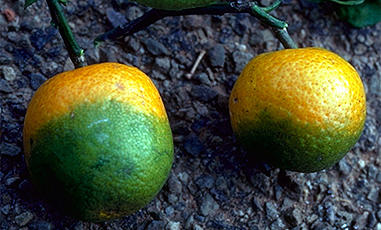
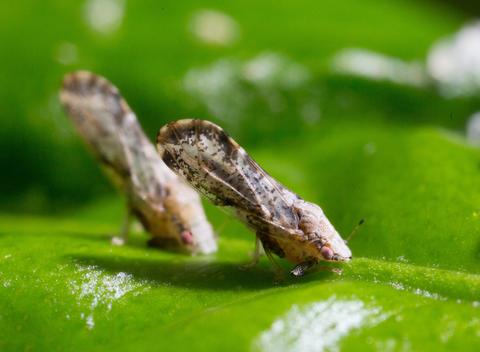
The Asian Citrus Psyllid vectors huanglongbing or HLB. The psyllid feeds on the leaves of the citrus tree, and the HLB bacteria is inoculated into the tree’s phloem. As the bacteria multiples, it clogs the phloem, and the tree slowly dies.

Asian Citrus Psyllids Feeding on Citrus Leaves

BioFlora, a company based in Goodyear, Ariz., has developed a unique citrus program that is getting stunning results from field trials conducted on HLB infected trees. In collaboration with two prominent universities, Bioflora conducted a three-year study on grapefruit trees, the most susceptible citrus species. Initial greenhouse trials were conducted at a government research facility in Florida, and field trials and analysis were performed at two prominent universities with current on going trials with growers in Florida.

A Lake County, FL lemon grower, whose grove experienced the turnaround, noted that he could see trees with significant growth within two initial applications. “Leaf drop stopped after the program was initiated, and the trees had good color and are growing vigorously. I can see an improvement from month to month,” the grower said.

“Over a three-year study on HLB in grapefruits, we were amazed at the results from the four programs (consisting beneficial bacteria isolates, biostimulants, and nutrition, including macro and micro-elements) that we initiated. While we continue our analysis, these diverse programs appeared to have a multirole synergistic effect on HLB trees which also seems to show beneficial yield and fruit quality, but one program (program #2) seems to have the most dramatic effect (Manuscript in Progress)”. said Srinivas Makam, Ph.D., Molecular and Microbiologist for BioFlora’s Integrated Life Science Research Center.

“Studying HLB at the genetic level is providing us with a tremendous amount of information which we are combing through on how HLB functions in the plant phloem and plant’s defense mechanisms. Those plant defense mechanism (systemic resistance, induced or acquired to be determined) we hypothesize, seems to be activated to help the tree cope with HLB .” In addition to advanced molecular assays, leaf samples were analyzed using electron microscopy and a marked reduction in cLas population was observed in trees treated with program #2, with some initially infested leaves showing no bacterial presence. The key reason for this response appears to be the continued timely application of the citrus program”, Makam explained.

“Currently, BioFlora has a lemon orchard trial in Lake County, Florida, infected with HLB. Within five or six months, HLB infected trees are responding to the citrus program very positively,” noted Makam.

BioFlora believes in the partnership between plants and soils, transforming plant health with cutting-edge bio-stimulants that enhance plant defenses, address nutrient deficiencies, and unproductive soils.

Citrus tree health and nutrition has been the focus of the HLB trial. BioFlora programs bring organic and sustainable solutions that growers can implement immediately in the fight against HLB infections.


2020-10-05T14:07:41-07:00September 25th, 2020|

Tuff Times in California–But It Stands Strong

Through Wildfires and Pandemic, California Agriculture Persists

By Tim Hammerich with the Ag Information Network

Mother nature has not been kind to California this year. And nobody is more acutely aware of this fact than farmers. Here are a few ways in which agriculture is coping under these challenging conditions courtesy of the California Farm Bureau.

As winegrape harvest accelerates around California, farmers navigate forces that include high temperatures, wildfire smoke and the marketing impacts of the pandemic–on top of large supplies that left some grapes unharvested a year ago. Analysts expect this year’s harvest to be about the same size as last year’s. Marketers say the pandemic has shifted wine demand to retail outlets, with less being sold at restaurants or tasting rooms.

Agricultural and forestry research and teaching projects have suffered damage from California wildfires. A representative for Cal Poly San Luis Obispo says it could take months for a full assessment of damage to its Swanton Pacific Ranch in Santa Cruz County, where structures including classrooms burned. Fires also hit six reserves managed by the University of California, with researchers still working to determine the impact on their projects.

Impacts of the pandemic continue to reverberate through the meat business. An American Farm Bureau Federation analysis shows the gap between the retail price and farm price of beef is the largest in 50 years of recordkeeping. A similar gap exists in pork prices. While pandemic-related demand boosted retail prices, slowdowns at meat processing plants led to a backup of animals in the marketing chain that drove farmers’ prices down.

2020-09-24T11:25:46-07:00September 24th, 2020|
Go to Top