HASS AVOCADO MARKETING PROGRAM

Avocados-Love One TodayTM

Love One TodayTM is a science-based food and wellness education program that encourages Americans to include fresh Hass avocados in everyday healthy eating plans to help increase fruit and vegetable intake and as a delicious, cholesterol-free, whole food source of naturally good fats.

The Hass Avocado Board developed a distinctive mark to support the Love One Today program with the words “fresh avocados” and nutrition benefit messages “naturally good fats + cholesterol free” which provides a clear and simple unifying nutrition message to encourage consumers to enjoy fresh avocados every day. The new mark is available at no cost for the industry for use in marketing communications to promote fresh Hass avocados.

Recent published research reveals that avocado consumption is associated with improved overall diet quality and nutrient intake, and reduced risk of metabolic syndrome (a combination of medical disorders that increase the risk of cardiovascular disease and diabetes).
2016-05-31T19:44:25-07:00October 2nd, 2013|

East Side Farmers Also in Dire Shape

Like Westside, Eastside is Dire
Environmental Releases Hurting Farmers, Cities

By Patrick Cavanaugh, Editor

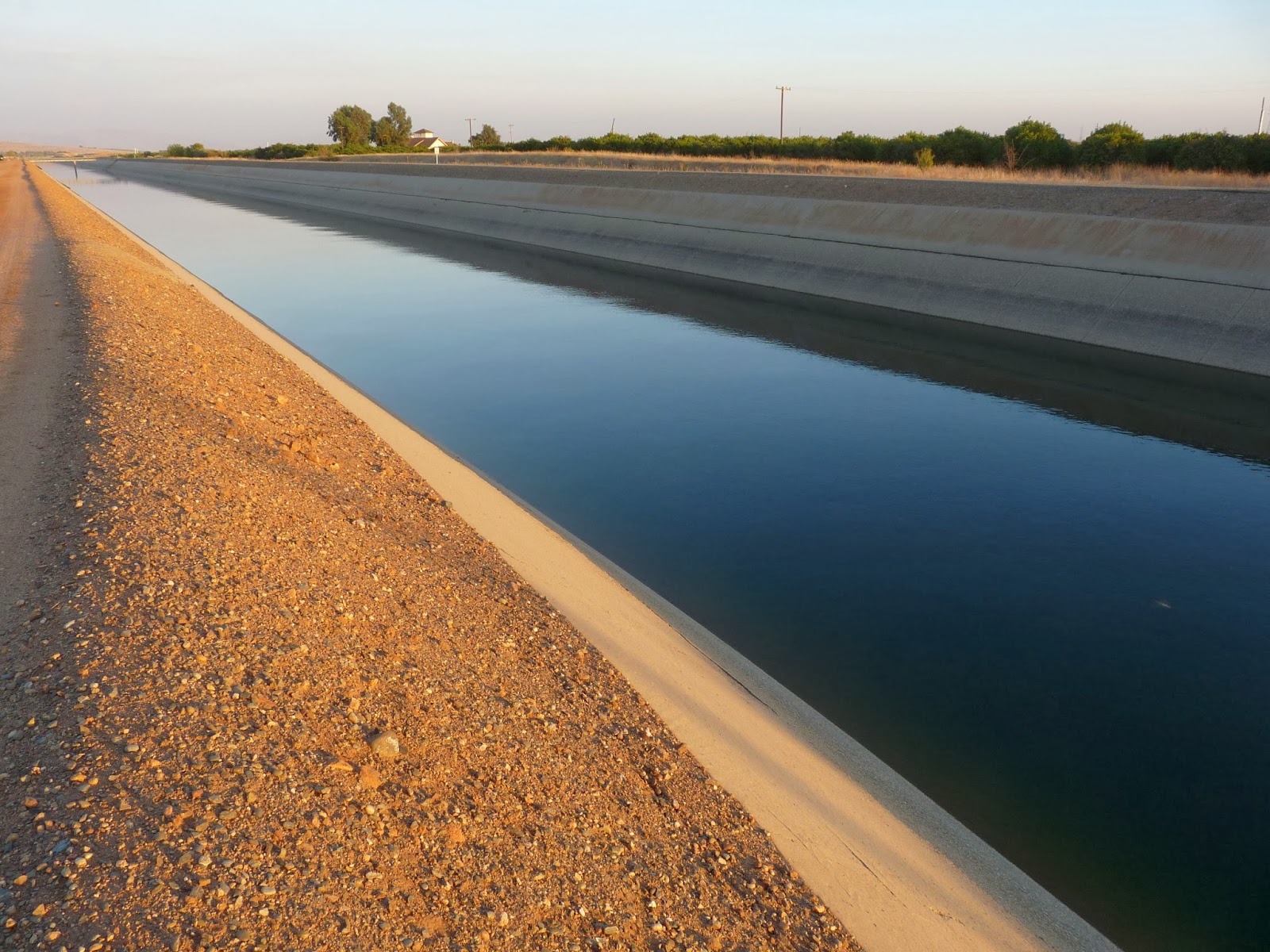
Friant-Kern Canal Providing Water to East Side Growers
While severely reduced water allocations on the Westside of the San Joaquin Valley are hurting many growers in federal water districts such as Westlands, San Luis and Panoche, if no water at all is delivered next year, growers could be completely forced out of business. And the Eastside of the Valley has huge problems as well. 

In the Eastside’s portion of the Central Valley Project—the Friant Division—the situation is also growing dire. Basically, this has been a dry year throughout the Valley.  The Eastside farmers have received 22% of their overall water supply in terms of full-contract allotments. This is nearly as grim as the situation seen in the federal water districts on the Westside.

Most of this year’s Eastside supply curtailments result from severe drought conditions that have gripped the San Joaquin River watershed northeast of Fresno over the past two years. Longer-term Eastside supply reductions, if they were to be as severe as those experienced on the Westside, have the potential for greater severe impacts. “Actually it could be worse for the Eastside because it is mostly trees; you cannot stop watering trees,” said Mario Santoyo, assistant general manager of the Friant Water Authority.

Friant’s declared supply is 496,000 acre-feet, all of which is allocated for holders of Class 1 contracts. The San Joaquin River, which supplies the Friant Division, is expected to generate 851,000 acre-feet by the time the current water year ends September 30. But a big portion of that flow occurred late in 2012. Dry conditions since January 1, 2013, resulted in below average runoff during the peak April-July snowmelt period, which measured about 519,000 acre-feet.

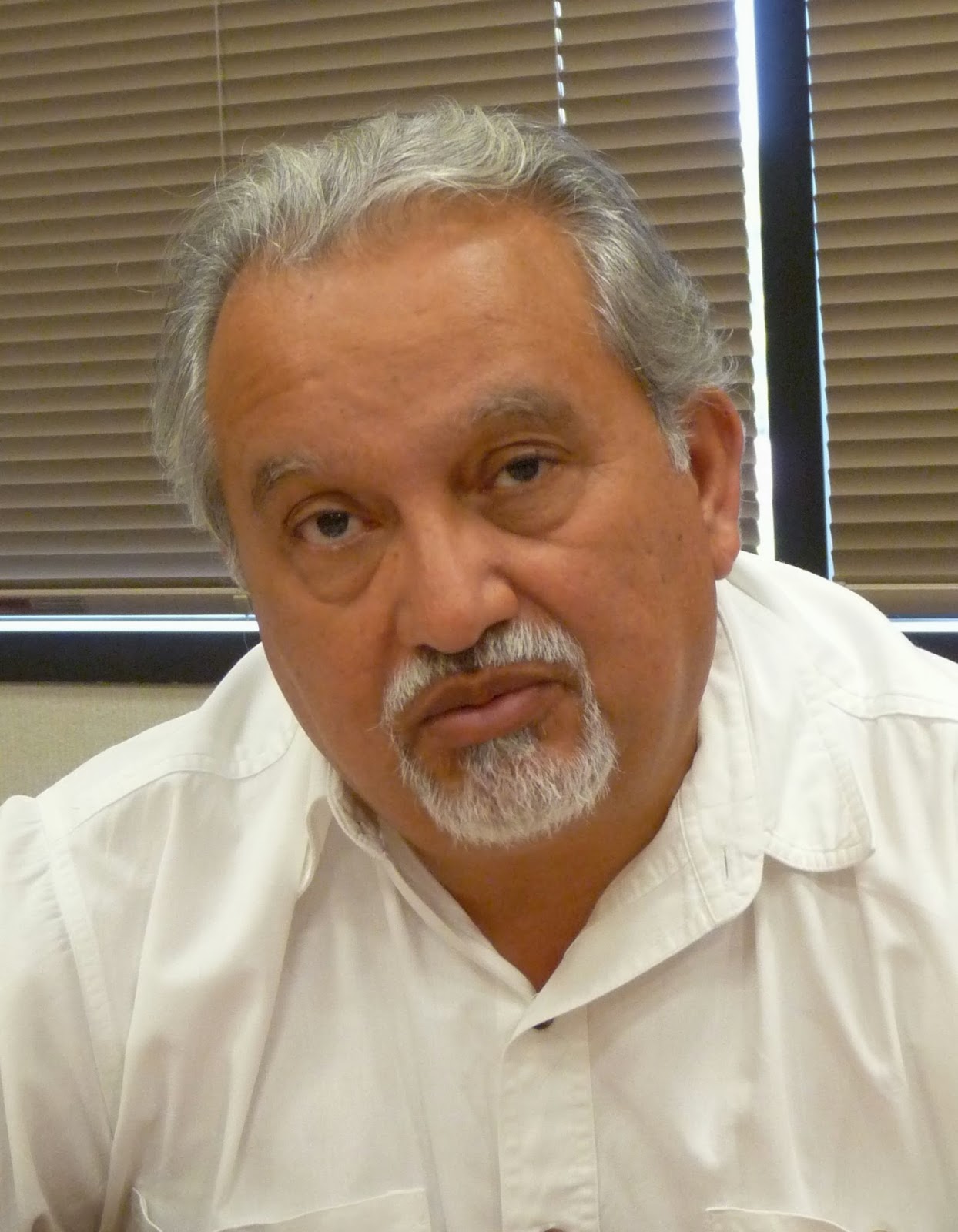
Mario Santoyo
The Friant supply was reduced not only by drought, but also by interim flows of about 200,000 acre-feet released from Friant Dam under the San Joaquin River Restoration Program. Santoyo noted, “That water would have been available for beneficial use for crops or cities. That water was to benefit salmon, but there are no salmon in the San Joaquin River,” noted Santoyo. These interim flows are considered experimental. The declared Friant supply of 496,000 acre-feet is for water remaining after restoration and riparian pumper demands are met.

According to a statement by Families Protecting the Valley: “It’s another `big gulp’ on the Eastside.  It’s the 200,000 acre-feet we’ve lost to the San Joaquin River Restoration, water being wasted because the river isn’t ready to be restored, but it’s being sent anyway.  We need to point out it’s not just the Westside that’s in trouble.  Stopping the SJ River Restoration would be like increasing Millerton by 200,000 acre-feet, and it wouldn’t cost a dime.  It would save money, and make sense.  And common sense can be just as effective as new infrastructure.” 


Friant Water Authority covers portions of Merced, Madera, Fresno, Tulare, Kings and Kern Counties. A good portion of its recharge and other beneficial water uses occur in Tulare and Kern Counties. Also, the City of Fresno and Fresno Irrigation District (FID) in Fresno County use Friant water for recharge and other purposes.

“Water released for restoration certainly has had an impact on Friant’s overall water availability this year,” said Santoyo. He noted, however, that due to natural drought conditions, there would not have been any Class 2 available in 2013, even if there were no interim restoration flows. Class 2 water is Friant’s supplemental supply, which is typically used for groundwater recharge activity.

These basins recharge the groundwater, taking pressure off the over-drafting agricultural pumps for irrigation water. “Without the recharge, we will continue to overdraft groundwater. Conditions on the Eastside will continue to be poor until we create some additional storage to prevent that water from going to the ocean,” said Santoyo.

Santoyo noted a sobering thought, “If these environmental water flows continue, the only hope we have is to build a dam at Temperance Flat, upriver, behind the Friant Dam. If we don’t build Temperance Flat, the future of the Eastside will not be as productive as it could be,” he said.

“Valley cities will have their own challenges as we move down the road. The Eastside relies on conjunctive use of surface and water, and that includes cities. Most Valley cities rely on using groundwater that moves from agricultural districts once it is recharged. But, if recharging is curtailed by a lack of surface water availability, the water table will decline under use by cities as well as farmland. It’s like everything else; unless we are aware of what’s happening, and unless we do something to prevent it from becoming a crisis, we will be in a crisis,” Santoyo warned.

He noted that the proposed Temperance Flat Reservoir is as important as the Delta’s twin tunnels. Groundwater recharge depends on our ability to capture surplus flows. Unfortunately, the recharge process is more sluggish than flood runoff because only so much water can be conveyed to recharge sites, and percolation into the water table is slow.

“We had better do something on the Eastside if we want to prevent a major crisis in our Valley,” said Santoyo. “It’s not an Eastside problem; it’s not a Westside program; it’s a Central Valley problem, and it’s an agricultural problem.”

Pressure Needs to Be Applied

We have to encourage legislators to push back on some of these environmental constraints.

Santoyo questioned whether there has been enough “pushback”. “I don’t think people from the Valley, including their legislators, have countered supply curtailments. They could have been all over the Bureau of Reclamation, much like when Senator Dianne Feinstein threatened Secretary Salazar to get us to 40% in 2011, and he did it. Feinstein said, ‘Either you do it administratively, or I will do it legislatively.’ Without such pressure, Salazar wouldn’t have delivered.”

Santoyo said that we need to apply that pressure, and “if it is not applied at the right time, it’s too late,” he noted.

2016-05-31T19:44:25-07:00October 1st, 2013|

Succession Planning Workshop

Succession Planning Workshop, Oct. 9


Farmers have unique needs when it comes to financial and succession planning. Without a doubt, getting started is one of the hardest steps. Farm Bureau’s partner in insurance, Nationwide® has developed the Land As Your Legacy® program to help farm and ranch families preserve the land and businesses they have developed over generations to provide a legacy for generations to come.  

Tulare County Farm Bureau will host a free Land as Your Legacy workshop for members on Wednesday evening, October 9 at 6:00 pm at the Tulare County Farm Bureau’s headquarters in Visalia.  Dinner will be provided, and reservations are limited to 2 guests per membership. 

The goal of any transition plan is to make sure the farming operation has the resources and management it needs for future farm operators.

The Land As Your Legacy program creates a plan that includes all areas that affect succession including: Farm transition planning – transferring the business to the next generation; Business planning – maintaining profitability over time; Retirement planning – ensuring money and structuring responsibility; Investment planning – assisting with financial goals and investment diversity; and Estate planning – distributing assets and tax payments.

Call the office at 732-8301to reserve your seats today, seating is limited to 50 participants.  The workshop will take place at the Farm Bureau office, 737 N. Ben Maddox Way in Visalia.

2016-05-31T19:44:25-07:00October 1st, 2013|

Farm Labor Shortage

Farm Labor Tight But Manageable
Bryan Little, Director of Labor Affairs, California Farm Bureau Federation( CFBF) in Sacramento, noted that labor is short, about the same as it was last season.

He said that between 60 and 70 percent of the farmers who voluntarily enter data on the CFBF website cited that they were experiencing about a 30 percent shortage of farm labor.

“Growers are getting by again this year, however they have been helped by weather conditions that have spread out the harvest season of several crops, including raisins,” Little said.


2016-05-31T19:44:25-07:00October 1st, 2013|

ACP TREATMENTS CRITICALLY IMPORTANT

No Time for ACP Complacency

Beth Grafton-Cardwell

“With frequent news reports on Asian Citrus Psyllid trappings and observations of live adults and nymphs on trees, the citrus industry needs to be more vigilant in keeping this pest suppressed,” noted Beth Grafton-Cardwell, UC Cooperative Extension specialist in the Department of Entomology at UC Riverside.

“It’s so important that, when psyllids are found on a sticky card or live in a tree, we do not give up on treating the pest,” Grafton-Cardwell told California AG Today. “We need to keep this pest suppressed and locally eradicated,” she emphasized.
“Huanglongbing (HLB), also known as citrus greening disease, will eventually start spreading, and we must keep the population suppressed in order to keep our citrus industry viable,” Grafton-Cardwell said. 

Work is being done at UC Davis and UC Riverside to develop tools that will determine if a tree is infected with HLB well before the USDA PCR Test can detect a positive.

For more information on this early detection, go to:  http://californiaagtoday.blogspot.com/2013/09/early-hlb-detection-sought.html

2016-05-31T19:44:25-07:00October 1st, 2013|

GOVERNMENT SHUTDOWN TO AFFECT AGRICULTURE

Shutdown on Agriculture


Some expected impacts of today’s federal government shutdown on agriculture are:
  • Up to 1 million U.S. federal workers may face furloughs without pay beginning October 1 (tomorrow).
  • Most federal agency workers will be furloughed.
  • Federal workers could face penalties if they tried to do any work during the furlough.
  • The FDA said it would continue “limited activities” only related to drug approval applications.
  • Meat inspectors for the U.S. Department of Agriculture, considered necessary to national safety, would stay on job.
  • The United Fresh Produce Association’s Washington Public Policy Conference, in progress in Washington, DC, has had to relocate or cancel events. Participants’ visits to Congressional offices have been cancelled or are pending cancellation.  
  • An Oct. 2 seminar at the University of California, Davis by research entomologist Jay Evans of USDA’s Agricultural Research Service (USDA-ARS) Beltsville Bee Research Laboratory has been cancelled.
  • Some Department of the Interior-Bureau of Land Management services and programs that will cease are:
    • Endangered Species Act and cultural clearances
    • Range management restoration
    • Work on resource management plans, including those driven by court deadlines
    • Monitoring of grazing allotments 
  • The U.S. Agriculture Department will cease its statistical reports leaving traders and food producers in the dark about most activities in the world’s largest farm exporter. (Reuters)
  • USDA may be forced to delay the release of its monthly crop estimates, due on October 11, which often cause swings worth billions of dollars in the price of corn, soybeans, wheat and cotton.(Reuters)  
  • The department’s public face, the usda.gov website, has already been shut down 


    “Due to the lapse in federal government funding, this website is not available.
    We sincerely regret this inconvenience.

    After funding has been restored, please allow some time for this website to
    become available again.

    For information about available government services, visit usa.gov
    To view U.S. Department of Agriculture Agency Contingency plans, visit: http://www.whitehouse.gov/omb/contingency-plans”  


    • USDA’s NASS (National Agricultural Statistics Service) statistics and other agricultural economic and statistical reports and projections will be discontinued.
    • The Economic Research Service, which provides analysis and forecasts, would be shuttered and its public Website would be taken offline, said USDA. Agricultural research stations also would close, and reports from USDA’s Foreign Agriculture Service attaches around the world would be suspended.
    • The Bureau of Reclamation’s contingency plans are to keep minimal services and programs operational for emergency purposes and/or excepted activity with non-appropriated or non-lapsing funding, such as:
      • Dam Safety Program
      • Reservoir Operations/Water Delivery
      • Emergency Management
      • Operations & Maintenance
      • Water Rights
      • Water Treatment
    • Bureau of Reclamation’s routine reporting, inspections, and planning will cease.
    • EPA will be nearly totally shutdown, retaining a few essential employees.


    2016-05-31T19:44:26-07:00October 1st, 2013|

    ACP FOUND IN FRESNO COUNTY

    Update on ACP Finds Announced Today
    First Psyllid Reportedly Trapped
    in Fresno County

    Three distinct Asian Citrus Psyllids were discovered TODAY in traps along the citrus belt in Strathmore and in Ducor in Tulare County, plus a third northeast of Dinuba just over the Fresno County line.

    “It represents what could be the first ever ACP trapped in Fresno County,” said Sylvie Robillard, Fresno County Liaison for ACP, who is an advocate for growers to help them meet the mandates necessary when an ACP is discovered.

    “No one really knows what it means yet,” noted Robillard. “The one in Fresno could be a hitchhiker from a passing citrus truck.”

    Delimitation traps are going along with a major increase in visual surveys. And soon there should be a mandated spray program 800 meters around the tree where the trapped Psyllids were found.

    “We should be giving the growers a call this week to notify them about the need to spray,” said Robillard. “There will be an official map of the trapped area, and CDFA will determine if a quarantine is needed.”


    If infected with Huanglongbing (HLB) disease, Psyllids after feeding on a citrus tree will kill the tree. Only one tree has ever been infected with HLB in California. That was in 2012 in a Hacienda Heights neighborhood in Los Angeles County.

    2016-05-31T19:44:26-07:00October 1st, 2013|

    NEWS ON MORE PSYLLIDS FOUND IN TULARE COUNTY

    LATE MONDAY BREAKING NEWS

    New Psyllids Found in Tulare County


    The Tulare County Agricultural Commissioner’s office has announced TODAY that two additional Asian citrus psyllids (ACP) have been detected on traps north of Eckert Field near Strathmore and northeast of Ducor. The latest interceptions were confirmed by the California Department of Food and Agriculture (CDFA) this morning. Maps and current information will soon be available on the Agricultural Commissioner’s website: http://agcomm.co.tulare.ca.us/default/.

    CDFA staff continues to utilize traps and surveys of our county in order to determine the extent of these infestations. The United States Department of Agriculture’s Animal and Plant Health Inspection Service (USDA-APHIS) and CDFA will work collaboratively to determine what steps are taken next.  

    “I heard about the two suspected trap finds on Sunday, but did not receive the locations until TODAY. It seems like time stands still when you are waiting for this type of bad news,” said Tulare County Agricultural Commissioner Marilyn Kinoshita.

    The Asian citrus psyllid is an invasive species of grave concern because it can carry the disease huanglongbing (HLB), also known as citrus greening.  All citrus and closely related species are susceptible hosts for both the insect and the disease.  There is no cure once a tree becomes infected. The diseased tree will decline in health, producing bitter, misshapen fruit until it dies. To date, HLB has been detected on just one residential property in the Hacienda Heights neighborhood of Los Angeles.

    Kinoshita points out that every resident of Tulare County plays a vital role in assuring that ACP is not spread from other parts of the state. “One of my neighbors brought over a plastic bag containing citrus fruit and leaves, which showed signs of scale infestation”. She said she wanted to be cautious and not cause harm for our local citrus producers.

    Residents in the area who think they may have seen the pest are urged to call CDFA’s Pest Hotline at 1-800-491-1899 or the Tulare County Agricultural Commissioner.

    2016-05-31T19:44:26-07:00October 1st, 2013|

    AGRIBUSINESS MANAGEMENT CONFERENCE 2013

    Fresno Agribusiness Management Conference 2013 is Oct. 31

    Leading Economist To Address Agribusiness Management Conference

     
    Top economists will join with academic and business experts to discuss the economic outlook, global trade agreements, California’s water supply, immigration policy reform and other key issues at the 32nd Annual Agribusiness Management Conference to be held October 31, in Fresno.
     
    Sponsored by Fresno State’s Center for Agricultural Business (CAB), Bank of America, Wells Fargo and the Zenith Insurance Company, the event will occur in partnership with supporting farm businesses, agencies and organizations. It will be held at the Radisson Hotel and Conference Center downtown.
    “Our markets are subject to the trends in the general economy and the global economy as well,” according to CAB Director Dr. Mechel Paggi. “The conference will feature expert speakers who will address these issues, and participants will be provided with supporting information and outlooks on specific commodities.”
     
    Paggi will open the half-day event with an 8:00 a.m. The official greeting will be by the new President of Fresno State, Dr. Joseph Castro.
     
    Following the opening remarks, at 8:15 a.m. Terry Barr, chief economist for CoBank, a national cooperative bank that is part of the farm credit system, will offer insights on upcoming economic challenges and opportunities in an address titled “Economic Outlook: Traversing the Minefield.”
     
    Adding to the economic outlook will be a presentation by John Wainio, economist with the USDA Economic Research Service, who will discuss new developments in the global trade outlook in his presentation, “New Trade Agreements: Prospects for California Agriculture.”
     
    Following a break, a panel will address the future of California’s water supply. Panelists include Ronald Jacobsma, general manager, Friant Water Authority; Jim Beck, Kern County Water Agency; and Thomas Birmingham, general manager, Westlands Water District. The panel will be moderated by David Zoldoske, Ph.D., Director of the Center for Irrigation Technology at Fresno State.
     
    Wrapping up the morning sessions will be a discussion of the current state of immigration reform policy and its importance to California and the Central Valley. Offering a perspective on the progress in federal legislation will be Monte Lake, of CJ Lake, LLC. Mr. Lake is a prominent Washington, DC lawyer who has provided counsel on labor and other issues facing agricultural interests in California for more than 30 years.
     
    Following Lake, Craig Reglbrugge, co-chair of the Agricultural Coalition for Immigration Reform, will discuss the group’s view on prospective changes to existing policies. The panel will wrap up with remarks from Fresno County Sheriff, Margret Mims, who will speak on the importance of immigration reform from the perspective of law enforcement community.
     
    To conclude the event, Beacon Economics’ Jock O’Connell, one of California’s foremost authorities on world trade, global economic trends, and the internationalization of the Golden State’s economy, will offer his insights on the future in his presentation, “Imagining California in 2023: Economic Issues and Outlook.”
     
    The conference is designed for farmers, farm managers, attorneys, appraisers, insurance personnel, processors, accountants, and others involved in California’s agribusiness industry.
     
    Early registration fee is $100. Late or walk-in is $125. For more information, call 559.278.4405 or visit the CAB website at www.csufcab.com.

    2016-05-31T19:44:26-07:00September 30th, 2013|

    California Minimum Wage Increase

    Governor Brown Signs Bill
    To Increase Minimum Wage


    In case you missed it……


    Governor Brown has signed AB 10 by Assembly member Luis Alejo (D-Salinas), which will raise the minimum wage in California from $8.00 per hour to $10.00 per hour.  AB 10 will raise California’s minimum wage in two one-dollar increments, from $8 per hour today to $9 per hour, effective July 1, 2014and to $10 per hour, effective January 1, 2016.

    Currently, California ranks 8th in the country in minimum wage behind Nevada ($8.25), Connecticut ($8.25), Illinois ($8.25), District of Columbia ($8.25), Vermont (8.60), Oregon ($8.95) and the highest – the state of Washington ($9.19).  In 2016, California could become the highest; however, Vermont, Oregon and Washington are all tied to inflationary increases and could very well be higher than $10 in 2016.


    Nearly all farmworkers make more than minimum wage already, but this could add more of a burden to farmers’ overall payroll.

    2016-05-31T19:44:26-07:00September 30th, 2013|
    Go to Top