Asian Citrus Psyllid Quarantine Established in San Luis Obispo County

Breaking News: NEW ACP Discovery


Victoria Hornbaker, APHIS Citrus Program Manager, announced TODAY the first confirmed Asian citrus psyllid find in San Luis Obispo County as reported in a San Luis Obispo County Ag Commissioner’s press release.

APHIS LOGO

Hornbaker also announced a Science Advisory Panel Report Stakeholder meeting will be held on April 16, 2014 at 9 am at CDFA headquarters, 1220 N Street, Room 220, Sacramento, CA 95814. To participate via conference call, please call 866-692-3158 and use participant code 87947483.

The meeting agenda follows this article.

Martin Settevendemie, Agricultural Commissioner/Sealer, County of San Luis Obispo announced detection of an adult Asian Citrus Psyllid in an insect trap on March 26th in a residential landscape near Arroyo Grande. The discovery prompted a high-density trapping delimitation survey of the immediate and adjacent area – about a nine square mile area – and no other ACPs were found.

A quarantine restricting the movement of citrus nursery stock and citrus fruit within a five-mile radius around the detection site has already been established by the California Department of Food and Agriculture to prevent the spread of this serious plant pest. “We are working with growers to get everyone in compliance with the regulation. This will help them understand what the requirements are to move any product outside of the quarantine area,” said Settevendemie.San Luis Obispo County Ag Commissioner Logo

CDFA announced that they will be conducting spray eradication treatments approximately 800 meters around the detection to eradicate this pest.

The first detection of the Asian Citrus Psyllid in California occurred in San Diego County in 2008. Since then, it has been found throughout southern California.

“This insect pest is of serious concern to California’s commercial citrus because it is responsible for spreading Huanglongbing, also called citrus greening disease, a plant disease that is fatal to all types of citrus trees. This includes citrus trees in countless landscapes across the county as well as local commercial citrus orchards valued at over $13 million in 2013,” according to Settevendemie.

Over the past ten years nearly 50% of the commercial citrus groves in Florida have been killed by this disease. The University of Florida estimates the disease has tallied more than 6,600 lost jobs, $1.3 billion in lost revenue to growers and $3.6 billion in lost economic activity for the state. The disease does not affect human health.

A single orange tree infected with Huanglongbing was found in a Los Angeles County backyard in 2012. To date no additional detections of the disease in California have occurred.

Staff from the San Luis Obispo County Agricultural Commissioner’s office and officials from the California Department of Food and Agriculture continue to search for this pest by monitoring hundreds of insect traps placed in urban neighborhoods and commercial orchards throughout the county.

“It is difficult to close off all potential pest pathways into the county. An engaged community of all county residents is critical in successfully excluding pests such as Asian Citrus Psyllid,” said Settevendemie.

Community members can do the following to protect backyard citrus trees and the local citrus industry:

        Buy Local! Purchase citrus trees from reputable local sources selling plants that have been routinely inspected by the Agricultural Commissioner’s staff.
        Do not transport citrus plants or plant parts into the county from quarantine areas. Call 805- 781-5910 for information about quarantine areas.
        Check residential landscaping often for signs of unusual symptoms or strange insects. Contact the local University of California Cooperative Extension’s Master Gardener Program at 805-781-5939 for help in identification of unusual plant symptoms or pests.
        If asked, allow the Agricultural Commissioner’s staff to place an insect trap in your yard and cooperate with officials if it becomes necessary to exclude or eliminate Asian Citrus Psyllid from San Luis Obispo County.

For more information about the Asian Citrus Psyllid visit the California Department of Food and Agriculture website or the San Luis Obispo County Agricultural Commissioner/Sealer’s website.


AGENDA FOR: ACP/HLB Ad Hoc Science Advisory Panel Report

Stakeholder Review/Conference Call

April 16, 2014, 9:00 a.m.

CDFA LOGO

Call-in number: 866-692-3158

Passcode: 87947483

– This meeting is open to the General Public –


AGENDA

1. Call to order, introductions – Jason Leathers

2. Review of Science Advisory Panel Questions and Answers

3. Review of Science Advisory Panel Report

a. Rapid Detection of HLB Infected Trees and/or Psyllids

b. Longitudinal Study being Conducted at the UC Davis Containment Facility

c. Potential for Movement of CLas Infected ACP with Fruit Movement

d. Recommendations Regarding Areawide ACP Treatment Program

e. Recommendations Affecting Quarantine Area

f. Recommendations Affecting Citrus Nurseries

4. Additional Questions/Review Items

 

2016-05-31T19:38:04-07:00April 3rd, 2014|

Public Listening Session: Water Transfer Process Streamlining

The staff of the State Water Resources Control Board (State Water Board) and the California Department of Water Resources (DWR) will hold a listening session to solicit ideas on recommendations to streamline the review process for temporary water transfers, in which water can be transferred for up to one year.

The purpose of the listening session is to obtain input to inform efforts by the State Water Board and DWR to streamline water transfers. Information provided will be considered in the context of near-term and long-term planning for improvements in transfer processing.

Background and Agenda:

On May 20, 2013, Governor Edmund G. Brown, Jr. issued Governor’s Executive Order B-21-13 (Executive Order), for the purpose of streamlining approval for water transfers to address dry conditions and water delivery limitations.

The Executive Order directs the State Water Board and DWR to expedite processing of water transfers and to assist water transfer proponents and suppliers, as necessary, provided that the transfers are consistent with the Water Code, will not harm other legal users of water and will not unreasonably affect fish, wildlife, or other instream beneficial uses.

The State Water Board and DWR were also directed to make all efforts to coordinate with relevant federal agencies, water districts, and water agencies to expedite the review and approval of water transfers in California.

On January 17, 2014, Governor Brown issued a Proclamation of a Drought State of Emergency (Proclamation). The Proclamation finds that dry conditions and lack of precipitation present urgent problems to drinking water supplies and cultivation of crops, which put farmers’ long-term investments at risk.

The conditions also threaten the survival of animals and plants that rely on California’s rivers, including many species in danger of extinction. The Proclamation directed the State Water Board and DWR to expedite the processing of water transfers as set forth in Executive Order B-21-13.

Proposed Agenda
• Overview of State Water Board Transfer role and current process

• Overview of DWR Water Transfer role and current process

• Public Comments on Streamlining Water Transfers

This Listening Session is designed as a forum for public input on the agencies’ streamlined water transfer processes, rather than discussion of specific transfer projects. Input received during the session will be taken into consideration in determining whether to modify the agencies’ water transfer processes in the short and long term.

DWR and the State Water Board seek suggestions for improving:

• availability of information on water transfers

• responses to comments on water transfer proposals.

• coordination between transfer approval agencies

• available information on impacts due to water transfers

• evaluation of surface water, groundwater, and environmental impacts related to water transfers.

Each commenter may be asked to limit their remarks to five minutes, depending on the number of parties present. Parties of like interests are encouraged to consolidate their comments and may pool their allotted time in a joint statement.

Parties also may submit written comments, either in lieu of or in support of their verbal comments. Comments will be collected for consideration in future transfer efforts, however the State Water Board and DWR will not be providing formal responses to comments.

Click here for more information.

2016-05-31T19:38:05-07:00April 2nd, 2014|

Ag Labor Identifies Solutions for Farmworkers

Housing & transportation recommendations to improve ag labor quality of life and labor force stability


Sebastopol, CA – On Tuesday, April 1, 2014, a multi-stakeholder task force will present the ag labor findings and recommendations of the California Agricultural Workforce Housing and Transportation Project to the California State Board of Food and Agriculture. The project was a year long investigation into the challenge of providing safe and affordable housing and reliable transportation to the state’s specialty crop workforce, resulting in a report, SHELTER + MOBILITY: Recommendations for California’s Specialty Crop Ag Workforce.

The key recommendations of the report include:

  • Improve existing and develop new farmworker housing by reducing barriers and dedicating state funding sources.
  • Develop a central, online repository to house information related to farmworker housing and transportation.
  •  Incorporate ag labor housing and transportation needs in federal, state, regional, and local planning and funding policies and priorities.
  • Maintain the newly revised definition of “rural” under federal law and create a recognized and accepted rural-specific definition of ”smart growth.”
  • Increase farmworker transportation options, both public and private.
  • Increase farmworker driver safety through training for farmworkers and their families.

There is an inadequate availability of safe, affordable housing and transportation options for California’s farmworkers. Not only does this impact the quality of life for workers and their families, it also affects labor force stability for the agricultural industry. Recognizing this need, the California Department of Food and Agriculture (CDFA) awarded a USDA Specialty Crop Block Grant to Ag Innovations Network to bring together 50 of the state’s agricultural, labor, housing, and transportation leaders to develop a set of recommendations for addressing these issues.

“We all respect the tremendous contributions of farmworkers to successful food and agricultural production,” said CDFA Secretary Karen Ross. “California Ag Vision: Strategies for Sustainability recommended we pursue a suite of policies and actions to secure a sustainable agricultural workforce for California agriculture, including options for public transportation and affordable housing. The open and frank conversations held throughout this project were a critical step toward identifying recommendations to achieve our goal of improving the availability of safe, affordable housing and transportation for farmworkers and their families.”

The stakeholders involved in the project offered these recommendations in the hope of ensuring that resources and systems are in place that will result in all of California’s specialty crop agricultural workers and their families having safe, reliable, and affordable transportation to their places of employment, and a home that reflects their dignity and importance.

More information about the project is available at http://aginnovations.org/workforce/. The report can be accessed athttp://aginnovations.org/images/uploads/Housing_Transportation.pdf.

The April 1, 2014 California State Board of Food and Agriculture meeting will be held at CDFA, 1220 N Street, Sacramento. Meeting details are available athttp://www.cdfa.ca.gov/state_board/.

2016-05-31T19:38:05-07:00March 30th, 2014|

Lawmakers Unite and Urge Administration to Capture Water from Storm

Senator Dianne Feinstein and Congressmen Ken Calvert, Jim Costa, Jeff Denham, Kevin McCarthy, Devin Nunes and David Valadao TODAY sent a letter to Interior Secretary Jewell and Commerce Secretary Pritzker calling on their departments to evaluate the operating criteria that govern the Central Valley Project and the State Water Project in order to capture as much water as possible from this week’s storm.

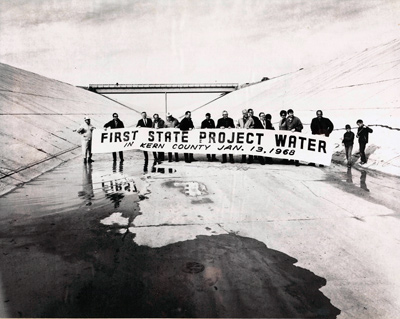
State Water Project

Full text of the letter follows:


March 27, 2014

The Honorable Sally Jewell

Secretary

Department of the Interior

1849 C Street, N.W.

Washington, D.C. 20240


The Honorable Penny Pritzker

Secretary

Department of Commerce

1401 Constitution Ave. N.W.

Washington, D.C. 20230


Dear Secretary Jewell and Secretary Pritzker:

We are writing to urge you to immediately evaluate the operating criteria that govern the Central Valley Project (CVP) and the State Water Project (SWP) so that actions can be taken as soon as possible to capture the maximum amount of water from this week’s storm in California.

We begin by contrasting two different circumstances under the drought:

Extremely Low Water Allocations to Agriculture

  • An unprecedented zero percent allocation for SWP water contractors
  • Zero percent allocation for CVP agricultural water service and Friant Division contractors
  • A historically-low 40 percent allocation for senior water rights holders (Settlement and Exchange contractors)
  • 
500,000 acres of farmlands to be fallowed
  • 100,000 head of cattle expected to be lost
  • At least 10 communities potentially running out of water soon without relief action

Minimal Endangered Fish Incidental TakeCentral Valley Project, USBR

Adult Delta smelt – 0 out of 155 allowed

Juvenile Delta smelt – 0 out of 1,007 allowed

Winter Run Salmon – 276 out of 24,237 allowed (1.1%)

Spring Run Salmon – 0 taken based on various levels of concern

Steelhead – 148 out of 3,000 allowed (4.9%)

These numbers show that existing protections for endangered fish are more than adequate. On the other hand, our constituents’ farms and communities are facing potential devastation. From our view, it is apparent that there is a significant imbalance of regulatory burdens.

Let us be clear: A disaster of great magnitude has been unfolding in our communities, and will continue to worsen with each passing day if relief is not provided.

Ever since the State’s drought declaration on January 17, 2014, there have only been two major storms in California. With much of the rain season behind us, California has received only about 50 percent of normal precipitation. The principal reservoirs for the CVP and SWP – Shasta and Lake Oroville – and San Luis Reservoir in the South Delta are still below 50 percent of capacity, and the snowpack is less than 25 percent of normal.

Farms and communities north and south of the Delta are suffering from the drought’s severe effects. Besides lost or fallowed acreage and damage to livestock, highly valuable trees and vines are being cut down. The socioeconomic impacts – such as unemployment – will be disastrous.

According to the National Weather Service, two storm systems will be passing through California this week. The central and northern Sierras expect to see more than two inches of rain; higher elevations could receive four to six inches. The San Joaquin Valley could receive between 0.25 to 0.75 inches of rain. The far northern reaches of the State could see up to 5 inches of rain. The Sierras can also expect between 3 to 16 inches of snow depending on location and elevation.

Based on historical weather patterns, these storms could be our last chance this year to receive, capture, and move a sizable amount of water to those farms and communities that desperately need it for public health and safety and for their livelihoods that are under severe threat.

Biological opinions issued by your Departments regulate the amount of water that can be exported from the Sacramento-San Joaquin Delta in order to protect endangered fish. However, based on the data we cited above, there is clearly no imminent threat to any of the key protected fish species that is attributable to water pumping operations.

We understand that your Departments have to consider other factors, such as salinity levels in the Delta and the need for pulse flows. Still, this latest data strongly suggest that there is significant leeway for the Bureau of Reclamation, the U.S. Fish and Wildlife Service, and the National Marine Fisheries Service to alter current water operations to benefit water users without risking jeopardy to protected species.

This latest rainstorm is occurring as we speak. You have authority under the law and, we assert, the obligation, to immediately take advantage of the rare, and likely the last, opportunity this year to capture and move water to bring relief to millions of Californians, and to mitigate the large-scale drought disaster that has struck our State. We urge you in the strongest terms to take action without delay.

Thank you for your urgent attention to this very important matter.

Sincerely,


Dianne Feinstein, U.S. Senator

Ken Calvert, U.S. Representative

Jim Costa, U.S. Representative

Jeff Denham, U.S. Representative

Kevin McCarthy, U.S. Representative

Devin Nunes, U.S. Representative

David Valadao, U.S. Representative

###

2016-05-31T19:38:05-07:00March 28th, 2014|

Ag Students Rally to Try to Preserve Education Grants

Source: California Farm Bureau Federation 

Concerns about future funding for high school agricultural classes and leadership programs are being voiced throughout California—and nowhere louder than at the state Capitol, where thousands of students and members of Future Farmers of America rallied last week to try to prevent elimination of the state’s $4.1 million Agricultural Education Incentive Grant program.

“It was gratifying to see the number of legislators who came out to support the students at the Capitol rally,” said Jim Aschwanden, executive director of the California Agricultural Teachers’ Association, who estimated participation at more than 2,000 students.

“They were met with great bipartisan support from both houses,” Aschwanden said. “The kids who came to the Capitol were well prepared to discuss the programs and funding issues, and did a great job of visiting offices.”

Program funding was included in the 2013-14 budget because legislators pressured the administration to preserve it, but the administration suggested the grant program could be scrapped this year.

Agricultural educators across the state currently use the grants to support career-based education that combines FFA leadership and personal development programs with classroom and vocational instruction, he said. The programs develop young leaders who go on to attend post-secondary colleges and career technical education programs at higher rates than their peers, Aschwanden said.

Enrollment in agriculture classes offered at 315 high schools statewide has steadily climbed during the past decade, educators said. Today, about 78,000 California high school students take agriculture-related classes, with strong program growth at urban high schools as well as those in rural communities.

“As teachers, parents, community members and taxpayers, we’re angry,” said Dave Gossman, who heads the agriculture department at Atwater High School. “The decision to eliminate the ag grant program is perplexing because it impacts an education program that has a direct benefit on the lives of our kids and the state’s future.”

Without the grant funding, California’s agricultural programs could be terminated, vocational education experts said.

“Instead of eliminating California’s proven FFA program, why not secure funding and build on the programs to offer more students the opportunity for success?” Gossman said.

“Virtually every region in our state has an FFA program,” Assemblyman Rudy Salas, D-Bakersfield, said in a letter to legislative leaders, which was signed by nearly 100 members of the Legislature and also noted the rising enrollment in agricultural classes.

The classes include agriscience, mechanics, ornamental horticulture, animal science, agriculture business, plant and soil science, forestry and natural resources.

Andrea Fox, legislative policy analyst for the California Farm Bureau Federation, said Farm Bureau has been “actively involved in ensuring that funding will remain available for the agricultural grant program.” She noted that a Farm Team alert from CFBF generated nearly 400 letters to the governor and legislators in support of the program.

Aschwanden said the next steps in the state budget process will include legislative committee hearings.

“We’re anxious to see what the May (budget) revise looks like in terms of overall funding for education,” he said. “We’re hearing there may be additional funds available for education, which will make these proposed cuts to ag education even more disturbing.”

He said agricultural educators have asked people to contact legislators, “particularly those from urban areas.”

Leaders of “Save FFA.com,” a grassroots group affiliated with the California Agricultural Teachers’ Association, encourage parents and community leaders to write letters to the governor and members of the Legislature. More information on the effort to ensure funding for agricultural education is online at www.saveffa.com.

2016-05-31T19:38:06-07:00March 26th, 2014|

Salmonella Data Now at Your Fingertips

Forty years of Salmonella data, a major cause of food poisoning, is now available to the public, the food industry, and researchers in a new report from the Centers for Disease Control and Prevention (CDC).

The data, collected by state and federal health officials, provides a wealth of information on Salmonella, the top foodborne cause of hospitalizations and deaths in the United States.

Available for hands-on web access for the first time, the Atlas of Salmonella in the United States, 1968-2011 summarizes surveillance data on 32 types of Salmonella isolates from people, animals, and other sources. The information is organized by demographic, geographic and other categories.

“Salmonella causes a huge amount of illness and suffering each year in the United States. We hope these data allow researchers and others to assess what has happened and think more about how we can reduce Salmonella infections in the future,” said Robert Tauxe, M.D., deputy director of CDC’s Division of Foodborne, Waterborne and Environmental Diseases. “The more we understand Salmonella, the more we can make progress in fighting this threat all along the farm to table chain.”

CDC estimates that Salmonella bacteria cause more than 1.2 million illnesses each year in the United States, resulting in more than 23,000 hospitalizations and 450 deaths.

Salmonella infections most often cause vomiting or diarrhea, sometimes severe. In rare cases, Salmonella illness can lead to severe and life-threatening bloodstream infections.

By providing data by age, sex, geography, and season of the year in a downloadable format, the Atlas allows users to view national trends in reported cases of human Salmonella infection over time, problems in specific geographic areas, sources of Salmonella, and the connection between animal and human health.

Serotyping has been the core of public health monitoring of Salmonella infections for over 50 years. Now, scientists use DNA testing to further divide each serotype into more subtypes and to detect more outbreaks.

With the next generation of sequencing technology, advancements continue as the laboratory can find information about the bacteria in just one test.

The data presented likely represent just the tip of the iceberg since many cases of human salmonellosis are not diagnosed and reported to the health department. This underreporting may occur because the ill person does not seek medical care, the health care provider does not obtain a stool culture for testing, or the culture results are not reported to public health officials.

The Salmonella group of bacteria has more than 2,500 different serotypes, but fewer than 100 cause the vast majority of infections in people. Older adults, people with weakened immune systems, and children under five years old have a higher risk for Salmonella infection. Infections in these groups can be more severe, resulting in long-term health consequences or death.

To access the Atlas, please visit http://www.cdc.gov/salmonella/reportspubs/salmonella-atlas/index.html.

For more information on Salmonella, please visit: http://www.cdc.gov/salmonella/.

For more information on food safety, please visit: www.foodsafety.gov.

For more information about preventing Salmonella infections, please visit: http://www.cdc.gov/salmonella/general/prevention.html.

If you have any questions, please contact:  CDC Media Relations at (404) 639-3286.

2017-09-03T01:26:27-07:00March 26th, 2014|

Walnut Board Referendum to Start March 29

Walnut Farmers Support Continuation of Calif. Walnut Board

 California walnut producers will be asked later this month to vote in a referendum to decide whether or not the programs of the California Walnut Board will continue for another five years.  California Walnut Board Referendum Ballots will be mailed to all California walnut producers March 29 and they must be returned via mail with a postmark not later than April 19.

The California Walnut Board is a federal marketing program operating with oversight from the United States Department of Food and Agriculture. The program works in conjunction with a separate, but cooperating, entity called the California Walnut Commission. For operating efficiencies the two programs are implemented by the same staff based in Folsom, CA. 

Much more information about these programs is available on the web at www.walnuts.org.

In short, the California Walnut Board (CWB) conducts activities in the following areas: production research, food safety, grades & standards, regulatory matters and U.S. marketing activities. Meanwhile the California Walnut Commission (CWC) is charged with: health and nutrition research, export market development, educating government officials and communicating with industry members.

The USDA requires growers, who fund marketing order programs like the CWB through mandatory assessment, vote to decide if they want to continue with the programs every five years.

Several members of the California walnut industry are speaking out about the good work of this program and urging walnut farmers to vote in favor of continuing the program.  These growers attribute the CWB with much of the industry’s success and note that California is currently experiencing an all-time high price per pound AND an all-time high crop size.

“In my opinion, all growers in California have benefited directly from research funded by the California Walnut Board,” said Todd Ramos, who farms 640 acres of walnuts in Yolo and Solano counties. “In recent years walnut growers have seen average yield per acre increase, quality of our product improve, increasing tonnage and record high prices.  This is a direct result of the research funding and market development provided by the California Walnut Board.”

Ramos explained that an observable benefit from this funding and research is the release of California’s  three most planted varieties, Chandler, Tulare and Howard and that the walnut breeding program is currently evaluating over 70 unreleased varieties which will lead to additional releases in the future. The financial support and direction provide by CWB has led to the development of disease resistant rootstocks such as VX211, Vlach and RX1.  To ensure the walnut improvement program continues to be a priority for researchers, the CWB has set up an endowment of $2 million at University of California, Davis.

Ramos further noted that with respect to daily farming practices by all growers in California, the CWB has supported research on blight control, ethrel use, control of husk fly and codling moth along with spider mite management and pheromone puffers.  The CWB Research Committee has also subsidized research on pruning, crown gall, water management, soil fumigation and planting density.

Pat Mecklenberg of Derby Orchards in Rio Oso shares Ramos’ support of the CWB. 

“As a business owner, I cannot think of a better investment than investing in our own industry,” she said.   “Looking at the increased market demand for walnuts for the past ten years and all that the California Walnut Board has done to promote California walnuts, it’s clear to me this program has given us a better return on investment than any other place I have invested money.”

Pete Jelavich, a walnut farmer in Sutter and Yuba counties, also voiced his support of the CWB.  “CWB provides many benefits to walnut farmers including: being proactive in providing information and implementation of food safety programs for industry members; monitoring and inspections of outbound product to buyers and consumers; providing research for insect and disease control, propagation of new varieties, as well as pursuing the use of safer, better, and more effective controls to get product from the farm to the consumer and promoting the many health benefits that have been published through the efforts of the California Walnut Commission. I strongly support the vote to continue the operations of the California Walnut Board.”

“The programs of the Walnut Marketing Board are really effective and they are an integral part of the industry’s great success, especially over the last few years,” said Jonathan W. Field, manager of the Walnut Bargaining Association, a group which supports the efforts of the CWB.  Field cited the exceptional production and marketing data developed through the CWB as critical in helping growers make planting decisions; handlers find new markets; banks to make financial decisions and for his organization, the Walnut Bargaining Association, to establish fair grower prices and maintain good returns for growers and handlers. “The historical data available could be lost if the marketing order is not continued.”

Field also noted that CWB provides a forum for discussion of issues that impact the growing and marketing of California walnuts such as: food safety; pests and disease pressure; improved production practices; product theft; drought, etc.

“No other forum is available specific to walnuts that has the credibility of the CWB,” he said.

Donald Norene, who also farms walnuts in Rio Oso, summed it up and reminded walnut farmers of the importance of the upcoming referendum.

“This spring we walnut growers have an important decision to make on behalf of our industry,” said Norene. “The continuation of the California walnut marketing order is dependent on the outcome of the vote.

Growers should consider the numerous benefits – crop production research, new variety research, methyl bromide replacement research, food safety efforts, domestic market promotion and the viability of the entire industry – we receive for the small cost of the California Walnut Board’s assessments.”

2016-05-31T19:38:06-07:00March 26th, 2014|

Extended Deadline for USDA Value-Added Producer Grants

TODAY, the U.S. Department of Agriculture’s Rural Development Agency announced a two-week extension for grant applications for the Value-Added Producer Grant program. The new grant deadline, April 8, was necessary due to changes to the program included in the 2014 Farm Bill that was recently signed into law.

“Value-Added Producer Grants create jobs and economic growth in rural communities by increasing income and marketing opportunities for farmers and by improving the local economy through job development and retention,” said Ferd Hoefner, policy director for the National Sustainable Agriculture Coalition (NSAC). “VAPG also enhances food choices for consumers, helping farmers meet growing demand for high quality, value-added local and regional food products.”

Farmers’ Guide to Value-Added Producer Grant Funding

To help farmers, farm groups, and farm coops understand the program and the current funding cycle, NSAC today re-issued its Farmers’ Guide to Value-Added Producer Grant Funding. The updated free Guide provides helpful hints to improve a producer’s chances of obtaining funding from the highly competitive program and provides clear information on the program’s application requirements, including a step-by-step description of the application and ranking processes.

Veteran Priority Added

The two week extension will allow groups who have already submitted funding applications to revise their proposals if the new farm bill’s addition of returning veteran farmers to the program’s priorities is applicable to their proposal.

Other program priorities include small and medium-scale family farms, beginning farmers and ranchers, and socially disadvantaged farmers and ranchers. “We urge everyone who submitted a VAPG application to make a determination in the coming days as to whether their proposals need to be modified or not,” said Hoefner. “As part of the new farm bill, Congress added a veteran’s preference to a variety of programs, including VAPG, and applicants whose project includes returning veterans will want to highlight that aspect of their project.”

In addition, the 2014 Farm Bill also clarifies that group projects that include more than a single farmer are to be ranked in terms of how well they advance the program’s priorities by the review panels that evaluate all of the proposed projects. USDA will also be implementing this change as part of the current funding round.

“The program will function better with the new approach for determining which group project proposals best contribute to advancing the congressional-mandated priorities for small and mid-sized family farms and for beginning, minority, and veteran farmers.” commented Hoefner. “We applaud USDA for implementing this provision and the veterans priority as part of the current grant cycle.”

Second Grant Round This Year Possible

Congress appropriated $13.8 million in fiscal year 2013 and $15 million in fiscal year 2014 for VAPG. Both sums will be added together for this current grant round. Whether USDA awards the entire combined amount, or something less than that, will depend on the quality of the proposals received.

In addition to the $15 million in appropriated funds for fiscal year 2014, the 2014 Farm Bill also provides the program with $63 million in funding that can be used over the course of the next five years. USDA may decide to use a portion of the $63 million in a second grant round later this year; final decisions are pending.

“We are pleased USDA is combining two years’ worth of appropriations in this grant round, and that they are considering a possible second round later this year,” said Hoefner. “This will allow Rural Development to catch up and hopefully get back on a normal year-by-year grant cycle beginning in 2015.”

The National Sustainable Agriculture Coalition is a grassroots alliance that advocates for federal policy reform supporting the long-term social, economic, and environmental sustainability of agriculture, natural resources, and rural communities.

2016-05-31T19:38:06-07:00March 25th, 2014|

California Table Grape Commission News

Grape Commission Positions Itself for Continued Industry Growth

New and expanded positions in international marketing, digital media/community service, and marketing communications

Fabian Garcia Table Grape Commission

Fabian Garcia

Fresno, CA – The California Table Grape Commission recently hired Fabian Garcia as the new assistant director of international marketing, and expanded the responsibilities of Rachel Scott and Jeff Klitz in the areas of digital media/community service and marketing communications, respectively.

Fabian Garcia fills the new position of assistant director of international marketing. A native of Santa Barbara, Garcia studied international relations at American University in Washington, D.C. and traveled frequently to east Asia. He speaks Spanish and Mandarin Chinese and spent several years in Shanghai, China where he worked as a market researcher at the USDA Agricultural Trade Office. Garcia joined the commission in January and in his new role assists in developing and implementing the commission’s international promotional programs, with an emphasis on China.

Rachel Scott Table Grape Commission

Rachel Scott

Jeff Klitz Table Grape Commission

Jeff Klitz

Rachel Scott, digital media and community service manager, has been with the commission for five years. She has a bachelor’s degree from Western Michigan University in organizational communications and Spanish (double major); before joining the commission, she spent two years in Japan teaching English. Rachel’s new responsibilities include content development and management of the Grapes from California website and social media platforms, which includes Facebook and Pinterest and the launch of a Twitter account this year. On the community service side, she will assume a greater role in managing the programs, which include scholarships, grants and donations.

Jeff Klitz, assistant director of marketing communications, has also been with the commission for five years. Jeff is a native to the San Joaquin Valley, growing up in Fresno, and has a bachelor’s degree in agricultural business from Cal Poly State University, San Luis Obispo. Jeff has been involved in helping coordinate components of the commission’s communications and research programs, but will now begin assisting in the development and implementation of the broader consumer communications program for Grapes from California.


2016-05-31T19:38:07-07:00March 24th, 2014|

50 Most Powerful People in 2014 Food World

Source: Colman Andrews

These men and women decide what and how you eat, whether you realize it or not.

The ability to make things happen, rewrite the rules, change the conversation and shift the paradigms; the people with power in the food world decide or influence what and how and where and why we eat.

Their power is economic, legislative, sometimes inspirational. They’re the agribusiness moguls who decide what crops to plant and how to harvest, process, and sell them.

They’re the heads of major food processing and distribution concerns and retail food outlets (that is, the people who actually put food on our tables).

They’re the scolds and nannies — and admirable consumer advocates — who tell us what we should and shouldn’t eat and why, sometimes upending whole industries in the process; the key figures in the governmental agencies concerned with the economics and the safety of our food supply; the media stars and public figures who sway our food opinions and stimulate our appetites; the chefs and restaurateurs who introduce us to flavors and culinary ideas, and establish and maintain standards for the preparation and presentation of food. They’re the journalists, in whatever medium, who report on all of the above.

Any catalogue of powerful people — and certainly any ranking of them in order of perceived power— is bound to be highly subjective. That doesn’t mean that it has to be arbitrary.

To come up with our list of The 50+ Most Powerful People in Food in America, our editors assembled an initial roster, based on research done gradually over many months, then added and subtracted, fine-tuned and developed.

We read news stories, annual statements, editorial analyses. We consulted with experts in the various fields we cover. We had endless discussions and occasionally strenuous debates.

Our ultimate criterion was simply this: Is each person on our list capable, whether by dint of corporate station, media access, moral authority, or sheer personality, of substantially changing, improving, and/or degrading the quality and variety of the American diet or the way we think about it?

Choosing which men and women in the American food world to include on our list was difficult enough; arranging them in order of power was a far greater challenge.

Here is the finalized list:

50. Danielle Nierenberg and Ellen Gustafson, Co-Founders, The Food Tank

49. Adam Rapoport, Editor in Chief, Bon Appetit

48. Matt Maloney, CEO, GrubHub Seamless

47. Bill Marler, Foodborne Illness Lawyer and Attorney

46. Steve Ells, Founder/ Co-CEO, Chairman, Chipotle Mexican Grill

45. Tom Colicchio, Chef-Restaurateur and TV Personality

44. Catherine Cassidy, Vice President and Editor-in-Chief, Taste of Home

43. Ingrid Newkirk, President and Co-Founder, People for the Ethical Treatment of Animals

42. Mark Bittman, Journalist and Author

41. Tracey Ryder, President and CEO, Edible Communities Publications

40. Dana Cowin, Editor-in-Chief, Food & Wine

39. Alice Waters, Chef-Restaurateur and Founder and Director, The Edible Schoolyard Project

38. Dawn Sweeney, President and CEO, National Restaurant Association

37. Thomas Keller, Chef-Restaurateur

36. Susan Ungaro, President, James Beard Foundation

35. Danny Meyer, Restaurateur

34. Michael Pollan, Author (just noteworthy)


33. Bill Shore, Founder and CEO, Share Our Strength

32. Dan Bane, Chairman and CEO, Trader Joe’s

31. Bob Aiken, President and CEO, Feeding America

30. Steve Spinner, CEO, President, and Director, United Natural Foods, Inc.

29. Julie Packard, Executive Director and Vice-Chairman, Monterey Bay Aquarium

28. John Mackey, Founder and Co-CEO, Whole Foods Market

27. David Kirchhoff, CEO, Weight Watchers International

26. Mario Batali and Joe Bastianich, Chef/ Restaurateurs

25. David Murdock, CEO, Dole Food Company

24. Kevin Systrom, Co-Founder and CEO, Instagram

23. Ben Silbermann, Founder and CEO, Pinterest

22. Michelle Obama, First Lady of the United States

21. Rodney McMullen, Chairman and CEO, The Kroger Co.

20. Fred DeLuca, Co-Founder and President, Subway

19. Bob Tuschman, General Manager and Senior Vice President, Food Network

18. José Andrés, Chef-Restaurateur

17. Pamela Bailey, President and CEO, Grocery Manufacturers Association

16.  Paul Grimwood, CEO and Chairman, Nestlé USA

15. Donald Thompson, Vice Chairman and CEO, McDonalds

14. Pete Wells, Restaurant Critic, The New York Times

13. Craig Jelinek, CEO, Costco

12. Donnie Smith, President and CEO, Tyson Foods

11. William J. Delaney III, CEO, Sysco

10. David MacLennan, Chairman and CEO, Cargill

9. Jeremy Stoppelman, Co-Founder and CEO, Yelp

8. Jack Menzel, Product Managing Director, and Dan Entin, Director of Digital Product Management, and their teams, Google

7. Patricia Woertz, Chairman, President, and CEO, Archer Daniels Midland

6. James P. Hoffa, General President, International Brotherhood of Teamsters

5. Indra Nooyi, Chairman and CEO, Pepsi

4. Michael R. Taylor, Deputy Commissioner for Food, Federal Drug Administration

3. Doug McMillion, President and CEO, Walmart

2. Hugh Grant, Chairman, President, and CEO, The Monsanto Company

1. Thomas Vilsack, Secretary, USDA


2016-05-31T19:38:07-07:00March 24th, 2014|
Go to Top