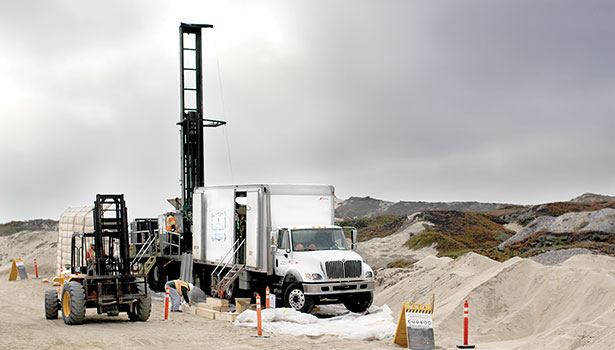
Slant Well to Address Water Shortage Without Harming Environment

By Valerie King; National Driller*

History is unfolding along the coast of California, according to Dennis Williams, president of GEOSCIENCE Support Services Inc.

His groundwater consulting firm has designed something like 1,000 municipal water supply wells in almost 40 years. But those were typical wells, vertical wells. What he’s working on now he’s only done once before.

“Necessity is the mother of invention,” he said, alluding to a well technology his firm is designing for California’s Monterey Peninsula. It’s called a slant well or subsurface intake, and while the technology has been used in Europe and tested in the United States, he says it’s still a very rare method.

“The evolution of the subsurface slant well technology,” as Williams calls it, is an outcome of California state regulators and environmental groups that prefer an environmentally friendly approach to desalination. Their goal is to avoid harming marine life like more traditional ocean pipelines tend to.

The slant well will be drilled close to the coastline at a diagonal and collect enough ocean water to produce about 100 million gallons of drinkable water daily.

That’s what California American Water hopes, according to Rich Svindland, vice president of engineering. California American Water is a subsidiary of American Water Works Company Inc., the largest publicly traded U.S. water and wastewater utility company. They proposed the idea after California ordered reductions to the Monterey Peninsula’s current water sources, a local river and aquifer that are expected to lose more than half of their current supply in the next decade.

“The idea is that we’re trying to launch a well field out under the ocean floor to basically ensure that we capture ocean water as opposed to inland ground freshwater,” Svindland said. The local groundwater basin he’s referring to is protected and cannot be exported to residents across the peninsula.

*This article was originally published in National Driller, Copyright 2014.  The entire article can be found at National Driller.
2016-05-31T19:33:27-07:00September 3rd, 2014|

Californian kiwifruit industry forecasts good fruit quality

Source: Fresh Fruit Portal

The upcoming season looks as though it should be a relatively positive one for Californian kiwifruit growers, with normal production, good fruit quality, and strong domestic market conditions.

California Kiwifruit Administrative Committee assistant director Nick Matteis said that as of the board’s latest meeting in July, the industry was anticipating a production of around 6.8 – 7 million seven-pound tray equivalents.

“That’s about average, based on producing acreage and what our growers are able to get produced per acre. It’s about a normal size crop, and the distribution of sizes will be pretty normal as well,” Matteis told www.freshfruitportal.com.

“It’s not lopsided towards larger sizes necessarily nor smaller sizes – there should be a good variation in size profile. The quality looks to be good as well, though at this juncture of course we still have a month and a half of growing season left.”

The board of directors will hold another meeting in September to take one last look at the estimates and see if anything dramatic has occurred.

Matteis said although it didn’t sound like growers have had serious problems with the state-wide drought, he could not be sure due to the vast area they covered.

“It’s hard to generalize how people are going to be affected because we have growing regions closer to the northern area and some further to the south with a couple of hundred miles in between,” he said.

“Most folks are pumping groundwater because there’s zero allocation from the state and federal water resources departments.

“So I think everybody’s going to make it just fine this year – I guess I could summate – but there is some pretty significant groundwater pumping that’s going on now to keep flows where they need to be to get to harvest.”

He added demand looked like it would be strong going into the season, with the first harvest expected to take place around six or seven days earlier than last year.

“Probably at the end of September we’ll start seeing some of the first fruit harvested, but the harvest being in full swing is usually around the first or second week of October,” Matteis said.

“The actual harvest will go till the end of November and then the marketing season will run from October all the way to April.”

Generally around 70-75% of the fruit is sold to the North America market, with Canada and Mexico being the two biggest importers.

2016-05-31T19:33:28-07:00September 1st, 2014|

Drought lessons from a sheep rancher

Source: Brad Hooker, UC Davis

While a severe drought continues to devastate California agriculture, one sheep rancher in Oroville has found a centuries-old solution at the bottom of his wood stove — and researchers at UC Davis are paying attention.

After dumping ash from a weekend cookout in his backyard, Mel Thompson noticed the grass grew a little better. On the advice of Glenn Nader, a UC Cooperative Extension farm advisor based in Yuba City, Thompson took the initiative to research wood ash on his own, going as far as to establish a connection with an Oroville-based energy plant 20 minutes away, which was paying millions to deliver wood ash to the landfill.

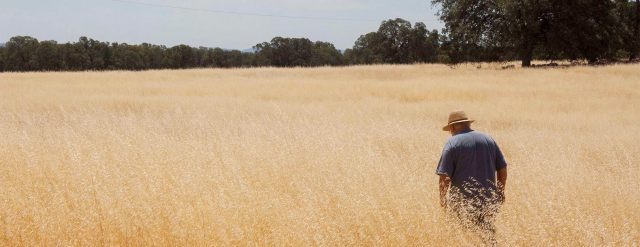
Today, the difference in growth from that wood ash can be seen in two adjoining pastures on Thompson’s foothill ranch. One layered in ash three years ago has chest-high grass despite the drought, while the untreated pasture has considerably shorter ground cover.

While the benefits of supplementing crops with ash have long been known, the UC Davis researchers were interested in specifically how it was altering the soil composition to promote plant growth and how it could help other ranchers in this Northern California region.

“It has improved our feed production significantly,” says Thompson. “With that, in conjunction with fencing and the rotational grazing, we seem to be doing OK through this drought period.”

Ken Tate, a plant sciences professor and a Cooperative Extension rangeland watershed specialist, recently surveyed more than 500 ranchers and says Thompson falls into the roughly 5 percent of California ranchers practicing these types of strategies in hopes of gaining more productivity from their land.

“Mel is what we call an early adopter, someone who has a large toolbox and a lot of information that he makes use of,” Tate says. “He’s an innovator and experimenter in the industry.”

2016-05-31T19:33:28-07:00August 28th, 2014|

Voters to decide fate of water bond this November

Source: Kate Campbell; Ag Alert 

Finding agreement on the $7.5 billion water bond measure headed to the November ballot wasn’t easy—it involved years of hard work by many stakeholders, including the California Farm Bureau Federation—but participants in the discussion said it’s a key step in addressing the critical need to upgrade the state’s broken water system.

“The severe water shortages we’re currently experiencing result from 30 years of neglecting our water-storage system,” CFBF President Paul Wenger said. “That neglect is magnified by the drought, and it’s time to reverse that pattern of neglect. Placing this water bond on the November ballot gives Californians a chance to provide more water for our cities, for food production and for the environment.”

CFBF Administrator Rich Matteis said passage of the water bond bill last week marked the end of more than five years of sustained effort.

“Farm Bureau has been involved in this issue since the beginning, working for a bond that would maximize the investment in new water storage for California,” Matteis said. “But as much as the passage of the bond bill marked the end of that process, it also signaled the beginning of a campaign to show Californians the essential need to invest in our state’s water system.”

Matteis noted that the water bond will come before voters in less than 11 weeks, meaning that supporters of new water investment will need to move quickly to solidify support for the measure.

“Farm Bureau members are uniquely positioned to work at the grassroots level to educate and build public awareness for much-needed water improvements,” Matteis said. “Every Californian has a stake in the voter outcome in November, but none more than farmers and ranchers who depend on adequate, reliable water supplies.”

The revised bond measure includes $2.7 billion for water storage projects and that money will be continuously appropriated, Matteis noted, meaning that future Legislatures will not be able to redirect it to other uses.

“This bond represents the state’s largest investment in water storage in more than 30 years,” Wenger said, “and it couldn’t come at a more critical time.”

The current drought has shown that California has lived too long with an outdated water-storage system, he said.

“We need to update that system to match changing weather patterns, in which more precipitation will fall as rain rather than as snow,” Wenger said. “Additional surface storage can capture those strong storm surges when they come, reduce flooding and bank that water for later dry times.”

In addition to new surface and groundwater storage projects, proceeds from the sale of bonds—if approved by voters—would be used for regional water reliability, sustainable groundwater management and cleanup, water recycling, water conservation, watershed protection and safe drinking water, particularly for disadvantaged communities.

Association of California Water Agencies Executive Director Tim Quinn called the revised water bond the “right size at the right time for California.”

Noting the bond includes $100 million that can be used by local agencies for groundwater plans and projects, the Kern County Water Agency commended those who negotiated the final version of the measure. The water bond also includes new funding for a variety of local water programs through integrated regional water management plans, or IRWMPs. Specifically, the bond measure would allocate $34 million to IRWMPs in the Tulare/Kern watershed.

The California Water Alliance, whose members include Central Valley farmers and agricultural businesses, applauded the bond’s placement on the November ballot.

“Most importantly, it recognizes that Californians statewide, from all walks of life, cannot afford to carry the burden of a dysfunctional water system that has been exacerbated by the worst drought in California history,” said Aubrey Bettencourt, executive director of the alliance.

The drought, she said, has resulted in dramatic levels of unemployment, higher food prices, increased utility costs, water rationing and severe losses for California farms, many of which have had to fallow thousands of acres.

“This bond provides the means to begin upgrading California’s water system for the 21st century, including new storage facilities and clean water projects for underprivileged communities,” Bettencourt said.

2016-05-31T19:33:30-07:00August 22nd, 2014|

CaliforniaAgNews Streams 24/7, Globally

CaliforniaAgNews 24/7 Available on Any Platform


Clovis, Calif., August 14, 2014  Timely, relevant and important California agricultural radio news is now available for the first time ever –online, 24/7. Find it at www.CaliforniaAgNews.com.

Listen to the most comprehensive California agricultural news, updated continuously, on your smartphone, iPad, tablet, or any computer.

CaliforniaAgNews 24/7 includes the latest reports broadcasted on the CaliforniaAgToday Radio network, plus extensive in-depth interviews and reports, all presented to users in a state-of-the art, multi-platform format.

“CaliforniaAgNews 24/7 uniquely covers the state’s $45 billion dollar agricultural industry,” noted Ag News Director Patrick Cavanaugh, a thirty-year-veteran agricultural news reporter, often breaking stories.

“Our broadcast team is constantly in the field reporting news directly from farmers and other industry leaders throughout the state,” said Cavanaugh. “We also report relevant USDA news.”

“This new service will spread the word on what’s really happening in California agriculture during this severe drought crisis, worsened by federally-imposed environmental restrictions,” said Cavanaugh.

“In California, a major disconnect exists between the urban consumer and the farming community. CaliforniaAgNews 24/7 bridges the gap between the field and the fork; connecting the public to the land, resources, science & technology, politics and policies of California’s safe and local food, fiber, and fuel,” noted Cavanaugh.

“Hearing a farmers’ voice talking about how she or he provides a safe and nutritious crop will go a long way towards that city listener’s understanding of the farmer. On CaiforniaAgNews 24/7, listeners will hear, firsthand, about the concerns and challenges of farming in California – the leading and most diverse farming state in the nation,” said Cavanaugh.

2016-05-31T19:33:31-07:00August 14th, 2014|

Understanding California’s Groundwater

California’s Groundwater Is in Crisis

Source: Janny Choy and Geoff McGhee; Water in the West


California’s groundwater is back in the spotlight. Largely invisible, lightly regulated and used by 85% of California’s population and much of the state’s $45 billion agriculture industry, groundwater is a crucial reserve that helps stave off catastrophe during drought periods like we’ve experienced over the past three years.

Unheralded, Underegulated and Overused, California’s Groundwater Is in Crisis

California's groundwater managementBut after more than a century of unregulated use, California’s groundwater is in crisis – and with it the state’s hydrologic safety net. This carries profound economic, environmental, and infrastructure implications. How did it come to this, and what do we do now?

6 Million Californians Rely on Groundwater

Over 6 million Californians rely solely or primarily on groundwater for their water supply. Many of them reside in towns and cities in the Central Valley and along the Central California coast, where communities generally have limited local surface water options or don’t have the ability to finance other water supply sources.

For Others, Groundwater Complements the Surface Water Supply

Generally, though, groundwater is used alongside surface water to meet the state’s needs, which range from urban and industrial uses to irrigating roughly half the fruits and vegetables grown in the United States.

In normal and wet years, groundwater provides 30 to 40% of the water supply. It supplements surface water that is collected from snowmelt and rainfall then is stored and conveyed by a vast system of state and federal dams, reservoirs, and aqueducts.

During droughts, surface water availability can be sharply reduced, leaving water users to pump water from local wells. At times like these, groundwater can surge closer to 60% of water used statewide, and even higher in agricultural areas like the Central Valley.

When Rain and Snow Don’t Fall, Groundwater Prevents Disaster

This year, the third consecutive year of an extreme and extensive drought, state officials have warned that little or no surface water will be made available to most consumers. In turn, water providers are advising large users to pump their own groundwater.

As bad as this drought is, it is not uncommon. Droughts are a part of life in California, as anyone who has lived here long enough knows. But what most may not know is that groundwater has been getting us through droughts, including the last big one in the 1970s, and it is getting us through the one today.

In fact, 5 million acre feet of additional groundwater will be pumped in the Central Valley alone to make up for the 6.5 million acre feet in surface water reductions for agriculture in 2014. Even so, the economic loss for the Central Valley from this drought is expected to be $1.7 billion.

By Overusing Groundwater Today, We Are Living Off Our ‘Savings’

Writers often turn to financial metaphors to explain the importance of groundwater. As Tom Philpott of Mother Jones magazine wrote recently, “To live off surface water is to live off your paycheck … To rely on groundwater, though, is to live off of savings.”

Another metaphor frequently applied to groundwater is that of mining. In fact, “groundwater mining” is exactly what experts call nonrenewable groundwater use, where farmers “mine” water to grow almonds, alfalfa or grapes. You could even say they are “mining” those commodities themselves.

Recommendations for Groundwater Reform 

Through numerous hearings, workshops, and consultations with experts and interest groups, recommendations by groups such as the California Water Foundation are coalescing around the concept of local groundwater management with the state serving as a backstop authority if local action has not occurred or is insufficient.

Next steps might include creating and empowering local groundwater management entities; requiring groundwater management plans; and defining the state’s role for assistance, oversight, enforcement and funding. Read more in the California Water Foundation’s report with recommendations for sustainable groundwater management.

2016-10-14T19:45:06-07:00August 12th, 2014|

EIR Approved to Clear Brush From Salinas River


By Patrick Cavanaugh, Editor

Norm Groot, Monterey County Farm Bureau Executive Director, commented recently on the completion of the Environmental Impact Report (EIR) that allows the Salinas River to be unclogged of brush and other plant material. “It’s been a over a three-year process to get the environmental impact report completed and certified, and the Board of Supervisors took action to certify it, so that is the first big step in moving forward to getting the resource agencies to issue permits.

Norm Groot

Monterey County Farm Bureau Executive Director, Norm Groot.

“It’s not perfect at this point, but we feel it’s a good start, and maybe as a short-term project moving into some sort of long-term river management project. Ultimately, this could be a first good step,” said Groot.

“We’re hoping that now that we have this certified EIR, the permits for the Nature Conservancy projects will go forward, and they will be able to hopefully start their maintenance work in October of this fall and complete that work before it starts raining—and we are hoping for rain. It also clears the way for other landowners, or as we’re calling them, River Management Units, to start working on filing for applications and moving their individual projects forward, hopefully, for next year.”

Groot said, This is all in case of flooding that could result from winter rains and cause a lot of damage to the adjacent fields.”

“It’s due to concerns about food safety  and flooded fields being out of production for a lot longer than they were during the last floods in 1995 and 1998,” said Groot. “Things have changed considerably since then, and we do have the potential for having a pretty epic flood here.

“So we’re a little concerned that if we don’t get something done in the riverbed this year and next year, some much larger problems could impact the economy as well as the industry,” said Groot.


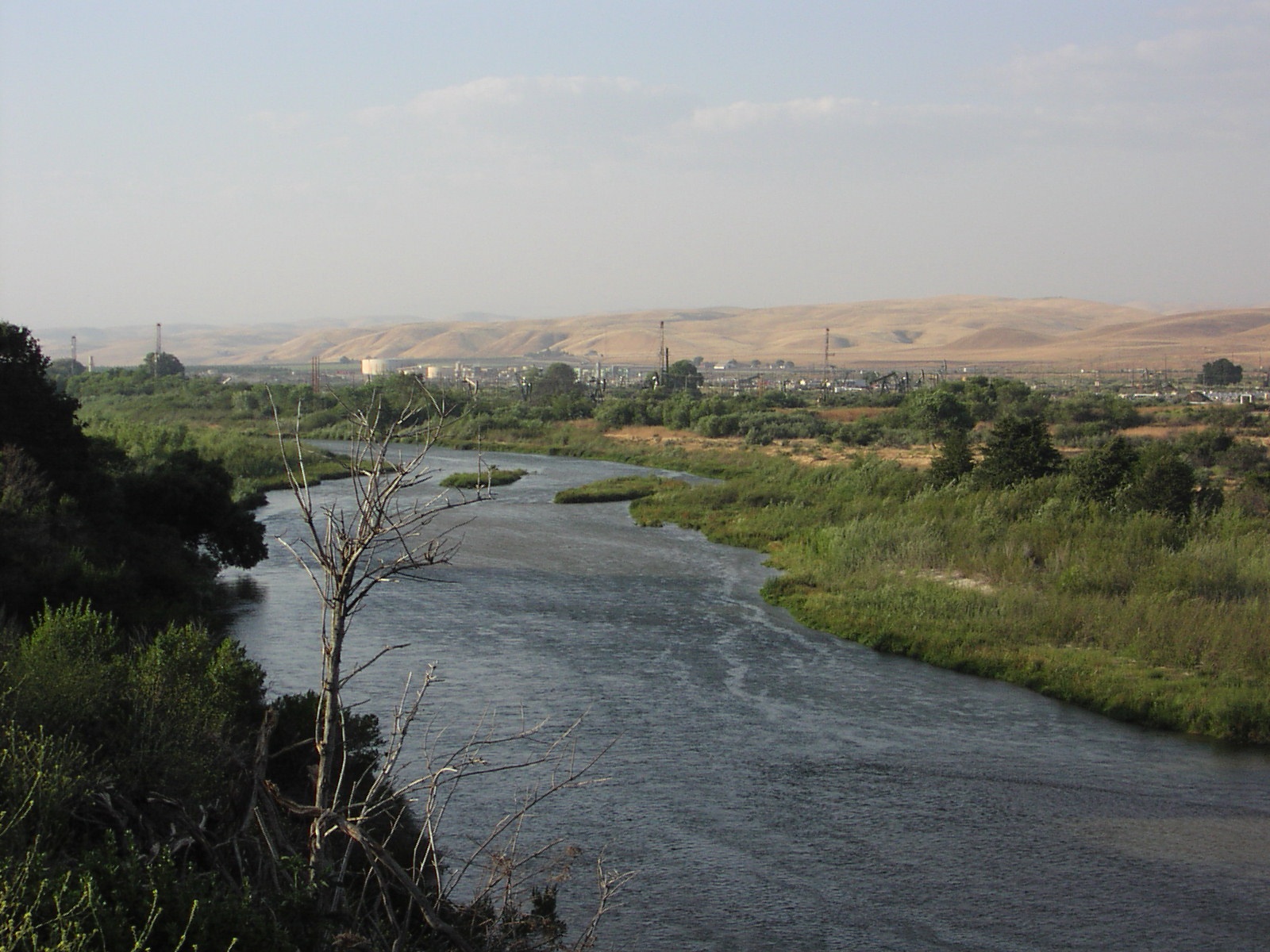
Featured Photo credit: Salinas River, San Ardo Oilfield View, Wikipedia.

2016-05-31T19:34:11-07:00August 4th, 2014|

Harlan Ranch Pushes Citrus Trees Due to No Water


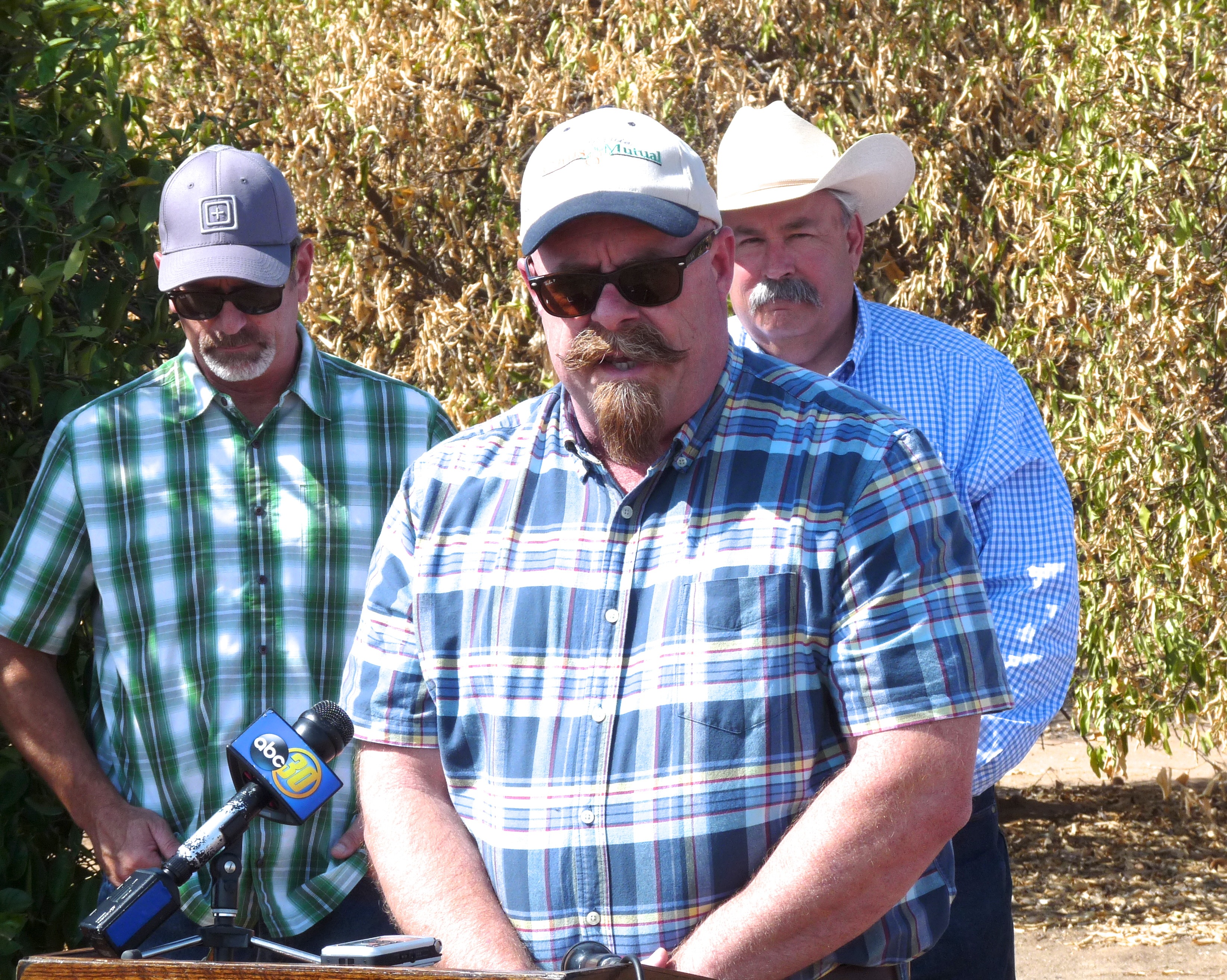
Califonia Citrus Mutual Holds Press Conference at Harlan Ranch to Show Catastrophe

Kevin Severns, a citrus grower and manager of Orange Cove – Sanger Citrus Association and chairman of California Citrus Mutual, spoke to the crowd gathered at third-generation, family-owned Harlan Ranch, Clovis, CA, TODAY, “This is what a zero allocation looks like, folks, this is what zero allocation looks like.”

“Harlan Ranch and Orange Cove-Sanger Citrus have a long history together. Next year we will receive our lowest-ever deliveries from Harlan Ranch simply because of the number of trees are being pushed. Why are they being pushed? No water.

“This is an inexcusable situation and something we are desperate to do something about. Thankfully, this doesn’t have to be the end of the story. We can do something about this, and that’s what this is all about–to bring attention to both the plight and what can be done about it,” said Severns.

“The packing house that I manage is about 25 miles, as the crow flies, from where I’m standing, and the fruit from this ranch is delivered there along with fruit from the other growers who also own the packing house. It’s a cooperative of family farmers. We employ about 100 people directly in our packing house, and another 200 to 250 in the crews that pick, harvest and prune,” Severns said.

2016-05-31T19:34:13-07:00July 30th, 2014|

Will Mandatory Water Conservation Regulation be Effective?

By Laurie Greene, Editor

As the agricultural sector does its part in coping with curtailed water allocations and conserving what remains, an emergency regulation to increase conservation practices for all Californians went into effect TODAY. The new mandatory water conservation regulation targets outdoor urban water use. In some areas of the state, 50 percent or more of daily water use is for lawns and outdoor landscaping. This regulation establishes the minimum level of activity that residents, businesses and water suppliers must meet as the drought deepens and will be in effect for 270 days unless extended or repealed.

The regulation, adopted by the State Water Board July 15, and approved by the Office of Administrative Law July 28, mandates minimum actions to conserve water supplies both for this year and into 2015. For more information please visit the Conservation Regulation Portal.

In “The Public Eye: Voluntary water conservation not effective, data show,” Matt Weiser and Phillip Reese confirm, “only mandatory conservation measures, backed by a threat of fines, seem to prompt consumers to save.”

They reported state water agencies used five percent less water (January-May 2014) under mandatory rules alone than the previous three-year average. Agencies under voluntary conservation measures increased water usage four percent over the same timeframe.

Most significantly, water agencies working under mandatory water conservation regulations used fourteen percent less water in May 2014; whereas, other agencies increased usage slightly. And, seventy-five percent of water districts north of the Grapevine reduced usage compared to previous years, while only thirty percent of those south showed reductions.

Now let’s put this into perspective, the authors say that, for instance, Santa Ana residents, each, consume 108 gallons of water daily versus Sacramento residents, who use 218 gallons each. Likewise, San Francisco residents increased their water consumption in May, but they use forty-nine gallons daily, and of course,they do not have substantial landscaping to nourish.

With this regulation, all Californians are expected to stop: washing down driveways and sidewalks; watering of outdoor landscapes that cause excess runoff; using a hose to wash a motor vehicle, unless the hose is fitted with a shut-off nozzle, and using potable water in a fountain or decorative water feature, unless the water is recirculated. The regulation makes an exception for health and safety circumstances.

Larger water suppliers are required to activate their Water Shortage Contingency Plan to a level where outdoor irrigation restrictions are mandatory. In communities where no water shortage contingency plan exists, the regulation requires that water suppliers either limit outdoor irrigation to twice a week or implement other comparable conservation actions. Finally, large urban water suppliers must report water use on a monthly basis to track progress beginning Aug. 15.

Local agencies could ask courts to fine water users up to $500 a day for failure to implement the conservation requirements of the regulation, in addition to their existing authorities and processes.

In addition, Governor Brown has called on all Californians to reduce their water use by 20 percent and prevent water waste and has signed a bill that bars state homeowners associations and common interest developments, such as condominiums, from fining residents for drought-respectful brown lawns. As yet, all other homeowners are not protected.

Visit SaveOurH2O.org to find out how everyone can do their part; Drought.CA.Gov to learn more about how California is dealing with the effects of the drought, and Saveourh2o.org/report-water-waste to report state agency water waste.

2016-05-31T19:34:13-07:00July 29th, 2014|

California’s Malibu Coast winemakers secure AVA status

Source: Louis Villard in San Francisco

The Malibu coastline outside Los Angeles has become California’s newest American Viticultural Area (AVA), which winemakers hope will raise the region’s profile.

Officially named Malibu Coast AVA, the sub-region will stretch northbound along the Pacific Coast Highway for approximately 46 miles and inland to the Santa Monica Mountains for about eight miles.

Malibu currently has 198 acres of vines in production and over 50 grape growers and wineries.

Elliot Dolin, proprietor of Dolin Malibu Estate Vineyards, helped initiate the classification process and was delighted to see it approved.

‘In Malibu we’ve proven we can produce high-quality, award-winning wines,’ Dolin told Decanter.com. ‘With the AVA designation, we hope it will inspire a curiosity among consumers to explore our wines, and a commitment from producers to continue to improve.’

Despite the low profile until now, the first documented vineyard in the Malibu area was planted in the 1820s, which is venerable for California. The first modern operation, The Malibu Vineyard, was planted in 1985 with red Bordeaux varieties.

Malibu Coast joins two established AVAs in Los Angeles County: Malibu-Newton Canyon, which became a region in 1996, and the more recent Saddle Rock-Malibu, which was classified in 2006.

Malibu Coast elevations range from sea level to 3,111 feet. During the summer, days can be hot and sunny but this new AVA will benefit from a large diurnal shift with very cool nights.

Malibu is regularly in the news for autumn wildfires and a section of the AVA proposal suggested that planting vineyards could provide natural barriers against future fires, which could be beneficial for drought stricken California.

Currently a large variety of well-known international wine grapes are planted. Of those, Dolin believes ‘Chardonnay in the cooler-climate areas is of a great quality and the higher elevation vineyards do very well with Bordeaux and Rhone varieties’.

A second AVA was also established alongside Malibu Coast for the Upper Hiwassee Highlands in Georgia. The state’s first official AVA covers 690-square miles in Cherokee and Clay Counties, North Carolina, and Towns, and Fannin Counties.


2016-05-31T19:34:13-07:00July 29th, 2014|
Go to Top