University of California, Division of Agricultural and Natural Resources

Pyrethroids Under Review

EPA Reviewing Pyrethroids

Ag Industry Urged to Comment

By Patrick Cavanaugh, Farm News Director

The pyrethroid insecticide class is in review for ecological risk assessment by the Environmental Protection Agency. John Cummings, Registration and Regulatory Affairs Manager at chemical company FMC believes that the assessment could have a large impact on producers.

Agricultural leaders have urged all to comment on the need to keep this chemistry available.  Please share your thoughts by clicking here.

“At FMC, we’re very concerned with the content of that risk assessment that they’ve identified that there’s high risk concerns to certain aquatic organisms, not necessarily fish or anything like that, but small aquatic organisms,” Cummings said. “Our concern, as a company who manufactures these pyrethroids, which are used in California, is that the EPA has not used the best science that’s available. They’ve done a very high level simple cursory risk assessment that has identified these concerns.”

More than 3,500 registered insecticides contain a pyrethroid. Many pyrethroids are household products and are not limited to agricultural usage.

“Our hope, as a pyrethroid company, is that EPA will consider better data which FMC and our industry consortium, the Pyrethroid Working Group, are developing to incorporate into this risk assessment. We need the EPA to look at the real world of how these products are used. With that, that risk assessment should look much better and remove any of these risk concerns that EPA currently has,” he said.

There have been other actions conducted by the EPA around the use of the best available data and the best science in risk assessment. These kind of precedents will impact production agriculture in the U.S. as well as California.

“EPA should be using the best science to make the right regulatory decisions while protecting the environment,” Cummings said. “It is very important, and I think it’s important, too, that EPA understand the implications of taking a conservative approach and making regulatory decisions that may impact production. I think EPA needs to understand how important it is to consider the benefit of production agriculture in feeding the world.”

It is important to keep many pest control products available to prevent the overuse of one product. Pesticide resistance is a growing problem, and it is essential that producers are able to keep all of their options open.

“Pyrethroids are a very important element of integrated pest management, as well as resistance management. Growers today are facing very complex insect control problems,” Cummings said.

“It’s necessary to have many tools in the toolbox to control insects. We have multiple classes of chemistry, but based on regulatory decisions, the EPA could potentially remove some of these important tools, which puts more pressure on other tools that remain in the toolbox, and insects may become resistant to many of these tools,” Cummings explained.

“Pyrethroids are a critical broad spectrum insecticide that are very affordable and control a lot of different insects that are economically important,” Cummings said.

Bob Klein, the manager of the Pistachio Research Board, agrees that pyrethroids are essential to pest management.

“The use of pyrethroids goes hand-in-hand with the use of soft chemicals like the growth regulators, or some of the neonicotinoids, or some of the other new chemistries we have,” Klein said.

“It guards against resistance development in those other chemicals as well. The inclusion of pyrethroids by the University of California, and many other Integrated Pest Management manuals, shows that pyrethroids are an important part of any IPM program. IPM programs are the way that people control pests in their orchards,” Klein said.

The risk assessment is currently open for comment and will remain open until March 31st.

Comment: Here


2021-05-12T11:05:43-07:00January 26th, 2017|

Farm Advisor Culumber is in Awe

Catherine Culumber is Impressed by Big Production

By Patrick Cavanaugh, Farm News Director

Catherine Culumber is a UC Cooperative Extension Orchard Crops Farm Advisor in Fresno County. She has been on the job since June 30, and we wanted to catch up with her since she’s gotten her feet on the ground.

catherine_culumber

Catherine Culumber, UC Cooperative Extension Farm Advisor, Fresno County.

She came to the position with a Masters in Plant Science and a PhD in Soil Science.

“I’m so happy to be here, and it’s been great to get to know the network of people working in the University of California Cooperative Extension.  There is endless amounts of resources and wealth of knowledge that I feel really fortunate to have.”

She is working with almond, walnut and pistachio growers, with the majority of her calls from almond producers.

Culumber was surprised with the vastness of Fresno County and all the production here. “My PhD research was in orchard systems at Utah State University, and it didn’t nearly prepare me for the infinite acreage that I saw upon arriving here,” she said.

She said that she has met some very innovative growers, and they all seem to be doing the best they can for the family farm.

“I think that farmers are very adaptable, and I can see that in recent years with the decrease in water availability, most people have adapted and gone to different micro-irrigation systems to increase their water use efficiency,” Culumber said.  “The farmers are working hard to not only be sustainable, but they’re smart business people as well.”

2016-12-27T12:38:59-08:00December 27th, 2016|

Unprecedented CAPCA Conference Attendance!

Agriculture Needs a Hero! Welcome to the Annual CAPCA Conference.


In an exclusive interview at the 42nd Annual California Association of Pest Control Advisers (CAPCA) Conference & Agri-Expo TODAY in Anaheim, CAPCA CEO and President, Ruthann Anderson, shared, “We have had an unprecedented response here at CAPCA.”

CAPCA CONFERENCE 2016 audience

Ruthann Anderson, CAPCA CEO and President

“Registrations are at an all-time high,” she continued. “We’ve actually sold out the entire show as well as registrations with 1600 attendees. There were just a handful of walkups that we unfortunately just couldn’t accommodate today. We are excited and looking forward to continuing to have a high professional continuing education program as well as an exhibit hall here today.”

“This year’s theme is ‘Fighting the Fear, Feeding the Nation,’ said Anderson, “so we’ll have Captain CAPCA as well as Doctor Foe here this morning.”

Click here to meet Captain CAPCA and Doctor Foe on this CAPCA ‘NEWS’ video!


Anderson reflected, “You know for us, CAPCA really represents the Pest Control Advisors (PCAs) for production ag and turf and ornamental. As a requirement for their continuing education, they need 40 hours in order to renew [their certification]. For us, bringing together continuing education as well as networking is so valuable for them as they move into the new year.”


Some “Top Gun” people speaking this year, according to Anderson, “are obviously some of our main sponsors. Bayer CropScience and FMC Corporation are both doing high-level presentations. We also have Kern County agricultural commissioner Ruben Arroyo talking about the new proposed regulations for buffer zones around schools, so that’s going to be a great conversation starter for all of our members.”


“We appreciate all of the support we receive,” Anderson stated. “It’s so valuable for us. We exist because of volunteers and we exist because of our membership. We are grateful for all of them.”


The California Association of Pest Control Advisers (CAPCA) represents more than 75% of the nearly 4,000 California EPA licensed pest control advisers (PCAs) that provide pest management consultation for the production of food, fiber and ornamental industries of this state.

CAPCA is dedicated to the professional development and enhancement of our member’s education and stewardship, which includes legislative, regulatory, continuing education and public outreach activities.

CAPCA membership covers a broad spectrum of the industry including agricultural consulting firms, U.C. Cooperative Extension Service, city, county and state municipalities, public agencies, privately employed, forensic pest management firms, biological control suppliers, distributors, dealers of farm supplies, seed companies, laboratories, farming companies and manufacturers of pest management products.

2021-05-12T11:05:45-07:00October 17th, 2016|

Initial Walnut Irrigation Can be Delayed

Walnut Irrigation Research Update

By Brian German, Associate Broadcaster


First springtime walnut irrigation can be delayed, according to a UC Cooperative Extension team in Tehama County working on some fascinating research regarding irrigation practices. Allan Fulton is an Irrigation and Water Resource Advisor who covers Tehama, Colusa, Shasta and Glenn counties. “We actually just finished one of our irrigation experiment harvests this weekend. It was looking at early season water management decisions, basically deciding when to begin the irrigation season,” Fulton said.

allan_fulton

Allan Fulton, UC Cooperative Extension Irrigation Specialist

Growers typically begin irrigating their walnuts sometime between late April and early May. In order to be as thorough as possible in their experiment, Fulton and his team have been pushing the limits beyond what most growers would ever consider. “We had some treatments that got no irrigation until almost the end of June,” Fulton explained.

Now in its third year, the research experiment is generating information that will provide a variety of benefits. “The whole motivation is to avoid possible injury to the trees from irrigating too much, too early, from lack of aeration and damage to the root system,” Fulton said. Delayed irrigation, while having no impact on yield or nut size, can also provide a bit of water savings. “We’re trying to look for the sweet spot,” with less intensive early season irrigation in favor of root health, tree health and disease prevention.

California walnut orchard, walnut irrigationThe research is being conducted in the northern Sacramento Valley primarily using the Chandler variety of walnut trees. Fulton has spent some time working in the San Joaquin Valley as well and understands different weather conditions can be a significant factor when applying their findings to other regions. “Our spring rainfall is quite a bit different than other walnut growing areas. Usually we’ve got an added source of water that sometimes you might not have in the southern San Joaquin Valley,” Fulton noted. From his experience, he suggested growers could usually wait until “the first week of May in most years, before really getting pressed for irrigation.”

The location of the research exposes groves to the opportunity to receive “more rain during the dormant season with a better chance at a deeper profile in moisture before you ever break dormancy,” Fulton said. More regional rainfall is possible in the spring as well, while the trees are growing.

The information gathered so far indicates growers should not jump the gun on springtime irrigation, particularly if there is still any kind of standing water issues. “The data is starting to suggest that you’ve got some room. You don’t have to irrigate at the first sign of heat; you can use a little bit of the stored moisture coming out of winter,” Fulton said. He also noted “It’s a lot more difficult to recover from a damaged tree with a sick roots system,” than it is to recover from a lack of early season irrigation.

2021-05-12T11:05:46-07:00October 11th, 2016|

ACP Spread in Bakersfield Area, Ingenious Research Proceeds

Ingenious Research Effort to Fight ACP Spread with Natural Predators


By Joanne Lui, Associate Editor


beth_grafton-cardwell

Beth Grafton-Cardwell, Cooperative Extension specialist, University of California, Riverside Department of Entomology

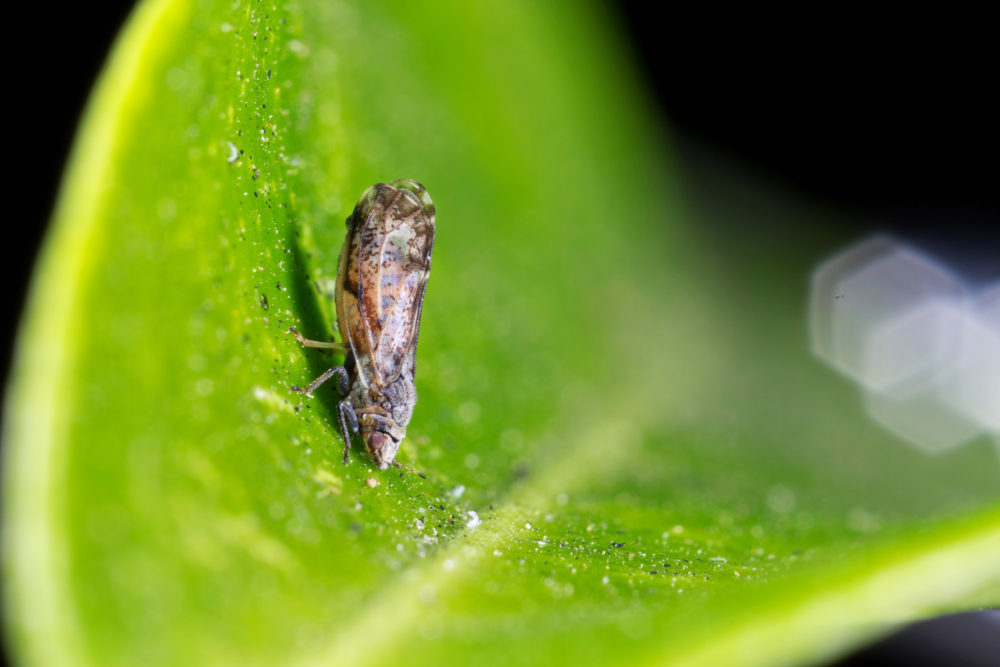
As we have reported in-depth before on California Ag Today, the Asian Citrus Psyllid (ACP) is a tiny, mottled brown insect that poses an ever-increasing threat to the state’s robust citrus industry, as well as to residential citrus trees. The pest can spread a bacterium known as Huanglongbing (HLP) that is fatal to citrus trees. The disease has nearly shut down Florida’s citrus industry.

Beth Grafton-Cardwell, cooperative extension specialist in integrated pest management, UC Riverside Department of Entomology, explained the significance of the recent ACP spread to Bakersfield. “That is really problematic because it’s mostly in the urban areas. It’s very difficult to find, to control and to stop that spread. It’s going to move out from that region into the local citrus orchards, and so there are lots of meetings and discussions right now to mobilize growers to get treatments to help protect their citrus orchards against the psyllid.”

#CitrusMatters

#CitrusMatters

To contain the ACP problem, Grafton-Cardwell stated, “There are traps everywhere, but the traps are not terribly efficient. So, we really need to carefully examine groves and flush [new leaf growth] for the nymph form,” she said.

According to Agriculture and Natural Resources, University of California’s Statewide Integrated Pest Management Program:

Adults typically live one to two months. Females lay tiny yellow-orange almond-shaped eggs in the folds of the newly developing “feather flush” leaves of citrus. Each female can lay several hundred eggs during her lifespan.

ACP UC IPM

ACP (Source: ACP UC IPM)

The eggs hatch into nymphs that are wingless, flattened, yellow or orange to brownish, and 1/100 to 1/14 inch long. Nymphs molt four times, increasing in size with each nymphal stage (instar), before maturing into adult psyllids. The nymphs can feed only on soft, young leaf tissue and are found on immature leaves and stems of flush growth on citrus.

Save Our CitrusThe nymphs remove sap from plant tissue when they feed and excrete a large quantity of sugary liquid (honeydew). Each nymph also produces a waxy tubule from its rear end to help clear the sugary waste product away from its body. The tubule’s shape—a curly tube with a bulb at the end—is unique to the Asian citrus psyllid and can be used to identify the insect.

Grafton-Cardwell and other experts are concerned because once the ACP becomes established in urban areas, it is difficult to eradicate. “It starts spreading into the commercial citrus, and we’re off and running,” she commented.

bayer-save-our-citrusIn a ingenious effort to control the spread of the psyllid, trained teams of entomologists have imported Tamarixia radiata, a tiny wasp that naturally preys on ACP, from Pakistan to research and release in California. A cooperative effort of the University of California Riverside, Citrus Research Board, United States Department of Agriculture and California Department of Food and Agriculture, researchers are also exploring the effectiveness of another beneficial insect called Diaphorencyrtus aligarhensis to assist Tamarixia with control of the Asian citrus psyllid. To see where Tamarixia and Diaphorencyrtus have been released, visit this University of California’s website map at, “Distribution of ACP, HLB and Parasites in California,” and turn on the parasite layers.
Grafton-Cardwell said, “They’re going to inundate that area,” with natural ACP predators, “so hopefully that will push back a little bit.”

2021-05-12T11:05:46-07:00October 10th, 2016|

Food Tank’s Farm Tank Summit in Sacramento Reveals Knowledge Gap

Food Tank’s 1st Annual Farm Tank Summit in Sacramento Reveals Gap in Agricultural Knowledge

Good Starting Point for Constructive Conversation

By Patrick Cavanaugh, Farm News Director


Several hundred food activists attended the First Annual Farm Tank Summit in Sacramento last week, hosted by Food Tank, in partnership with the Visit SacramentoCalifornia Farm-to-Fork Program, and University of California, DavisDanielle Nierenberg, co-founder and president of Food Tank noted having the event in Sacramento enabled West Coast agricultural experts to contribute to the discussion.

“We were really excited to feature California agriculture, because it’s such a huge part of the American economy,” said Nierenberg. “Californians are feeding the world, and we need to really highlight what these amazing producers are doing. When the Farm to Fork program of the Visitors Bureau reached out to us, we were thrilled to partner with such an amazing group of people, as well as UC Davis folks and the Center for Land-Based Learning,” she said.

Food Tank, an abbreviation of Food Think Tank, is a 501(c)3 non profit organization focused on building a global community for safe, healthy, nourished eaters that values education, inspiration and change.

According to their website:

Food Tank is for the 7 billion people who have to eat every day. We will offer solutions and environmentally sustainable ways of alleviating hunger, obesity, and poverty by creating a network of connections and information for all of us to consume and share. Food Tank is for farmers and producers, policy makers and government leaders, researchers and scientists, academics and journalists, and the funding and donor communities to collaborate on providing sustainable solutions for our most pressing environmental and social problems.

The organization begins with the premise, “Our food system is broken. Some people don’t have enough food, while others are eating too much. There’s only one way to fix this problem—and it starts with you and me.”

Food Tank, Farm Tank SummitWith the goal of feeding the hungry world of nine billion people in a few years, “Food Tank highlights hope and success in agriculture. We feature innovative ideas that are already working on the ground, in cities, in kitchens, in fields and in laboratories. These innovations need more attention, more research, and ultimately more funding to be replicated and scaled-up. And that is where we need you. We all need to work together to find solutions that nourish ourselves and protect the planet.”

Nierenberg clarified, “I don’t necessarily think we need to scale up food production; I think we need to scale out different innovations that are working. We’re wasting about 1.3 billion tons of food annually. That’s enough to feed everyone who’s hungry today, so we don’t necessarily need to ramp up production. We need to have better distribution, and processing practices that can help get food to people who need it the most,” she said.

“We need the political will behind those things,” she continued, “to build the infrastructure necessary for farmers to have better processing facilities, to have better storage facilities, to have better roads—if we’re talking about the developing world. I don’t necessarily think that we need to invest in producing more calories; we need better calories. We need more nutrient-dense food, and we need less starchy staple crops,” she noted.


Editor’s Note: Activists overtook the stage during the event, and the conversation was notably challenging for panelists. In an effort to Cultivate Common Ground to link consumers with the farmers who grow their nutritious food—and vice versa—California Ag Today has chosen to share some interesting statements from presenters and attendees to illustrate, perhaps, where the discussion could begin:

Regarding farms and processing facilities, big is bad, and small is good.

Regarding food quality, organic produce is healthy and safe, while conventional produce is unsafe and full of pesticides.

One of many moderators from the Bay Area, Twilight Greenaway, managing editor of Civil Eats mistakenly introduced Oscar Villegas, Yolo County Supervisor, District 1, as being from Sacramento County. When Villegas corrected her, Greenaway said, “I’m showing my Central Valley and Bay Area eliteness.”

Eric Holt-Giménez, executive director of Food First, noted that farmworkers are invisible in California agriculture. “There is racism in the fields. We need more worker unions and we need farmworkers to be paid much more than they are now and the farmworkers should be getting pensions from the farmer.”

Michael Dimock, president, Roots of Change, said to the audience, “You guys are doing a great job. Keep doing it. Keep working with your NGOs. They know policy. In turn, they can work with the legislators.”

“You need to be in the capital, pursuading the legislatures to support their bills. They want to be reelected, and if they don’t do what we ask them to do, they are scared.”

“In the meantime, we have to be nice to farmers because farmers are scared. We are putting a lot of pressure on them; They are in a vice. Our movement has supported bills AB 1066 – the overtime bill, minimum wage increases, organic farming legislation,  and workers’ rights.”

Kerryn Gerety, founder and CEO, Lazoka, referred to John Purcell, vegetables global R&D Lead, Hawaii business lead, vice president and distinguished fellow, Monsanto Company, and said, “There is an elephant in the room, the Monsanto rep. Monsanto has all the technology patents. We all want transparency and we need you to be more transparent.”

Continuing, “Why doesn’t Monsanto open-source some of your patents and release the intellectual property so others can take advantage of your teçhnology?”

Purcell answered, “We are an Ag company. Why would our company invest a million dollars on technology and let everyone have it? It is our investment and we need to have the opportunity for a return on that investment.

During a panel discussion of food companies including Blue Apron, Almond Board of California, and Bayer CropScience, that covered organics, Jennifer Maloney, food chain sustainability manager, Bayer CropScience, said, “We do support  the organic industry, because we have biological products that work in organic as well as conventional [farming].”

Maloney also talked about agricultural Integrated Pest Management (IPM) technology such as smart sprayers that spray only targeted areas.

Matt Wadiak, founder & COO, Blue Apron, responded, “It’s not about smart sprayers; it’s about biological systems in the field and trying to lean on them instead of spraying.”

Maloney replied, “Yes, that is exactly what IPM is.”

Keith Knopf, COO, Raley’s Family of Fine Stores, commented on the organic question, “the way we see organic versus inorganic—that is not the discussion for us. What’s more important to us is, is it the candy bar or the apple?”


This two-day event featured more than 35 speakers from the food and agriculture field, interactive panels moderated by top food journalists, networking, and delicious food, followed by a day of hands-on activities and opportunities for attendees. This was the second in a series of three 2016 Summits, following the Washington, D.C. Food Tank Summit that completely sold out and drew in more than 30,100 livestream viewers. The third Summit will be held in Chicago on November 16, 2016.

2021-05-12T11:05:46-07:00September 27th, 2016|

Eighteen New California Farm Academy Graduates!

Eighteen New Farmers Graduate from California Farm Academy


By Patrick Cavanaugh, Farm News Director


The California Farm Academy, a part-time, seven-month, beginning farmer training program run by the Land-Based Learning, graduated 18 new farmers on Sunday, September 18, 2016.


With more than 250 hours of classroom and field training behind them, these enterprising graduates were honored by notables such as Karen Ross, secretary, California Department of Food and Agriculture (CDFA); Craig McNamara, president and owner of Sierra Orchards, as well as president of the California State Board of Food and Agriculture; Sri Sethuratnam, director, California Farm Academy (CFA); and Mary Kimball, executive director, Center for Land-Based Learning, based in Winters California.

new farmers graduate from California Farm Academy beginning farmer training program run by the Land-Based Learning.

Eighteen new farmers graduated from California Farm Academy’s beginning farmer training program run by the Center for Land-Based Learning.


“The impetus of our program,” said Christine McMorrow, director of development for Land-Based Learning, “is the need for more farmers as the current ones age out. According to the USDA, over 700,000 new farmers will be needed in the next 20 years to replace those who retire.


CFA teachers, farmers, academic faculty and staff, and agricultural, natural resource and business professionals, teach CFA students basic production agricultural practices; crop planning; soil science; pest management; organic agriculture; irrigation and water management; marketing; ecology and conservation; obtaining loans, insurance and permits; farm financials; human resource management; risk management; farm safety; regulatory compliance and problem-solving.


McMorrow stated, “These folks have been with us since February, following a rigorous application process. A lot of these folks either have land they have dreamed of farming but did not know how to put it into production. Some of them come from farming families, but they wanted to get involved in the family business on their own. They may have been in a different career and now want to do something new or different. Perhaps they haven’t studied agriculture or they have not seen much agriculture other than what their family does, so this is an opportunity for them to learn and to explore a new business idea.


“We only take people who are serious about production agriculture. This is not a program for somebody who thinks, ‘I’ve got an acre in my backyard and I really want to grow something.’ While that’s a cool thing to do, the academy is not for those people.”


“Our graduating farmers, who range in age from their late 20s to early 50s, each wrote a business plan and presented it to folks within the agriculture industry,” said McMorrow. “They also planted some of their own crops on a farm in Winters.


McMorrow elaborated, “These new farmers have been able to create their own networks, having made contact with more than 40 different folks within the agricultural industry throughout the time they spent with us. These networks include local farmers around Yolo County, Solano County, Sacramento County, and other regions, and will help our graduates realize their dreams.”


California Farm Academy (CFA) We grow farmers

“This is the fifth class that has graduated,” explained McMorrow, “and mind you, these folks are doing lots of different things. Some of them already have their own land, some are going to work for someone who has land, some will work other farmers, and some will go into a food-related business.”


“Still others will stay and lease small plots of land from us,” McMorrow commented, “to start their own farming business. Beginning farmers face huge barriers to getting started, the biggest of which is access to land, capital and infrastructure. So, to get their farming businesses started, California Farm Academy alumni are eligible to lease land at sites in West Sacramento, Davis and Winters at a very low cost.”


The Center for Land-Based Learning exists to cultivate opportunity.

For the land.

For youth.

For the environment.

For business.

For the economy.

For the future of agriculture.
2021-05-12T11:00:49-07:00September 19th, 2016|

Spider Mites Gave Almond Industry Reprieve in 2016

Spider Mites Showed up Late This Season

By Lauren Dutra, Associate Editor


This year, near-perennial spider mite pressure on almonds was delayed until hull-split. “That’s the big story this year,” said David Haviland, UC Cooperative Extension entomology farm advisor, Kern County. “The orchards of people who did early management programs well their fields looked great until hull-split. And the orchards of people who did not do anything well their fields looked great at hull-split as well—when the mites showed up,” he said.

Almond hull-split

Almond hull-split

“And a good population of them arrived,” Haviland continued.  “People sprayed, but now we’re at the beginning of September, and everyone I have talked to in the Southern San Joaquin Valley have reported the arrival of the sixspotted thrip, a beneficial spider mite predator. The thrips came in fierce, cleaning out anything that didn’t get controlled prior to Nonpareil harvest,” said Haviland.

“We are on the tail end of the season in Kern County, and mites ought to be going away in a couple of weeks,” he said.

almond-tree-shaking-harvesting

Haviland also explained the appearance of navel orangeworm this year is about average. “As far as navel orangeworm goes, things are looking good. They are certainly out there. They’re certainly in some nuts, but trap captures have been about normal, so—nothing really alarming in terms of numbers,” Haviland noted. “I haven’t heard of anybody really getting hit hard this year, other than some orchard edges here and there.”

“Growers seem to be happy. We are about halfway through the harvest, hoping the second half of almond-shaking goes just as well as the first,” said Haviland.

2021-05-12T11:02:58-07:00September 9th, 2016|

Weedy Rice Challenges Some Rice Growers

Weedy Rice Crops Ups Again in Northern Calif. Rice Fields


By Patrick Cavanaugh, Farm News Director


In Northern California, rice growers typically prepare to start harvesting in mid-September, but some growers have endured a lot of weed pressure from weedy rice (Oryza), also known as red rice, according to Whitney Brim-DeForest, a UC Cooperative Extension Rice Farm Advisor in Sutter, Yuba, Placer, and Sacramento Counties who focuses particularly on weeds. Red rice is actually the same species as cultivated rice, but it produces far fewer grains per plant and is therefore considered a pest.


Brim-DeForest said weedy rice is common in the Southeast, but not in California. “We’ve been pretty lucky in California in that we actually don’t have a big problem with it,” she said. “It’s a big problem down in the southern U.S. and they have been dealing with it in for a long time; but we have had it crop up. I think the last time was in 2006, and we managed to deal with it. It somehow popped up again in the last couple of years, so we’re dealing with it again.”


How weedy rice reached California is apparently a mystery. “We don’t really know the source of it, to be honest,” said Brim-DeForest. “We’re investigating that through research, hopefully starting this fall,” she said.


Brim-DeForest said growers have few choices to control weedy rice. “Growers that have it will either have to rogue¹ it out, pull it out by hand or sacrifice that field and spray it with Roundup,” she said, “which would kill the rice as well. And, if the rice grower doesn’t know he has weedy rice in the field, it could hurt him later at the rice mill,” explained Brim-DeForest.


“Once harvested, the rice goes to the mill. If a certain amount of red rice bran (the outer layer surrounding the rice grain) is discovered, the mill will not accept it and could reject the entire load,” she said.


¹rogue (verb) to remove inferior or unwanted plants

2021-05-12T11:05:48-07:00September 2nd, 2016|

CULTIVATING COMMON GROUND: Economic Analysis of Drought on California Agriculture

Editor’s note: We thank Aubrey Bettencourt for her contribution to California Ag Today’s CULTIVATING COMMON GROUND commenting on the report, “Economic Analysis of the 2016 Drought for California Agriculture,” released this week. Lead UC Davis author Josué Medellín-Azuara’s response can be read below. 


By Aubrey Bettencourt, executive director, California Water Alliance (CalWA)


Josué Medellín-Azuara, Duncan MacEwan, Richard E. Howitt, Daniel A. Sumner and Jay R. Lund of the UC Davis Center for Watershed Sciences, ERA Economics and the UC Agricultural Issues Center reported their views on the economic impact of California’s continuing drought on agriculture this week. The study, “Economic Analysis of the 2016 Drought For California Agriculture,” proved to be uncommonly riddled with errors, questionable metrics and inaccuracies; it’s a continuation of a disturbing recent trend.

CA Water Alliance logo


The authors claim that about 78,800 acres of land might be idled due to the drought, but a quick Google search shows a single water district that had more than 200,000 acres of fallowed land in 2016. There are more than a hundred other water districts throughout the state, and most are reporting idled acreage.


In another irrigation district in Yuba County, more than 100 agricultural users have been cut off entirely, leaving their nearly-mature crops and fruit and nut trees without water.   [North Yuba Water District (NYWD)]


This year the federal and state water projects announced they would provide agriculture with 55% of their water. Two months ago, they reduced the estimate to 5% south of the Delta, and they are struggling to even deliver that amount.


Across the state, water prices have increased dramatically, whether pumped from the ground or bought on the faltering water-exchange market. Water that costs less than $250 per acre foot in 2012 now costs up to $750 or more.


It doesn’t take a doctoral or economic degree to understand that when the price of water goes up, the cost to produce food also goes up. Farmers may be getting more money for the produce they grow, but they are watching their bottom line shrink because it costs more to grow it. Even water from their wells isn’t free; pumping takes energy, and energy costs money too.


Adding to rapidly increasing costs are the new minimum wage, capped work hours, and hundreds of regulatory mandates from the 80+ local, state, and federal agencies that oversee every aspect of California farming and bury farmers in paperwork and red tape. Compliance takes time away from growing food, and it costs money.


Take a look at rice farmers. Growing rice today is a losing proposition. After the labor, cost of rice plants, fuel, fertilizing, care, harvesting, drying and milling, growers pay substantially more to grow rice than they can charge for their crop. Many have converted rice paddies to other uses, and some sell their water or take money from federal agencies and conservation groups to create wildlife habitat in order to simply stay afloat. Some are selling off their land to developers, a lose-lose decision affecting everyone.


On main street, consumers are another group taking a second, alarmed look at their grocery, water and sewage bills. All are rising far faster than inflation. Whether you are talking about the price of fruit, bread and eggs or the cost of taking a shower, all have been increasing over the past five years because of the drought.


To really understand what’s happening, take a drive out of the city and into the countryside where your food is grown. Stop at a roadside produce stand or park your car and strike up a conversation with some ranchers and farmers in a small town cafe.


After you hear their stories, you may realize that almonds and pistachios are not as labor intensive as strawberries, tomatoes, cucumbers, grapes, beef, lamb or many others out of the nearly 450 crops grown in California. Some crops are thirstier than others, too. This doesn’t diminish the value of these fruits, nuts, vegetables, and proteins. The value of water is what it provides us: in this case, safe, local, and hopefully affordable food.


But commonsense interviews and case studies of actual operations — once the heart of any competent agricultural economic study — are virtually missing from the report’s statistical models built on university computers, research hypotheses and tables of statistics.


The drought has hurt California farmers, and it is hurting Californians wherever they live. Gross income may be up, but net profits are down, and the rate of decline hasn’t hit bottom yet. 


Aubrey Bettencourt is the executive director of the California Water Alliance (CalWA), a leading educational voice and authority on California water. CalWA advocates for the water needs of California families, cities, businesses, farmers and the environment.


Editor’s note: California Ag today thanks Josué Medellín-Azuara, senior researcher, UC Davis Center for Watershed Sciences, and lead author of “Economic Analysis of the 2016 Drought For California Agriculture,” published this week, for his response to several claims made by Aubrey Bettencourt (above).

UC Davis Center for Watershed Sciences
Josué Medellín-Azuara told California Ag Today, “I will not go over debating the comments which I very much welcome and respect, but I would like to provide some thoughts instead.”


1)  “Through remote sensing,” Medellín-Azuara said, “we estimated summer idle land in Westlands by the end of the irrigation season to have been 170K acres in 2011 and just above 270K acres in 2014,” based on NASA data. The difference can be explained by some drought effects and other conditions, according to Medellín-Azuara, “so idled land differences should be taken with a grain of salt. As a point of interest, most of the fallow land we estimated was on the Westside of the south San Joaquin Valley.”


2) In addition, Medellín-Azuara clarified, “My understanding is that there is a cost issue and a cutoff issue. We estimated about 150 TAF (Thousand Acre-Feet) of [water] shortage in the Sacramento Valley in our study. At current conditions for North Yuba Water District (NYWD) agriculture is no more than 3 TAF from my reading of the attached document. I am not saying the cutoffs are not hard for the more than a hundred users, but [I] also want to put numbers into perspective.”


3) “From what I’ve heard and read,” Medellín-Azuara stated, “the timing [of] more than quantity of the projected releases is unfortunate. One of the things we highly encourage in this and past reports is easing of low environmental impact water transfers among users.”
2021-05-12T11:05:48-07:00August 22nd, 2016|
Go to Top