Associations, Organizations, Educational and Research Institutions

WAPA Annual Meeting in Monterey

WAPA Annual Meeting Nears! June 25-26

The 2015 Western Agricultural Processors Association (WAPA) Annual Meeting is right around the corner! Beginning on Thursday, June 25, the meeting will kick-off with a four-man scramble golf tournament at Black Horse Golf Club with the Associate Member and Annual Meeting reception to follow including special guest speakers.

The event will be held at the Monterey Plaza Hotel and Spa, 400 Cannery Row, Monterey CA.

The following day will include pertinent industry, regulatory and legislative updates including a FSMA Implementation Update provided by Kathy Gombas, Senior Advisor of the U.S. Food and Drug Administration, a California Water Update provided by Aubrey Bettencourt of the California Water Alliance and Gary Bardini of the Department of Water Resources and Curt Covington of the Federal Agriculture Mortgage Corporation will provide an economic outlook for the tree nut industry.

Associate members and sponsors will exhibit their services and products on:

Thursday, June 25, from 5:30-7 p.m., and

Friday, June 26, from 7:30-9 a.m. and 10:10-10:45 a.m.


Registration and payment for the WAPA Annual Meeting are due ASAP to:

Western Agricultural Processors Association

1785 N. Fine Avenue

Fresno, CA 93727

Tel: 559.455.9272
2016-05-31T19:28:13-07:00June 23rd, 2015|

Ag Leader Paul Martin Inducted into Sonoma County Farm Bureau Hall of Fame

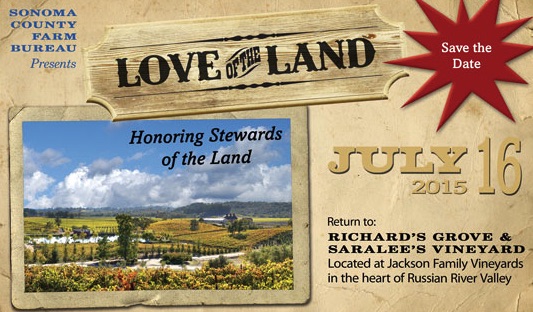
Paul Martin, a Petaluma rancher and agricultural leader who has dedicated his life to building bridges between farmers and regulatory agencies, will be honored at Sonoma County Farm Bureau’s “Love of the Land” celebration on July 16 at Richard’s Grove and Saralee’s Vineyard in Windsor, Calif.

Paul_Martin

Paul Martin (Sonoma County Farm Bureau)

Martin’s remarkable agricultural legacy has earned him a prominent place in Sonoma County Farm Bureau’s Hall of Fame. The annual award recognizes agricultural leaders who are a guiding force in preserving, protecting and propelling Sonoma County’s $4 billion farming industry. Martin joins legendary leaders in the Hall of Fame, like the late Saralee McClelland Kunde, who was the Saralee of Richard’s Grove and Saralee’s Vineyard; Gene Benedetti, who was founder of Clover Stornetta Farms; and Larry Bertolini, who was founder and president of Western Farm Center.

Martin is a former dairy rancher who had a second career as a representative for the dairy and agriculture industries. After selling his cows in the late 1990’s, Martin started working as field representative for Western United Dairymen, utilizing his knowledge of the dairy industry and his excellent communication skills to represent milk producers. After retiring from Western United Dairymen in 2012, he served a two-year stint as Gov. Jerry Brown’s Deputy Director in the Office of Business and Economic Development. Martin and his wife Jill have retired to their ranch in Two Rock.

Sangiacomo Family Photo

Sangiacomo Family Photo (Sonoma County Farm Bureau)

The Sonoma County Farm Bureau will also honor the Sangiacomo Family, a multi-generational Sonoma Valley family respected for their land stewardship, agriculture leadership and dedication to growing world-class grapes, as “Farm Family of the Year”. In addition, the Bureau will present the “Luther Burbank Conservation Award” to Harmony Farm Supply & Nursery in Sebastopol. The Farm Bureau refers to Harmony as, “It could easily be called the Institution of Organic & Sustainable Farming & Gardening, a revered center of learning that upholds an environmental ethic while helping growers produce crops the natural way.”

Harmony Farm Supply & Nursery (Sonoma County Farm Bureau)

Harmony

Love of the Land honors the stewards of the land and Sonoma County’s agricultural bounty. The event starts at 5 p.m. with a tasting of Sonoma County wine and food. A dinner featuring an array of Sonoma County grown products is at 7 p.m. The dinner will be followed by the awards presentation and live auction. The event is open to the public and anyone who wants to join in recognizing the stewards of Sonoma County’s working landscape.

Individual tickets are $65. Corporate sponsor tables for eight people are $1,250. General seating tables of eight are $700.

To make reservations, visit Sonoma County Farm Bureau or call 707-544-5575. Tickets are available until July 2 or until sold out.


2016-05-31T19:28:13-07:00June 21st, 2015|

BioConsortia Invents the Future

BioConsortia Plans New Ag Bio Products

By Patrick Cavanaugh, Associate Editor

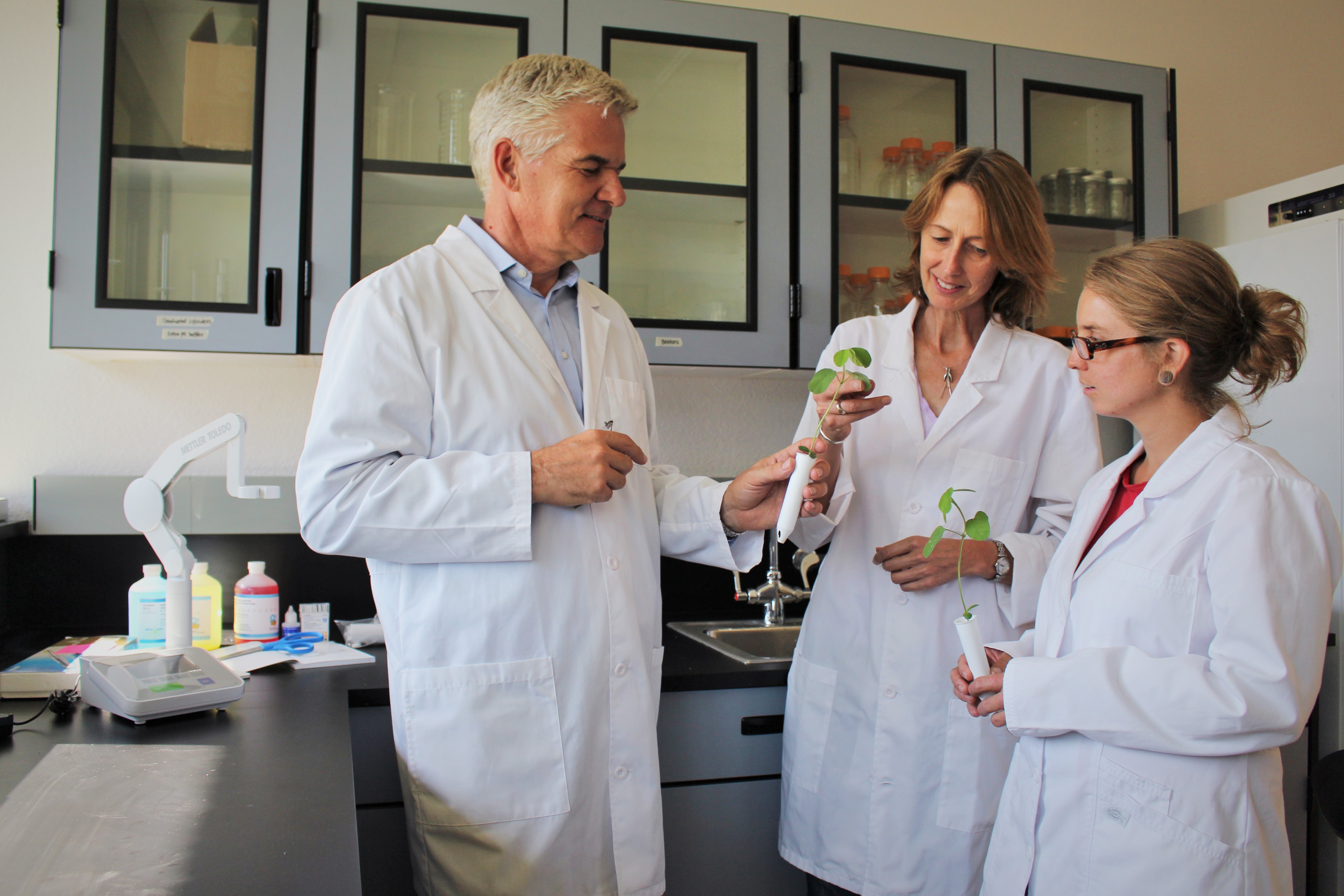
Marcus Meadows-Smith is with BioConsortia, a research and development biodiscovery company in Davis, Calif. He and his company have big plans to invent the future for Ag.

“The company was founded about 20 years ago in New Zealand and was funded by a U.S. private equity,” said Meadows-Smith. “We decided to globalize the technology, and I became the founding global CEO of the company as it was established in the U.S. about 1 year ago.”

The company in New Zealand is called BioDiscovery. For many years, it was a contract research company that was very successful in the microbial space, working with companies like Monsanto and Syngenta. Then Biodiscovery made a R&D breakthrough. “We have totally restructured the company so that the global headquarters and global R&D are now run out of the United States,” noted Meadows-Smith, “and the New Zealand company has become the subsidiary that handles complementary R&D functions.”

Meadows-Smith mentioned that UC Davis and surrounding areas such as West Sacramento are teaming with bioscience researchers. “It’s turning into a bit of a hub for microbial expertise with several of the big players. Obviously you’ve got UC Davis, which is always credited as being the number one U.S. agricultural university. I’ve heard that it is now the world’s best agricultural university, so it’s a great place to be.”BioConsortia Logo

“We’ve got an excellent team of scientists in Davis, and the historic team in New Zealand has a lot of experience. They’ve been working together now for about five years, so the R&D down there is really humming at a great pace,” said Meadows-Smith.

“We’ve been able to rapidly bring together a group of scientists in the U.S.,” said Meadows-Smith, “that have jelled. We have set up a series of experiments, and we’re putting discoveries together. It’s a very exciting time to be doing pure research in the lab.”

“The other very exciting progression for us is we have just planted our second year of field trials, having completed our first year of field trials in 2014–just after the company was established,” he said.

The company is biological- and microbial-based. “We are looking at teams of microbes to improve plant traits and increase plant yield . We are developing products for fertilizer-use efficiency, abiotic stress tolerance, and biotic stress,” said Meadows-Smith.

“Pests and disease control are important, as well as metabolite expression,” he continued. “We’ve identified teams of microbes that instruct or enable the plant to deposit more sugar. As you can imagine, this provides the double productivity benefit of increasing both yield per acre and sugar content per plant.”

“While getting the plant to have increased sugar deposited in its leaf structure is a good thing; but that is actually not our main focus,” Meadows-Smith said. “We look at all the crops we want to target and ask what are the biggest needs today?”

“Fertilizer, for example, is a significant cost for the grower, so fertilizer-use efficiency products, we believe, would experience a large demand,”  Meadows-Smith stated. “There are also concerns about fertilizer leaching into groundwater, so the more efficient you can make plant take up the fertilizer, the better,” he added. “And of course, living in California, we are acutely aware of the importance of drought, so we are working on that as well. We are hoping for a yield increase per acre for the grower in everything we do.”

“We are moving products down the pipeline as we speak,” he commented, “and, obviously, we want a large body of data to demonstrate to growers how to best use our products. We are looking for two years of good field trial results and then we’ll go through the registration process. So we are expecting to get our first product on the market by 2017.

“We are developing products that contain beneficial bacteria, beneficial fungi, and good plant colonizers,”  Meadows-Smith declared. “Some will colonize the root system, and some the outside of the plant. Still others, endophytes, that will actually grow through the plant tissue. Just as we humans have microbes in our guts to aid digestion, plants actually have beneficial microbes, bacteria and fungi growing within the plant tissue,” Meadows-Smith explained.

Meadows-Smith said BioConsortia’s revolutionary platform will take biologicals to the next level “by assembling teams of microbes that perform complementary functions; so while some microbes will enhance the root system, others will aid the root in nutrient uptake,” he said. “This will bring consistency and superior performance to the marketplace. It’s a very exciting time for the industry as a whole,” he said.

“We are looking to transform food production in a way that is sustainable, bringing benefits to the grower and feeding the world with nutritious, affordable food. That’s what we are in this industry for. These are very exciting times!” Meadows-Smith said.

Featured photo: Marcus Meadows-Smith, with Bio Consortia Scientists.

2016-05-31T19:28:13-07:00June 20th, 2015|

Westlands Water District Announces Westside Scholarship Recipients

Congratulations to the Westlands Water District Westside Scholarship Recipients!

Six outstanding high school seniors from communities on the Westside of the San Joaquin Valley have been selected to receive scholarships offered by the Westlands Water District. The 2015 scholarships are offered by Westlands under a program to recognize and reward exceptional academic achievement and leadership by graduate seniors at area high schools.

The recipients of the 2015 scholarships are:

Aneet Hundal, a senior at Coalinga High School. Ms. Hundal is an honors student who plans on attending the University of California, Irvine to pursue a degree in nursing. She was actively involved in the Academic Decathlon, Mock Trial, Link Crew, California Scholarship Federation and tennis and basketball. Additionally, she has received a number of awards including the Superintendent’s Honor Roll, Lab Biology II Star of the Month and Wendy’s High School Heisman.

Phillip Augusto, a senior at Lemoore High School. Mr. Augusto plans to attend Cal Poly, San Luis Obispo to pursue a degree in BioResource and Agricultural Engineering. He is an honors student who has received awards from the Future Farmers of America – Scholar Awards, State Degree, Chapter Degree and Greenhand Degree. Additionally, he has been a Robotics Team finalist at West Hills Collect Vex Robotics Competition and Student of the Month for the Lemoore High School Math Department.

Emily Parra, a senior at Tranquillity High School. Ms. Parra plans to attend Stanford University to pursue a degree in Economics/Education. She is an honors student who has been the president of the California Scholarship Federation, Associated Student Body Secretary and World Travel Club Vice President, Mathematician of the Year and Student of the Month.

Jackelyn Sanchez, a senior at Riverdale High School. Ms. Sanchez plans to attend University of California, San Diego to pursue a degree in Aerospace Engineering. She is an honors student who has competed in Academic Decathlon, is an AVID 8th Grade Tutor, Student of the Month, Science Olympiad Competitor, and won an End of the Year Award for maintaining a GPA above 4.0 throughout her high school career.

Gaston Ruben Aganza, a senior at Mendota High School. Mr. Aganza plans to attend Cal Poly, San Luis Obispo to pursue a degree in Engineering. He has held leadership positions in chess and Upward Bound and has participated in AVID, Young Legislators Program, Lend-A-Hand and MESA. Additionally, he was a cross-country runner.

Teddi Diedrich, a senior at Firebaugh High School. Ms. Diedrich plans to attend Menlo College to pursue a degree in agricultural business. She has received several awards in AVID (Student of the Year), Future Farmers of America Greenhand Degree, Honor Roll, Athlete Scholar, the Superintendent’s List and State Future Farmers of America and has also played softball and volleyball.

Each scholarship recipient will receive $1,000 to be used for community college or university expenses. Applicants were judged on their academic performance, school activities and community leadership. Each applicant submitted an essay on an agricultural-related topic.

“Westlands is honored to provide this assistance for these outstanding student leaders,” said Tom Birmingham, general manager of Westlands. “These scholarships represent a small gesture of thanks and support to the communities on the west side of the San Joaquin Valley that make our region such a productive and vibrant place.”

2016-05-31T19:28:14-07:00June 16th, 2015|

Farmers Are Doing the Right Thing for Dry Creek

Stanislaus County Farm Bureau Works With Growers to Clean up Dry Creek

By Laurie Greene, Editor, CaliforniaAgToday.com

Wayne Zipser is the Executive Director of the Stanislaus Farm Bureau and co-founder of the East San Joaquin Water Quality Coalition. Wayne spoke with California Ag Today about his work with both organizations and how farmers are doing the right thing.

Zipser addressed new nitrogen reporting standards for members of the coalition, “We’re the very first coalition in the Central Valley that will be required to report nitrogen use and that’s one of the things growers probably have not had to do yet. Right now they have to do their farm evaluation plans; they were due last year, but they had to be renewed this year.”

“The other coalitions will follow suit,” he said, “but we are the first coalition to require this for our growers. We’ve been successful; we’ve had success stories on a lot of our watersheds and we’ve actually improved our water quality. Part of being the first kids on the block is seeing the success stories,” Zipser said.

“One of the success stories involves Modesto’s Dry Creek, which was impaired with crop protection materials. Four years ago, the regional water board told us that we had to come up with a mitigation plan for all of our impaired water bodies. Well, all of them are impaired, so we had to create a priority list, and Dry Creek was one of the top priority watersheds in Modesto,” Zipser said.

“We visited with every grower along Dry Creek, just to let them know what the problems were and what we were finding. They generated their own solutions or we suggested some best management practices to mitigate problems. For the last two-and-a-half to three years, we have shown zero exceedences in the pesticides we are monitoring,” Zipser said.

“Farmers are out there doing the right thing. We showed them each problem, and they fixed it on their own. It doesn’t necessarily take rules and regulations to force people to do things. I congratulate all those farmers along Dry Creek. We also addressed issues along Lateral 5 on the Turlock Irrigation District.  As we continue to visit more the watersheds,” Zipser said, “we talk to those growers and see extreme improvements,” he said.

Zipser emphasized that most farmers just needed to be alerted about a watershed problem, and they readily collaborated to fix it. “They are all concerned about it,” he said. They all want to make sure they are doing the right thing. They also don’t want to lose access to the materials they have now, so they don’t want them to flow into the waterway and cause a problem down the road. I’ll tell you, it reinvigorates my belief that people want to do the right thing.”

Zipser acts as a grower representative of the Coalition, “If a grower has questions on how to fill out forms or on compliance issues, they can call me at the Stanislaus County Farm Bureau office.”


Contact Information:

Stanislaus County Farm Bureau

1201 L Street

PO Box 3070

Modesto, CA 95353-3070

(209) 522-7278 Phone

(209) 521-9938 Fax

Email: programs@stanfarmbureau.org

http://www.stanfarmbureau.com/index.htm

2016-05-31T19:28:14-07:00June 15th, 2015|

Building Trust Between California Farmers and Consumers

William Clark, Harvard Professor, on Building Trust Between California Farmers and Consumers

By Courtney Steward, Assistant Editor

Social and conventional media are sharing widespread and varied opinions about California farmers and farming across the Central Valley and beyond, using soundbites in place of fact-based dialogue.

William Clark, Harvard Professor

William Clark, Harvey Brooks Professor of International Science, Public Policy and Human Development, John F. Kennedy School of Government, Harvard University

At a recent workshop called “Food for a Healthy World: Monitoring Progress Towards Food Security,” sponsored by the UC Davis World Food Center and the UC Agricultural Issues Center, William Clark, Harvey Brooks Professor of International Science, Public Policy and Human Development, John F. Kennedy School of Government, Harvard University, at first appeared to dodge giving his opinion. “It would be dumb beyond belief for me to have opinions about farmers in California,” explained Clark, “except I enjoy what they produce.”

The goal for the group of campus and visiting experts who attended the workshop was to reach agreement on the major factors that must be considered to sustainably feed the world’s population. “The reason I’m here,” he said, “is because I work on sustainable development issues broadly, and much of what is going on here in California in the farming sector as well as in the energy sector are some of the most fascinating and useful experiments anywhere—in grappling with these issues. And I come out fairly frequently to UC Davis because I find it a wonderful point of contact with the farming community here. I’ve borrowed some UC Davis students, and I learn a lot when I visit.”

Clark explained, “I think California is a state that obviously thinks hard about how it can be a productive, vibrant economy, while taking care of the environment and of the people,” evidenced by great creativity and ingenuity among California farmers and researchers. “My colleague, Tom Tomich, director of the Agricultural Sustainability Institute at UC Davis recently co-authored one of the first peer-reviewed articles* to emanate from the California Nitrogen Assessment (CNA), an ongoing project at UC Davis.”

Assessment research indicates that while there are many pathways through which nitrogen can enter the environment, inorganic fertilizer use is responsible for the largest fraction of new nitrogen introduced in California annually. Currently, over 600,000 tons of nitrogen fertilizer are sold in the state each year.

Tomich maintains that better nitrogen use information is indispensable for the collaborative development of effective solutions to increase nitrogen use efficiency and save farmers money. The article describes both how nitrogen flows in crop production, but also how farmers can limit the flows that create problems in the environment.  Also included are recommendations on how data could be better compiled to improve understanding of statewide trends in fertilizer use.

Clark claimed, “That’s the best nitrogen study that’s been done anywhere in the world in terms of showing how farmers are working and could be working to capture the benefits of fertilizer without offsite damages to the environment.”

Regarding these offsite flows, Clark emphasized, “I’ve almost never met a farmer who does not care deeply about the land, or the fisher about the health of the fishery or of the sea. And I think sometimes the debates that between the conservation and farm communities go completely nuts on this,” Clark explained. “I mean, you start with somebody who is making their living—has chosen a life—on the land. That’s where you start.”

“That said, all of us end up sometimes doing stuff that has some consequences we didn’t intend,” stated Clark. “I look to the science community to help all of us, including farmers, see some of the downsides of some of the practices that we do that are invisible. So, perhaps science discovers this chemical we thought was safe turns out not to be safe. Or the way we are turning over our crops has impacts on biodiversity that we didn’t know about.”

“But again,” Clark continued, “it’s the responsibility of my community, the science community, to bring those invisible but measurable discoveries into light in a conversation with farmers to reach a joint understanding of why one might want to use less of these applications and how one could use less of them while still turning out an attractive crop.”

Clark said it’s been his experience that most growers listen and try new approaches.

Clark concluded that trust between farmers, consumers, retailers, and health advocates is an all-time low. “I think  food is one of the most complicated personal issues there is. If I were trying to build trust in an arena, there’s none harder, except maybe nuclear energy, than food issues. I think we all know that we have had less dialog and more soundbite exchange, and I don’t think any side is blameless.”

“My pitch here,” Clark summarized, “is simply I don’t see how we can move forward without starting meaningful dialogues that aren’t soundbites.” Clarke wants to inspire people to ask themselves, “What am I worried about?” instead of throwing blurbs into the middle of a on-air radio conversation. He elaborated, “Whether I’m a consumer advocate, a farmer, or a retailer, ‘What am I worried about? What do I think you guys are doing that I wish you weren’t doing?’ We aren’t brain dead; we should be able to work together, as long as we can talk instead of yell.”


*Rosenstock T, Liptzin D, Six J, Tomich T. 2013. Nitrogen fertilizer use in California: Assessing the data, trends and a way forward. Cal Ag 67(1):68-79. DOI: 10.3733/ca.E.v067n01p68.

2016-05-31T19:28:14-07:00June 11th, 2015|

MY JOB DEPENDS ON AG Broadens Ag Community on Facebook

“My Job Depends on Ag” Facebook Campaign Goes Big

 By Patrick Cavanaugh, Associate Editor

It was a vision by Steve Malanca a tractor, salesman, and Erik Wilson, pest control operator and honeydew melon farmer, both working in around Dos Palos in Merced County.

Erik Wilson

Erik Wilson

“The fact that California agriculture is only 2 percent of the gross domestic product of the state was offensive to agriculture,” said Wilson. “because we all know it goes way beyond the gross receipts.”

Steve Malanca

Steve Malanca

Back in 2013 Malanca, an equipment salesman with Duetz Allis in Kerman, Calif., came up with a decal with the message: My Job Depends on Ag. He made a few for his friends who slapped them on their trucks.

“The phrase was inspired by a video done by Mike Wade, California Farm Water Coalition, in which he asked several people how they depended on ag for their job,” Malanca said.

Malanca was born and raised in Firebaugh, where his grandfather settled after emigrating from Italy. “My grandfather worked for Miller and Lux ranch, which was one of the largest ranches in the United States in the late 1800s,” he said.

“My father was born and raised on the West Side and was a cotton gin manager for Producers Cotton Oil Company. I have an older brother who is in the cantaloupe business longer than I have been in the farm equipment business. He is part owner of Westside Produce, and my younger brother is a shipping clerk there.

Producers Cotton Oil Company Plant Near Calwa, California

Producers Cotton Oil Company Plant Near Calwa, California

For the last 40 years, starting in Firebaugh, Malanca has been selling farm equipment. “That community has been tremendous to our family. Being involved in the equipment business, and talking to our customers about the trials and tribulations about water was an inspiration to put the ‘I Depend on Ag’ video together.

“There was a local Firebaugh farmer who made a brown ‘V’ decal that was a spinoff of the green ‘V’ of former Fresno State Bulldog coach Pat Hill, signifying the green valley. The brown V of course signified no water,” said Melena. “I expanded the idea and generated the ‘I Depend on Ag Decal’ about a month ago.

“Then Erik immediately suggested that we put it on Facebook, and the two ideas were married–and here we are,” said Malanca. As of the afternoon of June 6, the number of connections were close to 21,000 members!

“We did not want to have a Facebook with statistics on the importance of agriculture in California,” said Wilson. “I have a friend named Brian Ervin who is on Facebook, and he posted an item unrelated to the ‘I Depend on Ag’ concept. He wanted to know about other people’s California…Was it raining?…Was there hail on the ground? There was also an image of a guy loading a hay truck.”

“Instead of pushing out information, I got the idea of just letting everyone tell their own story,” Wilson said. “If people have a job that depends on ag, then we should let them tell their own story. Let people get involved. They own the page, and the stories have been wonderful. In fact, Steve and I have gotten choked up on some. People are saying are some things you’ve never heard of, and it’s really kind of historical,” he said.

“There are a lot of old methods of farming that have been forgotten that are now being introduced on the page,” said Wilson.

“Also, I have encouraged any group or person who disagrees with our philosophy and farming methods to open up the conversation, and not yell or get profane. This is what everyone America has been crying for from our politicians. So, we are going around them. This is how civilized adults get things done.”

“There have been comments from the organic crowd regarding images of sprayers working in fields. Now if they want organic food to eat, we will be happy to give it to them at a higher cost; organic production costs us more in time, money and trips across the field because the materials that we are permitted to use are not as affective,” said Wilson.

“We had a conversation with Western Growers on June 4 in which they asked if we were having to delete a lot of entries from people bashing the web page,” said Malanca. “And Erik, who moderates the page, said only three posts had to be deleted.”

“I may have deleted something prematurely because I thought a comment might go south too fast, but I just do not want the nastiness or personal attacks to take over, because it often happens if you do not moderate–even if it’s a friend–if they throw F-bombs, their entries will be deleted.”

“We are hearing from so many people who understand that ag is part of their job. We had a guy who works in the tortilla chip factory in Los Angeles who depends on ag for his job because all the corn that goes into the chips is grown in the San Joaquin Valley,” said Wilson.

“Flower shops are connecting in because flowers are agriculture. A lavender grower also posted a comment.”

Trucking companies are chiming as well. “If we can’t grow and sell it, then these boys can’t haul it,” noted Wilson. “And if we can get the trucking industry behind us since they do haul a lot of ag products, suddenly we are uniting an even larger segment of people who depend on agriculture,” said Malanca.

“I’d like to see these truckers and the guys on the docks get as passionate as we are, and maybe decide not to haul freight to areas that are complaining about farmers. They need to say, ‘if you want what we have, then turn the water on for the farmers.'”

“This is giving farmers a voice,” said Malanca. “And it’s something that has been missing.”

“Our wives have said that we are preaching to the choir, and I say that we need to rally and embolden every single person in the industry. I want to champion them as their story has not been told in the media–other than the agricultural media,” said Wilson.

“Many fragments have beentrying to get something done, but now we are seeing farmers really coming together on ‘I Depend on Ag.’ This is what we have been trying to do since the beginning of time,” said Malanca.

While the scope of the facebook page focuses on California, plans are germinating to roll out a national campaign. “After all, there are millions across the country who depend on agriculture,” said Wilson.

2016-05-31T19:28:15-07:00June 6th, 2015|

Biomass Bill Passes Assembly

Biomass Bill (AB 590, Salas / Dahle) Protects Renewable Energy and Air Quality

SACRAMENTO – AB 590 will incentivize biomass utilization of agriculture waste and forest waste. The legislation will save jobs, divert biomass from landfills, and create renewable energy.

“Biomass power generation is a clean and efficient way to produce renewable energy and help improve our air. In fact, the Delano biomass facility has helped reduce 96 percent of the pollutants released from open-field burning. This facility alone converts 300,000 tons of agricultural waste per year into clean, renewable energy.” said Assemblymember Salas. “AB 590 provides the necessary structure and resources to protect and incentivize biomass power in California.”

Farms in Kern and Tulare Counties generate over 580,000 tons of woody waste annually, mostly from almond, peach, and nectarine orchards. In the past, most of this material has been burned openly in the fields. Open burning of wood residues produces up to 100 times more greenhouse gas (GHG) emissions than biomass power plants, which convert wood into renewable energy. The Delano biomass facility reduces 96 percent of the pollutants released in open-field burning; leading local air quality management officials to call Covanta Delano “a stationary air pollution control device.”

In addition to air quality benefits, the biomass plants produce a steady flow of reliable, renewable, baseload electric power regardless of natural external conditions, like wind, sun and water flow. The plants also help ensure that the state meets its current renewable energy portfolio standard of 33 percent by the 2020 statutory deadline.

“In the past few years we have seen the catastrophic results of forests that are too loaded with forest fuels. The people of my district have lived in a cloud of smoke, as thousands of acres have burned destroying lives, property, critical animal habitat, ruining our watersheds and wasting valuable resources,” said Assemblyman Dahle. “I introduced AB 590 to address this crisis. The bill is now on to the Senate with bipartisan support from the Assembly, where I hope to see it receive the same support.”

Currently, California biomass plants use more than eight million tons of wood waste as fuel. About 3.7 million tons represent urban wood waste kept out of landfills, helping local governments meet disposal mandates.

Biomass plants across the state employ approximately 700 people directly, as well as 1,000 to 1,500 other workers in dedicated indirect jobs. Many are in economically hard-pressed rural communities where the plants are one of the largest private employers.

Unfortunately, the 25 plants that convert biomass waste into energy are at serious risk of closure without decisive action by the State Legislature and the Governor. In the past year, five plants closed. AB 590 would allocate part of the state’s Greenhouse Gas Reduction Fund (GGRF) revenue to defer the costs of operating these plants.

###

Assemblymember Salas represents part of the City of Bakersfield, the cities of Arvin, Avenal, Corcoran, Delano, Hanford, Lemoore, McFarland, Shafter, Wasco, and the communities of Armona, Buttonwillow, Home Garden, Kettleman City, Lamont, Lost Hills, Stratford and Weedpatch

Assemblymember Dahle represents Alturas, Anderson, Butte County (Portions), Colfax, Dunsmuir, Grass Valley, Lassen County, Modoc County, Montague, Mount Shasta, Nevada City, Nevada County, Placer County (Portions), Plumas County, Portola, Redding, Shasta County, Shasta Lake, Sierra County, Siskiyou County, Truckee, Weed, Yreka

(Photo: Covanta Biomass Plant, Delano, CA)

Contact: Jillian Rice. (661) 335-0302

2016-05-31T19:28:15-07:00June 4th, 2015|

Op-ed: California Agriculture Is Worth the Water

California agriculture is worth the water

Op-ed co-authored by Secretary Ross and Daniel Sumner in the LA Times

SalinasLettuce1000

By Karen Ross and Daniel Sumner

Pundits here in drought-stricken California have become fond of proclaiming that farms consume 80% of the state’s water and generate only about 2% of its gross domestic product. “Why devote so much of our water to an industry that contributes so little fuel to our economic engine?” they ask.

Both of those figures are deceptive. It’s only possible to arrive at 80% by not accounting for the amount of water dedicated to environmental uses. (For example, the water in rivers that flows into the sea.) And the 2% figure grossly undersells the importance of food grown in California.

California’s economy is incredibly diverse, much like its topography, its climate and its population. That’s a significant benefit when you’re the eighth-largest economy in the world. And agriculture is a key part of that diversity.

Of course, many aggregate sectors constitute a larger share of our economy than agriculture. Finance, insurance and real estate tops the list at 21%. Professional services and government follow at 13% and 12%, respectively.

Beyond those sectors, we have a broad, flat grouping of several categories, each representing just a few percent of the state’s GDP. That’s a remarkably balanced profile that lends resilience and dynamism to our economy.

Let’s look more closely at that data, though. Is agriculture really just 2.1%? As is so often the case with statistics, what’s not in that number is more significant than what is.

Take the “utilities” category, for instance. It includes power generated for farms and for processing and marketing crops once they’re harvested. The “real estate” piece includes sales and leasing of agricultural acreage and processing facilities. “Non-durable goods manufacturing” includes food and beverage processing. “Wholesale trade” and “retail trade” does not just mean the shopping mall; it includes the supermarket, the food court and the regional produce hub.

Categories such as “transportation and warehousing” and “finance and insurance” are linked into every one of our 78,000 farms, each of which needs trucks, banks and insurance coverage to bring in the harvest.

“Accommodation and food services” not only runs on food but also is fond of promoting the fact that many of the most healthful and desirable foods and beverages grow on California farms and ranches. California, after all, helped start the farm-to-plate movement, and it’s not an exaggeration to say that agriculture is tied to the state’s identity from harvest (Cesar Chavez) to table (Alice Waters).

Granted, all economic sectors have ripple effects and multipliers. But unlike most other segments, California’s agricultural productivity and diversity are not readily duplicated elsewhere. Our soils and climate are what have made it possible for us to supply so much of our nation’s and the world’s food.

Food is central to California in more than just the nutritional sense. It contributes to nearly every aspect of our economy and our lives, an important point to keep in mind as we weigh what our water is worth during this drought, and the next one.

Karen Ross is California agriculture secretary. Daniel Sumner is a professor of agricultural and resource economics at UC Davis.

2016-05-31T19:28:15-07:00June 3rd, 2015|

International Trade Tariffs Must Be Lowered

For California Ag Especially, International Trade Tariffs Must Be Lowered


By Laurie Greene, Editor, CaliforniaAgToday.com

USDA Foreign Agriculture Service Associate Administrator Janet Nuzum recently met with agricultural commodity representatives at the California Center for International Trade Development (CITD) in Fresno.

Nuzum spoke about both the opportunities California agricultural groups face as well as key problems they encounter in international trade. She said, “The strength of California agriculture can sometimes appear to be its weakness, in this sense: California is, of course, the largest agricultural state in the United States. It’s also incredibly diverse compared to other parts of the United States. And, because of that diversity, it faces a wider variety of challenges and problems in global trading.

“If there were less diversity, there might be fewer problems,” said Nuzum. “But, with greater presence in the marketplace, having a wider diversity of products or types of products, and whether their product is fresh or processed, California growers and exporters and government officials and regulators face a very challenging set of circumstances, particularly with international trade tariffs.”

Nuzum said that is both the good news and challenging news—all in one. “You’ve got a rich agricultural economy,” she elaborated, and you’ve got a lot of natural resources which are not necessarily found in other parts of the United States. This enables the industry to offer a very rich plate of different kinds of agricultural products. There are some products, and I am thinking about tree nuts now, in which California represents the majority of world production or world trade. So, other consumers around the world are dependent on having that American product, that Californian product, out there in the marketplace,” she said.

Nuzum said because California’s diverse produce is exported around the world, international trade discussions need to come to fruition to lower foreign trade barriers. “Our tariffs, both agricultural and non-agricultural, are much lower than other countries we trade with. That is one reason it is so important to negotiate these trade agreements—to reduce these other tariffs to zero, or at least to our levels,” she said.

(Photo credit: The Busy Port of Oakland, Flickr)
2016-05-31T19:28:15-07:00June 2nd, 2015|
Go to Top