Associations, Organizations, Educational and Research Institutions
California Safe Soil Honored

California Safe Soil Honored By Forbes Reinventing America

By Patrick Cavanaugh, Associate Editor, California Ag Today

At the recent invitation-only Forbes Ag Tech Summit “Reinventing America: The AgTech Summit” in Salinas, California Safe Soil (CSS) was awarded the Thrive Accelerator Sustainability Award. The Thrive Accelerator program is a highly selective mentorship and investment program for technology-enabled startups in precision agriculture.

Mark Bauer, California Safe Soil

Mark Bauer, California Safe Soil

Mark Bauer, director of business development for CSS said, “Forbes just started this process over a year ago when they interviewed over 100 companies throughout the world. About three months ago they notified us we were among the top ten finalists, and today we found out we won the Sustainability Award! So we are extremely pleased and quite honored to receive that award, ” said Bauer.

California Safe Soil, based in West Sacramento, is a fresh food recycler that increases a farm’s productivity at a low cost, while helping to improve the environment. The company converts food that supermarkets cannot sell or donate into its Harvest to Harvest (H2H) fertilizer which promotes sustainable agriculture by returning nutrients to the soil and increasing plant vigor and crop yield.

“We think it is really important to find sustainable solutions in agriculture today,” Bauer explained. “We have partnered with Save Mart Supermarkets because Save Mart recognized the value of our process. We take all of the organic food waste that Save Mart can’t sell or donate, interrupt that trip to the landfill, and we put it through a three-hour enzymatic-digestion process that takes all the available food energy and forms it into small particles that growers apply to the roots of their crops through their existing drip lines.”

Bauer noted, “We are seeing terrific response in a number of crops, especially with strawberries, raspberries and processing tomatoes. We are growing thousands of acres of almond trees right now and seeing great results. We’ve been working in the areas of leafy greens as well growing broccoli, cabbage and lettuce crops,” he said.

California Safe Soil (CSS)

California Safe Soil (CSS)

“The H2H material moves with the irrigation water through the drip or micro-sprinklers and supercharges the soil microbes,” Bauer explained. “After it goes through our process, the H2H material is composed amino acids, fatty acids and simple sugars–not what plants eat, but what soil biology needs. H2H is the food for the microbiology of the soil; it makes the micronutrients and macronutrients in the soil more available to the plant,” he said.

CSS’s unique full-cycle process assists supermarket customers in recycling their organics, improving store hygiene, and reducing costs. In addition, H2H is a safe, low-cost, high-volume and high-quality liquid fertilizer that helps agricultural customers save money, increase crop yield, and reduce nitrate runoff. These benefits deliver improved quality in air, water, and soil environments, while employing safe, efficient, and effective solutions.
2016-05-31T19:28:09-07:00July 27th, 2015|

UC Davis to Host Beef Cattle Conference

Reproductive Strategies in Beef Cattle

UC Davis to Host National Conference August 17–18

The latest technologies and techniques in beef cattle reproduction will take center stage at UC Davis in August at the 2015 Applied Reproductive Strategies in Beef Cattle Symposium.

Cattle producers, veterinarians, faculty, UC Cooperative Extension specialists, students, and more are welcome at the national event, which will be held August 17 and 18 at the UC Davis Conference Center.

“Speakers from multiple states will outline approaches to improve the efficiency and success of beef cattle reproduction,” said Alison Van Eenennaam, a UC Cooperative Extension specialist in the UC Davis Department of Animal Science, which is hosting the annual beef cattle conference. It’s the first time the symposium has been held in California.

Participants will explore key topics in beef cattle reproduction, including physiology, genetics, management, marketing, and strategies for coping with drought.

“Dr. Eric Scholljegerdes from New Mexico State University will deliver a particularly timely talk entitled, ‘Drought: Devastating natural event or a wakeup call for better cattle management,’” Van Eenennaam said.

Heifer development will also be addressed, along with the role maternal nutrition plays in fetal development. For a full list of speakers and topics, visit the Beef Reproduction Task Force website.Screenshot 2015-07-23 15.37.57

American Registry of Professional Animal Scientists, as well as Veterinary Medicine continuing education credits are approved for the meeting.

The Registration fee of $250 includes one dinner and two lunches. Students can attend for $100.

For additional information, visit the conference website at or contact Alison Van Eenennaam at alvaneenennaam@ucdavis.edu or 530-752-7942.

2016-05-31T19:28:09-07:00July 23rd, 2015|

We are being lied to!

Assembly Member Patterson Accuses NRDC and Governor’s Office of Bias

By Laurie Greene, Editor


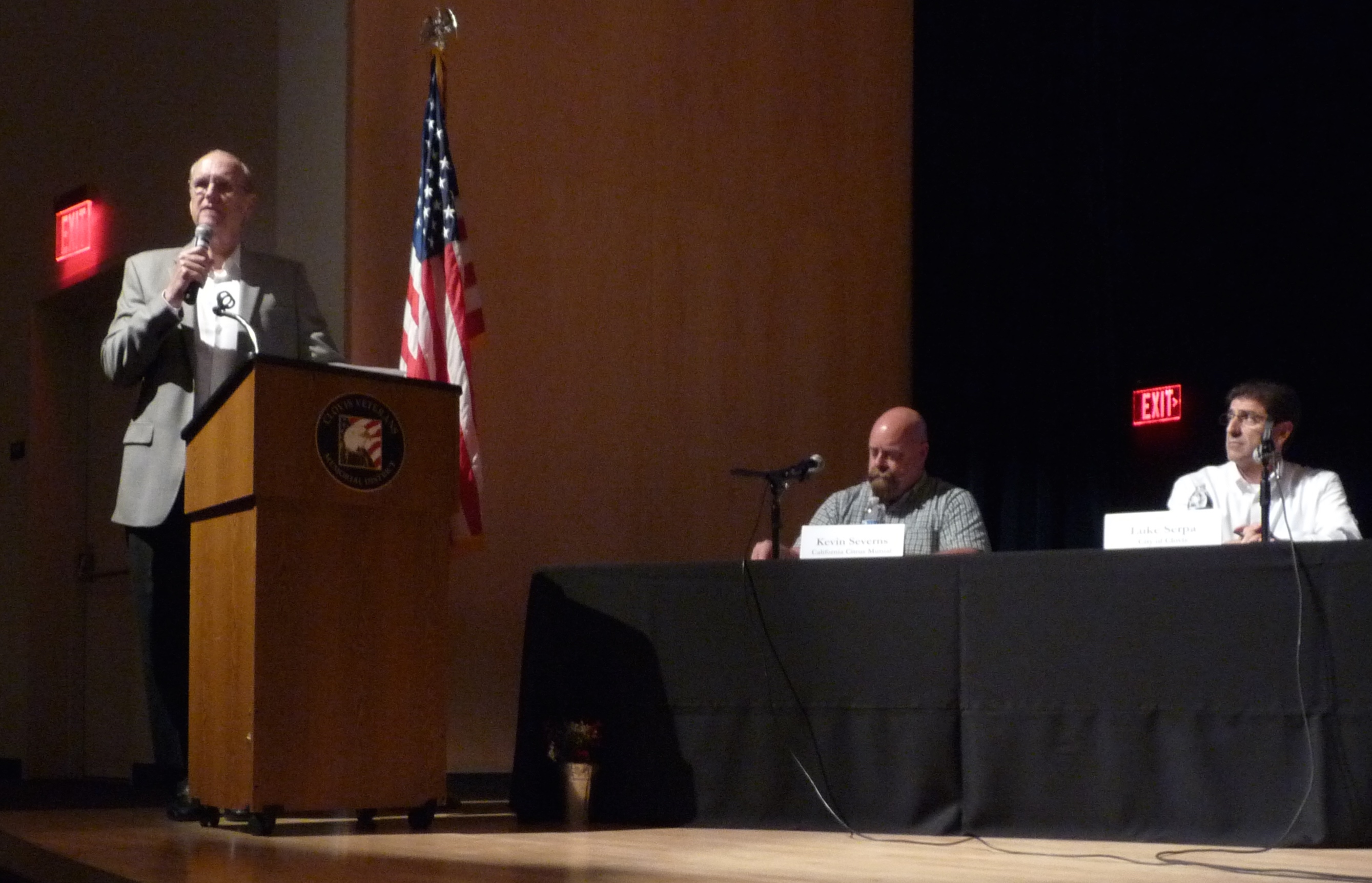
We are being lied to,” declared Jim Patterson, who represents the 23rd Assembly District in the California State Assembly since 2012, at his recent drought forum in Clovis.

“I have come to the conclusion there is a power structure led by the Natural Resources Defense Council (NRDC), the governor’s office and in the bureaucracies,” Patterson explained. “They are not telling us the truth. They do not abide by their own agreements, and they have a bias against the very water technology and the water systems that have made California a ‘Golden State’. They are biased against dams, reservoirs and conveyance, and every time I turn around, I find another example.”

Jim Patterson, California Assembly Member

Jim Patterson, California State Assembly Member

“We need to have regulatory relief from the State of California in order to build Temperance Flat (a proposed dam project on the San Joaquin River) and its conveyance systems and to build the improvements at Shasta Dam and Reservoir and at Sites Reservoir,” said Patterson.

“And yet,” he continued, “I know for a fact that we are not going to get that regulatory relief. Nevertheless, the governor and this legislature have given that very same regulatory relief to the Kings’ Basketball Stadium in Sacramento (Golden 1 Center) and to two big NFL football stadiums in the state.”

To build water saving and conveyance systems, Patterson expects to face a gauntlet of litigation from the NRDC. “Though we have tried over and over again, unsuccessfully, to get the California Environmental Quality Act (CEQA) reformed,” he stated, “the Democrats will do it for basketball and football, but they won’t do it for water. That demonstrates to me they are absolutely disingenuous.”Map_of_proposed_Temperance_Flat_Dam_and_reservoir

“Secondly, we were promised money in this budget for the Central California InterConnect,” Patterson said. “Putting an interconnect between the federal Central Valley Project (CVP), best illustrated by the Kings River and San Joaquin River Watersheds in the Central Valley, and the state’s California State Water Project (SWP), exemplified by the San Luis Reservoir system, is critically important. We need to connect those projects so we have water conveyance alternatives to improve water reliability and to save us from the kinds of hard decisions that we’ve had to reach now—to starve a portion of the Valley. Because we can’t get water between the two systems, the situation is real and dire.”

“The governor promised those of us who negotiated the bond the budget would include appropriations for the InterConnect,” Patterson reported. There is no such thing. It doesn’t exist, and it didn’t show up in this budget. The governor didn’t come through on his promises.”

“I have tried repeatedly to talk with the water bureaucracies—appointees of the governor—and ask how I could help them understand the importance of giving us back the water,” Patterson commented. “For example, the water behind Shasta Dam right now has been paid for and banked by our farmers. I’ve asked repeatedly, ‘Why can’t we get the InterConnect funded? You promised us that you would do that.’ I’ve asked, ‘What is it going to take for you to understand the importance of storage in the San Joaquin River Watershed?’ It’s like talking to a wall; I get no answer.”

“So, I have had to come to the conclusion that we’re being misled, and it’s on purpose,” he said. “I just don’t believe this governor anymore. That’s a sad conclusion to have to come to, but I think we are seeing a ‘behind-the-scenes hand of power’ called the NRDC, that runs the governor’s office and the state legislature.

When asked what concerned citizens can do, Patterson answered, “Today we heard a lot of passion. I think we need to turn that passion into significant efforts, politically and organizationally. We have to make a real nuisance of ourselves to the governor and to the legislature until they pay attention to us. I have learned in public life, as mayor and now in the legislature, that those people who stand up and are persistent and persuasive get heard. We have got to continue to step up in ever-increasing numbers and be heard.”

Sign of drought Westlands Water District Turnout“We also have win some elections,” he emphasized. “We are under a one party-dictatorial rule right now. And I would be saying this even if Republicans were the party in rule. Our founders believed there should be separated powers in government and people in office from all walks of life. These kinds of checks and balances get us to good policy for most people, most of the time.”

“You can’t do that in a dictatorship,” Patterson explained, “and that’s really what we have—one party that has all the levels of power and is using them all against us in Central California. And we’re seeing the result of it.”

Patterson tells other members of the legislature on the committees he serves, “You are literally putting a bait fish that striped bass are eating, ahead of the lives and the wellbeing of people and their property, and you’re blaming us for it. The reality is you’re making a drought that is bad into a drought that is a nightmare.”

“If this were to be compared, for example, to a forest fire,” Patterson conjectured, “and the firefighters were told by the governor, ‘Stop trying to save lives and stop trying to save property; go make sure you save that tree over there because there’s a spotted owl in it,’ people would very quickly tell the governor where to go and what to do.”

2016-05-31T19:28:09-07:00July 21st, 2015|

Location! Location! Location!

UC ANR Research and Extension Centers Strategically Located

By Charmayne Hefly, Assistant Editor, California Ag Today

Bill Frost is the director of the University of California, Division of Agriculture and Natural Resources’ Research and Extension Center System that has nine different research and extension centers located throughout the state.

UC ANR Research and Extension Center System

UC ANR Research and Extension Center System

Describing the strategy in their geographic placement, Frost said, “We have located them in different growing zones, climates and environments. We have chosen everything from the desert region in El Centro, to cropland here in Kearney, to livestock grazing in both our Hopland and Sierra Foothill Research and Extension Centers, all the way up to Intermountain in Tulelake, where we research potatoes, garlic and crops that can be grown in that fairly short growing season.”

The goal, according to Frost, is to solve local issues from a local or regional perspective. “Each one of our centers has different environments, crops and pest issues to address,” he explained. “These diverse locations are critically important to us because we can do localized, applied research and get useful information out to people, whether they are homeowners in their gardens or growers managing a thousand acres of a crop.”

Frost noted the UCANR Research and Extension Center System has been actively seeking new personnel to better meet the needs of growers. “Just in the last four years,” he said, “we’ve hired almost one hundred new cooperative extension advisors and specialists around the state—many of whom are housed here at the Kearney Research and Extension Center. They are also housed on UC campuses and in our county Cooperative Extension offices.”

Frost commented, “We continue to be relevant. We continue to do cutting-edge applied research. Our programs provide information to everyone; from our youth development program in 4-H and our nutrition education, to master gardener programs that help homeowners with pest problems and water management.”

“And of course, we serve the agricultural community. We have a lot of good research going on and we’re generating lot of good information in commodity production, pest management and water management,” Frost said.

The nine UC ANR Research and Extension Stations are:

Featured Photo: UC ANR

2016-05-31T19:28:10-07:00July 20th, 2015|

Phone Calls Needed Now

STOP WHAT YOU’RE DOING AND MAKE AS MANY CALLS AS YOU CAN!

CALL all Senators to support the WESTERN WATER AND AMERICAN FOOD SECURITY ACT OF 2015

WE ARE DEDICATING THE REST OF THE DAY TO MAKE THESE CALLS.

OUR LIVES DEPEND ON THIS!


H.R.2898, the Western Water and American Food Security Act of 2015 has passed the House and is on the way to the Senate.

MY JOB Depends on Ag urges each and every one of us to call all U.S. Senators and tell them we want a YES vote.

  • Here’s a template letter to email.
  • Call these Senators, starting with CA and moving onward.
  • Say you are calling regarding HR 2898 and want the Senator to vote YES!! They may ask for your zip code and say they will pass along your concern.


Senator Dianne Feinstein (D-Calif.) TODAY released the following statement after the House of Representatives passed the Western Water and American Food Security Act:

“The House today passed a drought bill that included some useful short-term provisions as well as some provisions that would violate environmental law. While I cannot support the bill as passed, I remain hopeful we can come to an agreement that can advance through both chambers.

“House Republicans are right that we need to increase the flexibility of the state’s water delivery infrastructure. We need to facilitate water transfers and maximize water pumping without violating environmental laws like the Endangered Species Act or biological opinions, and we must do this using updated science and real-time monitoring. Provisions to accomplish this were in the bill the Senate unanimously passed last year, and I plan to include them again this year with added environmental protections.

“I also believe we must look closely at ways to support water recycling, storage, desalination and groundwater replenishment projects. There are already 15 ocean desalination projects and 65 water recycling projects being considered throughout California. These types of projects—as well as building or increasing reservoir capacity—must be a part of any long-term solution.

“To get a bill through the Senate and the House we’ll need to include provisions that benefit the entire West and help support the development of alternative water infrastructure. If the climate continues to warm, as I believe it will, these alternatives will be key.”

2016-05-31T19:28:10-07:00July 16th, 2015|

False Data Abounds

California Drought Information Game:

False Data Out-Markets Ag

By Laurie Greene, Editor and Producer


At “The Truth About the Drought” forum, organized by Assemblymember Jim Patterson recently in Clovis, CA, moderator John Broeske, executive director of Families Protecting The Valley, said he thinks Ag is doing really badly on the information game.

“I think that we are getting out-marketed in messaging in the state of California,” said Broeske. “I think a lot of the people in the Central Valley know things that the people in Southern California and in the Bay Area, don’t know.”

Broeske continued, “I don’t blame those people for not knowing because they’re being told over and over again about the ‘80% number’ for Ag water use; and the ‘2%’ Ag contributes to the economy’. These are not real numbers, but people hear them repeatedly, so it’s not hard to understand they believe it.”

“I think the environmentalists want people to believe the 80% figure,” Broeske stated, “because it’s a lot easier to demand water from us if it appears we are using it all. But we’re not, and it’s hard for us to get the message out that these numbers aren’t true.”

Broeske did not know the best way to get the message out, but said he tries to correct people when they get it wrong. He suggested correcting online articles in the comment section to empower more people with the right numbers as ammunition for when they get into conversations. “You’ve got to fight back; if you let people use these false numbers over and over again, nothing is ever going to change.”

As false data out-markets ag in messaging, Broeske said water usage accountability is unequivalent. “Farmers are getting blasted for raising almonds and using too many gallons per almond,” said Broeske. “But, there’s no article about how many gallons it takes to raise a smelt. How many acre-feet for salmon? How many is too many? I think those questions have to be asked.”

“California is spending four million dollars of water per salmon!” Broeske declared. “Should there be some accountability there? How much water are we going to spend on one salmon? At least we get almonds at the end of the farming process. That’s what accountability means; we’ve got to create some rules about how much water is too much to save one fish.”

“I think the only way the public can demand accountability from the government and the scientists is to win elections,” he conjectured. “We are not winning the marketing war on these water usage numbers, so voters keep electing the same people who tell them the wrong numbers, and there’s nothing we can do if they keep getting elected. It’s a tough battle.”

“We are outnumbered,” Broeske said, “and I don’t know how we can overcome their marketing. They’re not even buying marketing, like billboards or advertising—just newspaper articles and news stories they are quoted in—so their marketing costs them nothing.”

“For us to win the market,” Broeske concluded, “we have to buy billboards and ads, and have enough money to do so.”

2016-09-13T14:11:41-07:00July 16th, 2015|

Viticulturist Mark Greenspan Confirmed as ASEV President

Announced TODAY, Mark Greenspan, president of Advanced Viticulture Inc., has been confirmed to serve as the American Society for Enology and Viticulture (ASEV) 2015-2016 president. Greenspan succeeds Lise Asimont of Francis Ford Coppola Presents to lead ASEV’s 12-member board.

mark greenspan

Mark Greenspan, president of American Society for Enology and Viticulture

“Throughout my career, ASEV has been the go-to source for reliable, thoughtful research and science that has been critical to my success and that of my vineyard clients. It’s a real honor to serve as the Society’s new president and to hopefully carry on the impressive work of Lise and the other dedicated ASEV past presidents,” said the new ASEV president. 

Greenspan, a Sonoma County resident, provides premiere vineyard consultation in water management, nutrient management, precision viticulture and vineyard design, establishment and management. He has operated Advanced Viticulture for over 10 years. Previously, he was the viticulture research manager at E&J Gallo, responsible for viticulture experiments in the north coast vineyards and collaborative projects throughout the state of California. He is a monthly contributor to Wine Business Monthly and periodic contributor to other trade publications. He presents at local, national and international events, and is a certified crop advisor (CCA) and certified professional agronomist (CPAg). Mark has served on review panels for the American Vineyard Foundation and Viticulture Consortium – West and Viticulture Consortium – East. He is a member of Sonoma and Napa Viticulture Technical Groups, Sonoma County Farm Bureau and Napa Valley Grape Growers Association. He’s a former director of the UC Davis Trellis Alliance and sponsor of the Sonoma County Winegrape Commission.

As an active 25-year ASEV member, Mark has held several ASEV positions and served as a reviewer for the American Journal of Enology and Viticulture (AJEV). He has served on the best paper review committee, annual meeting technical abstract review committee, annual meeting program committee, and as sessions chair. He received the ASEV Best Viticulture Student Paper Award in 1991. 

ASEV has also confirmed two new directors: Patty Skinkis, associate professor at the Department of Horticulture at Oregon State University, and Hans Walter-Peterson, viticulture extension specialist at Cornell Cooperative Extension. In addition, the Society has announced its 2015-2016 executive team members: Nichola Hall of Scott Laboratories, confirmed as first vice president; James Harbertson of Washington State University, elected as second vice president; and Tom Collins of Washington State University will serve as secretary-treasurer. Additional Board members continuing current terms are: AJEV Science Editor Linda Bisson and Technical Program Director M. Andrew Walker, both of the University of California, Davis; and Directors Lise Asimont of Francis Ford Coppola Presents, Kristen Barnshisel of J. Lohr Vineyards & Wines, and Kay Bogart and Anita Oberholster, both from the University of California, Davis.

Formed in 1950 as a professional society dedicated to the interests of enologists, viticulturists and others in the fields of wine and grape research and production, the ASEV’s membership of more than 2,000 includes professionals from wineries, vineyards, and academic institutions and organizations around the world.  In addition to publishing the AJEV, the Society also hosts its National Conference (slated for Monterey in June of 2016) and co-presents the Unified Wine & Grape Symposium in January with the California Association for Winegrape Growers. For more information, visit www.asev.org.

2016-05-31T19:28:10-07:00July 16th, 2015|

Bio-Solarization Research

Bio-Solarization for Soil Pest Management

By Patrick Cavanaugh, Associate Editor, California Ag Today


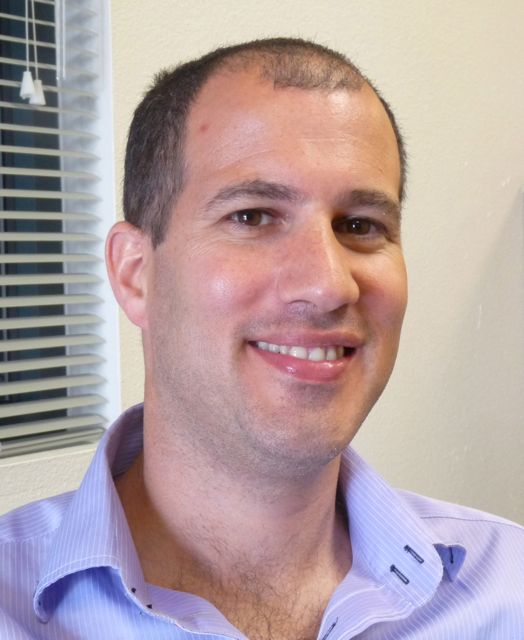
Yigal Achmon is a post-doctoral scholar at UC Davis in the department of Food Science and Technology. He explains some current research they are doing with solarization, a non-chemical method for controlling soilborne pests using high temperatures produced by capturing radiant energy from the sun without leaving chemical residues. A simple method appropriate for the home gardener or the large scale farmer, solarization also improves soil structure by increasing the availability of nitrogen and other essential nutrients for growing healthy plants.

The method involves heating the soil by covering it with a clear plastic tarp for 4 to 6 weeks during a hot period of the year when the soil will receive the most direct sunlight. When properly done, the plastic sheets allow the sun’s radiant energy to be trapped in the soil, heating the top 12 to 18 inches and killing a wide range of soilborne pests, such as weeds, pathogens, nematodes, and insects. The effect of solarization is greatest at the surface of the soil and decreases at deeper soil depths. The maximum temperature of soil solarized in the field is usually 108° to 131°F at a depth of 2 inches and 90° to 99°F at 18 inches. Controlling pests found in the upper 6 inches of earth is the most efficient target.

“We are now at the stage where we are testing bio-solarization, with the goal of further improving the effectiveness of solarization by incorporating organic materials and bi-products. Hopefully, bio-solarization will change the soil pest management field,” Achmon said, “giving us new insight into what we call ‘closing the loop’. We will be able to use what we should no longer call ‘waste, but rather residue with high potential, like tomato residue or grape residue, and incorporate it into our standard solarization method to achieve bio-solarization.”

Achmon reports observing this new bio-solarization system in the laboratory achieving higher temperatures than standard field solarization, and researchers are discovering a wide range of pest management effects. “This is like lowering the pH while incorporating organic waste,” said Achman.

Achmon championed the benefits of bio-solarization, “We are using up a lot of waste, which has long been a huge problem. This is a very interesting stage because we are studying both the chemical and biological effects of the method. And now with all the next-generation sequencing identification tools, we can start to discover which soil microbes are there working for us.”

2016-05-31T19:28:11-07:00July 13th, 2015|

HLB Found in LA

Huanglongbing Detected on LA County Pre-Symptomatic Kumquat Tree


By Patrick Cavanaugh, Farm Director; Laurie Greene, Editor, California Ag Today


#CitrusMatters

#CitrusMatters (provided by Bayer CropScience, in partnership with California Citrus Mutual)

“It’s disappointing, but fortunately it was found in a residential area,” commented Joel Nelsen, president of California Citrus Mutual (CCM), on the second discovery of Huanglongbing  [wong-long-bing] (HLB), or citrus greening, in California. CCM refers to HLB as “a death sentence for California citrus” as once the plant is infected with this bacterial disease, there is no known cure.

Joel Nelsen

Joel Nelsen, president, California Citrus Mutual

“HLB was detected in plant material taken from a kumquat tree in a residential neighborhood in the San Gabriel area of Los Angeles County,” Nelson stated. “The 20-year-old tree was in the front yard of a residence and had not yet shown any symptoms.”

The San Gabriel neighborhood is located about 15 miles from Hacienda Heights, where the first HLB case in the state was detected in 2012 in a residential citrus tree. The  An aggressive trapping program for the Asian citrus psyllid (ACP), a pest known to spread the HLB bacteria as it feeds on citrus trees and other plants, has been ongoing ever since this first finding, including in the San Gabriel area.

“It’s fortunate that the homeowner is quite cooperative,” said Nelsen, “and other neighborhood homeowners are allowing officials to run PCR tests (polymerase chain reaction) on samples of their trees to determine if the disease is present.” PCR analysis is a sensitive research technique for detecting and identifying small numbers of bacteria in plants via DNA amplification.

Nelsen declared, “This find is exactly what the Citrus Pest and Disease Prevention Program is designed to do. PCR testing of a random sampling of leaves and stems in the area, as our program prescribes, enabled us to hit a positive” before symptoms appeared.

“We do not know how long the tree had been diseased,” said Nelsen, “but we do know that we have been trapping ACPs there for a long time and had not found any HLB before. You do not want to

Citrus Pest & Disease Prevention Program

find anything,” Nelsen said, “but when you do, you want to find it before it becomes an epidemic.”

In a statement on Friday, California Department of Food and Agriculture (CDFA) Secretary Karen Ross said, “Citrus is a cherished part of our landscape and our shared history, as well as a major agricultural crop.” CDFA has been planning and preparing for HLB detections since before the first ACP was detected in the state in 2008. Quarantines are now in place in 17 California counties.

Los Angeles County Agricultural Commissioner Kurt Floren will mobilize his team over this week to check on citrus trees in plant nurseries that fall within the 800-meter radius around the infected tree area. A spray protocol is already in place for all citrus trees within the 800-meter radius.

“More traps are going out so we can try to delineate the scope of the problem. Hopefully it will be nothing more than this one tree, like the solitary diseased tree we found in Hacienda Heights,” Nelsen said.

Resources

To support the citrus industry in its fight against HLB, go to California Citrus Mutual Action Center.


For questions about the ACP or HLB, visit or call CDFA’s toll-free pest hotline at 1-800-491-1899.


View the Distribution Map  of ACP, HLB and parasites in California published by the UNIVERSITY OF CALIFORNIA Division of Agriculture and Natural Resources.

USDA's free "Save Our Citrus" iTunes app

USDA’s free “Save Our Citrus” iTunes app


Visit the Citrus Pest & Disease Prevention Program.


Verify plant symptoms at USDA’s SaveOurCitrus website.


For information and ACP solutions, go to #citrusmatters, provided by Bayer CropScience, in partnership with California Citrus Mutual


2016-05-31T19:28:11-07:00July 13th, 2015|

UC ANR Horticulture Advisor Retires After 28 Years

John Kabashima wrapped up his horticultural career on July 1, after 28 years with University of California Agriculture and Natural Resources. Nursery professionals lauded the UC Cooperative Extension advisor’s service to the nursery and landscape industry and to homeowners in Orange and Los Angeles counties.

“He’s one of the few people who could translate science into business with a sense of candor and fact-based conversation,” said Robert Crudup, president of Calabasas-based Valley Crest Tree Company, of Kabashima.” John has long-term vision, which he used throughout his career to move the nursery industry forward.”

John Kabashima

John Kabashima, UC ANR

“He is smart about political science as well as plant science,” Crudup said. On a regular basis, Kabashima would warn growers about emerging issues that were likely to affect the nursery industry, such as regulations to control the spread of polyphagous shot hole borer, red imported fire ant and palm borer.

“He’s been very, very valuable,” said retired nurseryman Gary Hayakawa, noting that Kabashima not only contributed research on pest control and water issues for the nursery and landscape industries, but also persuaded people from UC campuses, the California Department Food and Agriculture and industry to work together. “Before he was involved in issues, the work was all separate. Industry didn’t have input,” Hayakawa said. “What John has done is to work with all three to form a coalition.”

Crudup, whose company has nursery operations in Los Angeles, Ventura, Alameda and San Joaquin counties, agreed.

“John’s biggest contribution was his work with the glassy-winged sharpshooter subcommittee,” said Crudup, who served on the subcommittee. “He brought a voice of reason that helped counterbalance emotional sides of the discussion.”

“His ability to act as the primary liaison between the nursery industry, CDFA, the UC, the county agricultural departments and the wine and grape industries was the primary reason this part of the GWSS (glassy-winged sharpshooter)  program was so successful and, more importantly has resulted in the continued viability of the California nursery industry in light of significant regulatory pressures,” said Bob Wynn, who was statewide coordinator of the CDFA Pierce’s Disease Control  Program and who  continues to oversee the program as senior advisor to Secretary Karen Ross.

“The CDFA, with advisement and counseling from John, developed what is known as the Approved Nursery Treatment Program, which allows nurseries in the infested areas of the state to ship by merely treating the plants with an approved treatment,” Wynn said.  “John was the primary author in the development of the nursery ‘Approved Treatment Best Management Practices’ document published in 2008. The use of this document has allowed the nursery industry to save millions of dollars in regulatory compliance costs over time.”

A native of Los Angeles, Kabashima says he started working in his family’s nursery business as soon as he was tall enough to water 1-gallon nursery plants.  “After killing thousands of plants, I was finally allowed to manage the family business from 1970 to 1976,” he quipped.

In 1976, his family sold the nursery and Kabashima enrolled at California Polytechnic University, Pomona. After he  earned a B.S. in agricultural biology from Cal Poly Pomona in 1979, he was hired by UC Riverside horticulture entomologist Pat Morishita as a lab technician. While working at UC Riverside, Kabashima earned a  master’s degree in pest management. He would later complete a Ph.D. in entomology at UC Riverside.

Kabashima earned his MBA at Pepperdine University in 1986 while managing the Ornamental Horticulture Division at Target Specialty Products. In 1987, the UC Division of Agriculture and Natural Resources recruited him to become a UC Cooperative Extension environmental horticulture advisor in Orange and Los Angeles counties.

Over the years, he has studied the management of insects, diseases and weeds in horticulture production systems, biological control of exotic pests, and water-related problems in landscapes, golf courses, nurseries, municipalities and watersheds.

In 1998 Kabashima took over the fledgling UC Master Gardener Program in Orange County, which as of now has trained more than 300 UC Master Gardener volunteers to extend research-based information on gardening and horticulture to the public.

The UCCE environmental horticulture advisor has also served as director of UC Cooperative Extension in Orange County and interim director of the UC ANR South Coast Research and Extension Center.

In 1994, when Orange County filed for bankruptcy and the Board of Supervisors voted to discontinue funding and housing for the local UC Cooperative Extension, Kabashima worked with Gary Hayakawa to keep UCCE in the county.

“When Orange County cut Cooperative Extension’s budget, we found out that without extension you don’t have 4-H or Master Gardeners,” Hayakawa said. To preserve the UC Cooperative Extension programs, Hayakawa, who was an Orange County Fair Board member, helped Kabashima  secure office space in trailers on the fairgrounds. In 2014, the UCCE office moved from the fairgrounds to UC ANR South Coast Research and Extension Center in Irvine.

Kabashima belongs to many professional organizations including the Entomological Society of America, California Association of Nurseries and Garden Centers, Nursery Growers Association, Western Chapter of the International Society of Arboriculture, United Agribusiness League, and San Diego Flower and Plant Association. The scientist has served on numerous government and industry advisory committees.

Throughout his career, Kabashima’s achievements in education and research have been recognized by various organizations. To name a few, he received the 1987 Education and Research Award from the Orange County Chapter of the California Association of Nurseries and Garden Centers (CANGC), 1993 CANERS Research Award from CANGC, 2002 Nursery Extension Agent Award from the American Nursery and Landscape Association, 2008 Western Extension Directors Award of Excellence, 2010 Entomological Society of America’s National IPM Team Award and the 2011 California Agriculture Pest Control Advisors Association Outstanding Contribution to Agriculture Award. In 2014, he and his friend Hayakawa were inducted into the Green Industry Hall of Fame.

Being a UCCE advisor has suited Kabashima. “I love learning new things, sharing that information with others, and using my skills to solve problems facing California, such as the ever-increasing arrivals of exotic and invasive pests,” he said. The avid photographer has been able to unite his avocation with his vocation. His photographs of insects have been used to illustrate textbooks, websites and news articles.

“Success in one’s field is often a combination of natural ability, informal and formal training and education, being mentored, and networking with collaborators and colleagues, all sprinkled with a little bit of luck and support from one’s family and friends,” Kabashima said.

In retirement, Kabashima plans to seek new culinary experiences with his wife Janet and daughter Misa, at  home and in their travels together. He has been granted emeritus status by UC ANR and he will continue his efforts to help UC Irvine save trees on its campus that are infested with polyphagous shot hole borer.

UC Agriculture and Natural Resources researchers and educators draw on local expertise to conduct agricultural, environmental, economic, youth development and nutrition research that helps California thrive. Learn more at ucanr.edu.

2016-05-31T19:28:11-07:00July 12th, 2015|
Go to Top