Associations, Organizations, Educational and Research Institutions

Mario Santoyo: Recent Temperance Flat Dam Memo is Misleading

Mario Santoyo: Recent Temperance Flat Dam Memo is Misleading

By Patrick Cavanaugh, Deputy Editor


A recent memo to the City of Hanford, issued by the Townsend Public Affairs office in Washington D.C., stating the Temperance Flat Dam proposal may not be eligible to receive Proposition 1 funds, was deemed “misleading” according to Mario Santoyo, executive director of the 11-member board of the Joint Powers of Authority that oversees the proposed Temperance Flat Dam.

The U.S. Department of the Interior Bureau of Land Management’s 2014 decision to recommend designation of an 8 mile segment of the San Joaquin River (accompanied by a restricted-use river corridor extending 0.25 miles from the edge of the identified river segment) that falls in the footprint of Temperance Flat as a “National Wild and Scenic River,” has been a concern for awhile, noted Santoyo. “This memo is very misleading,” he said. “It has nothing to do with state bond funding”—California’s Proposition 1 (Prop 1), the legislatively-referred Water Bond (Assembly Bill 1471), passed by state voters on the November 4, 2014 ballot.

USBR Temperance Flat Dam and Reservoir

Temperance Flat Dam and Reservoir (Source: USBR, “Managing Water in the West: Alternative Water Management and Delivery,” 2014)

“But if the [recommended] designation stays in place,” Santoyo continued, “it would prevent us from building Temperance Flat with any funding. Whether with state funding, federal funding or Prop. 1 funding, it does not get builtperiod,” Santoyo said.

“To be eligible for Prop 1 funding, you have to have a feasibility report,” said Santoyo. “In other words, the federal government has to determine if the project is feasible under Prop. 1 money.” However, doing the feasibility report is part of doing the environmental paperwork. And, if at the end something changes on the conditions that were originally evaluated, then the project could be determined unfeasible.”

“But none of this has happened,” emphasized Santoyo, as the recommendation of this San Joaquin River segment to be designated National Wild and Scenic River has not yet been legislatively authorized. “We are perfectly aware of that hurdle. The designation is one of many things that we have to deal with.”

Santoyo said there would be a discussion this week with the regional director of the Bureau of Reclamation to talk about the Scenic River designation, the National Environmental Policy Act (NEPA), and the California Environmental Quality Act (CEQA), as well as technical partnership. “There are a series of things that need to happen to keep advancing the ball,” Santoyo said.

And even though the proposed Sites Reservoir is not subject to the Scenic River designation, it has not passed the feasibility study. “So it even has its challenges,” said Santoyo.

“All the projects have big challenges, but the question is: Do you keep moving forward regardless of how hard the issues are or do you just fold the first time you hit a bump? We are not folding; we are moving forward,” Santoyo said. “Either we shoot hard for currently available options or we shut down and do nothing. Why go through 10 years’ worth of effort to give us this opportunity and not take a shot?” he asked.

Editor’s Note:  Several calls to James Peterson, director of the Townsend Public Affairs federal office were not returned.

2016-05-31T19:24:08-07:00March 31st, 2016|

New Citrus PSA Shows Homeowners HLB Threat

New Citrus PSA Shows Homeowners HLB Threat

By Charmayne Hefley, Associate Editor

Without the involvement and aid of backyard citrus growers to prevent the spread of the invasive Asian Citrus Psyllid (ACP) and the citrus-deadly Huanglongbing (HLB) disease vectored by the ACP, consumers would no longer have the opportunity to enjoy fresh citrus. Deadly Plant Disease Threatens California Citrus, the newest public service announcement (PSA) from California Citrus Pest Disease and Prevention Program (CCPDPP) conveys this message to residential citrus growers, according to Joel Nelsen, California Citrus Mutual (CCM) president, in order to keep all citrus safe from HLB.

Nelsen said the citrus PSA announcement “shows a family in the backyard barbequing and doing what families do on a weekend.”  They walk over to their row of three citrus trees in the backyard when an orange falls off the tree and disappears, followed by the disappearance of all three trees. Nelsen said the PSA zeros in on the family members’ confusion at the disappearance of the oranges and the trees, all associated with the HLB infection.

CCPDPP’s new PSA is a way for homeowners to understand the importance of keeping citrus safe from HLB, said Nelsen, ”because as much as they’re emotionally tied to their trees, so are the growers in our industry. We don’t want to see anyone’s tree get eliminated because of HLB.”

_________________________________

Prevent HLB; Check Your Citrus Trees for Asian Citrus Psyllid

In a new four-minute video, University of California, Division of Agriculture and Natural Resources (UC ANR) scientists encourage California farmers and home citrus growers to check new growth on their citrus trees for Asian citrus psyllid infestation. As ACPs spread Huanglongbing (HLB) disease, a serious, incurable threat to both the citrus industry and backyard citrus trees, scientists aim to minimize the ACP population until researchers find a cure.

A flush of new leaf growth on citrus trees announces spring in California. The emergence of feathery light green leaves is particularly attractive to Asian citrus psyllids (ACP), signaling a critical time to determine if the trees are infested with ACPs.

“We encourage home citrus growers and farmers to go out with a magnifying glass or hand lens and look closely at the new growth,” said Beth Grafton-Cardwell, UC Agriculture and Natural Resources (UC ANR) citrus entomologist. “Look for the various stages of the psyllid – small yellow eggs, sesame-seed sized yellow ACP young with curly white tubules, or aphid-like adults that perch with their hind quarters angled up.Save Our Citrus

Pictures of the ACP and its life stages are on the UC ANR website. Call the California Food and Agriculture (CDFA) Exotic Pest Hotline at (800) 491-1899 with any findings.

The UC ANR ACP website provides help in finding the pest and taking action.

(Source: UC ANR)

_________________________________

2021-05-12T11:03:03-07:00March 30th, 2016|

36th Annual UnitedAg Meeting & Conference Discusses Future of Agriculture 

36th Annual UnitedAg Meeting & Conference Discusses Future of Agriculture 


UnitedAg, California’s member-owned agricultural trade association, recently concluded its 36th Annual Meeting and Conference, held March 15-17 in Anaheim, California.

POLA6651 (1)

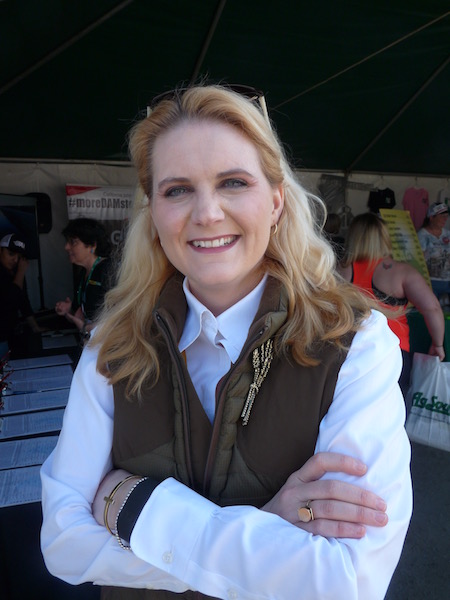
Pictured left to right, Karri Hammerstrom, Karen Caplan, Kirti Mutatkar, Ellen Way, Judy Lundberg, Abby Taylor-Silva and Fiona Ma. (Photo source: UnitedAg)

The three-day event, themed “Breaking Through,” featured speakers included, California State Assemblymember Fiona Ma, Tax Lobbyist Jon Coupal, Inspirational Speaker Lt. Col Kevin Sweeney, Agricultural Speaker/Comedian Jerry Carroll and Chapman University President Dr. James Doti who discussed issues and opportunities facing the California’s agriculture industry.

The conference also included a 5K Walkathon and member golf tournament benefitting UnitedAg’s scholarship foundation, as well as a member awards banquet.

“We believe the UnitedAg 36th Annual Meeting and Conference started a conversation for the future of the agriculture business here in California,” said Kirti Mutatkar, UnitedAg’s CEO and President.

Founded in 1980, UnitedAg is a member-owned agricultural trade association dedicated to providing innovative solutions for California’s strong and healthy agricultural industry.

UnitedAg works in close partnership with its 500 agriculture-affiliated member organizations to meet their employee benefits needs, promote their interests with lawmakers, and help them comply with legislation and regulation so members can focus on what they do best – run successful businesses and organizations.

_____________________________

For more information about UnitedAg and its activities, please visit www.unitedag.org.

2016-05-31T19:24:08-07:00March 29th, 2016|

Agriculture Science Recognition Awards, Part 2 – Meghan Loper

Agriculture Science Recognition Awards, Part 2 –

Meghan Loper Receives Fresno State Science Recognition Award

By Patrick Cavanaugh, Deputy Editor

Assemblyman Jim Patterson joined Dr. Sandra Witte, dean of the Jordan College of Agricultural Sciences and Technology at California State University, Fresno (Fresno State) and Lawrence Salinas, Fresno State’s executive director of Government Relations, at the 23rd Assembly District’s 2016 Agriculture Science Recognition Awards on March 17 at Fresno State.

California Ag Today will highlight each of four Fresno State students in the Fresno State Honoree series, Meghan Loper, Megen Morales, Elizabeth Mosqueda and Nick Wolfenden, who were selected from among several students nominated for their dedication to the future of agriculture in the Central Valley.

“These brilliant students represent the best of the best,” said Assemblyman Patterson. “Their devotion to making a difference in our agriculture science community is to be commended and I can’t wait to see what the future holds for them.”

______________________________________

Meghan Loper, is a master’s student at California State University, Fresno (Fresno State), in the poultry science field, working on animal welfare.

“She currently has a bachelor’s degree in animal science and livestock production management,” said California Assemblyman Jim Patterson. “She also teaches the animal health, welfare and poultry production class in the Poultry Science Department,” noted Patterson.

Most recently, Loper researched the economic significance of the number of chickens living in the same chicken house. Her study quantified the amount of chickens per house and its effect on economic return with the goal of understanding the threshold at which the number of chickens starts to have a negative impact on animal welfare. “She hoped the work would provide information to people about the importance of the welfare of chickens in the poultry industry,” said Patterson, “as the issue is obviously becoming more of a hot topic industry-wide, as well as for consumers, and it even touches the California Legislature.”

Loper has been a member of the Poultry Science Club and the Enterprise Manager of the Foster Farms Poultry Education and Research Facility at Fresno State for the last three years. She volunteers for a local 4-H Club and will be organizing a second FFA field day in April.

Loper is also involved with animals of a different type; she has raised 12 guide dogs for Guide Dogs for the Blind.

“This is an individual, as are our other three honorees, who is making plans and getting prepared to make a living, but you are also making a life,” Patterson said to Loper. “And it is that life that we honor today.”

Loper said, “We have been experimenting with the different amount of birds that can be put into production house. What is too many? What is not enough? And, what’s going to be best for the birds in the long run,” Loper elaborated.

“I’m hoping to get a job in the poultry industry,” said Loper. “I want to make a difference somehow.”

______________________________________

2021-05-12T11:05:57-07:00March 29th, 2016|

California Water 4 All Initiative On for 2016, with 2018 as Backup

California Water 4 All Initiative Still On for 2016, with 2018 as Backup Plan

Late last week, word spread that the @CaWater4All Initiative may postpone the Water Priorities Constitutional Amendment and Bond Act proposition from the 2016 ballot to the 2018 ballot. California Ag Today’s Patrick Cavanaugh, farm news director, spoke with Aubrey Bettencourt, executive director of the California Water Alliance, which is behind the initiative, with major funding by California Westside Farmers State PAC (FPPC #1381113).

Cavanaugh: Is the @CaWater4All Initiative campaign still slated for the 2016 ballot?

Bettencourt: We did not stop the campaign, but we do have two deadlines. In other words, we are looking at all options. We are still on track for 2016; we are not letting up on gathering signatures. And if for some reason we reach the April 26, 2016, deadline for placement on the November 2016 ballot, but with an insufficient number of signatures, then we will steer for the 2018 ballot. I feel strongly that support is still there to pass the measure.CaliforniaWater4All

Cavanaugh: So there is a full-court press for unpaid volunteers to get the signatures by the 2016 ballot deadline. How will you ramp up the volunteers to sprint to the finish line?

Bettencourt: We are working on strengthening and systematizing our volunteer coordination across fourteen counties so it can be replicated among the various teams in Riverside, Los Angeles and Fresno, for example, working in concert. We know what works for each team, and we want to share event promotions and workloads and more.

Our ground game for the next few weeks will become completely guerrilla. I’m actually surprised how well developed our infrastructure has become statewide already, and I think with a little more coordination, it will be a force of nature.

We are also continuing to build connections outside of agriculture because this issue is so much more than agriculture.CA Register to Vote

Finally, if conditions change on paid-signature gathering pricing, we of course will return to paid collection.

Cavanaugh: Will the signatures for the 2016 ballot be valid for the 2018 ballot?

Bettencourt: Absolutely.

Cavanaugh: I understand one reason you added the 2018 option was the sudden and crazy surge in street price for paid signature gatherers – more than double their previous rate?

Bettencourt: There are currently 12 propositions in the state that need signatures, so the price per signature has jumped from $2.00 to $5.00 and could go higher in a last ditch scramble to qualify by the April 26 deadline. Never before this year has an initiative signature gone above $3.00; this is truly unprecedented! We had budgeted to gather signatures at $2.65 to $3.65 each, normally a strong offer, but it would be irresponsible and unsustainable to be caught in the frenzy and pay double for signatures without guarantee of qualification. Such an expenditure would have implications for the fall election campaign for the measure if we qualify. For this reason, we simply told the company to pause on gathering signatures for the time being, but to remain on stand-by. We expect the market will shortly calm down.

Cavanaugh: So in tapping the breaks on the professional signatures, you are now relying on the volunteer base to get the needed number?

Bettencourt: We have swung our resources over to maximize our already strong volunteer side. We will continue our fundraising, of course. If we reach the week before the April 26 deadline and think we have enough signatures, we will turn them in to qualify for the November 2016 ballot. If not, we will continue collection until we qualify for the 2018 election instead.

Cavanaugh: Are there any benefits to being on the 2018 ballot?

Bettencourt: Yes, there are a couple of positives to rolling to 2018. When the April 26 deadline hits, the other 11 or so propositions that are paying $4 to $5 per signature may all either qualify, roll over, or drop out. Then the initiative market stabilizes, we can jump back in and pay only $2 per signature or less, a significant savings. With no other propositions on the street, the price will drop, the field will be clear and our efforts will yield higher numbers of signatures.

More importantly, if we were to qualify for 2018, we would be among the first propositions to qualify, and we would be higher up on the ballot. Ballot position is important; if you are low on the ballot, the likelihood of getting a ‘yes’ vote is generally more difficult.

Sign of drought Westlands Water District TurnoutThe mid-term election without a presidential election can also create a less expensive election with fewer initiatives. And with Governor Brown a lame duck in his last year as governor in 2018, he may be less inclined or he may lack fundraising capacity and resources to fight our initiative. Some Democratic candidates for his seat are already declared opponents of High-Speed Rail, so that would also help.

Cavanaugh: What about the provision in your initiative that would reallocate $8 billion in unused High Speed Rail (HSR) bonds to water storage? Will that fund be essentially empty in 2018?

Bettencourt: We double-checked with attorneys engaged in fighting HSR and with the Citizens for California High Speed Rail Accountability (CCHSRA) group. Both said the HSR Authority could not access that funding in the interim, unless they were to fulfill their complete system plan. Given they are not close now and never have been, and HSR continues to be held accountable through the courts, it is highly unlikely they will be able to touch that money in the next two years.

Cavanaugh: And what about the Prop 1 dollars allocated for more storage? Will the funding still be available in 2018?

Bettencourt: I’ve been told there is currently an estimated $40 billion worth of water projects competing for the $2.7 billion of Prop 1 funding, including Sites and Temperance Reservoirs and numerous groundwater projects and water recycling programs, and more. And Prop 1 does not guarantee the construction of any one of them. For the next two years, the California Water Commission will try to finalize its criteria and process for considering and valuing project applications, approve some project applications, and perhaps appropriate funds to them. If the Water4All initiative qualifies for the 2018 ballot, we have two years to make the same case that we have been making so far:

  • There is not enough money to build the water storage, groundwater recharge, stormwater capture, water recycling, etc. the state needs.
  • The timeline does not work. The Bureau of Reclamation is clear—without a significant and immediate expansion of new surface water storage, Californians will be 4.9-6.2 million acre-feet short of having enough water to serve our families, farms and protected environment.

Cavanaugh: Can you explain how growers in northern California will be safe with their senior water rights if the initiative passes? There seems to be great concern there.

Bettencourt: There are two specific exemptions within the Water4All Initiative that protects all established water rights structures in California—the foundation and bedrock of our water system. Keeping these rights protected and intact when we wrote this initiative was critically important. So, our constitutional amendment refers only to prioritization of beneficial uses, which is defined as the purpose for which water is used after it has been diverted by rights. It does not change the underlying rights, whether senior or junior, consumptive or non-consumptive, or any rights subject to contractual agreements such as those held by the Sacramento River Exchange Contractors with the Central Valley Project.

By definition, beneficial use is subservient to water rights. Our constitutional amendment, as well as in the statutory bond funding portion, has specific exemptions for all pre-1914 water rights, area or origins and existing water rights structures.

Cavanaugh: It seems, then, the initiative strengthens senior water rights?

Bettencourt: Many attorneys who have experience on matters specific to pre-1914 and other water rights, have said the initiative actually strengthens existing water right structures.

It reaffirms both the past decisions of the people of our state and our earlier legislature that respectively created Article X of the Constitution and the California Water Code’s laws. Moving Section 106 of the Water Code to the Constitution resets water law to a preexisting legal framework that long guided California’s water-use decisions, but is now muddled by the courts and legislature. Restoring this clarity will yield lasting benefits to the state’s people.

It will end attempts to grab water from existing rights-holders and divert it away from the purposes for which our water systems were designed and built.

2016-05-31T19:24:08-07:00March 28th, 2016|

FFA Members are #FFAProud

FFA Members are #FFAProud

By Charmayne Hefley, Associate Editor


Thousands of National FFA Organization (FFA) members have taken to social media to support a growing campaign known as #FFAProud. Sydnie Sousa, the 2015-2016 California FFA state vice president, said the #FFAProud movement stems from the pride its members feel at being a part of an organization that builds leadership skills and more.

“#FFAProud started,“ Sousa said, “because we want to be clear what we do in agriculture and what FFA was founded upon: premiere leadership, personal growth and career success. Students achieve all this by working with animals and caring for those animals properly.”

Sousa said students are proud to advocate because, “We work hard and diligently within this organization to make sure it is being showcased correctly from all different stages. We are in this organization developing leaders to educate people on the accurate story of agriculture. We truly are proud of the truth behind agriculture and the FFA,” Sousa said.

Sousa said the clear and confident response of FFA members to questions about agriculture and its practices demonstrates that FFA is strong. “It’s the core of our foundation; students rise to meet these challenges within agriculture,” Sousa said. “We are proud to share our stories and to be a part of this organization.”

_____________________

The National FFA Organization website reports the letters “FFA” stand for Future Farmers of America. These letters are a part of our history and our heritage that will never change. But FFA is not just for students who want to be production farmers; FFA also welcomes members who aspire to careers as teachers, doctors, scientists, business owners and more. For this reason, the name of the organization was updated in 1988 after a vote of national convention delegates to reflect the growing diversity and new opportunities in the industry of agriculture.

_____________________

Photo Source: Twitter

2016-05-31T19:24:09-07:00March 28th, 2016|

Landfill Dzine Partners with My Job Depends on Ag

Landfill Dzine Partners with My Job Depends on Ag

By Charmayne Hefley, Associate Editor

Todd and Heather Carpenter, of Landfill Dzine

Heather and Todd Carpenter of Landfill Dzine and A&J Industrial sell recycled lay-flat tubing made into into belts, purses,bracelets, flip-flops.

Landfill Dzine has partnered with My Job Depends on Ag (MJDOA) to sell specialized MJDOA merchandise, including the already-popular bling MJDOA baseball caps. Heather Carpenter, co-owner with her husband, Josh, of A&J Industrial and Landfill Dzine, said the partnership just makes sense because Landfill Dzine is a company based on upcycling old irrigation hoses, which depends on the agricultural industry for its existence.

“MJDOA is everything we already do,” Carpenter said, “so it’s just like a match made in heaven for us.”

Carpenter said that Landfill Dzine upcycles old irrigation hoses called Layflat that is made with rubber, nylon and other materials all woven or melted together, which makes the hoses un-recyclable.

We upcycle it into everyday, wearable products: flip flops, handbags, belts. We divert it from going to the trash, and we use it in all of our products. We cut [the irrigation hose], wash it, clean it and make it into something else.”

Carpenter said Landfill Dzine is able to help the agricultural community by taking waste straight from the field and giving it a new purpose. “It helps farmers save money because they don’t have to throw old irrigation hoses in the trash.”

Carpenter said she strongly believes the mission of MJDOA applies to Landfill Dzine; hence, the partnership between the two companies. “We help distribute MJDOA’s products as well,” said Carpenter, “ and increase awareness on what we’re trying to do in California and with water and waste.”

2016-05-31T19:24:09-07:00March 25th, 2016|

Agriculture Science Recognition Awards, Part 1- Megen Morales

Agriculture Science Recognition Awards, Part 1 – Megen Morales

By Patrick Cavanaugh, Deputy Editor

Assemblyman Jim Patterson joined Dr. Sandra Witte, dean of the Jordan College of Agricultural Sciences and Technology at California State University, Fresno (Fresno State) and Lawrence Salinas, Fresno State’s executive director of Government Relations, at the 23rd Assembly District’s 2016 Agriculture Science Recognition Awards on March 17 at Fresno State.

California Ag Today will highlight each of four Fresno State students in the Fresno State Honoree series, Meghan Loper, Megen Morales, Elizabeth Mosqueda and Nick Wolfenden, who were selected from among several students nominated for their dedication to the future of agriculture in the Central Valley.

“These brilliant students represent the best of the best,” said Assemblyman Patterson. “Their devotion to making a difference in our agriculture science community is to be commended and I can’t wait to see what the future holds for them.”

______________________________________

Megen Morales, a senior at Fresno State majoring in enology and chemistry, was honored recently for leading the way in the study of mold in winegrapes. “She’s also helping others in agriculture measure and quantify the amount of mold,” noted Patterson.

After a grapevine-judging contest in high school, Morales knew she wanted to work in the viticulture industry. So for the past three years, she has worked with her enology professors to create a new standard for wineries to follow for the amount of mold that is acceptable in harvested wine grapes. “The current maximum of moldy grapes acceptable in wineries is two percent,” noted Patterson, “but there is no process that accurately determines the level of mold content.” Morales explained, “Right now, you simply look at the grapes and usually determine that it looks like 1.5 to two percent mold.”

“So Megen harvested White Zinfandel Grapes from 15 farms throughout the Central Valley, and brought them back to the lab to study the levels of several types of mold,” noted Patterson. “Morales compiled the data, and her results are now used by large-scale wineries to determine how much mold is in their harvested grapes.”

A member of Central Valley Women for Agriculture (CWA) and a volunteer at the Fresno State Winery, Morales has also helped promote agriculture at Valley Children’s Hospital. As current manager of the laboratory, she trains other students on how to use it.

In fact, Morales has dedicated much of her time to teaching young people about the important role agriculture plays in everyday life. She says her experiences at Fresno State will help her excel in her future as an empowered, humble person, with the skills and mindset to accomplish great things. She hopes to work as an enologist at a major winery and eventually plans to become a senior wine maker. Morales’ ultimate goal is to serve as a role model, a mentor to women in agriculture, and to advocate for agricultural education to preserve the agricultural world of tomorrow.

“My passion started with crop production and it evolved towards viticulture,” noted Morales. “I really enjoyed chemistry in high school. Combining the two fields [agriculture and chemistry] was a challenge, but then I found enology. It has been really exciting learning how to make wine.”

“The winegrape scan spectrum we are developing will enable wineries to scan one sample of grapes coming in and better quantify the amount of mold,” Morales elaborated. “Since wine is filtered before it goes into a bottle, mold has not been a big problem. However, [mold] does affect the sensory impact of wine, so once you get above five percent mold you start to smell a funky, sweet, almost vinegary smell. It doesn’t affect the palate, but it does affect the nose,” she stated.

 ______________________________________

2021-05-12T11:05:57-07:00March 24th, 2016|

Pollinator Bee Nutrition

Collaborators on Pollinator Bee Nutrition: Bayer’s Bee Care Program and Project Apis m. 

By Patrick Cavanaugh, Deputy Editor


The North American Bayer Bee Care Program which, according to director Becky Langer, has invested more than $12 million to maintain pollinator health, has been working closely with Project Apis m. (PAm), which funds research to enhance the health and vitality of honeybee colonies while improving crop production.

Project Apis m. pollinator bee nutrition“We have enjoyed working with Apis m,” said Langer, “because foraging nutrition is one of the top factors affecting bee health today. Our ‘Feed a Bee’ program, launched in March 2015, has the goal to partner with 50 different organizations as ‘Feed a Bee’ partners, and PAm, dedicated to pollinator health, and is one of the “Feed a Bee” partners.”

Bayer Feed a Beed Program logoLanger explained that PAm really focuses on crops growers can plant around their orchards to provide for the bees when they arrive in California before the almond bloom, as well as after the almond pollination just before the bees move on to their next job. “Because PAm distributes free wildflower seeds and other to growers,” Langer said, “we see it as a great partnership that really helps pollinator health thrive and move forward.”

2021-05-12T11:05:57-07:00March 18th, 2016|

Citrus Growers Form ACP Management Areas

Commercial Citrus Growers Form Local ACP Management Areas

By Charmayne Hefley, Associate Editor


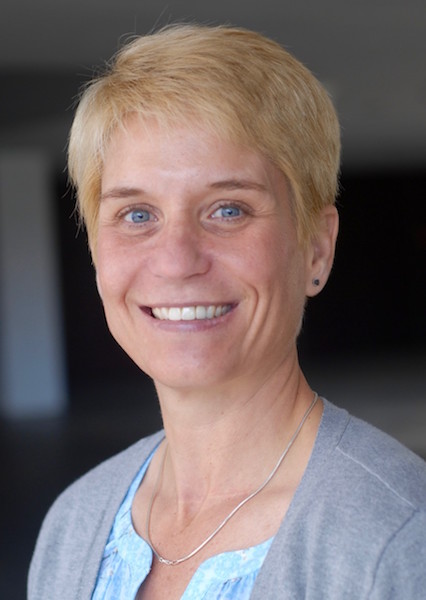
Commercial citrus growers are banding together to prevent the spread of the citrus-deadly Huanglongbing (HLB) disease and the pest that spreads it—the Asian Citrus Pysllid (ACP). Beth Grafton-Cardwell, an IPM specialist and research entomologist at UC Riverside and Director of UC ANR Lindcove Research & Extension Center, said growers are forming ACP management areas to prevent ACP from spreading HLB.

Elizabeth E. Grafton-Cardwell

Elizabeth E. Grafton-Cardwell

“ACP management areas are being formed by the citrus industry and community,” Grafton-Cardwell said. “They’re basically saying, ‘Let’s get together. Let’s form these groups of growers—25 to 35 growers in an area. Let’s work together as neighbors to treat across a large area and get more of the psyllids killed than if we each treated individually at different times.’”

HLB is a serious concern to growers, according to Grafton-Cardwell; the disease has already devastated the citrus industry in Florida. “We want to prevent that from happening here,” shel said.

According to the California Department of Food and Agriculture, ACP notices posted thus far in the first quarter of 2016 include the following areas:

            COUNTY                                                                 CITY

   Fresno County    Fresno
   Kern County    Bakersfield, Shafter, Wasco
   Imperial County    Bard, Brawley area, Calipatria, Niland, Winterhaven, Zone 7
   Los Angeles County    La Puente, San Gabriel
   Riverside County    Hemet, Riverside, San Jacinto
   San Bernardino County    Cadiz
   San Diego County    De Luz, Escondido, Fallbrook, Ramona, San Diego
   San Joaquin County    Stockton
   Santa Barbara County    Areawide, Buellton, Casmalia, Garey, Orcutt, Santa Maria, Sisquoc
   Santa Clara County    Milpitas, San Jose
   Stanislaus County    Oakdale
   Tulare County    Porterville, Strathmore
2021-05-12T11:03:03-07:00March 17th, 2016|
Go to Top