Associations, Organizations, Educational and Research Institutions

Food Safety: Protecting Consumers, Protecting Brands

The Acheson Group Lends Commodity Groups Food Safety-Based Brand Protection 

By Patrick Cavanaugh, Farm News Director

David_Acheson

Dr. David Acheson, Founder and CEO of The Acheson Group

With the overall importance of food safety, it’s important that growers remain diligent in the enforcement of their food safety protocols. Dr. David Acheson is the Founder and CEO of The Acheson Group; a consulting firm for food and beverage companies as well as those who provide technical support to the food industry.

He noted that part of risk management is taking the particular commodity into account. Things like leafy greens and cilantro are examples of some of the more high-risk crops. One method of mitigating the risks involved is through the adoption of good agricultural practices. “That gets back to everything from controlling the quality of water that you’re using to irrigate, especially if its spray irrigation,” said Acheson.

Some other ways of lowering risk include making sure the equipment that’s being used is properly sanitized, checking for animal encroachment, as well as being mindful of the time it takes to get the product refrigerated after its been harvested. Acheson noted that, “as soon as you chop it out of the ground, you’ve got exposed surfaces and you’ve got pathogens where bugs can grow.”

Another area of vulnerability is making sure employees follow the established food safety protocols. Acheson said that when his firm is assessing the risk of an operation, “We’re always looking for, not only are you talking the talk, but are you walking the walk.” Safety means relying on people to follow procedure, “Most companies have good policies and procedures written but do they translate in the fields? To the way the workers are operating?” Acheson said.

Ensuring that all of the safety measures come together in a coherent and effective way is the cornerstone to a successful agricultural operation. Acheson noted that, “The good operations, they’re going to walk the fields just before they harvest to look for any evidence of obvious animal encroachment and are continuing to watch as they move down through the field harvesting the product.”

(Food_Safety)_Flags_in_the_field_mean_stop_harvest_here

Flags in the field mean “Stop Harvest Here”

One way the USDA has tried to limit the risk involved in one particular crop was through the adoption of the California Leafy Green Products Handler Marketing Agreement. “I think it was a great step forward,” said Acheson. “I mean, really what it was doing was codifying good agricultural practices in California.”

The agreement has been so successful; it was used as a template for the FDA’s Produce Safety rule. By codifying good agricultural practices through the leafy green agreement, the FDA has taken it a step further with their increased area of jurisdiction. The “FDA has got global jurisdiction over leafy greens and produce that’s grown anywhere in the world that’s coming into commerce in the US,” said Acheson. “If you’re growing spinach in Salinas, or you’re growing spinach in Mexico, or anywhere in the world and you’re bringing it into the US to go into interstate commerce, you are required to follow the produce rule.”

Food safety is of great importance to farming operations of all sizes. “To me, no food company is too small to pay attention to food safety, they can’t.” said Acheson. He also noted that enforcement of safe handling practices is what sets some operations apart from others.

Acheson said, “That’s where you start to see the difference between the good ones and the not so good ones. Because the good ones will say, ‘this is a priority, we need to stop harvesting the rest of this field. It’s maybe 10 acres, but we’ve got to plow it under because we’ve got risks that we can’t control.’” Acheson continued, “That’s where you differentiate from the ones who will say, “well there’s ten acres, maybe we can use 9 of those acres and we’ll just plow under one acre of it.”

It all comes down to being diligent in the adherence to food safety directives. While it can sometimes be challenging for growers to always strictly abide by healthy agricultural practices, the alternative of being lax in enforcement could create dire consequences for not just an individual grower, but an entire commodity group.

2021-05-12T11:03:01-07:00June 15th, 2016|

Ricchiuti on World Nut & Dried Fruit Conference

Ricchiuti is Positive on Almond Industry 

By Patrick Cavanaugh, Farm News Director

Pat Ricchiuti, a third-generation diversified fresh fruit, olive and nut crop grower-packer-shipper and owner of P-R Farms in Clovis, attended the International Nut and Dried Fruit Council  (INC) World Congress on Nuts & Dried Fruit in San Diego early this month. Having met with industry handlers and traders from countries across the globe to discuss international almond prices, Ricchiuti’s observations were very positive for American nut growers.

Pat Ricchiuti, owner of P-R Farms

Pat Ricchiuti, owner of P-R Farms

“The greatest part of the conference was meeting a lot of good people—current customers and new people who handle and trade almonds globally,” said Ricchiuti.“We talked about the economic defaults in the Middle East, India and China and how they have affected current supply and demand.”

Ricchiuti said, “Everyone was questioning the 2 billion pound-subjective estimate for the almond crop,” USDA’s National Agricultural Statistics Service (NASS) early forecast about the coming Fall 2016 California almond crop developed after it is set [unripe nuts have emerged, ready to mature].

Many thought the subjective estimate was low—that more of a crop is out there. Some handlers and traders,fear that if we don’t have a good progress shipment report for this next month, it would be a disadvantage,” he said.

But, having a more positive outlook, Ricchiuti held that the crop is at least that amount and could be more. “It’s a reality but it shouldn’t scare everyone in the marketplace that tP-R Farms Logo Ricchiutihe price should go down any more. We need to be positive and I think the price can even move up a little more with the shipment reports being positive,” he said.

“We keep positive on shipment reports because everyone’s been buying hand-to-mouth. The warehouses are empty; there’s no one stockpiling almonds, even at the low prices. There’s hesitation in buying, but they’re buying on need and it’s picking up,” noted Ricchiuti.

Ricchiuti stated, “We just need to get these people away from thinking it’s doom and gloom and the sky is falling. It is not; it’s something that is very positive. First of all, there will be plenty of almonds to sell,” he elaborated.

We had a good shipment month last month and this month looks like it’s going to be good. People are still hungry for almonds; they still want almonds, but pricing is disrupting the market.”

“Even if it’s more than two billion,” Ricchiuti commented, “we think there’s a world market and demand from the consumer for almonds will continue.” He expects they will have less carryover [unsold crop], which will help with diminishing supply. “We feel it’s stabilized now. It has come up somewhat, about 50 cents a pound in the last few weeks.” he said, “so that’s been very positive.”

Ricchiuti explained, “We are looking forward to the objective estimate [in late June to early July] to really hone in where we are, what the May shipment reports will be, and move on from there. We just need to keep a very positive marketing attitude, keep selling almonds and keep selling the consumer on how nutritious and how good they are for you.”

Ricchiuti said conference topics included the immense nutritional value of almonds, how good they are for you and the diversified uses—”more so than any of the other nuts. We need to teach this younger generation to include almonds into their lifestyle. ‘Hey, have a handful of almonds every day.'”

2016-06-15T17:51:01-07:00June 15th, 2016|

VIDEO: Other Stressors, Not Pumps, Leading to Delta Smelt Decline

VIDEO: Wasted Freshwater in Failed Attempt to Save Delta Smelt and Salmon

By Laurie Greene, Editor

Other Stressors, Not Pumps, Leading to Delta Smelt Decline,” a video produced by Western Growers, explains why the communities, business, and farmland in the Central Valley and southward still experience regulatory water cutbacks that are extreme in some cases, while 3 billion gallons of extra freshwater flow out to sea in the failing effort to save the Delta Smelt from extinction.Western Growers logo

The VIDEO addresses this loss of freshwater unused by California residents and businesses still suffering from both drought conditions and environmental water cutbacks and that could have gone into water storage.

Decline in California Fish Population and Delta Smelt, Salmon

Western Growers accuses government agencies in charge of managing California’s water of restricting the Delta pumps far beyond what is required by the law. “As a result,” the association said, “billions of gallons of El Niño water have been flushed out to sea. Shutting down the pumps has not helped the Delta smelt and salmon recover, and government regulators are ignoring other stressors such as predation, invasive species and wastewater discharges.”

Delta Smelt Troll 2016

Delta Smelt Troll, Survey 6, 2016: “There were no Delta Smelt collected.”

______________________

Western Growers, founded in 1926, is a trade association of California, Arizona and Colorado farmers who grow, pack and ship almost 50% of our nation’s produce. Their mission is to enhance members’ competitiveness and profitability by providing products and services with agriculture in mind. Services include Affordable Care Act (ACA) compliant health benefits for farmworkers, cost-saving and environmentally-focused logistics, food safety initiatives and advocacy for members. 

They ask, “If you enjoy fruits, vegetables and nuts, support our members and the produce industry.”

Featured Photo: Delta smelt by metric ruler (Source: USFWS)

2021-05-12T11:05:55-07:00June 10th, 2016|

Drone Technology Benefits Agriculture

Drone Technology Useful for Calif. Ranchers and Growers

by Laurie Greene, Editor

Fifth-generation Parkfield rancher in southern Monterey County and 2016 Vice President of the National Cattlemen’s Beef AssociationKevin Kester, was introduced to the viability of potentially beneficial uses of owning and using a drone on his ranch for agricultural purposes.

Yamaha Drone

As owner and operator of Bear Valley Ranch & Vineyards, the family’s cattle and winegrape operations, Kester anticipated the biggest benefits of drone ownership would be the capability to check on cattle and ensure their safety from a bird’s eye view, and to determine water levels in reservoirs—a task that in the past could be completed only on foot or by vehicle. Cattle safety is especially important for ranchers, according to Kester, as the cattle industry has been experiencing stagnation in production.

Kester said having a drone would also helpful for security issues. He wants to detect human intrusion on his land, a problem that he experienced recently. “There have been some hunter-related trespass issues and people coming onto the ranch,” he said. “We’ve actually had cattle and horses shot.”

Kester, who is also a member of the California Association of Winegrape Growers, Paso Robles Wine Country Alliance and the Central Coast Vineyard Team, will purchase a commercial drone package and believes this modern technology will give not only cattlemen, but growers in California, a new way of assessing safety, production and maintenance.

2021-05-12T11:05:56-07:00June 9th, 2016|

BREAKING NEWS: First ACP Found In Monterey County

First ACP Found In Monterey County

By Patrick Cavanaugh, Farm News Director

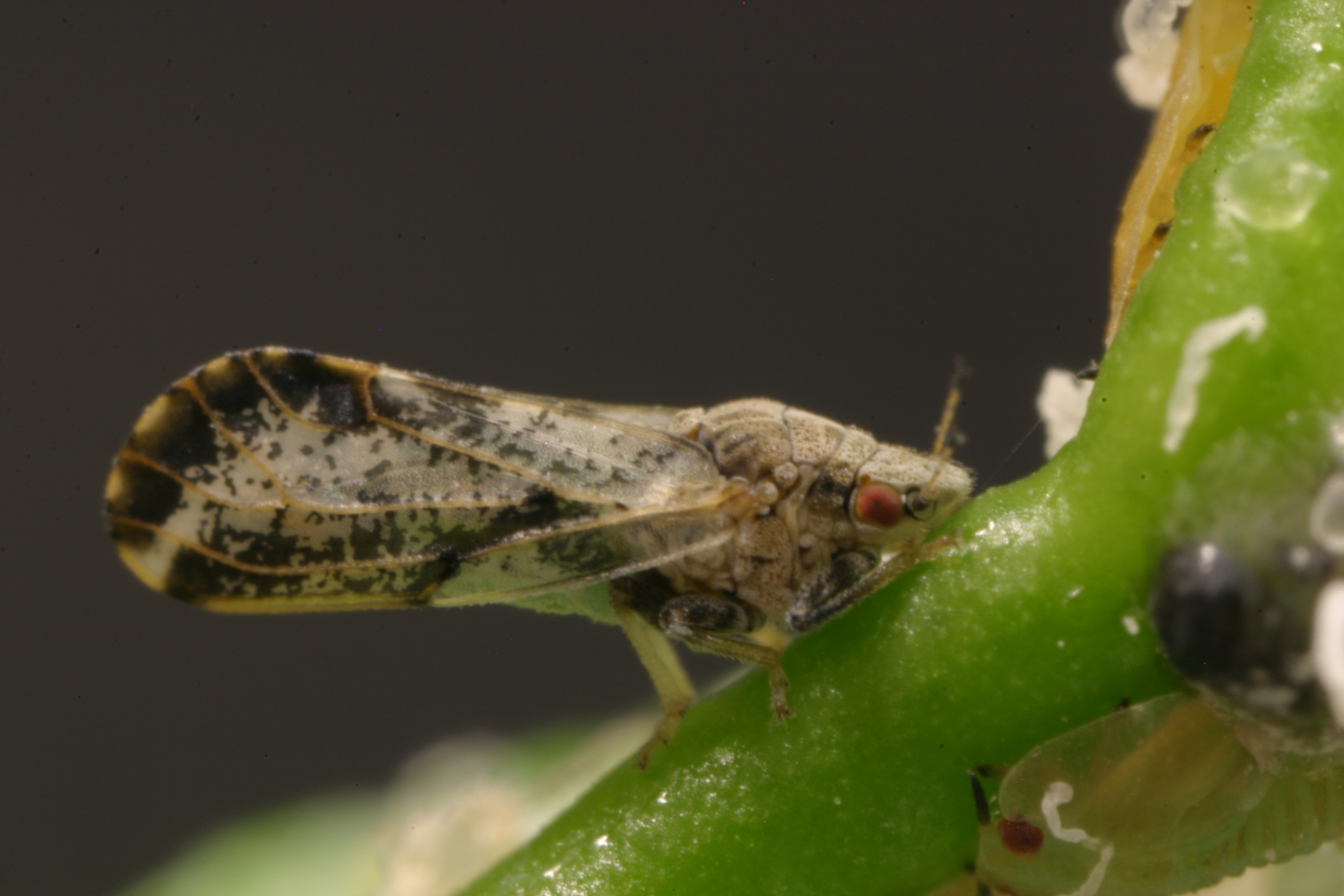
An Asian Citrus Psyllid (ACP) has been found in Monterey County, thus expanding the ACP Quarantine in the state. This is breaking news as the ACP vectors or has the ability to carry a fatal citrus bacterial disease known as Huanlongbing (HLB) or citrus greening.

Save our citrus from citrus greening

Save our citrus

“It was in a residential area of northeast Salinas,” said Bob Roach, assistant ag commissioner for Monterey County, “and it’s not really unexpected because, with the exception of Santa Cruz County, we are surrounded by other counties where ACP have been identified on the sticky traps.”

This ACP find was in a residential yard, just north of Salinas. “The most likely cause,” said Roach commented, “When you find it in a residential area, the likely source of the introduction is when people move plants around” from other regions where the psyllid is present.

The California Department of Food and Agriculture (CDFA) will begin the trapping next week,” Roach explained. “They flood the area with traps and then take care of the treatments.” CDFA will coordinate spray programs within 800 meters from the find. “They’re all set up for that,” said Roach.

Featured Image: Adult ACP (Source:  The Citrus Pest & Disease Prevention Program)

2021-05-12T11:03:01-07:00June 9th, 2016|

Dry Weather Affecting Cattle Ranchers

Cattle Ranchers Hit Hard in the South Valley, Move to Greener Pastures

by Emily McKay Johnson, Associate Editor


Josh Davy, a University of California, Division of Agriculture and Natural Resources, Cooperative Extension livestock, range and natural resources advisor in Tehama County reported good news for the cattle industry despite dry weather conditions around the state.

Josh Davy, UCCE Tehama County

Josh Davy, UCCE Tehama County livestock, range and natural resources advisor (Source: UCCE Tehama)

Heading into last fall, the feed year started off relatively dry, according to Davy; however the end-of-season crops produced a better forage than the year before. Though prices slid for the cattle farmer, Davy said optimisticly, “We’re happier on our range conditions—as compared to the previous years that we’ve had—by a long shot.” he said.  

The drought that plagues California still directly impacts cattle ranges, and ranchers are not quite out of trouble. Davy had to resort to feed supplementation through the month of December. “We didn’t have to supplement as much as in the previous few years,” he said, “but we definitely did this fall.” Fortunately the winter months were short and the spring rainfall produced good growth—good assurances that will help Davy and his team make it through next year.

Cattle-on-I5Davy has fortunately sidestepped hardship with a tinge of luck, but it hasn’t been as easy for ranchers in the south of the state. When cattle lack enough sustenance, a domino effect is felt all across the state of California; a lactating cow may not produce enough milk to feed her calves.

The cows like lush grass, a rarity in the Central and South Valley summer months. Winter options for cattle are either winter range ground or mountain meadow ground where greenery is still prevalent. Some ranchers haul their cattle to summer pasture feedlots to graze, while some prefer Oregon instead.

“We’re dried off here to where you might find a swell with a little rye grass in it that’s still green,”Davy said regarding the disappearance of lush land, “but pretty much everything else, the oats and all that stuff, they’re done here.”

Looking forward, Josh Davy is hoping irrigation water will sustain not only the beef cattle, but the pastures as well, to keep the herds stationary and munching on green grass.


2021-05-12T11:17:13-07:00June 8th, 2016|

Boost in Butte County Rice Production

Butte County Rice Growers and Communities Are Optimistic

By Emily McKay Johnson, Associate Editor

Butte County rice growers are all smiles this year as regional filled-to-capacity water allotments have progressed crop production in a very timely manner. Randall Mutters, the county director of the University of California (UC) Cooperative Extension in Butte County, specializes in rice production.

Randall Mutters

Randall Mutters, county director of the UC Cooperative Extension in Butte County (Source: UCCE Butte County)

Butte County, known as the “land of natural wealth and beauty,” hosts the second largest acreage of rice in California and a population of over 220,000 residents as of 2012. Rice production is imperative for supporting local growers and surrounding communities. Mutters reiterated, “When the agricultural base is doing well, the community as a whole prospers.”

As growers continue to cultivate their rice, businesses and communities in the area are incredibly optimistic. Mutters explained, “I fully expect to have close to 500,000 acres of rice planted this year,” a remarkable number compared to last year’s 425,000 planted acres.

Mutters said, “It’s been relatively warm and dry, with just a few sprinkles here and there, but not enough to really slow down operations. The season is progressing very timely.” Also encouraging to Mutters, is pests that are typically an early season problem, have not been troublesome this year.

The UC Cooperative Extension in Butte County monitors and protects the agricultural industry by offering educational resources to promote technology and other strategies for farmers. Though the price of rice is not very strong, the community as a whole is enjoying their success.

2021-05-12T11:00:54-07:00June 7th, 2016|

The Fight Against the Asian Citrus Psyllid

California Citrus Mutual on the Fight Against the Asian Citrus Psyllid and HLB

By Laurie Greene, Editor

On Saturday, June 4, 2016, Patrick Cavanaugh, California Ag Today’s farm news director, hosted iHeart Media’s Ag Life Weekend show on “Power Talk 96.7 FM Fresno and 1400 AM Visalia stations, sitting in for broadcaster Rich Rodriguez. Cavanaugh’s invited guests included Alyssa Houtby, director of public affairs, and Chris Stambach, director of industry relations for the Exeter-based California Citrus Mutual, to discuss the status of the state’s citrus industry amidst the ACP and HLB Infestation.Ag Life Weekend

The Asian Citrus Psyllid (ACP), certainly the number one pest for California citrus, can spread a bacterium known as Huanglongbing (HLB) that is fatal to citrus trees. As of 2016, 22 trees in the state have been infected with the fatal disease and had to be destroyed. The entire citrus industry of California has been and continues to be concerned that the ACP could take down the citrus industry, as it has in Florida.

Alyssa Houtby explained that the fight against ACP in California “is going well, we hope. The Florida citrus industry has been completely decimated by HLB; an estimated 90 percent of their acreage is infested with this disease.”

Asian Citrus Psyllid Evidence on New Growth (Source: California Ag Today

Asian Citrus Psyllid Evidence on New Growth (Source: California Ag Today)

“Here in California,” Houtby continued, “we saw it crop up in residential citrus before we saw it in commercial citrus. All of the HLB finds, to date, have been in the Los Angeles Basin.” Houtby said they are working diligently to keep the psyllid population down to decrease the exposure of trees to HLB.

The California citrus industry spends approximately $15 million annually on an ACP assessment program, which includes extensive public outreach. Part of the research entails trapping the pest, conducting survey work in the regions in question, applying treatments in residential areas, and managing a delimitation survey around the area of Los Angeles where the disease has populated.

“That means that we’re scouting very consistently,” explained Houtby, “looking for other trees with the disease and pulling those trees out as soon as we find them. We are doing everything we can here in California to keep the pest and disease from spreading—now that we have it,” she noted.

Alyssa Houtby, director of public affairs, California Citrus Mutual

Alyssa Houtby, director of public affairs, California Citrus Mutual

“The California industry has always been one to use a proactive approach,” Houtby elaborated. “We saw what happened in Florida, and we realized really early on that we couldn’t stand by and wait for this disease to find us. We had to actively go look for it and find it—before it found commercial citrus—and we’ve done that.” Regarding the 22 trees in the state that have been destroyed thus far, Houtby said, “It could be a lot worse if we weren’t as proactive as we are.”

When locating a positive ACP find in a residential area, Houtby noted, generally speaking, homeowners have mostly been compliant. “There are pockets in this state where folks don’t like government coming in, knocking on their door and asking to spray their trees with pesticides. We understand that. It’s an opt-in/opt-out scenario here. We’re not forcing homeowners in most cases to treat their trees.”

Chris Stambach

Chris Stambach, director of industry relations for California Citrus Mutual

“But that’s a different situation if HLB is present,” she emphasized. “Then we do. We get a warrant, and we go in and treat the surrounding trees. If we’re treating in response to an ACP find, homeowners can opt out, but overwhelmingly, they don’t. They support our program. They understand that citrus is a part of the California heritage, they like their citrus trees, and they want to keep them in their yards. They understand that the alternative to not treating is that tree will eventually die if it becomes infected. We’ve worked really hard to communicate to the general public about the seriousness of this issue. We’re pleased with the results.” Houtby said.

Chris Stambach discussed the importance of homeowners having a general understanding of the ACP, so if they find something unusual in their citrus tree, they know to call the local ag commissioner.

Stambach detailed ACP and HLB specifications to increase homeowners’ understanding about their beloved citrus trees. “HLB is symptomatic, but it takes a long time for those symptoms to show up in the tree,” said Stambach. “You really have to know what you’re looking for because some fertilizer deficiency issues in the tree will mimic what HLB looks like.”

“Though the ACP is a really tiny little bug, there are some key signs the public can look for,” explained Stambach. “You want to look for that psyllid and the little tubules it excretes on the new flush of growth—pretty much right there at the end of the terminals where all that new growth comes in the springtime and in the fall. That’s key to California, because there are only certain times of the year when that ACP is actively feeding on the citrus tree.”

California has a real benefit over the Sunshine State, where they have to spray 12 times a year to keep the psyllids at bay. “It hasn’t been effective for [Florida],” noted Stambach. “We had a couple of growers out this last winter to our Citrus Showcase. They planted new trees, 4 years old, and although they spray 12 times a year, their orchards are 100% infected with HLB. That’s the devastation that this insidious disease can bring. It’s really difficult to get your hands around it because it takes so long to be able to detect it.”

Another benefit for California citrus, according to Houtby, is, “We have a lot of areas in the state where we don’t have to spray at all because we can use beneficial insects. That’s just the great part about farming in California.”

Asian Citrus Psyllic Yellow Trap 2 (Source: Citrus Pest & Disease Prevention Program)

Asian Citrus Psyllic Yellow Trap (Source: Citrus Pest & Disease Prevention Program)

Houtby and her team often look to Florida for ideas and recommendations on what has worked for them, what hasn’t and what citrus growers here can do to prevent the disease from taking hold of their citrus. She clarified that 90 percent of the Florida citrus market is used for juice production; whereas, California is a “fresh-oriented industry, meaning that over 90 percent of our product goes into the fresh market.”

Although California citrus looks for recommendations from Florida, “here in California, there are a lot of things that we can’t afford to do because of the [fresh] market that we’re serving,” said Houtby.”  That is what we’re fighting so hard to maintain because we cannot sustain as long as Florida has; we don’t have the luxury of sending a bad-looking piece of fruit into the marketplace like Florida can, because they just juice it. Knowing that, we’re working really hard to never get to the point that Florida has reached.”

As if the dire situation in Florida couldn’t be any worse, they battled with “another deadly bacterial-based citrus disease, citrus canker, brought in from the far reaches of the world,” Stambach said. “That’s a concern we always have with importing citrus. When we import Argentine lemons, for example, we risk our domestic plant health by exposing orchards to a lot of plant diseases they have that we don’t. We want to keep those out of our country,” noted Stambach.

Abandoned citrus trees also pose problems for the industry; they can be sanctuaries for ACP. “If those trees are dead, that’s not a problem. They may look bad, but if they are not living, that’s not a problem. It’s when those trees aren’t cared for, aren’t sprayed in a normal routine, and there is a flush of new growth, the trees provide a sanctuary for the psyllids,” he said.

Abandoned Citrus

Abandoned Citrus

“And ACP are very good at finding citrus. They’ll target the perimeters of new growth on the very first citrus they find. Boom, they’re right on it,” he noted.

“Those abandoned groves create a real problem, particularly when they’re in close proximity to other commercial acreage or even homeowners,” he said. Neglected neighborhood citrus trees can become ACP sanctuaries. “ACPs will feed on them and move on to another tree, and feed there,” Stambach explained. “All that time, if an ACP is infected with the HLB bacteria, it will spread that disease, with a latency period of 2 to 5 years.”

Stambach and his team are working on a critical program in Southern California to remove abandoned citrus trees. “Sometimes it’s just getting a hold of the landowner and making them aware of the situation,” he said. “Our county ag commissioners are really key in contacting those people. We’ve had growers go in and spray their neighbor’s orchard to help them out. There are a lot of different ways to attack that problem.”

Compared to counties in the San Joaquin Valley, Riverside and Ventura Counties typically have a big-ag urban interface, which means there is a lot of acreage intermixed with home sites—small homes with citrus trees. Stambach said, “It’s not really commercial production, but it’s a significant amount of acreage with a number of trees that don’t get treated.”

“We’ve gotten some support from some of our partners in the chemical industry. Bayer CropScience has stepped up and worked with us to put together a program. We’re really happy. We’re working hard to take [ACP and HLB] out.” Stambach said.

“Fresno has even found ACPs in residential areas,” commented Houtby on the Central Valley situation. “ACPs are endemic in Southern California, but we’re still at a point in the Central Valley at which we can control these populations and knock them down really quickly when they arrive here.”CA Citrus Mutual

Houtby points to the Central Valley’s vulnerability when citrus plant material is moved over the grapevine or from the Central Coast. “We ask that homeowners, and the citrus industry as well, not move plant material out of Southern California into the Central Valley,” she stated. “The psyllid lives on that plant material and not on the fruit. If you’re going to buy a citrus tree, buy it at a local plant nursery or a local Home Depot or Lowe’s. Don’t buy it in Southern California and drive it to the Central San Joaquin Valley,” she urged.

“Our biggest task for homeowners is that they cooperate when the California Department of Food and Agriculture knocks on the door and wants to look at their trees,” Stambach said. “That is the best way you can help us win this battle against the ACP.”

Homeowners can learn how to protect their citrus trees at:

CaliforniaCitrusThreat.org

U.S. Department of Agriculture

California Department of Food and Agriculture

University of California Cooperative Extension

Contributors to this report include Patrick Cavanaugh and Emily McKay Johnson.

2021-05-12T11:05:56-07:00June 6th, 2016|

California Depends on National Dairy Month

National Dairy Month Encourages Americans to Eat More Cheese

By Patrick Cavanaugh, Farm News Director

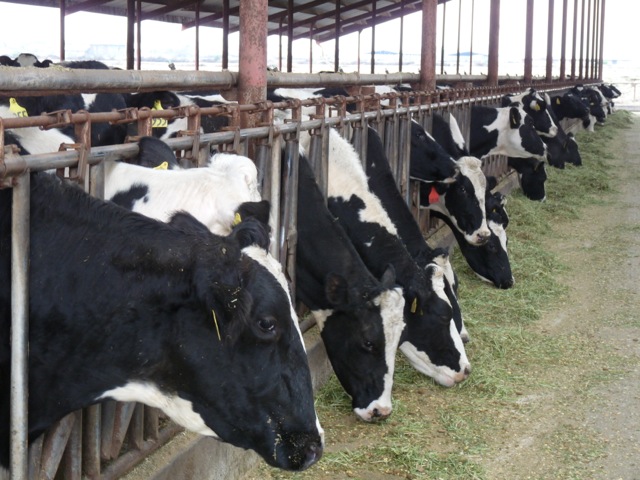
Across the country, National Dairy Month will be celebrated during the month of June to promote the consumption of dairy products. Though California is the number one dairy state, California dairy farmers have been experiencing a decline in dairy production amidst high labor costs, competition from other states and declining profit.

Founded in 1937 as National Milk Month with the goal of increasing milk consumption to stabilize the dairy surplusthe holiday was renamed National Dairy Month to encompass all dairy products.

Anja Raudabaugh, CEO of Western United Dairymen

Anja Raudabaugh, CEO of Western United Dairymen

Anja Raudabaugh, CEO of Western United Dairymen in Modesto, Calif., is hopeful that celebrating National Milk Month will educate more consumers about the health benefits of diary products, increase dairy consumption opportunities, open more markets and enable the lagging dairy industry in California to better compete with other states.

States such as South Dakota and Wisconsin have ramped up their milk production significantly, which has stressed California producers to even the gap. According to Raudabaugh, the term oversupply doesn’t necessarily apply to the dairy conditions in this state. She remarked, “We’re actually in a 17-month decline at the moment, which is the longest decline [in milk production] we have ever been in.”

The dairy industry has managed to be very competitive with wages, another stressor, but the high labor costs are hurting production companies. “As things get more and more competitive globally,” said Raudaubaugh, “we are going to continue to struggle to figure out how those margins play out.”

“The margin is going to continue to shrink, especially as wages get more and more competitive,” Raudaubaugh observed. “Being a worker on a dairy farm is certainly very wage-competitive throughout the agricultural industry. We cannot keep workers at anything less than about $16 or $15 an hour as it is, so it’s a good time to be a worker in the dairy industry. It’s a good craft and skill to have if you become a milker.”Real California Cheese Logo

Given Western United Dairymen’s mission to promote and administer programs and policies aimed at maintaining the longevity of the dairy industry on the West Coast, and as the milk industry struggles and continues to face tough times, Raudabaugh has a solution: “Eat more cheese.”

Enter: National Cheese Day every June 4! According to the California Milk Advisory Board website and California Department of Food and Agriculture (CDFA) 2014 data, California is the #2 cheese producing state—right behind Wisconsin—and the #1 producer of Monterey Jack cheese. An amazing 43% of California’s cow’s milk is used to make California cheese, which is produced by more than 50 California cheesemakers.

Even beyond cheese, Raudabaugh said, “There is a tremendous amount of diversity in the way people have exposure to dairy products they don’t even know about. There are yogurts and sour creams, ice creams, and whey products.”  She believes market sectors should understand more about the dairy products consumers are exposed to every day to increase not only more milk consumption, but higher-value dairy as well.

“The diversification of the product line is really what has kept us in business,” reflects Raudabaugh, “It’s what keeps us looking to the horizon and looking to the future optimistically, even in the face of some pretty bad milk prices right now.”

Remember California dairy producers, particularly, this monthNational Dairy Month, and try a new dairy product. And discover a new cheese tomorrow, June 4, National Cheese Day!

2021-05-12T11:17:13-07:00June 3rd, 2016|

It’s Avocado Month!

Celebrate the Magic of California Avocados.

By Emily McKay Johnson, Associate Editor


Chefs and foodies alike, get ready for California Avocado Month which begins TODAY, June 1st. Menus across California are celebrating this magical fruit, not only for its postive health benefits as a source of Omega-3 and Vitamin E, but also for its resiliency to thrive in spite of the prolonged drought.

california-avocados-logo


“Avocados are at their peak of the season,” said Jan DeLyser, vice president of marketing for the California Avocado Commission (CAC), “so we’re in very good supply and their eating quality is just second to none.”


Avocados are so diverse, they can be incorporated into daily menus for breakfast, lunch, dinner, snacks, beverages and even desserts. Consider celebrating summer gatherings with chocolate avocado pudding, avocado ice cream or, perhaps, even an avocado cake. Links to recipes are included at the end of the article.


Would you believe California avocados can be used as a butter alternative—with 300 fewer calories per quarter cup serving?


Despite entering year five of the drought, California and its farming industry received enough rain in the northern part of the state this year to replenish reservoirs and actually increase this year’s avocado harvest. Roughly 4,000 growers on approximately 53,000 acres have harvested 392 million pounds of avocados.


“We actually have more fruit this year than we had last year,” acknowledged DeLyser. “Our growers are continuing to be good stewards of the resources that are available to them and able to produce avocados for us all to enjoy throughout the summer months.”


The CAC’s collaboration with chefs around the country to feature California avocado items, helps support growers of the tree-bearing fruit in the state. Approximately 90 percent of the nation’s avocado crop comes from fertile, California soil, mostly on small family farms, which can ensure the avocados are carefully handled and inspected.


Recipes incorporating delectable avocados:  Chocolate Avocado CakeAvocado Ice Cream

2021-05-12T11:05:56-07:00June 2nd, 2016|
Go to Top