Associations, Organizations, Educational and Research Institutions
California Pistachios Are Set For Record Year

California Pistachios Make Comeback in 2016


By Brian German, Associate Broadcaster

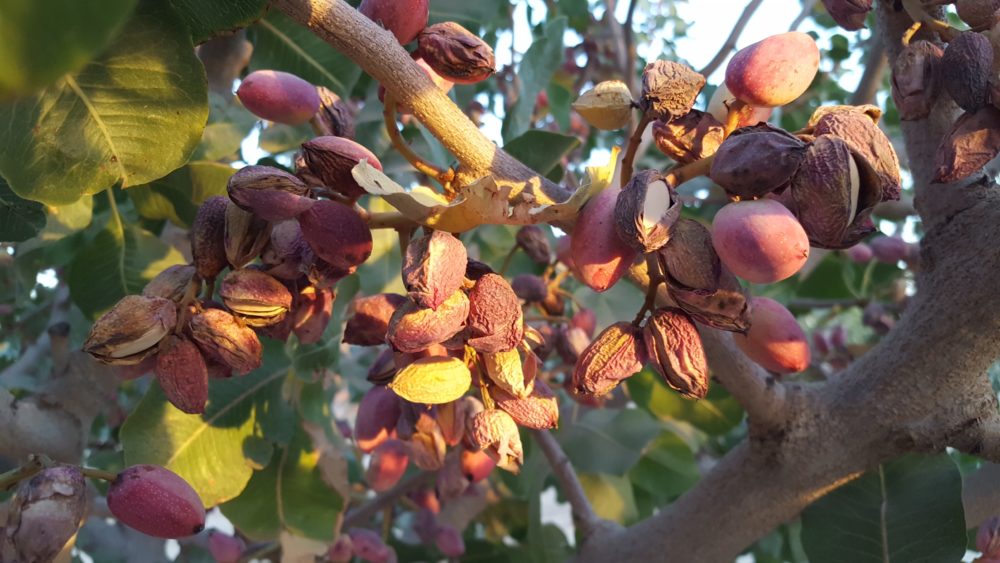
California produces close to 99 percent of the nation’s pistachios. With harvest season just about wrapped up, growers are pleased with this year’s crop. 

Last year was a slow one for pistachios, with only 275 million pounds produced.  Because pistachios are alternate-bearing [tendency for an entire tree to produce a greater than average crop one year and a lower than average crop the following year], last year’s disappointing crop allowed the trees to rest before producing this year’s estimated record crop. 

Richard Matoian, executive director, American Pistachio Growers, estimated this year’s crop to be between 830 and 850 million pounds. The last record-setting crop was in 2012 when growers produced 555 million pounds of pistachios.  This year, some California growers have reported broken branches due to the heaviness of the crop, a phenominon Matoian has never seen before.  

Just as last year’s lower harvest enabled the pistachio trees to bounce back this year, increased rainfall last winter helped improve irrigation supplies for the nut trees this year. 

In addition, more chilling hours last winter also helped boost production.  Pistachio trees require cold nights, with at least 800 hours of temperatures below 19 degrees Fahrenheit.  This winter, trees experienced more than 1,000 hours of those conditions. 

Reports indicate that the pistachio crop from Iran, one of our biggest global competitors, is a bit down this year, which could help California growers get a better price for their pistachios.  “We all hope and try to keep the market as strong as it can be,” said Matoian, “but there are market forces at work. You can’t hold on to a crop forever. You have to be conscious of what the world supply is, and so a number of factors go into setting a price.”

Growers are pleased with the overall size of the harvest compared to last year, but they’re also a bit concerned about the prices. “The initial price the growers got last year was somewhere between $2 and about $2.20 per pound. Now we are at a $1.60 to about $1.80 per pound,” Matoian said.

2016-12-12T18:48:36-08:00November 10th, 2016|

US Citrus Industry Working Together on ACP, HLB Funding

Critical ACP, HLB Funding Comes Only After Industry Helps Itself

By Patrick Cavanaugh, Farm News Director


State Citrus Mutuals in California, Texas and Florida are diligently working in Washington, D.C., for $10 to 12 million in annual funding to help their citrus regions fight Asian Citrus Psyllid (ACP) infestation and Huanglongbing (HLB), the disease that ACPs vector.

The three Citrus Mutuals have collaborated well for the half dozen years of the American ACP invasion. Initially, the Florida Citrus Mutual team developed the Citrus Health Response Program (CHRP),” said Joel Nelsen, president of California Citrus Mutual.

Joel Nelsen, president of California Citrus Mutual, acp and hlb funding

Joel Nelsen, president of California Citrus Mutual

“They initiated it at a very minor funding level. However we sat down with them and said, ‘Look, this is an opportunity to ensure that all of the U.S. citrus industry can work together to protect itself from Huanglongbing.’ They were gracious enough to say okay. We exerted our leadership because we had people in positions in Washington who could be very beneficial to this,” Nelsen said.

“Initially it was a Florida/California effort. We said we need to double the size of the CHRP program and allocate more dollars to California, some to Texas, and some to Arizona. Now everybody is participating to the extent that they can. Today, it is still a Florida/California effort and a Florida/California-run program in partnership with USDA.

Nelsen said those involved are working hard to protect the citrus industry, and not just chasing a problem. Funding has been helpful to California. Only after the industry does all it can, will the state expect the federal government to help.

“It’s true for all three states’ industries,” Nelsen said. Unfortunately, Texas made a mistake. They did not have a policy in place to immediately remove an HLB-infected tree. As a result, they have an HLB infection spreading.”

“Texas is being adversely impacted on the dollar level. We don’t want to see that industry die, so there is a partnership that does exist on behalf of our colleagues,” Nelsen said. “We can’t afford to make mistakes like that.”

“In order to justify the continued progress of funding on an annual basis we are going to have to continue looking ahead, taking the steps necessary and doing what is needed to protect the citrus industry from the spread of Asian Citrus Psyllid and Huanglongbing.”

“We definitely have to show progress. We can’t ask homeowners to spray their trees if in fact we are not spraying ours. We can’t ask the federal government to continue helping us looking for ACPs if we are not willing to tarp our trucks to stop the spread of it. If we’re not willing to do a coordinated spray program then why should the government help us in finding HLB? If we are allowing snake oil merchants to conduct research projects, why should the federal government fund those?

2021-05-12T11:05:44-07:00November 9th, 2016|

FFA Jackets Giving Tuesday Campaign

FFA Jackets Needed for Members

By Laurie Greene, Associate Editor

We have Black Friday, Cyber Monday, and the newest opportunity, #GivingTuesday—a global day of giving that has grown into a movement uniting people around the world on November 29th, the Tuesday after Thanksgiving.

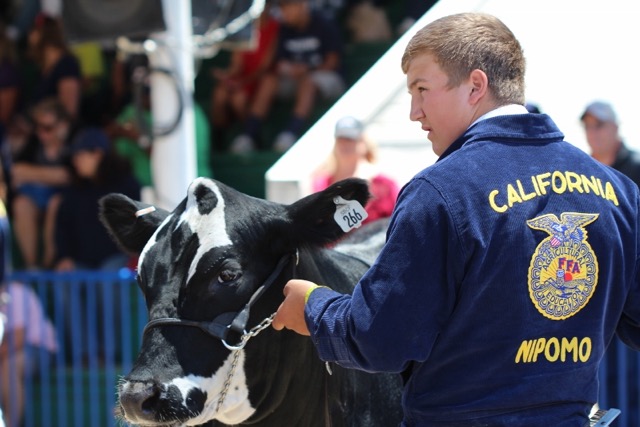
There’s a big #GivingTuesday campaign for the California FFA to purchase 100 of those iconic blue FFA jackets for members in need.

dsc_83311

FFA Members explore a diverse range of opportunities in agriculture

Katie Otto, development director of the California FFA Foundation said, “We have approximately 84,000 members in California, and 324 different chapters. Our members say having a jacket makes them feel like they are a part of something,” she said.

“It’s something that they hold on to. It makes them feel unified in what they’re doing. ‘Not to mention, a lot of our students wear jackets to field days,” Otto noted.

“They wear them at their county fair when they show, at chapter meetings and conferences. The list goes on and on in terms of opportunities where they wear their jackets.”

Each $65 raised will purchase a jacket along with an FFA tie for young men and a scarf for young women. 

Black Friday and Cyber Tuesday are all about getting things; #GivingTuesday is set aside for giving. Of course you do not have to wait for #GivingTuesday for the FFA campaign. You can donate anytime, now and even beyond Nov. 29.

How can you donate to the FFA #GivingTuesday campaign? Go to calaged.org/givingtuesday.

Credit cards and Pay Pal accounts are accepted.

2016-11-10T11:09:44-08:00November 8th, 2016|

Nov 9 Annual Ag Awards Luncheon Honors Manuel Cunha, Booth Ranches

Manuel Cunha, Agriculturist of the Year

By Laurie Greene, Editor


On Wednesday afternoon, November 9, the Who’s Who of Agriculture will gather at the long-standing celebratory Annual Ag Awards Luncheon in Valdez Hall at the Fresno Convention Center to commemorate the achievements of an individual and a company in the County’s agricultural industry.


Fresno Chamber of Commerce logoNathan Ahle, president and CEO of the Fresno Chamber of Commerce, said, “We are very excited about this. This is the 33rd time the Fresno Chamber has presented the Agriculturist of the Year Award, and the 21st time the Fresno-based CPA firm Baker, Peterson and Franklin has presented the Ag Business of the Year Award. We recognize that Ag is really the life-blood of our economy. This event is an honor to do and something we take great pride in.”


This year’s Agriculturist of the Year Award recipient is Manuel Cunha, president of the Fresno-based Nisei Farmers League. “Everybody knows Manuel Cunha—a legend in Valley Ag as president of the Nisei Farmers League for two decades,” Ahle said. “ This gentleman is a force to be recognized with when it comes to fighting for our farmers, fighting for water, fighting for anything and everything that has to do with agriculture in the Central Valley.”

2016 Fresno Chamber of Commerce Agriculturist of the Year recipient, Manuel Cunha, president, Nisei Farmers League.

2016 Fresno Chamber of Commerce Agriculturist of the Year recipient, Manuel Cunha, president, Nisei Farmers League.


Nisei Farmers League, established in 1971, informs grower members about ever-changing regulations and policies and provides legal assistance for labor and workplace-related issues. The league’s leadership and staff maintain a close working relationship with local, state and federal agencies and legislators to assure grower interests are adequately understood and defended.


The League also collaborates with other grower and agricultural organizations in California and other states to help provide a powerful and unified voice for the agricultural community.  The Nisei Farmers League is all about strength, clear focus and growers looking out for growers and farmworkers.


This year’s Ag Business Award recipient, Booth Ranches, is a premium San Joaquin Valley citrus grower. Otis Booth, Jr. founded Booth Ranches in 1957 on 40 acres by the foothills of the Sierra Nevada Range near Orange Cove.

booth ranches logo


Today, Booth Ranches is still family owned and operated on acreage from Orange Cove in the Northern San Joaquin Valley to Maricopa in Kern County to the South. Pasadena-born, fifth-generation farmer Loren Booth currently manages Booth Ranches which boasts premium Navel oranges, Valencia oranges, Cara-Caras, Minneolas and W. Murcott Mandarins that are distributed worldwide.


The selection panel went through a tough selection process, according to Ahle. “Those who have been in the Valley longer than I have tell me this is the strongest group of candidates for the award that we have ever had. I think it just speaks to the great passion that we have for Ag in this community, and Manuel Cunha and the team at Booth Ranches are great, great recipients.”

2016-11-10T10:50:56-08:00November 7th, 2016|

Water Diversion Lessons from Australia

Australian Water Woes: Water Diversion Will Not Save Fish


By Laurie Greene, Editor


Mike Wade, executive director of the California Farm Water Coalition, spoke to the CDFA Board of Directors about the State Water Resources Control Board’s proposed strategy of diverting up to 40 percent of the Tuolumne River flows to increase flows in the Delta for salmon and smelt. The diversion would severely impact farm and city water needs in both the Turlock Irrigation District (TID) and Oakdale Irrigation District (OID).


“Despite increased [water] flows over the years, the fish populations continue to decline in the Delta,” Wade said. “We have exacerbated this problem. We have released water with the intent going back to 2008 and 2009 [scenarios] and even before, if you want to turn the clock back to 1992, and yet we’re still seeing population crashes.”


“The science is showing that fish are not recovering. Yet, the California Department of Water Resources is doubling down on the same kind of activity—the same strategy—that hasn’t worked in the past and that we do not expect to work moving forward,” he said.


Mike Wade

Mike Wade, executive director of the California Farm Water Coalition.


“That is why schools, health departments, farmers, Latinos, economic development departments have opposed the regulation. A host of folks have come out and commented, written letters, and expressed their opinion on the plan because of the severe economic issues they are going to deal with at the 40% impaired flow level.”


Wade noted that in recent years, a lot of attention has focused on Australia and how great they are at water management. People commend their effectiveness in changing their water rights system and supposedly improving their ecosystem—or having a plan to work on their ecosystem issues. “In 2009, the vast agricultural production in the Murray-Darling Basin Authority established a flow amount, or a quantity, for environmental water that was around 2.2 million acre-feet. That is out of around 26.4 million acre-feet of average annual flow in the Murray-Darling Basin,” Wade said.


“To set the stage, the Murray-Darling Basin is in eastern Australia. It extends in the north around 800 miles from Gold Coast and the border of Queensland all the way south to Melbourne,” Wade said. “It is actually a geographic area about the size of California and remarkably has a very similar quantity of water to serve its farmers. The Murray-Darling Basin Authority set a 2.2 million acre-foot environmental water buyback for the environment, like we are talking about here.”


Wade conveyed to the CDFA Board what his friends in Australia were telling him. “I was there for two weeks in August following up on a trip I took in 2012 to learn about their water supply issues and how they deal with it. My friends are telling me, ‘Don’t do what we do. It has been a disaster,’” Wade said.


“The environmental sector hasn’t even achieved their full environmental buyback goal, and they’re already seeing 35% unemployment in some towns. It is directly related to the water buybacks, the declining amount of irrigation water, and the declining agriculture economy because of the change in focus on how they deliver and use water in Australia,” he said.


“Three weeks ago—this is how recent these things are coming about and how they’re changing—a good friend of mine, Michael Murray, Cotton Australia general manager, said the ‘Just Add Water’ approach already in place doesn’t work in the Northern Basin. It has to be abandoned. And recently, Ricegrowers’ Association of Australia, Inc. of Australia President Jeremy Morton said, ‘The over-recovery of water has resulted in unnecessary economic harm to communities. It’s a case of maximum pain with minimum gain.'”


“A dozen organizations are suggesting this isn’t just a, ‘Don’t do it’ and ‘Abandon the environmental water buybacks.’ What they’re suggesting is the exact same thing that TID and OID are going to experience. Australia’s problems in the Murray-Darling Basin are, remarkably, invasive species, the loss of habitat, and some of the water quality issues that we deal with. It’s the same story, only they are a few years ahead of us,” Wade said.


“What has happened in Australia is going to happen to us in the Valley, with big unemployment issues and the closed businesses,” Wade said. “I walked down the main street in the town of Helston and half of the businesses—I’m not exaggeratinghalf of the businesses were boarded up and closed. Only small businesses were still open, such as a convenience store, a bar and a tailor. All the rest were gone.”


Wade asked CDFA Secretary Karen Ross to extend the comment period for the Water Board’s proposal. “We all need to have an opportunity to bring some of these issues to light and to support what’s going on in the agriculture community. We must support the need for comprehensive economic studies, either bringing out the ones that have been done or doing some more. We have more economic data will show there is an economic hit that’s deeper, much deeper, that what is proposed or suggested in the plan.”

2021-05-12T11:05:44-07:00November 4th, 2016|

Celebrating California Agriculture . . . on World Vegan Day!

Celebrate World Vegan Day!

Peterangelo Vallis, executive director of the Fresno-based San Joaquin Valley Wine Growers Association, has an insightful viewpoint on California agriculture. That’s why California Ag Today considers him to be our Ambassador of Agriculture, and we’re glad he’s on our team.

In Celebration of World Vegan Day, Peterangelo Vallis addressed the need for California farmers to think about and engage with all the people who eat fruits and vegetables, including vegans*, environmentalists and fringe groups:

Yellow Bell Peppers, world vegan day

Well, vegans and environmentalists eat more fruits and vegetables than anybody. Guess what we make?

Look, I love a juicy steak, the same as most people. But frankly, most of my plate is vegetables. If somebody is buying something, they’re buying vegetables, and they want fresh vegetables. Vegans can get those in California, because they’re close enough to us. Let’s face it, these are highly perishable items and they’re going out there. Yet, we tend to vilify the same people that are paying our bills by buying our stuff.

Criticizing vegans is crazy. You don’t see Louis Vuitton making fun of middle-aged women. It’s just not what happens because they want you to buy more bags.

Big Vegetable Bin, world vegan day

Everybody eats fruits and vegetables. If they don’t, they should, and vegans are just an extra boon to California Agriculture. Look, people eat fruits, vegetables, milk, cheese, meat, everything. Without people eating, we don’t have jobs. The more population growth, the more people who need to eat. These are our customers.

We do a terrific job of turning [vegans] off to us. Look, we should be their favorite people and favorite sub-set of the population. We help keep them alive and healthy, and with shiny hair and good skin, because they’re eating all of our ridiculously safe and clean foods that you really can’t get anywhere else in the hemisphere.


*According to the Loma Linda University School of Public Health, Department of Nutrition’s, “The Vegetarian Food Pyramid,” Vegetarian is a broad term meaning a diet that excludes meat, fish and poultry. Vegans are vegetarians who do not consume any dairy products, eggs or animal flesh.

2016-11-01T14:00:37-07:00November 1st, 2016|

Groundwater Policy Confusion at State Level

WGA’s Puglia on Sacramento’s Muddled Potable Groundwater Policy

By Patrick Cavanaugh, Farm News Director


Groundwater Quality

Many residents in California’s agricultural regions rely on groundwater from private wells rather than from municipal supplies for clean drinkable water. Test results on many of these wells have revealed excess nitrates and other dangerous elements. Indisputably, all state residents deserve clean potable water.

Who is Responsible?

Cris Carrigan, director of the State Water Resources Control Board (SWRCB) Office of Enforcement, issued confidential letters to growers in two regions, Salinas Valley and the Tulare Lake Basin, demanding these farmers supply potable water to the citizens in need.

“The letter represents a legal proceeding by the Office of Enforcement,” said Dave Puglia, executive vice president of the Western Growers Association (WGA). “Why they desire to keep it confidential is something they would have to answer, but I think sending that many letters to a community of farmers is a pretty good guarantee that it won’t remain confidential.”

Dave Puglia, executive vice president, Western Growers Association, groundwater

Dave Puglia, executive vice president, Western Growers Association


The first letters went to growers in Salinas one year ago. “Although there has been some advancement of the discussions between some of the growers in the Salinas Valley and the Office of Enforcement,” Puglia said, “I don’t think it’s been put to bed yet.”

Which Groundwater Supply?

“It’s critical to distinguish between entire communities in need of [municipal] drinking water assistance and domestic well users whose wells have nitrate issues. Those are two different things.”

“It’s important to keep that distinction. The state has spent money and is advancing programs to provide clean drinking water to small community water systems that don’t have that capability, and that’s appropriate,” Puglia clarified. “That is not what we’re talking about here.”

“We’re talking about a smaller number of individuals whose domestic wells are contaminated with nitrates. These are people not served by a municipal system.”

“Again, these are people who depend upon wells located on property that has been previously used for agriculture, and the groundwater has nitrate levels that exceed state limits. We are talking about one to maybe five household connections serviced by one well, so it is a very small service of water.”

“This is a much smaller universe than we’re accustomed to talking about when we talk about nitrate levels in drinking water. It often conjures up the image of municipal water systems that [cannot be treated.] That is a different problem entirely, and the state has made some advances in tackling that problem and needs to do more. This is something of a smaller nature, but the cost-impacts could be very significant.”

Replacement Water

“There are different ways of providing replacement drinking water for some period of time until those folks can be connected to municipal water service. That really should be the objective here; if a domestic well is that far gone, we should get these folks connected to a municipal water service,” Puglia said.

The bigger question is what should the state’s replacement water policy be for individuals whose wells are contaminated with nitrates? Puglia said, “The state of California and the federal government encouraged farmers to apply nitrogen for decades to produce something we all need—nutritious food preferably from American soil.

“Now, with the benefit of scientific advancement, we discover that much of that nitrogen was able to leach below the root zone and enter the groundwater supply.”

Irrigated Field in Salinas, groundwater

Irrigated Field in Salinas

Groundwater Policy Debate

“This was not an intentional act of malice to pollute groundwater. These were farmers doing [best practices] to provide food as they were coached and educated by our universities and by our state and federal governments.” Puglia said the state looks at this problem as if it were a case of industrial pollution and growers should be punished.

“That is fundamentally not what this is. I think it’s really important for the state of California, for Governor Jerry Brown, and for his administration, to stand back, take a hard look at this problem and differentiate it from industrial pollution, because it is not the same. They need to go back to the SWRCB’s recommendations for best solutions,” Puglia declared.

“Three or four years ago, the Water Board recommended to the legislature the most preferable policy solution for the public good was to have everyone chip in for clean water. This is just like how all of us pay a small charge on our phone bill for the California Lifeline Service for folks who can’t afford phone service,” Puglia said.

“If we have a connection to a water system, we would all pay a small charge on our water bill to generate enormous amounts of revenue that the state could use to fix not only nitrate contamination but all of the other contaminants in the state’s drinking water supplies. Many of those contaminants are far more hazardous than nitrate, such as Chromium-6 (a carcinogen), arsenic and other toxins that are industrial pollutants, that pose a much greater health risk.”

Puglia explained that in this case, the state bypassed its own preferred ‘public goods charge‘ policy option with regard to water. The state bypassed its second preferred policy option, which is a small tax on food. The state bypassed its third preferred policy option, a fertilizer tax. “State officials from Governor Brown’s office went straight to the policy option the State Water Board said it did not prefer, which is to target farmers.”

Complex Contamination Needs a Holistic Solution

Now the big question is who ought to bear the burden of paying for that solution, both on a temporary basis and then on a permanent basis? Puglia said, “The state itself and the State Water Board itself already projected three policy options that would be preferable.”

“These options would have spread the cost very broadly among Californians through three different mechanisms, seemingly in recognition of the fact that farmers were doing the right thing for decades in growing food using fertilizer. Fertilizer that contains nitrogen has been essential to growing food since the dawn of humankind.”

Puglia said that nitrate contamination of drinking water is a legitimate problem in California. However, it pales in comparison to the presence of industrial pollutants in drinking water supplies that are highly carcinogenic and highly toxic. Such water sources throughout southern California and parts of the Bay Area can no longer be used.

Rather than looking at this holistically, Puglia said, Governor Brown’s administration has focused exclusively on one contaminant, nitrate, that affects a relatively small number of Californians and is targeting one small group of Californians to pay for replacement water.  A holistic perspective would determine that California has a severe problem with its drinking water due to contamination by different toxic substances that vary in different regions of the state and that affect many Californians diversely.

“The obvious way to ensure people have safe, clean drinking water,” Puglia said, “is a broad solution, like a fee on water connections that we all pay. And that has been, in fact, the SWRCB’s preferred solution.”

“And, yet, we have made no effort as a state to move that policy forward. Instead, we are defaulting to running over a small group of people who are relatively defenseless, politically.”

“More importantly some people in the Governor’s Office, as well as leaders and secretaries in the Governor’s administration, including Matt Rodriquez, secretary, CalEPA, expressed some agreement with our position and sympathy with our predicament. Yet the letters continued to go out,” Puglia said.

2016-10-31T15:19:55-07:00October 31st, 2016|

John Hartnett on Ag Tech

John Hartnett on Forbes AgTech and Urban Appreciation for Agriculture


By Patrick Cavanaugh, Editor


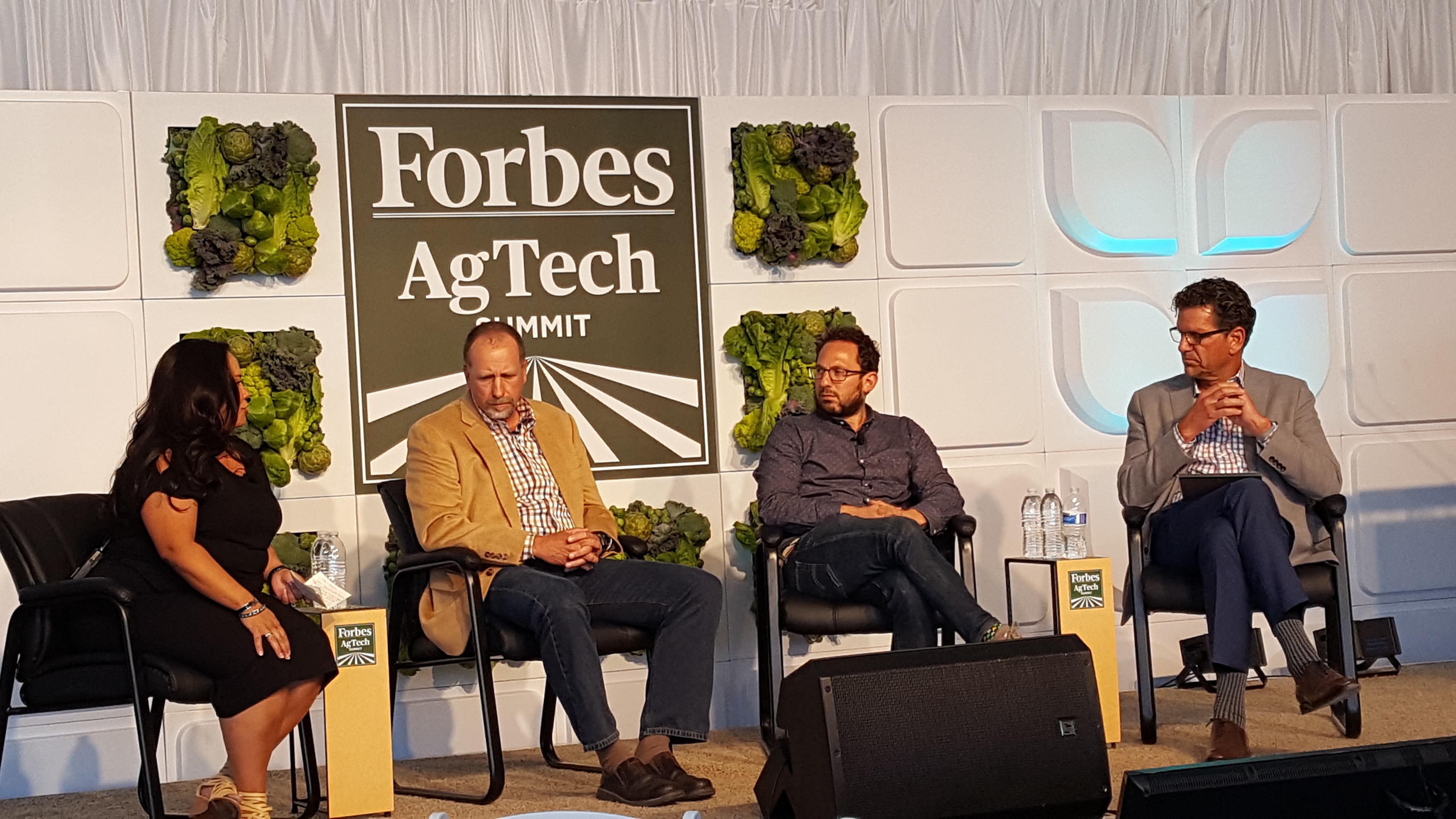
Forbes AgTech Summit

John Hartnett, founder and CEO of Los Gatos-based SVG Partners LLC, a Silicon Valley area investment and advisory firm, has played a pivotal role in the organization of the Forbes AgTech Summit in Salinas every summer. Hartnett said before partnering with Forbes, “we ran the first one here in Salinas and another one in Monterey. Two hundred people attended the Monterey Innovation Summit.”

John Hartnett, founder and CEO of Los-Gatos-based SVG Partners LLC, and pivotal organizer of the annual Forbes AgTech Summit in Salinas.

John Hartnett, founder and CEO of Los-Gatos-based SVG Partners LLC, and pivotal organizer of the annual Forbes AgTech Summit in Salinas.

“Then we partnered with Forbes and it brought us to a whole new level. Partnering with Forbes for the past two of four major AgTech Summits,”has been great,” Hartnett said. “Last year we had 400 people. This year, we had 700 people. Increased attendance has put Salinas on the map of being the center of AgTech.

“I bring leaders from technology and agriculture together,” Hartnell said. “It is a great event for Silicon Valley entrepreneurs to be onstage and get recognition in front of investors, customers and key business people they will work with.”

“Having Forbes and the Ag industry from across the country here in the heart of Salinas is phenomenal. We’ve executed this overall plan well. We are delighted with the outcomes.”

The next Forbes AgTech Summit will convene again in Salinas on June 28-29, 2017.

Urban Appreciation

Beyond AgTech, Harnett said helping urban American populations understand the rural Ag community is one of the agricultural industry’s biggest challenges. “The first thing you need to do is bring people around the table. I’m a consumer of food. I am the end user of what’s going on, but many people just don’t understand the supply chain.”

“They understand some of the water challenges at a high level because these issues are in everybody’s face today. This is part of the education process and it starts by bringing people and key groups together.”

“What we’re doing, in small part, is focusing on technological leaders and companies from Palo Alto and San Francisco that are coming, probably for the first time, to Salinas. They are absolutely impressed and blown away by what is actually here. And, instead of driving past farms, they are going into the farms.”

2021-05-12T11:05:45-07:00October 27th, 2016|

Ag Uses Sound Science to Help Fish

Ag Collaborates to Help Endangered Fish


By Patrick Cavanaugh, Farm News Director


Don Bransford, president of the Glenn-Colusa Irrigation District (GCID) as well as a member of the State Board of Food and Agriculture, expressed major concerns with the proposed State Water Resources Control Board (SWRCB) diversion of 40% of the water from many irrigation districts on rivers that drain into the San Joaquin River to increase flows in the Delta to protect endangered fish.


“It’s a very difficult challenge because it appears that the SWRCB wants to increase the flows in the Sacramento River. That water has to come from somewhere, and it looks like it’s going to come from the irrigation districts. Unless we can do environmental projects on the River to improve habitat for fish and re-manage our water, we have water at risk,” said Bransford.

Don Bransford, president, Glenn-Colusa Irrigation District

Don Bransford, president, Glenn-Colusa Irrigation District


Bransford, who is also a rice farmer, said “Everyone has their own science regarding protecting those species. We’re talking about salmon, steelhead trout, and of course the smelt.”

“The difficulty is, we believe they’re using a lot of old science. There is newer science that suggests there are better ways to manage this. And, if something does not work, then you change. You just don’t throw more water at it,” he noted.

“We think habitat improvements are important in providing refuge for the fish,” Bransford explained. “We’re looking at flushing rice water into the rivers to provide food. Currently, the rivers are pretty sterile because they are just channels now. If we could apply flows from rice into the rivers like we did for the Delta Smelt this summer, you’re providing food for smelt.”

Bransford noted the Northern California irrigation districts work with the U.S. Bureau of Reclamation to increase flows in certain areas of the Sacramento River at certain times. “Our irrigation district managers work with the Bureau to provide flushing flows on the upper Sacramento.” These flows clean out diseased gravel beds in the absence of natural high water flows.”

“So they used some extra water late March of this year,” Bransford elaborated, “to just turn the gravel over to freshen it up. It did help the fish, particularly the salmon,” said Bransford.


Glenn-Colusa Irrigation District (GCID), according to its website, is dedicated to providing reliable, affordable water supplies to its landowners and water users, while ensuring the environmental and economic viability of the region. As the largest irrigation district in the Sacramento Valley, GCID has a long history of serving farmers and the agricultural community and maintaining critical wildlife habitat. The District fulfills its mission of efficiently and effectively managing and delivering water through an ever-improving delivery system and responsible policies, while maintaining a deep commitment to sustainable practices. Looking ahead, GCID will remain focused on continuing to deliver a reliable and sustainable water supply by positioning itself to respond proactively, strategically and responsibly to California’s ever-changing water landscape.

2021-05-12T11:05:45-07:00October 24th, 2016|

Farm Water Coalition Shames State Water Resources     

Farm Water Coalition Shames SWRCB Over Proposal 

By Patrick Cavanaugh, Farm News Director


The California Farm Water Coalition (Coalition) was formed in 1989 to increase public awareness of agriculture’s efficient use of water and to promote the industry’s environmental sensitivity regarding water.

Mike Wade, executive director of the Sacramento-based Coalition, has major concerns about the State Water Resources Control Board (SWRCB)‘s proposal of taking 40% of the water from many irrigation districts along three rivers that flow into the San Joaquin River to protect an endangered fish. The SWRCB proposes to divert water from the Stanislaus, Tuolumne and Merced Rivers to increase flows in the Sacramento Delta.

Mike Wade, executive director, California Farm Water Coalition

Mike Wade, executive director, California Farm Water Coalition

Wade explained, “The Endangered Species Act (ESA) is important for the United States, and we want to see it work. However, it’s not working. It’s not helping fish, and it’s hurting communities.” But Wade wants to revise the ESA “in how we deal with some of the species management issues.”

Wade said SWRCB is doubling down on the same tired, old strategy that is not going to work any more now than it has in the past. “What happened in the past isn’t helping salmon. What’s happened in the past isn’t helping the delta smelt. You’d think someone would get a clue that maybe other things are in play, there are other factors that need to be addressed.”

The State Water Resources Control Board estimated the proposed 40% diversion of river flow would decrease agricultural economic output by 64 million or 2.5% of the baseline average for the region.

Ag officials warn that if the proposal goes through it would force growers in the area to use more groundwater—which they have largely avoided because the Turlock Irrigation District and Oakdale Irrigation District historically met the irrigation need of local farms.

This is the only agricultural area in the Central Valley that does not have critical overdraft problems. If the state takes away 40% of water available to growers, it could lead to a critical overdraft issue there as well.

2021-05-12T11:05:45-07:00October 21st, 2016|
Go to Top