Associations, Organizations, Educational and Research Institutions

Pyrethroids Under Review

EPA Reviewing Pyrethroids

Ag Industry Urged to Comment

By Patrick Cavanaugh, Farm News Director

The pyrethroid insecticide class is in review for ecological risk assessment by the Environmental Protection Agency. John Cummings, Registration and Regulatory Affairs Manager at chemical company FMC believes that the assessment could have a large impact on producers.

Agricultural leaders have urged all to comment on the need to keep this chemistry available.  Please share your thoughts by clicking here.

“At FMC, we’re very concerned with the content of that risk assessment that they’ve identified that there’s high risk concerns to certain aquatic organisms, not necessarily fish or anything like that, but small aquatic organisms,” Cummings said. “Our concern, as a company who manufactures these pyrethroids, which are used in California, is that the EPA has not used the best science that’s available. They’ve done a very high level simple cursory risk assessment that has identified these concerns.”

More than 3,500 registered insecticides contain a pyrethroid. Many pyrethroids are household products and are not limited to agricultural usage.

“Our hope, as a pyrethroid company, is that EPA will consider better data which FMC and our industry consortium, the Pyrethroid Working Group, are developing to incorporate into this risk assessment. We need the EPA to look at the real world of how these products are used. With that, that risk assessment should look much better and remove any of these risk concerns that EPA currently has,” he said.

There have been other actions conducted by the EPA around the use of the best available data and the best science in risk assessment. These kind of precedents will impact production agriculture in the U.S. as well as California.

“EPA should be using the best science to make the right regulatory decisions while protecting the environment,” Cummings said. “It is very important, and I think it’s important, too, that EPA understand the implications of taking a conservative approach and making regulatory decisions that may impact production. I think EPA needs to understand how important it is to consider the benefit of production agriculture in feeding the world.”

It is important to keep many pest control products available to prevent the overuse of one product. Pesticide resistance is a growing problem, and it is essential that producers are able to keep all of their options open.

“Pyrethroids are a very important element of integrated pest management, as well as resistance management. Growers today are facing very complex insect control problems,” Cummings said.

“It’s necessary to have many tools in the toolbox to control insects. We have multiple classes of chemistry, but based on regulatory decisions, the EPA could potentially remove some of these important tools, which puts more pressure on other tools that remain in the toolbox, and insects may become resistant to many of these tools,” Cummings explained.

“Pyrethroids are a critical broad spectrum insecticide that are very affordable and control a lot of different insects that are economically important,” Cummings said.

Bob Klein, the manager of the Pistachio Research Board, agrees that pyrethroids are essential to pest management.

“The use of pyrethroids goes hand-in-hand with the use of soft chemicals like the growth regulators, or some of the neonicotinoids, or some of the other new chemistries we have,” Klein said.

“It guards against resistance development in those other chemicals as well. The inclusion of pyrethroids by the University of California, and many other Integrated Pest Management manuals, shows that pyrethroids are an important part of any IPM program. IPM programs are the way that people control pests in their orchards,” Klein said.

The risk assessment is currently open for comment and will remain open until March 31st.

Comment: Here



2021-05-12T11:05:43-07:00January 26th, 2017|

Recharging Aquifers Using Floodwaters


Floodwaters Could Recharge Aquifer

By Brian German, Associate Broadcaster

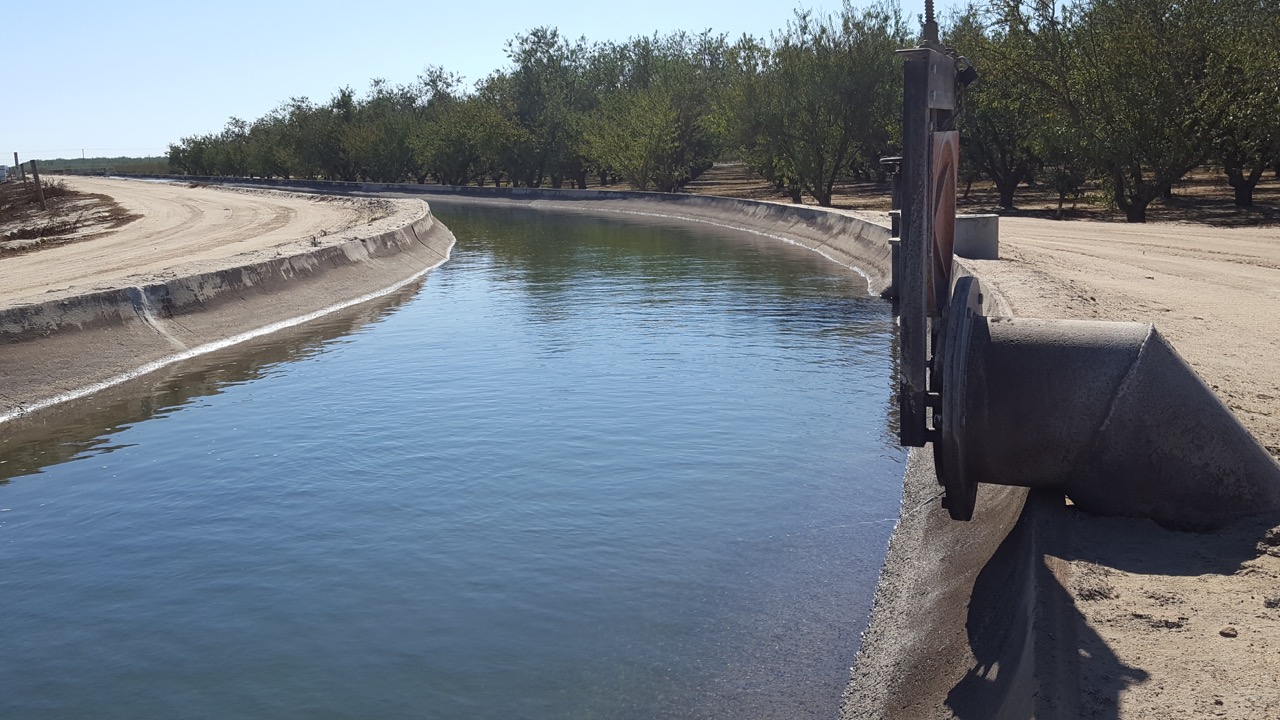
Last October, the Almond Board of California announced new partnerships with Sustainable Conservation, Land IQ and UC Davis researchers to look at ways floodwaters could recharge Central Valley groundwater aquifers. Daniel Mountjoy is the Director of Resource Stewardship for Sustainable Conservation, an organization helping to solve some of the challenges facing our land, air and, most importantly, water.

Mountjoy explained the idea behind the partnership: “The concept is, ‘Can we capture the available peak flows when they’re available from surface supply and recharge the groundwater so that it’s available during dry years when surface flows are under stress from environmental needs and other demands for it?’ ”

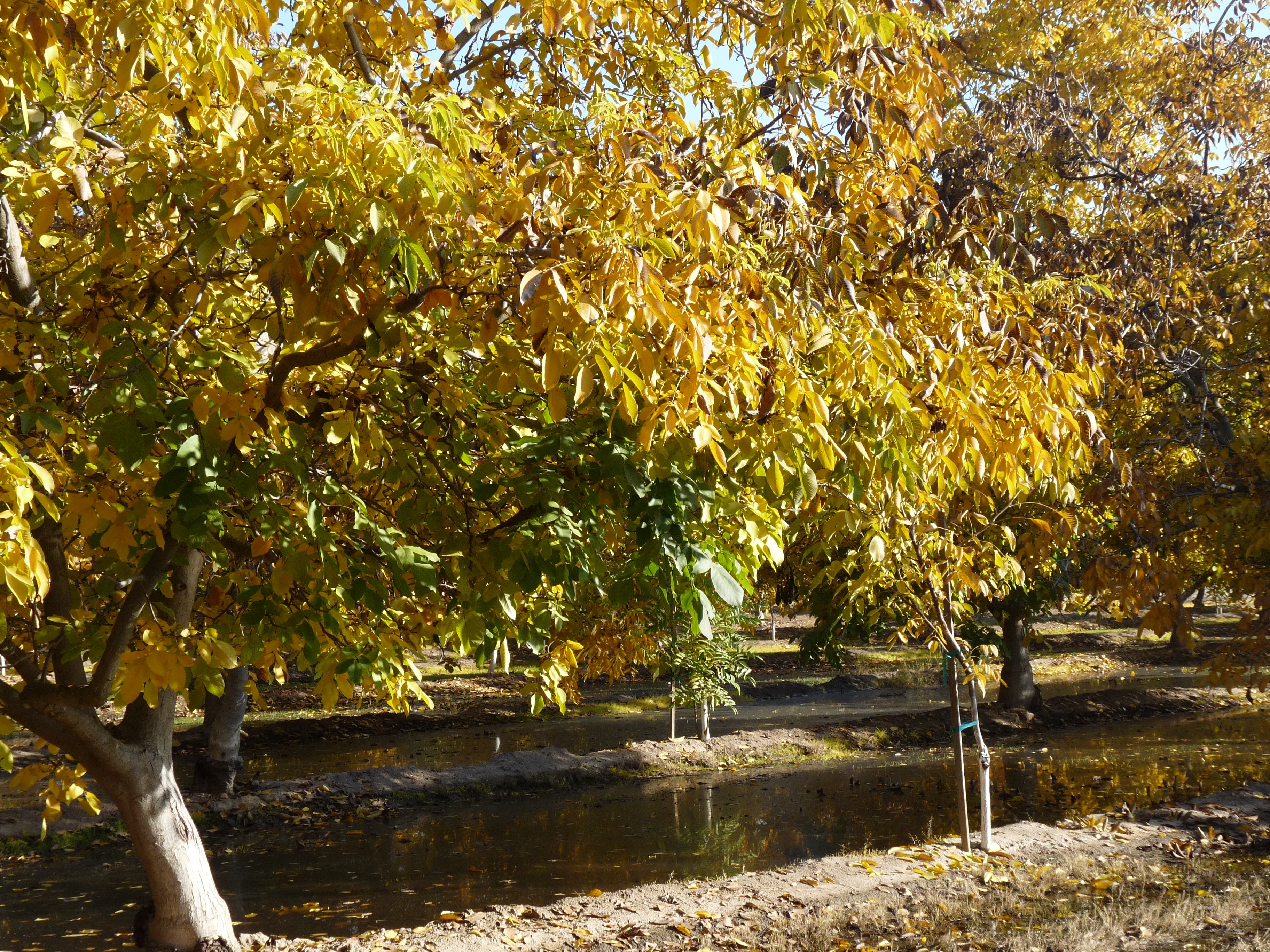
The thought is to use surface irrigation water during times of availability in order to flood almond orchards to recharge the aquifers.  This would not only help growers during times of drought, but also benefit those with limited access to surface irrigation.  Mountjoy has found some success in their research.  The initial focus will be on sandy soils, where the infiltration is really fast.

The concept behind the effort has already shown a level of success on a smaller scale.  “In 2011, Don Cameron at Terranova Farms in Western Fresno County captured 3,000 acre feet of water on 1,000 acres of sandy farm land. He infiltrated on pistachios, grapes and alfalfa fields in some fallow land during winter, as well as well into June and July on some of those crops,” Mountjoy said.

Partnerships like these are needed as California begins to fall under the full implementation of the Sustainable Groundwater Management Act.  “What we’re doing with the Almond Board right now is looking for sites in the Sacramento Valley, because there’s more likelihood that we’re going to have water supply there to test the concept. Both UC Davis and Sustainable Conservation are out working with growers,” Mountjoy said.

UC Davis will be working on the crop health aspect, while Sustainable Conservation will be looking into how much water can be put on different crops and what types of management compatibility there is with the crop.  Once a significant amount of data is collected, the next step in the process will be looking towards how to further incentivize the method for growers.  “Any time you recharge an aquifer, it becomes everyone’s aquifer. There’s still not a system in place to credit landowners for the benefit they are providing to their neighbors and to other irrigation pumpers,” Mountjoy said.

There are over one million acres of almonds stretching roughly 500 miles from Red Bluff to the south end of the San Joaquin Valley. Nearly two-thirds of that land is considered moderately good or better in its ability to percolate water into the underlying aquifers.  “We have to prove the viability that you can actually do this on farm land across extensive acres, because that’s really the cheapest solution, rather than buying land, dedicating it to recharge basins and managing it that way without production of crops,” Mountjoy said.

2017-01-24T15:09:38-08:00January 24th, 2017|

Water Board Plan Would Devastate Farmers

Bay-Delta Water Quality Control Plan Could Devastate Farmers


By Brian German, Associate Broadcaster

The State Water Resources Control Board held a public hearing recently to listen to input from the public on its Bay-Delta Water Quality Control Plan that would devastate famers around Modesto and Turlock.  Casey Hashimoto is the General Manager of the Turlock Irrigation District.  He was on hand to voice his doubts about the water board’s proposal.

Casey Hashimoto

Casey Hashimoto

“I just wanted to least give them a flavor of some of the big concerns that would impact TID in our region,” Hashimoto said.

The proposal calls for at least a 40 percent increase of unimpaired flows on the Tuolumne, Merced and Stanislaus rivers each year from February through June.  Hashimoto noted that one analysis indicates that if the proposed plan were in place during both the 2014 and 2015 irrigation seasons, Turlock farmers would have received zero water.  At the meeting, Hashimoto voiced some of the major concerns regarding the proposal.

“We’re an electric utility, so obviously the hydropower impacts us. … I only picked like three that are kind of high profile that really impact our area. Certainly, hydropower, greenhouse gas issues – there’s a whole number of things that we can go on and on about,” Hashimoto said.

The reason behind the specifics in the proposal is to provide “reasonable protection of fish and wildlife beneficial uses in the Watershed and its three eastside salmon-bearing tributaries” located in the Lower San Joaquin River.  However, the Water Board’s own research shows the average increase of Chinook salmon is a little more than one thousand fish each year. Because of this negligible increase, Hashimoto believes the proposal is neither reasonable nor beneficial.  It’s also important to note that most salmon, as much as 98 percent in some years, are being eaten by non-native species such as bass before they exit the Tuolumne River.

Hashimoto noted the types of commodities that will be negatively impacted if the Water Board’s plan comes into effect. “The biggest percentage wise of our 145,ooo irrigated acres is almonds right now, so it’s about a third of the acreage, but we also have a lot of forage crops … so we have corn, oats, alfalfa – that makes up a lot of big percentage of our acreage,” he said.

As a 30-year veteran of the District, Hashimoto was appointed to his current position in 2011 by the TID Board of Directors. Before becoming a part of the Turlock Irrigation District, Hashimoto was involved in a family farming operation along with other ag-related businesses, so he knows that family farms play a big role in Turlock agriculture.  “We have approximately 5,000 family farms in the district. And we’re not big corporate farms. We’re like less than 30 acres,” Hashimoto said.

2017-03-16T20:45:24-07:00January 20th, 2017|

Almond Sustainability a Priority

Documenting Almond Sustainability

By Jessie Theisman, Associate Editor

Sustainable almond farming utilizes production practices that are economically viable and are based upon scientific research, common sense, respect for the environment, neighbors and employees. The result is a plentiful, nutritious and safe food. That’s what the Almond Board of California is working to achieve along with Joe Browde from SureHarvest.

Joe Browde, of Sure Harvest, Heads up the Almond Sustainability Program for the Almond Board of California

Joe Browde, of Sure Harvest, Heads up the Almond Sustainability Program for the Almond Board of California

The almond sustainability program uses grower submitted production information to demonstrate the sustainability of the almond industry.

“Some of the benefits have been consistent over time. At the ease of the program, folks can more readily participate in a user-friendly mechanism,” Browde said. “They’ll be able to look at the practices, how they compare to their peers around the state, and see what they can do to improve their performance. Mostly economically, as well as for the environment. The more participation, the more value for the almond board that can tell the industry story.”

“What we want to do is get folks engaged. We want to let them ensure that they see the value individually as well as see the greater value for the whole industry across the state” Browde said.

“Documentation is the name of the game going forward. They just have to get out there and tell their story,” said Browde, who also touched on how sustainability in California isn’t the exception. “It is the rule, and we find the more we look at practices, we’re actually amazed at times at the performance of almond growers across the state.”

“We want to make it as easy as possible, but we also want to make it valid at the end of the day and ground-truth things. It’s going in the right direction. We’re pleased, the almond board’s pleased and we’re going to make a difference,” Browde said.

2017-01-19T16:22:52-08:00January 19th, 2017|

Red Wave Sale a Success

Red Wave Sale is a Hit at Fresno State

By Melissa Moe and Jessie Theisman, Associate Editors

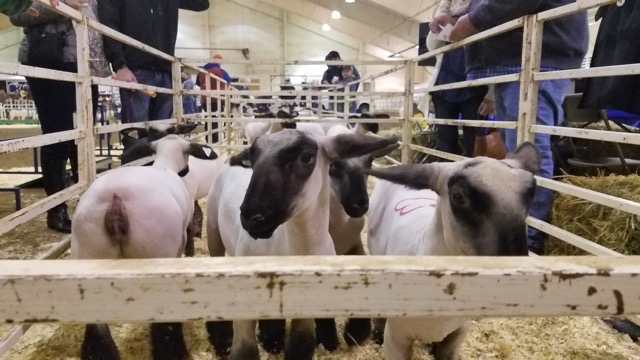
Every January, Fresno State hosts a large lamb and goat sale, known as the Red Wave Sale. Typically, around 60 lambs and 45 goats are sold in the sale, many of which were bred and raised by students on campus at the Fresno State Sheep Unit. The remaining sheep and all of the goats are consigned to the Red Wave Sale by Fresno State Alumni.

Red Wave Goats Ready for Sale

Red Wave Goats Ready for Sale

Student involvement is a huge part of the Red Wave Sale. Fresno State offers a class in which students learn to manage and run a livestock sale and show. The Red Wave Sale is entirely hands on and involves months of preparation to run smoothly. Cameron Rocha is a student at Fresno State who is very involved in the Red Wave Sale and helps manage the Sheep Unit.

”It really starts months and months before – almost before the lambs are even born,” Rocha said. “Getting the sale ready. ‘How we want to do our sale order?’ Dates, times and ideal weights that we want for the lambs. The Red Wave Sale benefits me, as a student. I spend a lot more time, here on campus. It keeps me on campus, keeps me more involved, keeps me out of trouble.”

Not only does the sale benefit students, but it also helps support Fresno State’s Jordan College of Ag. The sale contributes to the Sheep Unit, as well as other programs within the animal science and agriculture education departments.

The Red Wave Lamb and Goat Sale would not be possible without the support of alumni and affiliates. The Pavletich family of Pavletich Club Lambs has been breeding sheep in the Central Valley since 1971, and Scott Pavletich has been bringing lambs to the Red Wave sale for years.

“We’ve been here every year for the past eight or ten years, bringing a consignment. Every year the sale keeps getting better and better. Just like the sheep at Fresno State – they keep getting better and better,” Pavletich said.

Sheep and goats bought at the sale will be hauled to county fairs all around the state, from San Diego to Shasta and everywhere in between. Many of the sheep and goats were also bought by youth exhibitors who compete with their livestock in jackpot-style shows all across the state and in other parts of the nation.

Fresno State’s Red Wave Sale not only has a history of producing happy customers, it produces champions as well. Next month, many of the animals sold in the livestock sale will be shown at the Red Wave Classic, a livestock show put on by the students at Fresno State. The show will feature classes for sheep, goats, hogs and cattle, as well as a futurity class for exhibitors who are showing animals that were bought at the Red Wave Sale.

2021-05-12T11:17:11-07:00January 18th, 2017|

Cherry Industry Hoping for Better Year

Cherry Growers Face Challenges in California

By Jessica Theisman, Associate Editor


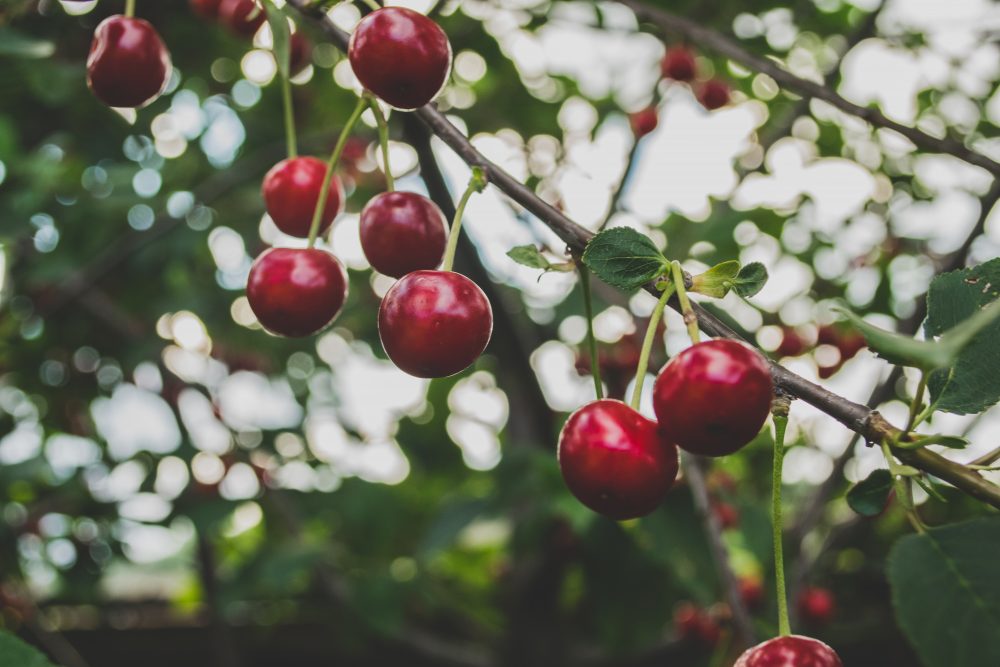
The cherry trees in California are sitting dormant now, but they will be waking up soon, for what the industry hopes to be a better season than the last few years.

“Cherry trees will soon push bud and leaf out and produce a crop by late April. We’ve had, I think, a decent amount of what we call chill portions,” said Nick Matteis, a spokesperson for the California Cherry Board.

With_Nick_Matteis,_Cherry_Board.jpg

California Ag Today’s Farm News Director Patrick Cavanaugh, left, speaks to Nick Matteis.

Enough minimum temperatures will help the trees become more vigorous in the spring. “It’s one of the things that makes growing cherries particularly challenging in this state,” Matteis said. “By January, folks will know, and hence, based on that information, that’s when the rest-breaking materials are sprayed if needed.”  Rest-breaking sprays are used to compact and advance bloom and harvest in cherries.

Many consumers in California really hope that this upcoming season will be a good season for cherries. “The only thing that makes it worthwhile is that people still just love to have those cherries at the earliest chance possible,” Matteis said.

“Last year, we got rain at the wrong time. Then we had a lot of split cherries that just didn’t make it to the market. The year before that, anybody’s guess is as good as anybody else’s,” Matteis said.

The cherry growers this year need a break. The state of California did not have a very good crop set two years ago, though last year, they had the opposite. “That’s the story with cherries, we’re always trying to squeeze into a really tight window, whether it comes to growing conditions or markets,” Matteis said.

There are always multiple factors that could lead to a decline in production. “There was some speculation amongst the growers that it maybe had something to do with bloom and pollination. Some thought maybe the chill was a factor, too. Of course, when you talk about any kind of factorial statistical analysis, I’m sure there are many combinations that’d be impossible to simplify,” Matteis explained.

2017-01-12T19:39:57-08:00January 12th, 2017|

Citrus Trucks Will be Tarped

Tarped Citrus Trucks Will Fight ACP 

By Melissa Moe, Associate Editor

In the ongoing battle against Asian Citrus Psyllids, an insect that is known to vector the fatal Huanglongbing disease in citrus, the California Department of Food & Agriculture has issued a new regulation to require trucks to be tarped when moving citrus.  This regulation will be phased in and permit holders will be notified by CDFA.

Joel Nelsen, president of the California Citrus Mutual, explained that the regulation will prevent the spread of this vector-transmitted pathogen. “What we discovered is that psyllids were flying towards fruit sitting in trucks and bins as they were being transited from Southern California to the San Joaquin Valley, because of the aromas that the fruit gives off,” he said.

Fruit is not considered to be a vector of Huanglongbing since ACP can only vector the disease through leaves and twigs. However, these pests are catching rides on trucks all over the state on the fruit that was considered to be relatively safe.

“What happens is the Asian Citrus Psyllid is attracted to the aroma coming off of the orange, and it flies towards it thinking it’s going to find a food source,” Nelsen said. “Well, it rides around on the orange for a couple of hours, until it figures out that there’s no green waste or twigs attached to that fruit, and then it flies off.”

Fruit that is being transported from Bakersfield to Fresno could be taking these hitchhiking pests anywhere along Highway 99. While on this joyride, they could go up and down 5, across 126, or across 10 from Southern California into the San Joaquin Valley. News of new ACP finds have been right along these traveling corridors.

“We discovered that we may be part of the problem in helping Asian Citrus Psyllids spread, or have a hitchhiker role,” Nelsen said. “We made that determination as a result of some research done by the University of California. We ended up talking to growers at seven different grower meetings; several hundred in total were participating in the discussions. We all came to the conclusion that it’s going to cost us some money now, but it’s better than costing us the industry later.”

2021-05-12T11:00:46-07:00January 9th, 2017|

Boron Affects Rootstocks

Excess Boron Threatens Orchards

By Brian German, Associate Broadcaster

There has been some exciting research taking place examining the effects of high levels of boron on various types of rootstock. Katherine Pope is an Area Orchard Systems Advisor, covering a large area that includes Sacramento, Solano and Yolo Counties.  High concentrations of boron have been a big problem for some growers in the area.

“This is a bigger topic for Yolo County, and there’s a few areas on the west side of Fresno county and also areas in San Joaquin County … that have excessively high boron. There’s veins of boron that come out of the Coastal Range,” Pope said.

Katherine Pope, UC Cooperative Extension Farm Advisor, Yolo County warn growers of excess boron

Katherine Pope, UC Cooperative Extension Farm Advisor, Yolo County warn growers of excess boron

Pope’s work as a UC Cooperative Extension Farm Advisor has her involved in covering production research, education and assistance with almonds, prunes and walnuts.  Boron can cause a myriad of problems in orchards, making preparation before planting even more important.  “You would want to test your water and your soil before you plant. Because if you plant the wrong rootstock on high boron ground, boy, you’re going to feel it for the next 20 years,” Pope said.

Some of the early findings of the project have shown there is not a steadfast rule regarding what rootstock variety fits what limitation.  “We have nine different rootstocks that we tried, of a lot of different origins. Peach-almond hybrids, some that have plum in them, or some that are just peach,” Pope said.  Other preliminary findings suggest that complex hybrids are more tolerant to high boron, sodium and chloride.

Some of the rootstocks that appear to be performing well under heavy boron conditions are both peach-almond hybrids.  “Both Titan FxA and Nickels performed really well last year. … That’s probably a mix of generally being vigorous trees, and so they’re higher-yielding no matter what, and the wider spacing we have them at,” Pope said.

The project has also shown that the rootstocks Lovell and Krymsk 86 continue to perform poorly under high boron conditions.  “Lovell – which is usually a fairly sizable, decently-yielding tree – and Krymsk have both had pretty low yields, about one-third of the yields of the highest yielding trees,” Pope said.  Researchers can tell that those rootstocks are letting a lot of boron up into the tree by looking at the boron numbers in the hull.  “Those two rootstocks do well in a lot of conditions but high boron is not one of them, according to the results we have.”

The trial is still fairly new, as the rootstocks were planted in 2011.  Last year was the first significant harvest.  Pope mentioned that if boron levels reach 0.5 parts per million, that’s  when it starts to become a concern.

2017-01-05T10:57:23-08:00January 5th, 2017|

CDFA Supports Ag Education

CDFA Awards more than $250,000 to support Ag Education

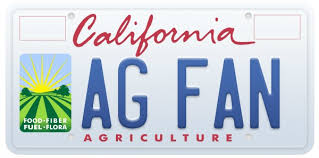
Today, the California Department of Food and Agriculture has awarded $257,000 to four organizations for projects that enhance agricultural education and leadership opportunities for students, teachers and youth under the 2016 California Special Interest Plate (CalAgPlate) grant program.

“The CalAgPlate program helps to support agricultural education and leadership opportunities,” said CDFA Secretary Karen Ross. “Every purchase and renewal of a CalAgPlate provides funding for activities that enrich the lives of students through exposure to farming and ranching across the state.”

Funded projects include school farm tours with the Dairy Council of California; ‘LearnAboutAg’ assemblies at elementary schools hosted by California Foundation for Ag in the Classroom; an agricultural leadership program in Monterey County for community leaders and professions; and support for California Future Farmers of America’s (FFA) leadership and development programs. Each of these projects provides educational and leadership opportunities connected to the agricultural sector.

The CalAgPlate program is funded with proceeds generated through the sale of specialized, agriculture-themed license plates through the California Department of Motor Vehicles (DMV).

CalAgPlate project abstracts are available online at www.cdfa.ca.gov/calagplate

Help to support agricultural education and the CalAgPlate program by purchasing a special interest license plate at your local DMV office or online today.

2017-05-15T21:49:00-07:00January 4th, 2017|

Almond Board’s Sustainability Program Gets Even Better

Almond Board Program Streamlined

By Jessica Theisman, Associate Editor

The Almond Board has set a new standard for the Ag industry, according to Joe Browde, a senior research associate for Sure Harvest, which is working with the Almond Board towards sustainability.

It isn’t news that best management practices is the goal of the almond sustainability program, which has been in place since 2010. According to Sure Harvest, “sustainable almond farming utilizes production practices that are economically viable and are based upon scientific research, common sense, a respect for the environment, neighbors and employees.” The result is a plentiful, nutritious and safe food.

Browde gave California Ag Today some insight on this well-known program. “What we’ve done is try to make it more user-friendly, streamline the whole process to ensure the value.” He explained that they wanted to “improve the value of the program so growers can see it more clearly, and handlers, too, as they increasingly assess their practices.”

Sure Harvest made the process more adaptable for all to use. “We’ve made it adaptable to various platforms. Obviously the traditional computer itself, the laptop, but now also well adapted even to smart phones and, of course, other mechanisms as well,” Browde said.

Sure Harvest has created a brand new program to simplify the process. “So if you answer a practice once, it’s auto-populated elsewhere where a similar practice is asked, so it’s all about making life easier for the assessor so they can enjoy the experience more” he said. “They will feel the value at the end of the day.”

Joe Browde also explained the Almond Board of California’s new bee and pollination module. “Brand new one. The bee health and pollination module is specifically desired by ABC … to go with their best management practices guide for bees, and they want to make a big deal on what they’re doing in that realm.”

The main goal of the Almond Board of California and their bee and pollination module is to help consumers understand the value in bees and their importance to the world supply chain of food. “We have developed a new module for that to help them answer those questions and folks can assess. They can use it perhaps even in a verification scheme one day with suppliers” Browde said.

Sure Harvest and the Almond Board are both researching the module. “We’re talking about various ways to help folks throughout the supply chain see the value and to be able to address their various customers” Browde said. Although these studies may still be in their infancies, “we’re trying to figure out the best strategic direction forward with ABC leadership.”

2017-01-03T14:10:43-08:00January 3rd, 2017|
Go to Top