Associations, Organizations, Educational and Research Institutions
Pierce’s Disease Research Advancing

Many Projects Under Way To Reduce Pierce’s Disease in Grapes

By Patrick Cavanaugh, Farm News Director

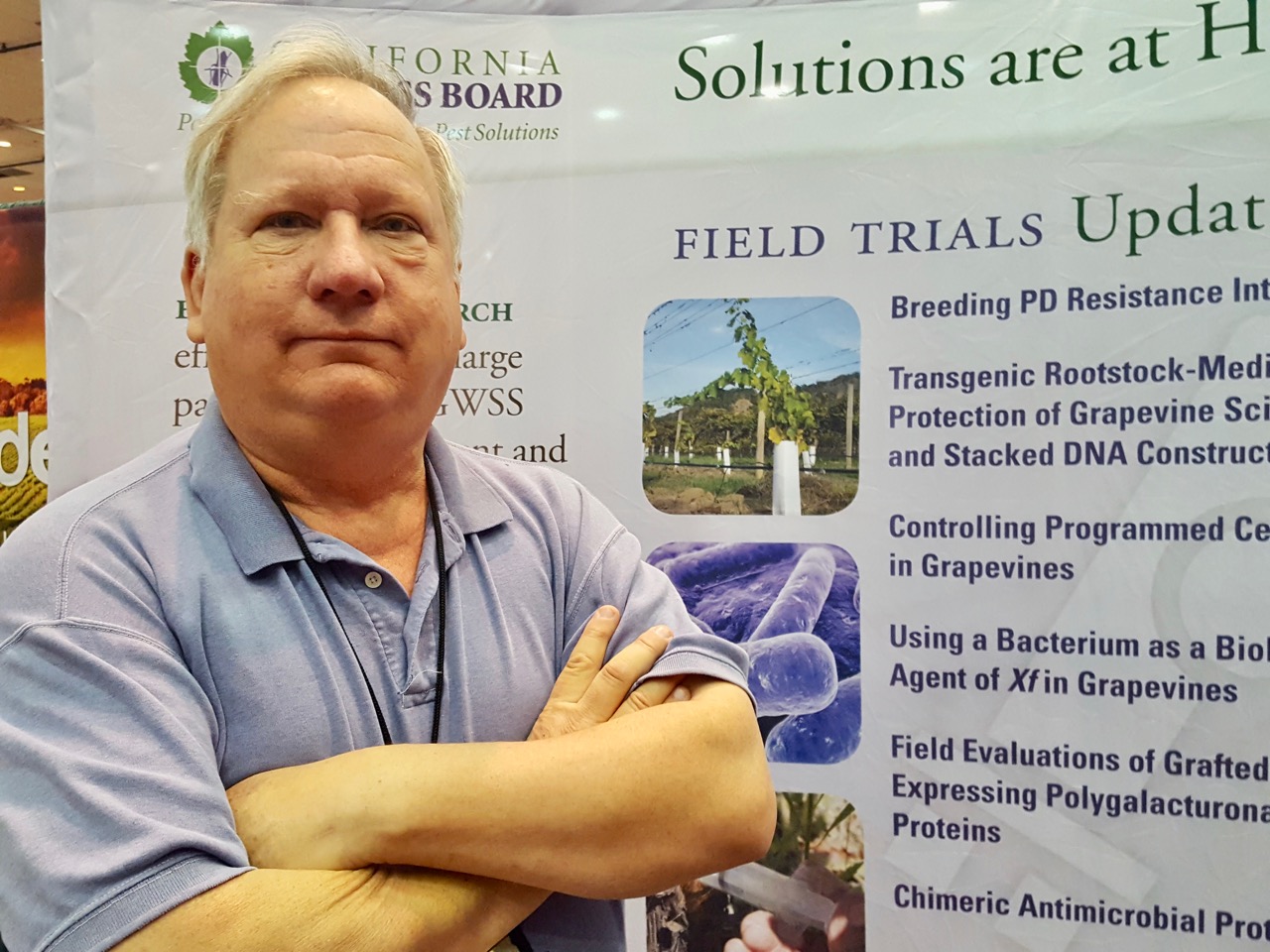
The glassy-winged sharpshooter vectors Pierce’s Disease, which has been devastating grape growers in California for the last few years. California Ag Today recently spoke with Ken Freeze, the Outreach and Education Director for the Pierce’s Disease/Glassy-Winged Sharpshooter Board, a program that uses winegrower’s assessments to fund research. He spoke with us about research that’s been carried out to hopefully find a cure for Pierce’s Disease.

Pierce’s Disease is caused by a bacterium, Xylella fastidiosa, that reduces the vascular function of the vine. The sharpshooter insect vectors the bacteria.

“Andy Walker, with the Department of Viticulture and Enology, UC Davis, has been working on Pierce’s Disease-resistant grapevines. We just released some of those vines to the Foundation Plant Services at UC Davis,” Freeze said. “There are 14 more that are in the wings about ready to go. Some nurseries will be able to get that pretty soon, but already there are about 4,000 of his vines planted. Some of them have been planted in Georgia and Texas, which are real hotspot for the glassy-winged sharpshooter and Pierce’s Disease.”

“Here in California, 2,000 vines were planted in Napa Valley right along the Napa River. Those vines are doing great,” Freeze said.

“We’ve got another project. University of Florida plant pathologist Dr. Don Hopkins has found a benign stain of Pierce’s Disease. It’s like inoculating a vine with a smallpox vaccination. That’s actually a company that’s working on commercializing that now,” Freeze explained.

“We’ve got another project that involves a modified root stalk that sends either a protein or a molecule up into the vine – a non-modified scion – five different ways that stops the Xylella fastidiosa bacteria literally in its tracks before it can cause Pierce’s Disease in the vine. That’s just a small sample of some of the really good projects.”

“One grower told me: ‘It’s not the end of the tunnel, but we can see it,’” Freeze said.
2021-05-12T11:05:15-07:00December 1st, 2017|

New Aerial Images to Help Almond Farmers

Aerial Image Tools Help Almond Irrigation

By Patrick Cavanaugh, Farm News Director

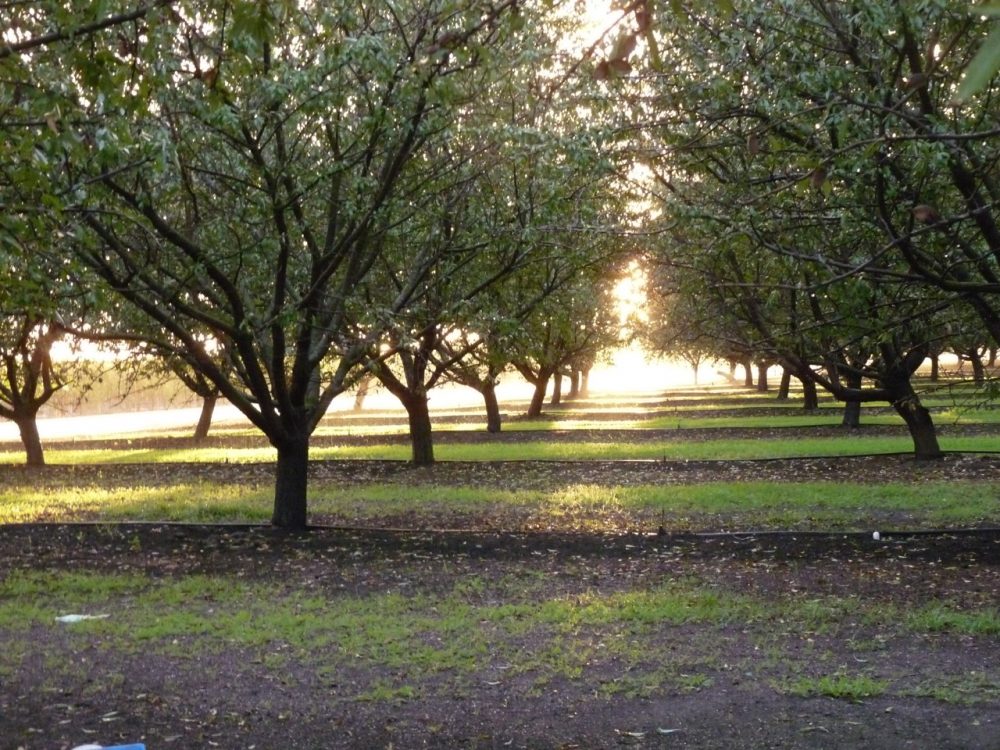
Aerial images of orchards can effectively tell farmers which almond trees aren’t getting enough water, according to the preliminary results of a five-year study by almond researchers at the University of California Cooperative Extension (UCCE), with funding support from the USDA.

Researchers from the UCCE are confirming the utility of Ceres Imaging’s new-to-the-industry aerial views of farmland that helped the startup win a water innovation competition last year. The preliminary results follow four years of replicated research plots in a large commercial almond orchard.

Why does almond irrigation matter? California only recently emerged from a major drought, and for almond growers, water efficiency is a top priority. Since 1990, California farmers have increased the use of sprinklers and micro-irrigation systems from 33 percent to 57 percent of total acreage. But micro-irrigation, the method that usually offers the highest water use efficiency (crop per drop) is prone to clogging and other maintenance problems, which can stress crops and reduce yield.

“Water is the number one input for most growers and is managed carefully in terms of how much is used and when,” said Ashwin Madgavkar, CEO and founder of Ceres Imaging. “This study shows that Ceres imagery can be used with high confidence to monitor if your crop is getting sufficient water or if the crop is in a water-stressed condition, so you can make timely corrective actions. Ultimately, the tool can be used to help catch issues before they result in crop losses.”

Maintaining ideal irrigation levels is a huge challenge for farmers, as is predicting the final harvest tonnage, which is why the study examined the usefulness of Ceres aerial images in those areas. Detecting deficient irrigation quickly is one way Ceres images offer early warnings to growers.

“Findings over the last four years show that the average Ceres conductance measurement from their imagery over the season has provided the best correlation with applied water,” reported Blake Sanden, UCCE Farm Advisor for Kern County. “While there’s no perfect predictor of final yield, Ceres aerial sensing of canopy plant stress has a significant relationship with final yield.”

This UCCE study has been under way since 2013 and will end after results for 2017 are recorded.

2021-05-12T11:05:15-07:00November 30th, 2017|

Navel Orangeworm Control Critical

Orchard Sanitation is Critical This Season To Lower NOW Numbers

By Patrick Cavanaugh, Farm News Director

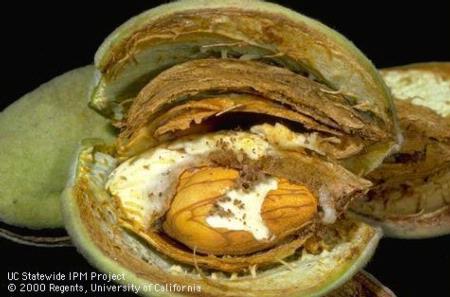
Emily Symmes is the area Integrated Pest Management farm advisor for the Sacramento Valley in the statewide IPM program. She recently spoke to California Ag Today about the high level of Navel Orangeworm (NOW) damage in nut orchards throughout California this past season.

“We had a lot of unique circumstances. The amount of rainfall we got in late 2016 into 2017 was pretty unprecedented and really led us into a really bad navel orangeworm year because we couldn’t get out and sanitize our nut crops,” she said.

Emily Symmes

“NOW is ubiquitous, and there is an increased nut crop footprint in California, with more than one million acres of almonds, plus pistachios and walnuts,” Symmes explained. “All play host to NOW, as well as a host of natural plants. This thing isn’t going anywhere. And it was pretty bad in 2017 in terms of harvest damage.”

One of the key factors for higher navel orangeworm damage was not being able to get into the fields because of the standing water.

“There were a couple of other factors as well. Typically, rainfall and moist conditions can help NOW mortality in the winter. We tend to think that it can help rot the nuts and do us some favors, but we have to be able to get out and get the nuts shaken or get pulling crews in and get those things on the ground. And then them being on the ground is not always a sure thing. Sanitation was huge in terms of NOW problems this year,” Symmes said.

Heat units also played a part in the development of more NOW pressure. There were a lot of moths flying around longer and laying eggs.

“It got hot in mid to late June, and it seemed to just not let up. What that meant was, in terms of our degree-day models or the heat unit that drive insect development, it ended up getting pretty far out ahead of what is typical, if there is anything such as typical. But certainly ahead of the last couple of years,” Symmes explained.

By September, we were about two weeks ahead in degree-days and that means that the moths were out earlier. They’re flying around. They’re laying eggs on the nuts when they’re still on the trees.

Symmes stressed that the importance of sanitation is to minimize the site where the NOWs mature.

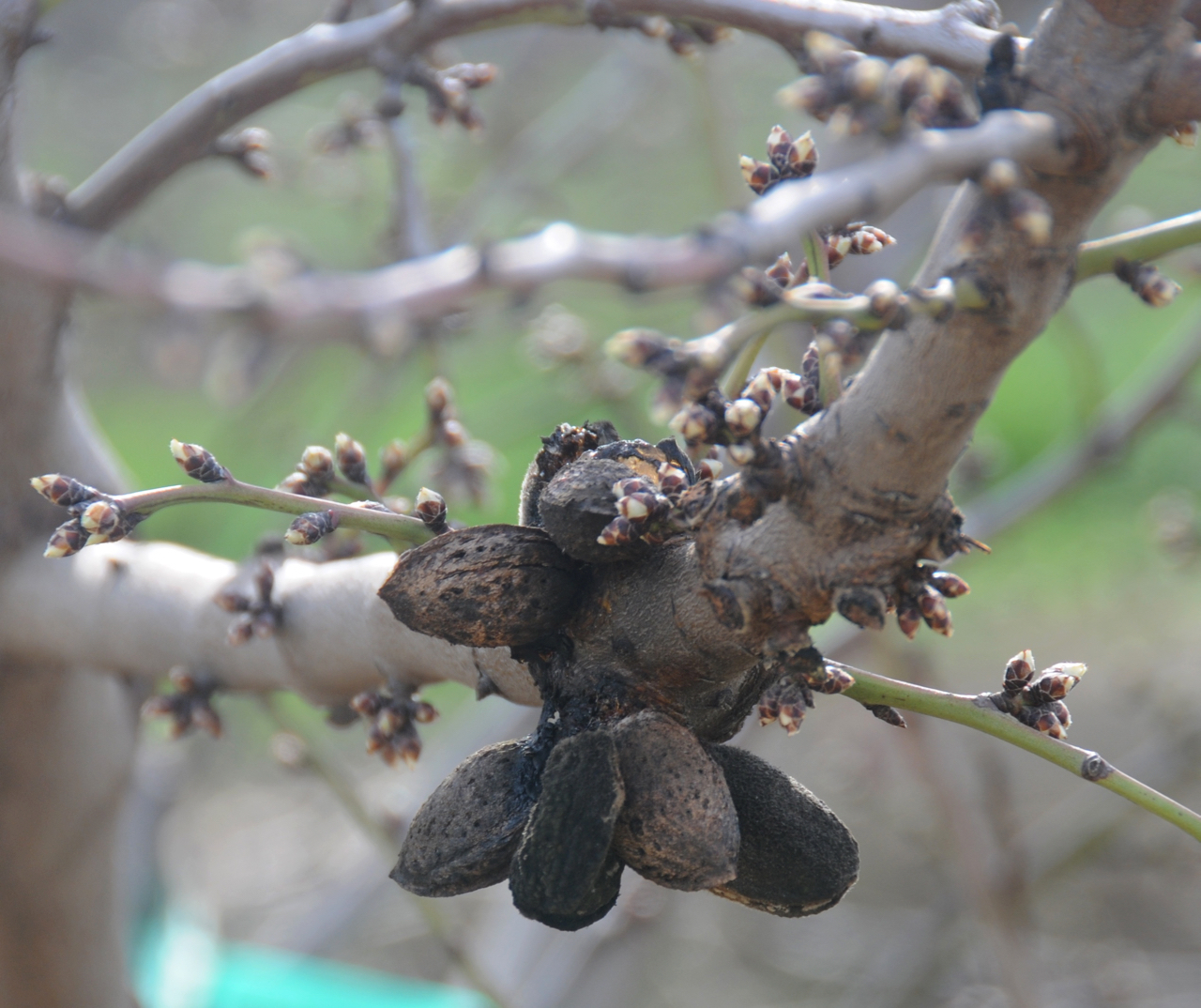
“It’s really important to remember that sanitation efforts aren’t just directly killing any worms that are over-wintering in your orchard. Yes, it does that. But it also minimizes those sites where your first and second generations are going to develop next year,” she said.

2021-05-12T11:01:58-07:00November 29th, 2017|

Future of Integrated Pest Management

IPM: A Decision Making Process

By Joanne Lui, Associate Editor

Lori Berger is the academic coordinator for the University of California’s statewide Integrated Pest Management program. She spoke with California Ag Today recently about the sustainability of IPM and where it’s heading in the future.

“IPM is part of a sustainable approach to pest management. It’s very holistic. It’s a decision-making process. It incorporates all factors in an environment and in a situation, and it uses all human resources.”

Berger believes that even though IPMs are sustainable, the system might not work as well as it should.

“IPM has been around for 50 years, but our system is somewhat stuck in that we tend to be more reactive than proactive,” she explained. “If there’s an event such as an invasive pest or some … pesticide incident, some huge regulatory change or some legislative pressure, it’s like all of a sudden the system needs to reboot itself. We need to look deeper into the system and be working in a more embedded way across platforms and people.”

Berger told us that instead of looking at things in a linear way, it’s important to look at all the parts and how they relate to each other to find flaws in the system.

“As scientists, we tend to look at things cause and effect. We were looking into optimizing the whole by looking at the parts, but now taking things that are more of a systemic level, we’re trying to looking at the parts and also how they work in relationship to each other. That’s to where we can realize some of our biggest gains that there’s not as much at stake, or there’s less risk for all parties, and people are more aware of what’s going on.”

2021-05-12T11:01:58-07:00November 28th, 2017|

California Supplies Thanksgiving

California Feeds the Nation on Thanksgiving!

By Patrick Cavanaugh, Farm News Director

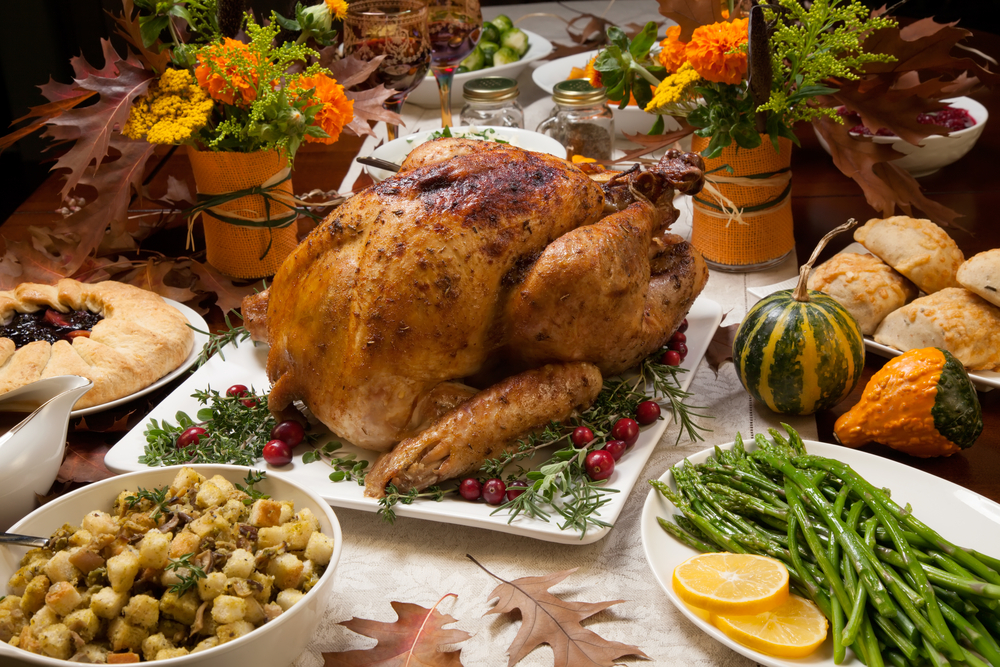
California ranks #8 in turkey production in the United States (2016), and we supply most of the western states from our poultry farms located in several areas in the state.

The famous Mrs. Cubbison’s Stuffing or “Dressing” originated from a ç, born in 1890 in the San Marcos area of San Diego County. In short, Cubbison graduated from California Polytechnical University in May 1920 with a degree in Home Economics having paid her way through school with the money she earned feeding the farm workers.

Cubbison created her popular stuffing in 1948 using broken pieces of the popular Melba toast and various seasonings. The factory in Commerce, California churns it out in mass quantities this time of year.

California farmers produce almonds, raisins, walnuts, prunes, figs, dates, apricots, pistachios, and pomegranates, right on up the food line.

These are all celebrated Thanksgiving foods.

Celery from the Oxnard and Ventura area completes the stuffing mix. Nutrient-dense carrots, lettuce and fresh spinach from Salinas now arrive, pre-washed and bagged, in your local produce department. Your Thanksgiving traditional green beans come from California growers.

An ample supply of freshly harvested oranges and kiwi fruit, table grapes, strawberries, and raspberries are shipped from many areas in the state. Seasonal features include sweet potatoes from the Merced, about an hour north of Fresno, plus all kinds and colors of potatoes and tomatoes, parsley, onions, and garlic—all crops are raised in California.

Nearly all the fruits, vegetables and nuts that are part of America’s Thanksgiving are sourced from California.

Don’t forget about the great varieties of wine grapes grown in the No. 1 agricultural state that are deftly crafted into delectable California wines.

Or the thirst-quenching Martinelli sparkling apple or grape cider from Watsonville California, near the Monterey Bay area. Local growers provide the tree-ripened fruit to the award-winning company that is still family-owned after almost 150 years and is managed by the founder’s grandson and great-grandson. Here’s something to discuss at your Thanksgiving meal:  the company won its first Gold Medal at the 1890 California State Fair in  Sacramento.

How about those heirloom and new apple varieties, plus those small round watermelons that we snack on or toss into a dessert fruit salad, topped with California pomegranate arils?

Of course, we raise poultry, and even California lamb, if you want to go that way. Here is a Did-you-know? challenge for your holiday meal:  What are the most recent Presidental Thanksgiving Turkeys from California pardoned by United States presidents? (Answers are below.)

And by the way, you know that food-safety pop-up turkey timer that indicates when the turkey has reached the correct internal temperature? Public relations genius Leo Pearlstein and a turkey producer in Turlock, a small town north of Fresno in Stanislaus County, invented this Thanksgiving fixture.

Back in the 1960s, they were sitting in a room trying to solve the undercooked poultry challenge, when they looked up and noticed ceiling fire sprinklers. The sprinklers sprayed water when the room temperature became hot enough to melt a tiny piece of metal alloy in the mechanism. This innovative team of two applied the same concept to the pop-up timer!

With the exception of cranberries, our national day of giving thanks for a bountiful harvest is really a California Thanksgiving.


Here are some friendly topics for discussion at your Thanksgiving Table:

  • What is the name of the famous Thanksgiving stuffing that originated in California?
  • What beverage company that is still operating won its first Gold Medal at the 1890 California State Fair?
  • How was the pop-up timer invented and by whom?
  • How does high does California rank in U.S. turkey production?
  • What are the most recent Presidental Thanksgiving Turkeys from California pardoned by United States presidents?

In 2010, President Obama pardoned Apple, a 45-pound turkey from Modesto, California-based Foster Farms; and alternate bird Cider. 

In 2015, President Obama pardoned Apple, a 45-pound turkey and an alternate 43-pound bird named Honest, again from Foster Farms.

The Presidential Turkey flock are Nicholas White turkeys, which originated in California’s Sonoma Valley in 1957. Today, the Nicholas White is the industry standard. (Foster Farms)

2021-05-12T11:17:10-07:00November 20th, 2017|

Push Back NOW with Orchard Sanitation

Part One of a Series

Orchard Sanitation Critical This Season

By Patrick Cavanaugh, Farm News Director

We recently spoke with Emily Symmes, the UC Area Integrated Pest Management farm advisor for the Sacramento Valley in statewide IPM program. She told California Ag Today about few reasons as to why Navel Orangeworm damage was so devastating this year, costing tree nut growers at least $137 million.

UC Cooperative Extension Integrated Pest Management Advisor, Butte County

Emily Symmes, UC Cooperative Extension Integrated Pest Management Advisor, based Butte County.

NOW is ubiquitous. And the nut crop footprint in California is larger, with one million acres of almonds, along with pistachios and walnuts up and down the San Joaquin valley.

“The pest is not going anywhere,” Symmes said.

“We had a lot of unique circumstances. The amount of rainfall we got in late 2016 into 2017 was unprecedented and led us into a bad navel orange worm year because growers couldn’t get out and sanitize their orchards”

“Growers were not able to get into their orchards because of standing water,” Symmes explained.

Also, rainfall and moist conditions can help NOW mortality in the winter. “

We tend to think that it can help rot the nuts and do us some favors, but we have to be able to get the nuts shaken or get pulling crews in and get the mummies on the ground and destroyed,” Symmes said.

Heat units also played a part in the development of more NOW.

“It got hot. And it seemed to just not let up. Our degree-day models, or the heat unit that drive insect development, ended up getting pretty far out ahead of what is typical,” Symmes explained.

“By September, we were about two weeks ahead in degree-days, and that which meant moths were out earlier. They’re flying around. They’re laying eggs on the nuts when they’re still on the trees, and we are talking almonds, pistachios and to a lesser extent, walnuts.”

Symmes said the importance of sanitation is to minimize the site where the NOWs mature.

“It’s really important to remember that sanitation efforts aren’t just directly killing any worms that are over-wintering in your orchard. But the other thing that it does is it minimizes those sites where the first and second generations are going to develop next year,” she said.

Despite all these circumstances as to why NOW was serious this this year, it is critically important to start orchard sanitation as soon as possible. It may not be a good idea to wait for rain and fog to help loosen the nuts this season.


2021-05-12T11:01:58-07:00November 13th, 2017|

Pistachios Suffer Navel Orangeworm Damage

Overwintering NOW Population Must Be Reduced

By Robert H. Beede, UCCE Farm Advisor, Emeritus

The following is a special report by Robert H. Beede, UCCE Farm Advisor, Emeritus, on the state of the pistachio harvest and the fight against navel orangeworm damage.

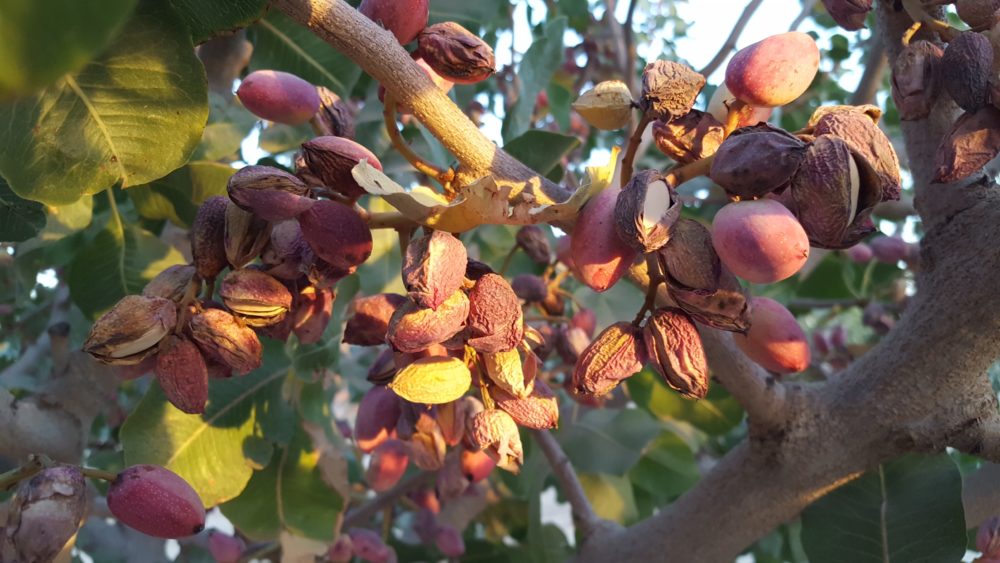
Season Wrap Up: It looks like we wound up with about 600 million pounds. Only God knows how many million navel orangeworm got, but you all know it was a bunch! Processors have their hands full delivering the quality nut California is known for. Many growers I speak to ask, “What happened?” From my discussions with many crop consultants, what DIDN’T happen was sanitation! This was not only true for the pistachio growers, but almond producers as well.

Growers barked at me about the wet weather making orchard access difficult to impossible, the size of the trees making sanitation cost prohibitive, and the difficulty in getting the nuts out of the trees. These issues are all true. So, if you decide that you cannot sanitize, then you had best figure out how you are going to run the ranch on pistachios that are 30 to 40 cents less valuable than those with low worm damage.

I know I sound like the donkey’s behind with all the answers, but the pistachio industry needs to join forces with the almond guys to determine what we can collectively do to reduce the overwintering NOW population.

There has been millions spent studying NOW, and I have NEVER waivered on the fact that sanitation is the cornerstone to controlling this beast! I also still think that once we get the kinks out of mating disruption, that everyone should use it as a means to SUPPRESS the population. Note that I did NOT say, “Control it as a stand-alone program,” just in case someone out there wants to stuff words in my pie hole!

We are in DESPERATE need of an effective adult monitoring tool for NOW mating disruption. I hope this comes soon, in order to give pest managers a method of knowing when the pheromone is not reducing mating sufficiently. We also need more research on the cultural and environmental factors affecting the number of early split nuts, which become the NOW link to the new crop at harvest.

Sanitation: Now is the time to begin winter sanitation by removing the nuts that did not come off during harvest. Many of these nuts are blank, but do not assume that all of them are. Research by many good scientists has proven that winter sanitation is the key to breaking the overwintering NOW population cycle, which looms ever greater when the winter is warm and dry. Beginning the season with a large overwintering population simply reduces the effectiveness of your in-season sprays. Although the research has not been done, to my knowledge, the TIMING of sanitation may be a factor in its efficacy.

Nut removal and destruction early in the fall may be more effective, because the percentage of NOW larva in the early instar stages should be greater. This is due to the large peak in egg laying that occurs during hull degradation. Thus, they may be more susceptible to desiccation or fungal attack because of their smaller size. Disturbing their overwintering site from the tree onto the ground early also places more environmental pressure on their survival. This is just my opinion; it may be worthy of investigation.

2021-05-12T11:01:58-07:00November 8th, 2017|

Letting GSAs or State Decide Sustainability

Who Decides What is Sustainable Pumping?

By Patrick Cavanaugh, Farm News Director

Local groundwater sustainability agencies, also known as GSAs are quickly being developed to draw out specific plans on how to prevent groundwater overdraft in the areas of the state, particularly in the central San Joaquin Valley. It’s all part of the Sustainable Groundwater Management Act (SGMA) that could forever change the face of agriculture, as we know it today.

Keith Freitas farms lemons on the east side of Fresno County, and he knows of many farmers that are getting together to fight SGMA.

“They’re going to take it to the courts and the judicial. They’ll be filing injunctive orders,” Freitas said. “You’ve got perishable crops you’re dealing with, so the injunctions can come really quick, they can last for long time, and for many years. There’s a possibility the way this thing is structured legally, if we put a legal defense program together and a plan, the plan could push this thing out another 10, 15, 20 years.

And sustainable pumping is the linchpin of SGMA.

The local GSAs are formed to make your basin sustainable, and the state says the GSAs in control.

“Well, how could we be in control of our own sustainability if the states laying the ground rules and setting the criteria for what’s sustainable, and what’s not?” Freitas said.

So, if the Central Valley GSAs, for example say that they believe pumping water down to the 2600 foot level underground is sustainable, “Then suddenly the state’s going to say: ‘well, no, that’s not even close.’”

“You draft the aquifer down to a thousand feet, all the buttons and bells and whistles go off, and you’re no longer sustainable,” Freitas said. “Well, wait a minute. What happened to that we choose what’s sustainable?”

2017-10-27T16:47:00-07:00October 27th, 2017|

Eating Healthy Produce Important for Kids

Produce Critical to Healthy Lifestyle

By Patrick Cavanaugh, Farm News Director

Fruits and vegetable are an important part of a balanced and healthy lifestyle. Eating healthy produce is especially important for kids whose minds and bodies are still developing.

Teresa Thorne, the executive director of the Alliance for Food and Farming in Watsonville, recently talked to California Ag Today about a peer-reviewed study that showcased the importance of healthy eating during childhood.

Teresa Thorne

“It’s another study, and it mirrors other peer-reviewed research that shows the health benefits to children of eating more fruits and vegetables,” Thorne said.

“There have been other studies that also have come out and said that increasing consumption of fruits and vegetables, especially among young children, can really increase IQ. This study, which was conducted in Australia with 4,200 kids, found that test scores on standardized academic tests increased markedly from students that ate more fruits and vegetables and ate them every day,” Thorne explained.

Thorne emphasized that it’s very important for people of all ages to eat their fruits and vegetables.

“We know fruits and vegetables have a benefit for all of us, and on overall health, and that does include brain health, including when your kids are young and growing and maturing,” she said. “Giving the brain those nutrient-rich foods that fruits and vegetables really provide is important, and these types of studies just underscore that.”

It’s not just one type of produce that’s healthy. No matter if you choose organic or conventional, the important part is that you eat more fruits and vegetables.

“Organic or conventional, where ever you purchase them, whether you like to shop at your local grocery store or warehouse store or farmer’s market, buy either organic or conventional, but just always choose to eat more,” Thorne said.

“Even the most loyal, say organic shoppers, there’s times you’re eating in a restaurant or what have you, that they may not have that choice for you, but you should know that the choice to order that salad is always the right choice, whether it’s conventional or organic. Both production methods yield very, very safe and healthy foods.”

2017-10-24T14:38:55-07:00October 24th, 2017|

Entrepreneurship Forum is Biggest in Valley

Entrepreneurship Forum in Clovis on Nov. 15

By Patrick Cavanaugh, Farm News Director

The Central Valley Innovation and Entrepreneurship Forum will be held in Clovis on Nov. 15th. This forum should be the largest event for innovation and entrepreneurship in the Central Valley. Industry leaders, angel investors, entrepreneurs and business owners will be there to share advice and strategies on how to make it in today’s economy.

“We are gearing up for our big event that will be held at Clovis at the Veterans Memorial District in the auditorium,” said Helle Peterson, manager of the Center of Irrigation Technology at California State University Fresno.

“We actually have the whole building because we have multiple things going on. We will have a series of workshops during the day that’s all around financing, investment, entrepreneurship, innovation. We also have five companies that will pitch their technology or their business to a group of potential investors. The whole community will be there, and we’re very excited about that,” Peterson said.

“There’s an evening program attached to that, which we call the stock exchange. It’s where we will have 20 entrepreneurs exhibiting their technology business and then the audience will go around and invest in these businesses with monopoly money. It will create excitement of which company we think will be more successful,” Peterson said.

The keynote speaker will be Paul Singh, the founder of disruption Corporation.

“He’s actually one of the founders of 500 Startup, which is a really well-known accelerator in the Bay area, and he can really talk to that entrepreneurship innovation space,” Peterson said.

Find out more about the event and register for it here.

2017-10-23T16:50:59-07:00October 23rd, 2017|
Go to Top