Associations, Organizations, Educational and Research Institutions
2017 Fresno County Crop Report Totals $7 Billion

Fresno County’s Ag Value Increases Significantly in 2017 Crop and Livestock Report


The Fresno County Department of Agriculture’s 2017 Crop and Livestock Report (Crop Report) was presented to the Fresno County Board of Supervisors Tuesday. Overall, the 2017 agricultural production value in Fresno County totaled $7.028 billion, showing a 13.58 percent increase from 2016’s $6.18 billion.

“Once again, Fresno County farmers and ranchers have produced an agricultural bounty for the world,” stated Fresno County Agricultural Commissioner Les Wright. “While much of this food and fiber goes towards feeding and supplying our nation, the Fresno County Department of Agriculture also issued 18,604 phytosanitary certificates for 133 commodities destined for 97 countries around the globe in 2017.”

“This Crop Report is comprised of nearly 400 commodities, of which 73 crops exceed $1 million in value,” Commissioner Wright continued. “Crop values may vary year-to-year based on production, markets and weather conditions, but our farmers and ranchers, their employees and all those who support their efforts work tirelessly year-around to bring in the harvest.”

With the great diversity of crops in Fresno County and the many variables in agriculture, it’s a given that some crops will be up in value while others are down. Increases were seen in a majority of the Crop Report segments, including field crops, seed crops, fruit and nut crops, livestock and poultry, livestock and poultry products, apiary products and pollination services, and industrial crops. Decreases were seen in vegetables and nursery. Surface water supplies were significantly better in 2017, although many Westside federal water contractors received much of that good news too late to benefit them with additional annual plantings.

Fresno County’s Top 10 Crops in 2017 (Source: 2017 Fresno County Agricultural Crop and Livestock Report)

Too often, the Crop Report gets summarized down to just a single overall number, but it yields a significant amount of information, such as the ability to examine changes and trends in crop acreage and yields. Amounts in the report reflect the gross income values only (income before expenses) and not the net return to producers.

“The San Joaquin Valley is the food capital of the World, and Fresno County is the region’s heart,” said Fresno County Farm Bureau (FCFB) CEO Ryan Jacobsen. “Daily, millions of food servings unceremoniously originate within our backyard, the result of generations of families and agricultural infrastructure that has been built to furnish an unbelievably productive, wholesome and affordable food supply.”

“The annual Crop Reports are more than numbers,” Jacobsen continued. “They provide the industry, the public and policymakers, regardless of the overall number, the opportunity to salute local agriculture and give thanks for the food and fiber, jobs and economic benefits, agriculture provides Fresno County.”

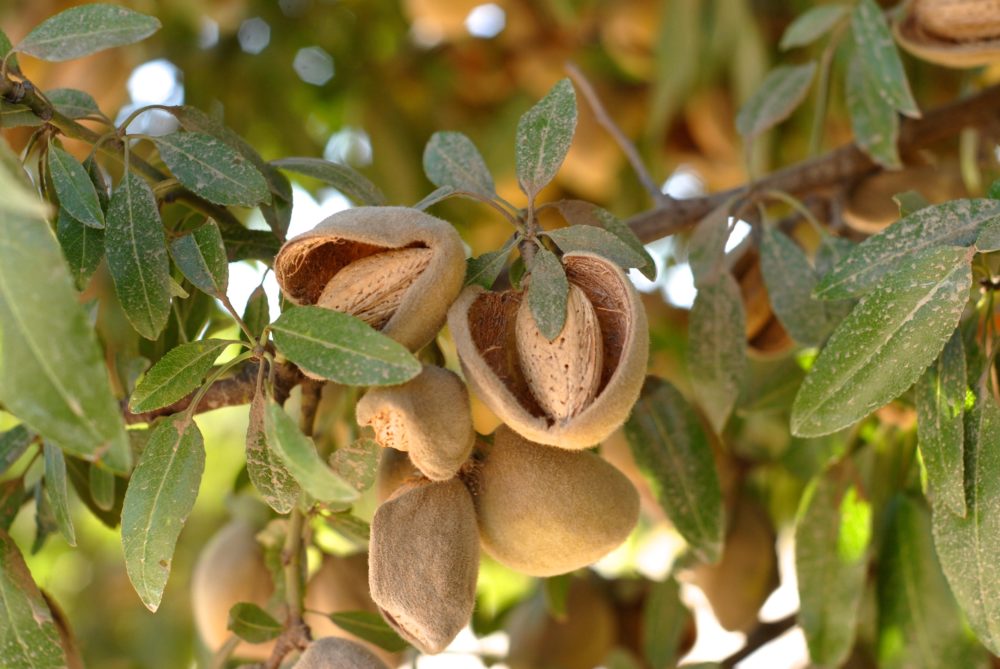
One popular component of the report is the review of the county’s “Top 10 Crops” that offers a quick glimpse of the diversity of products grown here. In 2017, these crops accounted for three-fourths of the report’s value. Almonds continue to lead the way as Fresno County’s only billion-dollar crop in 2017, representing 17.4 percent of the total gross value of the Crop Report. Added to this year’s list was mandarins at number six. Dropping out of the “Top 10 Crops” was garlic.

This year’s Crop Report was a salute to the Fresno-Kings Cattlemen’s Association. The organization is one of 38 affiliates of the California Cattlemen’s Association, a non-profit trade association that represents ranchers and beef producers in legislative and regulatory affairs.
2021-05-12T11:17:09-07:00August 21st, 2018|

Radanovich: President Trump Needs to Enact Immigration Reform

Congress Will Not and Cannot Do it Alone, Radanovich Says

By Hannah Young, Associate Editor

The future does not seem bright for California farmers who are desperately searching for labors to harvest crops. California Ag Today spoke with George Radanovich, president of the California Fresh Fruit Association and former U.S Congressman, about the need for immigration reform.

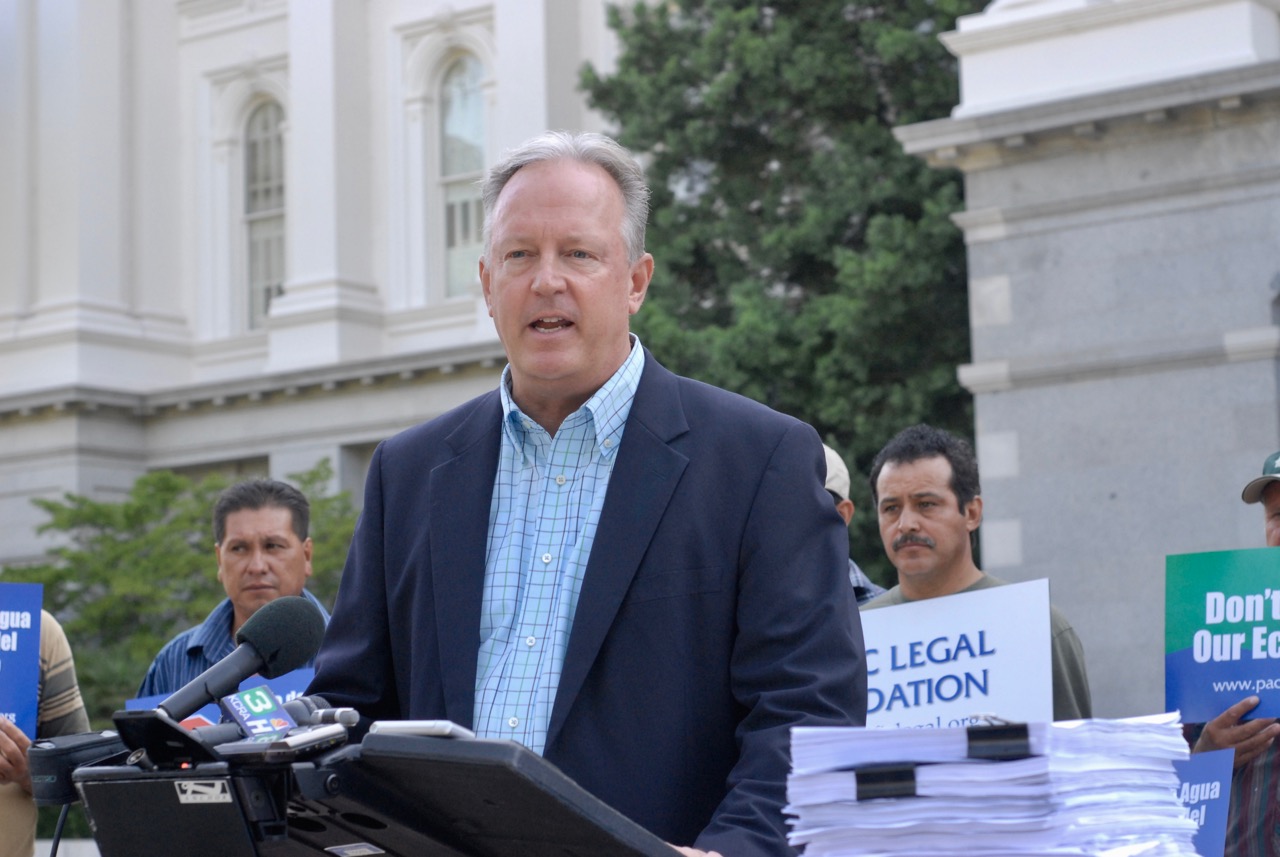
George Radanovich

Radanovich spent 16 years in Washington, D.C, and from his experience is not convinced that Congress alone will make immigration reform right for California farmers.

“I think that we need to get to President Trump and suggest that he intervene by direct talks with Mexico and create a system that will not leave our farmers high and dry,” Radanovich said.

In order to assure that farmers have enough labor for harvest, immigrants should be allowed to stay in the country as long as they are working during the time the government is implementing a new system, affirming border control, and e-verifying immigrants, Radanovich explained.

However, getting a system of this type will be tough to get past Congress due to a large portion feeling that every farmer worker is probably illegal and needs to go back to Mexico or any other foreign country.

“They don’t get it because they don’t live here, most of them, so they don’t understand how the system works,” Radanovich concluded.

2018-08-17T16:37:35-07:00August 17th, 2018|

Spotted Wilt Virus Light This Season on Tomatoes

Thrips Widespread But Yields are High

By Patrick Cavanaugh, Editor

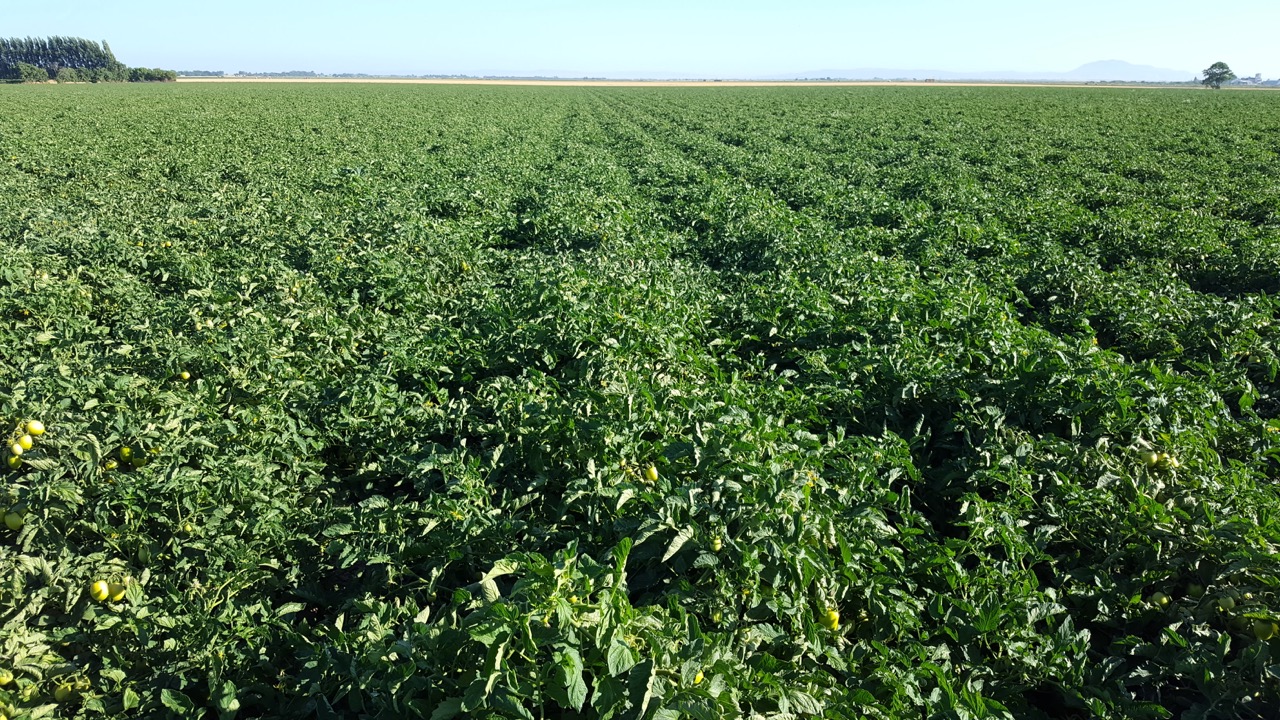
Spotted wilt virus on tomatoes was a big concern at the beginning of the season. California Ag Today spoke with Tom Turini, vegetable crops farm advisor for the University of California Cooperative Extension in Fresno County, about the topic. We caught up with him on the west side of Fresno County. He said despite the potential virus pressure, tomato yields have been very high this year.

“Thrips are the vector of tomato spotted wilt, and while the thrip distribution is much wider than it was last year, it doesn’t look like we’re seeing the level of economic damage,” Turini said.

Tom Turini

“We had had concerns initially about problems, and of course that could get worse as we get later in the season, but so far our yields have been very, very high,” Turini said.

He explained that the strong yields is in part due to the mild temperatures during the spring, so there was good early fruit set. “Even that, I would expect that now with these higher temperatures over the last six weeks, we’re going to start seeing the effects of the yield-robbing virus with a later harvest, he said.

Last year, the concern was with fresh market tomatoes.

“We had concerns late last year in the fresh market, but this year it’s at moderate levels of economic impact. “It doesn’t mean it couldn’t happen in the future, but at this point, it looks like we were spared, at least for the early season crop.

2021-05-12T11:01:53-07:00August 15th, 2018|

Irrigation Improvement Continuum Part of Almond Board’s CASP

California Almond Sustainability Program Offers Big Help to Growers

By Patrick Cavanaugh, Editor

The Almond Board of California has an Irrigation Improvement Continuum, which is part of the California Almond Sustainability Program (CASP). California Ag Today recently spoke with Spencer Cooper, senior manager of irrigation and water efficiency with the Almond Board of California, about the program.

CASP

Spencer Cooper, Almond Board

The Irrigation Improvement module allows growers to move through from the most basic to the most advanced.

“We’re key on growers understanding the fundamentals and foundation of irrigation management practices,” Cooper said. “The more we can get out there with growers understanding the basics, the more we can advance and continue to be progressive and leaders in the industry.”

Cooper said if growers sign up for CASP at SustainableAlmondGrowing.org and complete all nine modules, growers will receive a copy of the Almond Irrigation Improvement Continuum, a 154-page of soup to nuts on irrigation management that has taken more then 40 years of research that almond growers have funded.

2018-08-10T15:26:54-07:00August 10th, 2018|

UFW Breaks Law on Public Hearing But Will Appeal ALRB Ruling

Pick Justice Video Evidence Proves UFW Wrongdoing

By Laurie Greene, Founding Editor

Jesse Rojas, the spokesperson for Pick Justice, summarized the July 24, ALRB decision in favor of the Gerawan farm workers as “amazing.” The ALRB ruled the UFW broke the law and violated the rights of Gerawan farm workers on September 9, 2015, at a public hearing conducted by the ALRB in a hotel in Fresno.

At the 2015 public hearing, Nancy Oropeza, a UFW organizer, instructed hotel security to ban Gerawan Pick Justice employees from attending—in violation of their protected concerted activity. ALRB Administrative Law Judge Mark R. Soble (ALJ) issued the decision that the UFW violated the Agriculture Labor Relations Act by temporarily excluding a group of pro-decertification, anti-UFW farm workers of Gerawan at the recent hearing based on witness interviews and, more importantly, a video that captured everything.

“As you know, with these legal matters,” Rojas explained, “the UFW unfortunately still has the right to appeal it, even though a remedy has been issued. The remedy includes posting notices, just like typical unfair labor practices, to let employees know the UFW broke the law and that it is not supposed to happen again.”

“Ultimately, the ALRB—an unelected, governor-appointed board—has the authority to make the ultimate decision to uphold the ALJ’s full decision, to change it, or to deny it,” Rojas remarked.

“What is a bit disturbing, especially if you compare other cases where the ALRB is very strong against a company or a grower for violating employees’ rights,” he continued, “is the three ALRB members in Sacramento did not want the UFW to advertise the Judge’s remedial message that the UFW broke the law on the UFW’s La Campesina Radio Network. Furthermore, the ALRB did not uphold the ALJ’s recommendation to retrain their organizers so this does not happen again.”

“But because Judge Sobel publicly claimed that the video was a very persuasive piece of evidence,” said Rojas, “the ALRB still upheld that the UFW violated the law. So, the ALRB toned down the severity of the issue and basically just gave [the UFW] a slap on the hand. But we are hopeful that eventually, even if the UFW appeals, this will get remedied and the employees at Gerawan will know that the UFW broke the law and that they have the right to attend a public government hearing.”

Pick Justice is an organization that advocates for 99 percent of the farm workers in the state of California to protect both their freedom to choose their own labor representation as well as their constitutional rights. Pick Justice has supported the Gerawan farm workers in their ongoing legal attempt to mandate the courts to force the ALRB to count their votes from a 2013 election to decertify the UFW as their labor representative.

2018-08-09T16:05:45-07:00August 9th, 2018|

Navel Orangeworm Pressure Could Be Increasing in Almonds

Lack of Good Sanitation Leads to High Navel Orangeworm Numbers

By Jessica Theisman, Associate Editor

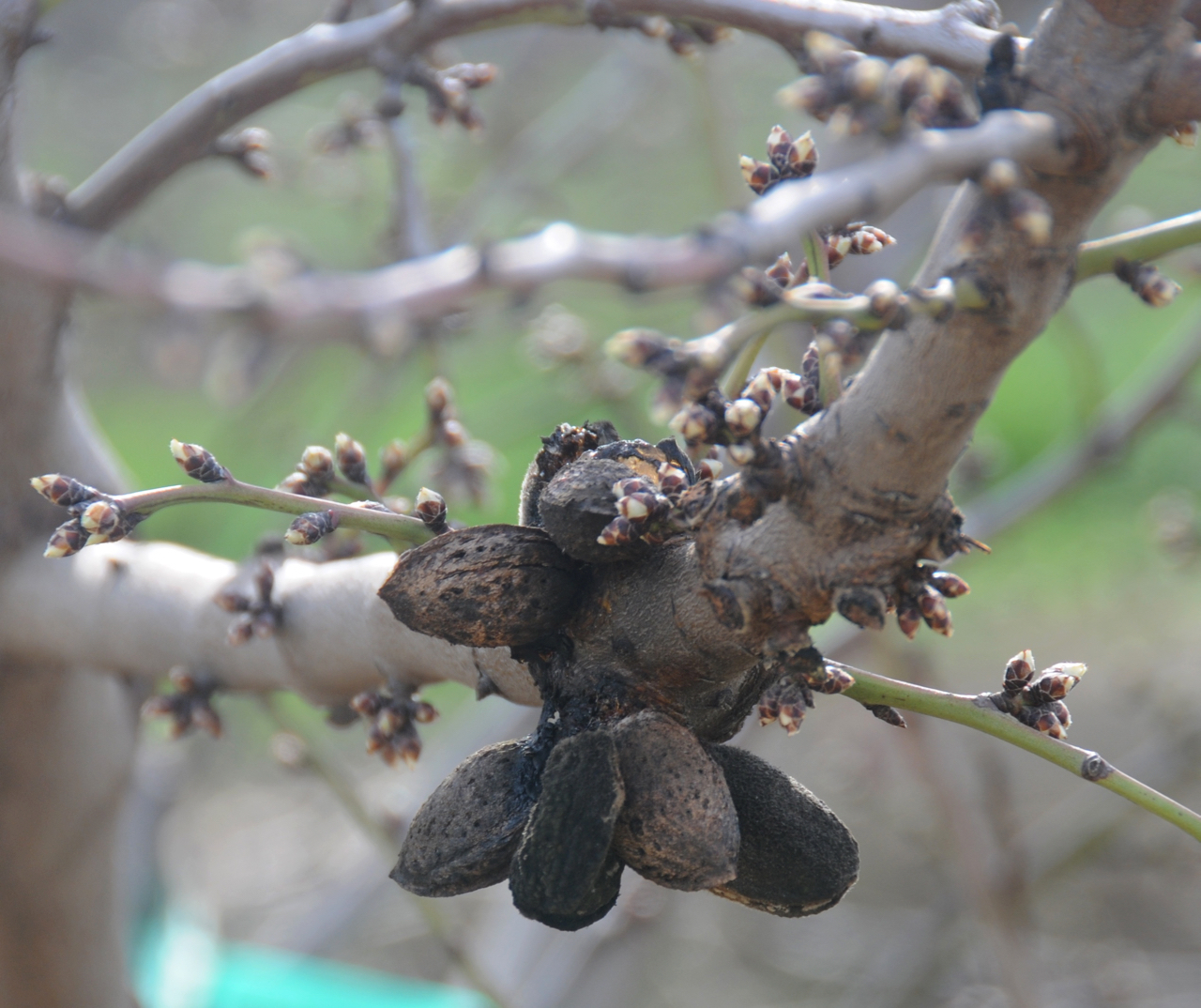
It could be another heavy year for Navel Orangeworm (NOW). David Haviland, UC Cooperative Extension farm advisor for Kern County and entomologist told California Ag Today that sanitation in almond orchards over the winter was not as good as it could have been.

“Everything right now is about trying to prevent a repeat from last year, and it is a little tricky so we know that sanitation wasn’t as good this winter as it generally should be,” he said. “The best time to shake NOW mummy nuts from an almond tree is after a rain when the nuts are heavier.”

David Haviland on Pyrethroid Review

David Haviland

However, rains came late this season, and by the time the rains left, there was only a few weeks before spring.

“This left a very short window to get any shaking done, and some people did an excellent job during that window to sanitize and other people just couldn’t get around all their acreage,” Haviland said. “On average across the whole industry, sanitation was not up to where it should have been, and it gave growers a difficult start to the season.”

NOW could be early this year, but the crop is on time.

“With all of this prolonged hot temperatures, particularly high night-time temperatures, the trees are shutting down a little bit at night compared to what they would do if the nighttime temperatures were cooler,” Haviland explained.

As a result, harvest is not coming as quickly as people would like.

“The problem is that the longer the nuts are in the orchard, the greater chance there will be NOW damage,” he said.

Timely crop protection sprays are recommended.

2021-05-12T11:01:53-07:00August 7th, 2018|

Proposition 3 Water Bond on Nov. Ballot

Initiative Would Fund Urgent Water Projects

By Patrick Cavanaugh, Editor

California Proposition 3, the Water Infrastructure and Watershed Conservation Bond Initiative, will be on the 2018 ballot. A yes vote supports the measure to authorize $8.8 billion in general obligation bonds for water infrastructure, groundwater supplies and storage, surface water storage and dam repairs, watershed and fisheries improvements, and habitat protection and restoration.

If passed, the bonds will help fix subsidence issues and the Friant Kern canal. If passed, this bond is sure to go to fixing things instead of being taken hostage by the California Water Commission and not used as it was intended.

Jason Phillips

Jason Phillips, CEO of the Friant Water Users Authority, which operates the Federal Friant Kern canal said, “It is real money that will be used. And I think what California will realize is that there’s a real need for that, and when you look at the size of California and the fact that the bond will fund projects that go from as far down as San Diego and the Salton Sea, and as far north to support the repairs needed Oroville Dam, it’s a 100 percent bond that would fund it, no reimbursement required, and the money would come straight to the Friant Water Authority to be used immediately.”

“We’ve already worked with Department of Water Resources to make sure that when the bond passes, we could start submitting requests for some of that funding immediately to start working on the canal in November 2018,” he said.

The subsidence along the canal is a big problem, and it’s growing. The worst part of it is in the middle of the 152-mile canal. The capacity of the canal has been reduced by about 60 percent, and that causes significant problems when there’s high demand, such as the middle of summer when the farmers need the water to put on their crops.

“It’s in the middle of summer, everybody’s asked for water, and we’re not able to move everything, so we have to turn people down and so what do they do? They have to turn on groundwater wells to supplement, and that is the problem that is causing more subsidence and right now,” Phillips explained.

Phillips said the canal, at it’s worse spot is, is sinking at about an inch a month.

Go to waterbond.org for more information.

2018-08-02T14:12:44-07:00August 2nd, 2018|

Bayer Helps Youth “Agvocate” For Farmers

Farming Operations Represent 21 Million Jobs

By Mikenzi Meyers, Associate Editor

Less than two percent of the United States population is working in agriculture. This may not sound like much, but let’s break it down. Two percent of the population means roughly 21 million jobs, 10 percent of the total workforce, and more than 160,000 farms. The greatest credibility for this huge industry goes to the farmers who work 365 days a year to feed the world. But who is advocating for them while they’re out in the field? That’s where Rob Schrick and Bayer Crop Science comes in.

Schrick, the Strategic Business Director for Bayer, knows the importance of promoting the industry and making consumers more aware of where their food comes from.

Rob Schrick, Bayer CropScience“What we’re trying to get across is that everyone in agriculture needs to lean into the conversation about ag, and be a proud ‘Agvocate’ for our industry,” he said.

Explaining the importance of farming, using both science and an emotional connection is key to getting this incredibly important concept across.

One way Bayer is striving to accomplish this goal is by working with youth involved in 4-H.

“We’re trying to get the kids even more excited about STEM,” Schrick explained.

STEM is a program that combines Science, Technology, Engineering, and Mathematics to give the kids hands-on education and inquiry-based science learning, which they can relate to agriculture and share with their community.

It is said that today’s youth are tomorrows leaders, and Bayer is helping the future leaders found in 4-H represent the farmers that work so hard to provide the world with a safe, affordable food supply.

2018-07-27T16:35:51-07:00July 27th, 2018|

UC and Israel Sign Agricultural Research Agreement

California and Israel Face Similar Challenges

By Pam Kan-Rice, UC ANR News

From left, Ermias Kebreab, Eli Feinerman, and Mark Bell sign the agreement for Israel and California scientists to collaborate more on water-related research and education.

Pledging to work together to solve water scarcity issues, Israel’s Agricultural Research Organization signed a memorandum of understanding with the University of California Division of Agriculture and Natural Resources and UC Davis recently. The signing ceremony kicked off the 2018 Future of Water for Irrigation in California and Israel Workshop at the UC ANR building in Davis.

“Israel and California agriculture face similar challenges, including drought and climate change,” said Doug Parker, director of UC ANR’s California Institute for Water Resources. “In the memorandum of understanding, Israel’s Agricultural Research Organization, UC Davis and UC ANR pledge to work together more on research involving water, irrigation, technology and related topics that are important to both water-deficit countries.”

The agreement will enhance collaboration on research and extension for natural resources management in agriculture, with an emphasis on soil, irrigation and water resources, horticulture, food security and food safety.

“It’s a huge pleasure for us to sign an MOU with the world leaders in agricultural research like UC Davis and UC ANR,” said Eli Feinerman, director of Agricultural Research Organization of Israel. “When good people, smart people collaborate, the sky is the limit.”

Feinerman, Mark Bell (UC ANR vice provost) and Ermias Kebreab (UC Davis professor and associate vice provost of academic programs and global affairs) represented their respective institutions for the signing. Karen Ross (California Department of Food and Agriculture secretary) and Shlomi Kofman (Israel’s consul general to the Pacific Northwest) joined in celebrating the partnership.

“The important thing is to keep working together and develop additional frameworks that can bring the people of California and Israel together as researchers,” Kofman said. “But also to work together to make the world a better place.”

Ross said, “It’s so important for us to find ways and create forums to work together because water is the issue in this century and will continue to be.”

She explained that earlier this year, the World Bank and United Nations reported that 40 percent of the world population is living with water scarcity. 

“Over 700,000 people are at risk of relocation due to water scarcity,” Ross said. “We’re already seeing the refugee issues that are starting to happen because of drought, food insecurity and the lack of water.”

Ross touted the progress stemming from CDFA’s Healthy Soils Program to promote healthy soils on California’s farmlands and ranchlands and SWEEP, the State Water Efficiency and Enhancement Program, which has provided California farmers $62.7 million in grants for irrigation systems that reduce greenhouse gases and save water on agricultural operations.

“We need the answers of best practices that come from academia, through demonstration projects so that our farmers know what will really work,” Ross said.

As Parker opened the water workshop, sponsored by the U.S./Israel Binational Agricultural Research and Development (BARD) Program, Israel Agricultural Research Organization and UC ANR, he told the scientists, “The goal of this workshop is really to be creating new partnerships, meeting new people, networking and finding ways to work together in California with Israel, in Israel, with other parts of the world as well.”

Drawing on current events, Bell told the attendees, “If you look at the World Cup, it’s about effort, it’s about teamwork, it’s about diversity of skills, and I think that’s what this event does. It brings together those things.”

2021-05-12T11:05:10-07:00July 24th, 2018|

Steve Patricio Honored for Significant Contributions to Agriculture

Western Growers will award Patricio the prestigious 2018 Award of Honor on October 30

News Release Edited by Patrick Cavanaugh

Western Growers will honor Steve Patricio, whose visionary leadership has advanced the agricultural industry by leaps and bounds, with the 2018 Award of Honor. The Award of Honor is Western Growers’ highest recognition of industry achievement and is given to individuals who have contributed extensively to the agricultural community.

“Steve has been a tireless advocate for agriculture, and his ability to turn some of the most tumultuous challenges that our industry has faced over the past few decades into opportunities is unmatched,” said Tom Nassif, president and CEO of Western Growers. “He has already left a tremendous legacy as someone who shoulders the responsibility of igniting change that advances the industry as a whole.”

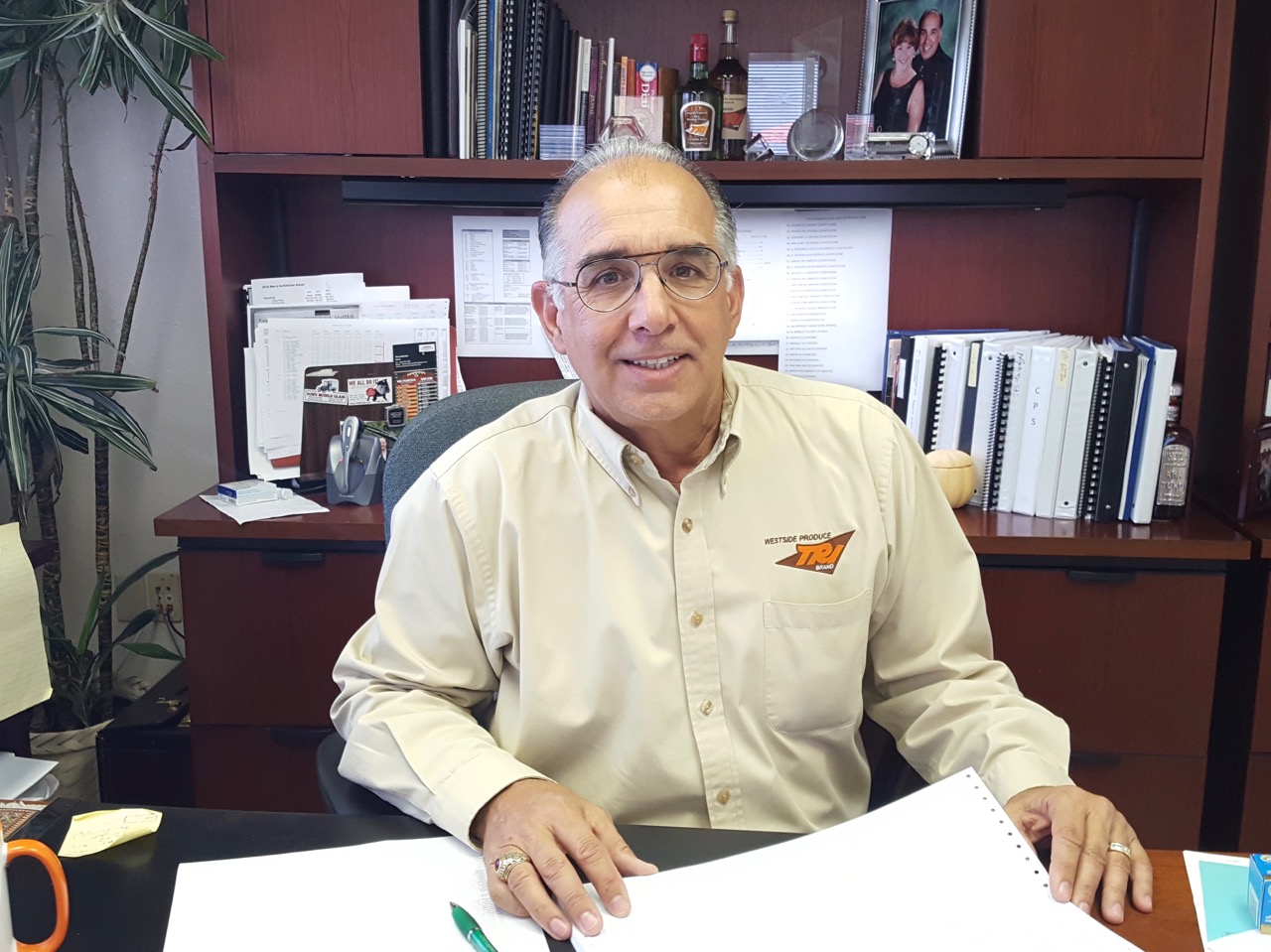
Steve Patricio to be Honored by Western Growers Association

Patricio, the Chief Financial Officer of Westside Produce, based in Los Banos, is being recognized for his immeasurable leadership and contribution to the agricultural industry, making significant advancements in food safety and the protection of public health. Steve led the creation of the first-ever mandatory food safety compliance program for the California cantaloupe industry, as well as helped raise millions of dollars to fund research geared toward preventing foodborne illness. He also played an integral role in the establishment of the California and Arizona Leafy Greens Marketing Agreements, which today have become the model for produce safety and accountability.

“When you look at the success of California agriculture, Steve is a true representative of why the ag community is as successful as it is today,” said Bonnie Fernandez-Fenaroli, executive director of the Center for Produce Safety. “He truly embodies passion and proactivity, and his commitment to food safety to benefit both the consumer and industry is unlike any other.”

Patricio’s tenacity does not just stop at food safety. Patricio has spent countless hours throughout his 45-year tenure in the industry advocating for a sustainable supply of water for farmers to grow the food that feeds the state, nation, and world. He has taken every opportunity, as he did when he was asked to join former California Governor Arnold Schwarzenegger at the San Luis Reservoir, to call attention to the need for more surface water storage and stress the need for a comprehensive water solution. Furthermore, Patricio launched the industry’s first orientation program for agribusinesses that focused exclusively on water rights.

“Steve has one of the brightest minds and quickest wit in the industry,” said Bob Gray, past chairman of Western Growers and former president/CEO of California Ag Leadership Foundation. “He is a contributor of substance, and the expertise and competence he has brought regarding food safety and water have made major impacts for the industry.”

A Los Banos-native, Patricio is deeply involved in the community and industry. He has served as chairman for Western Growers, Center for Produce Safety, California Cantaloupe Advisory Board, and Monrovia Nursery Company. He has also held leadership positions at Western Growers Assurance Trust, Monsanto Vegetable Seeds Advisory Council and the Produce Marketing Association.

“I was speechless when I found out I was selected for this award,” Patricio said. “I never thought that, at the end of it all, I would be a farmer or involved in this honorable and wonderful world that I am so engaged in today. I often tell youth that your career chooses you, and because I followed the path life decided to take me on, I am proud to say that I am a farmer. I couldn’t imagine being in any other industry.”

Patricio’s accomplishments and passion for shaping the ag industry will be recognized at the Award of Honor Dinner Gala at the Western Growers Annual Meeting on October 30 in Palm Desert, CA.  There, Patricio will be honored by his peers, friends, and family. To attend the ceremony, visit http://www.wgannualmeeting.com/.

2018-07-13T12:48:34-07:00July 13th, 2018|
Go to Top