Associations, Organizations, Educational and Research Institutions
Farm Bill Deal a Big Win for U.S. Citrus Growers

Agreement Provides $25 Million for ACP and HLB

News Release

Recently, leading farm bill negotiators in the House and Senate announced that they have reached an “agreement in principle” signaling that a final deal will be made before the end of the year.

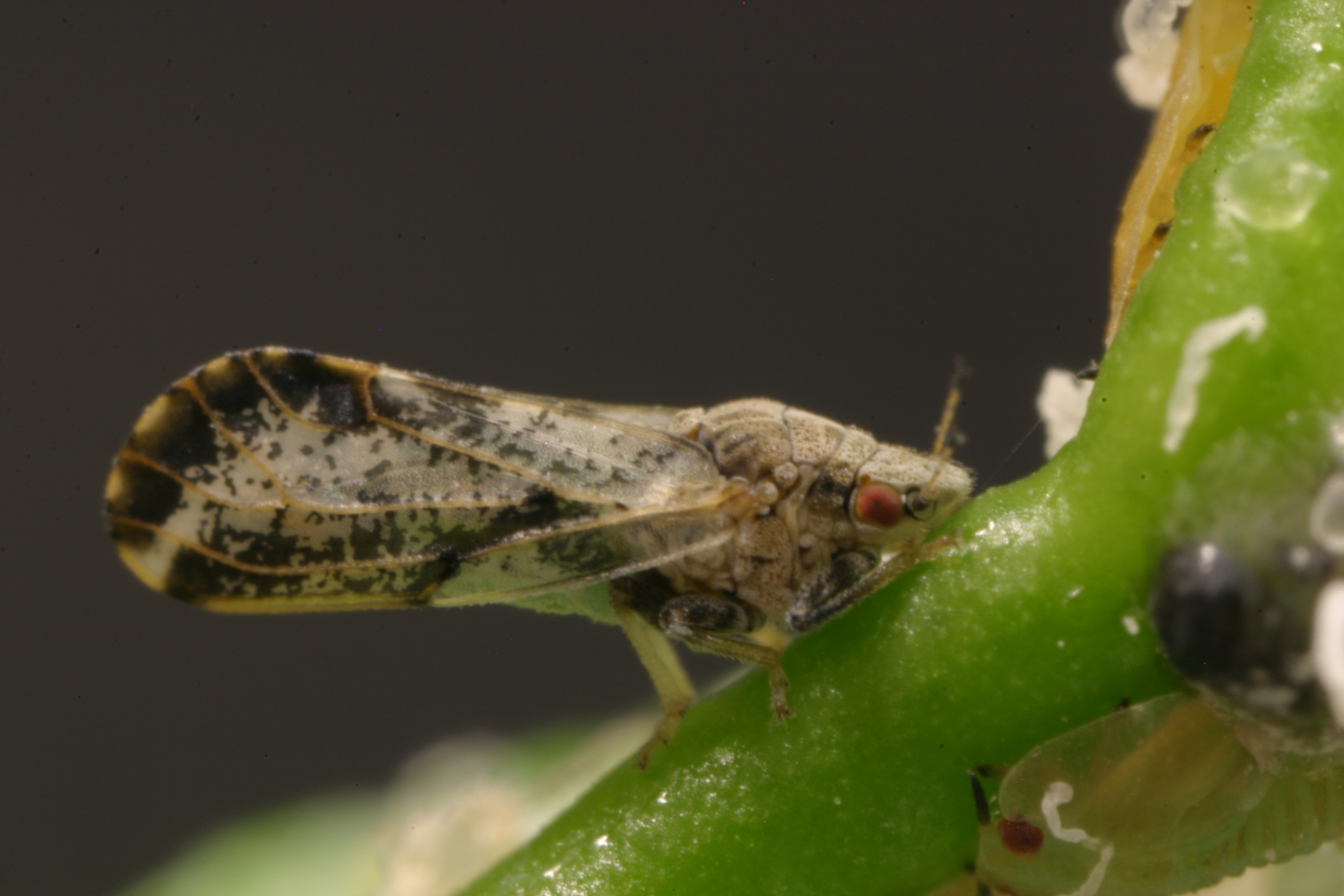
Included in the initial agreement is language providing $25 million per year for 5 years for research specific to the invasive insect Asian citrus psyllid and deadly plant disease Huanglongbing (HLB).

The Emergency Citrus Disease Research and Development Trust Fund will build upon the program created in the Specialty Crop Research Initiative (SCRI) title in the 2014 Farm Bill, which dedicated research funding for citrus.

“The trust fund language is a significant win for U.S. citrus growers,” California Citrus Mutual President Joel Nelsen said. “It’s critical for the future of our industry and the domestic citrus market that we continue to invest in research aimed to find a solution for HLB.”

The Farm Bill funding specific to HLB research complements the $40 million per year program funded by California citrus growers to stop the spread of HLB, which has been detected in over 900 backyard citrus trees in Southern California. In recent years, the state of California has dedicated funds to augment ACP and HLB control efforts in urban areas, including the rearing and release of millions of beneficial insects in backyard citrus trees.

Negotiators have also agreed to maintain funding for the USDA Animal and Plant Health Inspection Service’s (APHIS) Plant Pest and Disease Management and Disaster Prevention Program and the National Clean Plant Network (NCPN). Additionally, funding will continue for the Technical Assistance for Specialty Crops (TASC) program, which helps growers overcome artificial trade barriers.

“On behalf of the California citrus industry, I want to thank the lead farm bill negotiators in both houses for their commitment to passing a Farm Bill that includes this vital funding for the U.S. citrus industry and specialty crops,” Nelsen said.

2021-05-12T11:05:07-07:00November 29th, 2018|

Tea: More Than Just a Drink

Rich American History Around Tea

By Mikenzi Meyers, Associate Editor

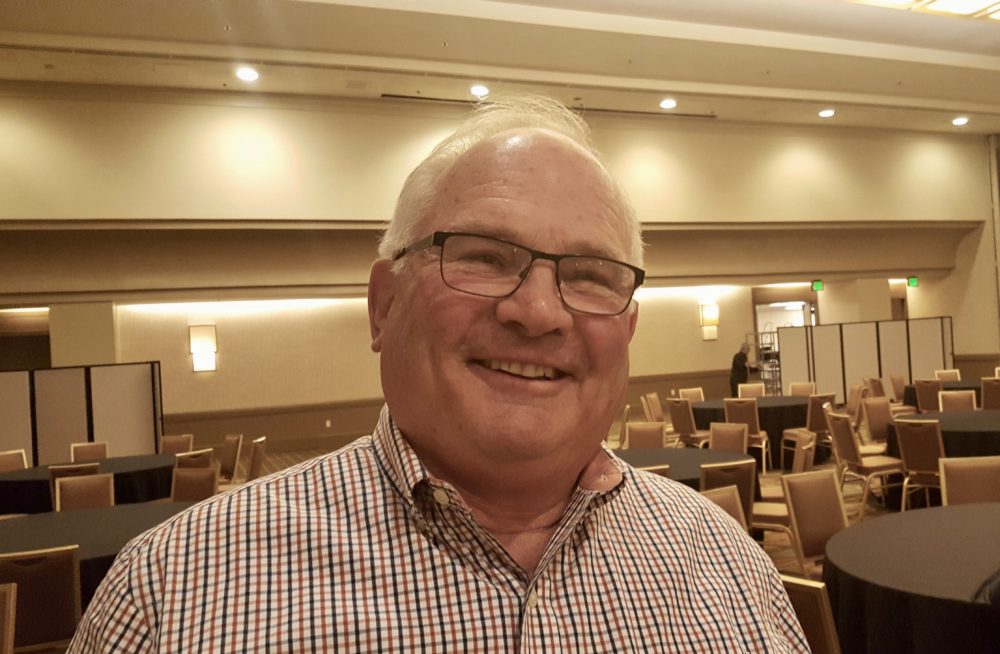
As the weather starts to get colder in California, nothing sounds better than a cup of warm tea on a chilly day. When reaching for what might be your favorite winter drink, Jeff Dahlberg, director of the Kearney Ag Research and Extension Center, urges you to think about the rich history behind it.

Dahlberg explained that, “Americans have been drinking tea for a long time. Back in the 1700s, as I understand it, there used to be tea shops everywhere in the U.S.”

tea

Jeff Dahlberg

He further emphasized the importance of truly educating yourself on the drink, which will only add to your ability to select the teas that best suit your pallet.

Even better, Dalhberg believes that first-class teas can be grown right here in California—an opportunity that the Global Tea Initiative in Davis is already looking into.

“Bottom line, we can actually grow pretty high-quality, high-yielding teas here in the state, and the folks at Davis are really excited about that,” he said.

For more information on the Global Tea Initiative, visit GlobalTea.UCDavis.Edu.

For more information on the Kearney Ag Research and Extension Center, visit their website at: kare.ucanr.edu

2018-11-29T16:21:28-08:00November 29th, 2018|

Sorghum Not Well Known in the U.S.

Sorghum Used in Different Ways in the World

By Mikenzi Meyers, Associate Editor

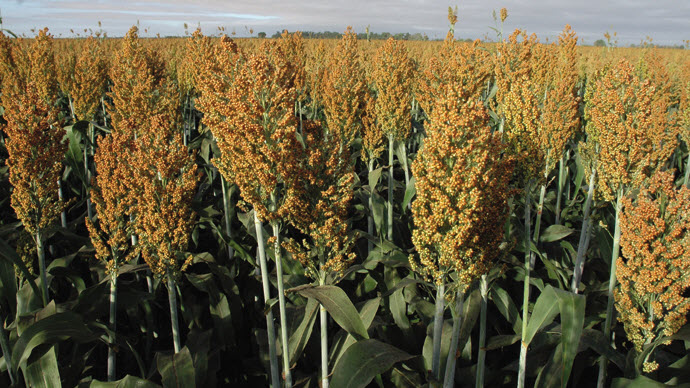
The Kearney Ag Research and Extension Center is currently doing extensive drought tolerant research on sorghum, a plant with a variety of uses. Jeff Dahlberg, director of the Kearny Ag Research and Extension Center in Parlier, knows the complexity of the plant, and the need to educate farmers about it.

Sorghum

Sorghum is used for humans and animal feed around the world.

“The challenge here is that nobody knows very much about sorghum, and I have to kind of retrain our nutrition people about how to use it properly, and how to treat it so that you can get the most use out of it,” Dahlberg said.

He further added that in most parts of the world sorghum is primarily used for human consumption, however, here in the United States, we use it for animal feed. Dahlberg has been looking into introducing the plant to California dairies as an alternative for forages that require more water.

Even though producers that currently use sorghum are pleased with the results, a new problem has been brought to Dahlberg’s attention.

“We had this insect show up called the Sugarcane Aphid. It can be controlled, but it takes a bit of management,” he explained.

Although the aphid presents challenges, Dahlberg knows that with the proper training the issue can be resolved.

For more information on the Kearney Ag Research and Extension Center, visit: kare.ucanr.edu

2021-05-12T11:05:07-07:00November 27th, 2018|

Global Tea Initiative at UC Davis

UC Davis Could Be Center of Global Tea Research

By Jessica Theisman, Associate Editor

Researchers at the Kearney Agricultural Research and Extension Center in Parlier are testing whether or not tea can be grown in California. California Ag Today recently spoke with Jeff Dahlberg, director of the center. He told us about the Global Tea Initiative at UC Davis. The Global Tea Initiative looks to explore the history and cultural importance of tea.

Jeff Dahlberg, director of the Kearney Agriculture Research and Extension Center in Parlier, Fresno County

Jeff Dahlberg, director of the Kearney Agriculture Research and Extension Center in Parlier, Fresno County

“There’s lots of excitement about it, and people are really starting to take to the initiative,” said Dahlberg. “People are starting to look at the Global Tea Initiative as a leader for research in the U.S.

Dahlberg believes that the support exists because of the wide variety of diverse crops in California.

We grow 400 different crops in the state because California is one of the few places in the world that has that kind of diversity.

“I think it’s going to offer some unique opportunities to some farmers who really would like to diversify and perhaps get into something that may be really unique,” Dahlberg said.

For more information on the Global Tea Initiative, visit GlobalTea.UCDavis.Edu.

2021-05-12T11:05:07-07:00November 26th, 2018|

Drought Tolerant Sorghum in CA

California Ideal for Drough Research

By Jessica Theisman, Associate Editor

Research is being done on drought tolerance and sorghum. California Ag Today recently spoke with Jeff Dahlberg, director of the Kearney Agricultural Research and Extension Center in Parlier about the topic.

“The sorghum research has gone pretty well for the drought tolerance; we have just finished publishing our fifth article on their first year of data,” he said.

There is a lot of interest in the research findings developing through all the drought work. California is a unique spot to do drought work on a field scale because it does not rain very often.

“That allows us to basically control the field through our ability to add water whenever we want to. I’m really excited about this,” Dahlberg said.

There are genes that are turned off and on with the application and/or lack of water.

Jeff Dahlberg, director of the Kearney Agriculture Research and Extension Center in Parlier, Fresno County

Jeff Dahlberg, director of the Kearney Agriculture Research and Extension Center in Parlier, Fresno County

“The challenge for us now is to start taking all this data and trying to make some sense out of it,” Dahelberg explained.

It is critical to find out which genes are needed for drought tolerance and how they can get them expressed in plants.

“I think this is long-term basic research but has long-term implications in our ability to produce more drought tolerant crops to help feed the world,” Dahlberg said.

Sorghum has a long-standing history in California. It was grown here in the late 1800s. The USDA brought sorghum to California as a drought-tolerant feed.

“In the 1960s, there were almost 400,000 acres of grain sorghum grown in the state, primarily as a rotation crop for cotton,” Dahlberg said.

This crop is making a come-back with all of the droughts California has been going through.

“It’s a very drought tolerant crop. Probably one of the most drought tolerance cereal crops that we grow worldwide,” Dahlberg explained.

2021-05-12T11:05:07-07:00November 23rd, 2018|

Preventing the Spread of ACP

Valley Citrus Growers Continue Vigilance

By Jessica Theisman, Associate Editor
ACP

USDA ACP Cooperative Program Map (Source:
California Citrus Pest & Disease Prevention Program)

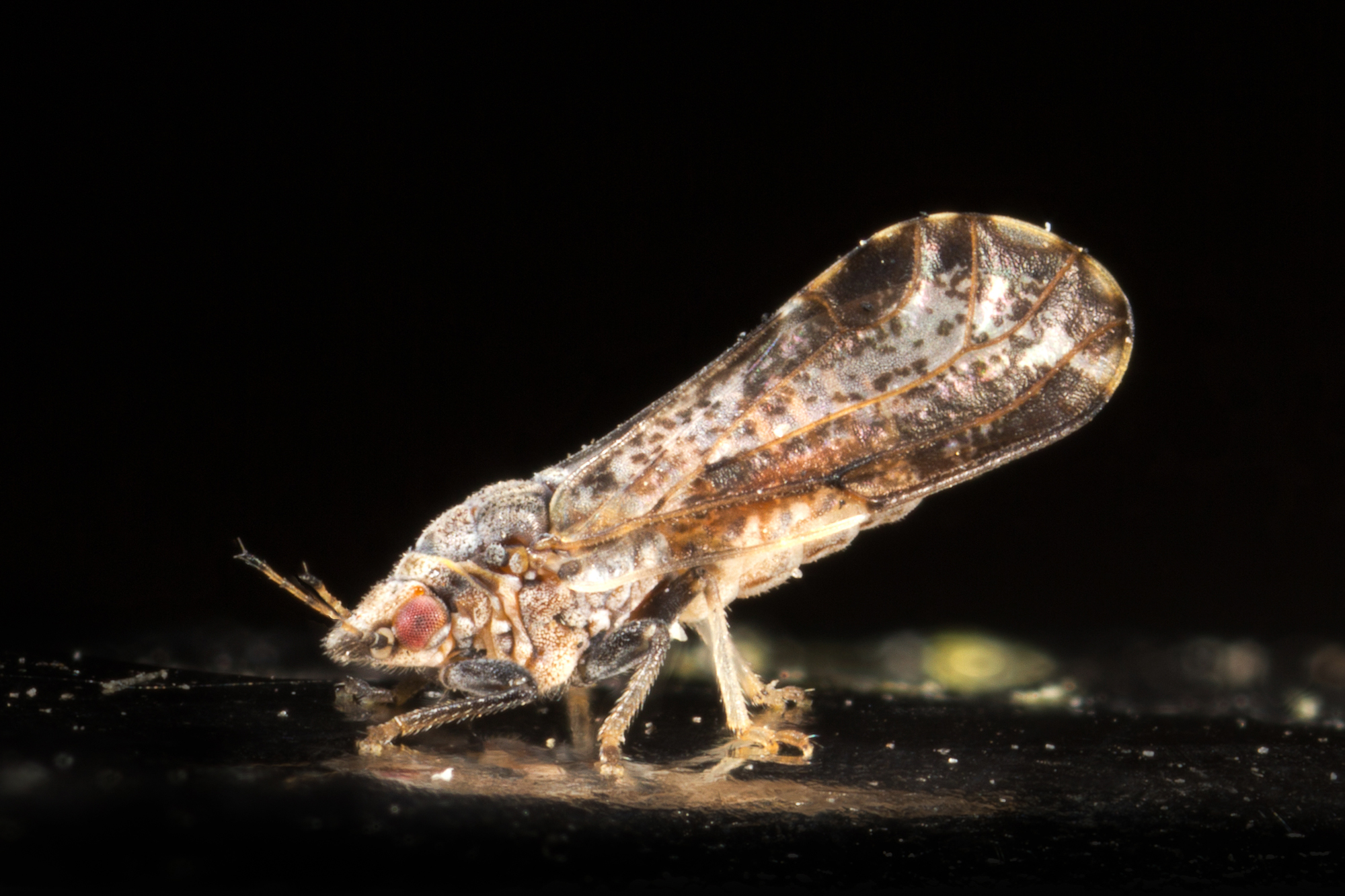
The spread of Asian Citrus Psyllid (ACP) continues to be a looming threat for Central Valley citrus growers as it vectors Huanglongbing (HLB), a disease that destroys citrus trees. Greg Douhan, a University of California Cooperative Extension Tulare County citrus farm advisor reported to California Ag Today recently that, “There have been so many people onboard really working at this from multiple angles, and we’re in the eradication mode. We want to make sure the insect doesn’t get established in the San Joaquin Valley.”

“If one were to look at a map of ACP infestation in California [such as CDFA Quarantine Maps and California Citrus Pest & Disease Prevention Program Threat map], they may consider it to be endemic in the Los Angeles area. Rest assured that anytime ACP is found in a trap, the CDFA sprays everything in that area within 400 meters.”

Douhan said the Valley is on high alert to find ACP in traps. “

If researchers discover a cluster of finds in any particular area, we manage some spray programs and try to get all the growers to do a coordinated effort in order to try to combat it,” he said.

SaveOurCitrusIn addition, the SAVE OUR CITRUS app is a free USDA iPhone app to report and identify the four leading citrus diseases: citrus greening, citrus canker, citrus black spot and sweet orange scab. Report your symptoms, upload a photo, and citrus experts will respond.

So far, the practices have been working well.

“I think most of the growers are very well informed,” Douhan said, “and are taking this very seriously because it is this their livelihood.”

2021-05-12T11:01:51-07:00November 21st, 2018|

No End in Sight for Stopping Huanglongbing Disease

Millions Spent to Fight Huanglongbing, with No Cure

By Mikenzi Meyers, Associate Editor

The California citrus industry—made up of 3,500 growers in Ventura, Riverside, and the San Joaquin Valley, and encompassing 70-75 packing houses—is an agricultural facet that continues to make California a fresh citrus powerhouse. Joel Nelsen, President and CEO of the California Citrus Mutual, spoke to California Ag Today recently on the industry-wide issue of Huanglongbing Disease—a deadly disease that has threatened the industry in every part of the state.

“For our industry, it’s a combination of enthusiasm, unity, frustration, and aggravation because we continue to fight the spread of the disease in Southern California.”

“We’re continually frustrated because science has not yet found a cure. We’ve given the scientific community an average of thirty to forty million dollars a year to find a cure for this disease.”

In a recent study done by the University of California, Riverside, economic outputs of the citrus industry is roughly $7 billion.

“It’s an economic engine for certain parts of this state. Lose it, and it’s not a positive alternative, that’s for sure,” Nelsen said.

2021-05-12T11:05:08-07:00November 14th, 2018|

Children Lacking Fruits and Vegetables

Centers For Disease Control Note Only 1 in 10 Children Are Eating Enough Produce

By Jessica Theisman, Associate Editor

A recent study found that over a quarter of young children do not consume a single serving of fruits and vegetables on a daily basis. That news is alarming for Teresa Thorne, executive director of the Alliance for Food and Farming in Watsonville.

The CDC releases consumption data every other year. At any age, only one in 10 people is eating enough fruits and vegetables every day.

“When you see a study like this and it talks about toddlers, children, and their lack of consumption, it is disturbing,” Thorne said.

Fruits and vegetables are not a current trend, but that is why it is important to make sure that there is an abundance of affordable and acceptable fruits and vegetables for parents to provide to their children.

“This is alarming because many children develop their eating habits around the age of two, and these habits will carry on into the rest of their lifetime,” Thorne explained.

In the study, the authors did some simple suggestions for parents in terms of helping parents to incorporate fruits and vegetables in the diet.

“The most important thing I thought was interesting is that it can take up to 10 times for a kid to adjust to a food and say, ‘oh yeah, I like that,’ ” Thorne said. “So be persistent again and keep trying.”

For more information, visit SafeFruitsAndVeggies.com.

2021-05-12T11:05:08-07:00November 8th, 2018|

George Soares on How DPR Sees Cannabis

Soares: DPR Interpretation of Cannabis is Wrong

By Jessica Theisman, Associate Editor

George Soares, a partner in Kahn, Soares, and Conway, a law firm based in Sacramento, recently spoke about the issues surrounding cannabis. He is managing partner of the firm and represents several agricultural commodity and trade groups in Sacramento.

He spoke at the recent California Associations of Pest Control Advisors (CAPCA) annual meeting in Anaheim. He touched on the fact that the California Department of Pesticide Regulation (DPR) is not thinking of the public in their handling of crop protection materials on cannabis.

“The people of California have decided that cannabis can be consumed by the public,” Soares said. “The question is how to grow the cannabis under the regulation.

Currently, the chemicals and fertilizers used to grow the cannabis are all illegal.

“So far, the solution is that we make it legal by stretching the interpretation of the law,” he explained.

By law, pesticides have to be labeled for use, and eligible crops must be on the label.

“The pesticides being used are being interpreted in ways to make it legal to use on cannabis,” Soares said. “Think about the damage that is doing to the legal structure of what we all adhere to.”

“DPR would never let a pesticide be used off-label, but when it comes to cannabis, it looks like the government is willing to let it slide,” he said.

2021-05-12T11:01:52-07:00November 1st, 2018|

Labor Challenges in Sweet Potatoes

Challenges Are High Demand for Innovation

By Mikenzi Meyers Associate Editor

Harvest for sweet potatoes is in full swing, which means long hours and high labor expenses for producers. Scott Stoddard, of the UC Cooperative Extension in Merced County, knows the difficult task at hand in managing time and money.

With new overtime laws in place, the extended work days during harvest can be costly to farmers. With insight into several operations, Stoddard explained, “Everybody is crunched and trying to get as much as they possibly can get done in a day.”

However, this isn’t the only issue farmers are facing, because although hourly pay is on the rise, labor is becoming more difficult to find.

Stoddard said, “I had a guy tell me last week when I was harvesting sweet potatoes that it is getting a little bit harder to find labor.”

All of these factors, he concluded, are driving forces for mechanical innovation.

Innovation and new pieces of equipment are continuing to “shake up” the industry, Stoddard noted. In a typical operation, it takes two passes in sweet potato fields to eliminate excess vines leading up to harvest. Stoddard said that the new machine is capable of removing vines pre-harvest in just one pass.

“It helps get rid of the extra little vines that are still left over after you flail mow the crop,” he explained.

Although this machine is costly, according to Stoddard, it is estimated to save about one person per harvester, which in the big picture can add up.

“It’s a little tweaking of the system, which will make sweet potato harvest more labor efficient.”

2018-10-31T15:19:52-07:00October 31st, 2018|
Go to Top