Associations, Organizations, Educational and Research Institutions

Agronomy Scholarships Offered By CCAs

Western Region CCA Offers College Scholarships and Teaching Honorariums to Professors

The Western Region CCA (Certified Crop Advisor) program is excited to announce the second annual scholarship program for students interested in agronomy and obtaining their Certified Crop Advisor credentials. Scholarship recipients are the next generation of leaders in the agriculture industry.

Western Region CCA is offering four $1,000 scholarships to undergraduate students. One from each of the four following regions: Arizona/California desert region (PhoenixàSan Diego/Inland Empire), California coast region (OxnardàSalinasàNapa Valley), California northern valley region (Mercedà Redding), and California southern valley region (MaderaàBakersfield).

The scholarship application features a series of questions and will be scored on the following:

  • Describe your coursework, year in school, GPA, and major
  • Describe any scholarships, awards, and other forms of recognition you have received
  • Describe your leadership involvement at school and in the community
  • Describe your professional commitment to agriculture and work history (if applicable)
  • Describe your pathway to earning the certified crop advisor credential in the near future

Scholarship applications will be submitted online through the scholarship homepage (www.wrcca.org). In September, winners will be honored at the 2021 Crop Consultant Conference.

In addition to the scholarship program, WRCCA will be offering honorariums to professors who teach agronomy related coursework. There are four $500 honorariums available, one for each scholarship region (Coast, Desert, North Valley, South Valley). To apply, write and submit a plan of how you would utilize the funds to help students learn more about agronomy. Plans will be submitted online through the scholarship homepage (www.wrcca.org).

The Western Region CCA program is committed to refining the knowledge and skill of those making important decisions in the field. CCAs work with producers to help make economically and environmentally sound decisions. This counsel is the result of the hours spent gaining knowledge and perspective through requirements to become a certified crop adviser. CCAs play a vital role in working with producers to ensure sustainability and long-term success for agriculturalists.

“With modern agriculture and regulatory hurdles and all of the challenges we face, you need to be broadly trained and the CCA is a great first step.” Karl Wyant, Western Region CCA Vice President

It is the board’s hope that scholarship recipients are the next generation of certified crop advisers leading the way in the agriculture industry.

2021-05-13T16:05:48-07:00March 15th, 2021|

HMC Farms Vaccinates Farm Employees

HMC Farms Delivers COVID-19 Vaccinations to Agriculture Workers


HMC Farms, based in Kingsburg,  has announced the successful distribution of 450 COVID-19 vaccines to agricultural employees in California’s Central Valley.

HMC Farms recently hosted vaccination clinics that distributed hundreds of COVID-19 vaccines to employees of HMC and several nearby businesses in the ag industry. More vaccinations are on the way as the first recipients near the second dose time frame.

HMC Farms is a family-owned and operated business, and the McClarty family values their employees as an extension of that family. Sarah McClarty, Chief Financial Officer of HMC Farms, stated at the event, “To watch every employee in our organization who wants a vaccine receive one over the last two days has been the biggest win in what has been an extremely challenging twelve months. Partnerships with the California Farmworker Foundation and Elite Medical that were in place prior to the pandemic have played a huge part in HMC’s continued efforts to support our employees’ health and well-being, and are what made this week’s event possible.”

At the vaccination event, it was clear to see that people were relieved to have vaccines available to them. Several employees were seen having their photos taken while receiving the vaccine to share with friends and family. “This is such a relief,” said one employee as she received her shot. Another employee commented, “The distribution process for vaccines has been confusing. It’s so helpful that HMC was willing and able to bring vaccinations directly to us.”

The past year has been difficult for people and industries around the globe, and the ag industry has felt the weight of keeping employees safe and healthy while maintaining the food supply. Speaking about the partnership with the California Farmworker Foundation which helped make the vaccination even possible, Harold McClarty, owner and Chief Executive Officer of HMC Farms, expressed gratitude. “We have all struggled during these very difficult times,” said McClarty. “We are very grateful and supportive of all the work that this organization has done for farmworkers. It gives us some hope that we will persevere and continue to move forward with our work to support the nation’s food supply.”

HMC Farms is located in the heart of California’s Central Valley, and has been family-owned and operated since 1887. All of their produce is grown sustainably, protecting the land, water, and people who make it possible to deliver delicious peaches, plums, nectarines, and table grapes year after year. To learn more, visit https://www.hmcfarms.com/ 


2021-05-13T16:11:22-07:00March 4th, 2021|

CALOSHA Unfairly Insists that Ag Increase Prevention of COVID Spread

Agriculture and Business Coalition Disappointed in Cal/OSHA Emergency Standards Preliminary Injunction Ruling


In response to the decision of the Superior Court to deny motions for preliminary injunctions restraining the California Occupational Safety and Health Standards Board from enforcing the Emergency Temporary Standards, a coalition of agricultural and business groups issued the following statement:

“The health and safety of farm and ranch employees is the top priority for agricultural employers. Throughout California, farmers and ranchers have adapted their operations to minimize the spread of COVID-19 in the workplace. In addition, agricultural organizations have advocated with local, state, and federal elected officials and agencies to prioritize access to vaccines for farm and ranch employees; individual farms and agricultural businesses have sponsored vaccination clinics, with more already scheduled.

“The court’s decision only complicates the ongoing work by family farms and other essential businesses to maintain safe, plentiful food supplies in the wake of COVID-19. The Cal/OSHA Board failed to justify the need for emergency intervention, despite their own staff report that the emergency standards were not necessary to protect employee health.

“With this decision, the court failed to properly exercise its oversight on this critically important issue, and we are now exploring our legal options to ensure the safe and timely delivery of food and essential services to all Californians. In the meantime, we will work with Cal/OSHA to assure the agency better understands the essential businesses and agricultural operations it regulates, and to inject practicality into the Emergency Temporary Standards as it develops forthcoming policies and guidance.”

2021-02-26T12:22:45-08:00February 26th, 2021|

Class 51 Ag Leadership Seeking Applicants

Applications Available for California Ag Leadership Program’s Class 51 

Applications are now being accepted for Class 51 of the California Agricultural Leadership Program (CALP). Applicants should be mid-career growers, farmers, ranchers, agricultural professionals, and/or individuals working in allied businesses and organizations who are emerging leaders in agriculture.

The Ag Leadership Program, operated by the California Agricultural Leadership Foundation (CALF), is considered to be one of the premier leadership development experiences in the United States. More than 1,300 men and women have participated in the program and are influential leaders and active volunteers in agriculture, communities, government, business and other areas.

“We are delighted to open the application process for Class 51,” said CALF President and CEO Dwight Ferguson. “The California Agricultural Leadership Program is uniquely positioned to prosper and produce leaders who benefit their communities, their companies and California agriculture as a whole due to our unique curriculum, personalized coaching and a dedicated focus on lifelong learning.”

The 17-month program includes approximately 55 days of formal program activities. Four partner universities—Fresno State, UC Davis, Cal Poly San Luis Obispo, and Cal Poly Pomona—deliver comprehensive, diverse and high-impact curriculum designed to improve leadership skills. As a valuable extension to the monthly seminars, fellows participate in national and international travel seminars and receive individualized leadership development coaching. Working with our partner universities, CALF is preparing various options to ensure we continue to effectively implement this program during and following the COVID-19 pandemic.

CALF invests more than $50,000 per fellow to participate in the Ag Leadership Program. The costs are underwritten by individual and industry donations. Candidates are strongly encouraged to talk with Ag Leadership alumni about the program and to attend a recruitment event. All recruitment events will adhere to state and local guidelines for safety and health.

Detailed program information and the phase one application are available online at www.agleaders.org/apply. Phase one of the two-part application process is due no later than April 26, 2021. Individuals are encouraged to complete the application as soon as possible.

2021-02-04T18:02:21-08:00February 4th, 2021|

Reducing Almond Harvest Dust

Reducing Dust During Almond Harvest–A Big Goal of the Industry

By Patrick Cavanaugh, with the AgInformation Network

Brian Wahlbrink is with Sperry Farms in Stanislaus County and Vice Chairman of the Almond Board as well as being the chair of the Almond Board’s Harvest Working Group—focused on reducing dust.

“This is the real gritty and dirty group, who gets the pleasure of focusing on the major goal of trying to reduce harvest dust by 50% by 2025. But I think we’ve already learned that progress is never a straight line,” said Wahlbrink. “You know, when it comes to these initiatives, I’ve loved being involved with this group. It’s such a diverse group. We have such an exciting future. We have growers, handlers, researchers, and there’s eight orchard equipment companies on this group. It’s remarkable,” he said.

“We had eight competing companies come into this room and talk about the betterment of the industry. It’s really amazing. And I so appreciate everybody doing that. And we have so much participation. You know, this year, the main focus was the existing equipment. We were talking about conditioners. We were talking about the Low-dust harvesters,” noted Wahlbrink.

Wahlbrink said, it’s interesting that they get the attention of the USDA, CDFA, and the Air Board incentive programs.

“And there’s actually been some very high dollar incentives for growers to participate in these programs and help with the acquisition costs of equipment,” Wahlbrink explained.

2021-01-27T18:02:50-08:00January 27th, 2021|

Agreeing on Water Needs

Sixth Generation Farmer and EDF Director Discuss Water Challenges

By Cannon Michael and Ann Hayden

Despite a seemingly endless era of upheaval – a surging pandemic, contentious election cycle and racial strife – we still have the responsibility to address pressing issues that cannot wait for calmer times. The future of California’s water is one of those issues.

While collaboration and relationship building have been made even more challenging due to distancing required by COVID-19, we believe that water is an issue where we can rise above party lines and entrenched perspectives.

Cannon Michael, Sixth Generation Grower

Water is the backbone of California’s agricultural economy, supports our iconic rivers, and of course, is essential to our survival.  Simply put, water is a lifeline that binds us together, and without it, we jeopardize our future and that of coming generations.

Could now be the time to collectively start down a better path for managing this precious resource and roll up our sleeves to make it happen? We think so.

For decades, fighting over water has stalled progress and sown deep mistrust across different water users.

We have forgotten that we are all stewards of California – a special place like no other, a rich connected tapestry of environmental beauty, diverse communities and productive agriculture.

We need to come together as Californians – not just farmers, environmentalists, rural community organizers and urbanites. We need to come together as Californians working for our children and future generations who are depending on us to leave them with a better California than we have today.

We need to come together to solve some admittedly difficult water challenges that affect the future of rural communities, cities, wildlife, farming in the Central Valley and consequently our country’s food supply. Drought and water scarcity are high on the list of these challenges. During our last major drought, the Sustainable Groundwater Management Act was enacted as one major piece of the solution to ensure we have enough water for future generations.

Looking forward, 2021 will be an important year for moving ahead on implementation of this sweeping change to water law. The state will be rolling out its first assessments of sustainability plans developed by regions with the most critically overdrafted groundwater supplies.

Balancing groundwater supply and demand, as required by the law, will no doubt be challenging: Some models say San Joaquin Valley landowners may need to take equivalent acreage to Yosemite National Park out of production to balance groundwater supply and demand.

To reach durable, fair solutions to such large challenges, we need to drop the baggage we’ve amassed over time. We need to come together as Californians to start collaboratively tackling problems – not just talking and arguing them. We need to come together and break the cycle of mistrust and take the time to truly understand how each side views the challenges and potential solutions.

It’s unlikely we will agree on everything – if we did California wouldn’t be the dynamic, diverse state it is today. But there is significant common ground we can build from. For instance, we all agree every single person in California should have clean and affordable drinking water when they turn on their kitchen faucet.

We also agree that replenishing groundwater is one of many solutions we will need to comply with the Sustainable Groundwater Management Act. But it’s not the only solution; it’s inevitable that we still will need to scale back some agriculture.

The question we need to address is, how can we make sure that agriculture can still thrive while some farmland becomes productive in new ways, whether it’s with less water-intensive ranching, low-impact solar projects, wildlife habitat or recreational areas for our families to enjoy on picnics and hikes?

Taking action to address these challenges may mean parts of our state and the very communities we live in will look different from how they look today. But if we can come together as Californians to get it right, California will evolve and endure as the special place it is today for generations to come.

We have decades of experience coming at water challenges from our silos. Let’s break down those silos, come together as Californians and see what happens. Isn’t it worth a shot?

Cannon Michael is a sixth-generation farmer and president and CEO of Bowles Farming Co., headquartered in Los Banos, cannon@bfarm.com

Ann Hayden is senior director of western water and resilient landscapes at Environmental Defense Fund, ahayden@edf.org

This document first appeared in WaterWrights.net


2021-05-12T10:52:43-07:00January 11th, 2021|

Dan Sumner on Almond Industry


Economics Of The Massive and Growing California Almond Industry

By Patrick Cavanaugh, with the Ag Information Network

Dan Sumner is a Distinguished professor in the Department of Agricultural and Resource Economics at UC Davis, as well as the Director of the UC Agricultural Issues Center at UC Davis.

“Of course, we’ve seen this coming for a decade. So, we’ve known that the bearings acreage was going to continue to go up because we’ve got the non-bearing acreage, and that’ always coming up,” Sumner said. “We don’t know for sure how many acres will be pulled, but nobody’s surprised that we have a massive crop.”almond crop

“The question is long-term demand. Do we get used to lower prices? There’s a million-dollar question. Actually, that’s a billion-dollar question, isn’t it? And nobody really knows the answer and I’m not going to pretend like I do either,” said Sumner.

“And we do know as well that even though you can’t grow almonds, very many places everybody’s trying to figure out whether the can expand outside of California. So,we know it’s a world crop and California dominates the world,” Sumner said. “It’s not just our additional size of crop, but it’s the rest of the world as well. And you can do a few almonds in Australia and you can do a few almonds here and there, and everybody’s going to try to figure out they can expand,” he said.

“And so, I don’t see any long-term disaster going on and almonds that is to say demand will continue to grow. But the real question is can demand keep up with the very rapid production increases. And the answer is maybe,” explained Sumner.

2020-12-17T18:01:07-08:00December 17th, 2020|

Agreeing on Water Needs

Sixth Generation Farmer and EDF Director Discuss Water Challenges

By Cannon Michael and Ann Hayden

Despite a seemingly endless era of upheaval – a surging pandemic, contentious election cycle and racial strife – we still have the responsibility to address pressing issues that cannot wait for calmer times. The future of California’s water is one of those issues.

While collaboration and relationship building have been made even more challenging due to distancing required by COVID-19, we believe that water is an issue where we can rise above party lines and entrenched perspectives.

Cannon Michael, Sixth Generation Grower

Water is the backbone of California’s agricultural economy, supports our iconic rivers, and of course, is essential to our survival.  Simply put, water is a lifeline that binds us together, and without it, we jeopardize our future and that of coming generations.

Could now be the time to collectively start down a better path for managing this precious resource and roll up our sleeves to make it happen? We think so.

For decades, fighting over water has stalled progress and sown deep mistrust across different water users.

We have forgotten that we are all stewards of California – a special place like no other, a rich connected tapestry of environmental beauty, diverse communities and productive agriculture.

We need to come together as Californians – not just farmers, environmentalists, rural community organizers and urbanites. We need to come together as Californians working for our children and future generations who are depending on us to leave them with a better California than we have today.

We need to come together to solve some admittedly difficult water challenges that affect the future of rural communities, cities, wildlife, farming in the Central Valley and consequently our country’s food supply. Drought and water scarcity are high on the list of these challenges. During our last major drought, the Sustainable Groundwater Management Act was enacted as one major piece of the solution to ensure we have enough water for future generations.

Looking forward, 2021 will be an important year for moving ahead on implementation of this sweeping change to water law. The state will be rolling out its first assessments of sustainability plans developed by regions with the most critically overdrafted groundwater supplies.

Balancing groundwater supply and demand, as required by the law, will no doubt be challenging: Some models say San Joaquin Valley landowners may need to take equivalent acreage to Yosemite National Park out of production to balance groundwater supply and demand.

To reach durable, fair solutions to such large challenges, we need to drop the baggage we’ve amassed over time. We need to come together as Californians to start collaboratively tackling problems – not just talking and arguing them. We need to come together and break the cycle of mistrust and take the time to truly understand how each side views the challenges and potential solutions.

It’s unlikely we will agree on everything – if we did California wouldn’t be the dynamic, diverse state it is today. But there is significant common ground we can build from. For instance, we all agree every single person in California should have clean and affordable drinking water when they turn on their kitchen faucet.

We also agree that replenishing groundwater is one of many solutions we will need to comply with the Sustainable Groundwater Management Act. But it’s not the only solution; it’s inevitable that we still will need to scale back some agriculture.

The question we need to address is, how can we make sure that agriculture can still thrive while some farmland becomes productive in new ways, whether it’s with less water-intensive ranching, low-impact solar projects, wildlife habitat or recreational areas for our families to enjoy on picnics and hikes?

Taking action to address these challenges may mean parts of our state and the very communities we live in will look different from how they look today. But if we can come together as Californians to get it right, California will evolve and endure as the special place it is today for generations to come.

We have decades of experience coming at water challenges from our silos. Let’s break down those silos, come together as Californians and see what happens. Isn’t it worth a shot?

Cannon Michael is a sixth-generation farmer and president and CEO of Bowles Farming Co., headquartered in Los Banos, cannon@bfarm.com

Ann Hayden is senior director of western water and resilient landscapes at Environmental Defense Fund, ahayden@edf.org

This document first appeared in WaterWrights.net


2020-12-14T11:32:24-08:00December 14th, 2020|

Mummy Shake Video Contest Announced

Almond Board’s Video Contest Helps Remind Growers of Mummy Nut Sanitation

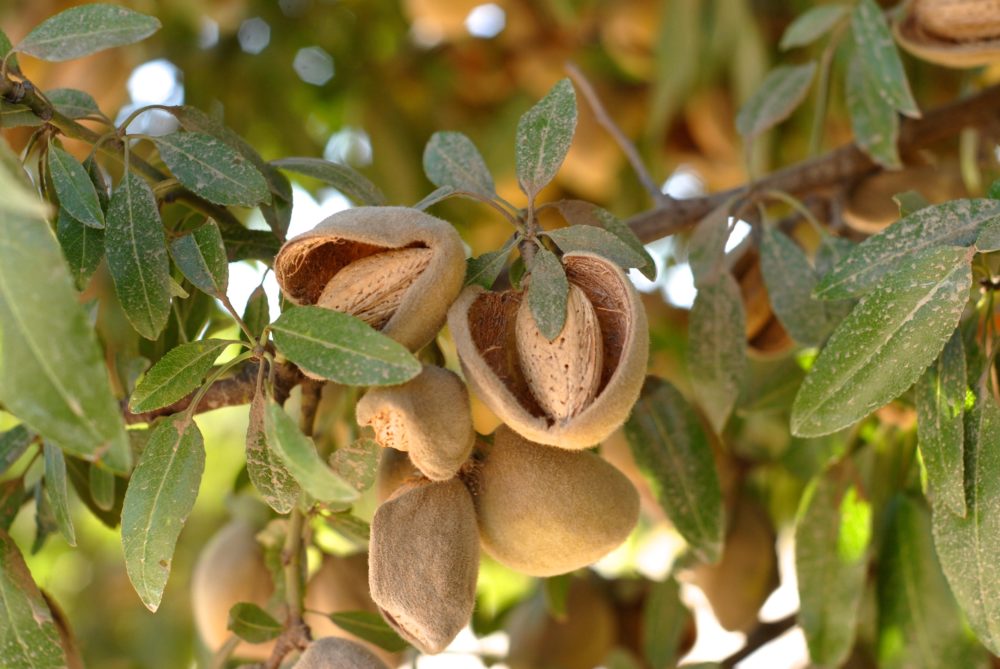
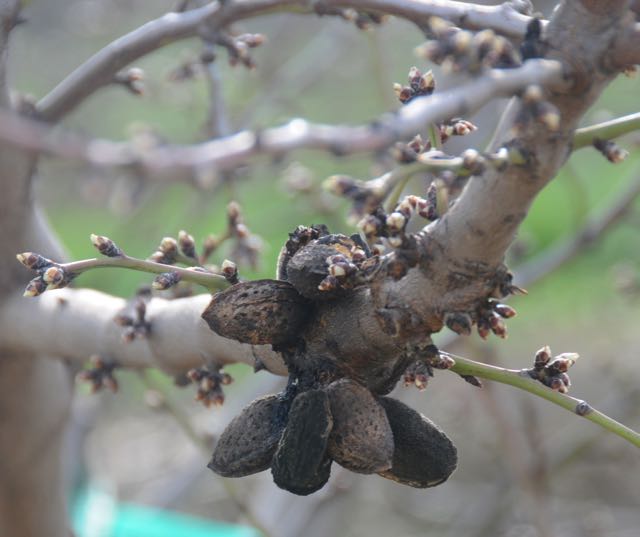
The Almond Board of California is excited to announce its third-annual Mummy Shake Video Contest, and we would deeply appreciate your help in spreading the word about this year’s competition. This contest is aimed at helping remind growers to break the link between mummy nuts (nuts left on the tree after harvest) and overwintering navel orangeworm (NOW).

NOW is the primary insect pest in California almonds, posing a high risk to the crop as the worms bore into the nut and feed on the nutmeat. This not only damages the nut but also opens the door to Aspergillus molds that can produce aflatoxins, a food safety contaminant.

To participate in this contest, almond industry and allied industry members are invited to submit a video of their families dancing – or even singing – along to The Mummy Shake! This year’s contest will run from Monday, Oct. 26, and end at 11:59 p.m. PT on Friday, Nov. 20. The winner of this year’s contest will receive a $500 Amazon gift card. Entries will be judged based on enthusiasm, creativity and composition, and a full list of contest rules may be found at Almonds.com/MummyShakeRules.

If you’re interested in helping us promote this year’s contest, please let me know. Sharing this event with industry stakeholders could include anything from mentioning the contest dates in an online calendar, sharing the contest in an email newsletter or on a social media page, or even giving the contest a shout out during a radio segment. Here’s some quick links to various mummy shake/NOW information that you may use in your promotions:

2020-11-04T12:02:43-08:00November 4th, 2020|

A Decisive Victory for Small Dairy Farms in California

“This ruling ends a cynical back door attempt to illegally take assets from dairy farmers.” – Niall McCarthy, Cotchett, Pitre & McCarthy 

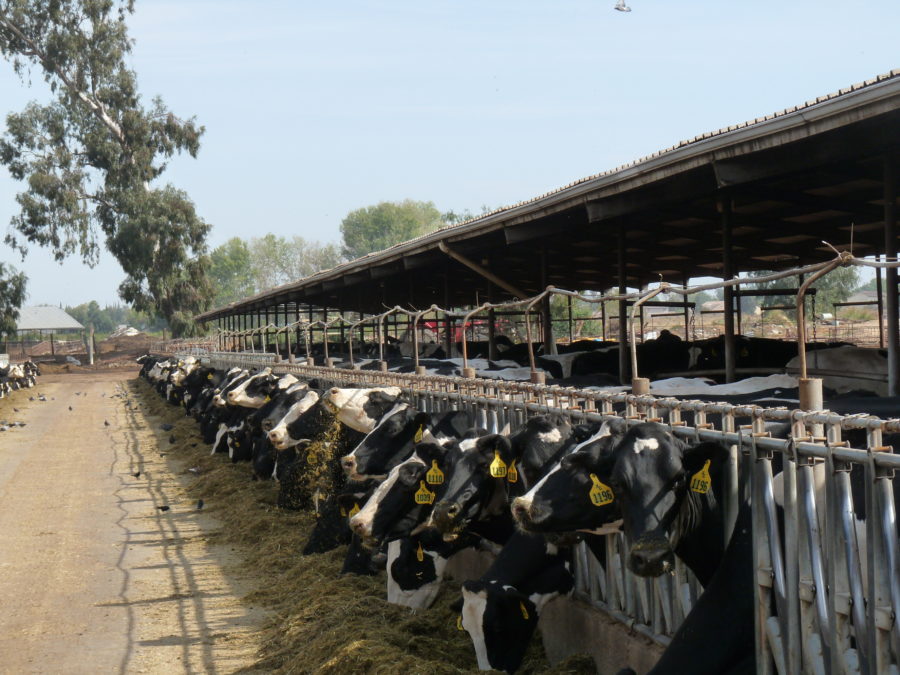
SACRAMENTO CA—A decisive victory for small family dairy farms was won this week in what has been called a civil war in the California dairy industry.  In a proceeding before The California Department of Food and Agriculture, Administrative Law Judge Timothy J. Aspinwall issued a much-awaited decision on a petition that could have put hundreds of California family dairy farms out of business.  Fortunately for those farms, the administrative law judge ruled that the petition, which sought to eliminate California’s milk quota system was “not legally valid” and recommends that Secretary of Food and Agriculture Karen Ross deny the petition in its entirety.

 
The petition sought to terminate the 50-year-old California milk quota system—a huge asset for the California dairy industry that is worth hundreds of millions of dollars and owned by most of the state’s dairy farms, especially smaller family-run farms.  The decision is a huge win for California dairy farms that have invested their revenue to purchase quota, and whose survival hung in the balance.  As dozens of farmers testified at the hearing in June, terminating quota would have robbed them of their and their families’ decades of hard work seized one of their most valuable assets without paying them any compensation, forced them out of business, resulting in huge lay-offs, and thrown the state’s dairy industry into financial chaos.  Examples of the testimony are:
 
Terminating quota would be “financially catastrophic” and is a “matter of life or death for our dairy.”  Maia Cipponeri, a fourth-generation dairy farmer from Merced County
 
“If quota were suddenly terminated, I would be immediately plunged into severe debt that I could not pay . . . . In addition to financial ruin, this would ruin my son’s dream of continuing the family of California dairymen.” – Frank Borges, a third-generation dairy farmer from San Joaquin County
 
A group of farmers who successfully opposed the petition throughout these proceedings were represented by the law firm of Cotchett, Pitre, and McCarthy, LLP.
 
“This ruling ends a cynical back door attempt to illegally take assets from dairy farmers.” – Niall McCarthy, Cotchett, Pitre & McCarthy
 
Cotchett, Pitre & McCarthy engages exclusively in litigation and trials and has earned a national reputation for its dedication to prosecuting or defending socially just actions. To learn more about the firm, visit www.cpmlegal.com.
2021-05-12T11:17:06-07:00July 29th, 2020|
Go to Top