Mathesius is New UC Soil Scientist

Mathesius is New Agronomy Farm Advisor in Sutter-Yuba, Colusa Counties

By Patrick Cavanaugh, Farm News Director


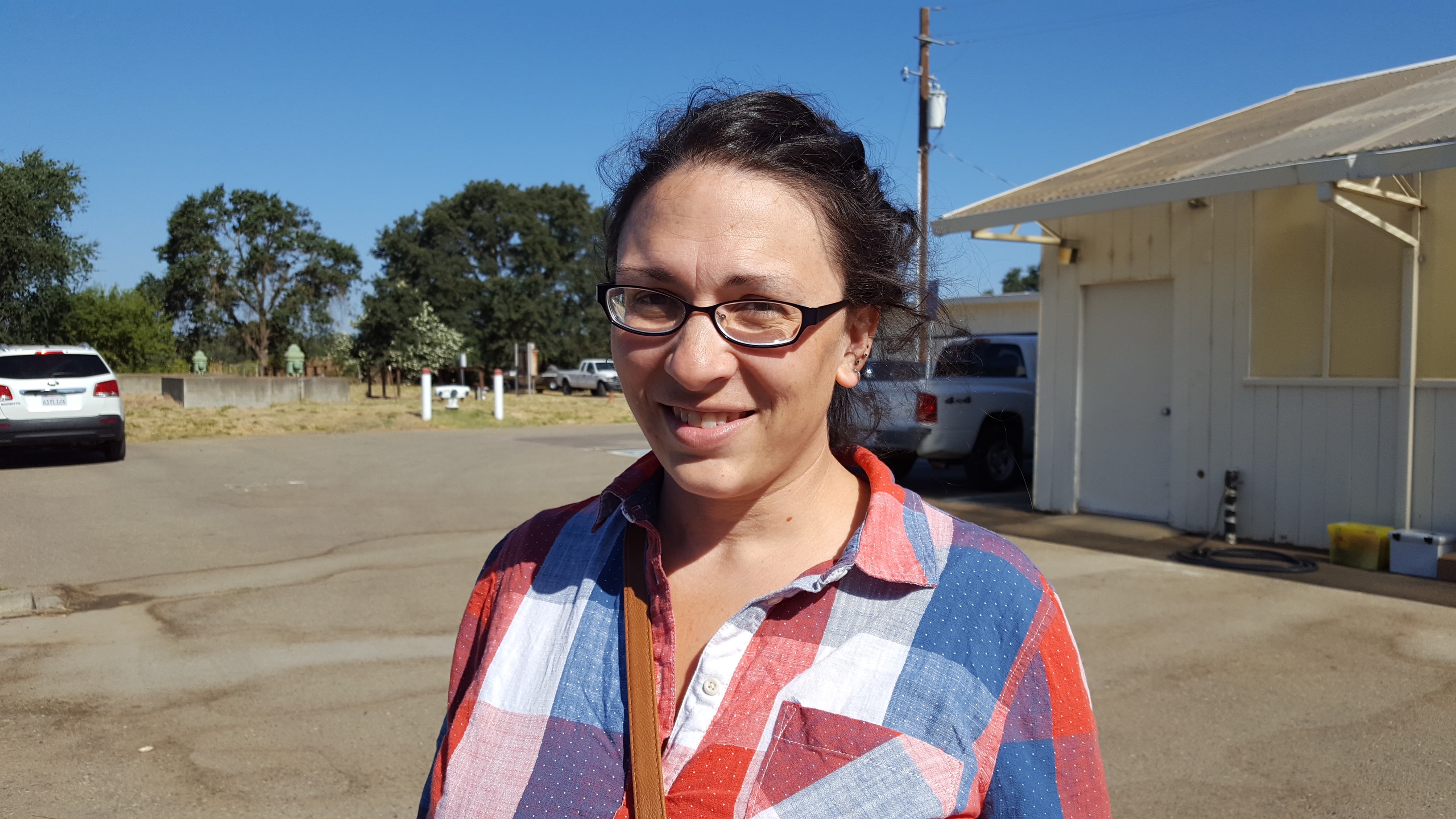
Konrad Mathesius is the new Agronomy farm advisor at the UC Division of Agriculture and Natural Resources Cooperative Extension, Sutter-Yuba, Colusa Counties. Mathesius first explained his unusual last name. “It means ‘mathematics’ in Latin. I guess we had accountants in our family lineage back there somewhere,” he said.

Mathesius completed his undergrad degree in political science at Utah State, followed by two master’s degrees at UC Davis in Soils and Biogeochemistry; and in International Agricultural Development (IAD)—a graduate group within the Department of Plant Sciences. “The IAD is flexible in its curriculum, which allowed me to take many plant- and soil- specific courses. I took the opportunity at IAD to specialize in soils,” he said.

California Safflower Field

California Safflower Field

“Through the years, we have learned a lot through the pioneers of soil science and it’s an exciting field because there is still a lot to learn,” said Mathesius. “And everything that comes out of soil science, in one way or another, is applicable to life on the planet.”

“Soils also tell a story, and that’s one thing I really enjoy about it. It’s especially evident in California because there is a remarkable combination of parent material that has created an abundance of different soils in the state,” noted Mathesius. “And it’s very relevant to agriculture, ecology, and environmental science. Differences in soils create a stark contrast in how crops grow and how they need to be managed,” he said.

Mathesius is responsible for the agronomic crops grown in his region, including dry beans, oilseeds such as safflower and sunflower, fresh market corn and silage corn, and small grains such as barley, wheat, and rye.

“I’m a soil scientist by trade, but ultimately I am a UC Cooperative Extension Farm Advisor and available to growers to figure out what their crop issues are—which include pests, diseases and soil fertility,” noted Mathesius. “I am a resource, and the UC system has many other resources and personnel who can thoughtfully consider solutions to crop problems.”

2021-05-12T11:05:51-07:00July 26th, 2016|

Celebrate National Ice Cream Month!

Celebrate National Ice Cream Month with California Ice Cream and Flavors!

By Lauren Dutra, NAFB Summer Intern and Assistant Editor

Jennifer Giambroni, director of communications, California Milk Advisory Board

Jennifer Giambroni, director of communications, California Milk Advisory Board

First established in 1984 by Ronald Reagan, the 40th President of the United States, National Ice Cream Month was scheduled for the month of July, with the third Sunday of the month designated as National Ice Cream Day.

Jennifer Giambroni, director of communications, California Milk Advisory Board, explained why Californians, in particular, have so much to celebrate during National Ice Cream Month. “As the number one ice cream state,” she said, “we produce 126 million gallons of ice cream a year.”

Thats a lot of scoops!

California also leads the nation in milk production, and 99 percent of dairies in the state are family-owned. Including milk production on farms and milk processing, the California dairy industry, supports about 190,000 jobs in the California economy and contributed about $21 billion in economic value added in 2014, according to “Contributions of the California Dairy Industry to the California Economy,” by the University of California Agricultural Issues Center (May 14, 2015). 

Blueberry Ice Cream Float

Blueberry Ice Cream Float (Source: California Milk Advisory Board, Kristina Vanni Blogger, 2012)

Ice cream, being both timeless and innovative, has evolved in flavors and varieties over the years, according to Giambroni, while still holding true to the traditional treat you grew up with as a kid. “Ice cream is an important category that represents a lot of the milk produced on California’s more than 1,400 family dairy farms and carry the Real California Milk seal,” she noted.

“We’re seeing adult-friendly milkshakes with the addition of spirits, ice cream sandwiches made with more than cookies, and sundaes with everything from balsamic vinegar reductions to red bean paste,” Giambroni elaborated. Other new ice cream trends include hyper-indulgent flavor combinations, including nuts and fruits grown in California, and “better for you” versions with probiotics, varying levels of fat and sugar, added calcium, lactose-free, and different kinds of oils. “We’re loving the olive oil and walnut oil ice creams for their subtle flavors,” Giambroni noted.


Approximately 12 pounds of Real California Milk are used to make just one gallon of California ice cream.


Watermelon Chill Ice Cream (California Milk Advisory Board)

Watermelon Chill Ice Cream (California Milk Advisory Board)

The California Milk Advisory Board works with bloggers on how to incorporate ice cream into events for children of all ages:

TomKat Studio – DIY Ice cream Sandwich Bar

Hostess with the Mostess – Healthy Milkshake Bar

Hostess with the Mostess – How to Set Up a Cocktail Milkshake Bar

Hostess with the Mostess – Kids Sundae Party


Check it out:

Ice Cream Sandwich (California Milk Advisory Board)

Ice Cream Sandwich (California Milk Advisory Board)

Rick’s Ice CreamBlue Moon-A fruit loops tasting ice cream with super-secret natural ingredients

McConnell’s Boysenberry Rosé Milk JamCentral Coast, grass-fed milk & cream and cane sugar, slowly-simmered to a thick, rich and decadent milk jam – then churned into house-made, boysenberry & rosé wine preserves. 

Breyer’s Strawberry Ice Cream-packed with sun-ripened California strawberries picked at the peak of happiness!

Gilroy Garlic Festival Garlic Ice Cream-July 29-31, 2016

The Orange Works‘ Orange Ice Cream and Chili Mango Ice Cream

Where Is the Best Ice Cream in California? (PBS, 2014)

2016-07-23T17:33:15-07:00July 22nd, 2016|

Lt. Governor Newsom Supports Calif. Agriculture

Calif. Lt. Governor Newsom Says Ag is at a Hinge-Moment in History

By Patrick Cavanaugh, Farm News Director


In an exclusive interview with Gavin NewsomLieutenant Governor of California, during the recent Forbes AgTech Summit in Salinas, Newsom declared, “It’s interesting about California—outside of Hollywood—no two more iconic industries exist than Silicon Valley’s technology, and the agricultural industry.

“It seems self-evident to everybody here that we have a unique opportunity to collaborate,” Newsom said about the event which joined the Silicon Valley high tech industry with the state’s farming industry to create digital solutions for agriculture. “We have the unique opportunity based on proximity and based on history. It is also a cultural opportunity as it relates to relationships that have been formed over the course of generations to begin to build bridges and connect some dots.”

Newsom said he believes in bottom-up inspiration, not top-down. “I don’t think you can sell down your vision from Sacramento. It’s about regions rising together and creating conditions for just these type of collaborations,” he said.

Newsom particularly appreciated comments about innovation. “I wrote a book, [“Citizenville”] and I’m not here to promote that book,” said Newsom, “but the whole idea was about platform thinking. The concept is the federal government, state government, and even local government cannot prescribe a federal, state or local pill for every problem,” he said.

“The point is,” he continued, “if we’re going to solve the big problems of the day, we have to create an environmenta platformto engage folks like yourselves to deliver the applications, literally and figuratively, to solve big problems. It’s self-evident to anyone who lives here in California, that we’ve got some big problems.”

Citizenville, by Gavin Newsom

Citizenville, by Gavin Newsom

“We have regulatory challenges in this state, and I say this as a business person with many businesses. I have a sense of kindred connection in spirit to the entrepreneurial ways that are here today,” he commented. Owner of three wineries, several restaurants and hotels, Newsom stated, “I am in the Ag business, of sorts. My point is, we could do a lot better to make a point that [agriculture] matters and we care,” he said.

“At the same time,” he added, “Silicon Valley is center-tip of the spear—all the innovation and discovery, and the change in the way we live, work and play,” Newsom said.

“We’re here on a hinge-moment in history where we are going from something old to something new, a world of mobile, local, and social; and cloud and crowd. It’s a moment of anxiety for a lot of people, a moment of mergerthe detonation of globalization and technology coming together. Again, there’s a lot of anxiety,” he noted.

Newsom suggested this is an opportune time to try to connect dots and address challenges, not just on the regulatory side and on the economic development side in this state, but also on the self-evident issues of water scarcity in this state. “You may have different opinions about climate change, global warming or violent disruption,” said Newsom, “but, as a guy who told me the other day up in Dutch Flat, Placer County, ‘I don’t care about all you folks from San Francisco talking about climate change, but something just ain’t right.’ Which is another way of describing a connection that things have changed,” Newsom explained.

Newsom said that kind of predictive nature, in terms of how we construct a water system for a world that no longer exists, and for a population that is twice the size; self-evidently, we have to do things differently. “We’ve got to be more creative and we’ve got to be more strategic,” he noted.

“It’s a long way of saying we are grateful for the work [California farmers] are doing. The goal for us in California is to make these conversations sustainable. ‘Not just situational and not just one annual conversation, but these are dialogs that must continue every day in this state,” Newsom said.

“I’m one of those people who believes in the combination of nature and technology, bringing cross-disciplines together,” Newsom said. “Cross-pollinating, literally and figuratively, ideas and people—values. “I think we have an incredible opportunity here in California, not just to survive in the agricultural industry but to truly thrive in a growing, competitive environment.”

2021-05-12T11:05:51-07:00July 20th, 2016|

Solving Central Valley Water Salinity

Mizuno on Water Salinity Solutions

By Laurie Greene, Editor


According to a Central Valley Salinity Alternatives for Long Term Sustainability (CV-SALTS) report, rising salt levels in the soil and groundwater threaten the potable water supply and agricultural productivity for the entire region. Walter Mizuno, longtime lecturer in mechanical engineering at Fresno State and director, Valley Industry Partnership for Cooperative Education (VIP) Program, researches increasing salinity conditions in Central Valley soil and groundwater, as well as methods of desalination.

Mizuno explained, “As the salt level rises, and if the soil salts aren’t leached out periodically, the ground becomes unsuitable for cultivating several crops. Growers either shift to high salt-tolerant crops or essentially idle that land.”CV Salts

Central Valley salinity conditions are serious, according to Mizuno. “Growers have already taken a lot of land out of production on the Westside,” he said, “and they’ll continue to do that until the salt mitigation measures have been implemented. Essentially, we need to get back to where we can currently sustain the amount of farming we have with the type of water that we have.”

“We are looking at desalination of agricultural drainage water,” Mizuno stated. “We’re trying to reclaim water that’s suitable for even human consumption; but right now, we’re looking at reclaiming water that is suitable for Ag use through a desalination process called vapor compression distillation, which takes drainage water from the Ag fields, distills it to make it pure and recovers some of the salts on the backside.”

Mizuno explained salt recovery would enhance the economic viability of this project by eliminating the cost of trucking or disposing the resulting brine and by possibly converting it into a revenue stream. “We’re trying concentrate that brine to a point, using solar evaporation, where we can find other uses for the highly concentrated form or maybe even sell it to a chemical processing company. We are also focusing on minimizing the energy cost to distill the water, to make the process more efficient.”

“We’re trying to combine multiple technologies, using ion exchange as our front end process,” Mizuno explained, “to get rid of some of the hardness in the water. We get rid of calcium and magnesium in the water, which helps the distillation process and protects the equipment for a longer period of time before requiring cleaning or eventual replacement. We’re using the brine stream of the distillation process to actually regenerate, upfront, the ion exchange units—similar to a home water softener.”

Pipe without waterMizuno explained, “When you look at the reasons why desal isn’t used more often—just the cost of energy makes the cost of the water expensive. So, we do a lot of energy recovery. Just take the basic process of distillation in which you heat up the water solution, boil it off, and condense the residue. A lot of that water you use, or a lot of the energy used to boil off the water, is lost; so we recover the heat from that steam to save energy. In other words, we don’t discard that energy; we try to reuse it.”

“We have been conducting studies on some Westside ranches,” he continued, “with our pilot plant that processes only one thousand gallons per hour. A series of ditches on those ranches collect the drainage water to be purified. Now, we have moved everything back to the Fresno State Center for Irrigation Technology (CIT),” said Mizuno, “because we’re building a brand new redesigned unit, which should be operating by the end of this year.

“The second phase of the project,” Mizuno commented, “is to move the unit out to Panoche, and conduct field testing out there. We will evaluate the energy efficacy and also the economics of the unit and process, and we will field-test to determine how rugged and dependable it is out in the actual service area.”

“This is actually a research project,” Mizuno clarified. “We’re still fairly far away from commercializing it. Basically, we will evaluate the scalability of these units so that depending on the size of the farm and everything else, you can either put multiple units out there or design a single-unit system very similar to ours. You could size the system to meet whatever the demands are, but you need a reservoir or holding area, and you’d like to be able to operate 24/7.”

“We are considering using solar to power this,” Mizuno mentioned. “The issue with solar is, obviously, it tends to work during the daylight hours but doesn’t do much during the evening hours. We’re looking at using batteries, electricity, natural gas or some other energy source to keep the process running when the sun goes down, but it’s a matter of economics.”

Mizuno said the research team is optimistiCIT Logoc about the process itself, but he does not anticipate it will be a cure-all. “It is a research project,” Mizuno reiterated, “and we’re trying to see if we can drop the energy cost, and lower the water cost. I think the economics will change though. Water will cost more for everybody in the next few years. As that changes, I think some of these technologies are going to become feasible from an economic standpoint.”

The entire state shoud be aware of these water issues, according to Mizuno. “I think there are still a lot of issues that the common person isn’t aware of and how they fit in, and Ag is no exception. I would like people to understand that we are working to stretch the available amount of water supplies we have and we are working on technologies that are yet unproven. But some of these technologies will require a few more years—to many years to solve. Others are not economically feasible today, but they may be in the future as water supplies get tighter.”

Mizuno has observed that farmers are already doing a lot to conserve water, particularly employing the use of new technologies such as drones to evaluate water stress and nutrient stress in plants. “Right now,” he offered, “we are looking at another piece of the puzzle; we’re trying to stretch the amount of water supply we have, utilize it in multiple-use scenarios, and use it more intelligently to make some waste streams into revenue streams.”

Mizuno urges the general population to just be aware. “Conservation is the first step for a lot of people,” he said. “That’s the easiest way to stretch water supplies, and so I think people need to understand that water is a finite resource in the state of California. The water situation is not likely to get better anytime soon, even if we have normal rainfall and so forth. We are in an overdraft situation with our water supply.”


CV-SALTS participants collaborate to develop a workable, comprehensive plan to address salinity, including nitrates, throughout the region in a comprehensive, consistent, and sustainable manner.

Center for Irrigation Technology (CIT) celebrates 35 years!


2021-05-12T11:05:52-07:00July 18th, 2016|

Family Tree Farms Enjoys Exceptional Tree Fruit Year

Tree Fruits and Hybrids Are Bountiful and Delicious This Season

By Emily McKay Johnson, Associate Editor

Tree fruits this year for Daniel Jackson, a seventh-generation farmer and partner, Reedley-based Family Tree Farms, are thriving and delicious. “The quality is just exceptional right now,” Jackson said. “I think the industry is taking a little bit of a lull in volume right now for the last two days, but it looks like it’s going to pick up again. The fruit coming off late season is going to be exceptional from an eating quality standpoint,” he indicated.

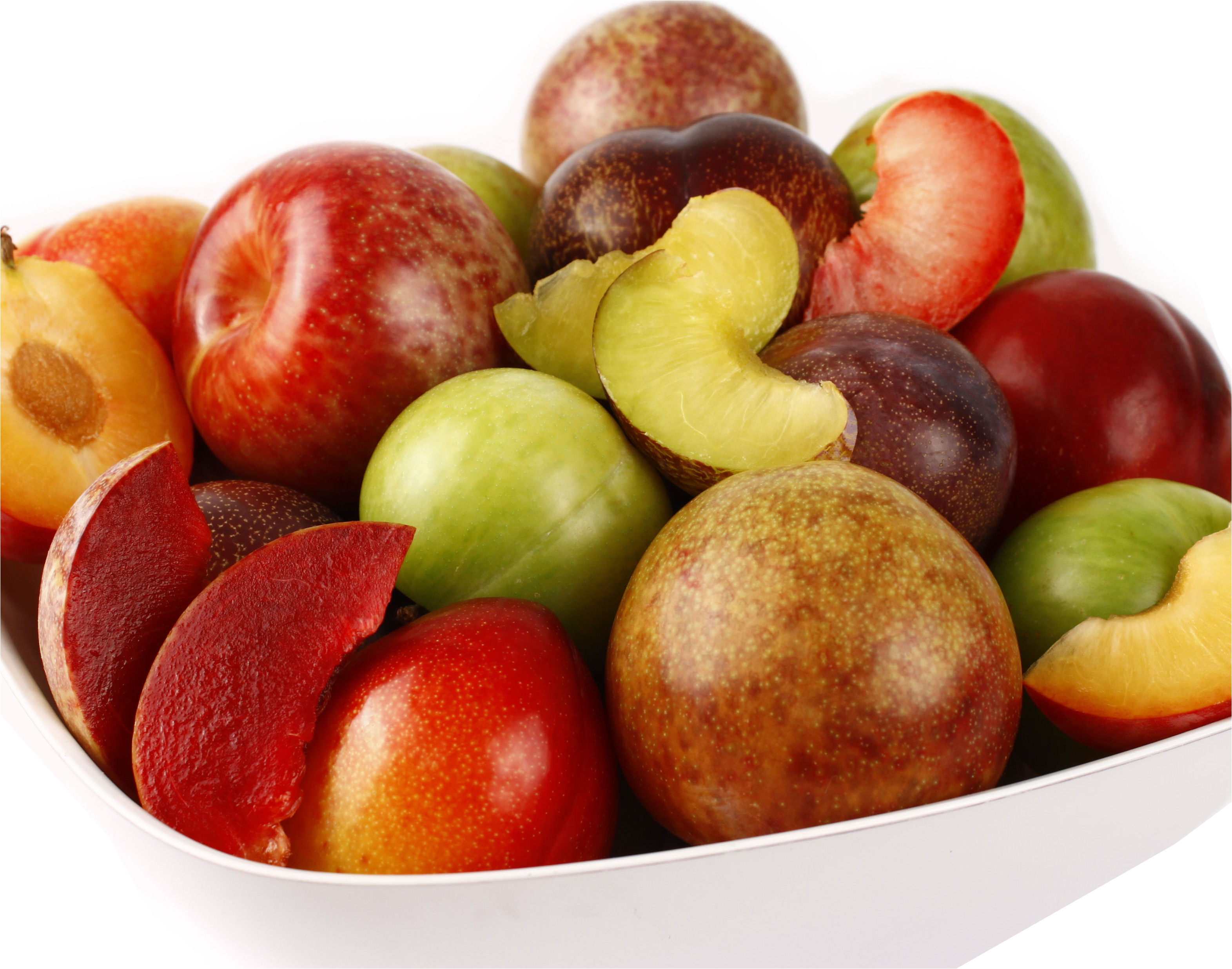
Family Tree grows various tree fruit hybrids, as well as blueberries and grapes—everything from plumquats (a hybrid between an apricot and a plum) and apriums (a similar hybrid that is more apricot than plum) to fresh white peaches and nectarines, yellow flesh peaches and nectarines, and apricots.

Daniel 1

Daniel Jackson, seventh-generation farmer and partner of Family Tree Farms in Reedley, Calif.

Although hot weather can be challenging to growers, trees in the Central
Valley have evolved to adapt to the heat. “Tree fruit genetics here in the Valley are used to that heat,” Jackson elaborated. “Other than a mid-season apricot that may get some tip burn, we’re not seeing too much damage,” he explained. “We may see some sunburn here and there; but for the most part, as long as you have a good leaf ratio on your tree, everything seems to be looking good. We’re happy with the way things are turning out.”

Jackson also reported some minor labor shortages, but their numbers are staying pretty strong. “It was short early on; now we’re pretty stout,” he commented. “I think our crews are up 25 guys, which is a good full crew. We may run into some challenges as we enter the table grape season, but right now things are looking good. We’re staying positive.”

Family Tree Farms has an optimistic attitude about their labor crews. “We just want to be able to provide a consistency of work out there so that people are happy and can stick around with us. I think most farmers are trying to do that same thing,” he said.

Springtime, this year, gave them an early bloom but a cool and mild spring, conditions that can impact the size of produce, come harvest season. “I don’t think we gathered enough heat units to grab the size that we typically have,” Jackson explained, “but I think we’re catching up now. A lot of times, that’s what happens in a season; the size may be a little bit off [early on], but it catches up and becomes more of a normal year,” he said, and other growers have experienced the same problem with their commodities,

“We were probably about a half size to a size off early on in the season, but are seeing sizing come back a little bit and we’re happy about that,” Jackson described. He attributed this impact on fruit size experienced by most California fruit growers, “because we lost a couple of early season growing days that are so important in the early-season varieties.”

The Family Tree crew remains positive; they take pride in the exceptional color of their fruit and picking has stayed consistent. “I think color has been one of the best years we’ve had. Especially with plumcot varieties, we see the ripening happening a little bit more evenly, so are able to pick more consistently as well.”

Jackson handles the fluctuating challenges in farming with stride. “There are a lot of positive things going on,” he commented. “There will always be challenges every year but we don’t let those slow us down. Farmers are more resilient than that.”

2016-07-15T12:32:37-07:00July 15th, 2016|

Weed Control in Rice Fields

Controlling Herbicide-Resistant Weeds in California Rice Fields

By Emily McKay Johnson, Associate Editor

Whitney Brim-DeForest, UC ANR Cooperative Extension rice farm advisor for Sutter, Yuba, Placer and Sacramento Counties in California, currently works in all rice production areas across the state to identify problematic weeds in rice fields.

Given her background in weed science, Brim-DeForest explained California rice growers flood their fields for weed suppression, as well as use herbicides for weed control and management. “I’d say that we do have quite a few herbicides right now. As we continue to get new herbicide resistant weeds every year,” said Brim-DeForest, “we are starting to run out of options, especially for some growers who encounter herbicide resistance.”

Brim-DeForest believes herbicide resistance was first discovered in the early 1990’s, but “has become significantly problematic for growers within the last 20 years. Because of the herbicides we use and the limited number that we have, we have ended up with an increasing number of weeds that are herbicide resistant every year. Since about 2000,  we’ve had a new species or herbicide that encounters resistance every year,” she stated.

Brim-DeForest treats a multitude of weed species in her line of work. “I would say the watergrass species is our biggest problem,” she noted. “We also have a weedy red rice that was discovered in the early 2000s. It is not widespread, but we do have a few fields with it,” she explained.

Featured Photo: Whitney Brim-DeForest, UC ANR Cooperative Extension rice farm advisor.

2021-05-12T11:03:00-07:00July 11th, 2016|

Jasieniuk on Weed Evolution

Tracking Herbicide Resistance in Weed Evolution  

By Emily McKay Johnson, Associate Editor


Marie Jasieniuk, professor and weed scientist at UC Davis College of Agricultural and Environmental Sciences, discussed her groundbreaking research, “I work on the population genetics and evolution of agricultural weeds and invasive plants,” she said. “We use molecular tools to look at the origins and spread of weeds. We also use molecular tools and genetic studies to understand the evolution of herbicide resistance in weeds,” Jasieniuk added, “to be able to propose management approaches that reduce the likelihood of further evolution and spread of resistant weeds.”

UC Davis Annual Weed Day 2016

UC Davis Annual Weed Day 2016

Jasieniuk and her team identify the origins of invasive plants, and determine how they were introduced. “We study how they were introduced, how they have spread and whether they have been introduced multiple times. Again, if we understand how they’re spreading, we can do something to try to stop the spread,” she said.

Italian rye grass, a weed Jasieniuk is currently studying, is problematic because it is resistant to Roundup, a popularly used weed and grass killer by growers. “UC ANR Cooperative Extension specialist, now emeritus, Tom Lanini, and I sampled over 100 locations of Italian rye grass and tested them for resistance to Roundup ten years ago,” she said about the project, funded by USDA. “Last year, we re-sampled all of those sites, and we’re re-testing to see if there’s been an increase or a decrease or no change in resistance to glyphosate, to Roundup,” she said.

Roundup isn’t the only weed and grass killer available on the market. “We’re looking at resistance to three other herbicides,” she said. Working with growers to determine the most efficacious weed treatments that also reduce the likelihood of wood resistance to herbicides,” Jasieniuk explained, “We interview growers about their herbicide use, non-chemical approaches, and integrated management techniques to identify management practices that correlate highly with low or no resistance,” she explained.

Resistance management is found to be more effective with a rotation of various herbicides. “What you want to do is rotate different types of herbicides with different modes of action,” Jasieniuk said. “Perhaps do tank mixes and incorporate non-chemical approaches as well,” she added.

Eliminating weeds can be as simple as disking and digging them out with a shovel when there are only a few. “I think, in many cases, this would have done a lot to prevent new weeds from coming in and certainly resistant weeds from spreading,” she noted.

2021-05-12T11:05:53-07:00July 11th, 2016|

Sparked Cultural Interest in Gardening and Locally Grown Produce

Locally Grown Food Inspires Consumers to Learn More, Garden at Home 

By Laurie Greene, Editor

Cultural changes in eating habits are sparking an added interest in locally grown produce. Scott Steinmaus, professor in the Biological Sciences Department at California Polytechnic State University, San Luis Obispo (Cal Poly SLO), outlined the surge in local produce purchasing and how it is igniting consumer interest in growing their own gardens.
“The food craze is a real big movement right now,” Steinmaus stated, “especially with urban folks. Some of the biggest scenes are the foodie craze—that farm-to-table idea of buying locally, organically-produced food.”

Scott Steinmaus, professor of Biological Sciences Department at Cal Poly San Luis Obispo.

Scott Steinmaus, professor of Biological Sciences Department at Cal Poly San Luis Obispo.

Continuing, “And the cooking shows are out of control-popular, right? Where does the food come from? It comes from here; this is what it’s all about,” he said, with pride.

The growing trends are also reinvigorating students to become more involved, according to Steinmaus. “Students are asking where their food comes from,” he commented, “and who the farmers are that produce such healthy fruits and vegetables. That is an exciting part of our discipline as well—this foodie craze, and I think our students want to become a part of that,” he reflected.

The push for local produce is also inspring more people to grow their own home gardens. “When they garden, they get it,” Steinmaus explained. “And as soon as people get their hands dirty and as soon as they produce their first tomato; there’s nothing more empowering than producing your own food,” he said, “even if it’s a little bit.”

With this renewed interest in home gardening, Steinmaus observed, many are discovering their preconceived notions of farming were not quite accurate. “We’re working with the American Horticultural Society, putting together the videos that show people farming isn’t what you might think it is; it is actually completely different.” Steinmaus said.

“Farming involves a lot more than a green thumb,” he elaborated. “It requires the understanding of growing cycles and identifying various deficiencies. It utilizes very high technology. It is producing food; there is nothing more empowering than putting food on your kitchen table that you grew in your garden, or was grown by a farmer you know just down the street, and you know his [or her] name,” said Steinmaus.

2016-07-06T17:44:22-07:00July 6th, 2016|

Red, White and California Blueberries

Celebrate Independence Day with Native Blueberries

By Emily McKay Johnson, Associate Editor

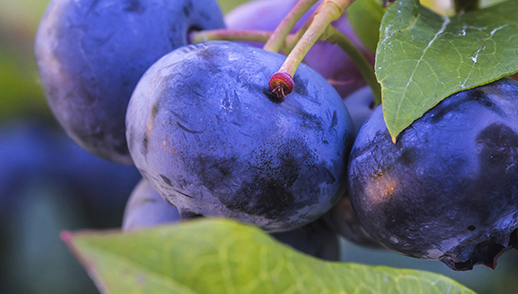
As we celebrate 240 years of America’s independence, we look forward to indulging in festive red, white and blue foods. One of the best ways to incorporate blue in our holiday spread is to serve plenty of California blueberries.

Mark Villata, executive director, U.S. Highbush Blueberry Council.

Mark Villata, executive director, U.S. Highbush Blueberry Council.

Mark Villata, executive director of Folsom, California-based U.S. Highbush Blueberry Council, explained California is an important blueberry production state as, “It is among the top five producers, nationally. We produce [blueberries] in about 38 states nationally, but nine states account for about 98 percent of our total production, and California is in that top five,” he said.

“Last year, California produced about 62 million pounds of blueberries,” Villata said; “this year’s crop looks like it could be close to 70 million pounds. Total yield has been increasing each year as new plantings come into maturity and start to produce blueberries.”

California is an important player in the berry market, and blueberries are one of the healthiest fruits consumers can eat. “Of course we’re lucky here in California to have a crop that is so readily available that is also incredibly healthy for us all,” Villata noted.

And blueberries are almost the perfect crop for celebrating the Fourth of July because they are native to the region. “Blueberries play well into any Fourth of July barbecue,” said Villata. “Blueberries are so diverse, they can be incorporated in salads, smoothies, breakfasts, desserts, and more. “We bring blue to the red, white and blue festivities,” he declared.

______________________________

Blueberry Infographic on Nutrition, U.S. Highbush Blueberry Council

2016-08-03T20:48:52-07:00July 4th, 2016|

Valley Fig Growers Have Rich History

Valley Fig Growers Foresees Bright Future

By Patrick Cavanaugh, Farm News Director

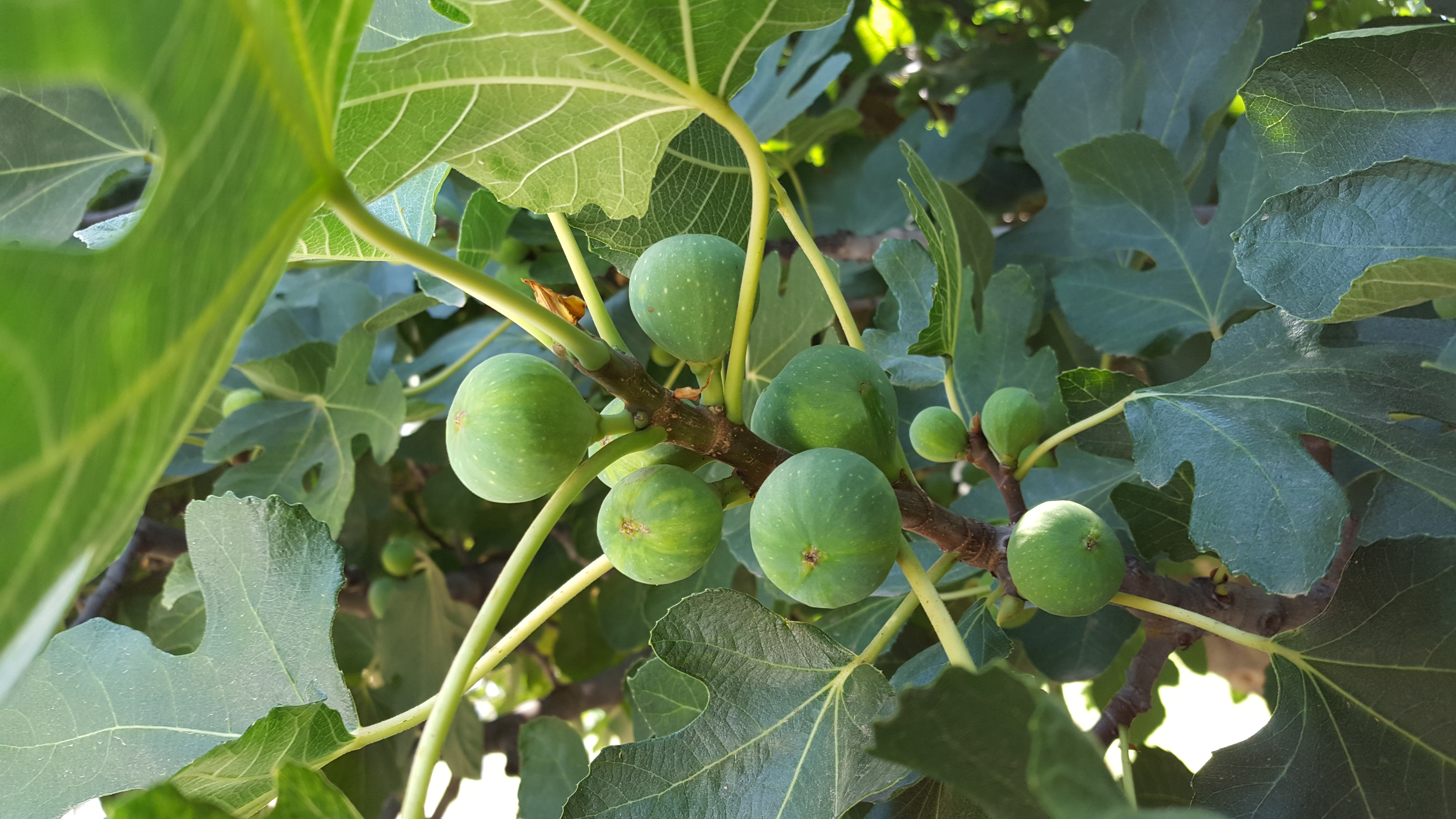
As the 2016 fig crop continues to ripen in Madera County orchards, the fig industry is finding a good balance between supply and demand. Gary Jue, president of Fresno-based Valley Fig Growers, said the association is last fig growers cooperative in the world. “Our growers, who are mainly in Madera County, produce only dried figs,”said Jue. “We do not handle any fresh figs.”

“Formed in 1959 by a group of growers,” explained Jue, “Valley Fig grower-members are our owners, and individuals like myself work at the pleasure of the board of directors and our owners. We are a very diversified dried fig company. We probably produce the largest quantity of dried fig products offered by any processor/packer.”

“Our goal is to provide innovative products to our customers,” Jue explained, “our industrial customers—food manufacturers, in particularas a way to enable them to use our products in their products. We want to be as user-friendly as we can, so we listen to consumer needs to get our product in their hands and make it easy for them to use. The more we can do that, the more successful we’ll be at with providing figs to the consumer,” he said.

Gary Jue

Gary Jue, president of Valley Fig Growers.

Fig popularity has grown over the last five to seven years, Jue said, including fresh figs in season. “That’s been very popular especially at the high-end restaurants,” noted Jue. “We’re starting to see more and more dried fig products used in entrees in high-end restaurants, and even in mid-sized-priced restaurants.”

“If you go to the renowned coffee supplier that you see in every port and city in the U.S. and abroad,” Jue said, “you’ll see our figs in a product they provide. It is great to see products like that on the shelf! Confectioners are also on the wagon, as we’re starting to see more confectionery products now made with dried figs that we had not seen in the past.”

Jue mentioned during the holiday season last year, one of the Valley Fig accounts provided a whole chocolate covered fig product that was great. “Now,” he said, “we’re looking to determine if this is going to be a seasonal item or a year-round item. That large wholesale supplier really did a great job of introducing this confectionery fig into the mainstream public marketplace. It’s not a high-end specialty item, but something that anybody can go to the retail shop everyday to buy and enjoy. That has been a great, great upshot,” Jue affirmed.

This is all good news for the fig industry because Americans tend not to be big fig consumers as the fig is not indigenous to the United States. More typically, figs are enjoyed with greater consumption throughout the Mediterranean region as they have been produced there since pre-biblical times. During Roman times, figs were given as prizes. “Through carbon dating studies,” Jue elaborated, “we have determined figs were the first cultivated food known to humankind.”

“Because the crop has been around for so long, figs are very well known in Europe. Europeans grow up eating figs, but Americans are starting to develop a palate for dried figs and fresh figs as well,” said Jue. “And for us in the fig industry, it’s great to see that occurring.”

2016-06-29T21:06:21-07:00June 29th, 2016|
Go to Top