About California Ag Today

This author has not yet filled in any details.
So far California Ag Today has created 2014 blog entries.

A Holistic Approach to Farming?


Regenerative Agriculture Goes Beyond Changing a Farming Practice

By Tim Hammerich with the Ag Information Network

Regenerative agriculture is widely talked about these days. Clearly defining it, though, can be a bit of a challenge. One reason for that is it’s more of a holistic approach rather than any one prescribed practice. Paige Stanley is a Researcher and PhD student studying regenerative practices at the University of California Berkeley.

“I think of it as like suites of practices used in combination. That we know to have additive or multiplicative benefits. For example, you know, we know that no-till has lots of benefits. We know that cover cropping has benefits, but if used in isolation, the positive outcomes are limited,” said Stanley.

“When you use something like no-till, cover cropping, a diverse crop rotation, hedge rows. If you use that as a suite of practices or in combination with one another, You’re going to get benefits that you wouldn’t see from using any of those practices individually,” Stanley noted.

Stanley explained that the regenerative approach requires a different mindset: one focused on soil health.

“That level of experimentation, and having the practices in combination with one another is what I like to think of as regenerative versus just the addition of any one practice to meet a specific goal,” she said.

2020-08-12T15:18:37-07:00August 12th, 2020|

Dairy Restores Riparian Areas

Sonoma County Dairyman Works Hard to Fix Carbon in the Soil

By Tim Hammerich, with the Ag Information Network

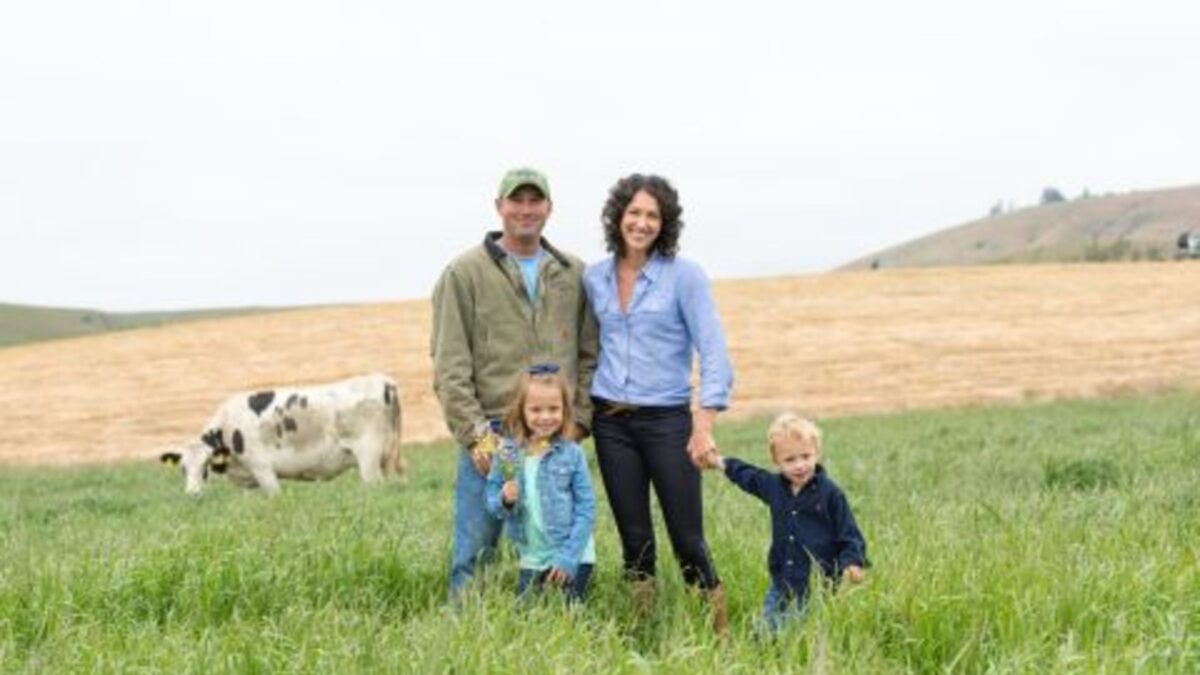
Sonoma County Dairyman Jarrid Bordessa has been working with his cooperative, Organic Valley, to develop a carbon farm plan. As part of that plan, he decided to restore a riparian area on his farm.

“The carbon farm plan identified the creek restoration as being the number one impact we can do to fix carbon to our soil per acre,” said Jarrid Bordessa.

“So along that restored area, they’re going to plant 600 trees and per acre that practice had the highest carbon fixing potential. Behind the obvious one when we did our carbon farm plan is applying compost to all our pastures,” Bordessa added.

“Doing it this way is the cheapest way, it gives us the most bang for the buck,”  said Bordessa, adding “It actually benefits us the most.”

“The Creek restoration has other benefits as well, ” explained Bordessa.

“It’s supposed to create wildlife habitat and pollinator habitat, Bordessa added. “I think it’s just going to aesthetically look nice on our farm also.”

Bordessa received help from over 400 students, teachers, and volunteers to plant the nearly 700 trees in the area.

2021-05-12T11:17:06-07:00August 12th, 2020|

USDA Coronavirus Food Assistance Program Extended

Application Deadline Extended to Sept. 11

U.S. Secretary of Agriculture Sonny Perdue announced today that the U.S. Department of Agriculture (USDA) is extending the deadline to apply for the Coronavirus Food Assistance Program (CFAP) to September 11, and growers with approved applications will receive their final payment.

To ensure availability of funding, growers with approved applications initially received 80% of their payments. USDA’s Farm Service Agency (FSA) will automatically issue the remaining 20% of the calculated payment to eligible growers. Going forward, growers who apply for CFAP will receive 100% of their total payment, not to exceed the payment limit, when their applications are approved.

Applying for CFAP: 
Growers, especially those who have not worked with FSA previously, are recommended to call 877-508-8364 to begin the application process. An FSA staff member can help producers start their application during the phone call.Also, on the CFAP website — farmers.gov/cfap — growers can:

  • Download the AD-3114 application form and manually complete the form to submit to their local USDA Service Center by mail, electronically or by hand delivering it to their local office or office drop box.
  • Complete the application form using the CFAP Application Generator and Payment Calculator. This Excel workbook allows growers to input information specific to their operation to determine estimated payments and populate the application form, which can be printed and then signed and submitted to their local USDA Service Center.
  • If growers have login credentials known as eAuthentication, they can use the online CFAP Application Portal to certify eligible commodities online, digitally sign applications and submit directly to the local USDA Service Center.

All other eligibility forms, such as those related to adjusted gross income and payment information, can be downloaded at farmers.gov/cfap. For existing FSA customers, these documents are likely already on file.

Additional Information:
In addition to extending the CFAP deadline, Secretary Perdue also announced that additional commodities are now covered by the CFAP in response to public comments and data. USDA collected comments and supporting data for consideration of additional commodities through June 22, 2020. The following additional commodities are now eligible for CFAP:

  • Specialty Crops: aloe leaves, bananas, batatas, bok choy, carambola (star fruit), cherimoya, chervil (french parsley), citron, curry leaves, daikon, dates, dill, donqua (winter melon), dragon fruit (red pitaya), endive, escarole, filberts, frisee, horseradish, kohlrabi, kumquats, leeks, mamey sapote, maple sap (for maple syrup), mesculin mix, microgreens, nectarines, parsley, persimmons, plantains, pomegranates, pummelos, pumpkins, rutabagas, shallots, tangelos, turnips/celeriac, turmeric, upland/winter cress, water cress, yautia/malanga, and yuca/cassava.
  • Non-Specialty Crops and Livestock: liquid eggs, frozen eggs and all sheep. Only lambs and yearlings (sheep less than two years old) were previously eligible.
  • Aquaculture: catfish, crawfish, largemouth bass and carp sold live as foodfish, hybrid striped bass, red drum, salmon, sturgeon, tilapia, trout, ornamental/tropical fish, and recreational sportfish.
  • Nursery Crops and Flowers: nursery crops and cut flowers.

Other changes to CFAP include:

  • Seven commodities – onions (green), pistachios, peppermint, spearmint, walnuts and watermelons – are now eligible for Coronavirus Aid, Relief, and Economic Stability (CARES) Act funding for sales losses. Originally, these commodities were only eligible for payments on marketing adjustments.
  • Correcting payment rates for onions (green), pistachios, peppermint, spearmint, walnuts, and watermelons.

Additional details can be found in the Federal Register in the Notice of Funding Availability and Final Rule Correction and at www.farmers.gov/cfap.

2020-08-11T12:28:50-07:00August 11th, 2020|

UC Davis Alumnus Receives Robert Snodgrass Award

Brendon Boudinot, an Ant Morphologist is Recipient of Award

UC Davis alumnus and ant morphologist Brendon Boudinot, who received his doctorate in entomology in June, is the recipient of the coveted Robert E. Snodgrass Memorial Research Award from the Entomological Society of America (ESA). The award is presented by ESA’s Systematics, Evolution and Biodiversity Section.

Boudinot, who studied with major professor Phil Ward of the UC Davis Department of Entomology and Nematology, is the second UC Davis-affiliated entomologist to receive the honor in its 28-year history.  Jessica Gillung of the Lynn Kimsey lab, Bohart Museum of Entomology, won the award in 2019.

Brendon Boudinot

Snodgrass (1875-1962), a leader in insect morphology, is known for his 76 scientific articles and six books, including Insects, Their Ways and Means of Living (1930) and the book considered to be his crowning achievement, the Principles of Insect Morphology (1935).

Boudinot has them all. “Principles of Insect Morphology and the Anatomy of the Honey Bee were the foundation of my studies,” he said. “I have both, plus his Textbook of Arthropod Morphology and Insects, Their Ways and Means of Living on my desk in the lab.”

The Snodgrass Award, which includes a certificate and cash prize, recognizes outstanding research by a PhD student who has completed a research thesis or dissertation in arthropod morphology, systematics, taxonomy, or evolution. Nominees are scored on honors, awards, achievements and recognition; recommendations of professors and advisors; grantsmanship, publications, creativity and innovation of thesis or dissertation; and contribution to morphology.

Boudinot’s dissertation: “Systematic and Evolutionary Morphology: Case Studies on Formicidae, Mesozoic Aculeata, and Hexapodan Genitalia.”

He earlier received the prestigious Alexander von Humboldt Research Fellowship to do research on evolutionary and comparative anatomy in Jena, Germany.  He will locate to Germany in early 2021 for the two-year fellowship, after completing intensive language studies.

‘I Am a Morphologist Because of Robert Evans Snodgrass’

“I am a morphologist because of Robert Evans Snodgrass,” Boudinot wrote in his application. “Although I have had pressure from my earliest undergraduate to become a molecular systematist, it was my chance encounter with Snodgrass’s Principles of Insect Morphology late one night in the college library that set the course of my career.

“I had struggled for years at that point to understand the biodiversity of insects and to untangle the deep morass of arcane terminology, but my vision was illuminated by the conceptual clarity, linguistic simplicity, and exceptional engravings of the Principles. This work continues to hold special dominion over my thinking, as it is through the principle of mechanical function for explaining comparative anatomical observations that I have come to my present understanding of systematic and evolutionary morphology,” he said

Boudinot wrote that his “career objective, in brief, is to resolve the morphological evolution of insects through the synthesis traditional morphology, as represented by Snodgrass, with recent trends in digital anatomy and bioinformatics. I envision a future wherein students rely not on Borror & Delong, a holdover from Comstock’s 19thCentury manual, but rather learn about insect structure, function, classification, and evolution through manipulation of three- and four-dimensional digital anatomical models, substantiated via manual curation and dissection. I want students to see for themselves what I have understood through the study of Snodgrass’s work, balanced by contemporary research: The origin of the Arthropoda and morphological transformation through geological time to the resplendent, and endangered, diversity of today.

“In sum, my identity as an entomologist, and as a scientist more broadly, is due to the insights on the language and phenomenology of morphological evolution I gained from the oeuvre of Snodgrass. Without these works, I would probably still be a botanist.”

Boudinot’s research interests include the origin and evolution of complex phenotypic systems from the perspective of phylogenetic systematics, including molecular and paleontological evidence. Specializing on morphological identity and evolutionary transformation, the skeletomuscular system of Arthropoda, with emphasis on the male genitalia of Hexapoda and systematics of the Hymenoptera, particularly the Formicidae.

John Henry Comstock Award
Highly honored for his academics, leadership, public service activities, professional activities and publications while at UC Davis,  Boudinot received the 2019 John Henry Comstock Award, the top  graduate student award given by ESA’s Pacific Branch. The branch encompasses 11 Western states, U.S. territories, and parts of Canada and Mexico.

In the Comstock award application, Steve Nadler, professor and chair of the Department of Entomology and Nematology, described Boudinot as  “A highly respected scientist, teacher and leader with a keen intellect, unbridled enthusiasm, and an incredible penchant for public service.” Boudinot maintained a 4.00 grade point average and published 18 peer-reviewed publications on insect systematics, some landmark or groundbreaking work.

His most recent publications: one on Cretaceous Strepsiptera in Cladistics and the other on the iron maiden ants in Myrmecological News (“Two New Iron Maiden Ants from Burmese Amber (Hymenoptera: Formicidae: †Zigrasimeciini”).

Boudinot received multiple “President’s Prize” awards for his research presentations at national ESA meetings. He organized the ESA symposium, “Evolutionary and Phylogenetic Morphology,” at the 2018 meeting in Vancouver, B.C. , and delivered a presentation on “Male Ants: Past, Present and Prospects” at the 2016 International Congress of Entomology meeting in Orlando, Fla.

Boudinot served on—and anchored—three of the UC Davis Linnaean Games teams that won national or international ESA championships. The Linnaean Games, now known as the Entomology Games, are a lively question-and-answer, college bowl-style competitions on entomological facts played between university-sponsored student teams.

Brendon served as president of the UC Davis Entomology Graduate Student Association from 2006 to 2019, and co-chaired the department’s UC Davis Picnic Day celebration (with forensic entomologist Robert Kimsey) for three years.


2020-08-10T12:45:10-07:00August 10th, 2020|

BREAKING NEWS—First Positive Psyllid Found in Commercial Orchard

All Other Positive Psyllids for HLB  have Been Found in  In Residential Trees

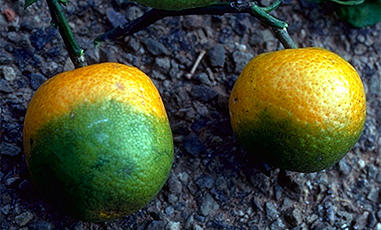
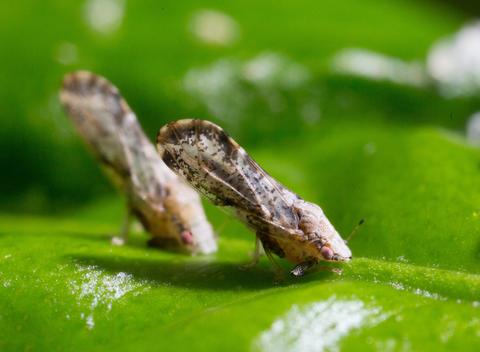
An Asian citrus psyllid (ACP) sample – confirmed positive for Candidatus Liberibacter asiaticus (CLas), the bacteria that causes Huanglongbing (HLB) – was collected from a commercial citrus grove in the Woodcrest area of Riverside County. HLB is an incurable plant disease that infects and kills all types of citrus trees and could devastate California’s $3.4 billion commercial citrus industry.

This single adult psyllid is the first CLas-positive ACP found in a commercial citrus grove in California.

While a positive ACP detection in a commercial grove is cause for serious concern, as of today, HLB has not been detected in any California commercial groves. That said, it is more crucial than ever that we stop the disease from spreading by eradicating the Asian citrus psyllid in commercial groves. The cost to manage the Asian citrus psyllid is far less than any potential costs or loss to the industry should HLB take hold throughout our state.

An expansion of the HLB quarantine zone will not be established as a result of the CLas-positive ACP detection and CDFA staff is swiftly conducting surveys and collecting samples per the ACP/HLB Action Plan  from the perimeter of all commercial groves and all residential HLB host plants that are located within a 250-meter radius around the find.

     While treatment is not mandatory as a result of the detection, all growers within 250-meters of the find site will be notified to apply insecticides to all HLB host material within the designated area with materials recommended by the University of California (UC).

     Currently, the best way to stop the disease from spreading is to stop the ACP. To stop the ACP, we must restrict its movement and suppress existing psyllid populations. It is critical to follow best practices and review recommendations from the UC on how to protect commercial citrus groves from HLB. Regulations are in place to help prevent the spread of the pest and disease. All growers, packers and haulers must comply with all California Department of Food and Agriculture, county and federal regulations, including quarantines.

     Growers in Riverside County may contact the County Agricultural Commissioner’s office or the CDFA Pest Hotline at 800-491-1899 for additional information. If you see or suspect ACP or HLB symptoms in your grove, please notify the CDFA hotline.

2020-08-07T12:57:32-07:00August 7th, 2020|

For Many Dairy Families, California is Home


Not All California Dairies Want to Move Out of State


By Tim Hammerich with the AgInfo.net

Some California dairies have decided to pick up and move their operations out of state due to heavy regulations and high costs of production. But others, like Tony Lopes in Gustine, remain committed to finding a way to profitably sustain their dairy in the state they call home.

“California is home. That’s where my great grandparents immigrated from the Azores Islands, they found a home in this valley, and they were able to raise their family and their businesses here,” said Lopes. “Now, when they were growing their businesses, regulatory environment, the way people viewed agribusiness versus today is very different. But for our family, and myself personally, I look to that almost as the challenge. Of saying, I want to be a dairy farmer in California. So I’m going to figure out how I can sculpt my business into what is necessary in order to be competitive and successful within California.”

Lopes is trying to build a model dairy by using data analytics, improving his employee retention and satisfaction, focusing on genetics, and diversifying. He hopes this will not only keep him ahead of constantly changing regulations, but also that customers will start voting for the types of local agribusinesses they want at the supermarket.

2021-05-12T11:17:06-07:00August 7th, 2020|

Federal Guidelines Call for More Beef


Beef Producers Asked To Submit Public Comments

By Rick Worthington with AgInfo.net

The National Cattlemen’s Beef Association (NCBA) announced the launch of a nationwide campaign on July 22 to encourage cattle producers to submit public comments supporting beef’s role in updated federal dietary guidelines.

Americans have until Aug. 13 to submit official comments as the USDA and the US Department of Health and Human Services (HHS) work to finalize the 2020-2025 guidelines.

“Study after study shows that beef plays an important role in a balanced, healthy diet across the lifespan,” said Marty Smith, president of NCBA. “NCBA has made it a priority to protect the scientific credibility of Dietary Guidelines and promote accurate information about the nutritional advantages of beef as part of a balanced diet.”

Along with making comments, NCBA plans to reach out to cattle producers via e-mail, text messages, social media and traditional media outlets between now and the deadline. It will also start the Twitter campaign of #BenefitsofBeef.

2021-05-12T11:17:06-07:00August 6th, 2020|

Vine Mealybug

Grape Pest Transmits Grapevine Leaf-roll Virus

By Tim Hammerich with the AgInformation Network 

Vine Mealybug is a pest that transmits the grapevine leaf-roll associated viruses. The University of California Ag and Natural Resources are trying to find better management techniques for vine mealybug. Statewide IPM Program Director Dr. Jim Farrar explains why.

“Vine mealybug is an invasive from the Mediterranean area and it’s more efficient at transmitting the virus,” said Farrar.  “And I think that we sort of didn’t recognize the great potential for damage when this new mealybug came in and was a more prolific vector of the virus. And so now we’re recognizing how important the virus is in impacting grape quality and yield.

“Associated with that, a heightened importance of this new new mealybug in transmitting the virus. And so now we’re starting to play catch up in developing much more robust management plans for vine mealybug and the leafroll virus,” Farrar said.

Grapevine leafroll virus can reduce yields, delay fruit ripening, and reduce soluble solids in the grapes.

For more information on the control of Vine Mealbug, go to the UC IPM website.

2020-08-05T12:39:51-07:00August 5th, 2020|

Legislation Provides Tax Credit for Farms With Uncollected Sales


Tax Credit Could be part of of federal stimulus addresses biggest pain point for distributors that provide food to restaurants, professional kitchens

This week, Representatives Darin LaHood (IL) and Jimmy Panetta (CA) introduced the Providing Liquidity for Uncollectible Sales (PLUS) Act. This legislation provides a tax credit to offset uncollectable debt incurred as a direct result of COVID shutdowns. It is supported by the United Fresh Produce Association, the International Food Distributors Association, and National Fisheries Institute.

The foodservice distribution industry collectively experienced more than $12 billion in uncollected debts as restaurants and other facilities shutdown in response to the global pandemic and were not able to pay their distributors. Seafood distributors reported approximately $2.2 billion of debt owed to them, fruit and vegetable distributors hold an additional $5 billion in such debt, and broadline foodservice distributors reported more than $5 billion of debt.

“Produce foodservice distributors absorbed a devastating blow with the spring shutdown of the restaurant and hotel industry. The impact of lost inventory and unpaid bills is not recoverable,” said Tom Stenzel, President & CEO of United Fresh Produce Association. “I commend Representatives LaHood (IL) and Panetta (CA) for introducing the Providing Liquidity for Uncollectible Sales (PLUS) Act, a helpful solution to an insurmountable challenge for produce foodservice distributors and the companies on both ends of their business agreements.”

Foodservice distribution is a crucial part of the food supply chain, delivering fish, fruits, vegetables, meat, and other products to restaurants, schools, hospitals and long-term care facilities. Distributors provide not only food supplies but the essential financing their customers need to purchase these products. Restaurants buy their supplies on payment terms that allow them to generate revenue before the bill comes due, normally 30-60 days after delivery. In the aftermath of the sudden and near complete closure of the food-away-from-home channel, sales plummeted, customers were unable to pay their bills and distributors were left with more than $12 billion in debt.


“Family-owned seafood businesses support restaurants by providing fish on credit, but now are stuck with billions in debt owed them by these customers,” said John Connelly, President, National Fisheries Institute. “This legislation will significantly help revive a complex system that brings seafood from water to table. If we don’t have functioning distributors bringing seafood to market, fish will simply rot on the dock, effecting everyone from boat owners to restaurateurs.”


While many of the provisions of the CARES Act provided critical assistance for foodservice distribution companies, it did not account for the biggest issue they face: large, unpaid debts owed to distributors for food that restaurants could not use due to COVID-related shutdown orders. Tax credits for this $12.2 billion in outstanding debts will provide the liquidity distributors need to continue to extend credit to their restaurant customers and help them get back on their feet as the economy restarts.

“The PLUS Act would provide tax credits for uncollectible accounts receivable, ensuring that distributors can continue to provide assistance to their restaurant customers,” said Mark S. Allen, President & CEO of the International Foodservice Distributors Association (IFDA). “I applaud Representatives LaHood and Panetta for their commitment to the foodservice distribution industry, a vital part of our economy.”

Foodservice distributors themselves suffered more than a 50 percent decline in sales due to the global pandemic, making it difficult to provide the financing their customers depend on to run their businesses; jeopardizing restaurants’ ability to purchase food and ingredients. Without restaurants and other places where people eat out, the economy will be missing a significant part of the $1 trillion food-away-from-home economic driver. The PLUS Act provides a solution to this complicated and critical challenge for the food supply chain.


###


2020-08-05T10:38:19-07:00August 5th, 2020|

Calif. Table Grape Season in Full Swing

Revised Crop Estimate Slightly Lower Than Original


With the California table grape season in full swing and expectations for a positive season as the backdrop, the California Table Grape Commission revised its estimate for the 2020 table grape crop to 104.9 million 19-pound boxes, down from its April estimate of 106.5 million. The final harvest in 2019 was 104.99 million 19-pound boxes.

“Estimating the crop is a detailed process that is formally undertaken three times a year and involves volume projections based on growing districts,” said Kathleen Nave, president of the California Table Grape Commission. “The significant amount of vineyard removal in 2019 appears to have been offset by new vineyards coming into production in 2020,” Nave said.

Noting that demand has been strong and steady, Nave said the expectation is that the season as a whole will be a positive one. “Quality is excellent and demand is strong in the U.S. and in export markets, and grapes are a perfect fit for consumers in these complicated times: simple, flavorful, versatile, and full of health-enhancing phytonutrients that boost immune health.”

Science reveals what we’ve perceived intuitively for centuries: Grapes are very good for us. Research shows that grapes of all colors—red, green and black—are a natural source of beneficial components called polyphenols. Polyphenols help promote antioxidant activity and influence cell communications that affect important biological processes.

With 65 percent of the California table grape crop typically shipped between September 1 and the end of January, Nave said that while grapes are a summer fruit, they are very definitely a fall and early winter fruit. With over 80 table varieties grown in California, consumers have lots of different grapes to try. For ideas that go beyond snacking, Nave suggests checking out the extensive collection of traditional and on-trend usage ideas at www.grapesfromcalifornia.com.

2020-08-04T11:30:49-07:00August 4th, 2020|
Go to Top