
About California Ag Today

This author has not yet filled in any details.
So far California Ag Today has created 2014 blog entries.

Bayer CropScience Horticulture Symposium Builds Relationships

Bayer CropScience Horticulture Symposium Builds Global Relationships for Collaborative Problem-Solving

By Patrick Cavanaugh, Deputy Editor


Nearly 200 professionals in the horticultural industry from across the food chain and the value chain, and from Europe and North, Central and South America, gathered this week at the Bayer CropScience Horticulture Symposium in Puerto Vallarta, Mexico. Attendees were treated to an inspirational mix of lectures, panel discussions, as well as an interactive poster session, all incorporating forward-thinking sustainable practices into contemporary agriculture. Among the crops discussed were tomatoes, citrus, grapes, potatoes, bananas.

Rob Schrick, strategic management lead, Bayer CropScience Horticulture, based in Research Triangle Park, North Carolina, said the event was the company’s second in a series of horticulture symposiums focused on international collaboration and problem-solving. “This is about bringing the best and brightest from across our industry,” said Schrick, “from influencers and universities to industry members like ourselves and the media. It’s about getting these creative minds together and discussing solutions. The solutions may not come from the symposium itself, but the connections that are made—you don’t know what will yield from those relationships.”

Jim Chambers, director of marketing, Bayer CropScience Food Production, said the Horticulture Symposium was all about sharing information on best management practices. “Bayer is a leader in the crop protection business within the horticultural space around the world, and this is a real opportunity to bring all of us within horticulture across the food chain and the value chain to talk, from the grower, to the processor, and to the consumer. It is a wonderful opportunity to work together to solve some very difficult challenges.”

“And, vivid to all attendees, was that members of the fruit and vegetable industry throughout the Americas have similar challenges to overcome,” noted Chambers. “It was very interesting; the issues that we talk and hear about in the specialty crop states such as California, Florida and Texas, are very much the same issues that people, for example in Mexico, Brazil, Argentina, or Central America, are facing. These issues do not go across just states or counties; they reach across the globe in solving these problems,” Chambers said.

Among the speakers were growers, commodity specialists from the industry and academia, and experts on sustainability practices, professionals on Maximum Residue Levels (MRLs), Bayer CropScience specialists and major agricultural association leaders such as Tom Nassif, ceo, Western Growers Association (WGA) and Dana Merrill, president, Mesa Vineyard Management Inc.

Bayer is a global enterprise with core competencies in the Life Science fields of health care and agriculture. Bayer CropScience, the subgroup of Bayer AG responsible for the agricultural business, is one of the world’s leading innovative crop science companies in the areas of seeds, crop protection and non-agricultural pest control. The company offers an outstanding range of products including high value seeds, innovative crop protection solutions based on chemical and biological modes of action as well as an extensive service backup for modern, sustainable agriculture. 

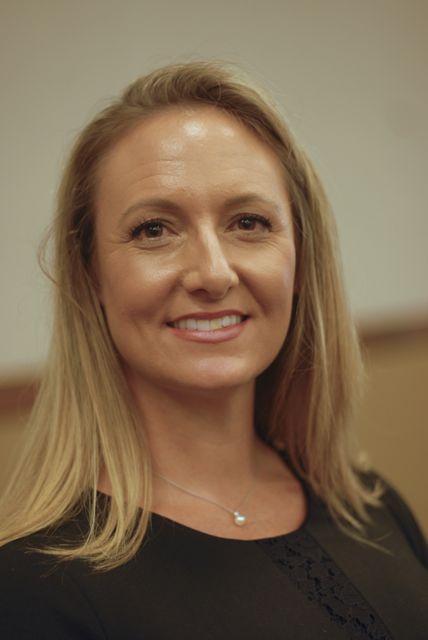
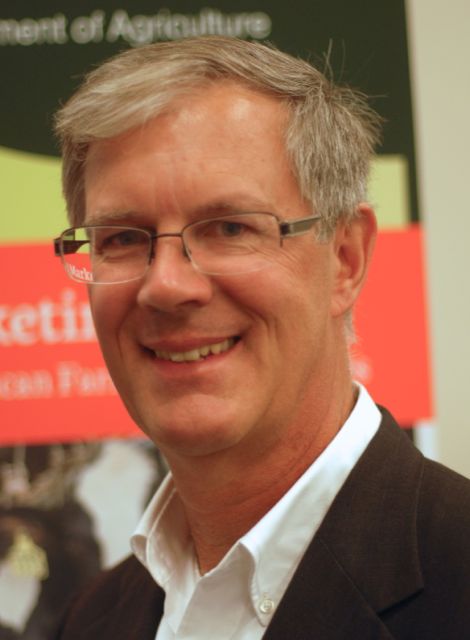
(Photo features Rob Schrick, Bayer CropScience – Horticulture strategic management lead)
2016-05-31T19:27:08-07:00October 2nd, 2015|

Historic Milk Pricing Hearing in Clovis

Historic Milk Pricing Hearing in Clovis:

Converting California to the Federal Milk Marketing Order

By Patrick Cavanaugh, Deputy Editor

In Clovis last week, an historic USDA milk pricing hearing commenced to gather testimony from the California dairy industry, which for the most part, favors changing to the Federal Milk Marketing Order (FMMO). This represents an abandonment of the state marketing order which has been harmful to dairies since it was altered 10 years ago to disallow dairies from getting paid the same price for their milk and whey products.

William Francis, director, USDA Order Formulation and Enforcement, is involved in the formal rule-making process for marketing orders. Francis commented, “There’s been tremendous interest in a federal order for California and we are holding a formal rule hearing for the promulgation of a California FMMO. This is an historic event. For years, the state has operated a program. But, farmers have gotten together and invited us to come in for the state’s hearing.”

The hearing could last as long as eight weeks to review each of four proposals. Francis noted, “We are here as long as it takes. We want to make sure we have a complete and accurate record so there are no time constraints,” He said the USDA will post a transcript on their website, filter through all of the documentation and make a recommendation.

A comment period with a sufficient amount of time will follow the public announcement of the USDA decision. “Then we will generate a modified final decision,” Francis said. “By the time we complete that process, farmers will have the opportunity to vote on the modified decision through a referendum process, which could be up to two years away.”

USDA Federal Milk Marketing Order (FMMO)

Industry Information Request postings

All of the proposals can be viewed at www.ams.usda.gov/CAOrder.

2016-05-31T19:27:08-07:00October 2nd, 2015|

WUD: Yes on Federal Milk Marketing Order

Continued Coverage on Milk Hearing

WUD: Yes on Federal Milk Marketing Order

Hearing in Clovis is the Super Bowl for California Dairy Producers

By Charmayne Hefley, Associate Editor


Anja Raudabaugh, CEO of Western United Dairymen, which represents half of the dairies in California, is closely watching the USDA special hearing to evaluate four proposals to convert California’s State Marketing Order to the Federal Milk Marketing Order (FMMO).

On September 22, in Clovis, Raudabaugh said, “This is an historic day. It is like a Super Bowl for California dairy producer. We welcome the opportunity for fair prices and better prices for California dairy producers, and that is what we are to support today. We are hoping to get better opportunities for our producers.”

“We are going to be testifying in support of the Cooperatives Proposal,” said Raudabaugh.

The dairy cooperatives – California Dairies Inc., Land O’ Lakes, and Dairy Farmers of America – say a federal pricing structure would fix the inequity that exists between the state’s dairy farmers and the rest of the nation.

Raudabaugh said the industry will need to see what the USDA actually delivers in terms of a federal order. “We have a proposal that we’d like to see happen,” she said. “It all depends on what the ultimate outcome is. We will review it with our membership at that time.”

It could take up to a year for the USDA to issue its proposal.

___________________________________________

Western United Dairymen

2016-05-31T19:27:08-07:00October 2nd, 2015|

Americans Support Endangered Species Act Reform

Americans Support Endangered Species Act Reform, Survey Says

Nothing is more priceless and more worthy of preservation than the rich array of animal life with which our country has been blessed.”
-President Nixon, upon signing the Endangered Species Act

The Endangered Species Act of 1973 (ESA) was signed on December 28, 1973, according to the National Oceanic and Atmospheric Administration website and provides for the conservation of species that are endangered or threatened throughout all or a significant portion of their range, and the conservation of the ecosystems on which they depend. The ESA replaced the Endangered Species Conservation Act of 1969. Congress has amended the ESA several times.

The California Endangered Species Act (CESA), per the California Department of Fish and Wildlife, states that all native species of fishes, amphibians, reptiles, birds, mammals, invertebrates, and plants, and their habitats, threatened with extinction and those experiencing a significant decline which, if not halted, would lead to a threatened or endangered designation, will be protected or preserved. The California Department of Fish and Wildlife will work with all interested persons, agencies and organizations to protect and preserve such sensitive resources and their habitats.

American Farm Bureau issued the following press release:

Most Americans think the Endangered Species Act is outdated and needs to be revised, a survey by Morning Consult shows. The poll conducted in early August adds impetus to congressional efforts to overhaul the increasingly outdated 1970s-era statute.

The survey shows:
• 63 percent of Americans support modernizing the ESA;
• 62 percent of Americans believe the act should help with species recovery, as opposed to merely cataloguing changes in their populations;
• 69 percent of Americans want the federal government to offer resources to third parties to help species recovery; and
• 49 percent of Americans believe that state or local authorities, rather than the federal government, lead in recovery of endangered and threatened species. Only 31 percent of Americans favor the federal government taking the lead.

“The intent of the Endangered Species Act is inspiring, but results have been less so,” American Farm Bureau President Bob Stallman said. “Farmers, ranchers and environmentalists agree that we must save wildlife facing preventable extinction, but the current recovery rate of less than 2 percent shows the law is a failure.

“Today, many landowners hesitate to establish habitat that would help endangered species. That’s so because the law itself makes it impractical for them to use their land once they have made the effort to help in the first place. The ESA can and must be modernized to protect endangered species and respect private property rights. Neither agriculture nor the endangered species have time to wait.”

A statistical summary of the poll can be found here. Detailed questions and answers can be found here.

2016-07-23T16:04:51-07:00October 1st, 2015|

Lygus Bug Control in Strawberries

Lygus Bug Control in Strawberries Can Prevent Significant Damage

By Patrick Cavanaugh, Deputy Editor

Adult Lygus Bug, Jack Kelly Clark, UC IPM

Adult lygus bug, Lygus hesperus.
(Photo by Jack Kelly Clark, UC IPM)

In the coastal areas of California where the majority of strawberries are grown, the top pest pressure comes from the lygus bug. Hillary Thomas, senior production research manager with Watsonville-based California Strawberry Commission, works on lygus bug control in strawberries, as it causes significant damage to the crop each season.

“We conservatively attribute between $150 and $250 million in damage each year to the lygus bug alone,” Thomas said. “We have only a few tools to handle this pest, including insecticide and vacuums, that can be used for the strawberry industry.”

Thomas explained vacuum use is widespread by both conventional and organic growers despite its drawbacks, beginning with the huge investment required by the grower. The vacuum is generally tractor-mounted with three or four vacuum fume hoods to one hydraulic system, and the entire vacuum system runs off the tractor’s PTO (power takeoff). The vacuum is so difficult to remove, it is typically installed on the tractor for the entire season.

Therefore, current research aims to make the vaccuum more useful, according to Thomas, by focusing on technological innovations to improve vacuum efficiency. She explained, “We are literally trying to suck up as many bugs as possible by moving the largest cubic volume of air and killing all the insects that move through the vacuum. We have created some standard operating procedures for vacuums as well as recommended short-term modifications to improve their efficiency by 25 percent. The Commission has also developed a series of trainings to disseminate information on the best management practices vacuums for growers.

2016-05-31T19:27:09-07:00September 28th, 2015|

Plants Do Not USE Water…They Borrow it!

Plants Transpire Most of the Water They Use!

Editor’s note: California Ag Today interviewed Allan Fulton, an Irrigation and Water Resources Advisor, UC Cooperative Extension Tehama County, in Redbluff CA, to comment on the debate about the agricultural industry’s use of water and to focus on a critical but disregarded process—that all plants transpire, even plants cultivated for the crops we eat.

Allan Fulton, Irrigation and Water Resources Advisor

Allan Fulton, Irrigation and Water Resources Advisor

CalAgToday: We hear in the media that our crops are using too much water. And while all plants need water to grow food, we also know that a high percentage of water taken up by all plants actually transpires back into the atmosphere, to form clouds and precipitation, right?

Fulton: Yes, when plants transpire, the water just returns to the local hydrologic cycle, leaving the harvested crop that we distribute elsewhere in the US or in the world actually very low in water content.

CalAgToday: When we think about transpiration, are the plants actually “borrowing” the water?

Fulton: Yes. We get a lot of questions about why we irrigate our crops so much, and it comes from the general public not being as close to farming everyday. The truth is, plant transpiration is a necessary biological process. The water cools the tree so it stays healthy and exits the leaves through special cells called stomata. While the stomates are open to allow water to transpire, carbon dioxide enters and is used in photosynthesis, making sugars and carbohydrates for the plant to create the fruits and nuts that we eat. So, an inadequately watered plant cannot take in enough carbon dioxide during transpiration, resulting in defective fruits and nuts that are smaller, shriveled, cracked—all the things the typical consumer does not want to buy.

Plants cannot gain carbon dioxide without simultaneously losing water vapor.[1]

CalAgToday: Can we say 95 or 99% of the water that is taken up by the plant gets transpired and definitely not wasted?

Fulton: Definitely. We converted to pressurized irrigation systems, micro sprinklers and mini sprinklers, so we have a lot more control over how much water we apply at any one time. We do not put water out in acre-feet or depths of 4-6 inches at a time anymore. So, much like when rainfall occurs, we can measure it in tenths, or 1 or 2 inches at most. As a result, the water doesn’t penetrate the soil very deeply, maybe only 1 or 2 feet each irrigation.

We are very efficient with the water, but because we deliver it in small doses, we have to irrigate very frequently. That is why we see irrigation systems running a lot, but they are systems that efficiently stretch our water supply and do not waste it.

CalAgToday: But again, the vast majority of the water that the tree is taking up is being transpired, right?

Fulton: Yes, most of the time, at least 90% of the water that we apply taken up through the tree and transpired so that photosynthesis can happen.UCCE Tehama County

CalAgToday: And transpiration increases on a hot day?

Fulton: Yes, we do get a little bit of loss from surface evaporation from wet soil, but we try to control that with smaller wetting patterns—drip-confined wetting patterns. When you think about it, the heat of the day is in the afternoon when many irrigation systems don’t run because of higher energy costs. There are incentives not to pump in the middle of the afternoon, but those who do try to confine the wetted area to limit evaporation. And the hot hours of the day make up about 4 hours of a 24-hour cycle, so we irrigate mostly during the nighttime and early morning hours to lesson evaporative loss.

CalAgToday: Growers are doing everything they can to conserve water. If the trees and vines are all transpiring most of their irrigated water, why is using water to grow food a problm?

Fulton: I think the emphasis throughout the United States has always been to provide a secure food supply. That security has many benefits, economically and politically; and in the end, we are trying to provide the general public with good quality, safe food at the best price possible.

______________________________________________

[1]  Debbie Swarthout and C.Michael Hogan. 2010. Stomata. Encyclopedia of Earth. National Council for Science and the Environment, Washington DC.

CIMIS


The California Irrigation Management Information System (CIMIS) is a program unit in the Water Use and Efficiency Branch, Division of Statewide Integrated Water Management, California Department of Water Resources (DWR) that manages a network of over 145 automated weather stations in California. CIMIS was developed in 1982 by DWR and the University of California, Davis (UC Davis). It was designed to assist irrigators in managing their water resources more efficiently. Efficient use of water resources benefits Californians by saving water, energy, and money.

The CIMIS user base has expanded over the years. Currently, there are over 40,000 registered CIMIS data users, including landscapers, local water agencies, fire fighters, air control board, pest control managers, university researchers, school teachers, students, construction engineers, consultants, hydrologists, government agencies, utilities, lawyers, weather agencies, and many more.

2021-07-23T14:31:38-07:00September 23rd, 2015|

Ag in the Classroom

Teaching Ag in the Classroom


By Charmayne Hefley, Associate Editor


As the disconnect between consumers and the source of their food grows, many students do not understand where their food comes from. California teachers are doing their part to bridge the educational gap by teaching ag in the classroom.

Agriculture in the ClassroomKathy Yager, a fifth grade teacher at Fowler Unified School District, as well as a farmer, brings agriculture education to her students in several ways. “We’ve been using programs through the California Foundation for Agriculture in the Classroom,” Yager said.

“I’ve participated in Taste Test grants,” Yager said. The grant allows teachers to bring in a new ag product, “and the students get the opportunity to try those things.” Yager said it also helps expose students to new products, and allows them to become better informDairy Council of CAed consumers in the future.

“We also have visits from the Dairy Council of California and students get to see a dairy cow and how the whole milking process works,” Yager said.

In addition Yager brings farmers, including her own brother, into the classroom to educate students, “and [they] show students how agriculture works and how a product gets from the field, to the stores, and to them.”

Healthy Eating

California Foundation for Agriculture in the Classroom (CFAIC)

More than 7 million California students are fed, clothed and housed with products grown right here on our farms, in our fields and within our forests. California Foundation for Agriculture in the Classroom is dedicated to helping students and teachers across our great state gain an understanding of how agriculture provides the daily essentials necessary to make our society and our world function.

From the cotton in our jeans and the food on our tables, to our landscaped yards and playing fields, we all depend on agriculture. The survival of this vital industry depends on educating and encouraging the next generation of decision-makers. We do this by engaging students and educators in meaningful ways: developing and sharing unique classroom curriculum, supporting school garden efforts, spreading our message at local Ag Days, honoring outstanding educators, rewarding students who learn and write stories about agriculture and so much more.

http://www.cfaitc.org/imaginethis/Featured Programs:

Imagine this… Story Writing Contest

Meet Academic Content Standards for California schools through this creative writing contest!

Create a positive learning experience that promotes reading, writing and the arts, and furthers the understanding of agriculture in our lives by using this award-winning contest in your classroom.

PUBLISHED AUTHOR

State-winning authors will have their stories published in an illustrated book and will be distributed to school libraries and classrooms across the state!

DEADLINE: NOV. 1

Entries must be postmarked by November 1, annually.
Download entry form (PDF, 331 KB)

California Fruits and Vegetables Seasonal Chart (PDF, 18 KB)

2016-05-31T19:27:09-07:00September 22nd, 2015|

1st in a Series on Mental Health on the Farm

Part 1 Mental Health on the Farm

Listening for Negative Thoughts

Resources are provided at the end of this post.

California Ag Today Editor Laurie Greene extensively interviewed Karen Markland, Division Manager for the Fresno County Department of Behavioral Health’s Planning, Prevention and Supportive Services about the mental health needs of those in the agricultural industry who may be emotionally suffering due to the severe drought and environmental water restrictions impacting their livelihoods.

Editor: I have observed that depressed people may say something that implies they are having suicidal ideation, but it is just so easy in our society to tell them, “Oh you’ll snap out of it.” In other words, we tend to dismiss these statements. What do you want to say to listeners on how to respond to someone who says something hopeless? What opportunity does this present to the person who hears someone utter something desperate?

Markland: It is so easy, I say it to myself sometimes, “I want to die; I don’t want to go on.” Those are really important messages, though, for people to pick up on. I really feel it is always important to respond genuinely and supportively. Our statewide California Stigma & Discrimination Reduction Program suggests we go back and say something like, “Each mind matters, and you matter.”

Each Mind MattersThis is an opportunity to have that dialogue; yet often, people will look at me like, “What?” But we all have those moments and we all feel that way at times. Tell people there are resources and support systems. Become familiar with them—whether they are family, clergy, a neighbor, a teacher, County services, a hotline. Likewise, let someone else know when you are not having the best of days.

Editor: It seems as if the general population believes that these issues are not medical issues, that they are within someone’s control, and that perhaps someone is weak or has a bad attitude and they need to change their thinking. What would you like to say to people who don’t recognize that mental illness is a medical illness?

Markland: So, there is a lot of dialogue about ‘What is mental illness?’ versus ‘What is mental health?’ ‘What is mental wellness?’ Clearly, mental illness is a diagnosable medical condition. There are categories in which an individual may have a serious mental illness and these include diagnoses like schizophrenia, bipolar disorder.

These are serious, long-term illnesses, but there is a whole other spectrum of mental illness such as postpartum depression, anxiety disorders, and depressive disorders, which show signs and symptoms that people are functioning outside of their wellness. These are also medical conditions—medical conditions that can be treated in a variety of ways.

Editor: Of course medication is one option. Are there other options?

Markland: Sometimes it is medication; sometimes it is holistic healing; sometimes it is having a positive self-attitude and making sure you get the sleep and the nutritious diet, exercise and more that you need. So it is truly a diagnosable medical condition that can be treated in a multitude of ways, and what we are seeing right now in mental health is a strong recovery movement. People live, grow and recover from mental illness.

Mental HealthThe Fresno Department of Behavioral Health is dedicated to supporting the wellness of individuals, families, and communities in Fresno County who are affected by, or at risk of, mental illness and/or substance use disorders through cultivation of strengths toward promoting recovery in the least restrictive environment.County of Fresno Logo

The Fresno Department of Behavioral Health provides mental health and substance abuse services to adults within the County of Fresno. The programs within our department focus on delivering the highest quality of service. There are over 300 professionals and staff dedicated to providing services in both metropolitan and rural areas. The diversity of our staff has helped us create a department that is sensitive to cultural differences and attempts to bridge the language barriers with our consumers. 


2016-05-31T19:27:10-07:00September 22nd, 2015|

Exclusive Interview with ALRB Chairman Bill Gould

ALRB Chairman Bill Gould Defends ALRB’s Actions

By Patrick Cavanaugh, Deputy Editor

California Ag Today exclusively interviewed William B. Gould IV, member and chairman of the California Agricultural Labor Relations Board (ALRB), and previously chairman of the National Labor Relations Board. ALRB Chairman Bill Gould described his extensive experience in labor law, “I have been practicing in labor law both on the union and employer side. I’ve arbitrated labor disputes for 50 years as an impartial arbitrator, and I’ve been in academics, teaching law, and of course in government service as well.”

Chairman Gould defined the Board’s role, “The ALRB is a quasi-judicial neutral agency that was established to interpret and administer the Agricultural Labor Relations Act of 1975. It deals with the cases in front of it the best it can and tries to promote rulemaking to implement the objectives of the statute.

When pressed to address a widely held belief that the ALRB is biased in favor of the United Farm Workers (UFW), particularly against Gerawan Family Farms, a Fresno County tree fruit operation which for several years has witnessed a majority of its farmworkers attempt to fight mandatory-mediation-imposed UFW representation and fees, Chairman Gould replied, “The ALRB is a government agency that is concerned with enforcing and administering labor laws. I think when you get in the business of interpreting law and finding facts, sometimes people don’t always agree, and that has happened in a number of cases. A lot of people don’t understand that the statute is written fundamentally to protect the rights of workers to engage in freedom of association and in concert under conditions they consider unfair. The Act also protects employees from retaliation for these freedoms. We are an impartial agency that attempts to take into account the interests of all parties; but fundamentally, we have to find all the facts before us and make decisions and determinations.”

ALRBWhen asked if, in general, farmers were taking care of their workers, Gould answered, “I’m not in a position to say whether farmers are taking care of their farmworkers. That’s really a broader mission than the one that the legislation has given to us. We are concerned with whether, in particular cases, violations of the statute have occurred, and in remedying those violations.”

“And while farmers would agree that farmworkers should have the right to speak up when something is wrong without any retaliation,” Gould elaborated, “bosses are not forced to correct any wrong or to change things. And the boss is not obliged under our statute to do anything about wages, health or safety concerns. We are concerned with giving workers the ability to speak up and engage in concerted activity with protection against employer retaliation.”

On September 17, ALRB administrative judge Mark Soble ruled to prohibit Gerawan employees from learning the outcome of ballots cast in 2013 to decertify the UFW union, angering the agricultural industry and the Gerawan farmworkers, in particular. Gould said, “I can’t make any comments about that matter at all.”

Recently the ALRB hosted three hearings in the state to learn how to better educate farmworkers about their labor rights and to establish legal access to communicate directly with them during work hours at their work sites. Prompted to explain this ALRB request to access private farm property, during production hours, Gould replied, “The problem is the difficulty in reaching those with lack of legal status and who live in the shadow of the law and are afraid to protest. As the most recent witness testified, this population is sometimes cut off by language barriers and might not know the content of the law.”

“Putting aside language and documented status,” Gould continued, “many workers don’t know some very basic aspects of the National Labor Relations Act because of the inability of the Board under the Act to communicate with those workers. So what we are looking at is our ability to communicate the content of the law and the procedures we employ more effectively than in the past.”

When asked about other forms of outreach, such as hanging educational posters in different languages that workers understand, Gould said, “These indigenous languages are something that only academics read. I don’t think that many of the farmers are academics.”

Chairman Gould explained the ALRB could reach workers who speak these ancient languages by “having lawyers on private property describe the content of our statutes and our procedures and perhaps show videos that would explain the rules in their own language.”

ALRB Bio

Appointed in March 2014 as a member and chairman of the Agricultural Labor Relations Board, William B. Gould IV has been Charles A. Beardsley professor of law, emeritus at Stanford Law School since 2002, where he has held multiple positions since 1972, including professor of law. He was chairman of the National Labor Relations Board from 1994 to 1998. Mr. Gould was a visiting professor of law at Harvard Law School from 1971 to 1972, professor of law at Wayne State University Law School from 1968 to 1972, and a lawyer at Battle Fowler Stokes and Kheel from 1965 to 1968. He was an attorney-advisor for the National Labor Relations Board from 1963 to 1965 and assistant general counsel for the United Automobile Workers from 1961 to 1962. Mr. Gould is a member of the National Academy of Arbitrators. He earned a Bachelor of Laws degree from Cornell Law School.

Mr. Gould’s term expires January 1, 2017 (Pursuant to Labor Code § 1141(b).)

2016-05-31T19:27:10-07:00September 21st, 2015|

CALIFORNIA WINE is a Brand

Amy Hoopes on How California Wine is a Brand

By Laurie Greene, Editor

The creation of Californian wines led to the realization of a new flavor profile; California Wine is a brand.

Amy Hoopes, chief marketing officer and executive vice president of global sales for Wente Family Estates in Livermore, Calif., said when Californian winemakers developed a new flavor style for wines, they hit home with the youthful American consumer palate. “I think the taste profile for California wines for a long time has been a product that offered more,” Hoopes said.

“It was more fruit forward,” Hoopes explained. “It was bigger. It was bolder. It appealed to the young American palate which had previously had access only to high-end European wines and a confusing French classification, which at that point caused a lot of anxiety,” she noted.

Hoopes said the California brand was able to build upon a flavor profile that matched the grapes grown in the state, “to make styles of wines that just clicked. Consumers say, ‘Wow I feel confident now. This is comfortable. I know what it is; I understand where this is going.’”

“I believe having that kind of focus again is the renewal we’re looking for in the California brand—to reconnect with what more means and to make sure that we’re consistently delivering that taste experience to increase the value behind the brand.”

Founded 130 years ago, Wente Vineyards is the country’s oldest, continuously operated family-owned winery.

2016-05-31T19:27:10-07:00September 19th, 2015|
Go to Top