About California Ag Today

This author has not yet filled in any details.
So far California Ag Today has created 2014 blog entries.

Historic Temperance Flat MOU Signing

Assemblymember Bigelow on Historic July 1 MOU Signing

By Patrick Cavanaugh, Farm News Director

East of Fresno at Friant Dam last Friday, July 1, the San Joaquin Valley Water Infrastructure Authority (SJVWIA) and the United States Department of the Interior, Bureau of Reclamation signed an historic Memorandum of Understanding to coordinate and complete feasibility studies of the proposed Temperance Flat Dam. 

Historic July 1, 2016 MOU Signing for Temperance Flat Dam

Historic July 1, 2016 MOU Signing for Temperance Flat Dam

State Assemblymember Frank Bigelow, 5th Assembly District (serving a large portion of Madera County, along with all the foothill and mountain communities north of Madera to the Sacramento area) noted the critical importance of getting Temperance Flat Dam built to store freshwater for the citizens and farmers of California.

Bigelow, a Madera rancher and farmer of pistachios, figs, and persimmons, said, “This is a huge event to enable us to have additional [water] storage. I just am so thankful to the people who put the water bond forward. Without the money that the people have made possible by voting to support the water bond, none of this would be possible; that’s a clear message.”

Friant Dam and Millerton Lake State Recreation Area

Friant Dam and Millerton Lake State Recreation Area (Source: U.S. Bureau of Reclamation)

“Without water,” Bigelow explained, “none of our communities would continue to survive in the way they have for years and years. Much of the water we see is being used in different ways; it is not all going to agriculture, and it is not all going to residential. It is going to the environment. So we’ve got to divide that up by the law now, and in equal proportional value.”

“Right now,” he detailed, “Millerton Lake captures 526,000 acre-feet of [fresh] water, but we have millions of lost acre-feet that flow past every year into the Delta, then ultimately to the ocean.” Upon completion, the Temperance Flat Dam would hold more than twice the amount of water that Friant Dam holds—”especially important for capturing freshwater during heavy rain and snow years,” noted Bigelow.

 

2016-07-07T10:05:08-07:00July 7th, 2016|

Brexit Affects U.S. Agricultural Trade

Joel Nelsen’s Commentary on Washington D.C. Meetings, Brexit and U.S. Agricultural Trade

By Lauren Dutra, Associate Editor

Joel Nelsen, president of California Citrus Mutual based in Exeter, Calif., spoke about his advocacy for growers and the impact Brexit has on U.S. agricultural trade as he arrived at the Fresno Yosemite International Airport from Washington, D.C. last week. Brexit is an abbreviation of “British exit,” which refers to the June 23, 2016 referendum by British voters to exit the European Union (EU), according to Investopedia.

Nelsen explained, “There were two missions I was on while I was in Washington. One had to do with a proposal to allow lemon imports from Argentina. We’re definitely opposed to it because of pests and diseases, and a lack of transparency in that country over the last one to two decades.”

“We have a comment period,” Nelsen continued, “but we have asked for an extension on that comment period because of the scope of the rule and the economic impact, and we haven’t heard a word on that,” he said. “We met with our colleagues and friends in Washington, D.C.  Senator Feinstein, Senator Boxer and a couple of House Office Committees have agreed to make a phone call to the Secretary of Agriculture and get a determination on that,” he said.

SaveOurCitrus

@SaveOurCitrus is a free USDA iPhone app to report and identify the four leading citrus diseases: citrus greening, citrus canker, citrus black spot and sweet orange scab. Report your symptoms to SaveOurCitrus.org and upload a photo, and citrus experts will respond.

The second purpose of Nelson’s trip was to discuss trade and the impact on the U.S. economy due to the recent Brexit, as Nelsen is chairman of the Fresh Fruit and Vegetable Agricultural Technical Advisory Committee (ATAC), a national trade committee that offers information and advice about agricultural products and trade issues to the USDA Secretary of Agriculture and the U.S. Trade Representative. “People from across the country came, and we talked about trade subjects, such as the Trans-Pacific Partnership (TPP) agreement and Britain’s separating itself from the EU,” said Nelsen. “It’s obvious that this upset everybody; Ambassador Michael Froman, United States Trade Representative (USTR) who advises the president on international trade and investment issues, said, “I know what I don’t know, and I don’t know a lot right now.”

Nelson explained, “We think [Brexit] will slow down the fresh fruit and vegetable sector, as well as the passage of the Transatlantic Trade and Investment Partnership (T-TIP). According to the USDA Foreign Agricultural Service, since the U.S. market share of agricultural products and food imported by the EU—the world’s largest importer in the category—is shrinking despite continued growth of the EU market, T-TIP negotiations offer a major opportunity to address unjustified tariff and non-tariff trade barriers to U.S. exports.

“Quite frankly,” Nelsen summarized, “we’re less than excited about [T-TIP] because it didn’t address the inherent problem that we have from competition: fresh fruit and vegetable producers in the EU get a direct subsidy and growers in the United States do not.”

___________________________

Some additional members of the ATAC for Trade in Fruits and Vegetables include:

  • Julie Adams, Almond Board of California
  • James R. Cranney, Jr., California Citrus Quality Council
  • Robert Guenther, United Fresh Produce Association
  • Richard Hudgins,
    California Canning Peach Association
  • Randy Hudson, National Pecan Growers Council
  • Marcy L. Martin, California Fresh Fruit Association
  • Matthew McInerney, Western Growers
  • Ken Melban, California Avocado Commission
  • Mike Montna, California Tomato Growers Association
  • Jim A. Zion,
    Meridian Growers, LLC
2021-05-12T11:03:00-07:00July 6th, 2016|

Sparked Cultural Interest in Gardening and Locally Grown Produce

Locally Grown Food Inspires Consumers to Learn More, Garden at Home 

By Laurie Greene, Editor

Cultural changes in eating habits are sparking an added interest in locally grown produce. Scott Steinmaus, professor in the Biological Sciences Department at California Polytechnic State University, San Luis Obispo (Cal Poly SLO), outlined the surge in local produce purchasing and how it is igniting consumer interest in growing their own gardens.

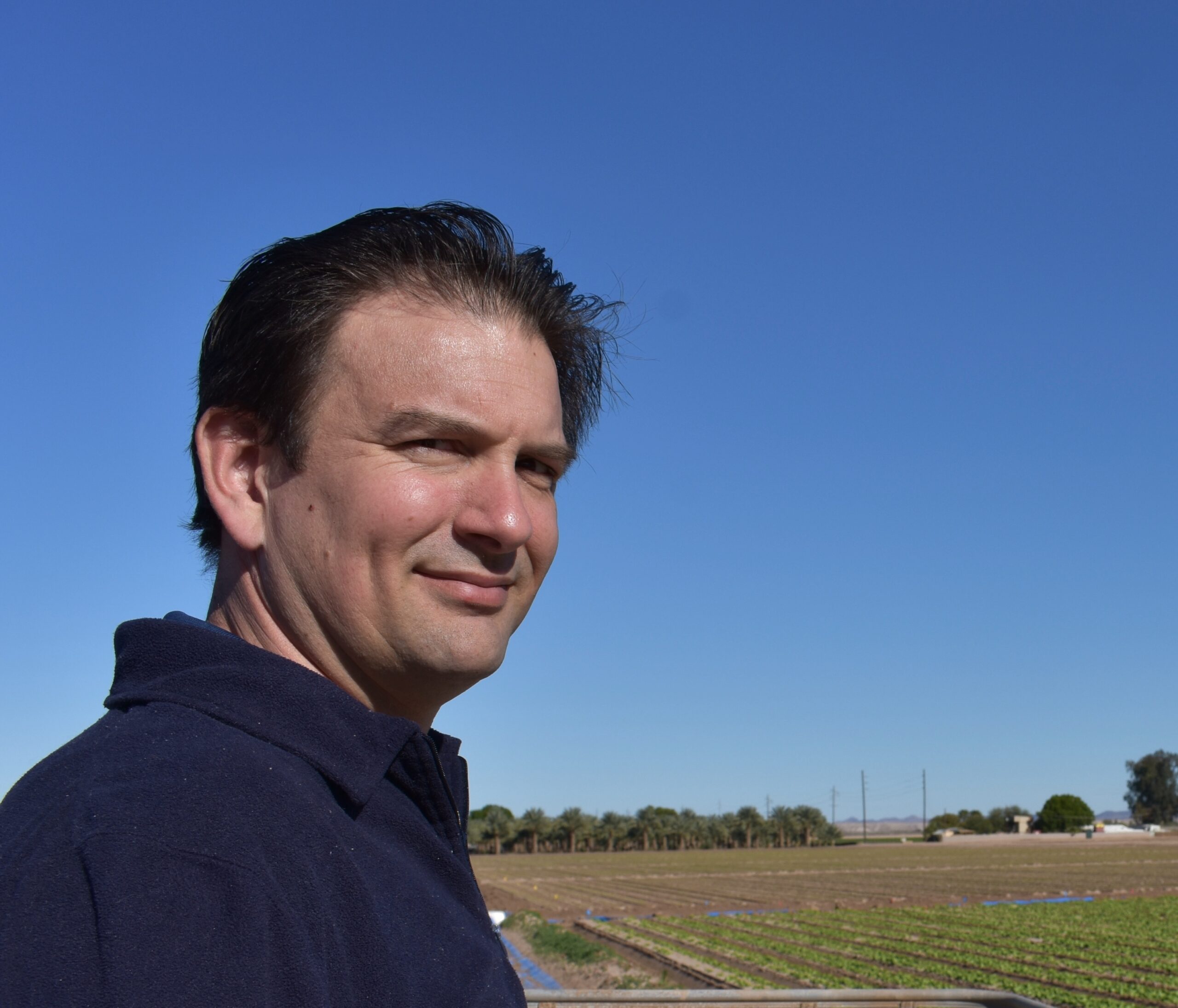
“The food craze is a real big movement right now,” Steinmaus stated, “especially with urban folks. Some of the biggest scenes are the foodie craze—that farm-to-table idea of buying locally, organically-produced food.”

Scott Steinmaus, professor of Biological Sciences Department at Cal Poly San Luis Obispo.

Scott Steinmaus, professor of Biological Sciences Department at Cal Poly San Luis Obispo.

Continuing, “And the cooking shows are out of control-popular, right? Where does the food come from? It comes from here; this is what it’s all about,” he said, with pride.

The growing trends are also reinvigorating students to become more involved, according to Steinmaus. “Students are asking where their food comes from,” he commented, “and who the farmers are that produce such healthy fruits and vegetables. That is an exciting part of our discipline as well—this foodie craze, and I think our students want to become a part of that,” he reflected.

The push for local produce is also inspring more people to grow their own home gardens. “When they garden, they get it,” Steinmaus explained. “And as soon as people get their hands dirty and as soon as they produce their first tomato; there’s nothing more empowering than producing your own food,” he said, “even if it’s a little bit.”

With this renewed interest in home gardening, Steinmaus observed, many are discovering their preconceived notions of farming were not quite accurate. “We’re working with the American Horticultural Society, putting together the videos that show people farming isn’t what you might think it is; it is actually completely different.” Steinmaus said.

“Farming involves a lot more than a green thumb,” he elaborated. “It requires the understanding of growing cycles and identifying various deficiencies. It utilizes very high technology. It is producing food; there is nothing more empowering than putting food on your kitchen table that you grew in your garden, or was grown by a farmer you know just down the street, and you know his [or her] name,” said Steinmaus.

2016-07-06T17:44:22-07:00July 6th, 2016|

Recycled Water Project for Water Stability, Part 2

North Valley Regional Recycled Water Program Projected Completion

By Brian German, Associate Editor

In our continued coverage of the monumental North Valley Regional Recycled Water Program (NVRRWP), Anthea Hansen, general manager of the Del Puerto Water District, talked about the projected completion for the project.

Anthea Hansen, general manager, Del Puerto Water District

Anthea Hansen, general manager, Del Puerto Water District

“We estimate the pipeline will be completed by December 2017—less than two years,” Hansen stated. “The first year’s combined quantities, if both cities (Turlock and Modesto) are online at the start date, will be somewhere between 25K and 30K acre-feet per year,” Hansen calculated.

NVRRWP will convey recycled water from Turlock and Modesto, currently being discharged into the San Joaquin River, instead to the Delta-Mendota Canal via pipeline for storage purposes and later use. “The sense that we all have here,” said Hansen, “is that this transaction and this accomplishment will change the future of the Del Puerto Water District for the better. It will give us some stability in our base [water] supply that we know will come year in and year out.”

After many years of working with various agencies and collaborating with  multiple cities, the project has passed all of its major hurdles and is set to break ground within the next few months. Using recycled water from treatment plants will reduce reliance on unsustainable groundwater supplies and also lower the amount of water pumped from the Delta.

NVRRWP map recycled water

NVRRWP map (Source: NVRRWP map)

“People use water in the cities every day, 365 days a year,” explained Hansen. “The reliability of the supply is so important to us because, for such a long time, we have not had reliability in our water supply,” Hansen noted.

“We have 40-year agreements in place with both cities,” she continued. “As a result of the program, even in the first years, each irrigable acre in the district will receive somewhere between one half to three-quarters of an acre-foot of guaranteed water supply, year in and year out.”

Hansen added the project will sustain a growing population. “Over time,” she remarked, “as the cites grow and the populations expand, the quantities of water are projected to grow over the build-out period for the project.”

______________________________

See Also: Recycled Water Project for Water Stability, Part 1, “North Valley Regional Recycled Water Program: A New Water Source for Valley Farmers,” June 14, 2015.

Additional Benefits of the North Valley Regional Recycled Water Program

2021-05-12T11:05:53-07:00July 5th, 2016|

Red, White and California Blueberries

Celebrate Independence Day with Native Blueberries

By Emily McKay Johnson, Associate Editor

As we celebrate 240 years of America’s independence, we look forward to indulging in festive red, white and blue foods. One of the best ways to incorporate blue in our holiday spread is to serve plenty of California blueberries.

Mark Villata, executive director, U.S. Highbush Blueberry Council.

Mark Villata, executive director, U.S. Highbush Blueberry Council.

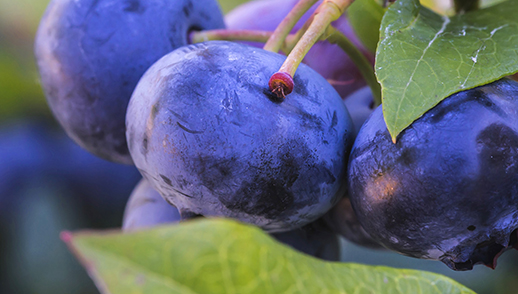
Mark Villata, executive director of Folsom, California-based U.S. Highbush Blueberry Council, explained California is an important blueberry production state as, “It is among the top five producers, nationally. We produce [blueberries] in about 38 states nationally, but nine states account for about 98 percent of our total production, and California is in that top five,” he said.

“Last year, California produced about 62 million pounds of blueberries,” Villata said; “this year’s crop looks like it could be close to 70 million pounds. Total yield has been increasing each year as new plantings come into maturity and start to produce blueberries.”

California is an important player in the berry market, and blueberries are one of the healthiest fruits consumers can eat. “Of course we’re lucky here in California to have a crop that is so readily available that is also incredibly healthy for us all,” Villata noted.

And blueberries are almost the perfect crop for celebrating the Fourth of July because they are native to the region. “Blueberries play well into any Fourth of July barbecue,” said Villata. “Blueberries are so diverse, they can be incorporated in salads, smoothies, breakfasts, desserts, and more. “We bring blue to the red, white and blue festivities,” he declared.

______________________________

Blueberry Infographic on Nutrition, U.S. Highbush Blueberry Council

2016-08-03T20:48:52-07:00July 4th, 2016|

CA Agriculture Leadership Transitions

CA Agricultural Leadership Transitions: Barry Bedwell to Head CALF, George Radanovich to Lead CFFA

By Patrick Cavanaugh, Farm News Director

There is a change in leadership at the Fresno-based California Fresh Fruit Association (CFFA), where Barry Bedwell has served as president for 13 years. The new president, as of August 1st, is former eight-term member of Congress for Mariposa County, George Radanovich, “and a five-year retiree in Mariposa, too,” said Radanovich.

“Don’t forget to add that,” he insisted. “Yes, the opportunity came up. My son King graduated from high school, and now he’s off to college at Ole Miss. This gives me the time to get back and start working on water and labor issues that I love—and being involved with the ag industry. The timing is perfect, and it’s a real exciting adventure for me.”

George Radanovich

George Radanovich will head California Fresh Fruit Associaition

Radanovich served in Congress from 1995 to 2011, representing a big chunk of the Central Valley in California’s 19th District in the U.S. House of Representatives. While there, he served on the Committee on Energy and Commerce and its subcommittees: Communications, Technology and the Internet, Commerce, Trade and Consumer Protection (Ranking Member) and Oversight and Investigations. Radanovich also served as co-chair of the Water Caucus, Congressional Wine Caucus and Congressional Croatian Caucus, as well as being considered an agricultural expert in areas related to water supply and immigration reform.

Barry Bedwell will now assume presidency of the California Agricultural Leadership Foundation (CALF), a non-profit corporation committed to leadership training and transformational learning experiences in partnership with California Polytechnic State University (Cal Poly) in San Luis Obispo and Pomona; California State University, Fresno; and the University of California, Davis.

“I am excited about it,” Bedwell said. “I think it’s a great opportunity for myself and a chance to really take what I’ve learned over four plus decades in California agriculture and put it to good and practical use.”

Bedwell will be replacing Bob Gray at the Agricultural Leadership Foundation. “Bob Gray has done an absolutely fantastic job in really focusing the program more on leadership development,” noted Bedwell. “It is really doing personal coaching and working on leadership tendencies. When I was there thirty-four years ago in Class 13, the foundation tried to expose people in agriculture to things outside of the realm of agriculture; but now, they’ve taken it even a step further to say, ‘Here’s how to make you a better leader. Here is how to really strengthen your areas so that in the end, everyone coming out of this program will be a better person and representative for California agriculture.'”

Barry Bedwell

Barry Bedwell Will lead the CA Ag Leadership Foundation

“The program has changed from 24 months down to 17 months, but it’s still a very valuable proposition,” noted Bedwell. “I think the estimated monetary value of what this means to the individuals involved is something like $50,000,” he said.

Bedwell brings to CALF a depth of experience in agriculture. “How do you develop the Leadership Program for maximum benefit?” asked Bedwell. “That’s where I think I can particularly help, knowing the issues that face California agriculture and what we have to deal with primarily in Sacramento. I think that will be a big help.”

Bedwell also emphasized the importance of keeping CALF alumni engaged. “With over 1300 graduates, this program is a powerful force out there,” he said. “We want to continue to build on what we have, and engagement with those alumni is critical, moving forward,” said Bedwell.

And perhaps certain alumni could be the new messengers to Sacramento. “What’s clear right now is we don’t necessarily have the right messengers. This Ag Overtime bill [AB-2757 Agricultural workers: wages, hours, and working conditions], which was reintroduced after failing in the Assembly a few weeks ago, has convinced me that although we went in and explained the negative impact it would have on employees, quite frankly, certain members did not believe us,” said Bedwell.

“We have to change the messenger, or the message gets lost sometimes,” Bedwell commented. “So that’s part of what we have to think about in looking at the future. We say the right things, but they are not getting through, so now we have to figure out how we get through,” Bedwell said.

2016-07-04T16:58:42-07:00July 1st, 2016|

Joel Nelsen on Departure of UK from the EU

Joel Nelsen Comments on EU and Impact on Ag from Recent Washington D.C Trip

Yesterday, we were fortunate enough to meet up with Joel Nelsen of California Citrus Mutual at Fresno-Yosemite Airport. He filled us in about his recent trip to Washington, D.C.

Nelsen told us about the discussion he and his colleagues had with foreign trade leaders regarding imports into the United States, as well as how California Ag will be impacted by the United Kingdom exiting from the European Union.

Click below to check it out!

2016-08-03T21:10:59-07:00June 30th, 2016|

Valley Fig Growers Have Rich History

Valley Fig Growers Foresees Bright Future

By Patrick Cavanaugh, Farm News Director

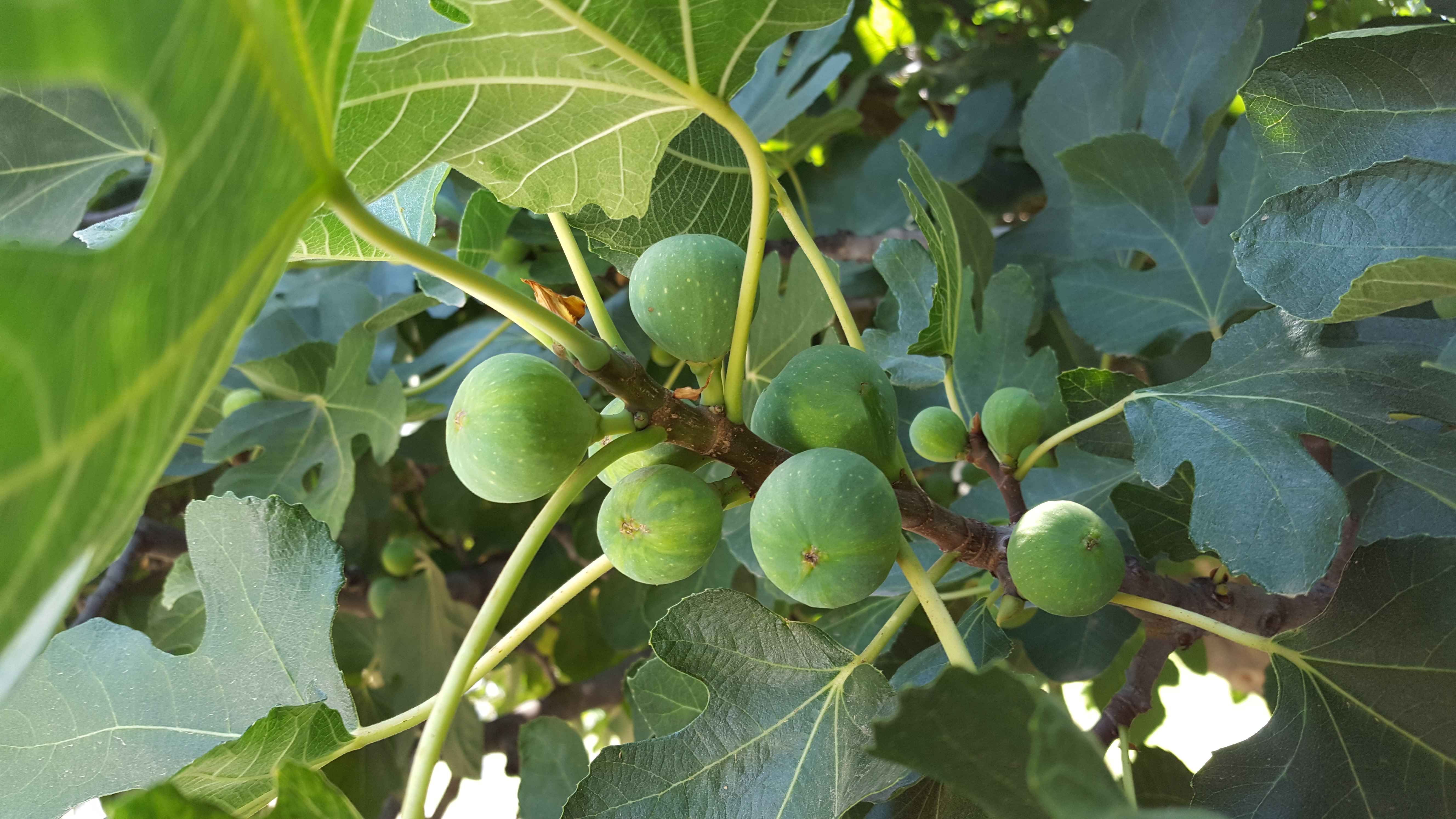
As the 2016 fig crop continues to ripen in Madera County orchards, the fig industry is finding a good balance between supply and demand. Gary Jue, president of Fresno-based Valley Fig Growers, said the association is last fig growers cooperative in the world. “Our growers, who are mainly in Madera County, produce only dried figs,”said Jue. “We do not handle any fresh figs.”

“Formed in 1959 by a group of growers,” explained Jue, “Valley Fig grower-members are our owners, and individuals like myself work at the pleasure of the board of directors and our owners. We are a very diversified dried fig company. We probably produce the largest quantity of dried fig products offered by any processor/packer.”

“Our goal is to provide innovative products to our customers,” Jue explained, “our industrial customers—food manufacturers, in particular—as a way to enable them to use our products in their products. We want to be as user-friendly as we can, so we listen to consumer needs to get our product in their hands and make it easy for them to use. The more we can do that, the more successful we’ll be at with providing figs to the consumer,” he said.

Gary Jue

Gary Jue, president of Valley Fig Growers.

Fig popularity has grown over the last five to seven years, Jue said, including fresh figs in season. “That’s been very popular especially at the high-end restaurants,” noted Jue. “We’re starting to see more and more dried fig products used in entrees in high-end restaurants, and even in mid-sized-priced restaurants.”

“If you go to the renowned coffee supplier that you see in every port and city in the U.S. and abroad,” Jue said, “you’ll see our figs in a product they provide. It is great to see products like that on the shelf! Confectioners are also on the wagon, as we’re starting to see more confectionery products now made with dried figs that we had not seen in the past.”

Jue mentioned during the holiday season last year, one of the Valley Fig accounts provided a whole chocolate covered fig product that was great. “Now,” he said, “we’re looking to determine if this is going to be a seasonal item or a year-round item. That large wholesale supplier really did a great job of introducing this confectionery fig into the mainstream public marketplace. It’s not a high-end specialty item, but something that anybody can go to the retail shop everyday to buy and enjoy. That has been a great, great upshot,” Jue affirmed.

This is all good news for the fig industry because Americans tend not to be big fig consumers as the fig is not indigenous to the United States. More typically, figs are enjoyed with greater consumption throughout the Mediterranean region as they have been produced there since pre-biblical times. During Roman times, figs were given as prizes. “Through carbon dating studies,” Jue elaborated, “we have determined figs were the first cultivated food known to humankind.”

“Because the crop has been around for so long, figs are very well known in Europe. Europeans grow up eating figs, but Americans are starting to develop a palate for dried figs and fresh figs as well,” said Jue. “And for us in the fig industry, it’s great to see that occurring.”

2016-06-29T21:06:21-07:00June 29th, 2016|

Temperance Flat Dam Brings Five Valley Counties Together

Key July 1 Signing Ceremony to Launch Temperance Flat Dam Process

by Patrick Cavanaugh, Farm News Director

Mario Santoyo, executive director of the San Joaquin Water Infrastructure Authority (SJWIA), which represents the five-county joint powers of authority in the Central San Joaquin Valley, has announced an important event will launch the process needed for Temperance Flat Dam: the Temperance Flat Project Partnership Agreement Signing Ceremony outside Old Fresno County Courthouse overlooking Millerton Lake at 10 a.m. sharp on Friday, July 1, 2016.

USBR Water“This is a major event, a significant milestone in terms of the process to get Temperance Flat Dam built.” Santoyo said. “In essence, it is a partnership between the new joint powers of authority and the U.S. Bureau of Reclamation, and, more specifically, their study team who worked on the technical studies and the feasibility reports for Temperance Flat.”
Merced, Fresno, Kern, Kings and Tulare Counties are joining forces with leaders of cities, Tribes, and other agencies to begin this significant move towards building the Temperance Flat Dam. “Working together, we are going to put the application together and submit it to the California Water Commission for their consideration for funding through Proposition 1, Chapter 8,” Santoyo said.  “It’s a solid statement that needs a signature.”

“It’s a memorandum of understanding between the Bureau of Reclamation and the joint powers of authority,” he said, “that defines the scope of work. In essence, it’s full cooperation between their technical people and our joint powers of authority. Our people are tailoring the application to the state to optimize funding. Keep in mind, we’re talking big dollars here; we are not talking a million or a hundred million; we are talking a billion.”

Temperance Flat Dam would create nearly 1.3M acre-feet of new water storage, according to the SJWIA, 2.5 times the current capacity of Millerton Lake, and would be a part of the Federal Central Valley Project.

“Chapter 8, which is the storage chapter in Prop 1, has $2.7 billion in it,” Santoyo explained. “Projects that are submitted for funding are limited to up to 50% of the capital costs of their project. If we were to take Temperance Flat, for instance, that’s going to cost somewhere around $2.8 billion. The maximum you could ask from the state is $1.4 billion, but we don’t expect that because there is a lot of competition. There’s not enough dollars to go around. We’re hoping to shoot for somewhere around $1 billion.”

“I see [the July 1 event] as being historic,” Santoyo reflected, “because it is one of the most critical things to happen—to be able to build Temperance Flat, as well as a good opportunity to be at a place where history’s being made.”

__________________________

For more information, contact Mario Santoyo at 559-779-7595.

Featured image: Mario Santoyo, executive director of the San Joaquin Water Infrastructure Authority (SJWIA)

2021-05-12T11:05:53-07:00June 29th, 2016|

JUST RELEASED: Monterey County Ag Value Up Nearly Eight Percent

Monterey County 2015 Crop Report Shows Ag Value Up 7.75 Percent

By Patrick Cavanaugh, Farm News Director

Monterey County Ag Commissioner Eric Lauritzen announced TODAY the production value by farmers in Monterey County for 2015 is $4.84 billion, an increase of 7.75% or $348 million over the previous year. According to the the 2015 Monterey County Crop Report released TODAY, the Monterey is again the fourth highest Ag producing county in California, following Tulare, Kern, and Fresno Counties.Lettuce fields

“Crop values vary from year to year based on production, market and weather conditions,” said Lauritzen. “As often the case, there was much fluctuation in the 2015 values, with 22 commodities down and 29 commodities increasing in value.

Notable results include:

  • head values increased 12% on better pricing.
  • Head lettuce showed a decline of 2% with fewer acres planted but higher prices.
  • Spring mix and salad products also declined in overall value.
  • Strawberry values increased by 21% on increased acreage and higher production.
  • Cauliflower and celery each saw values increase by approximately 25%. Celery showed a decrease in production with stronger pricing and cauliflower posted increases in both production and pricing.
  • Winegrapes declined 25% in 2015, after above-average production in previous years. This followed the statewide trend, with lower production and slightly higher prices.
  • Despite reduced acreage related to the drought, the value of nursery products increased by 11% on stronger pricing for many products.
Monterey County Strawberries

Monterey County Strawberries

“It is always important to note that the figures provided here are gross values and do not represent or reflect net profit or loss experienced by individual growers or by the industry as a whole,” Lauritzen clarified. “The numbers are big and only tell part of the story. It’s really about diversity and the ability to withstand changes, whether it is commodity change or Mother Nature,” said Lauritzen. 

“Growers do not have control over increased input costs such as fuel, fertilizers and packaging, or drought and labor shortage conditions,” Lauritzen explained, “nor can they significantly affect market prices. The fact that the gross value of agriculture increased reflects positively on the diversity and strength of our agriculture industry and its ability to respond to the many challenges,” he noted.

“The mainstays in Monterey County are the cool season vegetables,” said Lauritzen. “County growers are able modify planting programs even within the same year depending on market strengths or changes in consumer needs. When the cable food shows or restaurants decide to feature certain vegetable there is suddenly increase demand so Monterey County growers are often flexible in their planting schedules to meet demand.

“The Salinas Valley floor is very tight on acreage and available land planted out on the bench lands,” he said. “And growers are being asked to produce more with the same amount or even less ground and we are seeing that it increases prices,” he noted.winegrapes

“Each year we like to highlight a component of the industry in our report,” Lauritzen elaborated, “and this year we chose Certified Farmers Markets. We include a short piece on some of the people who produce and sell their own products directly to consumers at the 14 markets in Monterey County and elsewhere,” he said. “This important segment of our industry lets consumers meet farmers face-to-face and to become more directly connected with the food they eat.”

“Monterey County is proud to produce the crops that are healthy for the nation,” Lauritzen said, “and if consumer demand really matched what we need for a healthy diet, there would not be enough vegetables produced. We produce the food that consumers need to eat and it’s not just an economic driver for our region, but for the health of our nation,” he added.

“This 2015 Crop Report is our yearly opportunity to recognize the growers, shippers, ranchers, and other businesses ancillary to and supportive of agriculture, which is the largest driver of Monterey County’s economy,” Lauritzen summarized. “Special recognition for the production of the report goes to Christina McGinnis, Graham Hunting, Shayla Neufeld, and all of the staff who assisted in compiling this information and improving the quality of the report.”

2021-05-12T11:05:54-07:00June 28th, 2016|
Go to Top