About California Ag Today

This author has not yet filled in any details.
So far California Ag Today has created 2014 blog entries.

Celebrating California Agriculture

Celebrating California Agriculture – A Refreshing Perspective

By Laurie Greene, Editor

Peterangelo Vallis is the executive director of the San Joaquin Valley Winegrowers Association based in Kingsburg, CA. Today, he discusses the great care farmers put into their land.

“Hey, we don’t make any more land. God gave us a green earth. That is what we’ve got, and we live in the best possible place to grow virtually anything,” said Vallis.

peterangelo_vallis-side_shot-celebrating-california-agriculture

Peterangelo Vallis, executive director of San Joaquin Valley Winegrape Growers Association.

“In most cases, anything that has been farmed here in California has been farmed for a hundred years. The soil is better now than it was naturally because we are taking better care of it. We’re putting more natural green material back into the ground,” Vallis explained. 

“We are stewards of the land, and we have to be cognizant of that. We have to publicize that fact because farmers are the best people at caring for the land,” he said.

“I think oftentimes we are so busy caring for the land, we don’t do as good of a job pumping our chest up to everyone, going, ‘Hey! You know what? You come try to do this. You try to do it half as good as me, ‘because I’ve learned things from school. I’ve learned things from my family. I’ve learned things from generations. I’ve learned things just because I’m here doing my job and watching out,” Vallis said.

Vallis believes we need to widen the conversation and tell more people that farmers do the things they need to do; they do the things that benefit all society.

“We are proud of what we are doing. You know what? People who eat are the direct beneficiaries. Everyone who opens a can of beans. Everyone who goes and gets some lettuce out of the fridge. Everyone who eats beef, chicken or any other meat benefits from our taking care of the land to continue to produce,” he said.

“No farmer I know and no farmer I have ever met actively goes out and poisons our land, because then they can’t make food. Making food is what we are called to do.”

2016-11-11T16:37:06-08:00November 11th, 2016|

Army Vet Finds Purpose in Farmer Veteran Coalition

Organization Uses Ag to Help Veterans

By Joanne Lui, Associate Editor

California Ag Today is proud to announce a partnership in support of Farmer Veteran Coalition by featuring stories about their members on a monthly basis. This is the first story in a series that will carry over into the next year.


Agriculture is important in countless ways. In the broadest sense, California’s agricultural industry feeds the world and provides many jobs. But on a smaller level, farming can change one life at a time, whether it’s educating a child or giving purpose to a veteran. That’s what Randy Ryan discovered since he retired from military service with the U.S. Army’s XVIII Airborne Corps. 

“I volunteered to help some kids grow some food. They said, ‘Man, you’re really good with these kids.’ That started me on the path to teaching kids in the Southern

tgn Randy Ryan, Farmer Veteran Coalition

Randy Ryan (center) said, “There’s nothing that gives you purpose like serving. And I can’t think of a better way for veterans to serve than to grow food.”

California area about growing food,” Ryan said.

Ryan, who grew up on a farm in Tennessee, began working with Teaching Gardens, a program funded by the American Heart Association that fights childhood obesity by teaching kids how to plant seeds, nurture growing plants, harvest produce and understand the value of good eating habits.

“I used to go into classrooms and say, ‘Let’s try some broccoli. Let’s try some kale.’ They were like, ‘Ew,’” Ryan recalled. “But if they grow it, they are going to desire it. And if they desire it, they are going to buy it locally.”

While working with Teaching Gardens, Ryan also connected with the Farmer Veteran Coalition. The non-profit organization’s mission is to “cultivate a new generation of farmers and food leaders and develop viable employment and meaningful careers through the collaboration of the farming and military communities.” The Coalition believes “agriculture offers veterans purpose, opportunity, and physical and psychological benefits.”

Now, Ryan has become the manager of a new California initiative with the Farmer Veteran Coalition. “We’re going to focus on the state of California and get more veterans involved” Ryan said. The Coalition aims to reach more veterans with information on how to get involved and to encourage more farmers to provide internships to veterans.

Ryan recognizes it can be hard to ask a farmer to train a veteran because they do not necessarily have the time or resources. That’s why Ryan is focused on getting fellowships and grants. Already, many partners have come aboard, including Newman’s Own and the Bob Woodruff Foundation.

farmer_veteran_coalition_logo“There are also a lot of opportunities in the industry other than starting your own farm,” Ryan pointed out. He encourages veterans to consider opportunities in farm management, vineyard management and food safety, among other jobs. “The skills from being a veteran and those from being in the food and agriculture industry—they are so similar to me,” he said.

Ultimately, Farmer Veteran Coalition aims to give returning veterans a purpose after serving their country in the military. “Veterans come home with a feeling of needing to serve,” Ryan said. “Veterans want to serve. There is nothing that gives you purpose like serving. And I cannot think of a better way for veterans to serve than to grow food.”

Click on the link to learn more how you can support Farmer Veteran Coalition.

2016-11-11T17:54:25-08:00November 11th, 2016|

Trump Election May Help California Agriculture

President-Elect Trump May Help Make California Agriculture Great Again!

By Patrick Cavanaugh, Farm News Director

The election of Donald J. Trump as the 45th President of the United States may prove very significant for California. He and his future administration may be able to make sense of the devastating water deliveries diverted from California farms to protect fish species that may already have become extinct, in order to comply with the Endangered Species Act.

Joel Nelsen, president, California Citrus Mutual and a leader in California agriculture, is encouraged by the election results. “You know, the Donald Trump election was a bit of a surprise to me. You can always hope, but the numbers did not look that good. Now that he is our president-elect, I think we can be somewhat optimistic about the next Congress and this next administration,” Nelsen said.

Joel Nelsen, president, California Citrus Mutual.

Joel Nelsen, president, California Citrus Mutual.

Nelsen said the optimism is going to be on several fronts. “One, I think we have an opportunity now to move water legislation that contains real storage and creates water for a bigger population in California,” he said.

“We also have an opportunity to slow down a rogue agency—which I would call Environmental Protection Agency (EPA)—and their activity specific to crop protection tools. We can get an effort going to modernize the Endangered Species Act. Nobody wants to eliminate species, but let’s face it, when that was first signed and passed, it was two generations ago. I think we need to take another look at that,” he said.

Nelsen noted there are some opportunities on the horizon. He hopes the upcoming Congress and new presidential administration will generate some positive activity for the California agriculture industry .

Nelsen and other California ag leaders will soon return to Washington to make sure things are getting done. “A couple of us are going back next week for the lame-duck session because we are hoping Congress will pass a budget that will fund the Asian Citrus Psyllid and Huanlongbing program,” he said. “There is no money for it in the USDA budget. As a result, the support at the federal level is less than what it could be or should be.”

“Because the current administration is going to be in office until January 19, 2017, the activists have until then to get things moving in a direction that cannot be stopped from their perspective. I don’t think these next two months will necessarily be quiet.”

“We must have a mindset that others will attempt to do what they think cannot be done. It will be up to many of us in leadership positions to ensure that there’s still a balanced approach with this administration before the next one comes in,” Nelsen said.

2016-11-10T13:50:19-08:00November 10th, 2016|

California Pistachios Are Set For Record Year

California Pistachios Make Comeback in 2016


By Brian German, Associate Broadcaster

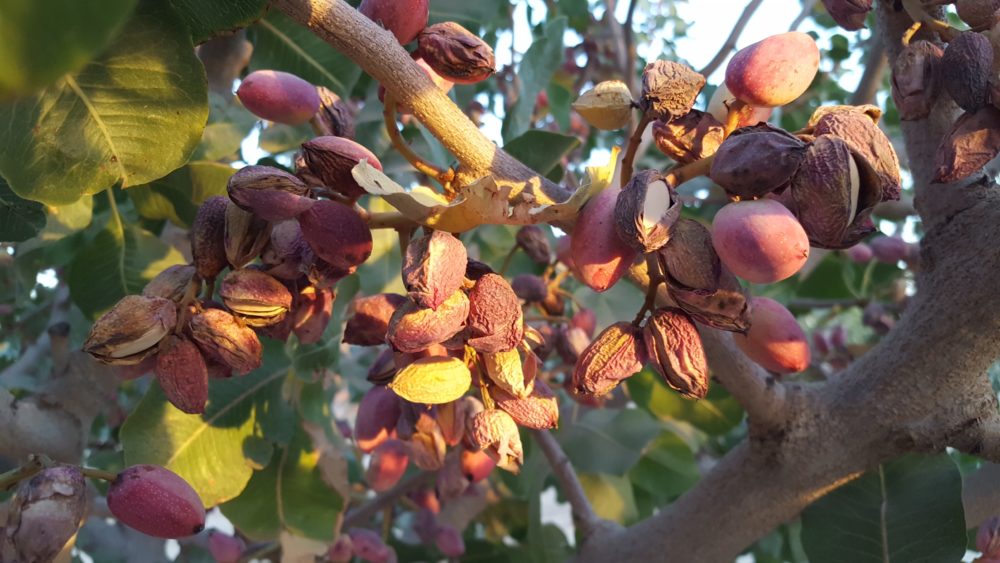
California produces close to 99 percent of the nation’s pistachios. With harvest season just about wrapped up, growers are pleased with this year’s crop. 

Last year was a slow one for pistachios, with only 275 million pounds produced.  Because pistachios are alternate-bearing [tendency for an entire tree to produce a greater than average crop one year and a lower than average crop the following year], last year’s disappointing crop allowed the trees to rest before producing this year’s estimated record crop. 

Richard Matoian, executive director, American Pistachio Growers, estimated this year’s crop to be between 830 and 850 million pounds. The last record-setting crop was in 2012 when growers produced 555 million pounds of pistachios.  This year, some California growers have reported broken branches due to the heaviness of the crop, a phenominon Matoian has never seen before.  

Just as last year’s lower harvest enabled the pistachio trees to bounce back this year, increased rainfall last winter helped improve irrigation supplies for the nut trees this year. 

In addition, more chilling hours last winter also helped boost production.  Pistachio trees require cold nights, with at least 800 hours of temperatures below 19 degrees Fahrenheit.  This winter, trees experienced more than 1,000 hours of those conditions. 

Reports indicate that the pistachio crop from Iran, one of our biggest global competitors, is a bit down this year, which could help California growers get a better price for their pistachios.  “We all hope and try to keep the market as strong as it can be,” said Matoian, “but there are market forces at work. You can’t hold on to a crop forever. You have to be conscious of what the world supply is, and so a number of factors go into setting a price.”

Growers are pleased with the overall size of the harvest compared to last year, but they’re also a bit concerned about the prices. “The initial price the growers got last year was somewhere between $2 and about $2.20 per pound. Now we are at a $1.60 to about $1.80 per pound,” Matoian said.

2016-12-12T18:48:36-08:00November 10th, 2016|

US Citrus Industry Working Together on ACP, HLB Funding

Critical ACP, HLB Funding Comes Only After Industry Helps Itself

By Patrick Cavanaugh, Farm News Director


State Citrus Mutuals in California, Texas and Florida are diligently working in Washington, D.C., for $10 to 12 million in annual funding to help their citrus regions fight Asian Citrus Psyllid (ACP) infestation and Huanglongbing (HLB), the disease that ACPs vector.

The three Citrus Mutuals have collaborated well for the half dozen years of the American ACP invasion. Initially, the Florida Citrus Mutual team developed the Citrus Health Response Program (CHRP),” said Joel Nelsen, president of California Citrus Mutual.

Joel Nelsen, president of California Citrus Mutual, acp and hlb funding

Joel Nelsen, president of California Citrus Mutual

“They initiated it at a very minor funding level. However we sat down with them and said, ‘Look, this is an opportunity to ensure that all of the U.S. citrus industry can work together to protect itself from Huanglongbing.’ They were gracious enough to say okay. We exerted our leadership because we had people in positions in Washington who could be very beneficial to this,” Nelsen said.

“Initially it was a Florida/California effort. We said we need to double the size of the CHRP program and allocate more dollars to California, some to Texas, and some to Arizona. Now everybody is participating to the extent that they can. Today, it is still a Florida/California effort and a Florida/California-run program in partnership with USDA.

Nelsen said those involved are working hard to protect the citrus industry, and not just chasing a problem. Funding has been helpful to California. Only after the industry does all it can, will the state expect the federal government to help.

“It’s true for all three states’ industries,” Nelsen said. Unfortunately, Texas made a mistake. They did not have a policy in place to immediately remove an HLB-infected tree. As a result, they have an HLB infection spreading.”

“Texas is being adversely impacted on the dollar level. We don’t want to see that industry die, so there is a partnership that does exist on behalf of our colleagues,” Nelsen said. “We can’t afford to make mistakes like that.”

“In order to justify the continued progress of funding on an annual basis we are going to have to continue looking ahead, taking the steps necessary and doing what is needed to protect the citrus industry from the spread of Asian Citrus Psyllid and Huanglongbing.”

“We definitely have to show progress. We can’t ask homeowners to spray their trees if in fact we are not spraying ours. We can’t ask the federal government to continue helping us looking for ACPs if we are not willing to tarp our trucks to stop the spread of it. If we’re not willing to do a coordinated spray program then why should the government help us in finding HLB? If we are allowing snake oil merchants to conduct research projects, why should the federal government fund those?

2021-05-12T11:05:44-07:00November 9th, 2016|

FFA Jackets Giving Tuesday Campaign

FFA Jackets Needed for Members

By Laurie Greene, Associate Editor

We have Black Friday, Cyber Monday, and the newest opportunity, #GivingTuesday—a global day of giving that has grown into a movement uniting people around the world on November 29th, the Tuesday after Thanksgiving.

There’s a big #GivingTuesday campaign for the California FFA to purchase 100 of those iconic blue FFA jackets for members in need.

dsc_83311

FFA Members explore a diverse range of opportunities in agriculture

Katie Otto, development director of the California FFA Foundation said, “We have approximately 84,000 members in California, and 324 different chapters. Our members say having a jacket makes them feel like they are a part of something,” she said.

“It’s something that they hold on to. It makes them feel unified in what they’re doing. ‘Not to mention, a lot of our students wear jackets to field days,” Otto noted.

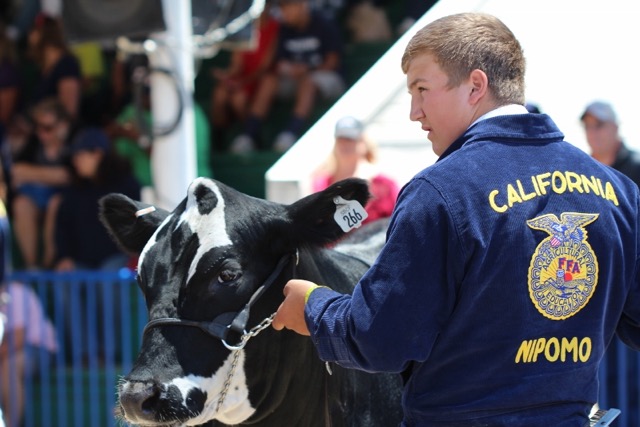
“They wear them at their county fair when they show, at chapter meetings and conferences. The list goes on and on in terms of opportunities where they wear their jackets.”

Each $65 raised will purchase a jacket along with an FFA tie for young men and a scarf for young women. 

Black Friday and Cyber Tuesday are all about getting things; #GivingTuesday is set aside for giving. Of course you do not have to wait for #GivingTuesday for the FFA campaign. You can donate anytime, now and even beyond Nov. 29.

How can you donate to the FFA #GivingTuesday campaign? Go to calaged.org/givingtuesday.

Credit cards and Pay Pal accounts are accepted.

2016-11-10T11:09:44-08:00November 8th, 2016|

Nov 9 Annual Ag Awards Luncheon Honors Manuel Cunha, Booth Ranches

Manuel Cunha, Agriculturist of the Year

By Laurie Greene, Editor


On Wednesday afternoon, November 9, the Who’s Who of Agriculture will gather at the long-standing celebratory Annual Ag Awards Luncheon in Valdez Hall at the Fresno Convention Center to commemorate the achievements of an individual and a company in the County’s agricultural industry.


Fresno Chamber of Commerce logoNathan Ahle, president and CEO of the Fresno Chamber of Commerce, said, “We are very excited about this. This is the 33rd time the Fresno Chamber has presented the Agriculturist of the Year Award, and the 21st time the Fresno-based CPA firm Baker, Peterson and Franklin has presented the Ag Business of the Year Award. We recognize that Ag is really the life-blood of our economy. This event is an honor to do and something we take great pride in.”


This year’s Agriculturist of the Year Award recipient is Manuel Cunha, president of the Fresno-based Nisei Farmers League. “Everybody knows Manuel Cunha—a legend in Valley Ag as president of the Nisei Farmers League for two decades,” Ahle said. “ This gentleman is a force to be recognized with when it comes to fighting for our farmers, fighting for water, fighting for anything and everything that has to do with agriculture in the Central Valley.”

2016 Fresno Chamber of Commerce Agriculturist of the Year recipient, Manuel Cunha, president, Nisei Farmers League.

2016 Fresno Chamber of Commerce Agriculturist of the Year recipient, Manuel Cunha, president, Nisei Farmers League.


Nisei Farmers League, established in 1971, informs grower members about ever-changing regulations and policies and provides legal assistance for labor and workplace-related issues. The league’s leadership and staff maintain a close working relationship with local, state and federal agencies and legislators to assure grower interests are adequately understood and defended.


The League also collaborates with other grower and agricultural organizations in California and other states to help provide a powerful and unified voice for the agricultural community.  The Nisei Farmers League is all about strength, clear focus and growers looking out for growers and farmworkers.


This year’s Ag Business Award recipient, Booth Ranches, is a premium San Joaquin Valley citrus grower. Otis Booth, Jr. founded Booth Ranches in 1957 on 40 acres by the foothills of the Sierra Nevada Range near Orange Cove.

booth ranches logo


Today, Booth Ranches is still family owned and operated on acreage from Orange Cove in the Northern San Joaquin Valley to Maricopa in Kern County to the South. Pasadena-born, fifth-generation farmer Loren Booth currently manages Booth Ranches which boasts premium Navel oranges, Valencia oranges, Cara-Caras, Minneolas and W. Murcott Mandarins that are distributed worldwide.


The selection panel went through a tough selection process, according to Ahle. “Those who have been in the Valley longer than I have tell me this is the strongest group of candidates for the award that we have ever had. I think it just speaks to the great passion that we have for Ag in this community, and Manuel Cunha and the team at Booth Ranches are great, great recipients.”

2016-11-10T10:50:56-08:00November 7th, 2016|

Water Diversion Lessons from Australia

Australian Water Woes: Water Diversion Will Not Save Fish


By Laurie Greene, Editor


Mike Wade, executive director of the California Farm Water Coalition, spoke to the CDFA Board of Directors about the State Water Resources Control Board’s proposed strategy of diverting up to 40 percent of the Tuolumne River flows to increase flows in the Delta for salmon and smelt. The diversion would severely impact farm and city water needs in both the Turlock Irrigation District (TID) and Oakdale Irrigation District (OID).


“Despite increased [water] flows over the years, the fish populations continue to decline in the Delta,” Wade said. “We have exacerbated this problem. We have released water with the intent going back to 2008 and 2009 [scenarios] and even before, if you want to turn the clock back to 1992, and yet we’re still seeing population crashes.”


“The science is showing that fish are not recovering. Yet, the California Department of Water Resources is doubling down on the same kind of activity—the same strategy—that hasn’t worked in the past and that we do not expect to work moving forward,” he said.


Mike Wade

Mike Wade, executive director of the California Farm Water Coalition.


“That is why schools, health departments, farmers, Latinos, economic development departments have opposed the regulation. A host of folks have come out and commented, written letters, and expressed their opinion on the plan because of the severe economic issues they are going to deal with at the 40% impaired flow level.”


Wade noted that in recent years, a lot of attention has focused on Australia and how great they are at water management. People commend their effectiveness in changing their water rights system and supposedly improving their ecosystem—or having a plan to work on their ecosystem issues. “In 2009, the vast agricultural production in the Murray-Darling Basin Authority established a flow amount, or a quantity, for environmental water that was around 2.2 million acre-feet. That is out of around 26.4 million acre-feet of average annual flow in the Murray-Darling Basin,” Wade said.


“To set the stage, the Murray-Darling Basin is in eastern Australia. It extends in the north around 800 miles from Gold Coast and the border of Queensland all the way south to Melbourne,” Wade said. “It is actually a geographic area about the size of California and remarkably has a very similar quantity of water to serve its farmers. The Murray-Darling Basin Authority set a 2.2 million acre-foot environmental water buyback for the environment, like we are talking about here.”


Wade conveyed to the CDFA Board what his friends in Australia were telling him. “I was there for two weeks in August following up on a trip I took in 2012 to learn about their water supply issues and how they deal with it. My friends are telling me, ‘Don’t do what we do. It has been a disaster,’” Wade said.


“The environmental sector hasn’t even achieved their full environmental buyback goal, and they’re already seeing 35% unemployment in some towns. It is directly related to the water buybacks, the declining amount of irrigation water, and the declining agriculture economy because of the change in focus on how they deliver and use water in Australia,” he said.


“Three weeks ago—this is how recent these things are coming about and how they’re changing—a good friend of mine, Michael Murray, Cotton Australia general manager, said the ‘Just Add Water’ approach already in place doesn’t work in the Northern Basin. It has to be abandoned. And recently, Ricegrowers’ Association of Australia, Inc. of Australia President Jeremy Morton said, ‘The over-recovery of water has resulted in unnecessary economic harm to communities. It’s a case of maximum pain with minimum gain.'”


“A dozen organizations are suggesting this isn’t just a, ‘Don’t do it’ and ‘Abandon the environmental water buybacks.’ What they’re suggesting is the exact same thing that TID and OID are going to experience. Australia’s problems in the Murray-Darling Basin are, remarkably, invasive species, the loss of habitat, and some of the water quality issues that we deal with. It’s the same story, only they are a few years ahead of us,” Wade said.


“What has happened in Australia is going to happen to us in the Valley, with big unemployment issues and the closed businesses,” Wade said. “I walked down the main street in the town of Helston and half of the businesses—I’m not exaggeratinghalf of the businesses were boarded up and closed. Only small businesses were still open, such as a convenience store, a bar and a tailor. All the rest were gone.”


Wade asked CDFA Secretary Karen Ross to extend the comment period for the Water Board’s proposal. “We all need to have an opportunity to bring some of these issues to light and to support what’s going on in the agriculture community. We must support the need for comprehensive economic studies, either bringing out the ones that have been done or doing some more. We have more economic data will show there is an economic hit that’s deeper, much deeper, that what is proposed or suggested in the plan.”

2021-05-12T11:05:44-07:00November 4th, 2016|

FSMA Deadlines and Details

Aspects of the Food Safety Modernization Act (FSMA) Explained

By Brian German, Associate Broadcaster


As many 2011 Food Safety Modernization Act (FSMA) provisions near their deadline for the first step in compliance, the U.S. Food and Drug Administration (FDA) announced an extension for many aspects of the new rules to allow growers and processors more time to clarify certain provisions to ensure compliance. Jon Kimble, food safety services manager with Sacramento-based DFA of California, a non-profit trade association formerly called the Dried Fruit Association, weighed in on several FSMA provisions and compliance.

Jon Kimble, food safety services manager with DFA of California, FSMA

Jon Kimble, food safety services manager with DFA of California

“The Preventive Controls Rule is the biggie that came out. This rule is largely based on the existing Hazard Analysis Critical Control Point (HACCP) structure that the food industry is familiar with, but with some slight modifications and specifics that are unique to the regulation,” noted Kimble. HACCP is an international standard that defines requirements for effective food safety control from biological, chemical, and physical hazards in the production processes that could cause the finished product to be unsafe.

The Preventive Controls Rules for Human and Animal Food was enacted September 18, for large operations. Small and mid-sized companies will have until September 2017 and very small companies have until September 2018.


The Produce Safety Rule, another critical part of the Food Safety Act that was published last November, provides farm standards for the growing, harvesting, packing, and holding of produce for human consumption.

The Produce Safety Rule will come into effect for large farming operations within the next month.


Other portions of the act include the Foreign Supplier Verification Programs (FSVP) for Importers of Food for Humans and Animals and Accredited Third-Party Certificationwhich relate to imported food products. “There are some regulations that you have to comply with whether you are a food processor or a broker importing food,” Kimble explained.

Finalized earlier this year, the Sanitary Transportation Rule pertains to service scenarios where foods are exposed and not packaged. This rule covers food transported in bulk; vehicle cleanliness, design and maintenance, temperature control; prevention of the contamination of ready-to-eat food (from touching raw food, non-food items in the same load or previous load, and cross-contact with food allergen); training of carrier personnel in sanitary transportation practices; documentation of the training; and maintenance and retention of records.

The Sanitary Transportation Rule has a compliance deadline of April 2017 for large companies.


FSMA also includes the Intentional Adulteration Rule, which “relates to what we would traditionally call food defense or security measures to prevent intentional contamination of the food supply,” Kimble said.


Founded in 1908, DFA is one of the oldest food safety companies in the U.S. that provides commodity inspection services and support to packers, processors and exporters in the dried fruit, tree nut, and kindred product industry through commodity inspection, the Red Seal Program, and the Export Trading Company (ETC)

Safe Food Alliance, a new division of DFA of California serves as a resource to the food industry for any and all food safety practices. Services include food safety training and consulting, laboratory testing and analysis, and third party certification audits conducted by Safe Food Certifications, LLC.

2021-05-12T11:00:48-07:00November 3rd, 2016|

Raisins: Quality Is Up, Tonnage Is Down

Fewer but Sweeter Raisins this Year 


By Brian German, Associate Broadcaster


After last year’s tremendously successful raisin harvest, Steve Spate a fourth generation farmer, said it is understandable to see a bit of a decline in tonnage this year. Spate, who is also grower representative for the Raisin Bargaining Association (RBA), which has been representing the raisin industry for nearly 50 years, said, “Just by nature, the year following a high crop year could potentially be down—especially for Thompson Seedless Grapes,” noted Spate.

Steve Spate, grower representative, Raisin Bargaining Association (RBA)

Steve Spate, grower representative, Raisin Bargaining Association (RBA)

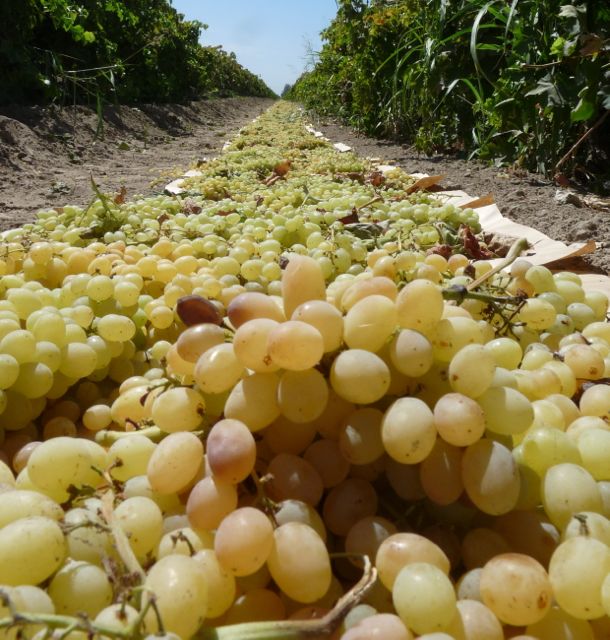
Raisin grape harvest in the central San Joaquin Valley is a two-month process for growers, typically running from late August to mid-to-late October, depending on crop maturity. Hard numbers on this year’s overall crop won’t be available for a few more months, but growers are reporting a significant decline from last year’s harvest. “Last year was a large crop,” said Spate,” so definitely we were considering that this year would be down—but not as severely as some growers have reported. We have people reporting differences in yield from 10% to as high as almost 50%.”

There are various possible reasons for this year’s drop in yield, aside from the cyclical nature of grapevines. “I think drought conditions last year may have played a big role, while the buds were setting basically for this year,” said Spate. He also suggested water was a significant factor this year as well, particularly if growers lacked enough surface water deliveries or a grower had a pump issue and there was a critical time where he or she didn’t get water on the field.

The overall reduction in acreage of this year’s harvest is yet another factor to consider. Industry experts report approximately 10K to 15K fewer raisin grape acres compared to last year. This shrinkage is attributed to growers replacing raisin crops with higher-value crops such as almonds.

Sun-Dried Raisins

Sun-Dried Raisins

As many industries struggled with the cost and availability of labor, Spate commented that it wasn’t too difficult to fill their labor needs this year. “Going into the year growers made different decisions and chose more mechanized harvests. The handpicking crews were much larger and seemed to be readily available,” Spate said.

While grape growers were thankful for the amount of available labor this year, they have some serious concerns regarding the cost of labor in the next few years. Between a minimum wage that will incrementally climb to $15 an hour in a couple of years and the newly established shorter workday for farmworkers [before reaching the overtime threshold of 8 hours, as opposed to 10 hours], growers consider the investment in mechanization as being more cost effective in the long run.

“I think we will continue to see shifts towards any type of mechanization possible due to some of those minimum wage [increases].” Before the governor signed the overtime bill, Spate said, “We used to have the ability to have workers work longer hours before overtime kicked in.”

Raisin grape growers will still be harvesting for the next few weeks. Although it appears overall tonnage is down a bit, sugar levels seem to be higher than last year, resulting in better quality raisins.

2016-11-02T17:12:31-07:00November 2nd, 2016|
Go to Top