About California Ag Today

This author has not yet filled in any details.
So far California Ag Today has created 2014 blog entries.

Measuring Crop Protection Material Tolerances

Biological Tolerances May Be Needed

By Patrick Cavanaugh, Farm News Director

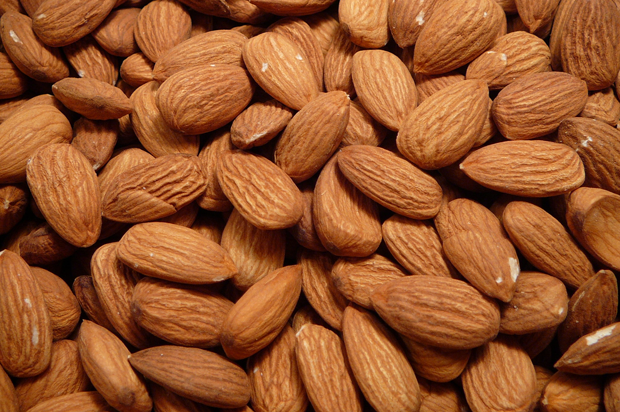
California Ag Today recently spoke with Gabrielle Ludwig, Director of Sustainability and Environmental Affairs for the Almond Board of California, about the issue of crop protection in almonds. Almonds are the number one specialty crop export. Almonds also remain the number one nut in global production and are California’s number two agricultural crop.

Ludwig explained that pesticides are used and necessary in today’s almond production. Pesticide residue is a concern for not only domestic production, but also for international distribution. And with biological products such as friendly fungi and bacteria, the biological industry noted that they are safe and free of residue tolerance.

“I would say for this industry, there’s a couple of things going on in parallel, and they don’t have exactly the same problems. So one is you have the sector where it is still a chemical that you’re applying, but it may not have very much toxicity or the residues are, for whatever reason, vanished,” Ludwig said.

“In the United States, we can get an exemption from a tolerance, where EPA has looked at and said there’s no health risk, and there’s no need to set a maximum residue limit. For those products then the question becomes: Do you have the same standards in other markets?” Ludwig asked.

“And again, one example is that the EU does have an exemption for tolerance process, but they don’t always have the same standards so EU is more likely to set a number than United States. And we have also seen examples where the United States is setting a number and the rest of the world says there’s no need to set a number because it’s a natural occurring compound.”

“So if you look at a pheromone, which falls into a natural occurring arena, there, you’re not even spraying the trees so it’s a totally different ball game,” Ludwig said.

“With biologicals, again, it’s a different ball game. You still need to have someone say, look at it, say it’s safe; because it’s going to be exempt from a tolerance.”

“But currently, there’s no testing for it,” Ludwig said. “With DNA technology, it probably wouldn’t be that hard to start testing for biological products’ lack of residue, especially ones that go on the produce that is eaten.”

“So again, what we’re saying here is, don’t rely on the fact you can’t be tested for it because we did that in the conventional pesticide arena and it’s caught up with us,” Ludwig said.
2021-05-12T11:05:14-07:00December 11th, 2017|

Making Comments with Data Carries Weight in Crop Protection

Make Comments When Needed

By Patrick Cavanaugh Farm News Director

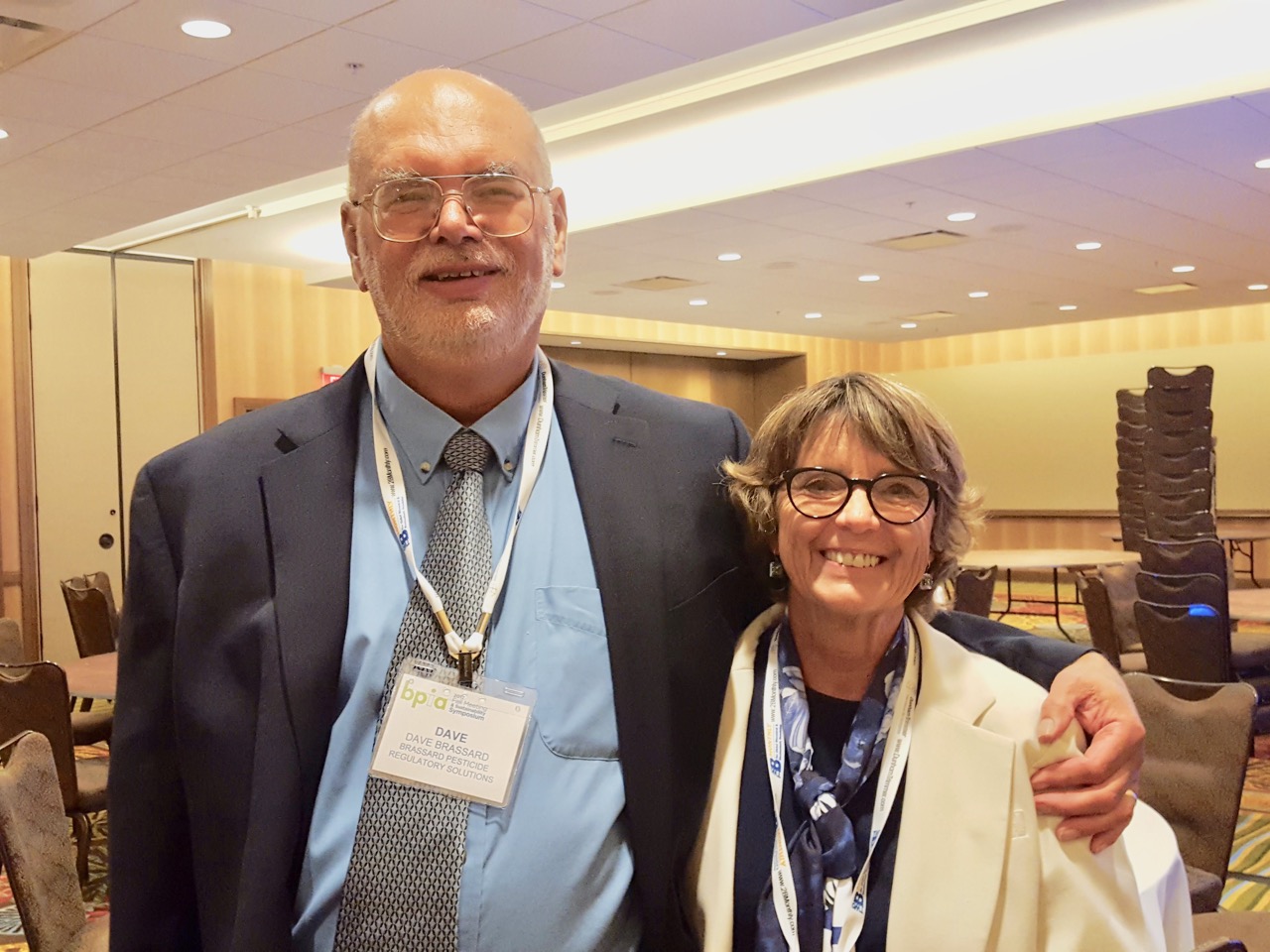
Dave Brassard of Brassard Pesticide Regulatory Solutions, based in Washington D.C., regularly assists with getting new products registered with the EPA. California Ag Today spoke with him about making comments regarding the registration status of crop protection products.

“We’re pesticide consultants, and we basically assist registrants into getting everything registered, and getting through a lot of the data requirements, data waiver processes, that they need to go through,” he explained.

Brassard and his wife have a combined total of 73 years experience working in the EPA’s office of pesticide programs.

“The importance of data collection in pesticide regulatory reform, and the need for real data collection to be used in growers defense. Especially when growers reach out for support, the data is the most important, and the most reliable, form of evidence to present to the EPA,” he said.

“What typically happens is we will keep track and count the number of comments. But a lot of comments are very generic, and are not supported by data,” Brassard said

Simply having a large number of comments is not enough; it’s the quality content that really matters.

“So a lot of times it just becomes a little blurb that we had 10,000 comments from stakeholders worried about a concern, but what really, I think, makes a big difference, is if it’s somebody sends in data that can change EPA’s opinion on something,” Brassard explained.

“Let’s say that the EPA is going to regulate a chemical that is the only chemical to control, say, an obscure pest that we didn’t even consider in our original analysis. Somebody sends in that studies, and boy that stops the presses! It’s, ‘Let’s review this,’ ” Brassard said. “Does this change our opinion on anything? Can we make an exception for this particular use-pattern? Is there a different kind of risk-mitigation that we can impose?”

“Sending in real data are comments that make a real difference,” he said


2017-12-08T16:09:09-08:00December 8th, 2017|

Who Safeguards California Farm Employees’ Rights? – Part 9

Court Allows UFW to Force Representation and Dues on Gerawan Employees


By Laurie Greene, Founding Editor


The California Supreme Court announced their decision on Nov. 27, 2017 in favor of forced UFW representation on Gerawan employees, thus mandating these workers pay three percent of their wages to the UFW or lose their jobs.

As background, the UFW was elected to represent Gerawan employees in 1990, but never successfully represented them in contract negotiations. Subsequently, the UFW disappeared from this farm operation for nearly two decades, so 99% of current Gerawan employees never voted for union representation; many were born after 1990. In addition, Gerawan employees have reportedly been paid the highest wages in the industry.

Gerawan Employees

Gerawan Farm Workers Protest against UFW at California Supreme Court.


Below is the transcript (in English) of the message, which was recorded in Spanish, that all Gerawan employees heard when they called in on Nov. 27, 2017 to hear their work schedules.

Hi, this is Dan Gerawan.

Unfortunately, the California Supreme Court today decided to overturn the lower court that had said you should have the right to choose whether a contract is forced on you. Instead, the California Supreme Court agreed with UFW and ALRB that you should not have the right to choose, even though you have to pay UFW.

Fortunately, today’s decision does not strip your right to decide whether the UFW can represent you. The majority of you asked for the right to make that decision, and the ALRB held a decertification election over four years ago.

Nothing in today’s court decision prevents your ballots from being counted. As you may know, the California Fifth District Court of Appeal is still going to decide whether your votes from the November 2013 election will be counted.

You are entitled to the same dignity and respect that all other workers in our state and country have, which is the right to choose who represents you.

As for today’s decision, we intend to ask the United States Supreme Court to review it.

Thank you for listening.

According to the November 27, 2017 press release posted by David A. Schwarz, legal counsel for Gerawan Farming, “We believe that coerced contracts are constitutionally at odds with free choice. The employees are entitled to the dignity and respect that they earned by giving them what is their right. A secret ballot election allows them to decide for themselves who will speak for them at the bargaining table.”


Laurie Greene Wins Journalism Award

Greene Wins Fresno County Farm Bureau Award for Series on Farm Workers’ Rights,  by Patrick Cavanaugh, Editor 


2019-12-25T15:59:00-08:00December 7th, 2017|

Assemblyman Adam Gray: Need Real Changes for Water Future

Everything is On Table For California’s Water Future

By Patrick Cavanaugh, Farm News Director

Now is the time to unite and plan California’s water infrastructure. That’s what Adam Gray told California Ag Today recently. Gray is the California State Assembly representing the 21st Assembly District, Merced and Stanislaus Counties. He said there is an urgent need for unification in regards to California’s water and the need for real changes to be made for future generations.

“It’s that famous quote, ‘Water’s for fighting. Whiskey’s for drinking.’ All we do is spend our time fighting, and we cannot continue to divide the pie. We have to grow the pie. That means targeted, intelligent investments in storage, projects like Temperance Flat, projects like Sites Reservoir,” Gray explained.

It is hoped that these reservoirs get California through years of drought, and will help us utilize water and years of heavy rain.

“It also means recycling, groundwater recharge, desal, and it means communities working together to make sure we have the conveyance systems in place to move that water around and meet the need of every Californian, and stop forcing people into false choices,” Gray said.

“The environment versus drinking water for schools. These are false choices. We can do better, we can do more,” he continued.

“We, as Californians, need to look past the short term into the long term. It’s important to look out for future generations and keep their needs in mind, as well,” Gray said.

“There’s no silver bullet solution, as is true with anything. There are always costs of doing business, there are always compromises to be made, if we can agree on the target.” he noted. “And the target being meeting the needs of not just of this generation, not just today, but of our children’s generation and our grand-children’s.”

“We need to make the same smart, significant investments that our grandparents made to provide us with this great economy that we have here in this great agricultural valley,” Gray said.

2017-12-06T15:45:15-08:00December 6th, 2017|

Cannabis Growers Not Following Regs

Cannabis Growers Must Adhere to Crop Protection Regulations

By Patrick Cavanaugh, Farm News Director

There’s a whole lot of trouble going on for California cannabis growers. They need crop protection products for pests – such as mites, aphids, thrips, and mealybugs – and diseases, including powdery mildew, alternaria and pythium.

Now legally grown in the state, cannabis meets the definition of an agriculture crop and must adhere to all agricultural regulations and best management practices. This includes all Pest Control Advisor-written recommendations. As few products are approved for application on cannabis in the state, as well as nationwide, a PCA can now be cited for recommending a product that has not been officially registered and approved for a use on cannabis, specifically. With legal cannabis production going mainstream in California, PCAs face this risky predicament regularly.

“I discussed this point with Department of Pesticide Regulation (DPR) Director Brian Leahy this past week,” said Rachel Kubiak, DPR Pesticide Programs Division, Cannabis Program Supervisor. “I think we are at a point now where it’s important that we make policy decisions so PCAs know, as stakeholders, what our expectations are. PCAs deserve for us to do that, so we are working internally right now to try to get a lot of answers to these questions.”

Cannabis growers will have to buy products from licensed agricultural dealers.

“I understand, in talking to different folks, that many companies are not comfortable with the liability of attaining DPR registration approval for cannabis application and are therefore advising not to sell product to cannabis growers,” Kubiak said. “I completely understand that.”

“Going forward as a department, the concern, I think, is to bring as many farmers into the legal crop protection market as possible,” Kubiak said. “They are going to go exactly where they have been buying the products from, right? And if PCAs do not sell to them, but the cannabis growers must buy from them, these growers will have to purchase their crop protection products online, from Home Depot, or anyplace else. I can almost guarantee you that 95% or probably more of the cannabis farmers I’ve talked to over the last couple of months have no idea what we are talking about regarding applying registered materials to registered crops.”

“They have no idea that you cannot buy product anyplace and apply it as a pesticide,” she explained. “They do not know how to store it. So we have a lot of work to do in a very short period of time to bring these people into compliance and understanding.”

The scenario is even dicier for California County Agricultural Commissioners. These commissioners are required to enforce regulations on cannabis, as they are for any other commodity.

“We are working with the county ag commissioners to figure out how we need to proceed with and advise on this,” Kubiack said.

“I will tell you, usually as a department,” Kubiak explained, “we are inundated by the environmental justice community. Yet, they have been completely absent to this point on this particular commodity. So it’s almost bizarre and unusual not to be hit continuously from the left. But understandably, again, we’re now getting into these forums in which the Ag community has a voice and an interest,” Kubiak said.

“I’ve heard from both sides,” she continued. “I have heard from different Ag groups and PCAs who have said, ‘You know, we see a need for this—by a whole industry of people,’” she said.

And that whole industry, the cannabis growers of California, is crossing the regulatory line in crop protection. It has been reported that cannabis growers are creating a lot of environmental damage as well as worker safety concerns. Cannabis is grown primarily indoors, and according to Kubiak, “People are using pesticides without any concept of what they’re doing. Normally we would recommend that they talk to a professional, but that puts licensed PCAs in a hard spot because they cannot write a recommendation for a product that is not legally approved for use on that product.”

Kubiak said DPR is trying to bring as many of cannabis growers into the light as possible, “so that we have some regulation. Again, clearly this has been going on for a really long time, but at least now we are trying to go into areas in which we have some regulation but where people are not necessarily informed. So we bring crop protection management more into the light than ever before,” she said.

Is the DPR at a big turning point in working with county Ag commissioners?

“In the absence of putting up a product list,” Kubiak asked, “what is quasi-legal and what is not quasi-legal? We are trying to come up with solutions to some of these dilemmas.”

“There are counties that want the flexibility. Boards of supervisors and their counties are economically dependent upon this newly emerging industry that’s been in the North Coast for decades. They want the ability to use discretion. Nevertheless, Ag commissioners in other counties clearly are not comfortable with that whatsoever,” Kubiak said.

2021-05-12T11:01:57-07:00December 5th, 2017|

Breeding for Pierce’s Disease Resistance Has Sped Up

Traditional Breeding Helps Find Resistance to PD

By Patrick Cavanaugh, Farm News Director

The glassy-winged sharpshooter is a major vector of Pierce’s Disease, which kills grape vines. Pierce’s Disease devastated the grape industry in southern California and lead to the creation of the Pierce’s Disease/Glassy-Winged Sharpshooter Board (PD/GWSS Board). Government programs to fund research on glassy-winged sharpshooters and Pierce’s Disease invest nearly $20 million annually.

California Ag Today recently spoke with Ken Freeze, the outreach and education director for PD/GWSS. He told us about two major methods of control and prevention that the board is funding.

“There’s the area-wide control program, which does everything it possibly can to pretty much keep the glassy-winged sharpshooter confined to basically the southern part of the state,” Freeze said.

This control program prevents the further spread of Pierce’s Disease into other parts of the state, which could devastate wine growers. In addition to preventing the further spread of Pierce’s Disease, the board is also funding additional research into hopefully finding a cure.

“We’ve got UC Davis Genetics Professor Andy Walker working on Pierce’s Disease resistant grapevine before the program, and he just released some of those vines to the UC Davis Foundation Plants Services.”

Freeze said this development has been done through traditional breeding, with the assistance of some new technology.

Walker’s traditional breeding is sped up by a lot of high tech tools. Previously growers would crossbreed, however they’d have to infect the vine and see if it got Pierce’s Disease.

“That could take a year or two. Now they know the genetic markers, so when the plant has only two or three leaves on it, researchers pull a leaf, do a DNA track on it, and look for that marker,” Freeze explained.  “Depending on the marker, the vine either goes to the next step in breeding or it ends up in the trash heap. So that has just sped up that process incredibly.”

“Again, that’s all just using traditional breeding,” Freeze said.

2021-05-12T11:05:15-07:00December 4th, 2017|

Pierce’s Disease Research Advancing

Many Projects Under Way To Reduce Pierce’s Disease in Grapes

By Patrick Cavanaugh, Farm News Director

The glassy-winged sharpshooter vectors Pierce’s Disease, which has been devastating grape growers in California for the last few years. California Ag Today recently spoke with Ken Freeze, the Outreach and Education Director for the Pierce’s Disease/Glassy-Winged Sharpshooter Board, a program that uses winegrower’s assessments to fund research. He spoke with us about research that’s been carried out to hopefully find a cure for Pierce’s Disease.

Pierce’s Disease is caused by a bacterium, Xylella fastidiosa, that reduces the vascular function of the vine. The sharpshooter insect vectors the bacteria.

“Andy Walker, with the Department of Viticulture and Enology, UC Davis, has been working on Pierce’s Disease-resistant grapevines. We just released some of those vines to the Foundation Plant Services at UC Davis,” Freeze said. “There are 14 more that are in the wings about ready to go. Some nurseries will be able to get that pretty soon, but already there are about 4,000 of his vines planted. Some of them have been planted in Georgia and Texas, which are real hotspot for the glassy-winged sharpshooter and Pierce’s Disease.”

“Here in California, 2,000 vines were planted in Napa Valley right along the Napa River. Those vines are doing great,” Freeze said.

“We’ve got another project. University of Florida plant pathologist Dr. Don Hopkins has found a benign stain of Pierce’s Disease. It’s like inoculating a vine with a smallpox vaccination. That’s actually a company that’s working on commercializing that now,” Freeze explained.

“We’ve got another project that involves a modified root stalk that sends either a protein or a molecule up into the vine – a non-modified scion – five different ways that stops the Xylella fastidiosa bacteria literally in its tracks before it can cause Pierce’s Disease in the vine. That’s just a small sample of some of the really good projects.”

“One grower told me: ‘It’s not the end of the tunnel, but we can see it,’” Freeze said.

2021-05-12T11:05:15-07:00December 1st, 2017|

New Aerial Images to Help Almond Farmers

Aerial Image Tools Help Almond Irrigation

By Patrick Cavanaugh, Farm News Director

Aerial images of orchards can effectively tell farmers which almond trees aren’t getting enough water, according to the preliminary results of a five-year study by almond researchers at the University of California Cooperative Extension (UCCE), with funding support from the USDA.

Researchers from the UCCE are confirming the utility of Ceres Imaging’s new-to-the-industry aerial views of farmland that helped the startup win a water innovation competition last year. The preliminary results follow four years of replicated research plots in a large commercial almond orchard.

Why does almond irrigation matter? California only recently emerged from a major drought, and for almond growers, water efficiency is a top priority. Since 1990, California farmers have increased the use of sprinklers and micro-irrigation systems from 33 percent to 57 percent of total acreage. But micro-irrigation, the method that usually offers the highest water use efficiency (crop per drop) is prone to clogging and other maintenance problems, which can stress crops and reduce yield.

“Water is the number one input for most growers and is managed carefully in terms of how much is used and when,” said Ashwin Madgavkar, CEO and founder of Ceres Imaging. “This study shows that Ceres imagery can be used with high confidence to monitor if your crop is getting sufficient water or if the crop is in a water-stressed condition, so you can make timely corrective actions. Ultimately, the tool can be used to help catch issues before they result in crop losses.”

Maintaining ideal irrigation levels is a huge challenge for farmers, as is predicting the final harvest tonnage, which is why the study examined the usefulness of Ceres aerial images in those areas. Detecting deficient irrigation quickly is one way Ceres images offer early warnings to growers.

“Findings over the last four years show that the average Ceres conductance measurement from their imagery over the season has provided the best correlation with applied water,” reported Blake Sanden, UCCE Farm Advisor for Kern County. “While there’s no perfect predictor of final yield, Ceres aerial sensing of canopy plant stress has a significant relationship with final yield.”

This UCCE study has been under way since 2013 and will end after results for 2017 are recorded.

2021-05-12T11:05:15-07:00November 30th, 2017|

Navel Orangeworm Control Critical

Orchard Sanitation is Critical This Season To Lower NOW Numbers

By Patrick Cavanaugh, Farm News Director

Emily Symmes is the area Integrated Pest Management farm advisor for the Sacramento Valley in the statewide IPM program. She recently spoke to California Ag Today about the high level of Navel Orangeworm (NOW) damage in nut orchards throughout California this past season.

“We had a lot of unique circumstances. The amount of rainfall we got in late 2016 into 2017 was pretty unprecedented and really led us into a really bad navel orangeworm year because we couldn’t get out and sanitize our nut crops,” she said.

Emily Symmes

“NOW is ubiquitous, and there is an increased nut crop footprint in California, with more than one million acres of almonds, plus pistachios and walnuts,” Symmes explained. “All play host to NOW, as well as a host of natural plants. This thing isn’t going anywhere. And it was pretty bad in 2017 in terms of harvest damage.”

One of the key factors for higher navel orangeworm damage was not being able to get into the fields because of the standing water.

“There were a couple of other factors as well. Typically, rainfall and moist conditions can help NOW mortality in the winter. We tend to think that it can help rot the nuts and do us some favors, but we have to be able to get out and get the nuts shaken or get pulling crews in and get those things on the ground. And then them being on the ground is not always a sure thing. Sanitation was huge in terms of NOW problems this year,” Symmes said.

Heat units also played a part in the development of more NOW pressure. There were a lot of moths flying around longer and laying eggs.

“It got hot in mid to late June, and it seemed to just not let up. What that meant was, in terms of our degree-day models or the heat unit that drive insect development, it ended up getting pretty far out ahead of what is typical, if there is anything such as typical. But certainly ahead of the last couple of years,” Symmes explained.

By September, we were about two weeks ahead in degree-days and that means that the moths were out earlier. They’re flying around. They’re laying eggs on the nuts when they’re still on the trees.

Symmes stressed that the importance of sanitation is to minimize the site where the NOWs mature.

“It’s really important to remember that sanitation efforts aren’t just directly killing any worms that are over-wintering in your orchard. Yes, it does that. But it also minimizes those sites where your first and second generations are going to develop next year,” she said.

2021-05-12T11:01:58-07:00November 29th, 2017|

California Supplies Thanksgiving

California Feeds the Nation on Thanksgiving!

By Patrick Cavanaugh, Farm News Director

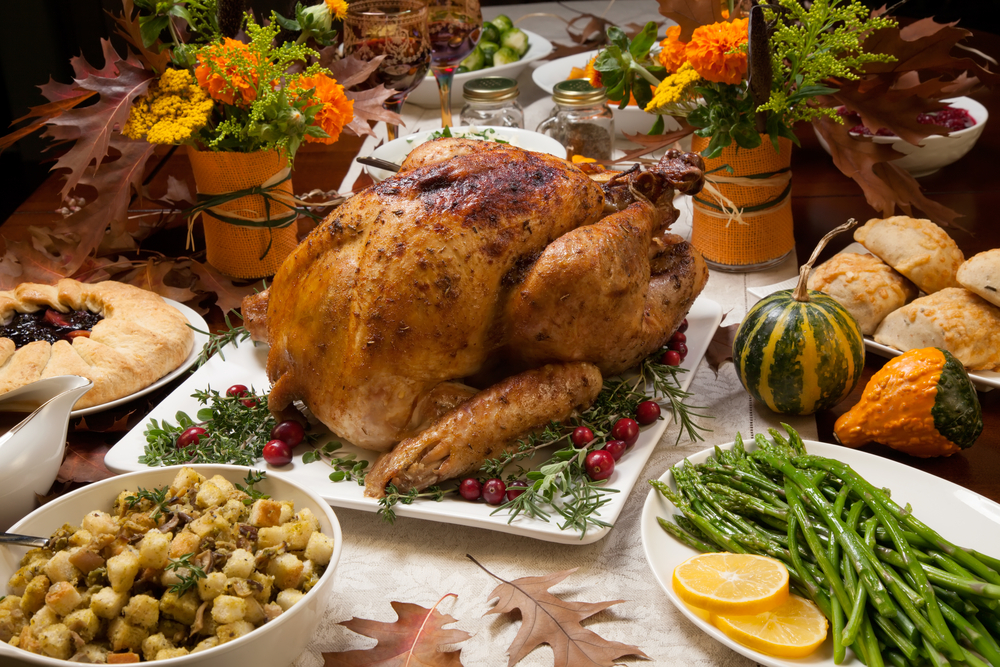
California ranks #8 in turkey production in the United States (2016), and we supply most of the western states from our poultry farms located in several areas in the state.

The famous Mrs. Cubbison’s Stuffing or “Dressing” originated from a ç, born in 1890 in the San Marcos area of San Diego County. In short, Cubbison graduated from California Polytechnical University in May 1920 with a degree in Home Economics having paid her way through school with the money she earned feeding the farm workers.

Cubbison created her popular stuffing in 1948 using broken pieces of the popular Melba toast and various seasonings. The factory in Commerce, California churns it out in mass quantities this time of year.

California farmers produce almonds, raisins, walnuts, prunes, figs, dates, apricots, pistachios, and pomegranates, right on up the food line.

These are all celebrated Thanksgiving foods.

Celery from the Oxnard and Ventura area completes the stuffing mix. Nutrient-dense carrots, lettuce and fresh spinach from Salinas now arrive, pre-washed and bagged, in your local produce department. Your Thanksgiving traditional green beans come from California growers.

An ample supply of freshly harvested oranges and kiwi fruit, table grapes, strawberries, and raspberries are shipped from many areas in the state. Seasonal features include sweet potatoes from the Merced, about an hour north of Fresno, plus all kinds and colors of potatoes and tomatoes, parsley, onions, and garlic—all crops are raised in California.

Nearly all the fruits, vegetables and nuts that are part of America’s Thanksgiving are sourced from California.

Don’t forget about the great varieties of wine grapes grown in the No. 1 agricultural state that are deftly crafted into delectable California wines.

Or the thirst-quenching Martinelli sparkling apple or grape cider from Watsonville California, near the Monterey Bay area. Local growers provide the tree-ripened fruit to the award-winning company that is still family-owned after almost 150 years and is managed by the founder’s grandson and great-grandson. Here’s something to discuss at your Thanksgiving meal:  the company won its first Gold Medal at the 1890 California State Fair in  Sacramento.

How about those heirloom and new apple varieties, plus those small round watermelons that we snack on or toss into a dessert fruit salad, topped with California pomegranate arils?

Of course, we raise poultry, and even California lamb, if you want to go that way. Here is a Did-you-know? challenge for your holiday meal:  What are the most recent Presidental Thanksgiving Turkeys from California pardoned by United States presidents? (Answers are below.)

And by the way, you know that food-safety pop-up turkey timer that indicates when the turkey has reached the correct internal temperature? Public relations genius Leo Pearlstein and a turkey producer in Turlock, a small town north of Fresno in Stanislaus County, invented this Thanksgiving fixture.

Back in the 1960s, they were sitting in a room trying to solve the undercooked poultry challenge, when they looked up and noticed ceiling fire sprinklers. The sprinklers sprayed water when the room temperature became hot enough to melt a tiny piece of metal alloy in the mechanism. This innovative team of two applied the same concept to the pop-up timer!

With the exception of cranberries, our national day of giving thanks for a bountiful harvest is really a California Thanksgiving.


Here are some friendly topics for discussion at your Thanksgiving Table:

  • What is the name of the famous Thanksgiving stuffing that originated in California?
  • What beverage company that is still operating won its first Gold Medal at the 1890 California State Fair?
  • How was the pop-up timer invented and by whom?
  • How does high does California rank in U.S. turkey production?
  • What are the most recent Presidental Thanksgiving Turkeys from California pardoned by United States presidents?

In 2010, President Obama pardoned Apple, a 45-pound turkey from Modesto, California-based Foster Farms; and alternate bird Cider. 

In 2015, President Obama pardoned Apple, a 45-pound turkey and an alternate 43-pound bird named Honest, again from Foster Farms.

The Presidential Turkey flock are Nicholas White turkeys, which originated in California’s Sonoma Valley in 1957. Today, the Nicholas White is the industry standard. (Foster Farms)

2021-05-12T11:17:10-07:00November 20th, 2017|
Go to Top