About Patrick Cavanaugh

This author has not yet filled in any details.
So far Patrick Cavanaugh has created 1490 blog entries.

CDFA Secretary Karen Ross talks with students at Chico State

Source: Excerpted from Heather Hacking, ChicoER News; posted by CDFA

California Department of Food and Agriculture Secretary Karen Ross spoke to students at the California State University, Chico Farm on Tuesday.

Ross was in Chico as guest speaker at the Chico Rotary Club and she toured the University Farm before meeting with students and local ag leaders.

“We need to reconnect farmers with consumers and create an ag-literate populace,” said Ross.

One student asked about a recent proposal by the governor to eliminate grant funding for FFA agriculture education.

Ross said students can send a powerful message; those in the FFA blue jackets can and should stand up at school board meetings and talk about the importance of investing in youth.

“What about conflicting messages that come from various sectors of agriculture?” asked Dave Daley, an instructor at Chico State.

Ross said there is room for many different segments of the food industry — organic and conventional and all the variations in between.

“Consumers want assurance that they have a choice,” said Ross. “Having many different markets also provides opportunities for producers.”

For students wondering which direction to go with after college, Ross encouraged young people to consider careers with CDFA and USDA.

“Many people are at retirement age,” Ross said. “A fresh workforce is welcome.”

"CDFA Secretary Karen Ross talks with students at CSU Chico" -ChicoER News

“CDFA Secretary Karen Ross talks with students at CSU Chico” -ChicoER News

For any ag producers, it’s important to be able to communicate and to clearly express themselves through writing, she added.

The stories of the farm cannot be told in 140 characters, the length of one Twitter entry, and the ability to communicate science to non-farmers will become increasingly important.

Ross also noted that farming has always included adaptation; as the world population increases and open land decreases, improvements to farming will continue.

2016-05-31T19:38:54-07:00March 4th, 2014|

“The Fight for Water” screens at Columbia College in Sonora, California

Historic Water March

The award-winning documentary, The Fight for Water: A Farm Worker Struggle”, has been invited to screen at 5:40 pm, Saturday, March 8th at Columbia College’s Dogwood Theatre  in Sonora, California, as part of the “Official Selection” at this year’s Back to Nature Film Fest Series.

Joe Del Bosque V

Joe Del Bosque

Presented by the college’s Forestry & Natural Resources Club and the ITSA Film Festival, the screening will be followed by a Q & A with the filmmaker.

The film documents the impact of a federal decision on people living in a Central Valley farming community in the Spring of 2009 when their water supply was cut off and they staged a march to fight for their water.

juancarlos5

The film proudly tells the humble story of Joe Del Bosque, who came from parents who were migrant farmworkers to become a farmer and a major Ag leader in the California Central Valley.

He was recently thrown into national spotlight when President Barack Obama visited his farm on February 14, 2014 to address the current drought in California.

Hollywood actor Paul Rodriguez, who helped organize the March for Water in the style of Cesar Chavez, and former Governor Arnold Schwarzenegger are also featured in the film.

The documentary film, which serves as a cautionary tale and precursor to the current drought in California, has screened at over 10 film festivals, winning accolades and worldwide recognition. The film was produced by Juan Carlos Oseguera, 40, a San Francisco State University alumnus who has been a published film critic and an accomplished  producer of several award-winning short films. 

It recently received the Best Documentary award at the 2013 International Monarch Film Festival and at the 2013 Viña de Oro Fresno International Film Festival.  The film also received runner-up honors for Best Documentary in Cinematography and for Best Political Documentary Film at the 2013 Action on Film International Film Festival, where it also received a nomination for Excellence in Filmmaking.

No Water Logo

“People should see this film,” stated Lois Henry, a newspaper columnist who reviewed the film for The Bakersfield Californian.  “It’s important that we understand that perspective of what the ‘Water Wars’ mean on a really, really human scale.”

This is Oseguera’s first feature-length film.

.

2016-05-31T19:38:54-07:00March 4th, 2014|

EPA Updates Pesticide Registration Info on Web

EPA has created a new area on its website containing all of its information on Pesticide Registration. Pulling from existing material, the new pesticide registration area is designed to help users find what they need easily and quickly.

Under clearly defined topic headings, visitors to this new Web area will have easy access to information on:

  • Pesticide registration
  • Fees and fee waivers
  • How to register a pesticide
  • Types of registrations under pesticide laws
  • Types of pesticides that can be registered
  • Registration forms and guidance documents

Under the Federal Insecticide, Fungicide, and Rodenticide Act (FIFRA), EPA regulates all pesticides that are sold and distributed in the United States.

The term “pesticides” includes pesticides, herbicides, rodenticides, antimicrobial products, biopesticides, and other substances used to control a wide variety of pests.

A pesticide product is defined as a pesticide in the particular form (including composition, packaging, and labeling) in which the pesticide is, or is intended to be, distributed or sold and includes any physical apparatus used to deliver or apply the pesticide if distributed or sold with the pesticide.

2016-05-31T19:38:54-07:00March 1st, 2014|

March is National Nutrition Month, California Agriculture Rules!

National Nutrition Month (NNM) this year focuses on following the Dietary Guidelines recommendations by combining taste and nutrition to create healthy meals. Consumer research confirms that taste tops nutrition as the main reason why one food is purchased over another. While social, emotional and health factors also play a role, the foods people enjoy are likely the ones they eat most.

NNM is a nutrition education and information campaign created annually in March by the Academy of Nutrition and Dietetics. The campaign focuses attention on the importance of making informed food choices and developing sound eating and physical activity habits. NNM also promotes the Academy and its members to the public and the media as the most valuable and credible source of timely, scientifically based food and nutrition information.

University of California Cooperative Extension – Imperial County is ready for NNM’s theme this year, “Enjoy the Taste of Eating Right.” Eating right can be challenging as healthy foods are often misunderstood to be bland, flavorless, boring, and not worth the time, but this isn’t always true! Eating right can be delicious, flavorful, quick, and easy, and enjoyable.

California Walnuts wants to help consumers defend health all year round, and especially during National Nutrition Month. Their message is including whole foods like walnuts as part of a healthy diet can provide valuable nutrition that defend against diseases. The Natural Defender’s Toolkit has a variety of components that can be used to track personal health and learn more about nutrition.

The BMI Chart allows people to find their BMI value based on height and weight. The Cholesterol Tracker allows people to track cholesterol levels after every doctor’s visit, along with exercise and diet goals. The Medicine Tracker aids folks in keeping track of medications. And, finally, the Personal Prevention Record helps defend people’s health against many preventable diseases. Use the forms in the Natural Defenders Toolkit, complete with nutrition tips from experts, to help people get started on a path towards wellness today.

The California Cling Peach Board suggests as we continue on through the month, we want to make sure we maintain a strong emphasis on the importance of nutrition.

California Strawberry Commission urges, “Just Add Strawberries for National Nutrition Month.”

Melissa Tamargo, on the UC Agriculture and Natural Resources Blog, says to choose fresh foods that are naturally low in sodium such as fruits, vegetables, lean meats and poultry, fish, eggs and milk. 

UC California Agricultural Tourism Directory instructs us to read the Nutrition Facts label to choose low-sodium foods and look for terms like “no added salt.”

The Hass Avocado Board tells us to celebrate National Nutrition Month with an avocado-focused menu. Avocados make a great dip for chips and veggies or a flavorful sandwich spread. For creative ideas on how to add Fresh Hass Avocados to menu, stop by AvocadoCentral.com/avocado-foodservice.

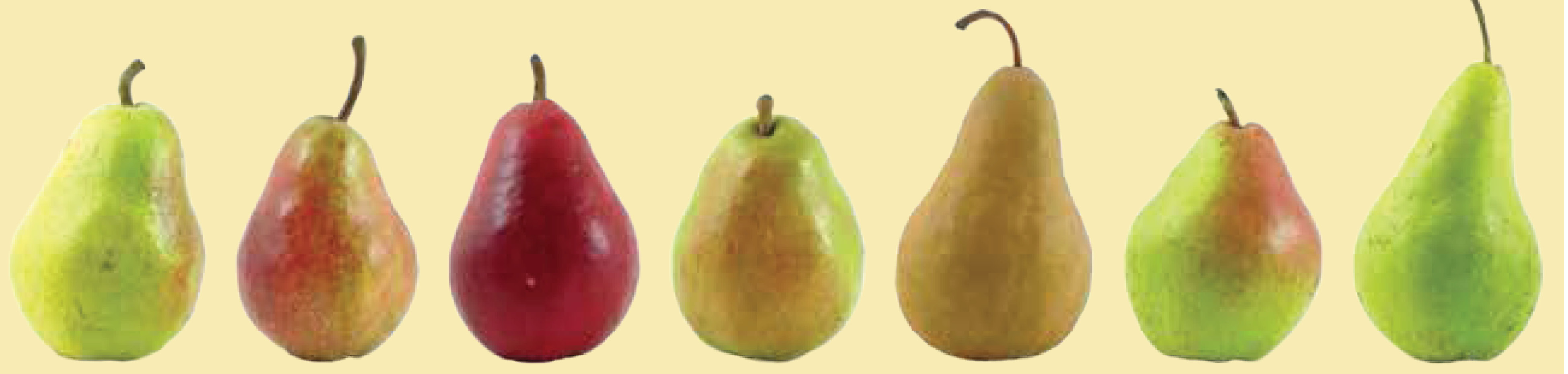
Why not celebrate National Nutrition Month by taste-testing different varieties of the same crop, as suggested by the California Foundation for Agriculture in the Classroom. Try some pears, for instance. After all, according to the CDFA, California provides us with more than 400 choices!


         Author: Melissa Tamargo

2016-05-31T19:38:54-07:00March 1st, 2014|

League of Women Voters to Host Ag Issues Seminars

The League of Women voters will host two seminars focusing on current issues in agriculture during the month of March.

The first seminar, “Agriculture’s Economic Health,” is scheduled to take place on Wednesday, March 5.

Panelists include Paul Betancourt, grower; Jerry Prieto, former Fresno County agricultural commissioner; Dr. Daniel Sumner, UC Davis agriculture economist; and Jeff Yasui, USDA Risk Management.

The second seminar, “From Animal Management to Food Safety,” will take place Wednesday, March 19.  Panelists include Bill Griffin, Fresno County Department of Agriculture; Charlene McLaughlin, a bovine veterinarian; Kiel Schmidt, organic farmer; and Paul Wenger, California Farm Bureau Federation president.

Each seminar will take place from 11:30 a.m. to 1 p.m. at the Community Media Access Collaborative (CMAC), 1555 Van Ness, Fresno.

The seminars are free and open to the public. Participants should bring lunch; a snack and beverage will be provided.  Relevant articles can be found at http://fresno.ca.lwvnet.org/.

2016-05-31T19:38:54-07:00March 1st, 2014|

USDA’s Final WIC and United Fresh’s Response

Today, USDA finalized changes to the Special Supplemental Nutrition Program for Women, Infants and Children (WIC) to further improve the nutrition and health of the nation’s low-income pregnant women, new mothers, infants and young children.

The changes – which increase access to fruits and vegetables, whole grains and low-fat dairy – are based on the latest nutrition science. Today’s announcement marks the completion of the first comprehensive revisions to the WIC food packages since 1980.                                                                                           

Along with a more than 30 percent increase in the dollar amount for children’s fruits and vegetables purchases, the changes also:

  • expand whole grain options available to participants,
  • provide yogurt as a partial milk substitute for children and women,
  • allow parents of older infants to purchase fresh fruits and vegetables instead of jarred infant food if they choose, and;
  • give states and local WIC agencies more flexibility to meet the nutritional and cultural needs of WIC participants.

Over 8.5 million participants receive WIC benefits each month.  Recent research by the Centers for Disease Control and Prevention (CDC) has identified changes to the WIC food packages as a contributing factor in the decline in obesity rates among low-income preschoolers in many States.


United Fresh Produce Association President & CEO Tom Stenzel issued this statement Today in response to USDA’s publication of the Final Rule on the Special Supplemental Nutrition Program for Women, Infants, and Children (WIC): Revisions to the WIC Food Package:

We applaud USDA’s emphasis on increasing fruit and vegetable consumption among low-income, nutritionally at-risk pregnant and breastfeeding women, and their infants and young children who participate in the WIC program. The final rule increases the cash-value of the fruit and vegetable vouchers for children to $8 per month; allows WIC mothers to receive a voucher for fresh fruits and vegetables instead of jarred baby foods for their infants; and allows WIC mothers to add cash (split tender) at check out to their fruit and vegetable vouchers to maximize their purchases. All of these provisions will increase fruit and vegetable consumption among WIC mothers and their young children.

Our only disappointment is that we continue to believe that WIC vouchers should include all fresh fruits and vegetables, without added fats, sugar or sodium, including fresh white potatoes.

For more than a decade, United Fresh has been a leading advocate for including fruits and vegetables in the WIC food packages. United played a leadership role in urging USDA and Congress to update WIC food packages to include fruits and vegetables, and has worked with the National WIC Association and advocates to increase the value of the fruit and vegetable vouchers for mothers and children.

The CDC has recently recognized the important role that the WIC Program’s nutrition education and food package changes that added healthy items like fruits and vegetables has played in decreasing childhood obesity by 43 percent among 2-5 year olds.

Founded in 1904, the United Fresh Produce Association serves companies at the forefront of the global fresh and fresh-cut produce industry, including growers, shippers, fresh-cut processors, wholesalers, distributors, retailers, foodservice operators, industry suppliers and allied associations.

 United Fresh and its members work year-round to make a difference for the produce industry by driving policies that increase consumption of fresh produce, shaping critical legislative and regulatory action, providing scientific and technical leadership in food safety, quality assurance, nutrition and health, and developing educational programs and business opportunities to assist member companies in growing successful businesses.


2016-05-31T19:38:54-07:00February 28th, 2014|

California Association of Agricultural Labor (CAAL) Conference

The California Association of Agricultural Labor (CAAL) is hosting the CAAL Conference on March 15, 2014 with the following agenda:

Department of Labor (DOL):  Transportation

Division of Labor Standards Enforcement (DLSE):  Piece rate

New:  Mandatory Rest Breaks Compensation and Record Keeping

OSHA:  Safety Training

Anthony_Raimondo

Anthony Raimondo

Other: Health Care Reform

Guest speakers will include:

Anthony Raimondo, Partner, McCormick Barstow LLP, Fresno, has been representing and counseling employers with strategic planning, day-to-day workplace issues, turning back union organizing campaigns, and negotiating favorable contracts. Mr. Raimondo is the primary labor and employment resource for California’s Western United Dairymen.

Gil Molina

Gil Molina

Gilbert (Gil) S. Molina, a highly respected bi-lingual resource, trainer and labor consultant in Fresno, has 31 years of federal service as an investigator within the U.S. Department of Labor Wage & Hour Division, Internal Revenue Service and the United States Navy. As CEO for CAAL, Molina’s goal is to create training and options for the Farm Labor Contractors and their foremen.

Mark Saltzman, Saltzman Financial & Insurance Services, has been working in the insurance industry since 1977. His firm has partnered with United Agribusiness League and Western Growers to offer some of the best medical plans available to the agriculture industry today.

Mark Saltzman and son, Kevin

Mark Saltzman and son, Kevin

The Conference begins at 8 am with breakfast; the meeting begins at 9 am. It takes place at 1444 Fulton Street in Fresno. Spanish translation is available.

CAAL Members – Free

Non-members – $25

RSVP  by phoning  559-513-8562 (English) or 559-905-7638 (Spanish).

CAAL’s mission is to create a favorable business environment for its members; foster and maintain good government relations on behalf of its clients; and educate, train, and certify the farm labor industry on all relevant regulations impacting agricultural business. This organization represents over 60,000 employees.

2016-05-31T19:38:54-07:00February 28th, 2014|

Many Legislative Bills Introduced

Legislative Update From Calif. Farm Bureau

Many Legislative Bills Introduced in California Last Week!


The State Water Resources Control Board (State Board) held a Workshop this week to take public comment on the Temporary Urgency Change Petition (TUCP) for the State Water Project and the federal Central Valley Project.

Consistent with the Governor’s Executive Order B-21-13 issued last May the TUCP for these two projects would temporarily modify (reduce) Delta outflow and export requirements to preserve water in storage and maintain in-Delta water quality.

Additionally, the TUCP would temporarily modify (open) the Delta Cross Channel gates to improve in-Delta salinity conditions. State Board staff also presented information on water diversion curtailment notices for junior water right holders. Due to rain events a couple of weeks ago the notices have not yet been issued.

A measure that would repeal provisions of the $11.14 billion Safe, Clean, and Reliable Drinking Water Supply Act, currently scheduled to go before California voters November 4th this year, was heard in the Senate Environmental Quality Committee this week. If approved by the voters, the Safe Drinking Water, Water Quality, and Water Supply Act of 2014 (SB 848), authored by Senator Lois Wolk (D-Davis), would authorize the issuance of bonds in the amount of $6.825 billion in five separate categories. Those five categories include:

  • $900 million for Safe Drinking Water,
  • $2 billion for Integrated Regional Water Management Planning and stormwater capture and reuse projects,
  • $1.2 billion for projects that protect the Delta ecosystem and integrity of Delta levees,
  • $1.7 billion for Watershed and Ecosystem Improvements,
  • $1.025 billion for Water Storage Projects.

All five categories would require legislative authority to appropriate the funds. Farm Bureau remains actively engaged in this and every effort to impact the size and structure of the water bond, emphasize the need for increased water storage, area of origin water rights protections and continuous appropriation for water storage dollars. Farm Bureau has an Oppose Unless Amended position on SB 848.

A measure that would allow multiple use registrations for small livestock stockponds was introduced this week. AB 1905 (Luis Alejo, D-Salinas) would allow small (10 acre feet or less) livestock stockponds to also be registered with the State Water Resources Control Board for use as small irrigation ponds. Currently law allows small irrigation ponds to also be registered for small domestic use, but not for livestock. Farm Bureau is the sponsor of this measure and therefore is also in support.


AB 1634 (Nancy Skinner, D-Berkeley) would require employers to immediately abate conditions that Cal/OSHA alleges are a violation of occupational safety and health regulations if the agency classifies the citation as a serious, repeat serious, or willful serious violation. Under current law, if an employer appeals the citation, the employer is not required to abate the violation unless and until the appeal is denied. AB 1634 allows Cal/OSHA to grant a stay of abatement at its own discretion. This is similar to legislation Assemblymember Skinner carried in 2013 (AB 1165) which Governor Brown vetoed in October. The Governor’s veto message cited an appeal process in AB 1165 for abatements parallel to that which already exists through the Cal/OSHA Appeals Board. AB 1634 does not include that duplicative appeal process. Farm Bureau will oppose AB 1634 because it undermines due process protections allowing employers to appeal Cal/OSHA citations.


SB 1034 (William Monning, D-Carmel) would eliminate waiting periods before employers offering health insurance would be required to institute coverage. Current state law allows for a 60-day waiting period; federal law allows a 90-day waiting period. Farm Bureau is analyzing SB 1034 before taking a position.


SB 1087, also by Senator Monning, would impose a laundry list of changes to the California Labor Code for Farm Labor Contractors (FLCs). Several of these changes include:

  • higher licensing fees;
  • increase the size of surety bonds FLCs must obtain and provide documentation of the size of the bond to the Division of Labor Standards Enforcement (DLSE);
  • requires that surety bonds be conditioned on compliance with state laws prohibiting sexual harassment;
  • requires FLCs to receive training on prohibitions on sexual harassment;
  • doubles the number of continuing education hours required of FLCs from 8 hours annually to 16 hours annually;
  • adds violations of laws prohibiting sexual harassment by an FLC or an FLC’s supervisory personnel to the list of violations of law which prohibit DLSE from issuing an license to an FLC and requiring DLSE to revoke an FLC’s license;
  • requires FLCs to provide, upon request to a current or former employee or grower, a written statement showing compensation paid to employees, and requires growers to retain payroll records furnished by FLCs for three years.

Numerous other changes in the Labor Code pertaining to FLCs are further outlined in the bill. Farm Bureau position pending.


AB 1723 (Adrin Nazarin, D-Sherman Oaks) would authorize the Division of Labor Standards Enforcement (DLSE) to recover for employees payment of applicable penalties for willful failure to timely pay wages. Existing law provides for criminal and civil penalties for violations of statutes and orders of the commission regarding payment of wages. This bill would expand that penalty, restitution, and liquidated damages provision for a citation to also subject the employer to payment of any applicable penalties for the willful failure to timely pay the wages of a resigned or discharged employee. Farm Bureau is opposed.


AB 1660 (Luis Alejo, D-Salinas) clarifies that an action taken by an employer to comply with federal immigration law is not a violation of California’s Unruh Civil Rights Act. AB 60, which became law in 2013, requires the Department of Motor Vehicles to issue driving privilege cards to persons who cannot furnish the requisite documentation to obtain a regular driver’s license. AB 60 also prohibited discrimination under the Unruh Act against people using a driving privilege card. Farm Bureau supports AB 1660.

AB 2033 (Rudy Salas, D-Bakersfield), just introduced yesterday, would create an Agricultural Career Technical Education (ACTE) unit in the Department of Education to provide schools with assistance in establishing and maintaining ACTE classes. This bill is in response to the 2014 state budget proposal to eliminate $4.1 million from the Agricultural Career Technical Education Incentive Grant Program from the state budget. Ag Incentive Grant funds are used to update and modernize equipment and technology, as well provide vital resource for developing leadership skills and personal growth opportunities for students through ACTE programs and coursework. Farm Bureau is in support.


2016-05-31T19:38:54-07:00February 28th, 2014|

Does “The West Without Water” Portend our Future?

Sources: Excerpts from UC Berkeley; Steve Hockensmith, UC Berkeley NewsCenter; University of California Press; The Commonwealth Club of California.

As 2013 came to a close, the drought was reported to have been the driest year in California since records began to be kept in the 1840s. That was, academically speaking, not quite the truth.

“This could potentially be the driest water year in 500 years,” says B. Lynn Ingram, a UC Berkeley paleoclimatologist professor of earth and planetary science and geography.

B. Lynn Ingram

B. Lynn Ingram

As a paleoclimatologist, Ingram analyzes sediments and archaeological deposits to determine how climates change over the course of millennia. And according to the width of old tree rings (which can record the coming and going of wet or waterless stretches), California hasn’t been so parched since 1580.

“These extremely dry years are very rare,” she says.

But soon, perhaps, they won’t be as rare as they used to be. The state is facing its third drought year in a row, and Ingram wouldn’t be surprised if that dry stretch continues.

If you go back thousands of years, you see that droughts can go on for years if not decades, and there were some dry periods that lasted over a century,” Ingram said in a recent interview with Steve Hockensmith, UC Berkeley NewsCenter. “The 20th century was unusually mild here, in the sense that the droughts weren’t as severe as in the past. It was a wetter century, and a lot of our development has been based on that.”

Ingram continued, “The late 1930s to the early 1950s were when a lot of our dams and aqueducts were built, and those were wetter decades. I think there’s an assumption that we’ll go back to that, and that’s not necessarily the case. We might be heading into a drier period now. It’s hard for us to predict, but that’s a possibility, especially with global warming.”

“When the climate’s warmer,” she said, “it tends to be drier in the West. The storms tend to hit further into the Pacific Northwest, like they are this year, and we don’t experience as many storms in the winter season. We get only about seven a year, and it can take the deficit of just a few to create a drought.”

“Yet, if you look at the past, you realize that our climate is anything but reliable. We’ve seen these big fluctuations. Extreme droughts and extreme floods.”

The co-authors want the public to know that if you’re going to buy a house in the Central Valley, you should know about these floods. “And we have to start assuming that we could go into one of these longer droughts and maybe start doing some serious conservation and rethinking of agriculture here,” Ingram commented.

West Without Water

Together, B. Lynn Ingram, Professor of Earth & Planetary Science and Geography, UC Berkeley; and Frances Malamud-Roam, Associate Environmental Planner and Biologist, Caltrans; Visiting Scholar, UC Berkeley; co-authored The West Without Water: What Past Floods, Droughts, and Other Climatic Clues Tell Us About Tomorrowwhich was released by the University of California Press last year.

The West without Water documents the tumultuous climate of the American West over twenty millennia, including past droughts and deluges and predictions about future climate change and water resources. Looking at the region’s current water crisis from the perspective of its climate history, the authors ask the central question of what is “normal” climate for the West, and whether the relatively benign climate of the past century will continue into the future. 

The authors show that, while the West may have temporarily buffered itself from such harsh climatic swings by creating artificial environments and human landscapes, our modern civilization may be ill-prepared for the predicted climate changes and  warn that we must face the realities of the past and prepare for a future in which fresh water may be less reliable.

The co-authors will present their ideas and research at The Commonwealth Club’s “In conversation” with Lisa Krieger, Science and Medical Research Reporter, San Jose Mercury News on Tuesday, Mar 11, 2014 at 6:30pm at the Lafayette Library, 3491 Mt. Diablo Blvd., Lafayette.

Join Ingram and co-author Frances Malamud-Roam for a discussion on California’s current water crisis, the region’s climatic past and predictions about the future of climate change and its effect on water resources.

2016-05-31T19:38:55-07:00February 28th, 2014|
Go to Top