About Patrick Cavanaugh

This author has not yet filled in any details.
So far Patrick Cavanaugh has created 1490 blog entries.

Food donations underscore drought impact

By Kate Campbell; Ag Alert

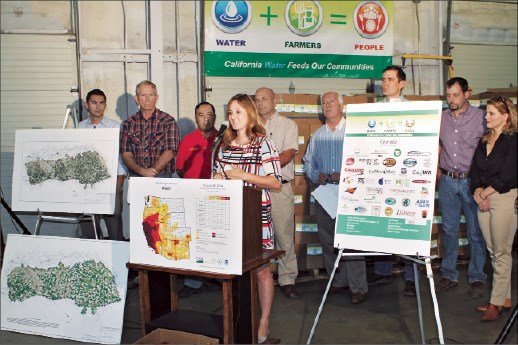
Central Valley farmers and businesses donated and shipped about 30 tons of fresh fruits, vegetables and nuts last week to help address food shortages at California food banks. A newly organized grassroots coalition, “California Water Feeds Our Communities,” was joined by the California Community Food Bank, Westlands Water District, the California Water Alliance and El Agua Es Asunto De Todos to bring valley-grown produce to those in need across the state.

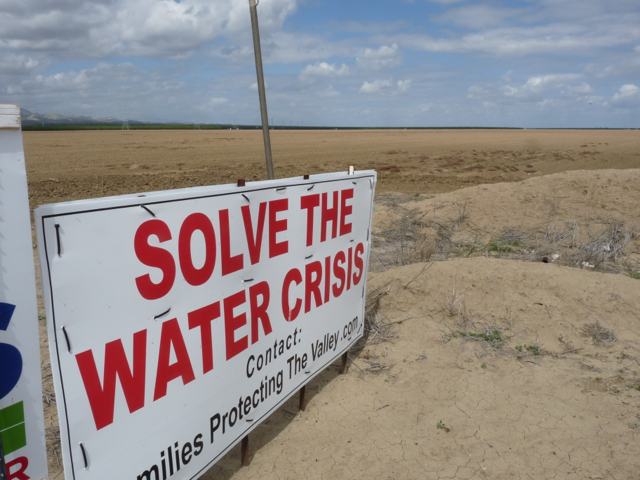
Fresno County farmer Bill Diedrich said the impact of fallowing hundreds of thousands of acres of irrigated cropland in the San Joaquin Valley this year translates into significant economic losses for the valley’s small farming communities.

“It’s the people—and the communities that depend on agricultural production—that are getting hurt,” Diedrich said at a news conference in Fresno to announce the donations. “For example, the schools are being hurt. If people are moving on, there’s no reimbursement for (school) attendance and the children of those families who’ve stayed are losing out. Besides the school districts, cities and counties also are being affected and their ability to help in this crisis is reduced.”

Diedrich said that when he drives through the valley’s small towns, he sees workers standing around idle, “because there’s so much fallowed ground there isn’t the normal demand for labor. We’re looking at a disaster and we’re hoping for regulatory relief,” noting that Congress will be considering drought-relief bills in coming weeks.

Kym Dildine with Fresno-based Community Food Bank said one in four people in Fresno, Kings, Madera, Kern and Tulare counties copes with food insecurity, a situation made worse by the ongoing drought.

Prior to the drought, she said the agency was serving about 220,000 people a month. With the drought, that number has increased by another 30,000 people a month in the five-county area.

“Every food bank we’ve spoken to is really grateful to be receiving an entire truckload of fresh produce grown right here in the valley,” she said. “Because less fruit is available, they’re having a harder time accessing it.”

To help address the problem, 15 trucks were loaded with boxes of fresh produce at Simonian Fruit Co. in Fowler before heading to food banks in Fresno, Merced, Bakersfield, Los Angeles, Watsonville, Salinas, Santa Maria, Oxnard, Riverside and San Diego.

“The food we grow here extends far and wide,” said Gayle Holman of the Westlands Water District. “In fact, most people don’t even realize the food they may be eating in other parts of the state, or across the United States, actually originates here.”

The Fresno County Farm Bureau, along with many valley farms and businesses, supported the food donation effort, as did irrigation districts and service groups such as the Girl Scouts of Central California-South and the Fresno Area Hispanic Chamber of Commerce, as well as California State University, Fresno.

Participants said the coalition hopes not only to bring attention to the impact of the drought and how far-reaching it is, but also to set the stage for future food donation drives as the crisis deepens during the winter. Diedrich said the effort also brings attention to the fact that an unreliable water supply jeopardizes everyone’s food security.

“The drought has impacted California’s food banks because they can no longer adapt to the spike in food prices resulting from a lack of water for farmers,” said Cannon Michael, president of Los Banos-based Bowles Farming Co. “This campaign has been launched to feed the needy and raise awareness about how the drought hurts the most vulnerable people in the state.”

Drought-related land fallowing brings “many unintended consequences,” Michael said.

“We hope raising awareness about the drought will bring all stakeholders together to find short- and long-term solutions,” he said.

Westside farmer Sarah Woolf said the coalition will continue to support food banks.

“This was just one small aspect of how we’re trying to help,” she said.

When the U.S. Bureau of Reclamation announced a zero water allocation for farm customers south of the Sacramento-San Joaquin Delta, Mendota Mayor Robert Silva said his community knew it was facing “a terrible situation.” But he said the city learned from the drought in 2009 and immediately began preparing.

“We got service agencies and utilities to come in and set up assistance programs right away,” Silva said. “We’ve added recreational opportunities for our youth to keep them busy and we’ve been finding ways to support our schools.”

In 2009, Silva said water shortages led to severe social problems such as domestic violence and higher school dropout rates that might have been eased with adequate social services. The unemployment rate in Mendota today is in the range of 35 percent, he said, compared to 50 percent at the same time in 2009.

“Unemployment is still high, but not as bad as we feared,” Silva said. “But we’re not out of danger yet. I understand it’s going to be a short growing season this year, harvest is nearly over, and that means more people will be unemployed for a longer time. We haven’t seen the worst yet.”

He said Mendota residents have been planning ahead and “trying to get the resources they’ll need to get by until they can go back to work next year,” and more agencies are prepared to help.

“But it’s going to be a long winter,” Silva said.


2016-05-31T19:33:26-07:00September 10th, 2014|

9/11 Memorial Plaza at California State Fairgrounds to open for September 11 anniversary

Source: CDFA

In observance of the September 11 attack of the World Trade Center in 2001, the 9/11 Memorial Plaza at the California State Fairgrounds at Cal Expo will open to the general public on September 11, 2014 from 8:00 a.m. – 6:00 p.m. The memorial honors the victims lost 13 years ago.

At 9:00 a.m., the Sacramento Young Marines will present colors at the Memorial, which is located inside the main gate near the Expo Center buildings. Admission and parking are free.

Central to the exhibit is a beautiful fountain including a granite ball inscribed with all of the names of the September 11 victims. There are also replicas of the World Trade Center buildings and memorials to American Airlines Flight 77–which crashed into the Pentagon–and United Airlines Flight 93, which crashed in a field in Pennsylvania.

Construction of the Cal Expo memorial began a year after the attack, when Cal Expo board member Larry Davis personally acquired and donated 125,000 pounds of wreckage from the World Trade Center. A massive I-beam extracted from Ground Zero was among the debris. Davis personally arranged for the wreckage to be shipped via rail to California. Through private donations to the California State Fair Memorial Plaza Foundation, the exhibit has been expanded to include additional elements.

2016-05-31T19:33:27-07:00September 9th, 2014|

Atwater High’s agriculture department getting national recognition

Source: Doane Yawger; The Merced Sun-Star

Atwater High School’s agriculture program is in the running to be named the top such endeavor in the nation.

By virtue of being named the top ag program in the state this year by the California Agricultural Teachers Association, the Atwater program was nominated for the national award and should be notified soon, Principal Alan Peterson said.

“They’re getting the recognition they deserve,” Peterson said. “They deserve it. They are a hardworking staff with a lot of motivated students.”

The national ag teachers association holds its annual conference Nov. 18 in Nashville, Tenn.

Dave Gossman, AHS agriculture department chairman, said at least half of the school’s 1,800 students have taken one or more agricultural courses. Last year it became the largest single high school ag program in the nation.

“We’re excited,” Gossman said. “We’ve got a supportive school, district, community and ag industry. The credit should go to all.”

There are five directions ag students can take. They can take pathways in agricultural mechanics, which includes welding, engines and woodworking. Or they can take agricultural science, ag biology and life science courses. Then there is floriculture; animal science and veterinary skills; and leadership and agribusiness, Gossman said.

Makala Navarro, a senior and an ag student, said she didn’t have many expectations when she took agriculture as a freshman.

“I was quiet and shy. I had no ag background,” Navarro said. “Through the past three-plus years, I have gained confidence and direction in life, and my goal is to enter a four-year university and major in agriculture education with the desire to be an agriculture teacher.

Natalie Borba, ag instructor, said the reason so many students get involved in agriculture education and Future Farmers of America is because it has personal value, it’s fun, and gets them participating in activities and events that extend beyond the classroom.

“For the parents and guardians, ag ed serves as a vehicle toward academic interest and success. For the community and ag industry, it keeps kids focused on something positive and provides a future pipeline of leaders and industry employment,” Borba said.

Gossman said if Atwater High is selected as the Region 1 winner of the State Outstanding Middle/Secondary School Agricultural Education Program Award, a teacher from its agriculture program will receive an expense-paid trip to attend the 2014 NAAE convention, where the program will be recognized during a general session. The Atwater program also received the top state award four years ago.

The Outstanding Middle/Secondary School Agricultural Education Program award is partially sponsored by Monsanto as a special project of the National FFA Foundation. Applicants are judged on teaching philosophy, effective classroom and experiential instruction, development of partnerships, and professional growth.

“The award and recognition is something we take pride in. However, it reflects the positive difference agricultural education makes on young people in terms of personal growth, academic success and career exploration,” Gossman said. “It is a proven education model that is for all kids. It provides value to both agriculture and non-agriculture-directed students.”

Gossman said the same success stories can be found in all high school agriculture programs throughout the state.

“It’s all about making a positive difference in the lives of young people,” Gossman said. “Ag ed is a great vehicle to accomplish this task.”

The National Association of Agricultural Educators, the professional organization in the United States for agricultural educators, provides its nearly 8,000 members with professional networking and development opportunities, professional liability coverage, and extensive awards and recognition programs.


2016-05-31T19:33:27-07:00September 9th, 2014|

CA Grown Releases New “Growing California” Video

The California Department of Food and Agriculture released a new segment in their “Growing California” video series. This installment, “Water Wise,” focuses on one of the most pressing and contentious issues facing the state, efficient water use while also producing crops.

In the words of CDFA Secretary Karen Ross, the video series is a way to connect people to the food they eat and the tremendous bounty of California agriculture. “I just see this yearning for people to make a connection,” Secretary Ross said. “In an era when people want to know more than ever about the origins of their food, we wanted to do our part in sharing these important, compelling stories.”

Total viewership on CDFA’s Planting Seeds Blog for a tracked period in 2013 (February through September) was 59,071 – a 22,384 viewer increase from the previous year. Of the increased viewership – the video series is representative of approximately 44 percent of this total. Average viewership per video, as of September 2013, is estimated at 346 views.

Growing California is a partnership between CDFA and the Buy California Marketing Agreement, which is behind the “California Grown” campaign. The videos, which have won a total of six Telly Awards, were produced in association with the Creative Services department at California State University, Sacramento (CSUS).

You can see more videos in the series here at http://www.californiagrown.org/growing-california/.

2016-05-31T19:33:27-07:00September 8th, 2014|

Groundwater bills on the way to Governor

Source: Monterey County Farm Bureau News

Passage of three groundwater-regulation bills by the California Legislature-Assembly Bill 1739 and Senate Bills 1168 and 1319-threatens a number of negative consequences for family farmers, ranchers and other landowners, according to the California Farm Bureau Federation.

CFBF President Paul Wenger said Farm Bureau has always encouraged the proper management of groundwater, “but doing that job efficiently and effectively should have been a priority.”

“Instead,” Wenger said, “the Legislature took the ‘ready, fire, aim’ approach, rushing these bills through and creating a massive new regulatory program in the final days of the legislative session.”

Farmers, ranchers and other landowners in California will be left to pick up the pieces, Wenger said, dealing with the consequences of the legislation for years to come.

“The bills would allow for groundwater to be monopolized to the detriment of urban water users and farmers-including people who have not created an overdraft problem but who could need access to groundwater in the future,” he said. “The same agencies that have been hamstrung by conflicting missions and statutory mandates-including environmental restrictions of questionable value-will now control all water decisions.”

In addition, the bills reach beyond efforts to balance inflows and outflows of groundwater basins, creating requirements that will lead to confusion and litigation, Wenger said.

“Farm Bureau and other opponents have been able to take some of the edge off of this legislation. It now includes protections for water rights and other provisions that could lessen its detrimental impact. For that, we must thank those in the Capitol who helped rein in some of the proposals’ worst overreaches and the legislators, both Democrats and Republicans, who voted against the bills,” he said.

“But making this significant of a change in water law-arguably the most significant in more than 100 years-and doing so without the necessary deliberation, or even a policy hearing, shows how susceptible to flaws this legislation could prove to be,” he said, adding that Farm Bureau will ask Gov. Brown to veto it.

“True resolution to California groundwater problems will come through measures that this legislation does not address, such as a streamlined adjudication process and the recognition of groundwater recharge as a beneficial use of water,” Wenger concluded. “Most importantly, California must improve its surface water supplies. All the fees and fines in the world won’t heal our aquifers unless California builds additional storage and improves management of surface water in order to reduce demand on groundwater.”

2016-05-31T19:33:27-07:00September 5th, 2014|

Twin Tunnels Could Produce Friant Dry Year Water Woes

Source: Friant Waterline 

While “progress” on the Bay-Delta Conservation Plan’s ambitious and controversial twin tunnels planning continues to mostly be marked by delay, Friant Division contractors and the Friant Water Authority are looking long and hard at findings in troubling computer modeling.

Friant Water Authority directors were told at their August 28 meeting in Visalia that the twin tunnels proposal to bypass the fragile Delta not only lacks benefits for Friant users, it could actually make Friant’s future dry year water supply problems worse.

‘LOSING PROPOSITION’

“Computer modeling shows it is a losing proposition with less water supply reliability to Friant, particularly in dry years,” said Ronald D. Jacobsma, FWA General Manager.

The FWA and its member districts have been evaluating the state’s twin tunnels plan to determine if Friant users would benefit from the two tunnels’ development. That includes San Joaquin River Exchange Contractor water, Cross Valley Canal water and San Joaquin River Restoration Program recirculation in addition to assumptions as to allocation of costs amongst water contractors.

All of this is crucial in Friant’s BDCP consideration because the tunnels, expected to cost many billions of dollars, are to be financed on a “beneficiary-pays” basis. Jacobsma said project proponents have indicated Friant’s share could be about $3 billion.

“The current process has lots of uncertainty,” Jacobsma said. “The bottom line is they won’t be starting construction any time soon on those twin tunnels.”

MORE DELAY

Delay, in fact, popped up again in late August when the California Department of Water Resources indicated that the BDCP needs more work as a result of the massive volume of public comments received on a draft environmental impact report.

Nancy Vogel, DWR spokeswoman, told the Sacramento Bee, “We’re going through it and we’re going to revise and send it back out for public review. We continue to look for ways to reduce the impacts to Delta residents and landowners.”

With a revised BDCP now scheduled to be released early next year, the newest delay is certain to consume several months. The plan has been seven years in the making.

The entire program’s cost is estimated at $25 billion. The BDCP is not to be funded through the pending state water bonds, should Proposition 1 be approved by voters. The Legislature intentionally kept the bond “Delta neutral” because of controversy surrounding the BDCP and twin tunnels.

The tunnels would be an isolated water conveyance system under the Delta between Courtland and state and federal water export pumping plants near Byron, northwest of Tracy.

EPA CONCERN

Meanwhile, a new wrinkle in the twin-tunnels plan popped up August 28 when the U.S. Environmental Protection Agency suggested the project could violate the Clean Water Act and increase harm to endangered species. EPA said the project could increase Delta concentrations of salinity, mercury, bromide, chloride, selenium and pesticides.

2016-05-31T19:33:27-07:00September 5th, 2014|

Bayer CropScience Plans Further US Growth, Opens New R&D Site in California

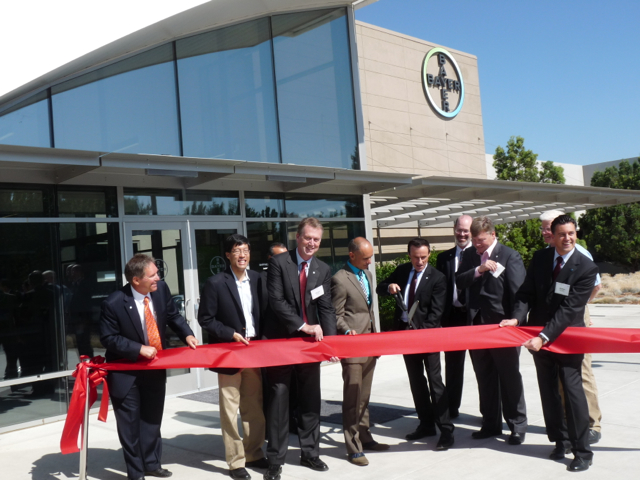
Bayer CropScience sees a positive long-term market development in North America and is committing significant resources to spur further growth. “We see future growth driven by increasing and sustained demand from customers for improved seeds and innovative crop protection products,” said Bayer CropScience CEO Liam Condon at the September 3, 2014 official inauguration of the company’s new integrated R&D site in West Sacramento, California.

Liam Condon, CEO of Bayer CropScience

Liam Condon, CEO of Bayer CropScience

“We are investing heavily in R&D infrastructure such as laboratories, greenhouses and breeding stations as well as new production capacities and seed processing facilities,” Condon explained. He said that the company aims to grow faster than the U.S. market.

Bayer CropScience plans to invest close to US$ 1 billion (EUR 700 million) in Capital Expenditures (CAPEX) in the United States between 2013 and 2016, mainly to ramp up research and development and to expand a world-class product supply of its top crop protection brands. These expenditures are part of a global investment program Bayer CropScience started last year, with a total CAPEX for the period 2013 to 2016 of EUR 2.4 billion (approximately US$ 3.3 billion).

Consolidating and expanding R&D organization is key for Bayer CropScience

Bayer CropScience seeks to better leverage its full research and development capabilities by consolidating and expanding its global R&D organization. “Our integrated West Sacramento site represents a major step forward in our efforts to enhance our vegetable seeds and biological crop protection innovation efforts,” said Dr. Adrian Percy, Global Head of Research and Development at Bayer CropScience. “The investment into this state-of-the-art facility creates an environment where our researchers and experts can find the best possible conditions to discover solutions that growers across the globe can depend on to produce high-quality food in a sustainable manner.”

The new West Sacramento site, which also serves as the global headquarters of Bayer CropScience’s Biologics Business has the capacity to house up to 300 employees. The approximately US$ 80 million facility is situated on 10 acres of land and features a 100,000-square-foot building and a 35,000-square-foot pilot plant to support research and development of biological crop protection products, as well as a 30,000-square-foot Vegetable Seeds research building. The facility will also include a 2,000-square-foot greenhouse and five acres of nearby land for future greenhouse space.

Expansion of production capacities in the USA

Bayer CropScience's New West Sacrmento Biologic Facility (PAC)

Bayer CropScience’s New West Sacrmento Biologic Facility

In addition to building its R&D network in the USA, Bayer CropScience is also investing significantly in the production capacities of its crop protection products.

“Along with capacity expansions at our Muskegon, Michigan and Kansas City, Missouri sites, the construction of our new plant in Mobile, Alabama for the production of our herbicide Liberty™ will contribute significantly to our future growth plans,” stressed Condon, who pointed out that the increased production of Liberty™ will help U.S. growers fight weed resistance, a key challenge for U.S. farmers.

“The single biggest investment item in the USA is our planned capacity expansion of Liberty™ herbicide. This is a strong signal to the market as Liberty™ is the only nonselective herbicide that controls glyphosate-resistant weeds,” said Jim Blome, president and CEO for Bayer CropScience LP and Head of Crop Protection for the North American region. “Two-thirds of our planned investments in the United States between 2013 and 2016 are intended to expand our production capacities. This includes measures to further optimize our supply chain in order to increase flexibility and thrive despite market volatility,” Blome added.

Investments in Seeds business and U.S. infrastructure

Bayer CropScience is also investing constantly in its Seeds business. In June 2014, the company announced plans to expand its North American and global Seeds headquarters in Research Triangle Park (RTP), North Carolina. The RTP site has experienced significant operational growth in recent years, and approximately US$ 200 million will be invested through 2016. “The construction of greenhouses as well as the necessary infrastructure and land development represent our continued commitment to growth in RTP,” said Blome.

The overall RTP investment program includes further important projects, for example the construction of the Development North America facility dedicated to Crop Protection and Environmental Science research; renovations to Bayer CropScience´s North American headquarters, scheduled to be completed in 2015; construction of the 6,000 square-foot North American Bee Care Center; and the purchase of 70 acres of land to accommodate future growth, which includes a new 29,500 square-foot greenhouse.

Bayer CropScience also plans to invest approximately US$ 90 million in its Cotton Research and Development Laboratory in Lubbock, Texas. Founded in 1998, the company’s global cotton headquarters is focused on providing cotton growers with the products and solutions they need to meet the world’s growing demand for fiber. With a staff of around 120 experts, Bayer CropScience operates two breeding stations, a seed processing plant, a quality assurance lab, a seed warehousing facility, and a state-of-the art research and development lab.

Complementing this, the company also invested US$ 17 million in the expansion of its Memphis Research and Development site, bringing total greenhouse capacity to 76,000 square feet. Located in the heart of the Mississippi Delta, a world-class group of scientists, researchers, technicians and agronomists with a specialized set of skills is developing high quality cotton and soybean varieties as well as trait innovations. Their aim is to support Bayer CropScience’s growing global cotton and soybean seed businesses through molecular breeding and other innovative technologies.

2016-05-31T19:33:27-07:00September 5th, 2014|

DPR Scientists Say Most Fresh California Produce Tested Has Little/No Detectable Pesticide Residues

The California Department of Pesticide Regulation (DPR) announced that once again, the majority of produce it tested annually had little or no detectable pesticide residues and posed no health risk to the public. 95 percent of all California-grown produce, sampled by DPR in 2013, was in compliance with the allowable limits.

“This is a vivid example that California fresh produce is among the safest in the world, when it comes to pesticide exposure,” said DPR Director Brian R. Leahy. “DPR’s scientifically robust monitoring program is an indication that a strong pesticide regulatory program and dedicated growers can deliver produce that consumers can have confidence in.”

DPR tested 3,483 samples of different fruits and vegetables sold in farmers markets, wholesale and retail outlets, and distribution centers statewide. More than 155 different fruits and vegetables were sampled to reflect the dietary needs of California’s diverse population.

Of all 3,483 samples collected in 2013:

  • 43.53 percent of the samples had no pesticide residues detected.
  • 51.51 percent of the samples had residues that were within the legal tolerance levels.
  • 3.99 percent of the samples had illegal residues of pesticides not approved for use on the commodities tested.
  • 0.98 percent of the samples had illegal pesticide residues in excess of established tolerances. A produce item with an illegal residue level does not necessarily indicate a health hazard.

Each piece of fruit or vegetable may legally contain trace amounts of one or more pesticides. The amount and type of pesticide (known as a tolerance), is limited by the U.S. Environmental Protection Agency. DPR’s Residue Monitoring Program staff carries out random inspections to verify that these limits are not exceeded.

The produce is tested in laboratories using state-of-the-art equipment operated by California Department of Food and Agriculture (CDFA). In 2013, these scientists frequently detected illegal pesticide residues on produce including:

  • Cactus Pads from Mexico,
  • Ginger from China,
  • Snow Peas from Guatemala and
  • Spinach from the US

Most of the 2013 illegal pesticide residues were found in produce imported from other countries and contained very low levels (a fraction of a part per million). The majority of the time they did not pose a health risk.

One exception occurred in 2013 when DPR discovered Cactus pads, imported from Mexico, that were tainted with an organophosphate-based pesticide. This had the potential to sicken people. DPR worked with the CA. Dept. of Public Health to issue an alert to consumers in February 2014. DPR also worked diligently to remove the entire product it from store shelves and distribution centers. In addition, DPR asked the US Food and Drug Administration to inspect produce at the borders and points of entry to stop shipments into California.

California has been analyzing produce for pesticide residues since 1926 and has developed the most extensive pesticide residue testing program of its kind in the nation. The 2013 pesticide residue monitoring data and previous years are posted at: http://www.cdpr.ca.gov/docs/enforce/residue/rsmonmnu.htm

2016-05-31T19:33:27-07:00September 4th, 2014|

‘To-do list’ on food safety grows longer for feds

Source: Benjamin Goad; The Hill

The largest food safety overhaul in generations is being starved of funding needed to enforce a host of new regulations for factories, farms and importers, safety advocates warn.

The 2010 Food Safety Modernization Act (FSMA) was billed as creating a fundamental shift in the way government protects the nation’s food supply against the threat of food-borne illness.

But despite bipartisan and industry support for the program, only a fraction of the funding needed to implement and enforce it has materialized. Now, with most fiscal 2015 funding issues likely in limbo until after the midterm elections, uncertainty remains.Without additional funding, priorities of the ambitious initiative could fall short, public interest groups fear.

“They’re just not going to make enough of a dent in their to-do list,” said Sandra Eskin, director of food safety at The Pew Charitable Trusts. “They’re going to be really strapped to effectively enforce it.”

The Food and Drug Administration in January of last year began rolling out the first of seven draft rules in support of the FSMA, the biggest food safety update in 70 years.

The rules add a slate of standards for the agriculture industry and food manufactures, and create third-party audits and a new supplier verification program to prevent contaminated foods from entering the country.

Together, the rules are meant to replace a decades-old system built to respond to illness outbreaks with one set up to prevent them through better practices at production plants, warehouses and farms.

The rule-making process has been fraught with delays, as the FDA grapples with a litany of questions about how to impose the regulations. The agency has been forced to revise and re-propose some of the rules in response to industry concerns.

The FDA’s failure to meet a July 2012 deadline under the law drew a lawsuit from food safety advocates and a subsequent federal court order requiring the agency to complete all final regulations under the FSMA by mid-2015.

But merely putting the rules in place is one matter; creating a system to enforce them is another.

During budget hearings this year, Michael Taylor, the FDA’s first ever deputy commissioner for foods, made clear that current funding levels would be insufficient.

“Simply put, we cannot achieve our objective of a safer food supply without a significant increase in resources,” he told members of the House Energy and Commerce Committee.

Upon approval of the FSMA in 2010, the nonpartisan Congressional Budget Office estimated the FDA would need an additional $583 million over five years to carry out its new mission.

Following boosts totaling just under $100 million in fiscal 2011 and 2012, the administration estimated last May that an additional $400 million to $450 million would be required “to make FSMA a fully successful initiative.”

Since then, the funding allocated to the effort has been much less than requested, thanks to budget cuts and competing priorities. An omnibus funding bill for fiscal 2013 included $40 million for food safety, but that total was reduced to $37 million by sequester-related cuts.

A fiscal 2014 omnibus passed in January added $53 million more. As of Tuesday, the agency said an additional $362 million to $412 million was needed.

Spending bills now pending in both chambers of Congress contain increases of around $25 million, sowing angst among groups who say funding is required to fully implement the law.

Even business groups with reservations about the new restrictions support additional funding, which they view as bringing certainty to the industry.

“In order to keep consumer confidence in the safety of America’s food supply high and to reduce the number of foodborne illnesses, it is important that FDA also have the infrastructure in place to implement FSMA once the rules are finalized and after the appropriate compliance period ends,” a coalition of major businesses including Wal-Mart, General Mills and Coca-Cola wrote in a letter to congressional appropriators.

Specifically, the groups are calling for funding to retain and hire additional scientific experts, modernize the FDA’s information technology and increase food safety inspections to meet the targets set out in the law.

Sophia Kruszewski, a policy specialist at the National Sustainable Agriculture Coalition, said the group is worried that a lack of funding would imperil programs authorized by the law to help farmers and other food producers come into compliance.

“Funding will be critical because so much of what proper implementation of FSMA is gong to require is training,” Kruszewski said. “It’s hard to know where all the money is going to come from.”

The Obama administration has proposed new user fees to help meet the funding goals. The president’s 2014 budget request calls for a new registration fee for domestic and foreign food facilities that are required to register with FDA. The fee would have yielded an estimated $59 million this year.

A second fee on imports would have brought in $166 million, according to estimates.

Congress, however, has not approved legislation establishing the fees, which industry groups have denounced as a “food tax.”

In prodding Congress to direct more money to the safety effort, public interest groups say the cost of inaction could be made clear in the event of a major illness outbreak.

There have been 26 multi-state outbreaks of food-borne illness since Obama signed the FSMA into law, according to a Pew analysis.

Food safety advocates say they are trying to raise the public profile of an issue that affects all Americans.

“Every time they sit down for a meal, they want to know that the government is doing to make sure their food is safe,” Eskin said.

2016-05-31T19:33:27-07:00September 4th, 2014|

Slant Well to Address Water Shortage Without Harming Environment

By Valerie King; National Driller*

History is unfolding along the coast of California, according to Dennis Williams, president of GEOSCIENCE Support Services Inc.

His groundwater consulting firm has designed something like 1,000 municipal water supply wells in almost 40 years. But those were typical wells, vertical wells. What he’s working on now he’s only done once before.

“Necessity is the mother of invention,” he said, alluding to a well technology his firm is designing for California’s Monterey Peninsula. It’s called a slant well or subsurface intake, and while the technology has been used in Europe and tested in the United States, he says it’s still a very rare method.

“The evolution of the subsurface slant well technology,” as Williams calls it, is an outcome of California state regulators and environmental groups that prefer an environmentally friendly approach to desalination. Their goal is to avoid harming marine life like more traditional ocean pipelines tend to.

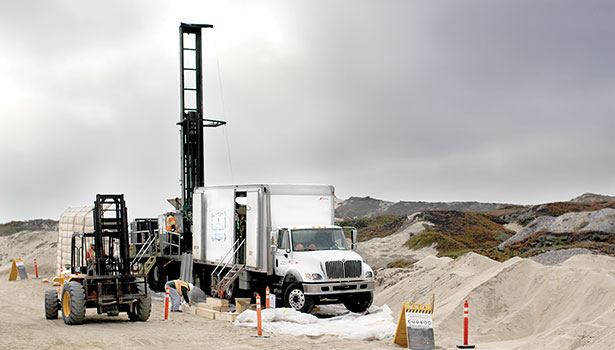
The slant well will be drilled close to the coastline at a diagonal and collect enough ocean water to produce about 100 million gallons of drinkable water daily.

That’s what California American Water hopes, according to Rich Svindland, vice president of engineering. California American Water is a subsidiary of American Water Works Company Inc., the largest publicly traded U.S. water and wastewater utility company. They proposed the idea after California ordered reductions to the Monterey Peninsula’s current water sources, a local river and aquifer that are expected to lose more than half of their current supply in the next decade.

“The idea is that we’re trying to launch a well field out under the ocean floor to basically ensure that we capture ocean water as opposed to inland ground freshwater,” Svindland said. The local groundwater basin he’s referring to is protected and cannot be exported to residents across the peninsula.

*This article was originally published in National Driller, Copyright 2014.  The entire article can be found at National Driller.

2016-05-31T19:33:27-07:00September 3rd, 2014|
Go to Top