About Patrick Cavanaugh

This author has not yet filled in any details.
So far Patrick Cavanaugh has created 1490 blog entries.

GOT MILK? GOT MILK AND TEA? GOT MILK AWARDS?

GOT MILK? Celebrates 20 Years 
GOT MILK? Author’s Reflections
Milk and Tea—the New Cappuccino?

By Laurie Greene, Associate Editor

In 1993, Americans first witnessed what is now one of the country’s most highly recalled ad campaigns, “GOT MILK?”

Two decades later, the brand and its creator, the California Milk Processor Board (CMPB), are still going strong!

To celebrate the brand’s 20-year history and success with the community, the CMPB announced the winners of the CMPB’s commemorative anniversary program, the GOT MILK? 20 Awards. Steve James, Executive Director of the CMPB said, “There is no better way to celebrate our milestone anniversary than by saluting 20 of these positive role models and their untiring work in their communities.”

The 20 GOT MILK? 20 Awardees include (listed by key markets):

Bay Area: Reading Partners, Oakland; Resource Area for Teaching, San Jose; North Bay Dairy Women’s Association, Petaluma

Sacramento:Runnin’ for Rhett, Elk Grove and Senior Gleaners, Sacramento

Fresno:Care Fresno Teen Leadership Program, Reading and Beyond and Women, Infants and Children (WIC) Breastfeeding Resources Program

Bakersfield:Reach for Greatness Mentoring Program

Los Angeles: Ability First, Long Beach; Kids Enjoy Exercise Now (KEEN), Los Angeles; El Monte Unified High School District Food Services Department; InnerCity Struggle, East Los Angeles; Duke Welliver & the Peaceful Warrior Martial Arts Academy, San Clemente; Christmas in the Classroom, Fontana and Champions for Change – Desert Sierra Program, Riverside/San Bernardino/Palm Springs

San Diego: Miracle Babies, La Maestra Community Health Group, Child Nutrition Services at Vista Unified School District and San Marcos Unified School District’s Child Nutrition Services Department

GOT MILK? 20 Award winners will be presented their recognition and prize during ceremonies to be held in key markets during the month of November.

Funded by all California milk processors and administered by the CDFA, The California Milk Processor Board was established in 1993 to make milk more competitive and increase milk consumption in California. Awareness of the campaign is over 90% nationally and it is considered one of the most important and successful campaigns in history.

Sources: California Milk Processor Board, Business Wire
******
The California Milk Processors Board and GSP initiated the Got Milk?campaign in 1993, but what did GOT MILK? accomplish?

The tagline was first introduced in the television commercial, “Aaron Burr,” and has since been entered into CLIO Awards Advertising Hall of Fame.

Prior to the CMPB’s formation, the California Milk Advisory Board (CMAB), had for many years produced the “Milk Does a Body Good”. But the old ads didn’t change consumers’ behavior; consumers-and especially kids and teens-still considered milk to be boring, (Yawn) and sales volume was fast declining.

In June 1993, Jeff Manning, Executive Director, was hired by CMPB to revive sagging milk consumption in California. “We weren’t going to turn around a 15-year decline in per capita in one year, but we did believe that at least for certain portions of the population, we could flatten it out and start to move it up,”

In 1994 California milk sales, for the first time in over a decade, increased to 755 million gallons from previous year’s 740 million.

In 2001, Manning established a web site to promote the GOT MILK? campaign on the internet to increase consumers’ interest in campaign as popular culture. More importantly, it would serve as a vehicle to promote products with the GOT MILK? slogan.

In 2008, GOT MILK? made it to television, along with continued success.

Soure: Advertising Educational Foundation


******
Jeff Goodby of Goodby, Silverstein & Partners wrote the GOT MILK? tagline. From AdWeek, Goodby looks back at the campaign on its 20th anniversary and offers some comments:

It is perhaps the most boring product imaginable.

We have all tried it. Most of us already own some. There is very little to say about it.

Milk is not new. It is not improved. It is white.

And so it was that when the California Milk Processor Board first asked us to pitch their business in 1993, we were shockingly ambivalent. A number of us simply thought the product was inherently too boring.

At a focus group, when the clouds parted and a woman said, “The only time I even think about milk is when I run out of it, Goodby scrawled, GOT MILK? on a poster board and decided it might be a tagline.

And of course, a 20-year downturn in California milk consumption leveled off and has even headed upward now and then.
******
Over the last five years, tea has become the new “it” beverage among Americans, especially here in California. As reported in Business Wire, thanks to their health benefits and the wide variety of herbs and flavors, tea and tea latte offerings now rival coffee drinks at major retail chains.

The California Milk Processor Board (CMPB), the creator of GOT MILK?, and Bay Area-based tea sommelier, Christopher Coccagna, have partnered to expand their markets by providing .beverage enthusiasts with innovative takes on teas with milk.

“Tea lattes are a fresh way to enjoy milk and the possible combinations are endless. We hope Californians try several varieties and recipes this season!”

“There are incredible varieties and flavors. Add milk, and tea becomes creamy, rich and even exciting.

Coccagna’s creations use only the finest ingredients, such as Velvety red rose petals, fragrant lavender blossoms, cool peppermint sprigs and spicy cardamom pods, with fresh milk to create modern beverages exclusively for GOT MILK?

“We are thrilled to explore the new world of tea with someone as passionate as Christopher,” says Steve James, CMPB Executive Director. “Tea lattes are a fresh way to enjoy milk and the possible combinations are endless. We hope Californians try several varieties and recipes this season!”

To learn more about the GOT MILK? Tea Lattes campaign, visit www.gotmilk.com/recipes.

2016-05-31T19:43:11-07:00November 5th, 2013|

“MELON MASTERS” – NEW CDFA GROWING CALIFORNIA VIDEO

Perry and Sons Featured in Growing California Video Series
The new video on CDFA’s Growing California video series is titled, “Melon Masters”.

Art Perry, CEO, Perry & Sons, Inc. introduces the company, now in its 4th farming generation. The farm, one of California’s largest growers, shippers and handlers of watermelons, has been family owned and operated since 1925.

The video highlights the farm’s harvesting equipment, family farming history, imports, and harvest seasons, among other topics. The farm also grows pumpkins; they harvest healthy, “fun” products that children, and yes adults, like.

To increase production, Perry and Sons has expanded its farming by buying watermelons from local growers and Mexico to supplement the farm to fulfill the increasing demand from customers. This enables the company to supply watermelons 365 days a year to their customers.

2016-05-31T19:43:12-07:00November 5th, 2013|

EXTENDED FOREIGN SUPPLIER VERIFICATION COMMENT PERIOD

FDA To Extend Comment Period For Foreign Supplier Verification Programs
FDA posted TODAY that it will soon announce a 60-day extension of the comment period on proposed rules for Foreign Supplier Verification Programs for Importers of Food for Humans and Animals and Accreditation of Third-Party Auditors/Certification bodies to Conduct Food Safety Audits to Issue Certifications. 

The current comment period for both proposed rules is scheduled to end November 26, 2013.  Details to follow.

For more information on FDA’s Food Safety Modernization Act, visit http://www.fda.gov/fsma

2016-05-31T19:43:12-07:00November 5th, 2013|

FSA RESUMES 2013 CROP COMMODITY LOAN DISBURSEMENTS

Crop Commodity Loan 
Disbursements Resume

USDA Farm Service Agency (FSA) announced TODAYthe resumption of 2013 Crop Commodity Loan Disbursements.


Crop year 2013 commodity loan-making was suspended Oct. 1, 2013, to make changes necessary to accommodate the automatic funding reductions known as sequester. Sequestration is mandated by the Balanced Budget and Emergency Deficit Control Act of 1985 as amended by the Budget Control Act of 2011.


The commodity loan programs provide interim financing to producers for agricultural commodities stored after harvest and then sold throughout the year. Producers requesting 2013 crop commodity loans on their harvested commodities now will have a 5.1 percent reduction to the loan amount upon its disbursement, due to the sequestration. Commodity loans issued by marketing associations and loan servicing agents are also subject to the sequestration reduction.


During the period that loan-making was suspended, producers were still able to submit loan applications to their county FSA offices, marketing associations and loan servicing agents. The processing and disbursement of these applications will begin immediately.


For further information about commodity marketing loans, farmers may contact their local county FSA office or go online to www.fsa.usda.gov.


As an example, Tulare County USDA Service Center posted on its website:


The election of agricultural producers to the Farm Service Agency (FSA) that every eligible producer participate in these elections because FSA county committees are a link between the agricultural community and the U.S. Department of Agriculture.


County Committee (COC) members are a critical component of FSA operations. The intent is to have the COC reflect the diversity of producers and represent all constituents. This means that minorities, women or lower income producers need to be on the committee to speak for underrepresented groups.


County Committee election ballots will be mailed to eligible Local Administrative Area (LAA) 2 voters on Nov. 4, 2013. The last day to return completed ballots to the USDA Service Center is Dec. 2, 2013.

2016-05-31T19:43:12-07:00November 5th, 2013|

CDFA SPECIALTY CROP BLOCK GRANT COMMITTEE OPEN FOR NEW MEMBERS

CDFA TECHNOLOGY COMMITTEE SEEKS NEW REVIEWERS

California Department of Food and Agriculture (CDFA) Secretary Karen Ross announced TODAY the opportunity to serve as a reviewer on the 2014 Specialty Crop Block Grant Technical Review Committee. Individuals with interest and expertise in the agricultural sector are encouraged to apply.


This Technical Review Committee reviews, evaluates, and makes recommendations to CDFA on proposals submitted for funding from the California Specialty Crop Block Grant Program.


The Specialty Crop Block Grant Program is designed to enhance the competitiveness of California specialty crops – fruits, vegetables, tree nuts, dried fruits, horticulture, and nursery crops (including floriculture). Grant awards range from $50,000 to $400,000 per project. Funding is contingent upon passage of a Farm Bill and available funding from the United States Department of Agriculture, Agricultural Marketing Service (USDA, AMS).


The Specialty Crop Technical Review Committee will consist of individuals who have knowledge and expertise regarding California’s specialty crop industry, and who may represent government and non-government organizations. The timeframe for reviewing proposals is between January and May 2014. The first meeting will be held in January 2014. By establishing the Technical Review Committee, CDFA maintains a competitive process to ensure maximum public input and benefit.


Individuals interested in serving on the Technical Review Committee should include a letter of interest, short biography, and statement of qualifications identifying the California Specialty Crop Block Grant Program funding category or categories related to the applicants area of expertise. 

For a description of the funding categories, please reference the Notice of Funding Availability posted at www.cdfa.ca.gov/grants.

Information should be submitted via email to Leslie Sullivan (grants@cdfa.ca.gov) before December 2, 2013.

2016-05-31T19:43:12-07:00November 4th, 2013|

UPDATE: GERAWAN FARM EMPLOYEES TO VOTE ON THEIR ECONOMIC DESTINY

Gerawan Employees Will Vote Tomorrow On UFW Representation

By Laurie Greene, Associate Editor

Dan Gerawantold California Ag Today that Gerawan farm employees would be given the chance on Tuesday, November 5, 2013, to exercise their right to decide their own economic destiny.


The state’s Agriculture Labor Relations Board (ALRB), in a reversal of its earlier decision, is allowing workers, or “petitioners”, at Gerawan Farming to hold an election tomorrow, on whether they want to decertify UFW, in other words, to determine if they want to be represented by the United Farm Workers union.


This new development follows a very fast roller coaster of events last week.

Led by longtime Gerawan employee, Silvia López, the workers gathered thousands of signatures calling for a new election. The first attempt failed after many of the signatures were found to be invalid. However, a second attempt, which gathered 3,000 signatures, satisfied the number of valid signatures necessary.


Silas Shawver, regional director of ALRB, overturned the employees’ right for an election citing that the petition and signatures in too late to be valid.


On Thursday morning, October 31, 2013, the ALRB in Sacramento issued a “Showing of Interest” whereby Shawver confirmed there were enough qualifying signatures on the employee’s petition to warrant a vote.


Later that morning, the petitioners’ attorneyannounced in a press release the election would move forward.


By Thursday evening, Shawver again blocked the election, saying there were pending unfair labor practice complaints.


On Friday, Gerawan employees did not show up for work. Instead they traveled to the ALRB office (for the second time) and demanded the right to vote. After hours of protesting, an ALRB representative came out and announced by bullhorn that the most recent decision was overturned and the election would, indeed, occur.


In this latest decision, The Board made it clear that the Regional Director’s “last minute,” “eleventh-hour charges” in a “late filed complaint” left the Board “with serious doubts as to the propriety of using that complaint to block the election.” The Board rebuked the Regional Director for failing to mention statements he made in Fresno Superior Court, where he told Judge Jeffrey Hamilton that Gerawan and the Board remedied some of the alleged unfair labor practice charges he now claims justify blocking the election.


So, ALRB decided to allow the election while also impounding the ballots pending the resolution of any election objections and unfair labor practice complaints.


The ALRB issued a Notice and Direction of Election on November 3, 2013 included the following text:


This election is being held to determine whether a majority of the employees in this unit wish to continue to be represented by the United Farm Workers of America for collective bargaining with Gerawan on wages, hours, and working conditions.


It is a secret ballot election, which will be supervised by an agent of the Agricultural Labor Relations Board.


You are eligible to vote if you worked for Gerawan during the week of October 14, 2013 to October 20,2013, if you are not a supervisor, if you are not directly related to the employer, if you are not a confidential employee, and if you are not a guard.


If there are any questions, feel free to contact the ALRB office (listed below). If you wish to vote, you will be asked for identification such as a photo ID (such as a driver’s license), a Gerawan paystub, or any other identification as required by the Board Agent in charge.


ALRB has determined when and where elections will be held on various Gerawan sites on the Eastside in Reedley and on the Westside in the Kerman area.  ALRB will also conduct the elections.


Observers will include employees chosen by the UFW and employees chosen among the petitioners. Attorneys and management will not be present.


TODAY, ALRB will instruct Gerawan employees on their rights and where voting will take place tomorrow.

Upon completion of the election tomorrow, the ballots will be impounded pending resolution of legal challenges. 


“There’s no telling of when or if ballots will be counted,” said Gerawan.  “ALRB will first investigate employer allegations, both existing and new.


***

In a related story, Gerawan filed a lawsuit on October 28, 2013 in Fresno County Superior Court against the ALRB alleging one of its employee’s first amendment rights were violated after being denied access to a mediation session.


According to the lawsuit, the employee, Lupe Garcia, attempted to attend a mediation meeting between Gerawan and the United Farm Workers union in June, but was told by the state-appointed mediator that the proceedings were confidential.


Gerawan’s lawyers argue Garcia’s first amendment rights were violated by not being allowed in the session. They are asking the court to make the mediation meetings open to the public.

***

Additional Sources: CalWatchDog,Fresno Bee, ALRB

2016-05-31T19:43:12-07:00November 4th, 2013|

ALRB ORDERS ELECTION AT GERAWAN FARMS

Statement by Ray, Mike, Dan and Norma Gerawan Farming on new ALRB Decision

Fresno, CA – Gerawan Farming congratulates our many workers who, this morning, prevailed in their fight for the most basic right in a democratic society – the right to vote. The Board’s November 1, 2013 Order Vacating the Regional Director’s dismissal of the Petition for Decertification is a victory for workers across this State. An election shall be held at Gerawan Farming on Tuesday, November 1, 2013 Order. For the first time in over 23 years, the UFW will face the will of the workers.
 

Today’s decision is an historic event. The victory belongs to those workers who never gave up hope that the Board would listen to their pleas.
 

We are humbled by the perseverance of so many workers who refused to give up in their quest to hold a secret ballot election.
 

For the second time this week, the Board overturned a decision by the Regional Director that would have snuffed out that right. In this latest decision, The Board makes it clear that the Regional Director’s “last minute,” “eleventh-hour charges” in a “late filed complaint” left the Board “with serious doubts as to the propriety of using that complaint to block the election.” The Board rebukes the Regional Director for failing to mention statements he made in Fresno Superior Court, where he told Judge Jeffrey Hamilton that Gerawan and the Board remedied some of the alleged unfair labor practice charges he now claims justify blocking the election.


On Tuesday, November 4, millions of Americans will go the polls to choose their elected officials. It is fitting that Gerawan workers will be given the chance on that same day to exercise that same sacred right to decide their own economic destiny.


The Board made the obvious, just, and long overdue decision to let an election go forward.


We congratulate every one of our workers.
2018-05-06T20:57:54-07:00November 4th, 2013|

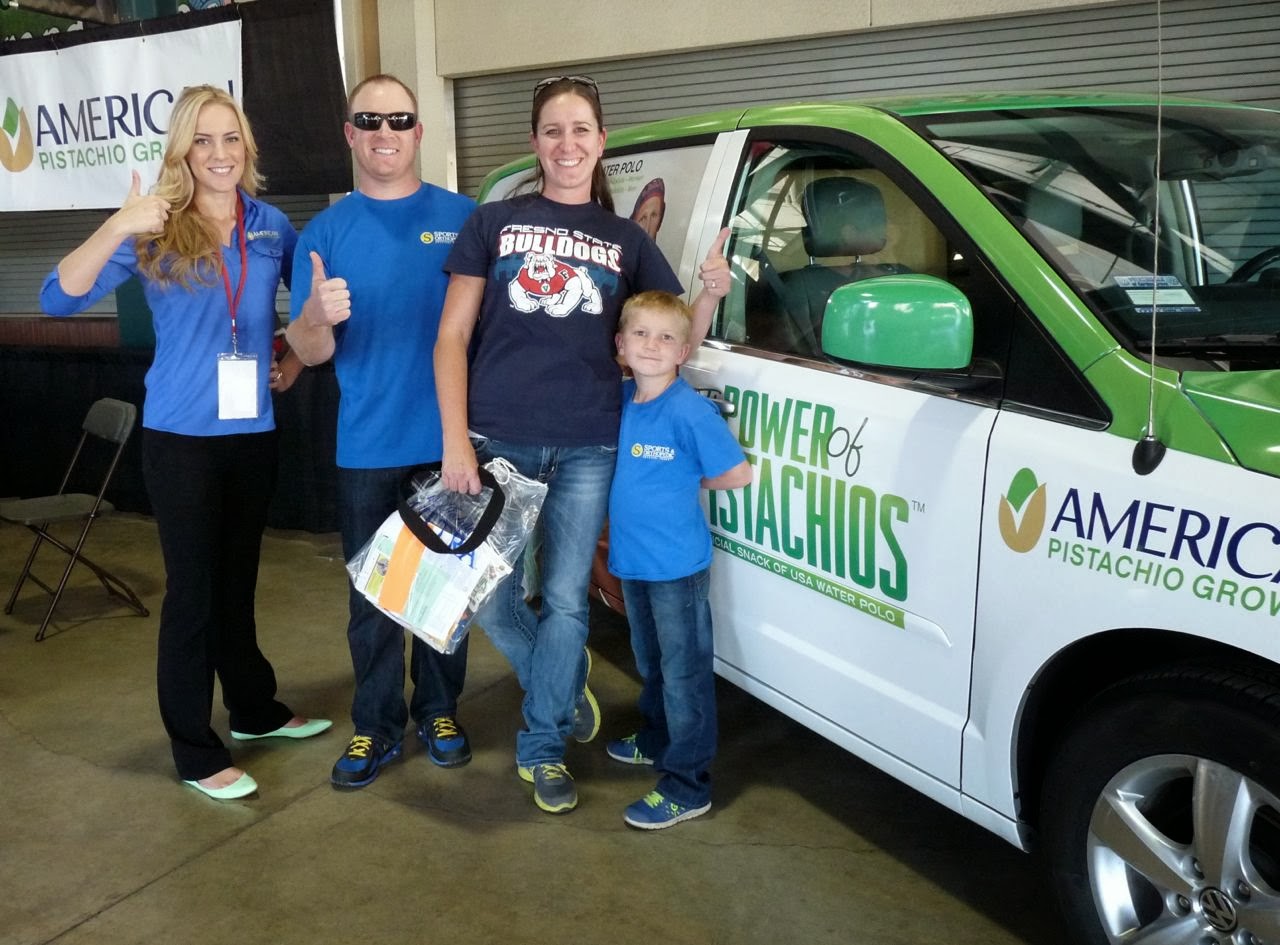
Pistachiomobile Promotes Power of Pistachios

American Pistachiomobile Debuts
Former Miss California Leah Cecil-Tibbitts, left, joins some pistachio
lovers at a pre-marathon event at Chukchansi Park in Fresno Today.

The new American Pistachiomobile will be cruising Fresno and Clovis this weekend with stops at the Two Cities Marathon Fitness Expo in downtown Fresno, Bulldog Boulevard before the Fresno State-Nevada football game, and finally at the Two Cities Marathon & Half at Woodward Park.

As a participating sponsor of these popular Fresno-Clovis events, American Pistachio Growers recognized them as great venues to introduce the specially designed Pistachiomobile, which will be used to promote the nutritional powers of pistachios at fitness events throughout California. These protein-packed and nutritionally-dense nuts are a favorite of athletes, both professional and amateur.

Attendees at all events are invited to stop by and learn more about the health benefits of pistachios, get a free sample pack, and have their picture taken with APG’s brand ambassadors Miss California 2013 Crystal Lee and Miss California 2012 Leah Cecil-Tibbitts. As an added bonus, people who like American Pistachio Growers on Facebook and upload photos of themselves with the Pistachiomobile on social media will be eligible to win a 100-day supply of pistachios.

Pistachios are a good source of lean protein and pack 3 grams of filling fiber per serving, which makes them a smart snack option. A one-ounce serving is equal to 49 nuts- more than any other tree nut- and contains 6g of protein, 290 mg of potassium along with calcium, phosphorus, magnesium, thiamin, vitamin B6 and other vitamins.
“Since our bodies don’t store protein it’s important to replenish, especially after participating in sports and athletic events,” says Judy Hirigoyen, Global Marketing Director for the Fresno-based American Pistachio Growers. She continues, “Health-oriented and sports events are a natural association for pistachios and this pistachio-themed van is a fun way to reach our consumers.”

The Pistachiomobile will be used during California events.
The Sierra Pacific Orthopedics Health & Fitness Expo was held at Chukchansi Park in downtown Fresno at 1800 Tulare Street on Friday, November 1 and from 4-7 p.m. and Saturday, November 2 from10 a.m. – 4 p.m. The Two Cities Marathon & Half will be held on Sunday, November 3 from 7 a.m. – 2 p.m. For more information, please go to www.runfresno.com.

The Pistachiomobile will also be joining tailgaters pregame (Fresno State vs. Nevada) from 5 p.m. – 7:30 p.m. at Bulldog Boulevard, located off Cedar Avenue just east of Bulldog Stadium and North of Beiden Field on the campus of Fresno State.

2016-05-31T19:43:12-07:00November 2nd, 2013|

32ND AGRIBUSINESS CONFERENCE

Economy, Water, Trade and Labor were Big Topics at 32nd Agribusiness Conference

By Patrick Cavanaugh, Editor


The reality of the 2014 Federal water allocation, new trade agreements, and the prospects of immigration reform were some of the topics discussed at the 32nd Agribusiness Management Conference, held at the Radisson Hotel and Conference Center in Fresno, and hosted by Mechel Paggi, Director of California State University Center for Agricultural Business.

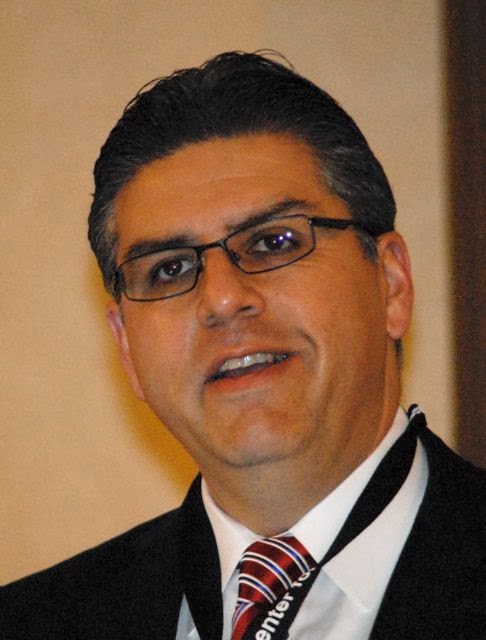
Dr. Joseph Castro

California State University, Fresno (CSUF) President Joseph Castro

California State University, Fresno (CSUF) President Joseph Castro, the first CSUF president native to the Central Valley and close to agriculture, opened the conference. “I’m happy that our Jordon College of Agricultural Sciences and Technology has had such a tremendous impact in helping to provide a well-educated work force to serve the many facets of the agricultural industry in the valley and beyond.

“One of my highest priorities as president is to further strengthen our agricultural programs in the broadest sense. In the next week, I will formerly establish a presidential commission on the future of agriculture at Fresno State. The commission will include leaders from the campus and industry coming together to assess our programs and to think about what the needs are now and in the future,” Castro said. “I want these leaders to make recommendations on how to further strengthen our agriculture program.  

Following Castro, Terry Barr, Chief Economist, CoBank, presented an economic outlook.  He noted that economic decisions are not being made fast enough, because the economy is about the same as it was a year ago. “There are still many issues that are unresolved,” he said, adding, “If you don’t make decisions then you don’t move forward.”

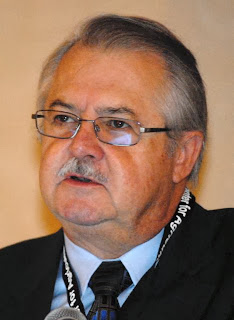
Terry Barr, chief economist, CoBank

Terry Barr, chief economist, CoBank

“We have been through a very dynamic period over the last 10 years. In the first half of that 10 year period, everyone was talking about the rising middle class in China and India and what it was doing for agricultural product demand,” said Carr. “From 2004 to 2008, we had the best of all possible worlds with strong economic growth and growth in the middle class. That was an extremely strong time for agricultural exports. In late 2008, we experienced different economic turmoil and global recession; however, agriculture was pretty well insulated,” Carr added.  

 “Today, demand for agricultural products remains very strong, mainly due to global shortfalls of some commodities and, of course, growth in China. Going forward in the next five years, we expect a period of continued turmoil, requiring policy changes to realign management, including budget deficits,” noted Carr.

“China is still going to be important but there will be some major geopolitical realignments globally.  We are not going to see rapid growth with solid demand. As we go forward, agriculture will probably have to find the new normal,” he said.

“In the US, there is a lot of policy inaction, and there is no long term strategy to reduce the debt. The US dollar is important to agriculture in terms of our competiveness on a global basis,” Carr explained.  “From 2002 to 2011, the US dollar fell in value by 38 percent, and our global competitiveness was extremely strong during that time. But we have to believe that the dollar is going to get stronger, not weaker, against most other currencies, with the exception of China.”

Carr noted that China is really driving the global economy at this point in time and what happens there has extraordinary influence on Ag pricing in the future. “They have a lot of room for stimulus, and they have $3 trillion in reserves that they are deploying both domestic and globally,” he said.

 “Brazil, Russia and India are emerging markets, which have slowed since the 2004-2008 experience. However, those economies are now in a more normal growth path,” Carr said.

Paggi then spoke about two trade agreements that are on currently in the forefront, the Trans-Pacific Partnership (TPP) and the Transatlantic Trade and Investment Partnership (TTIP).

Mechel Paggi, director of California State University Center for Agricultural Business

“Basically every commodity we work with in California, particularly from the Central Valley, has a huge stake in the export market,” said Paggi. “We produce about $44 billion worth of product and 38 percent of it moves into international trade. It’s tremendously important to us,” said Paggi.

“TTP and TTIP are the two most important preferential trade agreements to be negotiated since NAFTA,” he noted.

“Our TPP partners encompass a market of nearly 500 million consumers with a combined GDP of nearly $12 trillion,” Paggi said.  Partner countries include Canada, Australia, Mexico, Malaysia, Singapore, Chile, Peru, New Zealand, Vietnam, Brunei and Japan.

“The TTIP with the EU spans 28 countries with more than 500 million consumers and a GDP of $16.5 trillion,” said Paggi.

“These agreements would give us more marketing opportunities, which at the present time are less than completely open to us, so the benefits would have tremendous potential for us,” Paggi explained.

Paggi said that there is tremendous debate on these potential agreements within the U.S. Also, farmers in the foreign countries involved are worried about opening up their market to U.S. imports.

These agreements would also help to strengthen the existing trade agreements that already are in place with many of the countries in the area.

 “We also need to realize that a tremendous amount of trade among these countries is already covered in existing agreements, so what we would be doing with the TTP and TTIP is expanding the membership and bringing everyone into the same circle,” Paggi commented.

Paggi said, in summary, the U.S. has a choice to remain engaged or be left behind. None of these agreements or policy solutions is perfect, so there will have to be a pro-con compromise.

“Also, keep in mind,” Paggi continued, “that trade agreements promote economic well-being, and economic stability promotes political stability, so the benefits of these agreements often transcend simple market access and sales opportunities.”

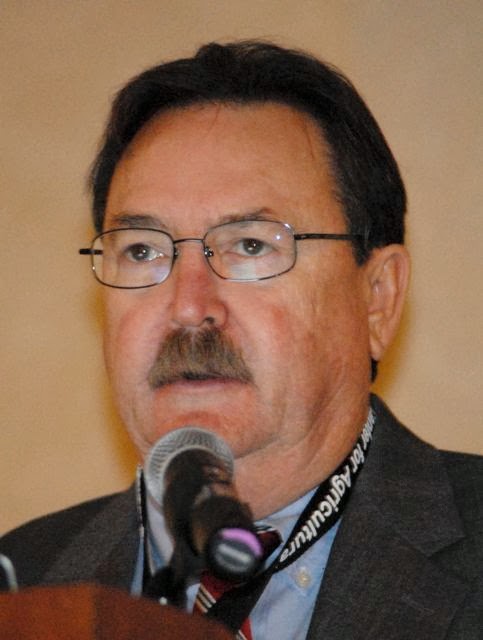
Tom Birmingham is General Manager of Westlands Water District, an agency of 615,000 acres on the west side of the San Joaquin Valley in Fresno and Kings Counties. “We are here to talk about ‘What’s on tap,’ which is a metaphor that creates an image I wish were applicable on the west side of the San Joaquin Valley,” Birmingham began, “I am not just talking about the Westlands Water District, I am talking about the west side of the San Joaquin Valley that includes the service of every agency that has an agricultural contract with the U.S.”

Tom Birmingham, general manager, Westlands Water District

Tom Birmingham, general manager, Westlands Water District

“Unfortunately, and it almost brings tears to my eyes, next year, when the farmers in the Federal Water districts that use water from the Central Valley Project they open their taps, nothing is going to come. Nothing, that is, unless we have a dramatic change in the hydrology that we have been experiencing over the last year, actually the last eight months,” Birmingham warned.

“In California, water years fall in one of five classifications of hydrology; they have been classified as wet, above normal, below normal, dry or critical. If you talk about average hydrology in California, average rain, average snowpack, average runoff, it doesn’t mean a lot,” said Birmingham.  “Because in fact, what is considered to be an average year, falls into a classification that is called, ‘a below-normal water year,’” he noted.

Birmingham continued, “But Westlands is projecting, and these are projections that the Bureau of Reclamation doesn’t take any issue with, that if we have average precipitation or hydrology for the rest of this water year, plus the same operational constraints the Endangered Species Act imposed in 2013 on the state water project and the Federal Central Valley project, our water supply will initially be zero. If we are lucky, we might get to 5% or 10% of our water supply.”

“So, we are facing a repeat of what we saw in 2009,” he noted, “when nearly half of the bare ground lay fallow in the Westlands Water District; where farmers over drafted the groundwater basin; where we experienced incredible unemployment; where people were forced to stand in lines to receive food, in some cases getting to the front of the line to be told the food bank had run out of food, or to get to the front of the line and be given carrots – grown in China. That, in my perspective, is a tragedy; it is unconscionable,” explained Birmingham.

“But that’s what we are faced with. It is hard to talk about these issues without talking about the Delta,” he said.

“The bad news is that in Kern County or the Friant-Kern service area, farmers and the Westside of the San Joaquin Valley, where groundwater is available, growers have been over drafting the groundwater basin,” said Birmingham.

“Westlands has one of the most sophisticated groundwater management programs that exist in the state,” explained Birmingham. “In fact, in 2009, when the state legislature adopted statutes requiring the development of groundwater management plans, Westlands was actually used as one of the examples of the types of information that could be collected.

But Westlands is projecting that in 2013, farmers in the district will use 598,000 acre feet of groundwater from the groundwater basin, compared to a safe yield of approximately 150,000 acre feet.

“The last time farmers in Westlands Water District extracted that much groundwater was in 1992, the fifth year of an extended drought,” said Birmingham.

“We have talked about subsidence and how it has historically occurred, and we are beginning to experience it in numerous places north of Fresno, Madera and Merced Counties,” he said.

 “In fact, we continue to experience subsidence within the Westlands Water District. It is fascinating to drive long I-5, where it used to be perfectly flat and smooth. Today, as you drive along the Westside, there are lots of undulations. The same is true at the Three Rocks area of Fresno County. I remember highway 33 was perfectly flat, but today now there are undulations as a consequence of subsidence,” said Birmingham.

“We will continue to experience subsidence, but the rate of subsidence will accelerate. Currently the groundwater levels in Westlands are approximately 100 feet higher than in 1967 when deliveries from the Central Valley Project began. When we fall below that historic low groundwater level, we’re going to experience the types of subsidence that led to the authorization of the San Luis unit.

“Congress authorized construction of San Luis to alleviate subsidence on the Westside of the San Joaquin Valley,” said Birmingham.

“One of the things on tap is there is going to be some type of groundwater regulation. California is one of the few states that generally does not regulate the use of groundwater,” he noted.

There is a lot of groundwater monitoring in California, and in a few regions there are special groundwater management districts created by the legislature. But, generally the use of groundwater is not regulated to the same degree as surface water.

“There exists a lack of statewide effort to regulate the use of groundwater. I would suspect that all of our agencies would oppose that type of statewide legislation,” said Birmingham. “From our perspective, regulations should be made at a regional level because every groundwater basin is different and should be managed on a case-by- case basis instead of state-wide regulations.”

“But it is interesting, half of the farmers in the Westlands Water District take the historic agricultural position that groundwater is the resource available to overlying landowners, and no one has any business regulating their groundwater,” he said.

“If the other 50% of farmers in Westlands, do not become proactive in its management of ground water, as opposed to its monitoring, then the state will step in and do it on behalf of everyone in the state,” said Birmingham.

“Equally as controversial, if management is not done by regional entities like Westlands Water District, it will be regulated by county or state.”

“So, Westlands Water District is actively looking to get into the business of regulating the use of groundwater.”

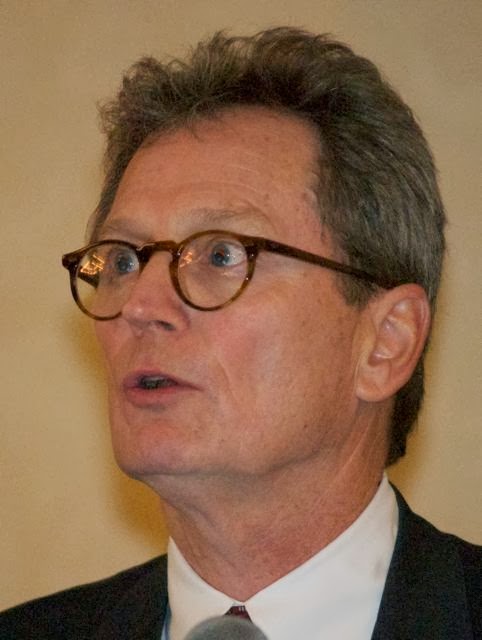
Ron Jacobsma, general manager, Friant Water Authority

Ron Jacobsma, general manager, Friant Water Authority

There is some good news, tempered with bad news. The good news is there are a lot of resources that can be reasonably and more effectively and efficiently managed.

Westlands Water District has experienced chronic water supply shortages on a regular basis since the implementation of the Endangered Species Act, and has coped using water transfer contracts based annually or on a longer-term basis with a fixed price.

Also speaking about water was Ron Jacobsma, General Manager, Friant Water Authority. He gave an interesting history of the San Joaquin River, Friant Dam, Millerton Reservoir and canal that serve 1,000s of growers on the East Side of the San Joaquin Valley from Madera to Kern County.


Brent Walthall, with the Kern Water Agency, talked about the many different and historical water districts in Kern County, as well as describing the innovative water banking that is taking place in Kern County during flood years.

Brent Walthall, Kern Water Agency

Brent Walthall, Kern Water Agency

 
The event was sponsored by California State University’s Center for Agricultural Business, Jordon College of Agricultural Sciences and Technology, Bank of America, Wells Fargo, Zenith Insurance Company, Edgewood Partners Insurance Center, and Higgins, Marcus & Lovett.

There was also a session on Immigration Reform and its importance to the Central Valley. We will post that on Nov. 4.
2016-05-31T19:43:12-07:00November 2nd, 2013|

TWO UPCOMING EVENTS

California Farm Labor Contractor Association Announces Two Conferences


Ag Supervisor Development Training Conference


Agricultural employers in the Central Valley and beyond should consider the opportunity offered through California Farm Labor Contractor Association’s (CFLCA) Ag Supervisor Training and Development Conference scheduled for November 13 at the Visalia Holiday Inn.

This conference offers 19 different sessions conducted entirely in SPANISH, to help with compliance, development, and improved performance for your front-line supervisors, safety and HR personnel. 


Many sponsors are making this an incredibly affordable program that includes lunch, handouts, documentation of training, and an exhibitors area!


   ____________________________


2013 Ag Employer Compliance Conferences

California Farm Labor Contractor Association (CFLCA) is pleased to announce a series of educational conferences for agricultural employers. The programs are approved by the Department of Labor Standards Enforcement (DLSE) for the required eight hours of continuing education for FLC licensing and renewal.


These “Ag Employer Compliance Conferences offer a wide range of information, including updates on: new and proposed labor laws; The Affordable Care Act/Obama Care; immigration reform; wage and hour issues; Cal OSHA requirements; worker transportation issues; and FLC licensing and continuing education. Plus – AB 1825 compliance with two-hour session on Sexual Harassment and Discrimination Prevention.


November 6, 2013 – Stockton

December 6, 2013 – Las Vegas


2016-05-31T19:43:13-07:00November 1st, 2013|
Go to Top