The Water Education Foundation Announces Four New Board Members

New Water Education Board Members Includes Sixth Generation Valley Farmer

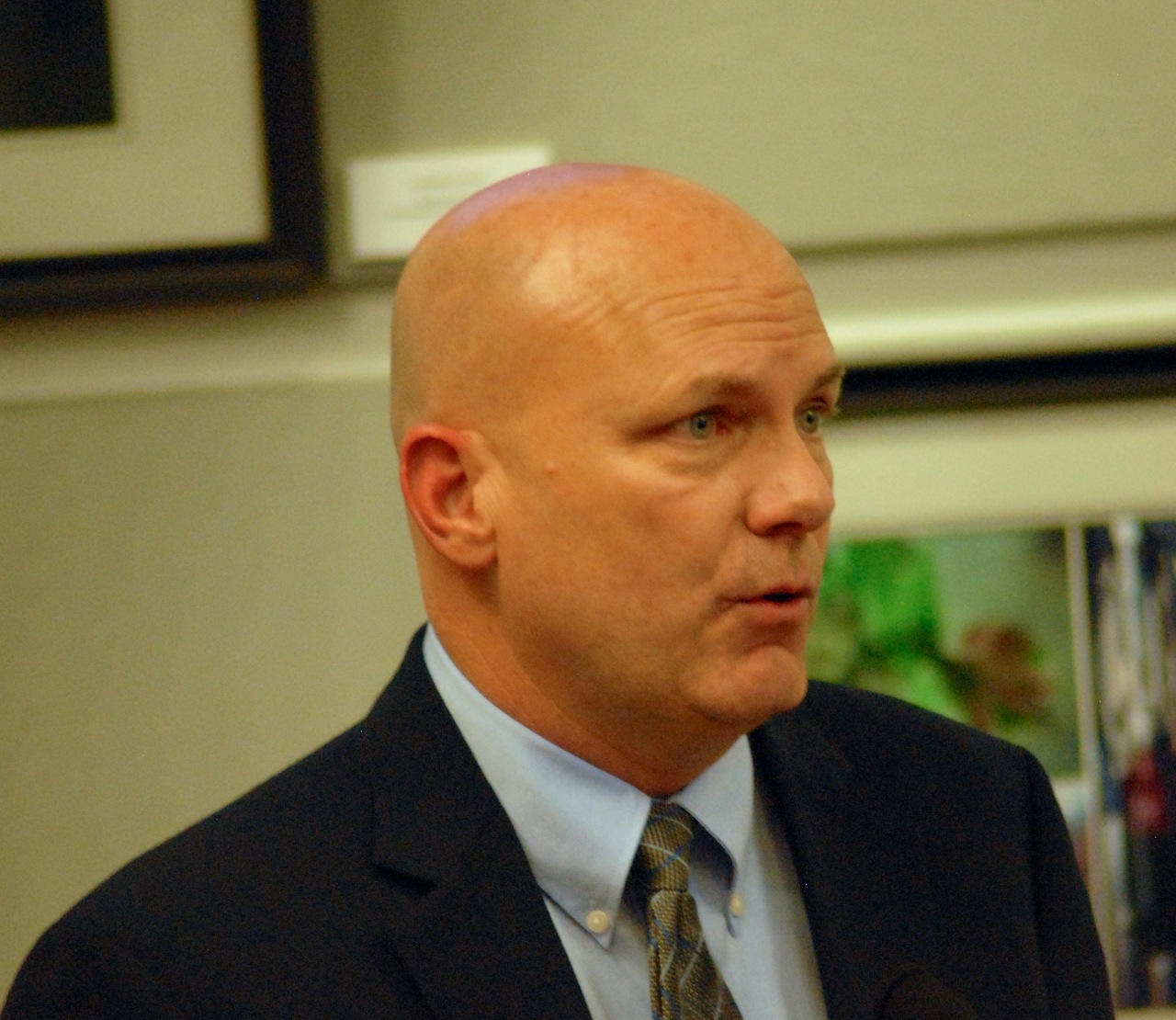
Jennifer Bowles,executive director of the Water Education Foundation Board of Directors, announced  four recently-elected members: Cannon Michael of Bowles Farming Company, Kim Delfino with Defenders of Wildlife, Jennifer Persike with the Association of California Water Agencies and Christopher Park with CDM Smith.

Elected in December, the four will join the rest of the Foundation’s board members at its next meeting in March. Their positions were effective Jan. 1, said Bowles, who is not related to Cannon Michael and his family’s farming operation.

“The staff and current board of the Water Education Foundation are happy to welcome new board members from diverse sectors of the water world,” said Bill Mills, president of the Foundation’s board of directors. “Our new board members will bring a wealth of knowledge and enthusiasm, and we look forward to their input in shaping our bright future.”

The Foundation, an impartial, nonprofit organization, is governed by a volunteer board of 33 members representing a broad cross-section of water, education, business, environmental and public interest communities. Typically, they serve three-year terms. The Foundation’s mission is to create a better understanding of water resources and foster public understanding and resolution of water resource issues through facilitation, education and outreach.

Founded in 1977, the Foundation is a vital source of nonpartisan, in-depth information about water resource issues in California and the West. Taking a steady pulse of the water world, the Foundation provides a vast repertoire of educational materials, products and services such as tours of key water sites in California and Nevada, conferences, flagship bimonthly magazine, Western Water, and Project WET (Water Education for Teachers).

The new board members are:

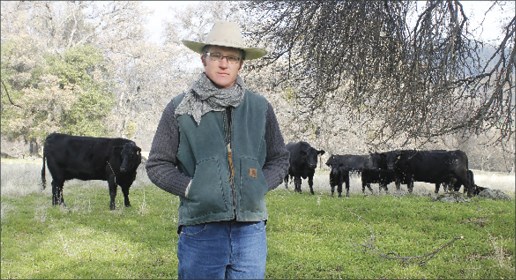
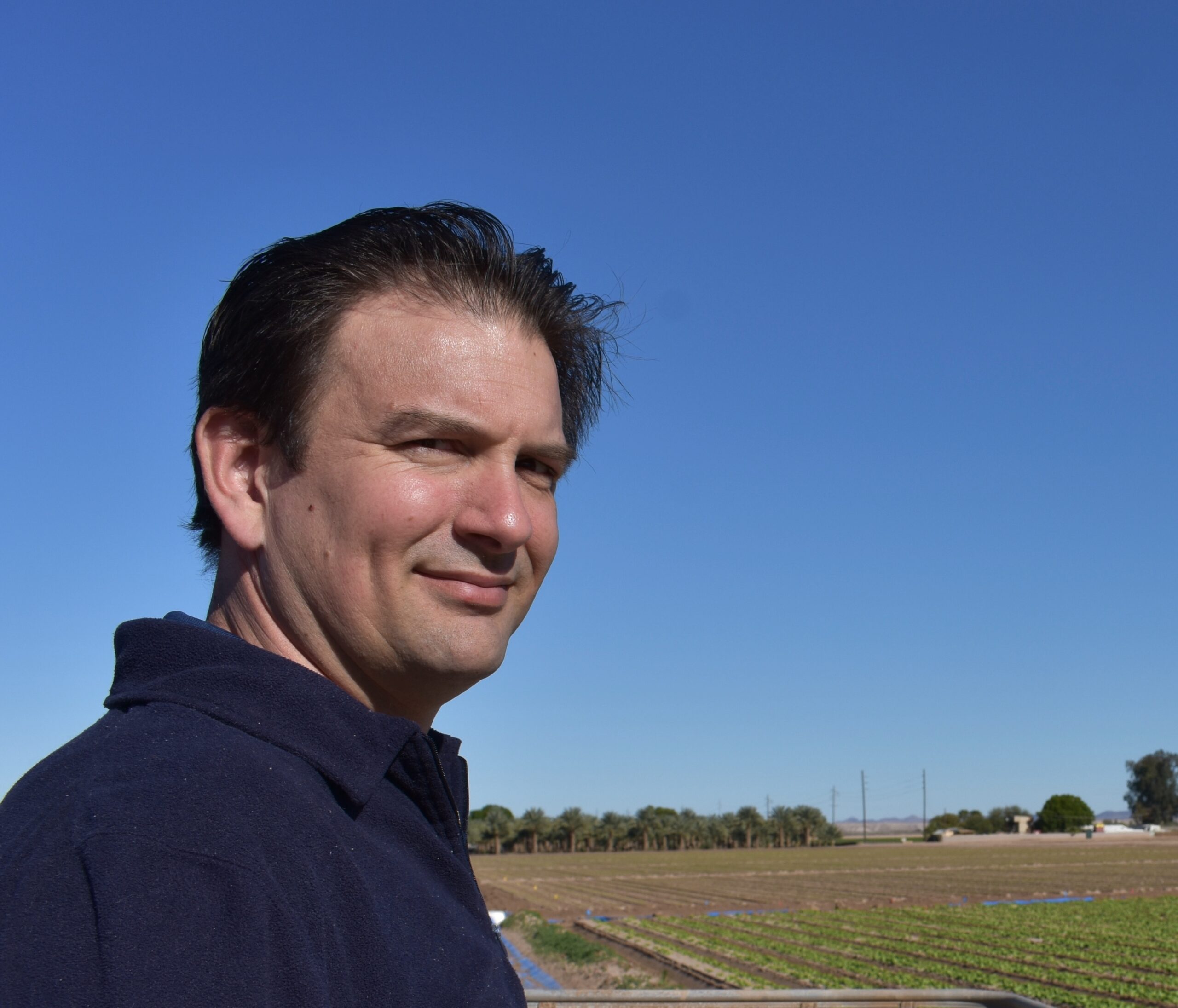
Cannon Michael: A sixth-generation farmer, Michael is president of Bowles Farming Company headquartered in Los Banos, CA. He oversees an 11,000-acre farm where the company grows cotton, fresh market and processing tomatoes, field crops and other commodities.

Michael’s great-great-great-grandfather was Henry Miller, a German immigrant whose partnership with Charles Lux became known as Miller & Lux and resulted in the build-up of landholdings in the San Joaquin Valley to more than 1 million acres.

Kim Delfino: As the California Director of Defenders of Wildlife, Delfino develops and directs the organization’s work across the state, including determining policy and program work in wildlife, land use, water and energy issues.

She is a gubernatorial-appointed member of the California Water Commission and serves on various coalitions and planning efforts, including the California Roundtable on Agriculture and the Environment, Salton Sea Coalition, the California Rangeland Conservation Coalition and the Desert Renewable Energy Conservation Plan Stakeholder Committee. Her policy expertise lies in state and federal endangered species, land use planning, water and other natural resource laws.

Jennifer Persike: As Deputy Executive Director for external affairs and operations at the Association of California Water Agencies, Persike oversees the association’s teams that work to advance ACWA’s image/brand, issues, policies and delivery of service to members. On the operations side, she oversees the association’s functions and activities related to finance, facilities, human resources, information technology, member services/events, communications and regional outreach

During her 25-year tenure at ACWA, Persike has held the positions of director of strategic coordination and public affairs, director of communications and outreach, director of communications and human resources, and manager of public affairs.

Christopher Park: Christopher Park, American Institute of Certified Planners’ certified, is a Water Resource Planner with CDM Smith in Sacramento.

Park has nine years of experience focusing on environmental impact assessment and permitting for both local and statewide water planning projects for clients that include the Bureau of Reclamation, Federal Emergency Management Agency, U.S. Army Corps of Engineers, the Santa Clara Valley Water District and the Cambria Community Services District.

Park joins the Foundation’s Board of Directors as the representative from the William R. Gianelli Water Leaders Class, of which he was a member in 2014.
2016-05-31T19:30:30-07:00February 19th, 2015|

Message to Water Board: Water is Everyone’s Business

Volunteer from El Agua es Asunto de Todos (Water is Everyone’s Business) Gives Compelling Testimony at Water Board Workshop

by Laurie Greene, CalAgToday

TODAYMaría L. Gutiérrez, a volunteer with El Agua es Asunto de Todos, “Water is Everyone’s Business,”  gave the following testimony at California’s State Water Resources Control Board‘s (Water Board) Sacramento information-only Public Workshop regarding the Temporary Urgency Change Petition (TUCP) submitted by the California Department of Water Resources and U.S. Bureau of Reclamation on January 23, 2015. Given the drought crisis, the DWR and USBR filed the TUCP with the SWRCB Division of Water Rights  to revise Sacramento-San Joaquin River Delta restrictions devised to meet flow and water quality objectives established in the Water Quality Control Plan for the San Francisco Bay/Sacramento-San Joaquin Delta (Bay-Delta) Estuary. The TUCP requests the Water Board allow more water to be allocated to the Central Valley, for a period of 180 days, via DWR’s State Water Project (SWP) and USBR’s Central Valley Project (CVP) that includes flows from recent storms in the northern part of the state.

Gutiérrez provided the following testimony:

“El Agua es Asunto de Todos” is a campaign with two main goals – to raise awareness about the water shortage in California and the devastating economic impact it is having upon the Latino community, and second, to provide a platform for the Latino community to actively weigh in on the water issues.

California is entering its fourth straight dry year marking this state’s worst drought in 500 years. A drought like this is wrecking havoc on the lives of Latino families and the communities they live in. And when you impact the Latino community, you are looking at a domino effect with epic proportions. Because this affects restaurants, gas stations, truck drivers, gardeners, mom and pop shops, small business, schools, and food projects.

Our situation is even grimmer. We have seen 40% unemployment in Mendota, Huron and Firebaugh.

We are living in America. And, so I have to ask you, how is this happening? In my mind, I expect it to get even worse. We can conserve as much water as we can now, but if we don’t get a reliable water supply, whole communities will be torn apart.

El Agua Es Asunto De Todos

“Water is Everyone’s Business”

The unconscionable decision by Executive Director Tom Howard to deny additional pumping and water supply to our Central Valley communities is outrageous and immoral. His decision is a slap in the face to Latinos who live south of the Delta.

Let me tell you something about the Latino community. Latinos want to work; they don’t want a handout; and they don’t want to be standing in food lines. People tell us at every place we stop to dialogue, how they are losing their jobs, cars, and homes. Families are seeing their college dreams for their kids disappear. They tell us, all I want to do is work.

We are seeing more women and men standing in lines for food baskets. People are being forced to make tough choices – to put food on the table or buy medication. We are also seeing too many families lacking life’s basic necessities like water for drinking, cooking and showering because their wells have run dry.  Another year with zero percent water will bring even more hardship to these families.

I’ve met farmers who have told me that if they didn’t get water, they would have to lay off entire families of workers that have worked for them for generations. Farmers are of all races and nationalities. Most have started as farm workers, they bought the acreage and now they are farmers. They are part of what makes this nation great.

People are very angry. You need to understand the total impact a bad decision will have on many of our communities.

We need water now!

It is a civil right. 

It is a human right.

All of our communities request that the State Water Resources Control Board approve in full and allow State and Federal agencies to collectively manage the Central Valley Project and State Water Project on a real-time basis to provide water to our communities that are in dire need.

Our communities cannot afford any lesser operational flexibility during this unprecedented crisis.

As the Water Board meeting was for informational purposes only, no Board action was taken.

2016-05-31T19:30:30-07:00February 18th, 2015|

Temperance Flat Reservoir Offers Solution for Flood Years

And Yes, Flood Years Have Always Followed Drought Years

 By Patrick Cavanaugh, Editor

Temperance Flat Reservoir offers a big solution for flood years, said Ron Jacobsma, General Manager of Friant Water Authority, who  spoke at a special California State Board of Food and Agriculture meeting in Sacramento recently regarding solutions to California’s water situation as we may be entering a fourth year of drought.

“The bottom line: We are not in a position to waste any more flood water. We have groundwater overdrafts all over the Valley, and if we don’t start balancing our water supplies from a regulatory perspective, but also managing when we have these generous years, we are going to end up with tens of thousands of prime agricultural land taken out of production,” said Jacobsma.

Jacobsma was focused on the proposed Temperance Flat Dam that would provide an additional 1.25 million acre feet of storage behind Millerton Lake and Friant Dam which holds only 400,000 acre feet.

“We have spilled over Friant Dam more than one million acre feet of water over the years, which ends up going to the ocean, and Temperance Flat would stop this,” said Jacobsma.

“What Temperance Flat will do is enable California to use the water twice. How do you use it in a non-consumptive way for the environment? We can create cold water pools and augment flows on the San Joaquin River. But then we can pick the water back up and move it to where it needs to go, either as irrigation supplies that year, or to recharge groundwater basins. And we have to get in the other side of the aisle–if you will–and start thinking about this,” noted Jacobsma.

“We’re not talking about grabbing as much water as we can even if we really can’t define why we need it,” said Jacobsma. “We need to say, “Let’s find a way to make the consumptive part go to traditional uses like urban and agriculture, but let’s see how we can manipulate the system with more infrastructure so that we can better manage our existing supplies and get ecosystem benefits as well.”

“That’s really the whole fundamental basis of Chapter 8, which refers to the public benefits of the Water Bond that was passed overwhelmingly by voters last November. We have to find that balance because the public is going to pay only for the public benefits.”

“It would be nice if the public paid for Temperance Flat for us, but they’re not going to. And if we can provide public benefits, we can build a broader base of support. So our objective on Temperance Flat is to take the flood water, put it in the Friant system, send it within the San Joaquin Valley with partners because we are going to have to move some water around, have some flood control, and get some recreational benefits out of it.”

“But if we are going to spend a billion dollars plus trying to get a fishery on the San Joaquin River that has not been there for 60 years–a fishery that is dependent on cold water–why wouldn’t you invest in Temperance Flat and get multiple uses out of it?”

“It is going to take some time to build those coalitions. First you have to build local support, then regional support, then broader state-wide support. That is the kind of effort that we are going to have to go through,” Jacobsma noted.

 Protecting Investment

“The other consideration with regard to Temperance Flat is how we would protect the water it stores. If we get into an operational plan, how do we protect ourselves? If our water users spend more than a billion dollars on surface storage, just to have some regulation or  law passed demanding half of the yield, but we’re stuck with that price tag, that’s a huge risk for our guys,” noted Jacobsma.

“So we also need the certainty that whatever we develop will be available for us for a definitive amount of time–you know 40, 50, 100 years,” Jacobsma said. “We have to know that the money is going to be well spent in paying dividends down the road. And we will commit under the operations plan to provide the ecosystem benefits that we agreed to.”


2016-05-31T19:30:31-07:00February 9th, 2015|

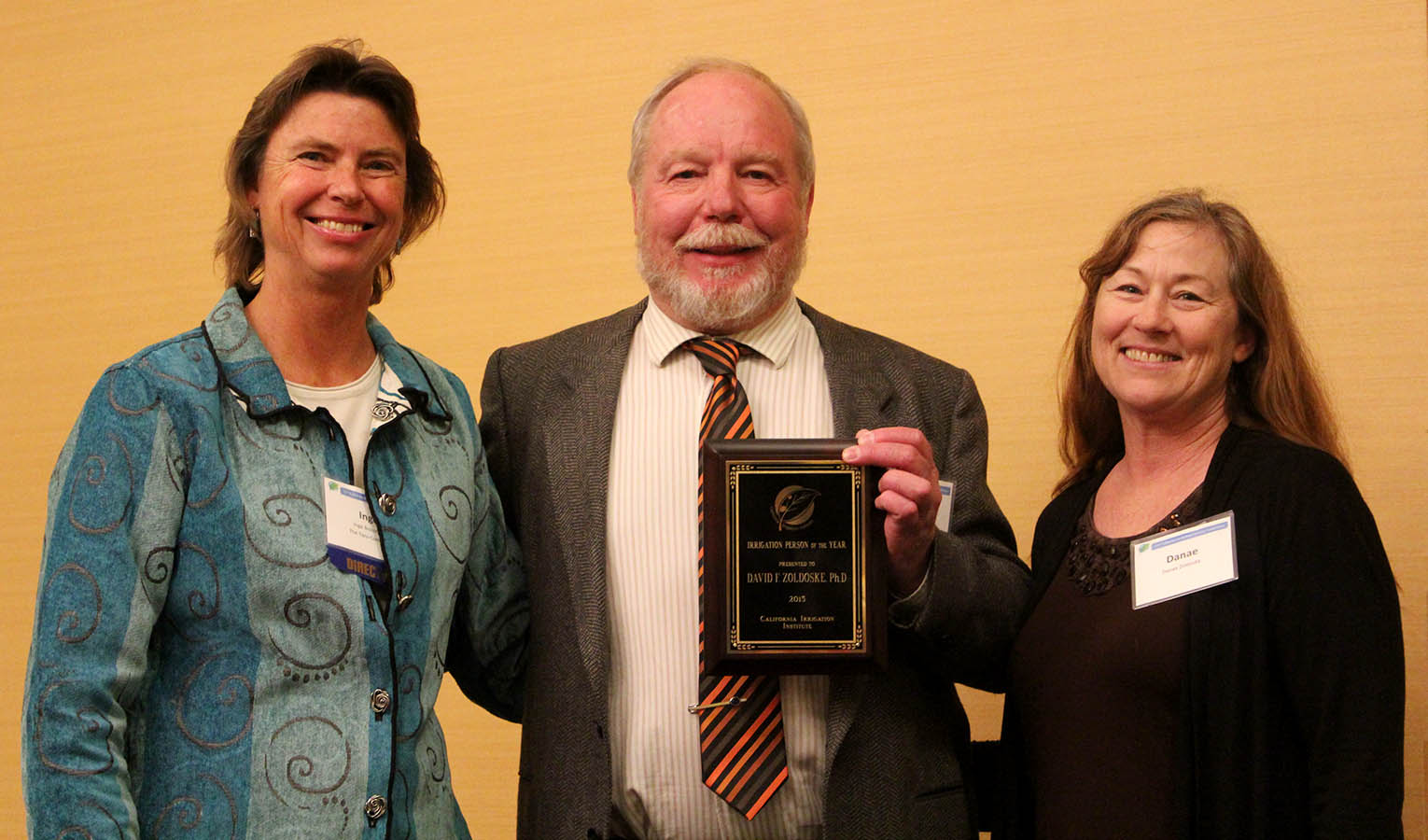
Zoldoske honored as state’s Irrigation Person of the Year

The California Irrigation Institute recognized Dr. David F. Zoldoske as its Person of the Year at its 53rd annual conference on Feb. 2-3 in Sacramento.

Zoldoske, director for the Center for Irrigation Technology at Fresno State, is the 36th recipient of the award sponsored by the state’s oldest independent forum on irrigation and water.

“On behalf of the board of directors, it is a pleasure and honor to bestow this award upon our friend and colleague, Dr. Zoldoske,” said Inge Bisconer, California Irrigation Institute board member and past president. “He has worked tirelessly for decades to promote water and resource use efficiency in agricultural and urban applications in California and beyond. We are fortunate that he chose to apply his passion, energy, skill and expertise to help address one of the most important topics of our generation: water.”

Zoldoske is the third recipient with Fresno State ties. Winston Strong, former plant science and mechanized agriculture professor was recognized in 1985 for his pioneering work in sprinkler testing, and former Center for Irrigation Technology director Kenneth Solomon was honored in 2004.

The annual conference brings together water experts, government agency representatives, water district managers, innovative farmers, urban water managers and commercial interests to focus on pressing water issues, explore innovative solutions, and discuss results of research and practical experience in the field.

Zoldoske was recognized with a similar national award in November 2013 as the Irrigation Association’s Person of the Year.

Fresno State has been involved in irrigation testing and research for more than 60 years, and Zoldoske has played a key role for four decades. He started his irrigation career as a graduate student research assistant before beginning work as a full-time research technician in 1983.

In 1994, he was named director of the center that is internationally-recognized as an independent testing laboratory, applied research facility and educational resource.

“It’s an honor to be recognized by a group representing all of California’s irrigation partners,” Zoldoske said. “The award is more of a recognition of our talented staff and all their successful and hard work. We have been tied closely with the California Irrigation Institute since the 1980s, and look forward to working with them for many years to come.”

2016-05-31T19:30:31-07:00February 5th, 2015|

CDFA AWARDS $5.8 MILLION TO ASSIST FARMERS WITH WATER EFFICIENCY AND ENHANCEMENT

Announced TODAY, the California Department of Food and Agriculture (CDFA) has awarded $5.8 million for 70 different projects in the second phase of a program to implement on-farm water irrigation systems with increased water efficiency and enhancement to reduce water and energy use, thereby reducing greenhouse gas emissions (GHGs).

The funding for the State Water Efficiency and Enhancement Program (SWEEP) is part of emergency drought Legislation (SB 103) signed in early 2014 by Governor Brown – authorizing CDFA to distribute as much as $10 million for eligible projects, in cooperation with the Department of Water Resources and the State Water Board.

“These projects are essential to allow farmers to continue agricultural food production while at the same time providing ecosystem services that enhance the environment” said CDFA Secretary Karen Ross. “The result is the continuous improvement of our farming systems while at the same time providing multiple benefits, including water conservation and reduced GHG emissions.”

With this latest round of funding, a total of $9.1 million has been awarded for 155 different projects that have leveraged an additional $6.9 million in private cost-share dollars from grant recipients. The money comes from the state’s portion of Cap-and-Trade auction proceeds. The proceeds are deposited in the Greenhouse Gas Reduction Fund and appropriated to state agencies.

The funding will reduce GHG emissions through projects that include modifications to improve water efficiency like drip and microsprinkler systems; energy-efficient water pumps; soil moisture sensors; and irrigation scheduling programs that apply water based on crop needs.

This program is the first of its kind at CDFA and applies to its authority under the Environmental Farming Act of 1995, which states that the department should oversee an Environmental Farming Program to provide incentives to farmers whose practices promote the well-being of ecosystem and air quality.

More information on the SWEEP program can be found by visiting  www.cdfa.ca.gov/go/sweep.

2016-05-31T19:30:33-07:00January 22nd, 2015|

California Projects in New USDA Regional Conservation Partnership Program

Agriculture Secretary Tom Vilsack has announced 115 high-impact projects across all 50 states and the Commonwealth of Puerto Rico will receive more than $370 million in federal funding as part of the new USDA Regional Conservation Partnership Program (RCPP).  In addition, these projects will leverage an estimated $400 million more in partner contributions—for a total of nearly $800 million—to improve the nation’s water quality, support wildlife habitat and enhance the environment.

“This is an entirely new approach to conservation efforts,” said Secretary Vilsack. “These partnerships empower communities to set priorities and lead the way on conservation efforts important for their region. They also encourage private sector investment so we can make an impact that’s well beyond what the Federal government could accomplish on its own.”

The RCPP competitively awards funds to conservation projects designed by local partners specifically for their region. Eligible partners include private companies, universities, non-profit organizations, local and tribal governments and others joining with agricultural and conservation organizations and producers to invest money, manpower and materials to their proposed initiatives.

Through the RCPP, partners propose conservation projects to improve soil health, water quality and water use efficiency, wildlife habitat, and other related natural resources on private lands.

Four of the selected projects are connected to California:

1) Expansion of Waterbird Habitat – The current sequence of events for rice production creates a situation where birds are frequently left with abrupt changes in habitat availability. The proposal extends the “watering” season of flooded rice fields beyond just the production phase and adds shallow water habitat in the winter/spring and fall months. This proposal supports the California Rice Commission in expanding the Waterbird Habitat Enhancement Program (WHEP) by 50 percent, thus enhancing the wildlife value of 165,000 acres of rice and the long term sustainability of rice agriculture.

2) Rice Stewardship Partnership – The Rice Stewardship Partnership, composed of Ducks Unlimited, the USA Rice Federation, and 44 collaborating partners, will assist up to 800 rice producers to address water quantity, water quality, and wildlife habitat across 380,000 acres in Mississippi, Arkansas, California, Louisiana, Missouri, and Texas.

3) Tricolored Blackbird Habitat – The Tricolored Blackbird once was abundant in California with a population in the millions. It now has an estimated 145,000 birds remaining statewide, and many predict that it is heading toward extinction. This proposal is a partnership between the dairy industry and conservation groups, with Audobon California as the lead partner, to address the factors that challenge California dairy farmers and threaten Tricolored Blackbirds, with the goal of finding a sustainable solution for management of colonies on farms and saving the Tricolored Blackbird from extinction.

4) Klamath-Rogue Woodland Health and Habitat Conservation – Many at-risk and listed species depend on quality oak woodlands that are threatened by conifer encroachment, densification, and severe wildfires in this project area, covering portions of Oregon and California. Working with landowners, including historically underserved producers, and using a sound, science-based approach, the partners will target 3,200 high-priority acres recently identified in a Conservation Implementation Strategy to preserve, enhance, and restore the structural diversity, ecological function, and overall health and persistence of oak habitats and their watersheds.

A complete list of the projects and their descriptions is available on the NRCS website.


2016-05-31T19:30:34-07:00January 15th, 2015|

Supreme Court declines to hear PLF’s challenge to Delta smelt “biop”

Washington, D.C.;  January 12, 2015:  The U.S. Supreme Court announced TODAY that it will not hear Pacific Legal Foundation’s (PLF’s) challenge to the Delta smelt “biological opinion,” a harsh and unjustified Endangered Species Act (ESA) regulation that has led to dramatic water cutbacks for tens of millions of people — including thousands of farms and businesses — in Central and Southern California.

In appealing the case — Stewart & Jasper Orchards v. Jewell — to the Supreme Court, PLF represented San Joaquin Valley farmers who grow almonds, walnuts, and pistachios, and who have been hit hard by the water cutbacks mandated by the Delta smelt “biop.” PLF represents these clients — as with all PLF clients — without charge.

Statement by PLF Director of Litigation James S. Burling

“We are disappointed that the Court declined to review the federal government’s damaging and unjustified Delta smelt regulations,” said James S. Burling, PLF’s Director of Litigation. “These regulations have harmed farmers and farm workers in the Central Valley, along with tens of millions of Southern Californians, by diverting vast quantities of water away from human use and out to the Pacific Ocean — all to try to improve the habitat of the Delta smelt, a three-inch fish on the Endangered Species Act list. As a result, hundreds of thousands of acres of once-productive farmland have been idled, farm workers have lost their jobs, and farmers are losing their farms. Water users in Southern California have seen rates rise significantly. And the impacts of the state’s record-level drought have been much worse.

“The feds broke their own rules when they concocted these destructive Endangered Species Act regulations, because they ignored the punishing economic impact,” Burling continued. “And the Ninth Circuit was wrong to uphold the water cutbacks, because it relied on an old interpretation of the ESA that gave short shrift to the interests of human beings. If that anti-human interpretation — in the 1978 Supreme Court case of TVA v. Hill — was ever correct, it is obsolete now, after subsequent changes in the ESA. It is high time to formally reverse that ruling.”

“Unfortunately, the High Court will not hear the challenge to the Delta smelt water cutoffs,” Burling said. “But Pacific Legal Foundation is not giving up. We will return again and again to ask the Court to review — and reverse — the perverse and outmoded TVA precedent that is being used to justify policies that are literally anti-human. The protection of imperiled species is important, but so is the protection of jobs and the economy. PLF will continue to fight for that principle until it is fully embraced by the courts and fully implemented by the bureaucracy.”

PLF’s argument: Delta Smelt Regulators Wrongly Ignored Economic Impacts

Listed as “threatened” under the ESA, the smelt is a three-inch fish in the Sacramento-San Joaquin Delta. In a controversial strategy to help the smelt, federal regulations under the 2008 “biop” sent vast quantities of water to the ocean — instead of storing it behind dams or pumping south for cities, towns, and farms. However, the smelt hasn’t improved — but the economy has suffered, and the effects of the drought have been made worse.

PLF’s legal challenge was based on the fact that the U.S. Fish and Wildlife Service violated its own regulations in drafting the Delta smelt biop. The agency ignored the potential harms — even though it was supposed to take economic considerations into account. “The economic impacts have been devastating,” noted Burling. “Pumping restrictions have fallowed hundreds of thousands of acres of farmland, and Southern Californians have seen water rates rise by as much as 20 percent. And once the drought set in, the impacts were more severe because of the Delta smelt regulations. By sending vast amounts of water directly to the ocean, the smelt regulations meant there was less water saved in reservoirs for the dry times.”

PLF’s case asked the Supreme Court to help drought-stricken California
by rejecting the Delta smelt biop — and reversing the “anti-human” TVA v. Hill

In 2010, then-U.S. District Court Judge Oliver W. Wanger, of Fresno, struck down the Delta smelt biop, holding that it had been drafted “arbitrarily and capriciously,” with “sloppy science and uni-directional prescriptions that ignore California’s water needs.”

However, this past March, a divided Ninth Circuit panel reversed Wanger’s order that the biop be rewritten. Although the Ninth Circuit acknowledged that the biop is a “chaotic document,” poorly reasoned and written, the court upheld it by citing TVA v. Hill, a controversial 1978 Supreme Court ruling.

TVA v. Hill interpreted the ESA as giving a blank check for onerous species-protection regulations, “whatever the cost” for the interests of human beings. “TVA was always an extreme reading of the ESA,” said Burling. “But it is clearly obsolete now. After TVA, Congress made it crystal clear that regulators must take a balanced approach to ESA regulations, by requiring that any species-protection rules to restrict government projects must be ‘reasonable and prudent.’ The Supreme Court needs to reconsider TVA’s outdated perspective. Unfortunately, the justices declined to use the Delta smelt case as an opportunity to do so. But PLF will continue to litigate, on various fronts, until TVA is reconsidered, and the courts insist on balance and common sense in ESA regulations.”

PLF represents Central Valley farmers

In challenging the Delta smelt biop, PLF attorneys represented three farms in California’s San Joaquin Valley that have been seriously affected, since 2008, by the water cutbacks: Stewart & Jasper Orchards (an almond and walnut farm); Arroyo Farms (an almond farm); and King Pistachio Grove (a pistachio farm). PLF represents the clients in this case — as in all our cases — free of charge.

The case is Stewart & Jasper Orchards v. Jewell. PLF’s petition for certiorari, a video, and a podcast are available at: www.pacificlegal.org.

About Pacific Legal Foundation

Donor-supported Pacific Legal Foundation (www.pacificlegal.org) is a nonprofit public interest watchdog organization that litigates for limited government, property rights, and a balanced approach to environmental regulation, in courts across the country. PLF represents all clients free of charge.

2016-05-31T19:30:34-07:00January 13th, 2015|

California Water Cutbacks Are Not Saving Delta Smelt

U.S. Supreme Court to rule on ESA-mandated water curtailments to protect Delta Smelt regardless of the cost to humans and economy


A summary of the California Department of Fish and Wildlife (CDFW) Fall Midwater Trawl Survey (FMWT) reports the lowest index for Delta Smelt in the 48-year history of this survey. The FMWT is mandated by the Delta Smelt Biological Opinion for the coordinated operation of the Central Valley Project and the State Water Project.

Jason Peltier, Chief Deputy General Manager of the Westlands Water District, sees these results as the “latest evidence of a failed regulatory regime.”

CDFW-Insignia-146x193The memorandum, sent from Steven Slater, CDFW Environmental Scientist, Region 3, to Scott Wilson, CDFW Regional Manager, Region 3, describes the Survey which annually measures the fall abundance of pelagic fish—fish which live neither near the bottom of oceans or lakes, nor near the surface, such as ocean coral reefs—since 1967. FMWT equipment and methods have remained consistent since the survey’s inception, which allows the indices to be compared across time.

According to the Memorandum, the FMWT annual abundance index is the sum of monthly indices from surveys conducted over the four months from September through December each year. During each monthly survey, one 12-minute oblique midwater trawl tow is conducted at each of 100 index stations used for index calculation and at an additional 22 non-index stations that provide enhanced distribution information.

The 2014 Delta Smelt index is 9, making it the lowest index in FMWT history. Delta Smelt abundance was highest in 1970 and has been consistently low since 2003, except in 2011.

Other fish also scored poorly. The 2014 age-0 Striped Bass index is 59, making it the third lowest index in FMWT history. Age-0 Striped Bass abundance was highest at the survey’s inception in 1967. The 2014 Longfin Smelt index is 16, making it the second lowest index in FMWT history. Longfin Smelt abundance was highest in 1967. The 2014 Threadfin Shad index is 282, which is the sixth lowest in FMWT history and the seventh in a series of very low abundance indices. Threadfin Shad abundance was highest in 1997. The 2014 American Shad index is 278, which is the second lowest in FMWT history and only slightly higher than the 2008 index of 271. American Shad abundance was highest in 2003. (Figures 2 through 6, below, illustrate these indices.)

2014_FMWT_graphs 1-4_Page_1 2014_FMWT_graphs 1-4_Page_2

In, “Delta smelt legal battle heads to Supreme Court,” published Wednesday in the LA Times, reporter David Savage, stated, “The delta smelt may be a small fish with a short life, but it has spawned a decades-long legal battle over water in California.
At issue has been a series of orders under the Endangered Species Act that at times reduce water deliveries from the Sacramento-San Joaquin River Delta to San Joaquin Valley growers and urban Southern California.”

Citing the severe state drought, the article reports that the Metropolitan Water District of Southern California attorneys are asking the U.S. Supreme Court to reconsider a strict federal rule from the 1970s that calls for curtailing the water diversions to protect the threatened delta smelt and other imperiled species regardless of the cost to humans and the economy.”

Lawyers for the Natural Resources Defense Council (NRDC) and U.S. Solicitor Gen. Donald Verrilli Jr. urged the court to turn down the appeals, the article states, saying the 9th Circuit was correct in saying Fish and Wildlife officials must take reasonable steps to protect an endangered species, regardless of the economic effect.

Kate Poole, an NRDC attorney, said the water agencies have “a long history of exaggerating the impacts “of protecting endangered fish in the delta, including Chinook salmon,” per the LA Times. “The underlying problem in California is that our demand for water consistently exceeds our supply, even in non-drought years,” she said. “Wiping out our native fisheries will not solve this problem.”


In response to the NRDC comments, the California Farm Water Coalition electronically published the following Today:

Kate Poole’s remarks, that farmers have exaggerated the impacts of ESA-based water supply cuts, would be insulting to the thousands of farmers, farmworkers, and local business owners who face not just bankruptcy, but the loss of their way of life. Hundreds of thousands of acres of farmland have been permanently fallowed. Farmers have switched to higher value crops to justify higher costs for reduced water supplies. Farmworkers have moved away, seeking employment because of job losses in communities like Firebaugh, Mendota and Huron.”

Communities were developed on the faith that was placed in the federal government to keep its promise to deliver reliable supplies of water through the Delta.  While the impacts of reduced water supplies seem insignificant to the lobbyists and lawyers from the kinds of powerful environmental organizations represented by Poole, for those whose very livelihoods are dependent on this water it is a constant struggle.


2016-08-03T21:02:07-07:00January 9th, 2015|

Early rains help range partially recover

By Ching Lee; Ag Alert

Late autumn and early winter storms that moved through the state have spurred greener pastures, improving grazing conditions on California rangelands, but ranchers say more rainfall is needed for them to begin rebuilding their herds.

“As far as grass growth, this is as good of a feed year as we’ve ever had this early in the season,” said Placer County cattle rancher Joe Fischer. “This early grass growth and early root establishment will really set us up to have a phenomenal feed year come spring if these rains continue.”

But he said he also prepared for additional drought by reducing the herd he manages by 20 percent last winter and leaving more residual feed on the ground in order to promote better grass growth this season.

Mild temperatures have also aided grass growth, Fischer said, but they don’t bode well for a healthy snowpack—sensors measure the Sierra Nevada snowpack at about half of average—and that will affect water supply for this summer where he has irrigated pasture. In addition, many springs are not yet flowing the way they should be, he added, noting that a lack of drinking water on one ranch prevented him from placing any cattle there in early fall, even though it had plenty of residual dry feed.

“I’m still fearful that we aren’t out of the woods yet when it comes to drought in California,” he said.

Despite his fears, Fischer said he’s “hopeful and optimistic that this is going to turn around for us” and that California ranchers will move toward reestablishing their herds, though their cattle numbers will remain conservative at first.

With last month’s deluge, Mariposa County rancher Clarence Borba said it appears he can start retaining some of his cattle, after being forced to cut his herd in half and to buy feed when there was nothing left to graze. Because he leases his ground, which receives no irrigation, Borba said his costs soared when he had to buy feed and pay rent on the land even when no grasses were growing.

“There were times when I didn’t know if we were going to make it through,” he said.

Borba said while he’s trying to build back his herd, he’s doing it slowly.

“Things are looking a lot brighter now than they were a few months ago, but our profit margin is pretty narrow, so you can’t make too many mistakes and spend too much money,” he said.

San Joaquin County rancher Diana Connolly said she sold about a quarter of her herd early last year and didn’t keep any replacement heifers, due to a lack of feed. Like many cattle ranchers around the state, she has had to buy plenty of hay during the last three years. Whether she will keep any replacements this year will depend on how the rest of the rainy season goes, she said, as she doesn’t have to make that decision until May, when she weans her calves.

Though she has filled her barns with hay, Connolly said if more rain does not come this season to improve pastures, “it won’t make any difference how much feed you have right now.” She recalled how the lack of precipitation last winter left ranchers scrambling, even though the fall began with some good moisture.

“The rains are good, but I think the whole cattle industry is still feeling the effects of the three-year drought,” she said.

One lesson that Sacramento County rancher Jim Vietheer said he has learned from the drought is to start buying crop insurance, with this year being the first time he’s signed up for it. He noted that federal disaster aid has allowed him to buy extra hay. Strong cattle prices have also allowed him to cull his herd more heavily than he normally would, so that he could reduce impact on his pastures.

He said even though recent rains “have helped our situation amazingly,” he fears it will be short-lived if the state does not continue to get more, periodic rainfall. For this reason, Vietheer said he’s going to remain conservative on his stocking rate on some of this leased properties, “in case it becomes another bad year.”

“I’m a lot happier, but you don’t want to count your chickens before they hatch,” he said.

For San Diego County rancher Jim Davis, his region has not gotten “significant amounts of rain” and it has “come very gently, with little runoff,” he said, but he also noted that “conditions are very much improved over what they were a month ago.”

He said his cattle will be on supplemental feed for another month and a half, but that is typical for this time of year. Being three hours away from the Imperial Valley, Davis said buying feed has not been a problem, and while the price of hay “is never low enough,” at least there’s an adequate supply.

But for now, he said he will try to maintain his herd at the current level.

“I’d like to see another year of good moisture before we start rebuilding,” he added.

Riverside County rancher Bud Wellman said his herd size has not bounced back because a fire two years ago destroyed much of his summer range, which is on forestland, and the U.S. Forest Service so far has not allowed grazing to resume.

“Right now is when the cattle would do the most good,” Wellman said, adding that cattle grazing would restore the forest ground so that water could penetrate it rather than causing floods.

What has helped him, he said, is that the Girl Scouts of Orange County has allowed his herd to graze its campgrounds for weed abatement and fire prevention.

While his summer range in the mountains has improved with the recent storms, Wellman said where he’s hurting is on his winter range, south of Palm Springs. He has not been able to place his cattle there because many of the springs and creeks cattle use for drinking water are still dry, and what rainfall the region received has not been enough to get them flowing.

“The water situation on the desert side is still very critical,” he said. “If we could get those streams and springs back, we’d be in good shape.”

2016-05-31T19:30:35-07:00January 7th, 2015|

Storm flows lead to challenges for water system

By Kate Campbell; Ag Alert

After enduring three of the driest years in state history, nothing could be more heartening to farmers and ranchers than the steady march of Pacific storms that reached California this month. But good news is tempered by the knowledge that a few strong downpours don’t translate into full reservoirs and abundant supplies — and the storms revived concern about how state and federal water systems manage storm flows in a drought year.

The state’s reservoirs stand at about 57 percent of average, slightly below this time a year ago and well below full capacity.

“We’ve had years past where rain and snow didn’t continue into the New Year,” said State Climatologist Mike Anderson, pointing to the moisture cutoff last January that assured shortages for farmers who rely on surface water deliveries from the state and federal water projects.

“So far this year, precipitation levels depend on where you are—north of a Bay Area-Tahoe line, precipitation is above average, but in the south, levels are actually below average,” Anderson said. “In addition, there’s also below-average snowpack across the entire Sierra Nevada.”

He said most of the storms so far this water year, which began Oct. 1, have been warm, meaning snow accumulations aren’t building the way water managers hope. Sierra snowpack currently is about 50 percent of average, he said.

While December storms dropped significant precipitation, the California Farm Water Coalition noted last week that many of the state’s agricultural customers in the federal Central Valley Project worry that this year’s zero deliveries of surface water will be repeated in 2015.

“In the last few weeks, hundreds of thousands of acre-feet of water were in the system at the same time delta pumps were almost completely shut down,” coalition Executive Director Mike Wade said.

As these storms have come in, Wade said the water storage situation is similar to what was seen a year ago—except the state’s reservoirs are now lower.

“It’s very frustrating to watch water flowing through the system without being captured,” he said. “We have constraints in the delta that hold down the amount of water we catch to the bare minimum because of protections for delta smelt.”

During the height of the stormwater pulse moving through the Sacramento-San Joaquin Delta last week, he said, less than 10 percent of the surge was captured for storage and use next summer.

The state Department of Water Resources and U.S. Bureau of Reclamation, in conjunction with the U.S. Fish and Wildlife Service, said last week they are experimenting with pumping reductions to prevent a “turbidity bridge” from occurring in the central and south delta. Delta smelt are attracted to turbid, or cloudy, water because it makes the tiny organisms it feeds on more visible and provides shelter from potential predators, such as non-native bass.

DWR described the strategy this way: “Forgoing the capture of tens of thousands of acre-feet of water may allow water project operators to avoid the loss of hundreds of thousands of acre-feet of water supply later in the winter.”

A spokeswoman for the Bureau of Reclamation, Erin Curtis, said the storms present challenges in operating the system “to balance the critical need to quickly increase water supplies south of the delta while being cautious to not trigger environmental restrictions that could constrain delta operations and ultimately reduce the overall supplies.”

Representatives of agricultural water users said they’ll be closely watching the results of the operational change.

“It will be interesting to see if this is a worthwhile new operating principle at the beginning of each season,” said Chris Scheuring, an environmental attorney for the California Farm Bureau Federation. “The downside is that it might turn out to be a waste of water.”

“Clearly there is risk associated with a decision like this,” Wade said. “We hope the risk pays off.”

Fresno County farmer Dan Errotabere said due to the “turbidity bridge” theory and the lack of water transfer from the delta into storage, there’s serious concern about water supply management on the part of San Joaquin Valley farmers who rely on the state and federal projects for water deliveries during the growing season.

“Managing water during a drought is critical,” Errotabere said, noting that he fallowed 1,200 acres this year. “We’re losing opportunities now and, if the available supplies aren’t managed to capture available water to the fullest extent, we may not see a water allocation for the next crop year.”

He said he’s grateful for recent rainfall that helped reduce the need for irrigation of his winter garlic and wheat crops. The rain also helps leach salt, which has built up in the soil due to the region’s widespread use of drip irrigation and saltier groundwater.

“We’ve got to get off the groundwater because of its lower quality,” said Errotabere, who is vice chairman of the CFBF Water Advisory Committee, “and we need legislation to make sure good-quality irrigation water is put into storage. The rainy days are slipping away and we may find there’s no more available water to capture.”

Vince Dykzeul, a diversified grower from Modesto, urged creation of new water storage to help water managers respond to the ebb and flow of storms.

“If it’s true the climate is changing,” Dykzeul said, “if we’re going to have larger storms and longer droughts, then we need more water in storage to respond to these changing conditions. Water storage increases system flexibility and, if done right, everybody wins from having more water available.”

He noted that his farming operation is particularly vulnerable to flooding.

“Without adequate infrastructure to control storm waters, that’s when we have trouble,” Dykzeul said. “Nobody wants to talk about managing flood while managing through a drought, but I know the benefit of keeping both sides of the coin in mind.”

Federal weather forecasters said last week they expect continued average to above-average rainfall across California during the next three months, predicting an easing—but not an end—to the severe drought of the past several years. There’s also a 65 percent chance of weak El Niño conditions developing in the Pacific Ocean, which could influence winter precipitation, although experts say “anomalies” in climate patterns create forecast uncertainties.

“It’s not likely the drought will be broken this year,” said Steve Baxter, a National Oceanic and Atmospheric Administration forecaster. “But it’s likely (California drought) conditions will improve.”

2016-05-31T19:32:09-07:00December 30th, 2014|
Go to Top