Apple Growers Stuggle

As Temps Heat Up, Apple Growers Struggle

By Courtney Steward, Associate Editor

As temperatures of early summer grow hotter, farmers of permanent crops, such as apple growers, are starting to struggle due to the lack of adequate water  to keep crop production where it needs to be. Alex Ott,  executive director of the California Apple Commission, based in Fresno, shared part of struggle.

“It’s always a challenge, especially when you are in your 4th year of drought,” Ott began. “Our biggest concerns, obviously, are about excessive heat and lack of water for the trees that are in the ground. But we’re also concerned that, first, we have a crop; and second, that the crop sizes well.”

Yet, despite the drought challenges, Ott noted the crop looks good. “The crops have good quality and look like we’re definitely going to be up—compared to last year—which is good. Last year, the crop was very light. It was a tough year for growers.”

“I think that the trees came back with some good vigor and were able to set a nice crop this year,” he said. “The conditions this spring were perfect for bloom, So, we are excited to see a good size crop,”

 

2016-05-31T19:28:13-07:00June 24th, 2015|

WAPA Annual Meeting in Monterey

WAPA Annual Meeting Nears! June 25-26

The 2015 Western Agricultural Processors Association (WAPA) Annual Meeting is right around the corner! Beginning on Thursday, June 25, the meeting will kick-off with a four-man scramble golf tournament at Black Horse Golf Club with the Associate Member and Annual Meeting reception to follow including special guest speakers.

The event will be held at the Monterey Plaza Hotel and Spa, 400 Cannery Row, Monterey CA.

The following day will include pertinent industry, regulatory and legislative updates including a FSMA Implementation Update provided by Kathy Gombas, Senior Advisor of the U.S. Food and Drug Administration, a California Water Update provided by Aubrey Bettencourt of the California Water Alliance and Gary Bardini of the Department of Water Resources and Curt Covington of the Federal Agriculture Mortgage Corporation will provide an economic outlook for the tree nut industry.

Associate members and sponsors will exhibit their services and products on:

Thursday, June 25, from 5:30-7 p.m., and

Friday, June 26, from 7:30-9 a.m. and 10:10-10:45 a.m.


Registration and payment for the WAPA Annual Meeting are due ASAP to:

Western Agricultural Processors Association

1785 N. Fine Avenue

Fresno, CA 93727

Tel: 559.455.9272

2016-05-31T19:28:13-07:00June 23rd, 2015|

BioConsortia Invents the Future

BioConsortia Plans New Ag Bio Products

By Patrick Cavanaugh, Associate Editor

Marcus Meadows-Smith is with BioConsortia, a research and development biodiscovery company in Davis, Calif. He and his company have big plans to invent the future for Ag.

“The company was founded about 20 years ago in New Zealand and was funded by a U.S. private equity,” said Meadows-Smith. “We decided to globalize the technology, and I became the founding global CEO of the company as it was established in the U.S. about 1 year ago.”

The company in New Zealand is called BioDiscovery. For many years, it was a contract research company that was very successful in the microbial space, working with companies like Monsanto and Syngenta. Then Biodiscovery made a R&D breakthrough. “We have totally restructured the company so that the global headquarters and global R&D are now run out of the United States,” noted Meadows-Smith, “and the New Zealand company has become the subsidiary that handles complementary R&D functions.”

Meadows-Smith mentioned that UC Davis and surrounding areas such as West Sacramento are teaming with bioscience researchers. “It’s turning into a bit of a hub for microbial expertise with several of the big players. Obviously you’ve got UC Davis, which is always credited as being the number one U.S. agricultural university. I’ve heard that it is now the world’s best agricultural university, so it’s a great place to be.”BioConsortia Logo

“We’ve got an excellent team of scientists in Davis, and the historic team in New Zealand has a lot of experience. They’ve been working together now for about five years, so the R&D down there is really humming at a great pace,” said Meadows-Smith.

“We’ve been able to rapidly bring together a group of scientists in the U.S.,” said Meadows-Smith, “that have jelled. We have set up a series of experiments, and we’re putting discoveries together. It’s a very exciting time to be doing pure research in the lab.”

“The other very exciting progression for us is we have just planted our second year of field trials, having completed our first year of field trials in 2014–just after the company was established,” he said.

The company is biological- and microbial-based. “We are looking at teams of microbes to improve plant traits and increase plant yield . We are developing products for fertilizer-use efficiency, abiotic stress tolerance, and biotic stress,” said Meadows-Smith.

“Pests and disease control are important, as well as metabolite expression,” he continued. “We’ve identified teams of microbes that instruct or enable the plant to deposit more sugar. As you can imagine, this provides the double productivity benefit of increasing both yield per acre and sugar content per plant.”

“While getting the plant to have increased sugar deposited in its leaf structure is a good thing; but that is actually not our main focus,” Meadows-Smith said. “We look at all the crops we want to target and ask what are the biggest needs today?”

“Fertilizer, for example, is a significant cost for the grower, so fertilizer-use efficiency products, we believe, would experience a large demand,”  Meadows-Smith stated. “There are also concerns about fertilizer leaching into groundwater, so the more efficient you can make plant take up the fertilizer, the better,” he added. “And of course, living in California, we are acutely aware of the importance of drought, so we are working on that as well. We are hoping for a yield increase per acre for the grower in everything we do.”

“We are moving products down the pipeline as we speak,” he commented, “and, obviously, we want a large body of data to demonstrate to growers how to best use our products. We are looking for two years of good field trial results and then we’ll go through the registration process. So we are expecting to get our first product on the market by 2017.

“We are developing products that contain beneficial bacteria, beneficial fungi, and good plant colonizers,”  Meadows-Smith declared. “Some will colonize the root system, and some the outside of the plant. Still others, endophytes, that will actually grow through the plant tissue. Just as we humans have microbes in our guts to aid digestion, plants actually have beneficial microbes, bacteria and fungi growing within the plant tissue,” Meadows-Smith explained.

Meadows-Smith said BioConsortia’s revolutionary platform will take biologicals to the next level “by assembling teams of microbes that perform complementary functions; so while some microbes will enhance the root system, others will aid the root in nutrient uptake,” he said. “This will bring consistency and superior performance to the marketplace. It’s a very exciting time for the industry as a whole,” he said.

“We are looking to transform food production in a way that is sustainable, bringing benefits to the grower and feeding the world with nutritious, affordable food. That’s what we are in this industry for. These are very exciting times!” Meadows-Smith said.

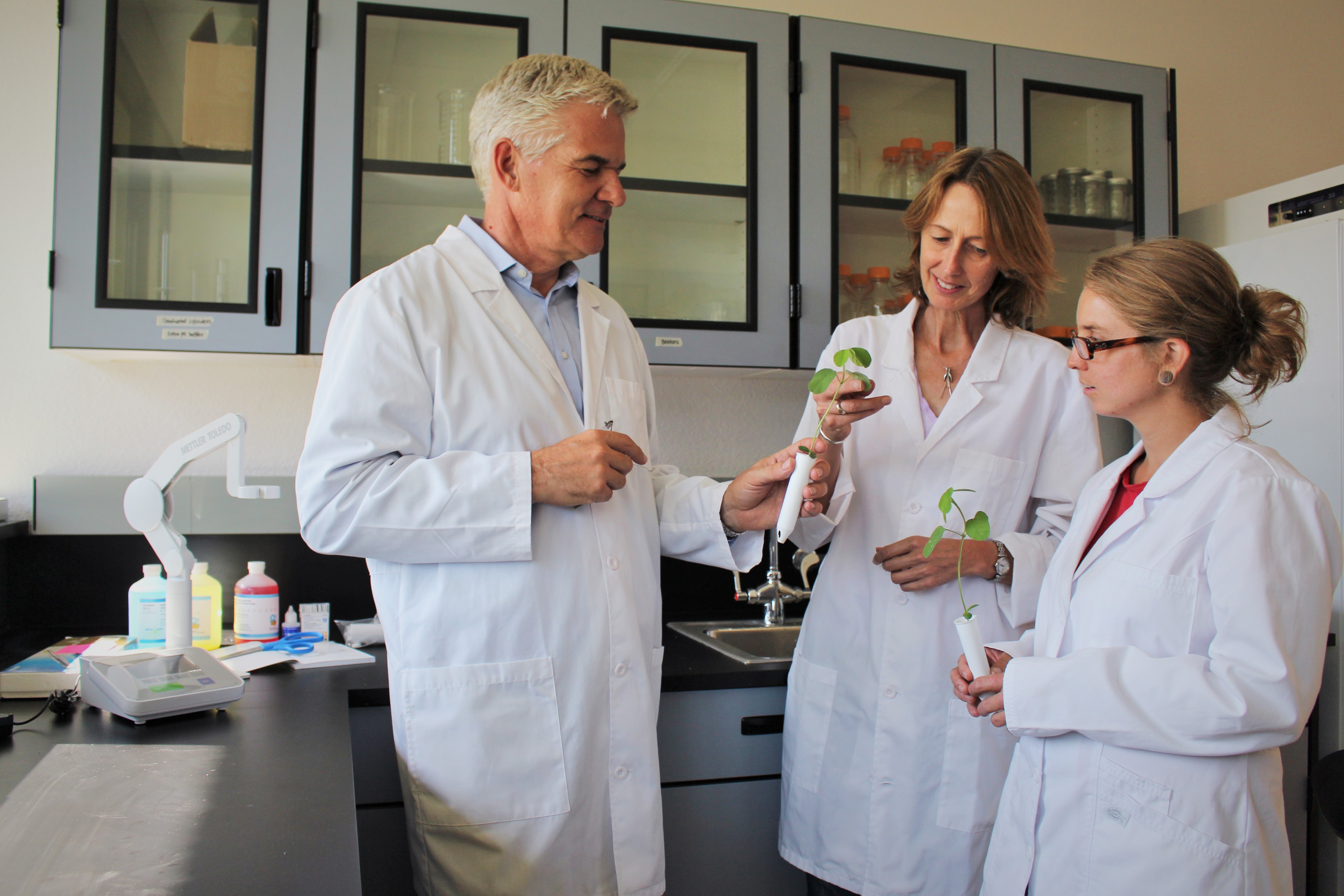
Featured photo: Marcus Meadows-Smith, with Bio Consortia Scientists.

2016-05-31T19:28:13-07:00June 20th, 2015|

Westlands Water District Announces Westside Scholarship Recipients

Congratulations to the Westlands Water District Westside Scholarship Recipients!

Six outstanding high school seniors from communities on the Westside of the San Joaquin Valley have been selected to receive scholarships offered by the Westlands Water District. The 2015 scholarships are offered by Westlands under a program to recognize and reward exceptional academic achievement and leadership by graduate seniors at area high schools.

The recipients of the 2015 scholarships are:

Aneet Hundal, a senior at Coalinga High School. Ms. Hundal is an honors student who plans on attending the University of California, Irvine to pursue a degree in nursing. She was actively involved in the Academic Decathlon, Mock Trial, Link Crew, California Scholarship Federation and tennis and basketball. Additionally, she has received a number of awards including the Superintendent’s Honor Roll, Lab Biology II Star of the Month and Wendy’s High School Heisman.

Phillip Augusto, a senior at Lemoore High School. Mr. Augusto plans to attend Cal Poly, San Luis Obispo to pursue a degree in BioResource and Agricultural Engineering. He is an honors student who has received awards from the Future Farmers of America – Scholar Awards, State Degree, Chapter Degree and Greenhand Degree. Additionally, he has been a Robotics Team finalist at West Hills Collect Vex Robotics Competition and Student of the Month for the Lemoore High School Math Department.

Emily Parra, a senior at Tranquillity High School. Ms. Parra plans to attend Stanford University to pursue a degree in Economics/Education. She is an honors student who has been the president of the California Scholarship Federation, Associated Student Body Secretary and World Travel Club Vice President, Mathematician of the Year and Student of the Month.

Jackelyn Sanchez, a senior at Riverdale High School. Ms. Sanchez plans to attend University of California, San Diego to pursue a degree in Aerospace Engineering. She is an honors student who has competed in Academic Decathlon, is an AVID 8th Grade Tutor, Student of the Month, Science Olympiad Competitor, and won an End of the Year Award for maintaining a GPA above 4.0 throughout her high school career.

Gaston Ruben Aganza, a senior at Mendota High School. Mr. Aganza plans to attend Cal Poly, San Luis Obispo to pursue a degree in Engineering. He has held leadership positions in chess and Upward Bound and has participated in AVID, Young Legislators Program, Lend-A-Hand and MESA. Additionally, he was a cross-country runner.

Teddi Diedrich, a senior at Firebaugh High School. Ms. Diedrich plans to attend Menlo College to pursue a degree in agricultural business. She has received several awards in AVID (Student of the Year), Future Farmers of America Greenhand Degree, Honor Roll, Athlete Scholar, the Superintendent’s List and State Future Farmers of America and has also played softball and volleyball.

Each scholarship recipient will receive $1,000 to be used for community college or university expenses. Applicants were judged on their academic performance, school activities and community leadership. Each applicant submitted an essay on an agricultural-related topic.

“Westlands is honored to provide this assistance for these outstanding student leaders,” said Tom Birmingham, general manager of Westlands. “These scholarships represent a small gesture of thanks and support to the communities on the west side of the San Joaquin Valley that make our region such a productive and vibrant place.”

2016-05-31T19:28:14-07:00June 16th, 2015|

Farmers Are Doing the Right Thing for Dry Creek

Stanislaus County Farm Bureau Works With Growers to Clean up Dry Creek

By Laurie Greene, Editor, CaliforniaAgToday.com

Wayne Zipser is the Executive Director of the Stanislaus Farm Bureau and co-founder of the East San Joaquin Water Quality Coalition. Wayne spoke with California Ag Today about his work with both organizations and how farmers are doing the right thing.

Zipser addressed new nitrogen reporting standards for members of the coalition, “We’re the very first coalition in the Central Valley that will be required to report nitrogen use and that’s one of the things growers probably have not had to do yet. Right now they have to do their farm evaluation plans; they were due last year, but they had to be renewed this year.”

“The other coalitions will follow suit,” he said, “but we are the first coalition to require this for our growers. We’ve been successful; we’ve had success stories on a lot of our watersheds and we’ve actually improved our water quality. Part of being the first kids on the block is seeing the success stories,” Zipser said.

“One of the success stories involves Modesto’s Dry Creek, which was impaired with crop protection materials. Four years ago, the regional water board told us that we had to come up with a mitigation plan for all of our impaired water bodies. Well, all of them are impaired, so we had to create a priority list, and Dry Creek was one of the top priority watersheds in Modesto,” Zipser said.

“We visited with every grower along Dry Creek, just to let them know what the problems were and what we were finding. They generated their own solutions or we suggested some best management practices to mitigate problems. For the last two-and-a-half to three years, we have shown zero exceedences in the pesticides we are monitoring,” Zipser said.

“Farmers are out there doing the right thing. We showed them each problem, and they fixed it on their own. It doesn’t necessarily take rules and regulations to force people to do things. I congratulate all those farmers along Dry Creek. We also addressed issues along Lateral 5 on the Turlock Irrigation District.  As we continue to visit more the watersheds,” Zipser said, “we talk to those growers and see extreme improvements,” he said.

Zipser emphasized that most farmers just needed to be alerted about a watershed problem, and they readily collaborated to fix it. “They are all concerned about it,” he said. They all want to make sure they are doing the right thing. They also don’t want to lose access to the materials they have now, so they don’t want them to flow into the waterway and cause a problem down the road. I’ll tell you, it reinvigorates my belief that people want to do the right thing.”

Zipser acts as a grower representative of the Coalition, “If a grower has questions on how to fill out forms or on compliance issues, they can call me at the Stanislaus County Farm Bureau office.”


Contact Information:

Stanislaus County Farm Bureau

1201 L Street

PO Box 3070

Modesto, CA 95353-3070

(209) 522-7278 Phone

(209) 521-9938 Fax

Email: programs@stanfarmbureau.org

http://www.stanfarmbureau.com/index.htm

2016-05-31T19:28:14-07:00June 15th, 2015|

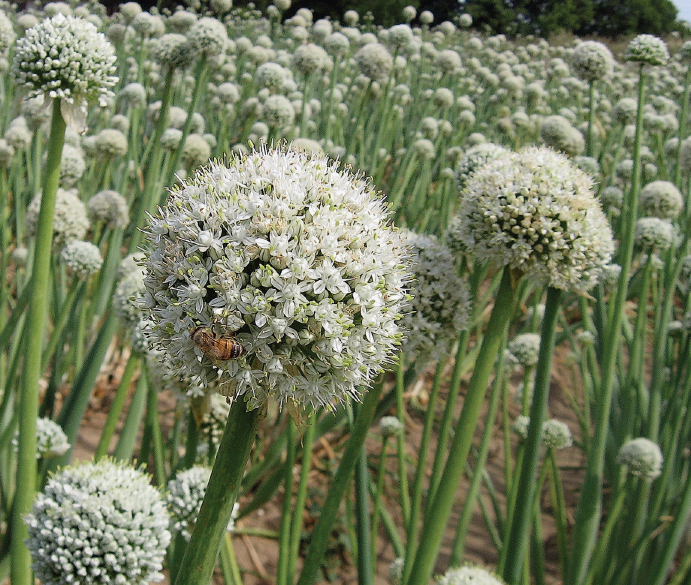
The Water Chase for Harris Farms Onions

Harris Farms Onions Diversify to Chase Water

By Patrick Cavanaugh, Associate Editor, CaliforniaAgToday.com

Some farmers facing very little or zero water deliveries in the Central Valley are investing in crops in areas where water is more plentiful. Steve Hamm, controller for Harris Farms near Coalinga in Fresno County, noted that Harris Ranch has taken this bold move and is now reaping benefits from farming in Kern County.

Hamm told California Ag Today, “We own a couple thousand acres of land in a little town called Mettler, near the intersection of 99 and I-5,” at the foot of a grade known as ‘The Grapevine’ that starts at the mouth of Grapevine Canyon and ascends the canyon to the Tejon Pass in the Tehachapi Mountains. “It is more of a gas stop; you’ve probably breezed by it many times heading to Los Angeles.”

“Despite the name ‘Grapevine Region,’ we do not grow any grapes. We grow crops similar to what we grow on the Westside, starting with almond trees, of course. These days, especially given over-priced water and an increase in fallowed ground, record almond prices is really the only thing keeping us afloat. Like almonds, we also grow melons, carrots, onions, tomatoes and lettuce down there,” Hamm noted.

“Although we duplicate a number of crops, farming in Mettler is unique. I’ll use onions as an example. We have an onion processing plant down there to process the onions as soon as they come in from the field, so they don’t  sit around for month–as in a bin. With onions, we are looking to getting through a certain tonnage per year and this is our window,” said Hamm.

“If we took onions from everybody on the Westside in Fresno County or northward,” Hamm explained, “processing them would not work efficiently. Harvest deliveries would arrive at the processing plant at the same time, resulting in a backup, and we would have to push the crop through the plant as fast as possible.”

Hamm says this inefficiency in delivering a large volume to market at one time would greatly impact prices. “What you are really looking for is a location at which you can harvest a crop when the market reaches its highest price. So, Kern County, especially south Kern County, right at the Grapevine but not quite at the granite mountain, still has good-enough soil to grow row crops like you do here in Fresno County. But Mettler is at a higher elevation, by hundreds of feet, and is also further south in latitude. Surprisingly, this combination places the Grapevine onion harvest first. So we harvest it down there, transport it up here to our packing shed, and that keeps us plenty busy for weeks until the local Fresno harvest, and that’s a huge volume.”

“These days the wholesale produce folks are looking for a year-round supply,” he continued. When they talk with an onion salesperson, they want a twelve-month supply. So our onion salesman looks into Mexico to start off the season, chasing it northward and all around California, wherever it becomes available. At the end of the season, we end up in Washington, even Canada. And when it gets too cold up there, we return to Baja Mexico. We may or may not pack each harvest, but when we geographically spread our supply, our market timing improves.”

In explaining the water chase for Harris Farms onions, Hamm said, “Kern County also has a very different water situation than the Westside of Fresno County, which is supplied by the Westlands Water District, a Federal system that delivered a zero percent water allocation last year. Our water systems in Kern County are Arvin-Edison and Wheeler Ridge-Maricopa, part of the state program, which delivered about a fifteen percent water allocation this year and five percent last year. And, unlike the Westside where the water district owns no wells, these Kern County districts have wells.”

“In addition,” he said, “we are actually part of a water bank in Kern, plus we have our own private wells, like most farmers there. But, here on the Westside, we have only two water sources; groundwater, of course, and our canal allocation that has been zero. So our Westside land is down to a single water source, not including free market trade. We are doing as much as we can in Fresno County on wells, but they have a maximum capacity–you can only run them 24 hours a day.”

“Even without buying water on the open market, we gain a lot more flexibility by diversifying with farms in Kern County that have these four water sources,” Hamm concluded.


Sources: California Ag Today interview with Steve Hamm; Harris Farms website; Wikipedia, “The Grapevine”

Featured Image: UCANR

2016-05-31T19:28:14-07:00June 13th, 2015|

Harris Farms Prepares For the Future

A Conversation with Steve Hamm, Controller of Harris Farms, Coalinga

CaliforniaAgToday: How long have you been working with Harris Farms?

Steve Hamm: I’ve been with Harris since December of 2013, so a year and a half. I have the freshest face on the farm!

CAT: That was the first year with zero water allocation; could that have been the worst time to start?

Hamm: I do not think it was a bad time to come in–even though 2013-2014 definitely was a hard hit, now look at 2015. I think it is an important time for me to be here. There are a lot of ways we used to do business that probably made sense under different scenarios. Now, whether we are looking at cost allocation or geographical diversification, we are thinking differently than before and challenging a lot of old assumptions, such as how much to plant, and how much water to carry over, and what are normal prices. A few years ago, people would laugh at $400-500/acre-foot of water; now you are paying triple that price.

CAT: Makes you think differently, doesn’t it?

Hamm: Everything is being challenged. I think when I started, it was a good time to ask questions–just within Harris Farms. Why do we do it this way, why do we do it that way? Have we considered this? And sometimes there is nothing you can really do to change, but other times, all it takes is really challenging old assumptions.

We are getting into some things we probably would not have considered a few years ago–just kind of the new reality. I really think about the future and making financial plans. Luckily, we are diversified, so if we don’t get Westside water, we’ll be OK. We’ve got the beef operation, plus hospitality with the Harris Ranch Inn & Restaurant in Coalinga, and other ranches for farming, so corporate will be OK. But looking at this farm here on the Westside, we’re all hoping next year the rains will come.

It reminds me of that old Jewish saying, “Next year…. in Jerusalem.” How many centuries did they say that before it happened? I wonder will the rains will come 2016? What if it is 2018? Are we preparing ourselves for that?

2016-05-31T19:28:14-07:00June 11th, 2015|

Recycled Wastewater Could Help Growers in Del Puerto Water District

Recycled Wastewater Could Help Growers of Permanent Crops

By Kyle Buchoff, CaliforniaAgToday.com

Jim Jasper

Jim Jasper, Owner/President, Stewart & Jasper OrchardsA recycled wastewater project from Modesto and Turlock wastewaster facilities may help provide 30,000 acre-feet to start with much more coming later if things work out. Jim Jasper, is a diversified grower with Stewart & Jasper Orchards in Newman, which is part of the Del Puerto Water District. “We hope to get about 30,000 acre-feet of water from the city of Modesto,” said Jasper, “and that would start in 2018 if we get it through the Del Puerto Water District which is 45,000 acres stretching from a little bit South of Tracy to just North of Los Banos, along the I-5 corridor.”

This would be enormously helpful for growers in the area, but Jasper said it hasn’t been easy. “We’ve been working on this for going on six years now,” stated Jasper.  “We’ve been back to Washington D.C. three or four times, and we are getting a lot of support. Del Puerto would pay to build a pipeline across the San Joaquin River to take recycled water from Modesto up to the middle of the canal. It would cost over 100 million dollars of farmers’ money to get it done, but it would give us a reliable source of approximately 30,000 acre-feet, which would be 1/3 of what our needs are to take care of our district.

And Jasper noted the supply would particularly help growers of permanent crops, “Of the 45,000 acres in our district, about 27-28,000 are permanent crops, mainly almonds, grapes, walnuts, and cherries. So it is very important that we have a dependable water supply. Obviously, 2015 is the second year that we have had a 0% allocation, so it has been extremely challenging to keep our crops alive.”

Jasper stated the Del Puerto Water District, “has 15,000 acres have been idled in 2015 of our 45,000 acres.”

He expounded, “On the Westside, along I-5, we just don’t have groundwater to substitute for our 0% allocation, so it has been very very difficult.”

Jasper said the only way to survive the 0% water allocation was to purchase water from someplace else. “We’re trying to purchase the water,” said Jasper. “Last year, one of the growers I work with in the almond business was successful at purchasing 1,000 acre-feet of water at $2100/acre-foot, so they were able to get through last year. But they sold their orchard because they could not continue that kind of expense. Another grower I do business with bought 1000 acre-feet of water at $2000/acre-foot, was not successful, and subsequently sold his orchard last year. So we see that as good as the almond industry seems to some people–where there is water, where there isn’t water, almond farmers are really hurting. They are pulling orchards–we pulled 400 acres of our 2,000 acres already–and water the younger trees, which have a better future. You just make these decisions. It’s been very challenging.”

And Jasper said that the recycling project gives them hope, “This recycled water will really help if if we can get it through. We’re in the process and are very, very hopeful.”

2016-07-05T03:28:23-07:00June 9th, 2015|

MY JOB DEPENDS ON AG Broadens Ag Community on Facebook

“My Job Depends on Ag” Facebook Campaign Goes Big

 By Patrick Cavanaugh, Associate Editor

It was a vision by Steve Malanca a tractor, salesman, and Erik Wilson, pest control operator and honeydew melon farmer, both working in around Dos Palos in Merced County.

Erik Wilson

Erik Wilson

“The fact that California agriculture is only 2 percent of the gross domestic product of the state was offensive to agriculture,” said Wilson. “because we all know it goes way beyond the gross receipts.”

Steve Malanca

Steve Malanca

Back in 2013 Malanca, an equipment salesman with Duetz Allis in Kerman, Calif., came up with a decal with the message: My Job Depends on Ag. He made a few for his friends who slapped them on their trucks.

“The phrase was inspired by a video done by Mike Wade, California Farm Water Coalition, in which he asked several people how they depended on ag for their job,” Malanca said.

Malanca was born and raised in Firebaugh, where his grandfather settled after emigrating from Italy. “My grandfather worked for Miller and Lux ranch, which was one of the largest ranches in the United States in the late 1800s,” he said.

“My father was born and raised on the West Side and was a cotton gin manager for Producers Cotton Oil Company. I have an older brother who is in the cantaloupe business longer than I have been in the farm equipment business. He is part owner of Westside Produce, and my younger brother is a shipping clerk there.

Producers Cotton Oil Company Plant Near Calwa, California

Producers Cotton Oil Company Plant Near Calwa, California

For the last 40 years, starting in Firebaugh, Malanca has been selling farm equipment. “That community has been tremendous to our family. Being involved in the equipment business, and talking to our customers about the trials and tribulations about water was an inspiration to put the ‘I Depend on Ag’ video together.

“There was a local Firebaugh farmer who made a brown ‘V’ decal that was a spinoff of the green ‘V’ of former Fresno State Bulldog coach Pat Hill, signifying the green valley. The brown V of course signified no water,” said Melena. “I expanded the idea and generated the ‘I Depend on Ag Decal’ about a month ago.

“Then Erik immediately suggested that we put it on Facebook, and the two ideas were married–and here we are,” said Malanca. As of the afternoon of June 6, the number of connections were close to 21,000 members!

“We did not want to have a Facebook with statistics on the importance of agriculture in California,” said Wilson. “I have a friend named Brian Ervin who is on Facebook, and he posted an item unrelated to the ‘I Depend on Ag’ concept. He wanted to know about other people’s California…Was it raining?…Was there hail on the ground? There was also an image of a guy loading a hay truck.”

“Instead of pushing out information, I got the idea of just letting everyone tell their own story,” Wilson said. “If people have a job that depends on ag, then we should let them tell their own story. Let people get involved. They own the page, and the stories have been wonderful. In fact, Steve and I have gotten choked up on some. People are saying are some things you’ve never heard of, and it’s really kind of historical,” he said.

“There are a lot of old methods of farming that have been forgotten that are now being introduced on the page,” said Wilson.

“Also, I have encouraged any group or person who disagrees with our philosophy and farming methods to open up the conversation, and not yell or get profane. This is what everyone America has been crying for from our politicians. So, we are going around them. This is how civilized adults get things done.”

“There have been comments from the organic crowd regarding images of sprayers working in fields. Now if they want organic food to eat, we will be happy to give it to them at a higher cost; organic production costs us more in time, money and trips across the field because the materials that we are permitted to use are not as affective,” said Wilson.

“We had a conversation with Western Growers on June 4 in which they asked if we were having to delete a lot of entries from people bashing the web page,” said Malanca. “And Erik, who moderates the page, said only three posts had to be deleted.”

“I may have deleted something prematurely because I thought a comment might go south too fast, but I just do not want the nastiness or personal attacks to take over, because it often happens if you do not moderate–even if it’s a friend–if they throw F-bombs, their entries will be deleted.”

“We are hearing from so many people who understand that ag is part of their job. We had a guy who works in the tortilla chip factory in Los Angeles who depends on ag for his job because all the corn that goes into the chips is grown in the San Joaquin Valley,” said Wilson.

“Flower shops are connecting in because flowers are agriculture. A lavender grower also posted a comment.”

Trucking companies are chiming as well. “If we can’t grow and sell it, then these boys can’t haul it,” noted Wilson. “And if we can get the trucking industry behind us since they do haul a lot of ag products, suddenly we are uniting an even larger segment of people who depend on agriculture,” said Malanca.

“I’d like to see these truckers and the guys on the docks get as passionate as we are, and maybe decide not to haul freight to areas that are complaining about farmers. They need to say, ‘if you want what we have, then turn the water on for the farmers.'”

“This is giving farmers a voice,” said Malanca. “And it’s something that has been missing.”

“Our wives have said that we are preaching to the choir, and I say that we need to rally and embolden every single person in the industry. I want to champion them as their story has not been told in the media–other than the agricultural media,” said Wilson.

“Many fragments have beentrying to get something done, but now we are seeing farmers really coming together on ‘I Depend on Ag.’ This is what we have been trying to do since the beginning of time,” said Malanca.

While the scope of the facebook page focuses on California, plans are germinating to roll out a national campaign. “After all, there are millions across the country who depend on agriculture,” said Wilson.

2016-05-31T19:28:15-07:00June 6th, 2015|

Biomass Bill Passes Assembly

Biomass Bill (AB 590, Salas / Dahle) Protects Renewable Energy and Air Quality

SACRAMENTO – AB 590 will incentivize biomass utilization of agriculture waste and forest waste. The legislation will save jobs, divert biomass from landfills, and create renewable energy.

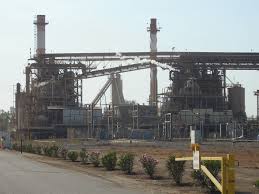
“Biomass power generation is a clean and efficient way to produce renewable energy and help improve our air. In fact, the Delano biomass facility has helped reduce 96 percent of the pollutants released from open-field burning. This facility alone converts 300,000 tons of agricultural waste per year into clean, renewable energy.” said Assemblymember Salas. “AB 590 provides the necessary structure and resources to protect and incentivize biomass power in California.”

Farms in Kern and Tulare Counties generate over 580,000 tons of woody waste annually, mostly from almond, peach, and nectarine orchards. In the past, most of this material has been burned openly in the fields. Open burning of wood residues produces up to 100 times more greenhouse gas (GHG) emissions than biomass power plants, which convert wood into renewable energy. The Delano biomass facility reduces 96 percent of the pollutants released in open-field burning; leading local air quality management officials to call Covanta Delano “a stationary air pollution control device.”

In addition to air quality benefits, the biomass plants produce a steady flow of reliable, renewable, baseload electric power regardless of natural external conditions, like wind, sun and water flow. The plants also help ensure that the state meets its current renewable energy portfolio standard of 33 percent by the 2020 statutory deadline.

“In the past few years we have seen the catastrophic results of forests that are too loaded with forest fuels. The people of my district have lived in a cloud of smoke, as thousands of acres have burned destroying lives, property, critical animal habitat, ruining our watersheds and wasting valuable resources,” said Assemblyman Dahle. “I introduced AB 590 to address this crisis. The bill is now on to the Senate with bipartisan support from the Assembly, where I hope to see it receive the same support.”

Currently, California biomass plants use more than eight million tons of wood waste as fuel. About 3.7 million tons represent urban wood waste kept out of landfills, helping local governments meet disposal mandates.

Biomass plants across the state employ approximately 700 people directly, as well as 1,000 to 1,500 other workers in dedicated indirect jobs. Many are in economically hard-pressed rural communities where the plants are one of the largest private employers.

Unfortunately, the 25 plants that convert biomass waste into energy are at serious risk of closure without decisive action by the State Legislature and the Governor. In the past year, five plants closed. AB 590 would allocate part of the state’s Greenhouse Gas Reduction Fund (GGRF) revenue to defer the costs of operating these plants.

###

Assemblymember Salas represents part of the City of Bakersfield, the cities of Arvin, Avenal, Corcoran, Delano, Hanford, Lemoore, McFarland, Shafter, Wasco, and the communities of Armona, Buttonwillow, Home Garden, Kettleman City, Lamont, Lost Hills, Stratford and Weedpatch

Assemblymember Dahle represents Alturas, Anderson, Butte County (Portions), Colfax, Dunsmuir, Grass Valley, Lassen County, Modoc County, Montague, Mount Shasta, Nevada City, Nevada County, Placer County (Portions), Plumas County, Portola, Redding, Shasta County, Shasta Lake, Sierra County, Siskiyou County, Truckee, Weed, Yreka

(Photo: Covanta Biomass Plant, Delano, CA)

Contact: Jillian Rice. (661) 335-0302

2016-05-31T19:28:15-07:00June 4th, 2015|
Go to Top