Farmers Urged to Participate in Survey

Study: Conservation benefits From Farming in Central Valley

By Anita Brown

USDA Natural Resources Conservation Service

Every year thousands of California farmers work hard to protect the environment while maintaining the state’s enviable status as the nation’s top agricultural producer.

Farmers establish highly efficient irrigation systems, limit or stop the runoff from their farms, add vegetative strips and hedgerows to catch sediment, lend a patch of space to pollinators and wildlife, practice Integrated Pest Management (IPM), and adopt practices to build healthy soils that help stop fields and creek banks from eroding.

The USDA’s Natural Resources Conservation Service (NRCS) enters into conservation contracts with over 2,400 producers each year in the state. Other farmers work with resource conservation districts, industry groups or non-profits, or they undertake conservation completely on their own to comply with the strictest regulations in the nation and fulfill an internal commitment to pass-on the land in better condition than they found it. As a result, hundreds of millions of dollars and countless hours are invested in protecting water, soil, air and wildlife on California farms. And yet, we constantly struggle to tell the story of what farmers are doing to protect natural resources.

With all of this in mind, NRCS California and the USDA’s National Agricultural Statistics Service (NASS), are collaborating on an extensive survey of approximately 1700 farmers in the Central Valley watershed. The study, called the Conservation Effects Assessment Project or (CEAP), is the largest one ever undertaken in California. NASS surveyors, called enumerators, have just begun to collect data and will continue to do so through next February.

USDA statisticians will use the survey data to populate computer models showing the benefits of conservation practices in use. The models can also simulate the impact of removing current practices or the benefits of targeting and applying additional conservation on the landscape.

This will help us tell our story to those crafting policy or legislation or anyone else who asks, “What has agriculture done for the environment lately?”

The results will also help point up where more assistance is needed and make the case for greater funding in such areas.

Since information is pooled for statistical analysis and modeling, confidentiality for individual landowners is absolute. In fact, in over 17,000 CEAP surveys completed nationwide, there has never been a breach of privacy.

But the project will be scientifically valid only if farmers agree to take their valuable time to participate. This conservation story deserves to be told. We ask farmers and ranchers to please add their voice if NASS comes knocking.

2016-05-31T19:42:25-07:00December 26th, 2013|

BILL TO CURB ANTIBIOTICS FOR FARM ANIMALS

California Law To Stop Non-Medical Antibiotics For Farm Animals
Senator Jerry Hill (D-San Mateo) has announced he will introduce legislationlegally requiring recently released FDA voluntary guidelines to phase out the non-medical use of antibiotics in farm animals in California in order to combat “growing resistance to these vital drugs. The bill will be introduced when the Legislature re-convenes on Jan. 6.

Under the legislation, farmers’ and ranchers’ use of antibiotics to make animals grow bigger, a practice since the 1950s, would be illegal in California. The bill would require food producers to obtain a veterinarian’s prescription to use the drugs to prevent disease in their animals.

“With veterinary oversight, animal pro-dicers will still be able to use medically important antibiotics for legitimate disease treatment purposes,” according to the press release.

Drug manufacturers would have to change their labels to prevent farmers from buying antibiotics over the counter and using them for non-medical purposes. Again, the press release states, “Pharmaceutical and livestock producers would be subject to penalties if they do not comply.”

At hand is the issue of disease-resistance from repeated exposure to antibiotics to drugs such as penicillin and tetracycline that are used to treat common bacterial infections in humans. Medically important antibiotics used in food-producing animals are the same ones used in humans. Farms consume at least 70 percent of the nation’s antibiotic supply, and the FDA has approved at least 685 different drugs for use in animals.

This year, an outbreak of antibiotic-resistant salmonella linked to three chicken plants in California sickened nearly 400 people; 40 percent of those infected were hospitalized. Each year antibiotic-resistant infections result in at least $20 billion in direct health care costs and at least $35 billion in lost productivity.

“Antibiotic use in food producing animals for non-medical reasons is a serious public health issue,” Hill said. “My legislation is intended to ensure that medically important antibiotics remain effective in treating bacterial infections in animals and humans.”

Sources: Office of Senator Jerry Hill, Western United Dairymen, 12/20/13

2016-05-31T19:42:25-07:00December 25th, 2013|

SOYMILK, ALMOND MILK NOT FROM COWS

Judge: Reasonable Consumer Knows Products Contain No Milk
U.S. District Judge Samuel Conti in California dismissed a lawsuit by ruling that that a reasonable consumer would not be deceived into thinking that products labeled as “soymilk” and “almond milk” contain dairy milk.

Conti said in the ruling, “Under plaintiffs’ logic, a reasonable consumer might also believe that veggie bacon contains pork, that flourless chocolate cake contains flour, or that e-books are made out of paper.”

The ruling terminates a lawsuit filed in California that seeks class action status and accuses manufacturers WhiteWave Foods, Dean Foods, WWF Operating Co. and Horizon Organic Dairy of false advertising. The judge said that because the words “soy” and “almond” precede “milk” in the product names, it’s obvious to “even the least discerning of consumers” that they’re not produced by dairy cows.

Since the FDA hasn’t adopted a uniform interpretation for what such products should be called, Conti said he agreed with the manufacturers that the terms “soymilk” and “almond milk” are accurate descriptions.

Soy milk, a beverage made from soybeans, is a stable emulsion of oil, water, and protein. It is produced by soaking dry soybeans and grinding them with water. Soy milk contains about the same proportion of protein as cow’s milk: around 3.5%; also 2% fat, 2.9% carbohydrate, and 5% ash. commonly used. The coagulated protein from soy milk can be made into tofu, just as dairy milk can be made into cheese.

Almond milk, a beverage made from ground almonds, contains no animal products, cholesterol nor lactose.


Sources: Western United Dairymen, 12/20/13
Wikipedia, the free encyclopedia

2016-05-31T19:42:25-07:00December 25th, 2013|

SANTA CLEARED FOR TRAVEL JUST IN TIME

Santa Gains All Permits for Travel, California is First Stop
Dr. Peter Merrill, APHIS Director of Animal Imports posted BREAKING NEWS out of Washington DC TODAY that the US Department of Agriculture’s Animal and Plant Health Inspection Service (APHIS) has issued a movement permit to Mr. S. Claus of the North Pole, a broker with Worldwide Gifts, Unlimited. 
The permit will allow Santa and his reindeer to enter and exit the United States between the hours of 6 PM December 24, 2013 and 6 AM December 25, 2013, through or over any northern border port.
In a fireside interview, Santa told California Ag Today that after entering from the north, his itinerary will commence in California’s Central Valley, where he can stock up on his favorite snacks: tree nuts and kale. Santa will bring some citrus back to the elves.
 

Santa – Across the Field in the Distance

“During this season of giving, USDA wants to do everything in its power to help Santa,” said Dr. John R. Clifford, USDA’s Chief Veterinary Officer. USDA has agreed to waive normal application fees and entry inspection/sniffing dogs/overtime costs/permits/baggage fees/passportcertification/visiting visa and foreign currency exchange, provided he winks his eye and wishes port personnel a Merry Christmas at the time of crossing.
APHIS also waived the normally applicable disease testing requirements, as the North Pole is recognized by APHIS as a negligible risk for all livestock diseases; at a recent inspection, the reindeer were found to be healthy and able to prance and paw with each hoof.
As a condition of entry, Santa Claus must certify the reindeer as never having been fed anything other than hay, sugarplums, and gingerbread. The reindeer must also be individually identified with microchips or official ear tag identification, and must respond to the names ‘Dasher’, ‘Dancer’, ‘Prancer’, ‘Vixen’, ‘Comet’, ‘Cupid’, ‘Donner,’  ‘Blitzen’ and ‘Rudolph’ when interacting with port personnel. 
No more than one reindeer in the group may be visibly affected by ‘Rednose Syndrome’, and upon entry, port personnel will visually inspect the reindeer to ensure they are healthy and fit for continued travel.
They will arrive pulling a wooden sleigh that has jingling bells attached and is filled with brightly wrapped gifts. Port personnel will clean and disinfect the runners and underside of the sleigh at the time of entry.
The Division of Motor Vehicles has already provided Santa with registration plates for the sleigh. Santa renewed his drivers’ license just in time for the journey.
“With these steps completed, the reindeer will continue their journey across the country and around the world, spreading holiday cheer as they go,” said Clifford.
APHIS regulates the movement of cervids, noted by their antlers, including reindeer, to protect the health of America’s livestock population. The permitting process provides assurance that only healthy animals enter the United States.

California Ag Today wishes everyone a Merry Christmas, a Happy New Year, a good 2014 crop and a deluge of rain.

2016-05-31T19:42:25-07:00December 24th, 2013|

SNAP BENEFITS THOSE IN NEED

Data Show SNAP Supports Work
TODAY,Kevin Concannon, Under Secretary for Food, Nutrition, and Consumer Services, circulated the following OpEd posted TODAY by Huffington Post:

Everywhere I go, I hear stories of seniors, veterans, and the working poor who use the Supplemental Nutrition Assistance Program (SNAP). This includes returned servicemen and women who spent holidays away from their families, missing major milestones while abroad in service to their country; previous generations who have worked hard to build our American infrastructure brick by brick; and even people working in the service industry across the nation.

SNAP serves 900,000 veterans and nearly 3.8 million elderly adults each and every month. While 60 percent of SNAP recipients are not required to work, either because they are children, elderly, or disabled, according to the Center on Budget and Policy Priorities (CBPP), the vast majority of adults who are able and expected to work, want to work and do so.

These people all serve their country and its citizens in some capacity. They work hard to keep us safe and secure, to build a strong, sustainable economy, to put food on the table for their families. America is a better country for their service.

Historically, about 80% of the funds authorized by the Farm Bill go to the SNAP food stamp and other nutrition assurance program. About 15% of the funds are designated for farm commodity subsidies and crop insurance, with the rest going to food safety, conservation, rural development, renewable energy and other farm programs.
The 2013 Farm Bill may not contain funding for the SNAP program. Congress has been deliberating over passage of the Farm Bill with and without SNAP funding and passage of a stand-alone SNAP funding bill later in 2013, possibly with billions in SNAP cuts.


According to the CBPP’s report, The Relationship Between SNAP and Work Among Low-Income Households (January 2013), SNAP’s primary purpose is to increase the food purchasing power of eligible low-income households in order to improve their nutrition and alleviate hunger and malnutrition.


The program’s success in meeting this core goal has been well documented. Less well understood is the fact that the program has become quite effective in supporting work and that its performance in this area has improved substantially in recent years.

The data also indicate that SNAP receipt does not create work disincentives. The overwhelming majority of non-disabled, working-age households that start receiving SNAP do not stop working. In the mid-2000s, only 4 percent of SNAP households that worked in the year before starting to receive SNAP did not work in the following year.

SNAP’s success in supporting work is not an accident. Through its basic structure and program rules, SNAP is designed to support work. It helps working households with low-incomes afford adequate nutrition during economic downturns. In addition, its performance in serving working families has improved in recent years, even during the recent deep recession and lagging economic recovery. Efforts at the federal, state, and local level to strengthen SNAP for working families have produced results.

Nonetheless, further improvements could be made. Despite hitting record high participation rates among eligible working households, one in three SNAP-eligible households with earnings fails to receive the help that is available in purchasing groceries. In addition, as the economy improves, states will be required to reinstate the program’s severe three-month time limit for unemployed childless adults — and most states will do so without producing an adequate number of work program slots for these adults — weakening the program’s ability to reach all otherwise eligible low- income households who are willing to work.

Sources:

Colleen Callahan,Senior Writer and Communication Specialist, Feeding America, Huffington Post

-The Relationship Between SNAP and Work Among Low-Income Households, Center on Budget and Policy Priorities.

-http://usgovinfo.about.com/od/uscongress/a/About-The-Farm-Bill.htm

Feeding Americais the nation’s fourth largest charity, according to Forbes Magazine.

The Center on Budget and Policy Priorities is a non-partisan research and policy institute, which works at the federal and state levels on fiscal policy and public programs that affect low- and moderate-income families and individuals.

2016-05-31T19:42:25-07:00December 24th, 2013|

WAPA Comments FSMA Rule Change

Statement from FDA on Proposed FSMA Rules:  
Allowing Comment on Revised Rules

In a statement released Friday, the Food and Drug Administration acknowledges that the provisions they had made to the Food Safety Modernization Act rules on produce safety and preventive controls for human food as proposed would not adequately meet their goals of improving public health and had the potential to negatively impact producers with unnecessary burdens.

The FDA statement acknowledges the magnitude of the rules and the necessity of practicality for them to not only protect public health, however be flexible enough to account for the great diversity in agriculture products.

In recognizing this, FDA plans to release revised rule language and allow public comment to “[get] these rules right”. FDA will release their proposed rule language by early summer of 2014 and will only take comment on sections of the rule that have been revised.

Western Agricultural Processors Association (WAPA) will continue to track the issue, collaborate with FDA on these rules and continue to push for an effective and practical approach that is both health protective and practical for producers.

2016-05-31T19:42:26-07:00December 23rd, 2013|

Funding Needed for Sacramento Screening

Please Help Fund The Fight For Water Film,

A Farm Worker Struggle

The award winning Fight For Water Film a Farm Worker Struggle has been gaining popularity with many screenings throughout the state. It documents the pain felt by farmers and their workers throughout 2009 and 2010 when water deliveries were severely cut in Federal Water Districts

But writer producer and director of the film, Juan Carlos Oseguera needs help from sponsors from the business community, anyone to get this movie shown at an important venue—Sacramento—where lawmakers have a chance to see it in late February. He needs  $2,000 to make it happen.

Oseguera notes that he is looking for four individual who can put up $500 each to insure this film can be shown in Sacramento.

If you can help call Juan Carlos Oseguera at (209) 675-2988—that’s (209) 675-2988.

Oseguera also notes that the Galaxy Cinemas throughout California has an interest to show the movie. But in order for that to happen Osequera must have the film professionally converted in order to show it in mainstream theaters. That takes funding too.

Again, if you can help with the screenings on The Fight for Water Film, Call 209 675-2988

2016-05-31T19:42:26-07:00December 21st, 2013|

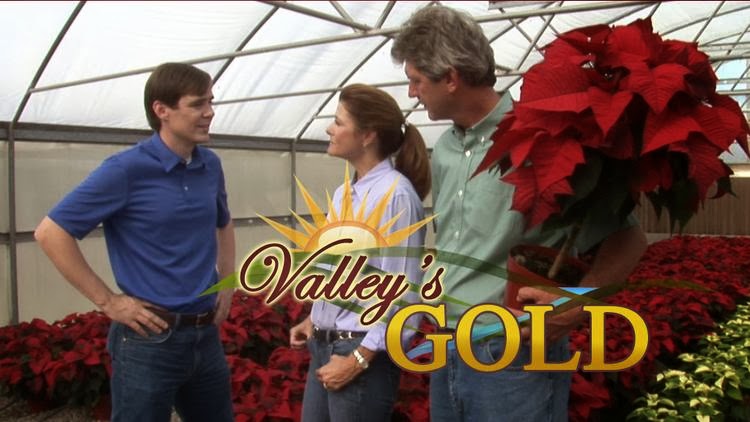
Valley’s Gold Shines Bright

Valley’s Gold Season One

Available for Purchase!

    Ryan Jacobsen, the host of Valley’s Gold visits with Jon and Connie Reelhorn,

     of Belmont Nurseries in Fresno. They are a local poinsettia growers.
ValleyPBS and Fresno County Farm Bureau partnered to develop Valley’s Gold, a much-needed weekly series that presents a behind-the-scenes look at Agriculture, the economic engine that drives the central San Joaquin Valley region.

The half-hour show airs on Wednesdays at 7 p.m. and rebroadcasts each weekend— Saturday at 6:30 p.m. and Sunday at 10:30 a.m. only on Valley PBS.

Season one will be available for purchase until February 2014 by calling the PBS membership hotline at (800) 579-4828 or online at

Additionally, previously aired episodes, more information and featured recipes are available online at www.valleysgold.org.

Thanks Valley’s Gold for showcasing Fresno County Agriculture! Fresno County Farm Bureau President Ryan Jacobsen is the host of Valley’s Gold. He does a splendid job!

2016-05-31T19:42:26-07:00December 21st, 2013|

Helping Farmers Improve Life in Soils

Water Right Technologies Supports

Agriculture’s Fight to Feed Families

Water Right Technologies (www.wrtag.com), of Escalon, Calif., acknowledges the critical role farmers play in feeding families and building a stronger country.  Agriculture must compete with rising input costs and less than ideal environmental conditions to meet steadily rising demands for healthy, nutrient dense crops. 

World population will increase from seven to an estimated nine billion people by 2050 and farmers will need to more than double food production to match new demand. Based on decades of experience in agriculture, WRT recognizes farmers’ struggles and can help agribusiness overcome obstacles to ensure productive, sustainable growth and bountiful harvests in the future.

Water Right Technologies understands that the key to improving a farmer’s soil lies in a multi-faceted program that scientifically assesses each farms unique inputs and environmental conditions, including irrigation water, soil composition, minerals, climate and geographic location. Water Right is committed to providing growers with customized, sustainable regimens to maintain crops and improve life in their soils.  

WRT would like to help all farmers, large agribusiness and small family farms alike, reduce agriculture’s harmful impact on the environment and boost yields to satisfy steadily rising demands for healthy, nutrient dense crops.  Contact Water Right Technologies to establish a program that ensures more vigorous plant growth and larger harvests next growing season.

2016-05-31T19:42:26-07:00December 20th, 2013|

Filmmaker Needs Help to Get More Screenings

Fight for Water Film Seeks Sponsors

For Screenings. Please Help if Possible

Juan Carlos Oseguera Need Help for Film Screenings
The award winning The Fight for Water Film, a Farm Worker Struggle, is seeking any sponsors that could help get a screening of the film in Sacramento.

According to filmmaker and director Juan Carlos Oseguera, an independent theater in Sacramento will screen the film but the theater requires a $2,000 fee. The screening would be FREE for the community and set for a late February.  “Four sponsors, at $500 each, would help cover the costs,” said Osequera. “I’m looking for businesses and organizations in Sacramento who would be interested in sponsoring.”

Oseguera also said that Galaxy Cinemas in California is offering a theatrical run in all their cinemas, but for that to happen, Oseguera must put up $15,000. He is looking for an angel folks. Please do what you can.

Go to the link below for more information and to make a donation.

Thank you!

2016-05-31T19:42:26-07:00December 20th, 2013|
Go to Top