Study Forecasts Cost of Regulations on California Citrus Industry

Citrus Research Board Explains Cost Impacts on Growers

News Release From California Citrus Mutual

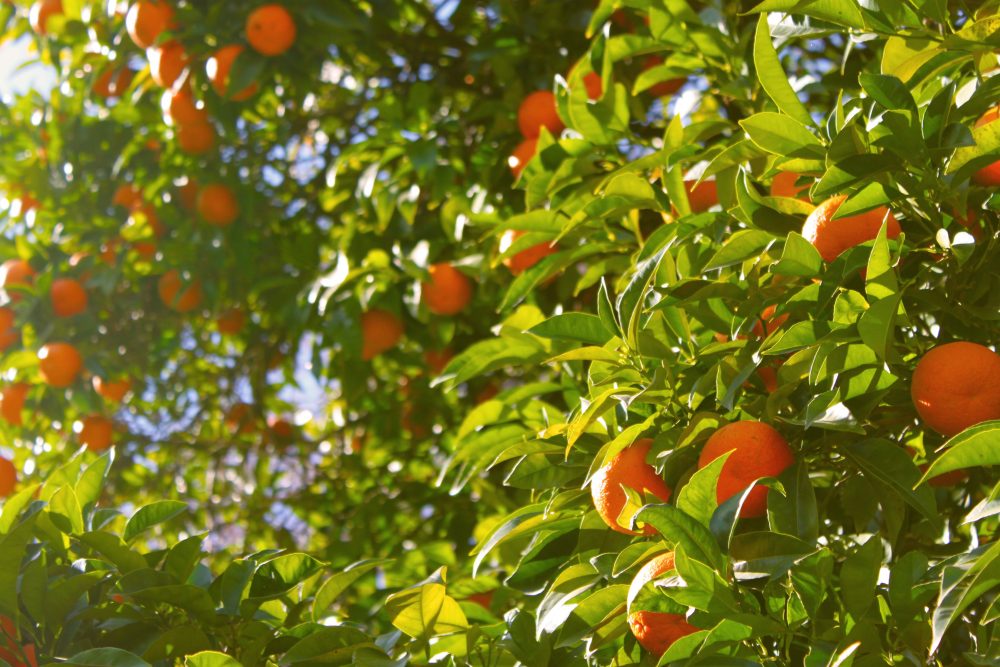
New regulations are expected to cost California citrus growers an average of $701 per acre per year, or $203 million annually statewide, according to a new study commissioned by the Citrus Research Board (CRB).

“Compliance with environmental regulations not associated with groundwater sustainability is estimated to increase costs by $17.7 million, or $67 per acre of citrus,” predicts Bruce A. Babcock, Ph.D., a professor in the School of Public Policy at UC Riverside who authored the study. “New labor requirements will increase costs by $112 million, or $357 per acre, once they are all phased in.”

“Babcock has presented a well-researched economic report that shows how new regulations will increasingly impact California’s citrus industry,” said CRB President Gary Schulz.

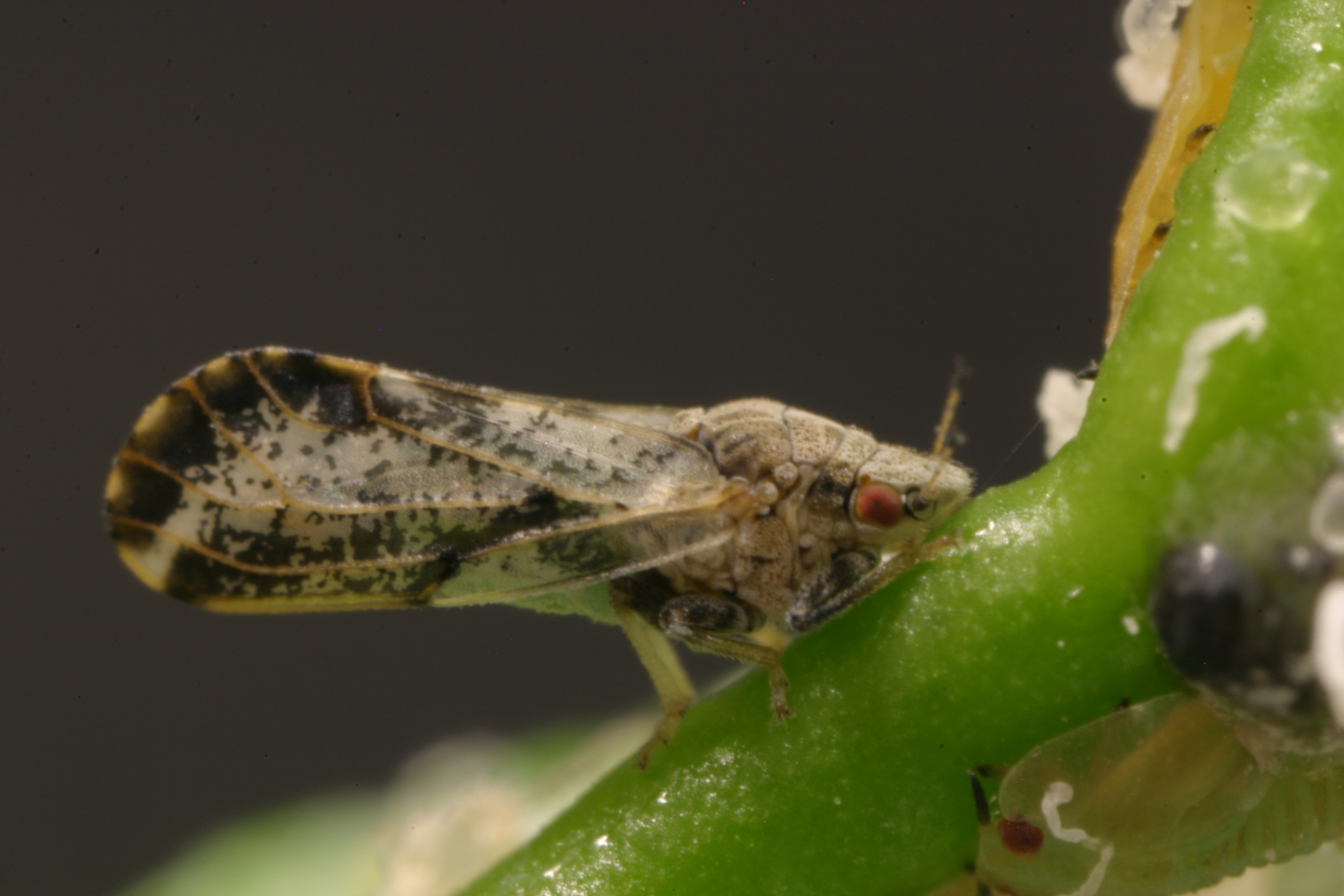
The report, Impact of Regulations on Production Costs and Competitiveness of the California Citrus Industry, also predicts that controlling the Asian citrus psyllid (ACP) “will increase costs by $65 million, or $248 per acre per year, if controls are extended to all citrus-growing regions.” Compliance training costs are estimated to increase costs by another $29 per acre, or $7.5 million for the state citrus industry.

“As I read and reread Dr. Babcock’s report, two things kept jumping off the page: one, ‘Cost increases borne by California’s citrus but not by … other citrus growing regions decrease the future competitiveness of California’s citrus industry’; and two, ‘… future compliance with these regulations is estimated to increase costs by $203 million, or $701 per acre per year,'” said California Citrus Mutual President Joel Nelsen. “When the cost of citrus at store level gets too expensive, consumers look for lower priced fruit. This UCR report paints a clear path for policy makers if their goal is to drive the citrus industry out of California and onto off-shore production areas.”

The 20-page report includes a breakdown of increases in labor costs, including California’s minimum hourly wage increases, which are scheduled to rise in annual increments to $15 over the next four years. The report also covers the projected cost increases of recent state legislation dealing with paid sick leave, payment rates for rest and recovery periods, overtime and workers compensation.

The section on insecticide treatment addresses grower cost of spraying for ACP, even though the severity of the problem currently differs greatly in various areas of the state. If ACP establishes itself in all citrus regions in the state, which the report says is “almost inevitable,” control efforts would amount to $39.5 million per year, according to Babcock. This would be in addition to the state-mandated tarping of fruit that is transported to packinghouses, at a cost of approximately $9 million per year.

According to the report, The Food Safety Modernization Act, which was passed in 2011 and is still being implemented, will not require major changes for growers who are already GFSI-certified (Global Food Safety Initiative compliant).

The impact of the Sustainable Groundwater Management Act (SGMA) is hard to predict, according to Babcock. “It will not be possible to calculate the impact of SGMA until each basin’s groundwater sustainability plans have been finalized,” he states. “Without new surface water supplies, it seems inevitable that some farmland that currently relies on groundwater will need to be fallowed to balance withdrawals with recharge rates.”

Babcock, a Fellow of the Agricultural and Applied Economics Association, has won numerous awards for his applied policy research. He received a Ph.D. in Agricultural and Resource Economics from UC Berkeley, and Master’s and Bachelor’s degrees from UC Davis.

The CRB administers the California Citrus Research Program, the grower-funded and grower-directed program established in 1968 under the California Marketing Act, as the mechanism enabling the state’s citrus producers to sponsor and support needed research. The full report on the Impact of Regulations on Production Costs and Competitiveness of the California Citrus Industry, as well as more information about the Citrus Research Board, may be read at www.citrusresearch.org.
2021-05-12T11:05:09-07:00August 22nd, 2018|

2017 Fresno County Crop Report Totals $7 Billion

Fresno County’s Ag Value Increases Significantly in 2017 Crop and Livestock Report


The Fresno County Department of Agriculture’s 2017 Crop and Livestock Report (Crop Report) was presented to the Fresno County Board of Supervisors Tuesday. Overall, the 2017 agricultural production value in Fresno County totaled $7.028 billion, showing a 13.58 percent increase from 2016’s $6.18 billion.

“Once again, Fresno County farmers and ranchers have produced an agricultural bounty for the world,” stated Fresno County Agricultural Commissioner Les Wright. “While much of this food and fiber goes towards feeding and supplying our nation, the Fresno County Department of Agriculture also issued 18,604 phytosanitary certificates for 133 commodities destined for 97 countries around the globe in 2017.”

“This Crop Report is comprised of nearly 400 commodities, of which 73 crops exceed $1 million in value,” Commissioner Wright continued. “Crop values may vary year-to-year based on production, markets and weather conditions, but our farmers and ranchers, their employees and all those who support their efforts work tirelessly year-around to bring in the harvest.”

With the great diversity of crops in Fresno County and the many variables in agriculture, it’s a given that some crops will be up in value while others are down. Increases were seen in a majority of the Crop Report segments, including field crops, seed crops, fruit and nut crops, livestock and poultry, livestock and poultry products, apiary products and pollination services, and industrial crops. Decreases were seen in vegetables and nursery. Surface water supplies were significantly better in 2017, although many Westside federal water contractors received much of that good news too late to benefit them with additional annual plantings.

Fresno County’s Top 10 Crops in 2017 (Source: 2017 Fresno County Agricultural Crop and Livestock Report)

Too often, the Crop Report gets summarized down to just a single overall number, but it yields a significant amount of information, such as the ability to examine changes and trends in crop acreage and yields. Amounts in the report reflect the gross income values only (income before expenses) and not the net return to producers.

“The San Joaquin Valley is the food capital of the World, and Fresno County is the region’s heart,” said Fresno County Farm Bureau (FCFB) CEO Ryan Jacobsen. “Daily, millions of food servings unceremoniously originate within our backyard, the result of generations of families and agricultural infrastructure that has been built to furnish an unbelievably productive, wholesome and affordable food supply.”

“The annual Crop Reports are more than numbers,” Jacobsen continued. “They provide the industry, the public and policymakers, regardless of the overall number, the opportunity to salute local agriculture and give thanks for the food and fiber, jobs and economic benefits, agriculture provides Fresno County.”

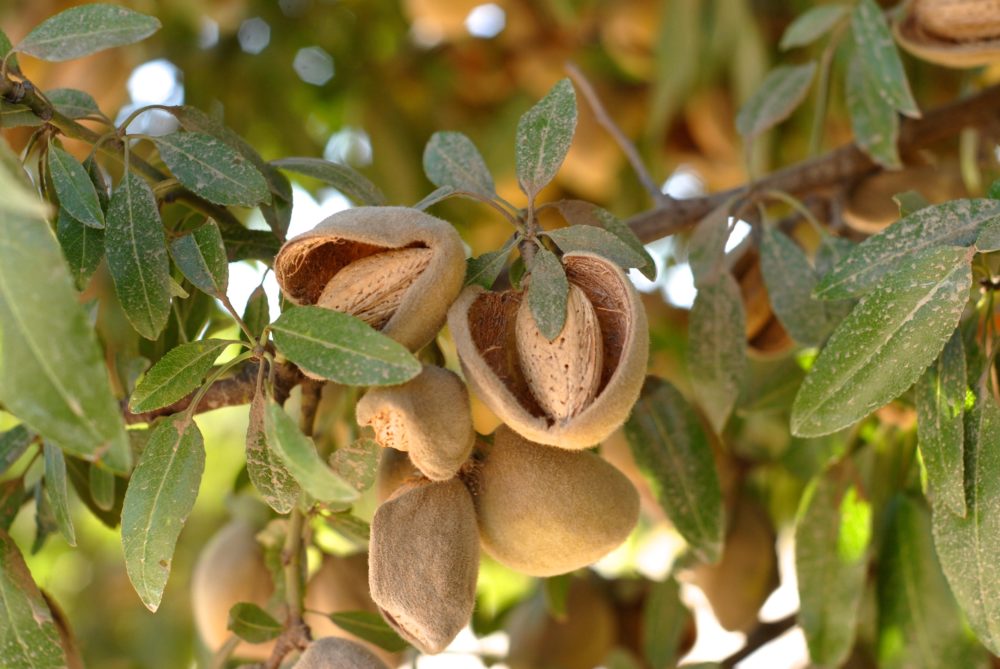
One popular component of the report is the review of the county’s “Top 10 Crops” that offers a quick glimpse of the diversity of products grown here. In 2017, these crops accounted for three-fourths of the report’s value. Almonds continue to lead the way as Fresno County’s only billion-dollar crop in 2017, representing 17.4 percent of the total gross value of the Crop Report. Added to this year’s list was mandarins at number six. Dropping out of the “Top 10 Crops” was garlic.

This year’s Crop Report was a salute to the Fresno-Kings Cattlemen’s Association. The organization is one of 38 affiliates of the California Cattlemen’s Association, a non-profit trade association that represents ranchers and beef producers in legislative and regulatory affairs.

2021-05-12T11:17:09-07:00August 21st, 2018|

Fighting Asian Citrus Psyllid On and Off the Farm

Fighting ACP on Farms and Residential Areas Critical

By Hannah Young, Associate Editor

Pests and diseases are as prominent as ever not only for California farmers but in residential areas as well. California Ag Today recently spoke with Rick Westcott, a senior sales rep for Bayer Crop Science, about preventative materials for pests and diseases and the importance of controlling the spread of those diseases, particularly Asian citrus psyllid.

Westcott explained that the advantage of Movento, a powerful insecticide, is that it is systemic, it’s applied early, and it will translocate throughout the entire tree.

“It’s both phloem and xylem movement, so it’ll go down into the roots and then back up so it constantly recirculates within the plant,” Westcott said. “That’s what gives it the longevity of control.”

In citrus trees, Movento typically takes about 65 to 70 days to start working after circulating through the plant which helps with the longevity of the product, Westcott added.

Although Movento is not used specifically for Asian citrus psyllid, it has proved to aid in controlling the pest.

Westcott said Movento is currently being used against citrus red scale and applied during pedal fall along with thrip sprays, which farmers are applying anyway.

“It will take care of your red scale, your early red scale spray, and of course, because it also controls Asian citrus psyllid, it’s a bonus to do that too,” Westcott said. “Then the other thing that they’re doing with the thrip spray as well for katydid control, which is also an issue in citrus at that thrip timing.”

By patrolling and monitoring for ACP, the spread of HLB can also be controlled.

“The key is to keep the ACP at the lowest level possible or zero if that’s possible. [The] fortunate thing for us in the San Joaquin Valley is the fact that we do a lot of spraying for other pests throughout the year that almost everything that we put in the tank happens to also control ACP at the same time,” Westcott explained.

Westcott said that this is the reason we have not seen a huge outbreak of ACP in the San Joaquin Valley, unlike other parts of California.

“The problem isn’t in any commercial grove at this point, but it’s all residential,” Westcott continued. “It’s all concentrated in the residential areas, so there are certain products that you can use an ag that you can’t use there, but most of them, fortunately, you know, they have a label for both residential and agriculture, so they do crossover to stop them there so they don’t get here.”

HLB is still posing a threat in California, but most specifically in the Los Angeles area.

“The total amount of trees currently that are infective with HLB in the counties of LA, Orange and Riverside County is 645. And then if you compare that from a year ago: a year ago, there were only 73 trees that they had infected, and it’s changing every day,” Westcott said.

2021-05-12T11:01:53-07:00August 8th, 2018|

Dried Plums or Prunes? Name Debate Continues.

Important Research Continues on Dried Plums

By Jessica Theisman, Associate Editor

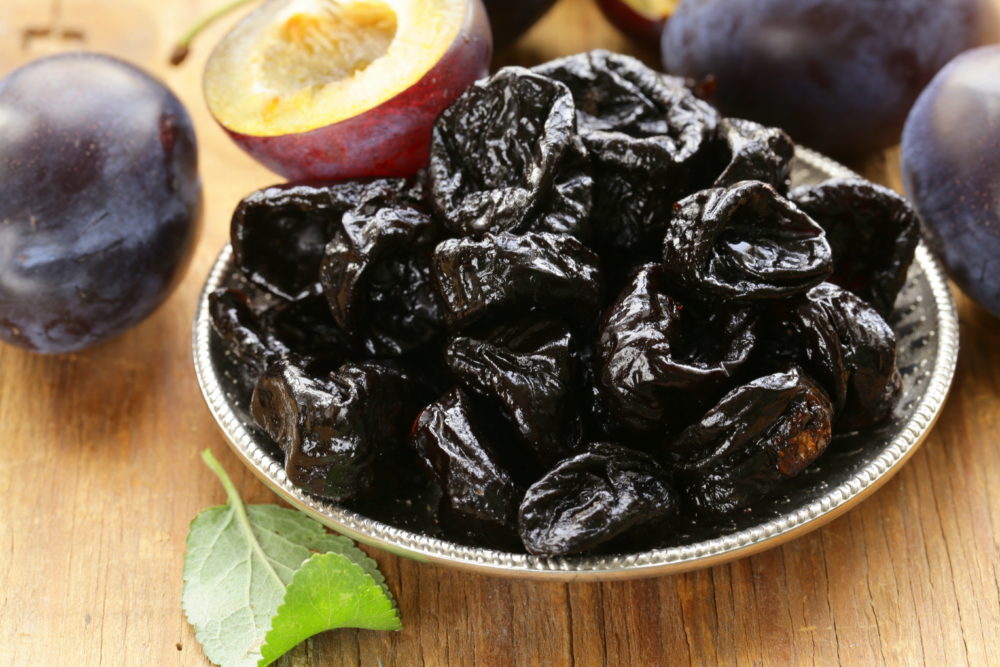
Gary Obenauf oversees the production research programs for the California Dried Plum Board. California Ag Today spoke with him recently about the work that he does with the fruit, also known as prunes.

Gary Obenauf, Production Research Manager

Obenauf helps with post-harvest issues in storage and handling. He also helps the industry with technical issues such as maximum residue limits, also known as MRLs.

“We ship to 135 different countries around the world,” said Obenauf. “We are the largest producer in the world of dried plums—most of the rest of the world still calls him prunes instead of dried plums.”

Obenauf said prunes are now being called dried plums due to a marketing issue about 10 to 15 years ago.

“We noticed that the younger millennials preferred dried plums over prunes, and we made the name change, but we are probably going change it back to prunes,” he said.

Obenauf said that insects, diseases, production cost, and pruning costs are some of the big challenges in the industry. “Essentially, 95 percent of our production is one variety; we need multiple varieties,” Obenauf said.

“We have an active breeding program, but we have not yet come up with good alternatives to the French prune,” he said. “The improved French prune is a good variety, and it is hard to find replacements, and that’s the problem we are having.”

2021-05-12T11:05:10-07:00August 6th, 2018|

Motion Filed in Fifth District Court to Count the Votes!

Editor’s Note: Anthony Raimondo with Raimondo & Associates filed a motion with the Fifth District Court of Appeal in Fresno to count Gerawan ballots .


SILVIA LOPEZ AND GERAWAN FARMING, INC V. AGRICULTURAL LABOR RELATIONS BOARD

COURT OF APPEAL OF THE STATE OF CALIFORNIA IN AND FOR THE FIFTH APPELLATE DISTRICT (FRESNO)

No. F073730

To Whom It May Concern:

On May 30, 2018, the Fifth District Court of Appeal in Fresno issued a unanimous decision that the Agricultural Labor Relations Board (ALRB) violated farmworkers’ Constitutional and statutory rights by refusing to count their ballots, essentially stripping them of their right to decide for themselves whether to be represented by a union.

Silvia Lopez and her co-workers from Gerawan Farms organized themselves in opposition to the state’s effort to force the United Farm Workers Union, a dying union looking to save itself with money from their paychecks, and through determination, organization, and civil disobedience forced the ALRB to hold what was the largest farmworker vote in history. From the dawn hours to late in the evening, thousands of farmworkers voted on whether to be represented by the union. Sadly, the ALRB, in cahoots with the union, refused to count the votes, suppressing the workers’ vote in order to protect the UFW.

Anthony Raimondo

Anthony Raimondo, of Fresno-based Raimondo & Associates, attorney for Gerawan employee spokesperson, Silvia Lopez

Since that time, the workers have been fighting to expose ALRB corruption and get their ballots counted. While they believed that day had finally come, the ALRB has chosen to defy the court and continues to refuse to count the ballots. In fact, the ALRB refuses to confirm where the ballots are stored, or whether it has them at all.

On behalf of the Gerawan workers, Silvia Lopez has filed a motion with the Fifth District Court of Appeal in Fresno, respectfully requesting that the Court order the state to immediately open the ballots, complete the election process, and preserve the record of the election as appeals wind their way through the Court.

The workers believe, as the Court ruled, that to suppress worker votes violates not only principles of democracy, but principles of government transparency as well. In the view of the workers, there is simply no justification to refuse to count the ballots, except for a desire to avoid exposing the overwhelming worker opposition to UFW representation.

2018-07-06T18:03:29-07:00July 6th, 2018|

Increased Chinese Tariffs Could put California Producers in a Tight Spot

There is Fear China Could Turn to Other Countries For Ag Products

By Mikenzi Meyers, Associate Editor

The ongoing threat of Chinese tariffs on American agriculture has recently been the topic of conversation for agriculturalists. With China posing a possible 25 percent tariff on U.S. soybeans back in April, it seems this conversation is here to stay. The added tariff could drive Chinese buyers to choose other markets on many California commodities, including walnuts, tree fruit and beef.

Matt Lantz, vice president of global access for Bryant Christie Inc., deals with international trade, and these issues on a daily basis. Bryant Christie is an international affairs management firm that is based in Sacramento and Seattle, where they help U.S. commodity groups and agricultural companies with their international trade issues in order to export their products.

Lantz explained that this new threat is a major concern for California agriculture.

“China is an incredibly important market for California fruit and vegetable exploiters, and any tariff or increased inspection makes it more difficult to export,” he said.

Making matters worse, Lantz pointed out that buyers are going to turn to the countries without the tariff—which can be bad news for producers.

2018-06-28T16:49:05-07:00June 28th, 2018|

Research Nets Going Over Citrus Trees To Prevent Huanglongbing Disease

Blocking Psyllids Carrying Disease is Key

By Jessica Theisman, Associate Editor

Beth Grafton-Cardwell is the director of the Lindcove Research Extension Center in Tulare County and research entomologist based out of the University of California, Riverside. She recently told California Ag Today that there is work being done on installing a net structure to protect trees from Asian Citrus Psyllids, which spread the deadly Huanglongbing disease. Texas A&M researchers are installing net structures on the edge of groves to block psyllids from coming into an orchard.

Psyllids have a preference for borders. These nets could have yellow sticky strips of material with an insecticide on it, so there would be an attract and kill process.

Beth Grafton-Cardwell

Other research is looking at netted structures that will completely enclose the citrus trees.

“Researchers are going to construct a completely enclosed net structure to grow the citrus trees in a block at Lindcove,” Grafton-Cardwell said. “We will study how well one can grow citrus under the screen so there could be the ultimate protection against pests and diseases.”

“The mother trees and increased trees have to be grown under the screen, but the field trees do not necessarily have to be,” she said.

Cold temperatures in the winter to protect the citrus from the psyllid.

“The cold temperatures hardened off the tissue, which makes it hard for the psyllid to find any place to lay eggs, and they probably cost some mortality to the psyllid,” Grafton-Cardwell explained.

Most outbreaks are in Southern California. Los Angeles, Orange County, and a few trees in Riverside.

“Prevention is working and there are fewer outbreaks in the Central Valley,” Grafton-Cardwell said.

Dr. Mark Hoddle and Dr. Kelsey Schall (both from UC Riverside) have been monitoring backyard situations. They are researching the release of beneficials such Tamarixia and other generalist predators like Syrphid flies.

“They have been reducing psyllids by about 70 percent in the backyards, and that’s really good news,” Grafton-Cardwell said.

2021-05-12T11:05:11-07:00June 15th, 2018|

Labor Contractor Fresh Harvest Deep in Vegetable Harvests

Fresh Harvest Relies on H-2A

By Jessica Theisman, Associate Editor

Steve Scaroni, along with his wife Brenda, owns Fresh Harvest, a premier labor provider, staffing and harvesting company for the agricultural industry in the western United States.

Steve Scaroni, with Fresh Harvest.

“Expansion for Fresh Harvest is coming, but the main emphasis is crops related to salads. They even expanded into citrus last year,” Scaroni said.

Fresh Harvest has also expanded into pears. Vegetables are the heart and soul of Fresh Harvest.

“Anything that goes into a salad, a lot of lettuce, romaine, broccoli; we touch a lot of salads every day,” he said.

The H-2A temporary agricultural program allows agricultural employers who expect a shortage in domestic workers to bring non-migrant foreign workers to the U.S. to perform agricultural services for a temporary or seasonal nature.

“If it wasn’t for H-2A, I wouldn’t be in business,” Scaroni said.

Scaroni explained that the H-2A gets legal workers to serve his customers demands for the services he offers. A majority of the demands are labor and harvesting, along with other farm services.

“We’re bringing up 100 irrigators this year to put throughout the Salinas Valley because our Salinas customers can’t get enough irrigators,” he said.

Laborers that show great work ethic will be able to work for a longer period of time. A worker could technically stay if moved from contract to contract.

“If the timing works, he gets up to three years, but then he has to go back for 90 days,” Scaroni said.

2018-06-07T15:50:41-07:00June 7th, 2018|

Heat Illness Prevention for Field Workers

Farmers Guard Their Most Valuable Asset

By Patrick Cavanaugh, Editor

When temperatures are heating up, it’s important that growers are keeping farm employees safe to prevent exhaustion and heat-related illnesses and to ensure that their employees go home to their families at the end of the day.

On an average day, temperatures in fields can range from eight to 10 degrees hotter than the average temperature in the area.

“We try always to have a regular tailgate meeting to remind all of our farm employees about the hazards of working when temperatures are more than 80 degrees,” said Ron Samuelson, a Fresno County grower who produces almonds and cherries. “We educate our employees about the importance of drinking water, the emergency procedures if needed. And for increased prevention, we are in constant contact with the workers throughout the day.”

heat illness

Some type of shade must be available to field employees when temperatures reach 80 degrees.

Samuelson said that shade is essential once temperatures reach around 80 degrees and they make sure there is adequate shade in the morning if temperatures are going to get to that high.

“If field employees are in an almond orchard where there are mature trees, there is adequate \shade for them to sit and rest under a tree to cool down,” Samuelson explained. “And when the temperature begins to reach 100 degrees, it’s not uncommon for work to stop to give employees a break from the heat.”

“If temperatures go over 95 degrees, we employ other procedures. The first thing we would do is to talk to the guys to get their input as to what’s their thoughts on how soon they want to stop working for the day.”

“A lot of times, we’ll start a little bit earlier and knock off earlier. Then we take breaks more often as well. We try to maintain that, encourage them to drink at least a quart per hour throughout the day. We make sure they let us know if the water jugs are down to a gallon are less. That way we can get them refilled right away.”

Employee safety is paramount because it would be impossible for farmers to farm without them.

“So it’s essential to help them get through the day and avoid heat stress. At the end of the day, our employees matter most,” Samuelson said.

2018-06-05T16:29:47-07:00June 5th, 2018|

New Study Reveals Economic Impact of California Citrus

Citrus Research Board Quantifies California Citrus Industry’s Importance

Edited by Patrick Cavanaugh
      Despite Tulare Mayor Carlton Jones posting a series of anti-ag comments on Facebook, causing a stir in the local community, agriculture provides a huge economic stimulus to his community. In fact, without agriculture in Tulare, the city would most likely be in economic ruin.
     Citrus is one crop that is grown in the county. And the total economic impact of the iconic California citrus industry is $7.117 billion according to a new study commissioned by the Citrus Research Board (CRB).
     “In updating our economic analysis, we selected a well-known expert, Bruce Babcock, Ph.D., a professor in the School of Public Policy at the University of California, Riverside, to conduct the research. His findings quantified the significant impact of citrus on California’s economic well-being,” CRB President Gary Schulz said.
     According to Babcock, the California citrus industry added $1.695 billion to the state’s Gross Domestic Product (GDP) in 2016.
     “California citrus is a major contributor to the economic value of the state’s agricultural sector and is much larger than just the value of its sales,” he said. “Estimated full-time equivalent California citrus jobs totaled 21,674 in 2016-17, and estimated wages paid by the industry during that same time frame totaled $452 million.”
     Babcock added, “The application of management skills and capital equipment to efficiently utilize land and water to produce high-quality citrus also generates upstream and downstream jobs and income that magnify the importance of citrus production beyond its farm value.”
     In 2016-17, the most recent marketing year of data compilation, Babcock found that the total direct value of California citrus production was $3.389 billion. This value generated an additional $1.263 billion in economic activity from related businesses that supplied materials and services to the citrus industry. Layered on top was another $2.464 billion in economic activity generated by household spending income that they received from California’s industry, according to Babcock, thus rendering a total economic impact of $7.117 billion.
     The study revealed that 79 percent of California’s citrus was packed for the fresh market and 21 percent was processed in 2016-17, which is economically significant because fresh market fruit has a higher value than processed fruit.
     Of further note, California produced about 95 percent of all U.S. mandarins in the most recent reporting season.
     California Citrus Mutual President Joel Nelsen said, “The ‘wow’ factor in this report is something, as it relates to gross revenues and positive impact for the state, people and local communities. This enthusiasm must be tempered by the fact that huanglongbing (HLB) can destroy all this in a matter of a year if the partnerships that exist between the industry and government cannot thwart the spread of this insidious disease. Just this week, coincidentally, Brazil authorities reported a 20% reduction in fruit volume. Reading how that would affect our family farmers, employees and the state is sobering.”
     The CRB study also looked at the possible impact of a potential 20 percent reduction in California citrus acreage or yield or a combination of the two that could result from increased costs associated with meeting government regulations, combatting the Asian citrus psyllid (ACP) and warding off the invasion of HLB, a devastating disease that has decimated citrus production in many other growing regions such as Florida. Babcock calculated that such a reduction could cause a loss of 7,350 jobs and $127 million in associated employment income and could reduce California’s GDP by $501 million in direct, indirect and induced impacts. The CRB currently is devoting most of its resources to battling ACP and HLB to help ensure the sustainability of California citrus.
     Babcock is a Fellow of the Agricultural and Applied Economics Association and has won numerous awards for his applied policy research. The economist received his Ph.D. in Agricultural and Resource Economics from the University of California, Berkeley, and his Masters and Bachelors degrees from the University of California, Davis.
     The CRB administers the California Citrus Research Program, the grower-funded and grower-directed program established in 1968 under the California Marketing Act as the mechanism enabling the State’s citrus producers to sponsor and support needed research. More information about the Citrus Research Board and the full report on the “Economic Impact of California’s Citrus Industry” may be found at www.citrusresearch.org. 
2021-05-12T11:05:12-07:00May 21st, 2018|
Go to Top