UC Davis Soil Symposium Showcases California Innovation

A big soil health symposium was held at UC Davis last week, and there was lot to learn for everyone in the industry.

Brian Leahy is Chief of the California Department  of Pesticide Regulation in Sacramento, which hosted the one day event. Leahy noted those in attendance were innovative and pioneering.

“In the room I think we had some of the most creative farmers, creative researchers, and creative private companies on the planet. These people are some the most amazing farmers that only California produces, and they were here I think as problem solvers. We know we need to understand soil better. What’s going on in the soil? And how do we work with it? said Leahy. “What we heard was a lot of  amazing activities that are taking place right now. Lot of great questions asked, its unbelievable the kind of research is going on. I think it was a very productive day.” he added.

Brian Leahy (left) speaking with Malcolm Ricci, of Bolthouse Farms of Bakersfield.

Brian Leahy (left) speaking with Malcolm Ricci, of Bolthouse Farms of Bakersfield.

In those attending the symposium, also learned some things they didn’t know.

“And that was the goal, we were trying to figure out, how do we build the support to get long term sustainable funding to better understand soil health. You know understanding soil and what’s going on in soil life, its one of the last frontiers in how were going to make incredible progress in how we feed people, how we take care of the planet, and how we take care of each other. Just layering all the other amazing research going on right in plant genetics. and plants on top of soil its going to be another revolution. I heard Warren Buffett’s son called it the “Brown Revolution”. said Leahy.

And think of that really important topsoil, 1 and half feet around the planet, that supports us all.

“We heard from the Noble Foundation and the soil renaissance, its a national movement as well, where people are realizing that we have to take care of the soil and work with soil, to really take care of the human race, to feed us, clothed us, all of that. So there is a lot of promise here.” said Leahy.
2016-05-31T19:35:23-07:00June 23rd, 2014|

Commentary: Cutting Regulations Would Stimulate the U.S. Economy

OpEd by Stewart Truelsen; Ag Alert 

Billionaires don’t always say the smartest things, but one of them has a smart idea. At the Forbes Reinventing America Summit, billionaire real estate developer Sam Zell said, “If you want to see the economy go wild, just cut all the regulations in half.”

Zell is known for his contrarian views and more often than not has been a successful investor. Cutting regulations is certainly contrary to what generally takes place in Washington. Regulations, especially environmental regulations, just keep piling up and up.

“We’re in a society where we think all risk can be regulated out,” Zell said. “There are just unending interpretations, revisions, legal fees to the sky—when you’re focused on that, you’re not focused on growing and getting new customers.”

Farmers know that feeling all too well. When they should be focused on growing this season’s crops and tending livestock, their attention is diverted by the Environmental Protection Agency “waters of the U.S.” proposed rule.

The rule broadens federal jurisdiction under the Clean Water Act and could extend permit requirements to ditches, small ponds and even depressions in fields that are only wet during a heavy rain. Farms, ranches, businesses and new construction could be affected.

EPA claims the proposed rule is a clarification of which waters fall under its jurisdiction. But in tracing the history of major regulatory acts like the Clean Water Act and Clean Air Act, the words that stand out on the EPA’s own timeline are “expanded,” “increased,” “authorized” and “established.”

The Office of Management and Budget reviews pending federal regulations, and it comes as no surprise that EPA has the most regulatory activities under review at the present time.

It is only a natural tendency for federal regulatory agencies to extend their reach by adding more and more regulations to the laws that Congress writes. The last president who really tried to stop them and tackle regulatory overkill was Ronald Reagan.

A reduction in regulations was one of the major policy objectives of his 1981 economic recovery program. Deregulation was applied primarily to regulations that restricted economic activity, like price controls on oil and natural gas.

Every administration since Reagan’s, including the Obama administration, has expressed a desire for regulatory reform, but the results have been slow to materialize. Cost-benefit analysis is done on only a fraction of new regulations.

The Competitive Enterprise Institute estimates the annual cost of regulations to be about $1.8 trillion.

On a household basis, regulations cost more than every budget item except housing; that’s more than health care, food, transportation, etc. Cutting regulations in half, as Zell suggests, would indeed cause the economy to go wild.

There are alternatives to regulations that can get the same or better results. The American Farm Bureau Federation advocates market-based solutions and incentives as preferable to government mandates. Incentives have proved successful with conservation efforts. Regulation can also be accomplished without the government through competition, reputation, contracts, insurance and other means.

Sam Zell probably won’t get his wish, but he is correct about the need to throttle back government regulations. They are stifling innovation and economic growth.

2016-05-31T19:35:23-07:00June 23rd, 2014|

Governor Brown Commemorates California Pollinator Week

Source: CDFA

OFFICE OF THE GOVERNOR

                                                      California Pollinator Week

Pollinator species such as birds and insects are essential partners to farmers and ranchers in producing much of our food supply. Pollinators also provide significant environmental benefits that are necessary for maintaining biodiversity and healthy ecosystems.

The health of our national forests and grasslands depends on pollination. These open spaces provide forage, fish and wildlife, timber, water, mineral resources and recreational opportunities for our communities and the vital industries that serve them.

The State of California provides producers with conservation assistance to promote wise stewardship of lands and habitats, including the protection and maintenance of pollinators on working lands and wild lands.

As Governor of the state of California, I urge all citizens to recognize the important role that pollination plays in our state’s economy and ecosystems.

Sincerely,
EDMUND G. BROWN JR.

2016-05-31T19:35:23-07:00June 23rd, 2014|

Pressure Builds Against EPA Water Proposal

By: Kate Campbell; Ag Alert

Proposed changes to the federal Clean Water Act have roiled farmers across the nation and created an uproar among many other water users—including cities and counties with parks and recreation areas, golf courses and local water agencies.

If adopted, the proposed rule changes would expand the definition of “waters of the United States” to potentially allow federal agencies to regulate virtually every area of ground in the nation that gets wet or has flow during rainfall.

California Farm Bureau Federation leaders were in Washington, D.C., in mid-May to explain to lawmakers face to face the damage the proposed changes could have on food production. They called for more time to review and comment on the proposal.

The U.S. Environmental Protection Agency said last week it will extend the comment deadline on the proposed rule, allowing farmers, ranchers and other interested stakeholders more time—until Oct. 20—to comment on its proposed redefinition of waters of the U.S. The extension adds almost three additional months to the comment period, which had been scheduled to end July 21.

Comment on a companion interpretive rule governing agricultural exemptions that accompanied the waters of the U.S. rule also will be extended—from June 5 to July 7.

The Clean Water Act was signed into law in 1972 to protect the nation’s “navigable” waters from pollution. The current proposal to amend the act would greatly expand EPA’s regulatory powers. Farm policy experts say Congress gave states, not the EPA, primary responsibility for land use oversight.

Farm Bureau, together with dozens of other business groups, is protesting the proposed changes.

Farmers and ranchers say the proposal would expand regulatory authority to many common land features including puddles, ponds, ditches, and temporary and small wetlands. The proposal would give federal agencies power to regulate and potentially prohibit many common land-use and farming practices on or near privately owned land.

Solano County hay and forage farmer Sean Favero said the proposed rule change gives him serious cause for concern. Fields where he plants alfalfa, wheat and triticale can retain seasonal moisture in low spots, which under the proposed changes could trigger additional permits and fees, including prohibitions against planting at all.

These are naturally occurring land contours that don’t connect to streams or other bodies of water, he said, adding that he’s concerned about regulations made thousands of miles away by people who don’t know what’s going on at ground level that could further complicate or prevent him from farming. Favero made those points as part of the CFBF federal policy delegation to Washington.

“Judging by the amount of interest from legislators in what we had to say about the proposed changes to the Clean Water Act, I’d like to think our office visits had something to do with the extension announced last week,” Favero said.

CFBF Federal Policy Division consultant Erin Huston said extension of the comment periods “allows us more time to flesh out our objections and explain how the proposal sits on top of the regulatory layers California already has to protect water quality.”

The House Transportation and Infrastructure Committee held a hearing last week on the proposed changes, and the House Agriculture Committee is scheduled to hold a hearing this week on the possibility of an agricultural exemption under the proposed rule changes, Huston said.

“That hearing will address our concerns about how the proposed rule would specifically tie in with the U.S. Department of Agriculture’s voluntary conservation practices established by farmers and ranchers through the Natural Resources Conservation Service,” she said.

“We spent a lot of time talking to legislators while we were in Washington and I felt they listened closely to what we had to say,” said Kris Gutierrez, partner in a San Joaquin County vineyard management company and a participant in the CFBF Washington trip. “I believe we got our points across and appreciate the thoughtfulness of our lawmakers.”

American Farm Bureau leaders said the EPA has “misrepresented” its proposed rule changes and downplayed impacts on land use.

“If more people knew how regulators want to require permits for common activities on dry land, or penalize landowners for not getting them, they would be outraged,” AFBF President Bob Stallman said, noting that the proposal “broadly expands federal jurisdiction and threatens local land-use and zoning authority.”

Stallman described the EPA proposal as “an end-run around Congress and the Supreme Court.”

The proposal to regulate everyday farming practices isn’t just impractical, it’s illegal, Stallman told the House Subcommittee on Water Resources and Environment last week.

The EPA has said farmers would face less regulation under its proposal. In response, Stallman said the rule would micromanage farming via newly mandated procedures for fencing, spraying, weeding and more. Obtaining permits, meanwhile, could delay time-sensitive tasks for months, potentially ruining crops in the process.

“EPA is deliberately misleading the regulated community about the impacts on land use,” Stallman said.

2016-05-31T19:35:23-07:00June 20th, 2014|

Breeding Crops for Drought Tolerance Tricky

By Ching Lee; Ag Alert

With water becoming ever-more precious, farmers are increasingly looking to innovations to help their crops be more resilient in the face of drought.

One focus has been on breeding and engineering new crop varieties that can withstand longer periods of water deprivation. While much progress has been made in this area, researchers say increasing drought tolerance in crops has never been clear cut, and prospects for getting those traits into specialty crops are uncertain.

In recent years, three major seed companies have introduced corn varieties that specifically target water-limiting conditions. Hybrids from DuPont Pioneer and Syngenta became commercially available on a limited basis in 2011, while Monsanto rolled out its first transgenic drought-tolerant corn in several Western Corn Belt states last year.

Kent Bradford, professor of plant science and director of the Seed Biotechnology Center at the University of California, Davis, said there has been a lot of interest in developing drought-tolerant varieties of field crops such as corn, wheat and alfalfa, but breeding drought tolerance into higher-value crops such as vegetables, fruits and nuts may be a longer-term goal.

One issue with developing crops that can withstand extreme weather conditions is that the process is not so straightforward and can involve a number of different genes and approaches.

“Drought tolerance is not an easy trait,” Bradford said. “It’s not like disease resistance where you have a disease, you have the resistance and you’re good.”

Daniel Gallie, a biochemist at UC Riverside, whose team did some of the initial work on DuPont Pioneer’s drought-tolerant corn hybrids, said one way to increase drought tolerance in plants is to grow bigger roots that can reach deeper into the soil to get water.

The method UC researchers used in developing DuPont Pioneer’s corn involved reducing the plant’s production of ethylene, which is triggered by drought stress.

Scientists have also looked at ways to help plants retain more water, such as by closing the stomata, or pores, earlier, so that there’s less transpiration. UC researchers found that by reducing a plant’s vitamin C, which controls the opening and closing of pores in the leaves, they can help plants better conserve water.

Since all plants have pores, Gallie noted, this approach could be applied to any crop species and has been particularly important to crops grown in California, where farmers rely largely on irrigation, he added.

But whether this and other techniques will find their way into commercial crop varieties depends on whether they get picked up by the various seed companies, he said. Because academic researchers typically are not in the business of commercializing their developments, they look to industry partners with the funding and infrastructure to introduce, test and market new crop varieties, Gallie added.

With a crop like almonds, for example, because the life cycle of the tree is so long, research would be much slower than what can be done with an annual crop. Also, specialty crops, while important to California, are not considered major crops with as much devoted acreage as key commodity crops.

“It’s the size of the market,” said Doug Parker, director of the California Institute for Water Resources at the University of California. “Companies are looking at: Am I going to be able to produce enough of this to make money. And it’s not just what’s being grown in other states that they’re looking at; it’s worldwide.”

For crops that are grown in California, the focus has been less on drought tolerance and more on water use efficiency, as growers are trying to get the most yield from what limited water they have, he said.

Farmers seldom plant specialty crops without some irrigation, Bradford said, whereas the major field crops—particularly those farmed in the Midwest—are often dependent on rainfall, so being drought tolerant is more critical.

Bradford cautioned that while researchers are making headway, they still face hurdles trying to create drought-tolerant crops that would work well under different weather scenarios and field conditions.

Soils can vary in one field, he noted, so the stress may not be uniform. And not all droughts occur the same way. Some are characterized by lack of precipitation, others extreme heat or both. These events may also happen during different periods of a growing season.

Since crop development is a long-term strategy to help farmers deal with drought, Parker said short-term strategies for how they manage water in their cropping systems may prove more important than drought-tolerant crops.

But ultimately, a mix of both is needed, he said.

2016-05-31T19:35:23-07:00June 19th, 2014|

Dry Farming in California

By Eric Holthaus; Slate.com

In a year with (practically) no water, here’s something that was inevitable: farming without any water at all.

Small farms around the Bay Area are reviving an ancient technique that is just what it sounds like. Add “dry farming” to the list of ideas that could get this dry state through the worst dry spell in half a millennium.

The Hoover Dam’s Lake Mead, the primary water supply for Las Vegas, has never had this little water to start June. Earlier this week, Fresno hit 110 degrees—the second-earliest achievement of that lofty mark in the 127 years that weather records have been kept there.

New data on Thursday showed California has now gone five consecutive weeks with fully 100 percent of the state rated at “severe,” “extreme,” or “exceptional” drought. The state is getting by on meager reserves amid a multiyear shortage, and there won’t be any more significant rain until the fall: The annual dry season has begun.

The last measurable rain in San Francisco was April 25, which is about a month earlier than normal. The coast gets most of its drinking water piped in from the Sierras anyway, so a dearth of local rainfall hasn’t done much except make cars and sidewalks extra dusty.

According to a San Francisco Chronicle analysis, the region is falling short of meeting conservation targets via voluntary water cutbacks. The Bay Area’s per capita water usage is already among the lowest in the state, so there’s not as much to cut as compared with other more water-hungry places.

In San Jose, water use is actually up slightly compared with the past three years’ average. If usage isn’t curtailed soon, San Francisco is considering mandatory water rationing for the first time in more than 20 years.

One theory on the lackluster response is that the state’s crisis isn’t as immediately visible to city dwellers as it is to farmers, who use 80 percent of the state’s water. Higher prices for food will be felt only gradually, even though they could linger for years. As an example, consumers are still feeling the pinch from higher meat prices linked to a 2012 drought in Texas that forced ranchers to cut back on herds.

There, I found one possible answer that’s catching on: get rid of water entirely.

Dry farming, a longtime niche of California’s massive agriculture industry, is gathering conversation within farmers market circles around the Bay Area. Here’s how it works, according to Fast Company:

By tapping the moisture stored in soil to grow crops, rather than using irrigation or rainfall during the wet season, dry-land farming was a staple of agriculture for millennia in places like the Mediterranean, and much of the American West, before the rise of dams and aquifer pumping.

During the rainy season, farmers break up soil then saturated with water. Using a roller, the first few inches of the soil are compacted and later form a dry crust, or dust mulch, that seals in the moisture against evaporation.

Dry farming isn’t as simple as just farming without rain. During a drought, it’s even more challenging.

“We’re concerned about keeping these trees alive. We try to create a barrier to keep the moisture,” said Stan Devoto, a dry farmer based in Sonoma County who raises apples, wine grapes, and cut flowers for Bay Area farmers markets. “On the east side of your grapevine, where the sun rises, you strip all the leaves. That allows for better airflow. On the west side, where the sun sets, you keep a good canopy of leaves to protect the drought. We do it by hand.”

The dry-farming method has long been practiced successfully in Mediterranean climates with a long dry season like California’s—basically, dry farmers forgo the extra fertilizer, water, and other inputs that maximize yields. Advocates say its water starvation diet produces sweeter and more flavorful tomatoes, apples, and other fruit. Some of the best wines ever produced in Napa Valley were dry farmed.

But there’s a significant downside. Though his heirloom apples make a cider that “brings to mind Lambic beer,” according to the San Francisco Chronicle, Devoto says “people have to be willing to pay a little bit more for them.” Dry farmers like Devoto are trading quantity for quality.

Devoto concedes that’s one of many reasons dry farming won’t have the potential to overthrow conventional agriculture. The lower water usage means there’s a significant yield tradeoff: His dry-farmed apples average 12 to 14 tons per acre, less than half the 20 to 40 tons per acre irrigated apple crops typically get. The wells on his property simply don’t produce enough water to irrigate.

That’s made his decision pretty easy.

2016-05-31T19:35:24-07:00June 19th, 2014|

June 16 – 22 is Pollinator Week!

Pollinator Week was initiated and is managed by the Pollinator Partnership.

Seven years ago the U.S. Senate’s unanimous approval and designation of a week in June as “National Pollinator Week” marked a necessary step toward addressing the urgent issue of declining pollinator populations. 

Pollinator Week has now grown to be an international celebration of the valuable ecosystem services provided by bees, birds, butterflies, bats and beetles. The growing concern for pollinators is a sign of progress, but it is vital that we continue to maximize our collective effort.  The U.S. Secretary of Agriculture signs the proclamation every year.

The Pollinator Partnership is proud to announce that June 16-22, 2014 has been designated National Pollinator Week by the U.S. Department of Interior.

The Pollinator Partnership is also proud to announce that June 16-22, 2014 has been designated National Pollinator Week by the U.S. Department of Agriculture.

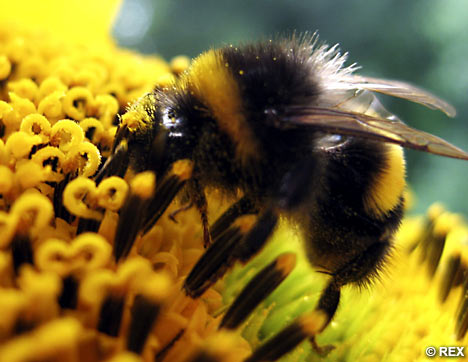
Pollinating animals, including bees, birds, butterflies, bats, beetles and others, are vital to our delicate ecosystem, supporting terrestrial wildlife, providing healthy watershed, and more. Therefore, Pollinator Week is a week to get the importance of pollinators’ message out to as many people as possible.

It’s not too early to start thinking about an event at your school, garden, church, store, etc. Pollinators positively effect all our lives- let’s SAVE them and CELEBRATE them!

For more information, please visit pollinator.org

2016-05-31T19:35:24-07:00June 18th, 2014|

Fusarium Dieback / Polyphagous Shot Hole Borer

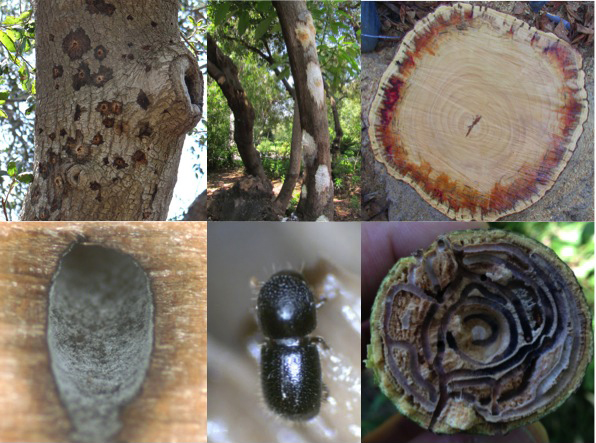
Recently  a new beetle/fungal complex was detected on avocado and other host plants in Los Angeles, Orange and San Bernardino Counties. The two fungal species are  Fusarium euwallaceae and Graphium sp., which form a symbiotic relationship with a recently discovered beetle that is commonly known as the polyphagous shot hole borer (PSHB, Euwallacea sp.)

Together, they cause the disease Fusarium dieback (FD). When the beetle burrows into the tree, it inoculates the host plant with the fungus (Fig. D), which is carried in its mouthparts in a structure called mycangia.

The fungus attacks the vascular tissue of the tree, blocking the transport of water and nutrients from the roots to the rest of the tree, and eventually causing branch dieback. The beetle larvae live in galleries within the tree and feed on the fungus.

FD has been observed on more than 110 different plant species in California, including many species common in urban landscapes and on such agriculturally important species as avocado, olive and persimmon.

 Symptoms:  Each host species shows different symptoms depending on the response to infection. Sycamore, box elder, maple, red willow, and castor bean are good trees to search for signs and symptoms of the beetle, as it tends to prefer to infest these hosts first. Depending on the tree species attacked, PSHB injury can be identified either by staining, gumming, or a white-sugar exudate on the outer bark in association with a single beetle entry hole.

The vector beetle:  An exotic ambrosia beetle (Euwallacea sp.) is very small and hard to see. At the advanced stage of infestation, there are often many entry/exit holes on the tree (Fig. E-F). Females are black and about 1.8 – 2.5 mm (0.07-0.1 inch) long (Fig. A-B (right)); males are brown colored and about 1.5 mm (0.05 inch) long (Fig. B ((left)). The entry/exit hole is about 0.85 mm (0.033 inch).

What to do:

  • Look for a single entry/exit hole surrounded by wet discoloration of the outer bark
  • Scrape off the bark layer around the infected area to look for brown discolored necrosis caused by the fungus.
  • Follow the gallery to look for the beetle (may or may not be present).
  • Avoid movement of infested firewood and chipping material out of infested area.
  • Look for other hosts (Castor bean, sycamore, maple, coast live oak, goldenrain, liquidambar) showing symptoms of the beetle/disease.
  • Sterilize tools to prevent to spread of the disease with either 25% household bleach, Lysol® cleaning solution, or 70% ethyl alcohol.

Who to contact if you find the problem: If you suspect that you have found this beetle or seen symptoms of the Fusarium dieback on your tree please contact either your local farm advisor, pest control advisor, county Ag Commissioner office or Dr. Akif Eskalen by either phone 951-827-3499 or email at akif.eskalen@ucr.edu.

For more information visit www.eskalenlab,ucr.edu

2016-05-31T19:35:24-07:00June 18th, 2014|

Views on Food: Outsmarting the Drought

By Elaine Corn; The Sacramento Bee

Shahar Caspi tends acres of gardens, fruit trees and a commercial vineyard in the hamlet of Oregon House in the foothills between Marysville and Grass Valley. His job since 2012 has been raising food year round for his community and bringing perfect wine grapes to harvest – all without tilling, and with little to zero added water.

We drove between two fields, one side brown, ragged and parched, the other a Caspi no-water showcase – grape vines in bud break, the ground beneath them rich, a natural ground cover green as jade.

“Mulch with shredded roots,” he says exuberantly, eyes off the road. “Very simple!”

At a sunny glade, another concept preps cherry trees. He walks us past huge square holes he flushed with water and allowed to drain. The holes were filled with Caspi’s mulch, manure and compost, then a tree. “They won’t need water for many, many months.”

Back in the greenhouse next to his mountaintop home, Caspi laid manure on the rock-hard dirt floor, and on purpose didn’t till the soil underneath. He stuck chard seedlings directly into the manure. “They flourished immediately,” Caspi says. “The roots went sideways into a huge mass of roots. I’ve never seen anything like it.”

And despite no rainfall the first four months of his second season of raising food for his neighbors, water usage dropped 30 percent and yields increased.

How does he do it?

The same way a dietitian would bulk up a wasting patient with lots of calories and nutrients. Except Caspi is like a soil chef, mixing fermented manure and compost in varying proportions “to re-establish a whole layer of soil that holds water” like a subterranean sponge.

The technique is reminiscent of Rudolf Steiner’s bio-dynamics, which treats the farm as a holistic entity. But considering Caspi’s past and combining it with an uncertain future of water in California, a goal of using zero water to grow food is understandable.

Caspi grew up inculcated with respect for water. In Israel, kids get “Don’t Waste A Drop” stickers in school that go on the family fridge. “It’s so much in our blood to save water,” he says. “We had a cartoon that showed the whole family showering together under a few drops of water.”

Modern drip irrigation with emitters was an idea out of Israel. So is placing black plastic sheeting over soil to contain moisture. Israel leads the world in recycling 80 percent of its water. Its latest technology collects dew.

In California, some growers are on top of the drought. A report from the California Farm Water Coalition says that in the San Joaquin Valley $2.2 billion was invested in drip irrigation on 1.8 million acres. But for every conserver using soil probes, infrared photography and improved weather forecasting, we have devourers of resources.

“Here you flood fields,” Caspi says. “An Israeli would say, ‘Are you kidding?’ It’s the mentality of abundance, that it’s going to last forever.”

In 2008, winemaker Gideon Beinstock hired Caspi to be vineyard manager at Renaissance Vineyard and Winery in Oregon House. With Caspi’s degree in plant sciences from The Hebrew University and years of experience in water strategy in Israel, his mission was to convert 45 acres of conventionally cultivated vineyard to fully bio-dynamic viticulture.

Production costs went down by 12 percent. Yields increased between 3 percent and 7 percent.

Beyond his work at the vineyard, Caspi tends the gardens of about 50 “member” neighbors in and around Oregon House. Because this is a rural community, Caspi can put a sign on the road saying “manure needed,” and loads are brought to him for fermenting.

The finished manure plus organic matter from garden waste, wood ash and olive paste all come from within a 10-mile radius. It returns to the members in the form of Caspi’s magical soil smoothie that retains water and nourishes roots.

In the garden, take a load off and don’t till. Then follow Caspi’s instructions.

Find a source of manure and compost. Lay a thick layer, up to 4 inches, on the ground and plant right into it. Apply plant by plant rather than over the entire garden. For tomatoes, dig a deep hole, water the hole until the water drains, fill the hole with a mix of chicken manure and compost, then a tomato seedling. Add a bit more nitrogen in the form of half a teaspoon of chicken manure when you dig the hole. Water once more.

How long can you go without added water? A week? A month? Water only if lack of moisture is detected by sticking a finger into the ground. “The first year is hardest,” Caspi says. “Don’t give up. If you fail, you try again.”

As to your own sense of food security, you can have a community-supported agriculture system on your street. “One person grows the potatoes, someone else grows the beans, and another person grows herbs,” Caspi explains. Everyone adds to the pile tended by the neighborhood compost geek. In a few years, the soil will be so absorptive it will gulp winter rainwater and retain it through summer.

Without access to the livestock that live near Caspi, there might be a cost for store-bought manure, unless you have a friend with a horse, a cow or chickens. When a crop is ready, deliveries begin in staggered availability.

With wells already stressed in the Sierra foothills, Caspi remains an Israeli at heart, tinkering for extra droplets of water in what he presumes is a terminal drought.

“The plant takes only what it needs,” Caspi says. “This is how it works in nature. If you don’t need it, why do you want to take it?”

To protect ourselves from food shortages and to buffer California’s agricultural economy, we all should regard any adjustments that allow us to grow food with less water as permanent.


2016-05-31T19:35:24-07:00June 17th, 2014|

From Service to Harvest – Military Veteran Deploys Aquaponics on the Farm

By: Blair Anthony Robertson; Sacramento Bee

Farming wasn’t Vonita Murray’s first choice, but after making a drastic career change, the 38-year-old Navy Veteran, former office manager and longtime fitness enthusiastic now believes digging in the dirt, growing food and being her own boss may be the dream job she has always wanted.

The transition to farming for Murray, 38, happened gradually over the past several years. She eventually took stock of her life, sized up her talents, sharpened the focus on her dreams and decided she was no longer cut out for a desk job.

For several years, Murray had been an office manager and a CAD, or computer-assisted design, technician for an architecture firm. Much of her work focused on remodeling floor plans for a major fast food chain’s Northern California stores. But when the economic downturn hit the architecture and design industry, Murray got laid off. She saw it as a chance to make a change in her life.

“It was the best thing that ever happened to me,” she said.

Using a $5,000 grant she received from the Davis-based Farmer Veteran Coalition, Murray bought some basic farm equipment and managed to launch her new career. She also enrolled in the first class of the California Farm Academy, a six-month farming course run by the Center for Land-based Learning in Winters.

Murray knows it will take hard work and several years before she can make a comfortable living as a farmer. But she has a long-term plan and says farming – including many 12-hour days – is exactly the lifestyle she was seeking.

“I’ve never been so tired, so broke and so happy,” she said with a laugh. “For the first time in my life, I have worth and a purpose. What I do has value in people’s lives.”

More and more veterans are turning to farming to connect in a similar way. “We’re all a family and we all try to help each other succeed,” Murray said.

When Michael O’Gorman founded the Farmer Veteran Coalition in 2009, he searched throughout the U.S. and found just nine veterans interested in going into farming. By the end of that year, the number was up to 30. These days, O’Gorman and his group have helped 3,000 veterans transition into farming.

“What’s really attracting veterans to agriculture is it offers a sense of purpose and a sense of mission,” said O’Gorman, who has farmed for 40 years. “It’s about feeding their country, offering food security and a better diet.”

O’Gorman is seeing more women get into farming and says Murray is a great role model.

“Vonita is dynamic, creative, energetic and smart. Whatever she does, she will do it well and take it places,” he said. “She’s a growing phenomenon. About 15 percent of those who serve in the military are women and that’s about the same percentage we hear from.

More and more women are going into agriculture. The military and farming are both male-dominated. The women who have taken on both of them just seem like a really exceptional group.”

Those who encounter Murray are often impressed by her energy and her holistic, lead-by-example approach to farming. Not only does she want to grow good food, she sees the work she does as a way to help people be healthy.

Indeed, Murray’s physical presence says plenty. Though she no longer trains as a bodybuilder, she remains noticeably lean and muscular. Her workouts these days focus on functional training and she is a big advocate of Crossfit, which combines classic weightlifting with mobility exercises.

“I’m doing all this because I want to get people healthy,” said Murray, noting that she hopes to someday build an obstacle course on the property so people can use it to work out.

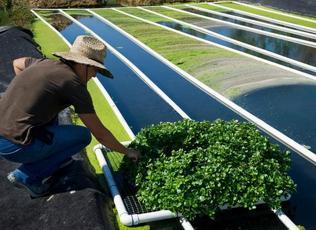
She also has a penchant for unorthodox and innovative approaches to growing food. Standing on a portion of the land she leases in rural Elverta next to the renowned Sterling Caviar facility, Murray watches water stream past. It’s runoff from the tanks where sturgeon are raised for their prized caviar. It’s also the key to what she will grow on her new “farm” site.

Murray essentially harnesses the water, 3 million gallons a day and loaded with nutrients, to create an innovative style of growing food called aquaponics, which combines modern hydroponics with forward-thinking environmental awareness.

The water goes through a settling pond to separate solids from liquids, travels through a moat and into small ponds where Murray is growing produce she sells to restaurants and to a growing number of customers at the Saturday farmers market in Oak Park.

The outgoing and optimistic Murray has put some of her energy into tapping resources that can help get her going in farming. She obtained a $35,000 low-interest loan from the U.S. Department of Agriculture.

Murray, whose produce operation is going to specialize in watercress, says she would have been at a loss as to how to proceed as a farmer without the education she got at the California Farm Academy. The program costs about $2,600 and various grants subsidize the tuition, according to Dawnie Andrak, director of development for the Center of Land-Based Learning.

Those who enroll run the gamut of age and work background. About 20 students graduate each year. To make it a real-world experience, they write a business plan and present it to a panel composed of people from the banking, business and farm community.

“There are more women like Vonita getting into farming,” Andrak said. “You will not find someone more dedicated and more clear about what it is she wants to do. She is certainly not one to give up.”

Jennifer Taylor, the director of the Farm Academy, is herself an example of a woman who made the career leap into farming. She was a research biologist who had no idea until well after college that a life in agriculture might appeal to her. She landed a four-month internship on a farm, was given four calves and eventually rented a barn and started dairy farming.

“If you have no connection to agriculture, it’s very difficult to imagine yourself doing it, Taylor said. “It’s a way many people want to live, an opportunity to be your own boss, work outside with your hands and be your own boss.”

But can you make a living?

“That depends,” said Taylor, noting that one young farmer from the program now sells to about 50 Bay Area restaurants and nets about $75,000 a year.

Back in Elverta, Murray is busy tending her crops and her chickens. She’s not making a profit yet, but she knows it takes time. More than anything, she loves the work, the lifestyle and the mission. She sometimes feels the stress of having debt and not knowing whether her crops will thrive.

But her farm is called Thrive Acres for a reason.

“You have to keep dreaming,” she said with a smile. “This is just the beginning.”


2016-05-31T19:35:25-07:00June 17th, 2014|
Go to Top