The International Food Information Council Conducts Consumer Survey

The International Food Information Council took a look at what U.S. consumers think about food safety and food technology, and offered some insights on the results in a webinar in late June. The topics included some that are of interest to the produce industry, including sustainability and biotechnology.

IFIC staff noted that consumers are farther removed from the sources of their food than ever before, and that food is a personal and emotional topic. They also noted that labeling initiatives around the United States put biotech in the spotlight, and social media and speedy communications spread information more quickly than ever.

These are a few takeaways from the webinar:

Confidence in the U.S. food supply, at 67% (19% neutral, 14% not confident) remains about the same as it has for the past six years. Consumers’ top concerns remain disease/contamination (18%) and handling/preparation (18%), but those concerns have declined since 2008.

When asked whether they avoid certain foods, 53% said they did—primarily for health reasons. The types of foods they avoid (in order) were: sugar/carbs, fats/oils/cholesterol, animal products, snack foods/fast foods/soda, salt/sodium, artificial/additives, processed/refined foods, biotech (1%). These attitudes certainly bode well for fresh produce.

Fewer than one in 10 know a lot about sustainability in food production, and more than four in 10 know nothing at all. Yet two-thirds say it is important that foods are produced sustainably. However, in general, consumers won’t pay more for sustainable foods.

Consumers believe modern agriculture produces nutritious, safe, high-quality foods that can be sustainable. Just over half believe farms are still primarily family-run.

Overall, U.S. consumers have heard a little about food biotechnology, but only 11% have heard a lot. Compared to prior years, consumers’ impressions of food biotech has changed—favorable 28% (37% in 2012) and 29% unfavorable (20% in 2012).

Interestingly, nearly two-thirds of consumers believe vegetables and fruits are biotech products. When given rationales for using biotechnology (e.g. reducing carcinogens, protecting produce from insect damage which reduces pesticide applications), two-thirds or more of consumers say they are likely to buy them. One-quarter of consumers want additional labeling information, and of those 4% want biotech information (up from 1% and 0% in prior surveys).

Studies like this continue to show that consumers need and want information. It’s up to us to tell them.

2016-05-31T19:34:18-07:00July 9th, 2014|

Proposed New Light Brown Apple Moth Quarantine Boundary – Mendocino County

Effective July 8, 2014, the Department is adding the Mendocino County Quarantine Boundary.  A map of the proposed boundary can be found at www.cdfa.ca.gov/plant/lbam/regulation.html.  The quarantine boundary is being added because a second adult Light Brown Apple Moth (LBAM) was found within three miles and one life cycle of a previous find. The new quarantine will add 14 square miles.

Regulated articles and conditions for intrastate movement under the quarantine can be found at Title 3 California Code of Regulations (CCR) section 3434.  Pursuant to Title 3 CCR section 3434 any interested party or local entity may appeal a quarantine area designation.

Process to Appeal the Proposed New Boundary

The appeal must be submitted to the Department in writing and supported by clear and convincing evidence. The appeal must be filed no later than ten (10) working days from the date of this notification.  During the pending of the appeal, the designated Quarantine Boundary under appeal shall remain in effect.

Mail Appeals to:

CDFA – Pest Exclusion
1220 N Street, Room 325
Sacramento, CA 95814

Electronic Notification of Boundary Changes

California Code of Regulation allows interested parties to be notified of quarantine area boundary changes, as well as the opportunity to submit quarantine boundary appeals.  If interested in receiving notifications, please sign up for regulatory updates through the email notification ListServ at: www.cdfa.ca.gov/subscriptions/index.html#planthealth.

For questions regarding the regulations or map, please email Dayna Napolillo (dayna.napolillo@cdfa.ca.gov) or Keith Okasaki (keith.okasaki@cdfa.ca.gov) or call (916) 654-0312.

Thank you for your attention to this timely matter.

2016-05-31T19:34:18-07:00July 9th, 2014|

The State Water Board to Consider Proposed Emergency Water Conservation Regulations

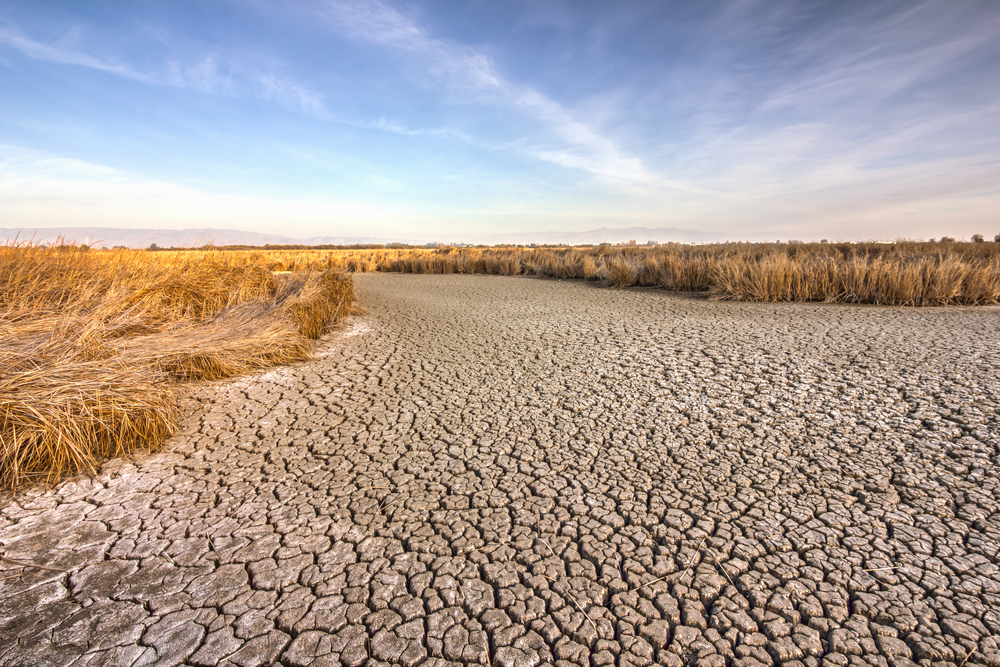
On January 17 Governor Edmund G. Brown Jr. issued a drought emergency proclamation following three dry or critically dry years in California. Extreme drought now covers nearly 80 percent of the state and these conditions will likely continue into the foreseeable future.

More than 400,000 acres of farmland are expected to be fallowed, thousands of people may be out of work, communities risk running out of drinking water and fish and wildlife species are in jeopardy. Many communities are down to 50 gallons a day or less per person for basic sanitation needs. With our inability to predict the effect of the next rainy season, water saved today can improve a region’s water security and add flexibility to systems that may need to withstand another year or more with precipitation below average.

In a survey conducted by the State Water Board in June, while many communities have significantly reduced their water demand over time, it is clear that more can  be done.

Conservation Actions Needed

Because of these dire conditions and the need to conserve more, the State Water Resources Control Board (State Water Board) is proposing that individuals and water agencies take necessary steps to conserve water supplies both for this year and into 2015, and is recommending that individuals and water agencies do even more voluntarily to manage our precious water resources.

Most Californians use more water outdoors than indoors. In some areas, 50 percent or more of our daily water use is for lawns and outdoor landscaping. Some urban communities have been investing in conservation, particularly indoors, for years, but reducing the amount of water used outdoors can make the biggest difference of all.

Temporary Water Restrictions

To promote water conservation statewide, the emergency regulations would prohibit each of the following, except in case of health or safety needs or to comply with a term or condition in a permit issued by a state or federal agency:

  • The direct application of water to any hard surface for washing
  • Watering of outdoor landscapes that cause runoff to adjacent property, non-irrigated areas, private and public walkways, roadways, parking lots or structures
  • Using a hose to wash an automobile, unless the hose is fitted with a sit-off nozzle
  • Using potable water in a fountain or decorative water feature, unless the water is recirculated

Action by Urban Water Suppliers Required

To reduce water demand, the regulations would require urban water suppliers to implement their Water Shortage Contingency Plans at a level that triggers mandatory restrictions on outdoor water use. Almost all urban water suppliers (those with more than 3,000 water connections) have these plans; about 40 of these larger agencies do not.

Water supplier serving fewer than 3,000 connections must also, within 30 days, require customers to limit outdoor irrigation to no more than two days per week or implement another mandatory conservation measure to achieve a comparable reduction in water consumption by the people it serves relative to the amount consumed in 2013.

2016-05-31T19:34:19-07:00July 9th, 2014|

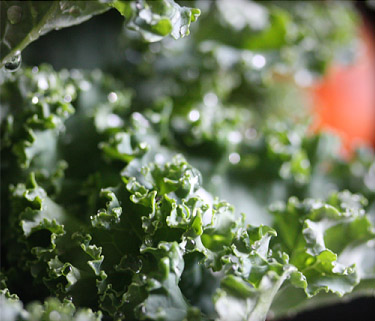
The Truth About Kale

Kale is a Nutritional Powerhouse!

By WebMD Expert Column


Eating a variety of natural, unprocessed vegetables can do wonders for your health, but choosing super-nutritious kale on a regular basis may provide significant health benefits, including cancer protection and lowered cholesterol.

Kale, also known as borecole, is one of the healthiest vegetables on the planet. A leafy green, kale is available in curly, ornamental, or dinosaur varieties. It belongs to the Brassica family that includes cruciferous vegetables such as cabbage, collards, broccoli, and Brussels sprouts.

Kale is a Nutritional Powerhouse

One cup of chopped kale contains 33 calories and 9% of the daily value of calcium, 206% of vitamin A, 134% of vitamin C, and a whopping 684% of vitamin K. It is also a good source of minerals copper, potassium, iron, manganese, and phosphorus.

Kale’s health benefits are primarily linked to the high concentration and excellent source of antioxidant vitamins A, C, and K — and sulphur-containing phytonutrients.

truth kaleCarotenoids and flavonoids are the specific types of antioxidants associated with many of the anti-cancer health benefits. Kale is also rich in the eye-health promoting lutein and zeaxanthin compounds.

Beyond antioxidants, the fiber content of cruciferous kale binds bile acids and helps lower blood cholesterol levels and reduce the risk of heart disease, especially when kale is cooked instead of raw.

Super-Rich in Vitamin K

Eating a diet rich in the powerful antioxidant vitamin K can reduce the overall risk of developing or dying from cancer, according to a study in the American Journal of Clinical Nutrition. Vitamin K is abundant in kale but also found in parsley, spinach, collard greens, and animal products such as cheese.

Vitamin K is necessary for a wide variety of bodily functions, including normal blood clotting, antioxidant activity, and bone health.

But too much vitamin K can pose problems for some people. Anyone taking anticoagulants such as warfarin should avoid kale because the high level of vitamin K may interfere with the drugs. Consult your doctor before adding kale to your diet.

Kale might be a powerhouse of nutrients but is also contains oxalates, naturally occurring substances that can interfere with the absorption of calcium. Avoid eating calcium-rich foods like dairy at the same time as kale to prevent any problems.

Eat More Kale

In summer, vegetable choices abound. But during the cooler months, there are fewer in-season choices — with the exception of kale and other dark, leafy greens that thrive in cooler weather.

To find the freshest kale, look for firm, deeply colored leaves with hardy stems. Smaller leaves will be more tender and milder in flavor. Leaves range from dark green to purple to deep red in color.

Store kale, unwashed, in an airtight zipped plastic bag for up to five days in the refrigerator.

2016-10-16T20:03:52-07:00July 7th, 2014|

California Rice Farmers Could Get Pollution Credit

Source: Edward Ortiz; The Fresno Bee

California’s evolving cap-and-trade market may soon have a new player: rice farmers.

A proposal by the California Air Resources Board staff, up for board approval in September, would allow rice farmers in the Sacramento Valley to sell carbon emission offsets as part of the state’s effort to combat climate change.

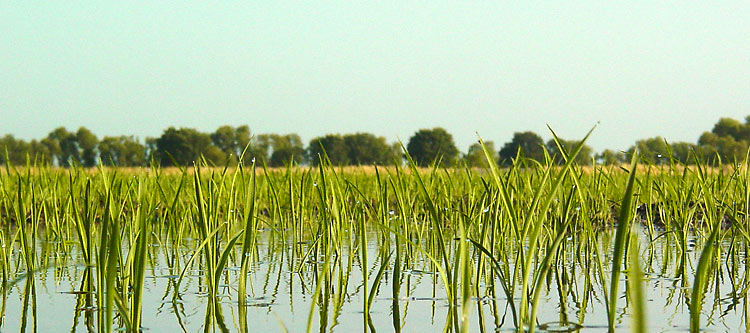
Rice farmers would flood their fields for shorter periods, which would reduce the decomposition process that emits methane – a potent greenhouse gas.

Businesses seeking to offset their own greenhouse gas emissions could buy credits from the farmers who had made gains in curbing pollution.

“The rice cultivation protocol is the first time rice practices have been identified as a potential source of greenhouse gas emission mitigation for California,” said Dave Clegern of the Air Resources Board.

The program, called the Rice Cultivation Projects Compliance Offset Protocol, is slated to go into effect on Jan. 1, 2015, and run for a 10-year period. State air quality officials and environmental groups say other crops could eventually be included in cap and trade as well.

“I think this rice protocol sets an important precedent for agriculture,” said Robert Parkhurst, director of agriculture and greenhouse gas markets for the Environmental Defense Fund. The nonprofit has been working with the California Rice Commission and the Air Resources Board to craft the program.

Rice was selected as the first crop because it’s a potent contributor of methane – a greenhouse gas implicated in climate change.

Methane is produced when rice farmers flood fields during spring seeding and prior to fall harvest. Flooding cuts off the soil’s exposure to oxygen. This causes anaerobic fermentation of the organic matter in the soil. Methane is an end product of that fermentation. The methane is released into the atmosphere primarily through the rice plant. A smaller portion bubbles up from the soil and escapes through the water.

The cap-and-trade program, launched in 2013, is an outgrowth of the state’s emissions-reducing law, AB 32. The program caps overall greenhouse gas emissions at a lower level each year. It allows industries to buy pollution allowances, within a certain limit, to offset their own release of greenhouse gases.

Farmers are largely exempt from cap and trade, and the offset program is voluntary for rice farmers. In order to sell credits, they will need to prove they changed the way they flooded their fields and reduced the amount of methane emitted as a result. The reductions will be measured using a complex computer model with independent third-party verification before offset credits are issued, according to the air board.

Those reductions can then be sold as part of the cap-and-trade program – at a market rate.

“For this to be successful, we’re going to need to see a group of farmers get together to cooperate in order to create these projects,” said Parkhurst. “The opportunity is large because there are a large number of acres, but the credits per acre (figure) is on the small side.”

The amount of methane that can be reduced would be about a half a ton to a ton per acre per year, said Parkhurst.

“What we would like is to take the opportunity with rice and see how it can be applied to other crops in other regions,” Parkhurst said.

He said that almonds are among a few crops now being considered for involvement in the cap-and-trade program. The Environmental Defense Fund has been working with the California Almond Board on a proposal.

That program would likely address fertilizer application practices in almond cultivation and their contribution to greenhouse gases.

The ARB is offering rice farmers two options under the new program. The first is a process called ‘dry seeding’ – where water is put on rice fields later during seeding season. The other demands farmers drain rice fields seven to 10 days earlier than usual.

Most of the 550,000 acres of rice planted in the state is in the Sacramento Valley, and most of that is grown by farmers who flood their fields – typically to a depth of 4 to 5 inches prior to seeding

Many unresolved factors could limit enthusiasm among rice farmers for the program, said Tom Butler, owner of the Sutter Basin rice farm corporation.

Butler grows 4,000 acres of rice and 265 acres of almonds several miles south of the Sutter County town of Robbins. He’s one of four farmers participating in a pilot program begun in March as part of the cap-and-trade effort with rice farmers.

The new practices suit his farm because his soil drains much more quickly than most rice farms in the Sacramento Valley. He said he thinks other farmers will be wary about draining their fields.

“Pulling water on and off can cause some serious nitrogen and erosion problems for your rice if you are not careful,” said Butler. “I would not have jumped into it feet first if we did not have the soil we have.”

If a lot of farmers sign up, however, the drying of their land could cause another environmental problem. Flooded rice fields provide more than 300,000 acres of wetland habitat for waterfowl and other birds that travel through the Sacramento Valley on the Pacific Flyway.

For now the air resources agency has decided to exclude winter flooding of rice fields from the cap-and-trade program. It is winter flooding – and not flooding during spring seeding or before harvest – that provides the most crucial wetland habitat for bird populations.

Butler said he’s decided to participate in the cap-and-trade program more for altruistic reasons than financial ones.

“I think about this as the right thing to do,” Butler said. “We’re trying our best to be good stewards of the land, and produce a crop … and this program could be a next step for us.”


2016-05-31T19:34:19-07:00July 7th, 2014|

California water bond: The burning questions

Source: Jeremy B. White; The Sacramento Bee

Having passed an on-time budget and concluded their committee hearings, California lawmakers have escaped Sacramento for a few weeks and retired to their districts for a July recess. When they return, much of the remaining legislative session will be devoted to trying to get a new water bond on the November ballot.

Water policy remains one of the most complex and potent topics to engulf the state Capitol. Here are some answers to the key questions in the water bond debate:

What happened to the other water bond they passed?

In the dwindling days of the 2009 legislative session, lawmakers and then-Gov. Arnold Schwarzenegger compromised on an $11.1 billion bond offering. That bond has been delayed twice and is now scheduled for the November 2014 ballot.

But the general Sacramento consensus now holds that the $11.1 billion bond is a goner: too large and too full of specific allocations redolent of pork. Gov. Jerry Brown has told lawmakers he is concerned about the 2009 proposal passing muster, and lawmakers argue it would be dead on arrival.

So what are they doing instead?

Even if they don’t like the existing bond proposal, many lawmakers still want something on the ballot. A historically intense drought can be a big motivator.

Several lawmakers have floated proposals for a new bond. Only one has made it as far as a floor vote. That measure, a $10.5 billion proposal by Sen. Lois Wolk, D-Davis, could not garner enough votes to get out of the Senate. On the day lawmakers adjourned for recess, senators announced a diminished $7.5 billion proposal.

Assembly members are hammering out their own compromise measure. They were close to introducing one earlier last week but had to go back to the drawing board. It now looks more likely they will unveil a pact once legislators return from summer recess.

What does the governor think?

For much of this year Brown declined to weigh in on a water bond. But he finally broke that silence recently and has begun meeting with lawmakers. Since the governor would need to sign any new bond, his opinion matters.

In keeping with his image as California’s responsible fiscal steward – a reputation he would like to burnish in an election year – Brown has advocated a bond that is smaller than both the $11.1 billion measure and the alternative bonds lawmakers are floating. These numbers are more starting points for negotiations than hard ceilings, but Brown suggested a bond worth $6 billion overall, with $2 billion for storage.

Surface Storage? What does that mean?

The term “surface storage” generally refers to big projects like dams and reservoirs. If California has more places to stash water in wet years, the thinking goes, it will be better equipped to survive the dry stretches. But storage could also encompass money to replenish or clean up supplies of groundwater, which California relies on more heavily in dry years.

Determining where storage dollars might go spurs fierce disputes over what types of projects could be eligible. Since all taxpayers are subsidizing them, bond-funded storage projects must carry broad public benefits.

Defining those benefits can be a problem. Bonds that list recreation as a benefit, for example, are a red flag for dam-averse environmentalists. As they note, you can’t take a boat out on groundwater.

Will a bond help with the drought?

One thing lawmakers can’t do is create more water. If rain is scarce and the Sierra snowpack is diminished, that means there’s less to go around. If big storage projects are advanced, it would still take years for construction to finish and yield results.

Other money could bolster access to drinking water. Proposals would offer grants to treat drinking water contaminated with nitrates or other chemicals, money for recycling and reusing wastewater, funding to repair water infrastructure in disadvantaged communities and support for capturing more stormwater.

What about the Delta tunnels? Will a bond pay for those?

This is a tricky one. Understanding the answer requires a brief explanation of the so-called “co-equal goals” of Brown’s Bay Delta Conservation Plan.

The centerpiece of Brown’s legacy water project would be a pair of massive water tunnels capable of funneling water to southern parts of the state without needing it to flow through the Delta. It’s very controversial. But the project isn’t just tunnels. It would also need to pay for sweeping environmental restoration to help the Delta’s teeming habitat, what’s known as “mitigation.”

That imperative of spending money on Delta habitat is affecting the water bond debate. None of the bonds would allocate money to build the tunnels. But they all offer money for the Delta. Senate President Pro Darrell Steinberg, D-Sacramento, and others point to polling suggesting that any bond that is not “BDCP-neutral” will rally the opposition and falter before voters. Brown also believes a bond must be divorced from the tunnels.

Would a bond with money for the Delta ecosystem help Brown build the tunnels? Depends who you ask. For now, Delta advocates and environmentalists believe Wolk’s bond is the most tunnel-neutral option. But some observers believe that Delta plan skeptics could frame any bond with Delta money as a boon to Brown’s tunnel dreams and hurt its chances for passage.

Are special interests involved?

Assuredly. With billions of dollars at stake, various interest groups have been making their priorities known to lawmakers. That includes environmentalists, agricultural interests, organizations like the Alliance of California Water Agencies, major urban water agencies like the Metropolitan Water District and prominent agricultural water providers like the Westlands Water District.

For the environmentalists, a key point of contention is what sort of projects a bond could fund. They don’t want to see preference given to new large-scale reservoirs, expressing skepticism that the new dams would be cost-effective and warning about environmental degradation.

Most pressing for many water districts and agencies is more money for storage. Their customers are thirsty, something they hope a bond can address. Since Brown’s tunnels have become bound up with the bond conversation, it’s worth noting that significant support for the Delta tunnels comes from exporters that would like to see a steadier flow of water.

When is the deadline?

The statutory deadline to get a new water bond on the ballot has come and gone (it was June 26). The Legislature can still waive various laws to put something before voters in November.

But elections are complex undertakings, and the civic machinery has already started whirring. The secretary of state’s office has begun assembling the voter guides that must go on public display by July 22 before being printed and mailed to voters. County election officials typically start ordering ballots to be printed in August. Those ballots have to be translated into nine other languages.

Lawmakers have options. Administrators are already allotting space for the $11.1 billion bond, so swapping out that language for a new bond would be simpler. If lawmakers take too long striking a new bond deal, they could end up having to print a second, separate voter guide. That would cost more money, potentially millions of dollars.

So the short answer is: there is no immutable deadline. But the longer lawmakers take, the more complicated and expensive it gets.

2016-05-31T19:34:19-07:00July 7th, 2014|

CDFA Official on California Farming Innovation

It is a big challenge to increase production for a hungry world.

CDFA Secretary Karen Ross spoke at a recent Soil Health symposium to discuss the critical need to increase production with less resources such as water.

“There’s a huge challenge for us to more than double our productivity and yet we are going to do it with less arable land, less available water on a global basis. So really understanding soil health and having the metrics to know what that is and what were doing is improves that as a way to maximize productivity and still get these environmental benefits that come with it. Its the demand of the time and I think California should be a leader,” said Ross.

Ross said that California has a good knowledge base to find answers.

“We’ve got some understanding world renowned Soil Microbiologists who are looking at this. But its not just going to come from academia its going to come from private companies, it’s going to come from  farmers and ranchers who are innovative themselves. And really bringing it all together, and creating that roadmap to prioritize what is it what we know? what are the gaps? How do we prioritize what needs to  happens next? and go out and seek the funding, the investment. This is a huge investment for the sustainability for our food supply and humankind,” said Ross.

Ross said that California growers are innovative in new systems of farming.

“And we see so many of our systems that are constantly adapting and seeking out the information,you know the early adopters who are willing to do some of those systems on their farm. One example is the just all the work on conservation tillage. and it usually takes a few who are willing to go first, kind of prove the concept and share it with their neighbors. Then all of a sudden it becomes the standard practice. It goes from best practices to standard practice,” said Ross.

Ross added: “But we can’t just stop with that, we have to be constantly looking at all those ways of adapting our systems.”

2016-05-31T19:34:19-07:00July 3rd, 2014|

CDFA Official on Success and Future of California Dairy

Karen Ross, Secretary for the California Department of Food and Agriculture, talks about the role of California Dairy has on the current global market, and what the future hold for the industry.

“So we really have seen a couple things going on. One is this huge constant demand for California milk-based products. the export markets looking for powders, they can’t get enough powders, they have huge confidence in the food safety of our milk production here, we‘re strategically located,” said Ross. “So that demand has really drive up prices, but at the same time fortunately for us our friends in the Midwest had great corn and soybean harvest and so those grain prices had moderated so that farmers are finally to the point where their realizing some margins and they need to rebuild their equity,” she added.

Ross mentions that industry leaders are already looking towards the future.

“We also to the credit of the leaders and the producers and processor community, are still meeting as part of their California Dairy Futures Task Force, and we actually have a couple different proposals for some reform to of our pricing system going forward, that we are taking a deeper dive in. We have some economists that are doing some analytics on that and concurrently the cooperative continues to work on the petition and we will find out people are willing to consider seriously going into a federally milk marketing order. ” said Ross.

Ross explains some aspects of the dairy industry need to change.

“So I think its healthy for the industry now that we have some margins in the business and to really think about our future and this almost 60-year old pricing system, and what works, and we want to retain and where we need to create some flexibility so that we can be very competitive  and maximize our opportunities in the export market.” said Ross.

2016-05-31T19:34:20-07:00July 3rd, 2014|

Thank a Farmer For Your Food Independence

As you fire up the grill this Independence Day, be sure to thank a farmer, whose contributions help keep the cost of a Fourth of July feast under $6 bucks a person, according to a recent survey by the American Farm Bureau Federation.

Considering Americans spend just 10 percent of our incomes on food – the lowest of any country – we are all indebted to the “thin green line” of only 210,000 full-time U.S. farms that produce a product that is safe, abundant and uniquely American.

These farmers are also critical to our nation’s “food independence.” This food security does not happen by accident. It is a blessing that is fostered by smart policy.

The roots of government involvement in U .S. agriculture are actually as old as the nation itself.   Government involvement began with the founding fathers of the nation and carries the fingerprints of other great Americans who followed.

In 1799, after years of colonies and states granting tracts of land to citizens encouraging people to plant crops and begin commerce, George Washington called for the establishment of the National Board of Agriculture to collect information on the nation’s agricultural inventories.

Not surprising since our first president was also quoted as saying: “It will not be doubted that with reference either to individual or national welfare, agriculture is of primary importance.”

President Abraham Lincoln then established the USDA in 1862, a department that has grown since then to include promoting agriculture trade, working to assure adequate and safe food and striving to end hunger in America and abroad.

Over the next 40 years, as the world population grows from 7 billion to 9 billion and demand for agricultural commodities doubles, we need such policies that encourage investment and constant improvement.

If done right, more nations and peoples will continue to know the happiness of a safe and reliable and affordable food supply.

2016-05-31T19:34:20-07:00July 3rd, 2014|
Go to Top