USDA, Microsoft Innovation Challenge Winners

Open Data from USDA, Microsoft Cloud Technology Strengthen Food Supply Through “Innovation Challenge” Winners


Agriculture Secretary Tom Vilsack and Microsoft officials announced the winners of the USDA, Microsoft Innovation Challenge late last month in which contestants used USDA agriculture production open data to develop online tools that can help make the American food supply more resilient in the face of climate change.

“In yet another example of how public and private resources can be leveraged together to address significant global concerns, the winners of the USDA-Microsoft Innovation Challenge have used open government data to create an impressive array of innovative tools to help food producers and our communities prepare for the impacts of climate change and ensure our nation’s ability to provide plentiful, affordable food,” said Agriculture Secretary Tom Vilsack. “For more than 100 years, USDA has compiled data on the farm economy, production, and the health of crops around the country, and it is exciting to see such modern, useful tools spring from these information sources.”

The Challenge was created in support of the President’s Climate Data Initiative, which aims to harness climate data in ways that will increase the resilience of America’s food system. USDA provided contestants with more than 100 years of crop and climate data through Microsoft Azure, Microsoft’s cloud computing platform.

“Combining the advantages of cloud computing resources with the government’s desire to provide open access to public data is likely to transform scientific research and business innovation,” said Dr. Daron G. Green, deputy managing director of Microsoft Research. “Microsoft’s partnership with the USDA evidences how public-private partnership can stimulate new applications, explore novel scenarios and, in this case, work towards a more resilient and sustainable food production.”

A total of $63,000 in cash and prizes were awarded, with winners selected from more than 346 registrants and 33 submissions from around the world.

The award recipients and their projects, are:FarmPlenty


  • Grand Prize, Open Source Application Award, and Best Visualization in Time or Space Award recipient: Farm Plenty, submitted by George Lee of San Francisco, Calif. This application allows farmers to analyze USDA data about crops grown within five kilometers of their farms to make informed decisions about their own crop choices.


  • Second Prize and Open Source Application Award recipient: Green Pastures, submitted by Khyati Majmudar of Mumbai, India. This comprehensive dashboard interface allows a farmer to visualize production, economic, livestock, and commodity data from NASS, ERS, ARMS, and other sources at scales from national to local, including information on farmers’ markets.


  • Third Prize recipient: What’s Local, submitted by Benjamin Wellington of Landscape Metrics LLC in Brooklyn, N.Y. This tool analyzes the resources that are required to produce agricultural outputs by using data from the Census of Agriculture in a way that allows urban population centers to connect with farmers in their area.


  • Honorable Mention: Open Source Application Award, and Best Student-Made Award recipient: Farm Profit Calculator, submitted by Fernando Napier and Matt Pedersen of Lincoln, Neb. Farmers can use this mobile phone application to compare their input costs (fertilizer, seed, fuel, etc.) to regional averages, and find financial efficiencies where their costs are above the norm.croptrends


  • Honorable Mention recipient: Croptrends, submitted by Chaiyawut Lertvichaivoravit and Ta Chiraphadhanakul of Thousand Eyes in San Francisco. This useful tool can be used for viewing spatial and temporal trends in crop production and yield by county for the entire United States by using NASS data.


  • Popular Choice Award recipient: VAIS, submitted by Ken Moini of Thallo Tech in Nashville, Tenn. This tool uses NASS data for the entire United States to provide a unique approach to visualizing crowd-sourced pricing data.


  • Large Organization Recognition Award recipient: Farmed, submitted by Bryan Tower of Applied Technical Systems in Silverdale, Wash. This tool allows farmers to view crop conditions in their area by using VegScape data from NASS combined with local weather data.


USDA is an active founding member of the Global Data Partnership through the memberships of both the U.S. Government Open Data and the Global Open Data for Agriculture and Nutrition (GODAN) initiatives. USDA is helping pave the way for coordinating global efforts to make agriculture and nutrition data open. USDA’s Open Data Catalog is the authoritative source of publicly available USDA data.

Since 2009, USDA has invested in and advanced innovative and transformative initiatives to solve societal challenges and ensure the long-term viability of agriculture. USDA’s integrated research, education, and extension programs, supporting the best and brightest scientists and extension personnel, have resulted user-inspired, groundbreaking discoveries that are combating childhood obesity, improving and sustaining rural economic growth, addressing water availability issues, increasing food production, finding new sources of energy, mitigating climate variability, and ensuring food safety. To learn more about USDA’s impact on agricultural science, visit www.usda.gov/results.
2016-05-31T19:24:13-07:00February 2nd, 2016|

Greg Douhan is New Citrus Farm Advisor

UCCE Tulare Welcomes New Citrus Farm Advisor

By Brian German, Associate Director

The UC Cooperative Extension Program has served Tulare County since 1918 and continues to meet the ever-changing needs of the community. UC Cooperative Extension, Tulare County is preparing to welcome their new citrus farm advisor, Greg Douhan, on March 1, 2016. Douhan, who noted his excitement for the opportunity, will be taking the reins from the recently retired Neil O’Connell who gave over 34 years of faithful service advising Tulare County citrus growers.

Douhan shared that his relatives inspired him to focus his career in agriculture. “I had an uncle who was an almond grower when I was a kid. And my grandfather was an avid horticulturalist; he used to graft different trees and I always found that fascinating.”

“As I got older, I decided I was interested in plants, so I went to Humboldt State University. I also got interested in fungi, so I decided to fuse my interests in fungi and in plants and go into plant pathology,” Douhan said.

“I earned my Master’s and Ph.D. at Washington State University, and then completed a post-doc assignment at UC Davis for 3-4 years. I moved to UC Riverside for about 6 years. Now I am here in Tulare County!” 

Cooperative Extension advisors serve as conduits of information from various UC campuses. Subject matter specialists, along with local research centers, collaborate with local advisors to identify and solve local problems through research and educational programs. The mission of the program is to serve California through the creation, development and application of knowledge, in agriculture, natural and human resources. Farm advisors then apply this knowledge to improve our agriculture and food systems along with our natural resources and environment.

“I’ve been working for the UC system basically since I was a post-doc,” Douhan said, “so it has been for many years. I think Cooperative Extension was the best system for working with both the growers and everybody else to better California agriculture,” Douhan said. “This was just an incredible opportunity. I was doing science and looking for another career move, and this was a perfect opportunity to have a next chapter in doing something different.”

_______________________

Link:

Tulare County Cooperative Extension

2016-05-31T19:24:14-07:00February 1st, 2016|

National Dairy Crisis—A Way Forward, Part 1

A Way Forward Out of National Dairy Crisis

First in a Series

By Patrick Cavanaugh, Deputy Editor

The national dairy industry is in crisis right now. Milk Prices are at an all-time low due to oversupply and drastically lowered exports. The seesaw scenario has inventories up and prices down below production costs.

Tom Van Nortwick, owner and publisher of Agribusiness Publications based in Fresno, has published a dairy magazine for 35 years. He was closely involved with hundreds of dairy producers from 2009 through June 2014 in the organization and establishment of the National Dairy Producers Organization nationwide. The organization focuses on keeping dairies profitable especially when market conditions force down dairy pricing.

Tom Van Nortwick

Tom Van Nortwick

Van Nortwick told California Ag Today, “The biggest problem our dairymen are facing today in California and across the country is that the price of milk, as set by the market and by supply and demand, is actually below the cost of production. So they are making a hundredweight of milk; it is on the market for sale; but the price that they are receiving for every hundredweight of milk is actually lower than what it costs them to make it. And that has been going on for most of 2015 and now we are heading into ’16 towards ’17, and there doesn’t seem to be a solution in play from anyone, anywhere.”

“The big question is how can this be sustainable for dairies, which, over the last 10 years, on average, have had milk prices below production costs?” Van Nortwick asked. “We are not sure,” he explained. “In fact, what we have seen is huge attrition in the dairy industry.”

“In September 2011, there were 110,00 dairy producers in America,” said Van Nortwick. “Today, there are 45,000-60,000 milk producers at some level in the country. We have had huge attrition as we have gone through nearly a decade of really high volatility and low prices. For the majority of the time, especially the last 7 years, it has been extremely difficult.”

“We had a wonderful 2014 when supply and demand were more in balance and there were no excesses,” Van Nortwick stated. “Our global milk sales were high, and yet that has now changed, driving the price of milk throughout 2015 to unsustainable [low] levels.”

Van Nortwick observed that survivors in the dairy industry, particularly in California, have been able to diversify into other crops for positive cash flow. “Whether it is nuts or almonds, of course we are going pillar to post with almonds in California anyways,” he remarked. “Someone the other day said, ‘Hey Tom, you might have to get used to the fact that California is more suited to produce these specialty crops than it is to produce feed for cows to turn into milk.’”

Van Nortwick contends there is a way for the dairy industry, not only in California, but nationally, to do something about these low prices. “The proposal we make is all about a way forward. Dairy producers in this country who have been in their barns over many years and have seen these conditions, have asked, ‘What if we did it this way?’”

090“So when we formed the National Dairy Producer’s Organization nearly five years ago,” he elaborated, “incorporated in the contract with producers was a long list of recommendations that needed to be implemented. We have not yet been able to implement very many of these and there are good men who are continuing that effort,” he noted.

“But one of the things we wanted to talk about most,” Van Nortwick said, “was the Dairy Pricing Organization originating from Robin Berg, a dairy producer in Wisconsin, that gave specific ideas to what dairy producers could do. We proposed that price volatility could be removed from the marketplace by dairy producers being market-responsive with their milk production on the farm, relative to profitable demand in the marketplace. If you make too much milk, and it cannot be sold, the price for—not just that excess milk—but all milk, goes down.”

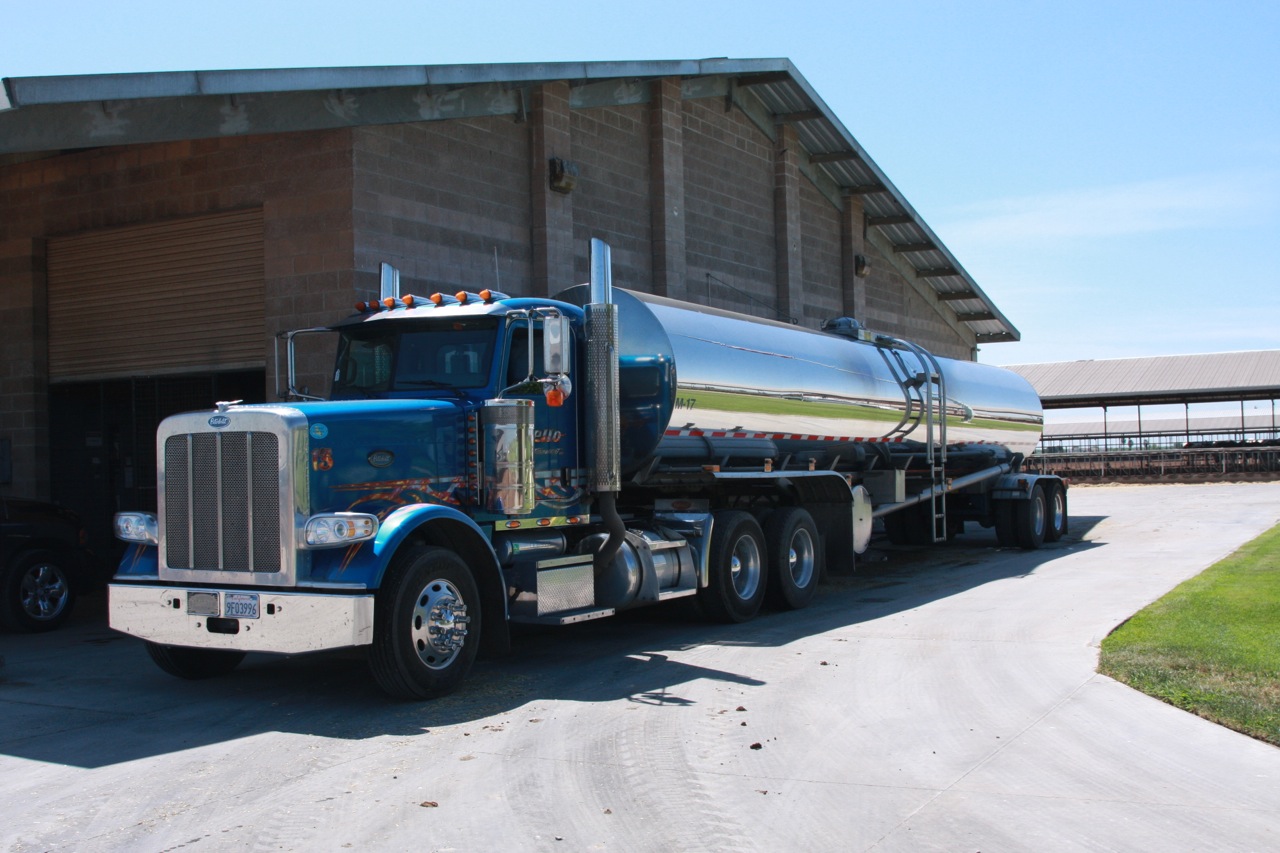
Nortwick further explained, “So picture a great big tank that we fill up every day, and everyday it goes down. But if we [over pour and] push milk out of the top of that tank and any of it spills over the side and onto the ground, then every bit of milk in the whole tank becomes less valuable.”

“So, we have to be market responsive,” he continued, “How much milk can we use at any given time? The big dilemma that has come about today, is that the high global demand we were enjoying in 2011, 2012, 2013, and even as far back as 2010, was double digit growth in every one of those four years. When the producers finally mitigated their excess milk production in 2013, dramatic price increases in 2014 resulted. Milk was at record levels during that nearly twelve month period of time.”

Van Nortwick cautioned, “Unfortunately what was ignored were warnings—ample signs available to us in the first quarter of 2014, even in the fourth quarter of 2013—that should have warned dairy producers, ‘We are losing; demand is falling. Don’t keep increasing the amount of milk you make every month.’”

Van Nortwick clarified this loss in demand was mostly due to global exports. “We have sustained, for the most part, all of our domestic demand,” he stated, “Those numbers have not changed at all.”

“But here is that tank of milk overflowing,” he illuminated, “and because our tank overflowed, the price of all of that domestic milk went down too! So even though we did not lose domestic consumption, we lost price because of excess milk production on the farm. The global market didn’t take it.”

“At the height of that boom, 17.5% of our total production was going global,” said Van Nortwick. “How much did global fall? It plummeted at least 50% when that bubble burst.”milk

“Since then, about half as much of our milk production in the United States is going global. What were the consequences? We had a 31-35% reduction in milk price nationwide for all milk—not just the excess milk that was going global—but all milk in America,” Van Nortwick noted.

Van Nortwick explained the dairy industry needs a sure approach to manage increased prices at a viable profit level. There must be a dramatic decrease of milk in the tank.

Van Nortwick offered several ways to tackle it, including a buyback program that donates milk products to churches and food banks across America. “Robin Berg, a dairy producer, came forward and said, ‘There are two ways to attack this: We can be market-responsive with milk production on the farm or we can go to the other end after it has been manufactured and sitting in storage, and the inventory is rising to the point where it is beginning to depress the price of milk paid to me (the producer). We could go in with dollars that we have set aside and saved, and we can remove that inventory, to help maintain a viable, profitable price for producers.”

Further describing the scenario, Van Nortwick said, “We have prevented milk from spilling on the floor because dumping is not a solution, it is a lose-lose plan. Get it manufactured and be ready on the other end.”

“Food insecurity is kind of the new insecurity,” he declared. “There are 49 million people in America who are underserved and have food deficiencies in their lives all the time.”

“What are we doing about it?” asked Van Nortwick. Feeding America, food banks and churches across this country have the infrastructure not only to take it in and house it, but also to immediately distribute it. Feeding America, a network of food banks, is leading the fight against hunger in communities nationwide and serves 46.5 million Americans in need.

Van Nortwick went on, “There is a sign on a little church in our neck of the woods, ‘Free Food-Saturday.’ So apparently, they are going to have a free distribution of food. That infrastructure is already in place! Give them the commodities they need to feed the 49 million people. Have it removed [from the market supply]. We will pay for it and donate it to them. They pick it up. They’ll even transport it. They will pay to move the products where they need to be distributed to the people who need the food.”

Feeding America is onboard and wants to do it, according to Van Nortwick. “Our people have met with their people who said they can take all that we can provide.”

Readers can learn more about Dairy Pricing and the goal of becoming more Market Responsive with their milk production on the farm by visiting www.dairypricing.org or www.my-dairyman.com.

2021-05-12T11:17:14-07:00February 1st, 2016|

Biocontrols Conference & Expo

Biocontrols Conference & Expo, March 3-4, 2016, Monterey, California 

Learn everything you need to know about agricultural biocontrols from the experts.  


Join your peers, leading organizations and industry experts at the Biocontrols Conference & Expo for two days of hands-on education devoted solely to the use of biocontrols in agriculture presented by Meister Media Worldwide, a media solutions provider for worldwide specialized agriculture, in cooperation with the Biopesticides Industry Alliance (BPIA), and the California Association of Pest Control Advisers (CAPCA). The Biocontrols Conference offers educational sessions, continuing education credits (CEUs) for pest control advisers (PCAs), certified crop advisers (CCAs) and other state certification programs, and an expansive Expo with top suppliers of biocontrol products and related services.

New for 2016!  

Two optional, concurrent add-ons on the last afternoon of the event (additional fees may apply):

1.Tour of two leading Monterey-area specialty-crop growing operations that use biocontrols as part of their integrated pest management programs:

-Biocontrols USA Tour

-Pacific Plug and Liner,  Watsonville, CA

2.Hands-on workshop on the use of beneficial insects in a greenhouse environment

lineclear

Agenda Sampling:

-8 Tips To Get The Most Out of Your Biocontrols Program

-A look at the most common active ingredients and how to handle them to get the best results, Lance Osborn, UF IFAS

-What’s Next In Biocontrol?

-Regulatory Update, Bob McNally, EPA

-Pipeline Update – what types of new products are coming?

-The Future Isn’t Biocontrol. It’s IPM

-Understand The Value of Biopesticides – Do they Pencil Out for You?

-How To Evaluate/Field Test a New Research Biopesticide

-Biopesticides and Beneficials: Make Them Work Together, Frank Sances, Pacific Ag

-Fruit and Tree Nuts: Hands-on, How-To Topics

-Using Green Lacewings in almond and pistachio, Brad Higbee, The Wonderful Co.

-Vegetables: Hands-on, How-To TopicsMycorrhizae: Why it Makes Sense in Strawberries, Johan Pienaar, Mycorrhizal Applications.

Monterey Bay, the conference location, is in close proximity to the heart of major California specialty-crop production: vegetables, fruits, and ornamentals in Monterey County and the Salinas Valley, and affords you the opportunity to tie-in a long weekend in the Monterey Bay area.

lineclear

Meister Media Worldwide and its leading family of brands including American Vegetable Grower®, Western Fruit Grower® / American Fruit Grower® and Greenhouse Grower®, CropLife®,

lineclear

Having celebrated its 15th anniversary in September 2015, BPIA is dedicated to fostering adoption of biopesticide technology through increased awareness about their effectiveness and full range of benefits to a progressive pest management program.

lineclear

Dedicated to the professional development and enhancement of its members’ education and stewardship, the California Association of Pest Control Advisers (CAPCA) represents more than 75% of the nearly 4,000 California EPA licensed pest control advisers (PCAs) that provide pest management consultation for the production of food, fiber and ornamental industries of this state.

2021-05-12T11:05:58-07:00January 28th, 2016|

Water Initiative Approved by AG

California Water Priorities Initiative Goes to Ballot

The Attorney General of California, Kamala Harris, has prepared the following title and summary of the chief purpose and points of the proposed water initiative:

WATER BOND. REALLOCATION OF BOND AUTHORITY TO WATER STORAGE PROJECTS. INITIATIVE CONSTITUTIONAL AMENDMENT AND STATUTE.

Prioritizes water uses in California, with domestic uses first and irrigation uses second, over environmental, recreational, and other beneficial uses. Reallocates up to $10.7 billion in unused bond authority from existing high-speed rail ($8.0 billion) and water storage ($2.7 billion) purposes, to fund water storage projects for domestic and irrigation uses.

Removes requirement that water storage projects funded by the $2.7 billion amount also benefit the environment. Creates new State Water and Groundwater Storage Facilities Authority to choose the projects to be funded by reallocated bond amounts. Summary of estimate by Legislative Analyst and Director of Finance of fiscal impact on state and local government:

No significant increase or decrease in the state’s anticipated debt payments from the redirection of up to $10.7 billion in bonds from previously approved measures, assuming these bonds would have been sold in the future absent this measure. Unknown net fiscal effects on state and local governments due to measure’s changes to how water is prioritized in the State Constitution, as well as potential changes to funding levels available for capital projects.

_____________________

“Measure is an opportunity for California’s people to influence the state’s priorities directly” said California Water Alliance, executive director Aubrey Bettencourt, executive director of the California Water Alliance, which is the sponsor of the water initiative.

“It’s a rare chance for the people of California to tell the state to get its priorities straight,” Bettencourt said. “High-speed rail is an unpopular boondoggle and a reliable water supply means more to the people and economy of this state in light of the current drought than ever before. Californians want to prepare the state for inevitable new droughts yet to come.”

Bettencourt emphasized that adding more storage to the state and federal water project systems will benefit more than just people and food producers, it will mean that wildlife refuges and habitats throughout the state will benefit from additional water when new droughts inevitably arrive. “The measure will give the system more operational flexibility and more options,” she said.

_____________________

About the California Water Alliance

The California Water Alliance is a statewide nonprofit organization dedicated to raising awareness about the nature of water and promoting long-term, sustainable solutions that meet the health and security needs of families, cities, businesses, farmers and the environment. 

About the California Water Alliance Initiative Fund Committee

The California Water Alliance Initiative Fund Committee (FPPC ID#1381113), sponsored by the California Water Alliance, a non-profit IRC §501(c)(4) organization, is a state primarily formed ballot measure recipient committee organized to qualify two or more state ballot measures for the November 2016 ballot. It is permitted to accept unlimited, non-tax-deductible donations from individuals, corporations, partnerships, nonprofit organizations, and any other lawfully permissible sources. 

2016-05-31T19:24:14-07:00January 26th, 2016|

UC’s Karen Klonsky Retires

Karen Klonsky Retires, Gets Major Credit for CA Agricultural Cost and Return Studies

By Patrick Cavanaugh, Deputy Editor and Laurie Greene, Editor


This is an exclusive interview with Karen Klonsky, UC Davis Cooperative Extension specialist emeritus, in the UC Davis Department of Agricultural and Resource Economics. Her expertise has been farm management and production, sustainable agriculture and organic agriculture.

CAT: Congratulations on your recent retirement!UCANR 100 years logo

Klonsky: Thanks Patrick. I retired on July 1, 2015, after 34 years. I started at UC Davis in ’81, straight from graduate school.

CAT: What has been your primary research interest?

Klonsky: My primary research areas are sustainable and organic agriculture. I have approached these subjects from several dimensions, including the economic feasibility of alternative farming practices, the size and growth of organic production in California, and factors influencing the adoption of alternative farming systems.

CAT: Wow, what a great career! I understand your interest in alternative farming systems began with your dissertation work comparing alfalfa systems with integrated pest management.

Klonsky: I studied agricultural economics in graduate school and started working with a professor in my department who had a joint appointment in agricultural economics and entomology. And I just became very interested in that research area.

I worked with entomologists and researchers on a computer model of plants and alfalfa weevils, and their interaction, plus a management component. I studied the plant and bug components, then did the management part and imposed it on top and asked, ‘If you did this, how many bugs would die?’ The plant model showed how much the alfalfa would grow, and at what point you could cut the alfalfa and achieve the desired yield. I never actually did any fieldwork.”

CAT: Since 1983, you not only directed ongoing Cost and Return Studies, but the development of an entire archived library of Cost and Return Studies for the UC Davis Department of Agricultural and Resource Economics. You recently completed studies on pistachios and walnuts, right?

Klonsky: Yes, both “Sample Costs to Establish and Produce English Walnuts In the Sacramento Valley, Micro sprinkler irrigated” and “Sample Costs to Establish and Produce Pistachios In the San Joaquin Valley-South, Low-Volume Irrigation.”

Our library contains studies about field, tree and vine crops and animal commodities. But since I retired, Dan Sumner, director, University of California Agricultural Issues Center and Frank H. Buck, Jr. Distinguished Professor for the Department of Agricultural and Resource Economics has taken that over and I continue to be peripherally involved.

CAT: These cost studies have been recognized worldwide.ARE Cost and Return Studies

Klonsky: Yes, and it has been very gratifying work. We decided to put them online routinely, and we have had a million downloads per year. Around 2005, Pete Livingston, my staff research associate, got the idea of scanning in the older studies. All of the newer studies were in electronic file format, so posting was easy. However, most of the older studies were paper copies, so we got a grant to scan and add them to our new online archive.

CAT: What was the most interesting thing about doing those cost studies?

Klonsky: I loved doing those studies. I really learned a lot because all cost studies are done directly with farmers we met through county farm advisors. I really got to know what farmers were thinking about and what their options were.

CAT: So those were real costs, not university costs?

Klonsky: Those were not university costs. The farmers tell us what equipment they will use, and then we calculate the cost of using their equipment—the fuel used to operate the equipment and the repair costs—with an agriculture-engineering program.

CAT: Do you have a math background?

Klonsky: Yes, I got my bachelor’s at the University of Michigan in mathematics. It was very helpful.

CAT: And you also earned your Ph.D. at the University of Michigan?

Klonsky: Yes.

CAT: So did you grow up in Michigan?

Klonsky: No, I grew up in New York.

CAT: And you just had an interest in going to Michigan State University?

Klonsky: Well, I had an interest in agriculture because I had an uncle who farmed corn and vegetables in upstate New York. We would go up there and I thought it was the most wonderful thing in the world.

CAT: What were some of the highlights of your career?

Klonsky: For many, many years, I was involved in the long-term on-campus sustainable agriculture research on land that is now on Russell Ranch, but it started as Sustainable Ag Farming Systems. We looked at four different farming systems, organic, low input, high-input, and we did a lot of analyses with cover crops and rotations. It was great to work on that project.

CAT: And you worked with USDA on the trends of organic farms?

Klonsky: And then I worked quite a bit with Department of Food and Agriculture on using the registration data for their organic farmers to compile statistics about how many farmers they had, what they grew, and the number of acres they planted with each crop. They had this database, which started in 1992 I believe, but they weren’t using it. Now the most recent registration analysis is available for 2012.

CAT: Just to try to get more data on the organic movement and organic growth?

Klonsky: Yes, because there was no data at all about it. Now NASS (National Agriculture Statistics Service) conducts a nationwide Organic Census, in addition to the regular Census of Agriculture.

CAT: I understand you served as an editor of the Journal of American Society of Farm Managers and Rural Appraisers (ASFMRA). What did that entail?ASFMRA

Klonsky: Yes. I did that for many years. ASFMRA is a national organization. The Journal of the ASFMRA comes out annually. As editor, I corresponded with the authors, assigned reviewers, and ultimately, accepted or rejected submissions, like any journal.

CAT: Did you travel a lot with your work and presentations?

Klonsky: You know, not so much, I went to Spain one time and France once for work. But I did travel around domestically to symposiums and conferences to speak on the economics of growing a lot of different crops, including many presentations at the EcoFarm Conference.

CAT: You worked and collaborated with some really interesting people.

Klonsky: Most of my important collaborations were conducting trials with people in other disciplines. For instance, at Russell Ranch, I was the only economist involved in the collaboration with plant pathologists and pomologists who ran trials to discover fumigation alternatives in the preplanting of trees.

Then I worked with people at UC Santa Cruz on alternatives for strawberry fumigation. Most of my work has been interdisciplinary.

CAT: California farming in general is huge, diverse industry. We produce 60% of the fruits and vegetables, and nearly 100 percent of the nut crops that people across the country consume. Any comments on that and on how valiant and resilient farmers are to get through year after year, particularly lately with the drought and the lack of water deliveries?

Klonsky: When I first started, there was a land price bubble, and there were a lot of bankruptcies because people had these land payments they just couldn’t pay.

It was kind of like the mortgage crisis that housing saw in 2008, agriculture saw in the early 80s.

CAT: So as you have been editor for the Journal of the American Society of Farm Managers and Rural Appraisers, you see land values going up and that keeps agriculture strong—the high land values, right?

Klonsky: Well, but it keeps it expensive. So now there is more and more leasing of land. As farmers retire from permanent crops, they have an orchard, but they don’t really want to sell it, so they lease it.

CAT: There you go. Keep it somehow in the family.

Klonsky: Yes, they try to keep ownership in the family. Or what we see also are these development leases where a young farmer can’t afford to buy the land, so they lease the land, but they pay for the trees to be planted.

CAT: So you are still coming to your office at UC Davis?

Klonsky: I am officially retired, but we have what we call a ‘partial recall’ where you can do things if you have funding. I have a project along with Rachel Goodhue, Professor, UC Davis Department of Agricultural and Resource Economics, with the California Department of Food and Agriculture, funded through the California Department of Pesticide Regulation. The Department of Pesticide Regulations is required by law to do an economic analysis of all proposed new regulations. So that is what I am working on.

CAT: Give me a couple of examples. VOC regulations?

Klonsky: Yeah, we do VOC.

CAT: Are you looking at sustainable groundwater legislation?

Klonsky: No, just pesticide regulation. It is funded by the Mill tax on pesticides.

CAT: Did you work with a lot of graduate students at UC Davis?UC Davis Graduate Studies

Klonsky: Oh yeah, I worked with a lot of graduate students coming through. One of them was on different ways of pesticide management on eucalyptus trees. I said I went to Spain. On that trip, I spoke about growing eucalyptus for firewood.

CAT: That was an economic study, wasn’t it?

Klonsky: Yes it was. They grow it not for firewood, but for paper. But that never really caught on here.

CAT: Are you bullish on agriculture? Do you think Ag is going to continue thriving in California?

Klonsky: Oh, sure. Oh, sure. But I think that the water situation is definitely real, and I think agriculture already has definitely made tremendous strides in irrigation systems, especially the subsurface irrigation in vegetables, in particular processing tomatoes, which I worked on.

CAT: That was a huge improvement in growing tomatoes. And people didn’t think it was going to work, but it turned out to be fantastic.

Klonsky: Yeah, a really win-win on that one. And orchards are getting more efficient. If you look at the water per pound of crop produced, you see major improvements with water efficiency.

CAT: Absolutely. Of course, most plants transpire most of the water they take up through the roots, up through the leaves and the stomata cells. By the way, do you have any interesting stories regarding your career?

Klonsky: It’s not the highlight, but the weirdest thing of my career is I got an email from somebody in Ministry of Agriculture and Fisheries from the United Arab Emirates. They wanted me to give a live presentation about Cooperative Extension in California and how it’s organized.

So I had to go to this office building in downtown Sacramento at 10:00 at night because of the time difference. I went into a conference room that had a special kind of projector so I could see them and they could see me. And on the monitor I see all these men walked in—they were all men—and half of them were in Western dress and half of them were wearing a Sheik-like headdress, with a band that sits on top and holds it on.

That was crazy, just being downtown after everybody is gone and the whole building was dark and quiet, except the one room that I was in.

CAT: How long was the presentation?

Klonsky: Gosh, maybe an hour.

CAT: You needed to do some research for that presentation?

Klonsky: Yeah, I had to do some research, I had to think about Cooperative Extension in a different way—the big picture. 

CAT: Keep up the good work, and I hope you are enjoying retirement.

Klonsky: Yeah, I come in two days a week, so it is nice to see everybody. I still get a lot of emails, which I need to answer.

2016-08-18T13:54:40-07:00January 26th, 2016|

Ag Collaboration with the Netherlands

Karen Ross: Ag Collaboration with the Netherlands

By Charmayne Hefley, Associate Editor


One of the best ways to overcome the challenges that arise in farming, is ag collaboration with countries that have already found solutions to the issues we face.

Karen Ross, secretary, California Department of Food and Agriculture, led a delegation of Californians to the Netherlands last month, “for shared discussion on all of the ways we can collaborate on climate-smart agriculture,” Ross said, “including water-use efficiency and improved fertilizer use.”

“In particular, the Netherlands has a shared issue with us—nitrates in groundwater—and what we can do to improve our water management and fertilizer management to avoid that. They’re doing some interesting things with greenhouse technologies and salt-tolerant crops, so we saw some real opportunities. We had university people with us to do some trials here.”

Ross’s group was able to visit Wageningen UR (University & Research centre), Netherlands’ prominent agriculture university. She said between the University of California, Davis and the Dutch university, “we found ways that we can collaborate together to find the solutions that are not just about here in California,” Ross said. “If we can solve these problems on water-use efficiency, desalinating brackish water, and salt-tolerant crop issues in California, we will make a contribution to solving these problems on a global basis.”

Ross’s team also visited many farmers, primarily of specialty crops. Ross commented, “We saw some of their digester technology, which we know is one of the solutions for our dairies. We really want to advance that technology, make it affordable and provide value to our dairies.”

2021-05-12T11:05:58-07:00January 22nd, 2016|

California Water Priorities Ballot Measure Review Completed

Legislative Analyst Completes Review of California Water Priorities Ballot Measure

California Water Alliance (CalWA) executive director Aubrey Bettencourt announced TODAY that California Legislative Analyst Mac Taylor and Director of Finance Michael Cohen reported their findings to Attorney General Kamala Harris regarding CalWA’s proposed constitutional and statutory amendment for November’s General Election ballot.

In its report to Attorney General Harris, the Legislative Analyst’s Office (LAO) found that the water priorities ballot measure “would not significantly increase or decrease the state’s anticipated debt payments.”

“We are pleased that the LAO agrees that our measure performs as we intended and has no undesirable fiscal effects,” said Bettencourt. “From the outset, we wrote it to avoid any new taxes, new debt, new user fees, or other costs to the state’s taxpayers.”

The measure would redirect up to $10.7 billion in previously-authorized High-Speed Rail Project and 2014 Water Bond general obligation bond authority to fund construction of specific water-storage related projects throughout the state and amend the state’s constitution to prioritize uses of water, putting people’s needs first.

By helping to solve California’s water storage infrastructure needs, the initiative would remove unspent bond funds from the High-Speed Rail Project approved by voters in 2008, now listed as the least important infrastructure priority according to the recent Stanford Golden State Poll. Dealing with the state’s water problems is the majority of voters’ top priority, according to the same poll.

CalWA sponsored the measure with State Senator Bob Huff and Board of Equalization Vice-Chair George Runner, its proponents.

The LAO also found the net effect of the measure on federal funds and its impact on state and local governments were unknown. The LAO also reported the measure could cause unknowable changes in other state capital projects.

 Bettencourt said that Attorney General Harris is expected to finish her review within a week and release an official title and summary for the measure, the first step in circulating petitions to qualify the measure for placement on November’s ballot.

“The people of California will be given the ability to reprioritize the state’s direction for the needs of today—from a high speed train to water storage,”  Bettencourt said. “They will soon be able to sign the measure’s petition and help us in our efforts to qualify this important initiative measure for a vote of the people,” she concluded.

_____________________________

About the California Water Alliance

The California Water Alliance is a statewide nonprofit organization dedicated to raising awareness about the nature of water and promoting long-term, sustainable solutions that meet the health and security needs of families, cities, businesses, farmers and the environment. To learn more, visit www.CaliforniaWaterAlliance.org.

About the California Water Alliance Initiative Fund Committee

The California Water Alliance Initiative Fund Committee (FPPC ID#1381113), sponsored by the California Water Alliance, a non-profit IRC §501(c)(4) organization, is a state primarily formed ballot measure recipient committee organized to qualify two or more state ballot measures for the November 2016 ballot. It is permitted to accept unlimited, non-tax-deductible donations from individuals, corporations, partnerships, nonprofit organizations, and any other lawfully permissible sources. For more information and restrictions, please visit http://cawater4all.com/

Paid for by the California Water Alliance Initiative Fund |  455 Capitol Mall Suite 600, Sacramento, CA 95814

2016-05-31T19:24:15-07:00January 20th, 2016|

Red Scale Challenges Citrus

Besides HLB, Red Scale Challenges Citrus

By Charmayne Hefley, Associate Editor

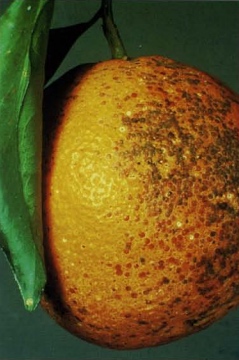
While much of the talk in the citrus industry is about how to fend off Huanglongbing (HLB) disease, one of the most devastating citrus diseases, Dr. Beth Grafton-Cardwell, director of the University of California Agriculture and Natural Resources Lindcove Research and Extension Center, reinforced that HLB isn’t the only pest that can overtake California’s citrus orchards.

Grafton-Cardwell explained how last year’s warm winter led to an increase in the California red scale, Aonidiella aurantii, population. “Normally we have cold conditions that kill off the younger instars of the scales and [basically] restarts the system. But we didn’t really have any low temperatures last year, so the scales didn’t go into their usual hibernating phase. They just kept cranking out crawlers and adding in an extra generation or two of production. So the higher number of scales on the trees made it much more difficult for the growers to control.”

Grafton-Cardwell explained while it is difficult to speculate whether this coming year will yield another large population of the CaSave Our Citruslifornia red scale, “We have already received more moisture as a result of seasonal rainfall, which should help hinder the pest. Hopefully we’ll get some cooler weather conditions too–not freezing because citrus groves don’t like freezing temperatures–but cold enough to knock out some of the scales and get the population back under a manageable level,” she said.
Nevertheless, despite the challenges that California red scale can cause, Grafton-Cardwell said, overall, citrus growers need to keep their focus on the fight against the Asian Citrus Pysllid (ACP), Diaphorina citri, and its ability to spread HLB. “Growers need to start thinking in terms of: California has the [HLB] disease and it’s going to start spreading in southern California soon,” Grafton-Cardwell said. “What do we do to prevent it from spreading up here into the San Joaquin Valley?”

Photo source: “Life Stages of California Red Scale and Its Parasitoids,” UC ANR Publication #21529, by Forster, Lisa D.; Robert F. Luck; and Elizabeth E. Grafton-Cardwell; with photos by L. Forster and M. Badgley)

2021-05-12T11:03:04-07:00January 20th, 2016|

Cattle Industry Supports TPP

California Cattle Industry Supports TPP Trade Proposal

By Charmayne Hefley, Associate Editor

Justin Oldfield, California Cattlemen’s Association’s vice president of government relations and a cattleman in Sacramento County, expressed support for the Trans-Pacific Partnership (TPP) at the December roundtable in Sacramento at which U.S. Department of Agriculture (USDA) Under Secretary for Farm and Foreign Agricultural Services Michael Scuse presented.

Oldfield anticipates TPP would boost demand for U.S. farm and food products among nearly 500 million consumers in 11 countries. “TPP is largely supported not only by California’s beef industry, but across the country, largely because members of TPP represent some of the largest export markets for U.S. beef.”

“Consumers in those markets love U.S. beef,” said Oldfield, “Unfortunately, we do have some pretty high tariff rates in TPP-member countries.” Oldfield explained the U.S. has recently been at a competitive disadvantage with Australia in supplying beef to Japan. Australia, which also depends on its beef exports, has a lower tariff right now with the Japanese.

“A good percentage of that [Japanese] market has been taken away from us by the Australians,” Oldfield said. “With TPP in place, it will put us right back on a level playing field with the Australians and a reduction in tariffs in the long-term. We hope to recapture some of that market share back once TPP is done,” said Oldfield.

Oldfield hopes Congress moves quickly on TPP to make it eligible for a vote, “so that we can get back to sending high quality beef to the Pacific Rim. Every day that Congress sits on [TPP] will cost beef producers money here, and not just in California, but across the United States in terms of our market access to Japan,” he said.

2021-05-12T11:17:15-07:00January 18th, 2016|
Go to Top